Wall Art for Dark Rooms: Brighten Any Modern Space
The Heva Team
Art Curators & Interior Design Enthusiasts · March 26, 2026 · 16 min read
Not every room gets flooded with natural light. Whether it's a north-facing bedroom, a basement apartment, or a hallway with no windows, dark rooms are a reality for many homes. But the right wall art can completely change how a space feels, making it appear larger, brighter, and more inviting without touching a single light switch. The secret lies in color, scale, subject matter, and placement, and once you understand these principles, decorating a dark room becomes one of the most rewarding design challenges you can tackle.
Dark spaces don't have to feel closed off or heavy. In fact, with the right art, they can feel cozy, dramatic, and deeply personal. The walls become your most powerful tool, and choosing what goes on them is not just an aesthetic decision but a psychological one.
Ready to browse? Explore our full wall art collection and filter by color and subject to find exactly what your dark room needs.
Why Bright Art Makes Dark Rooms Feel Bigger
Color psychology is not a new science, but its application to interior spaces continues to surprise people. When you hang a piece of wall art dominated by light tones, soft whites, sky blues, or warm golden yellows, your eye is drawn to it immediately. That focal point creates what designers call a "visual anchor," and because the eye naturally moves toward light, a bright canvas in a dim room functions almost like a window. You are not adding actual light, but you are adding the perception of it.
Research on color perception in interior environments confirms what experienced designers have long known: rooms feel larger when they contain high-contrast light focal points. According to findings published in architectural design literature, the human visual system interprets bright areas as spatially receding, meaning the brain reads a bright painted canvas as being farther away than a dark one. This depth illusion adds perceived square footage to rooms where none physically exists.
The reflective qualities of canvas finishes matter too. A framed canvas with a glossy or semi-matte surface reflects ambient light back into the room, acting almost like a secondary light source. This is particularly valuable in rooms where ceiling lights are the only illumination. The canvas becomes part of the lighting strategy rather than just decor. If you want to explore how finish choices affect a room's feel, our guide on framed canvas prints covers the key differences between finish types in detail.
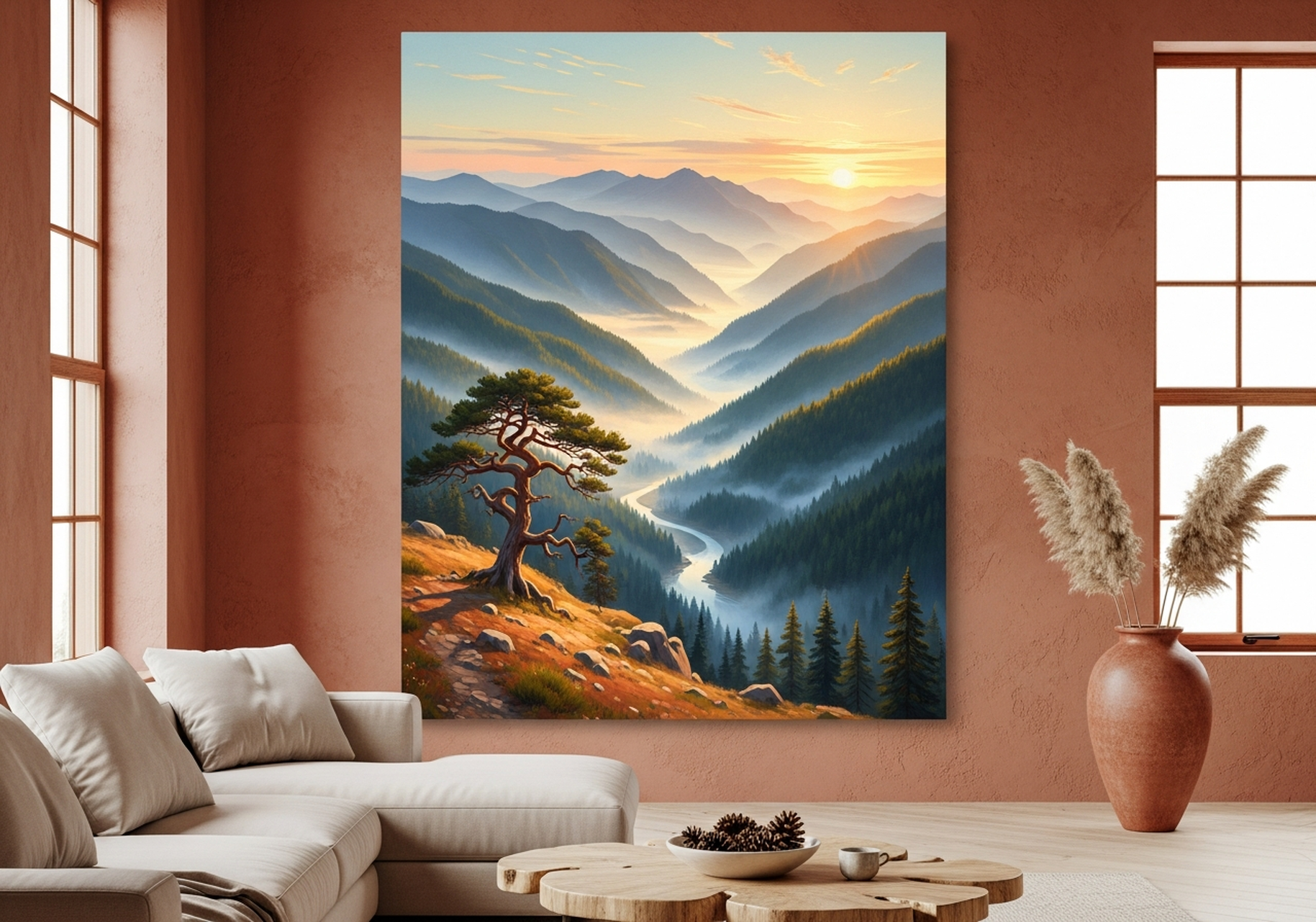
The subject matter of the art amplifies this effect. Landscapes that depict open skies, sunrises, misty valleys, or bodies of water carry an inherent spaciousness. Even at rest in a dim hallway, your mind processes the implied distance in a landscape painting and interprets the room as larger as a result. This is not a trick or an illusion in any negative sense. It is simply how human perception works, and choosing art with this in mind is one of the smartest decisions a homeowner can make.
Subjects drawn from the natural world also connect to the principles of biophilic design and nature-inspired art, which show that exposure to nature imagery reduces stress and increases feelings of spaciousness and wellbeing even when the images are representations rather than the real thing. A dark room hung with a sunrise canvas is not just brighter on the walls; it genuinely feels better to be in.
The Best Art Colors and Subjects for Low-Light Rooms
Not all bright colors work equally well in low-light rooms. Some colors read beautifully under artificial light while others lose their vibrancy and turn muddy. Understanding which palette families perform best gives you a reliable framework for choosing art you will love for years.
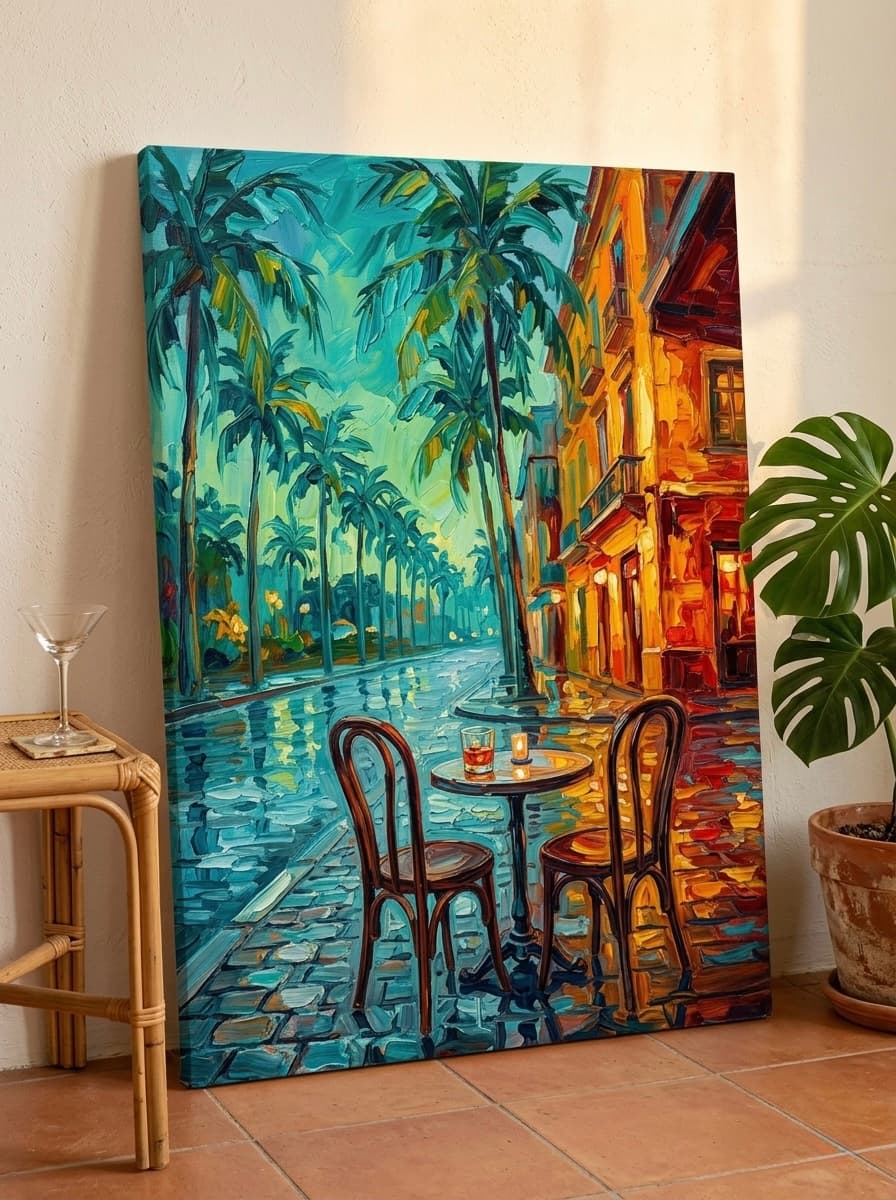
Blues and teals are consistently the top performers in dark and north-facing rooms. These cool tones do something remarkable: they expand space visually while also lending a calm, airy quality that counteracts the claustrophobic feeling many dark rooms produce. Ocean scenes, sky paintings, and tropical water art all leverage this effect. A canvas depicting turquoise reef water or a wide-open seascape brings an almost architectural sense of space to a room that physically has none to spare.
Yellows and warm golds add a completely different but equally effective energy. While blues expand, golds warm. A sunrise painting with deep amber and honey tones makes a north-facing room feel as though the morning sun found a way in. Sunflower prints, golden-hour landscapes, and autumn forest art work on this principle. Interior design publications including Architectural Digest and Elle Decor have consistently recommended warm-toned accent art as one of the most accessible ways to combat the coldness of rooms with limited natural light.
Whites and soft creams serve as grounding neutrals. A canvas with a predominantly white or cream palette does not compete with the room's existing colors but instead acts as a quiet brightener. Abstract art in these tones, or botanical prints on a cream background, can lighten a dark wall without introducing visual noise. For those drawn to this direction, botanical wall art in soft, natural palettes offers a particularly beautiful option for dark rooms.
Subjects to embrace: open water, mountain horizons, sunrise and sunset scenes, misty forests with light breaking through canopy, meadow landscapes, and minimalist nature prints with significant white space. All of these carry inherent visual depth and lightness.
Subjects to approach with care: heavily saturated dark abstracts, night-sky paintings, deep forest scenes with dense dark canopy, and black-and-white photography with predominantly dark tones. These are not inherently bad choices, but in an already dim room they can compound the sense of darkness rather than relieve it. If you love moody, dramatic art, the key is contrast: pair a dark subject with significant light areas in the composition so the overall tone of the canvas remains balanced. Our post on color drenching techniques explores how to use bold, saturated palettes intentionally without overwhelming a space.
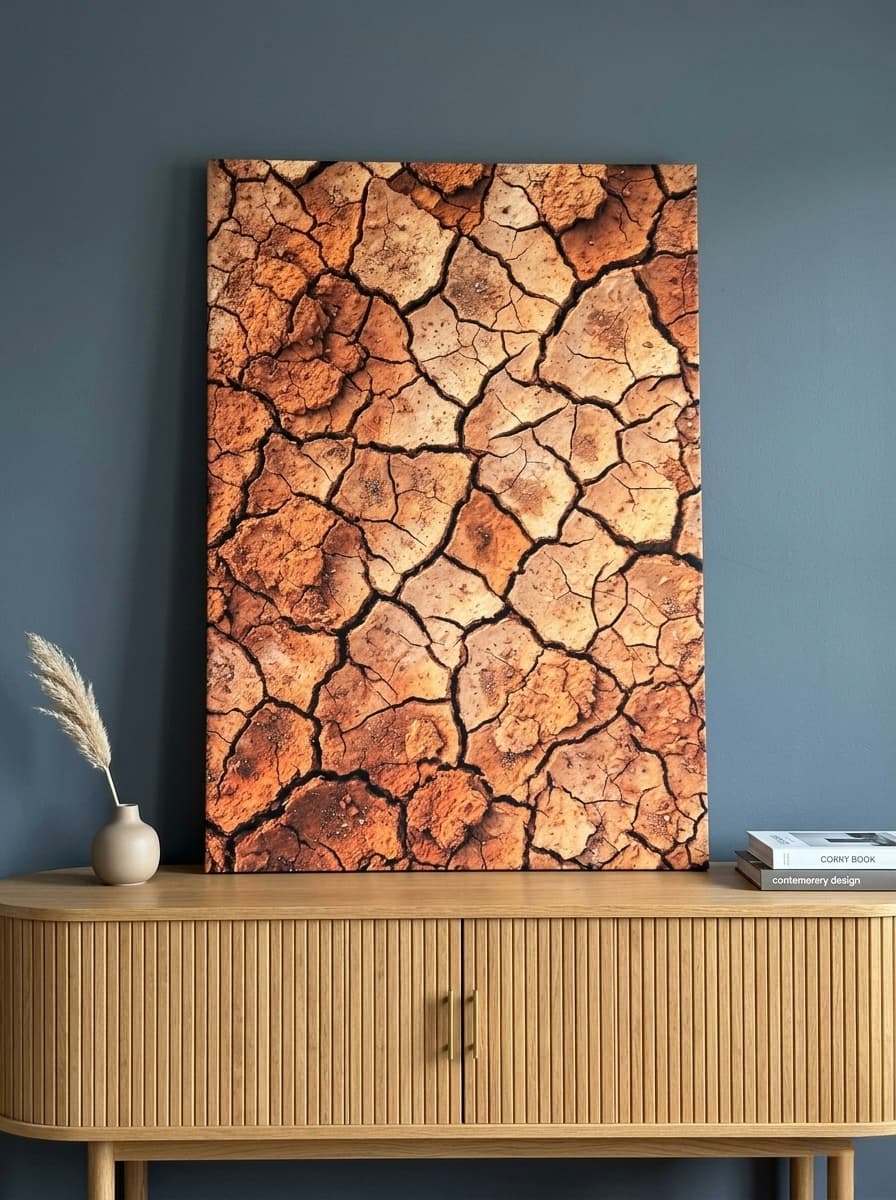
Earth tones deserve a special mention. Terracotta, warm sand, clay, and ochre are all mid-range tones that read as warm and grounding without being either too dark or too cold. Earth tone wall art is particularly effective in basement living rooms and windowless dining areas where you want warmth without the risk of a bright color feeling out of place.
Sizing Art for Dark Rooms
In a well-lit room, you have flexibility with art sizing. A gallery wall of small prints can be charming and eclectic. In a dark room, that same gallery wall often disappears into the shadows, with each small piece competing for attention and collectively reading as visual clutter rather than a cohesive focal point. The sizing rules shift significantly when working with low-light spaces.
The fundamental principle is this: in a dark room, bigger is almost always better. A single large canvas, ideally 80x100 cm (32x40 inches) or larger, creates a commanding focal point that your eye can find and hold even in dim conditions. Small prints scatter your attention rather than directing it, and in a dark room that scattered effect makes the space feel busier and smaller rather than more interesting.
Leading interior designers recommend that for dark rooms, the primary art piece should span at least 60 percent of the width of the sofa or bed it hangs above, and ideally closer to 75 percent. For a 200 cm (79 inch) wide sofa, that means a canvas of at least 120 cm (47 inches) wide. This scale ensures the art reads clearly under ambient lighting and does not appear to shrink against the wall.
Hanging height is another factor that deserves more attention than it typically receives. The standard recommendation of hanging art so the center sits at eye level, roughly 145 to 152 cm (57 to 60 inches) from the floor, was developed for well-lit gallery spaces. In a dark room, consider hanging the canvas slightly lower: 140 to 150 cm (55 to 59 inches) from floor to center. This subtle adjustment draws the eye downward, which in turn makes the ceiling feel lower and the room more intimate and cozy. It counteracts the cold, lofty feeling that dark rooms can produce when their upper walls disappear into shadow.
Research on spatial perception and art placement, including work cited in architectural psychology journals, confirms that lower-hung large-format art in dim spaces creates a measurable increase in perceived comfort and warmth compared to the same art hung at standard gallery height. The effect is subtle but real, and given that it costs nothing to adjust hanging height, it is one of the easiest improvements you can make.
For hallways and narrow spaces where a large single canvas may not fit, the alternative is not multiple small pieces but rather a single tall vertical print. A 60x90 cm (24x36 inch) vertical canvas in a bright landscape palette achieves the same focal-point effect that a horizontal large-format canvas achieves in a wider space. The key is always having one clear, bright, large visual anchor rather than many competing elements.
Our Top 6 Wall Art Picks for Dark Rooms
Every piece below was chosen specifically for its ability to introduce light, depth, and warmth into spaces that receive limited natural illumination. Each one works on the principles described above: bright palette, open subject matter, and inherent visual depth.
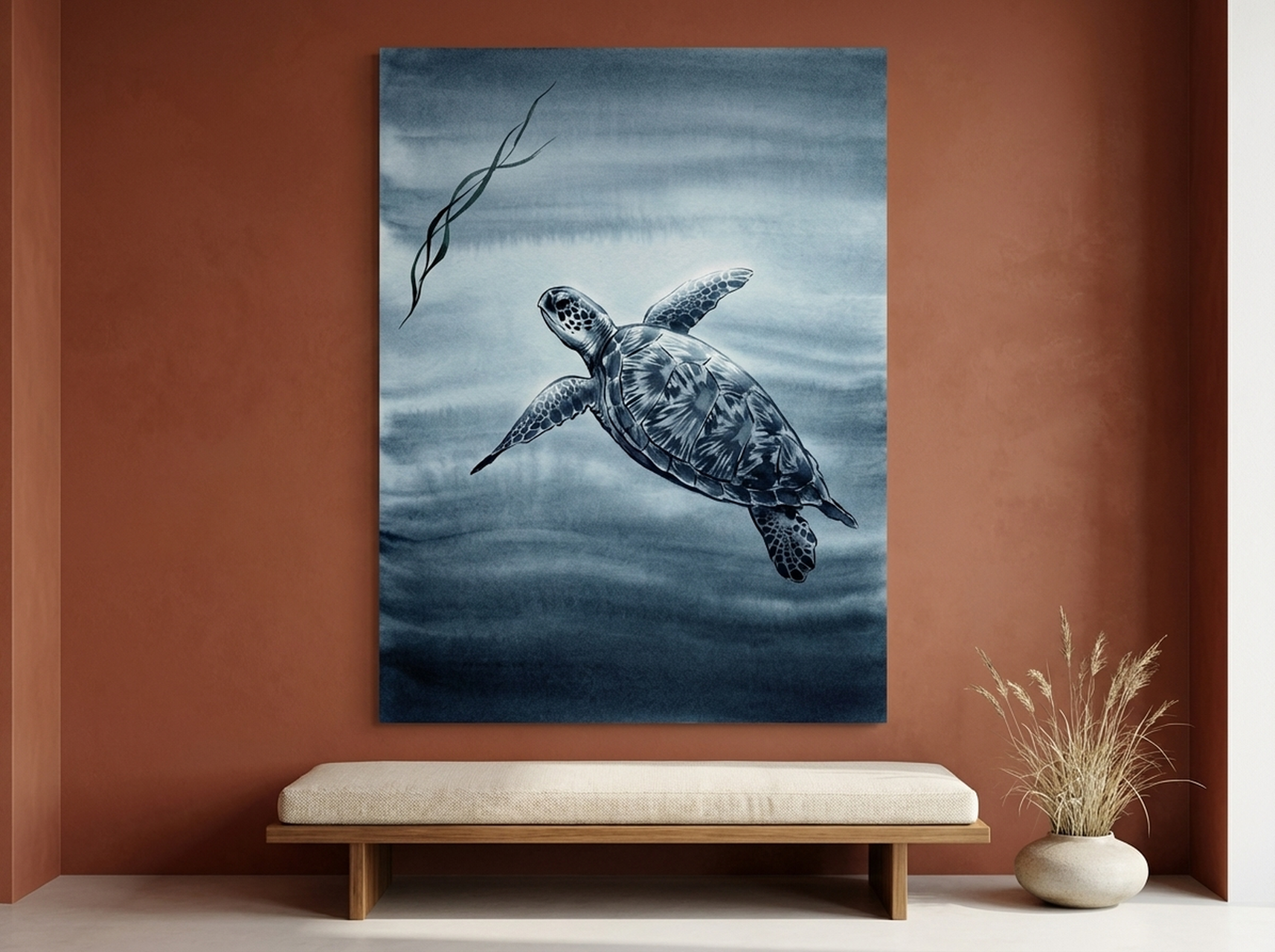
1. Sea Turtle Canvas Wall Art | Ocean Wildlife Minimalist Painting
This ocean wildlife canvas brings the expansive calm of open water directly into your room. The dominant palette of clear aqua and deep turquoise are among the most effective colors for visually expanding a dark, enclosed space, while the minimalist composition keeps the overall tone clean and uncluttered. The gentle implied movement of the turtle through the water adds a sense of quiet life and depth that static abstract art cannot replicate. It works beautifully in a dark bathroom, a north-facing bedroom, or any room where you want a serene, spa-like quality.
2. Volcano Canvas Wall Art | Volcanic Summit Landscape Photography Print
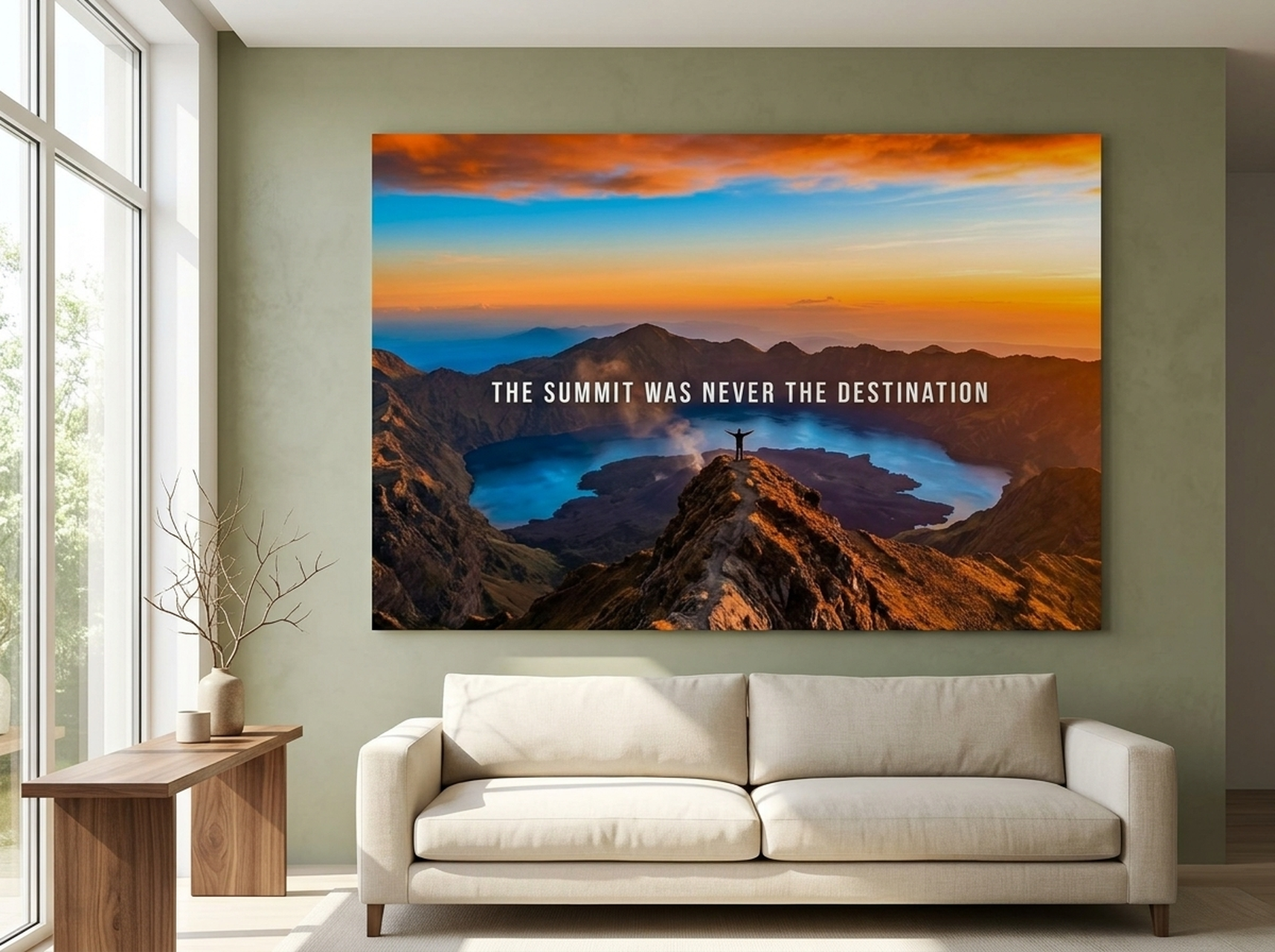
The volcanic summit rising above a sea of clouds delivers exactly the kind of visual depth that dark rooms need. The wide-open sky, dramatic cloud formations, and sheer implied scale of the landscape force the room to expand in the mind's eye. The color range here, from warm amber and ochre at the summit to the soft lavender-grey of the cloud layer below, adds warmth without heaviness. This is a strong choice for a dark home office or a study where you want the room to feel energizing rather than enclosed. The sense of height and open air is almost architectural in its effect.
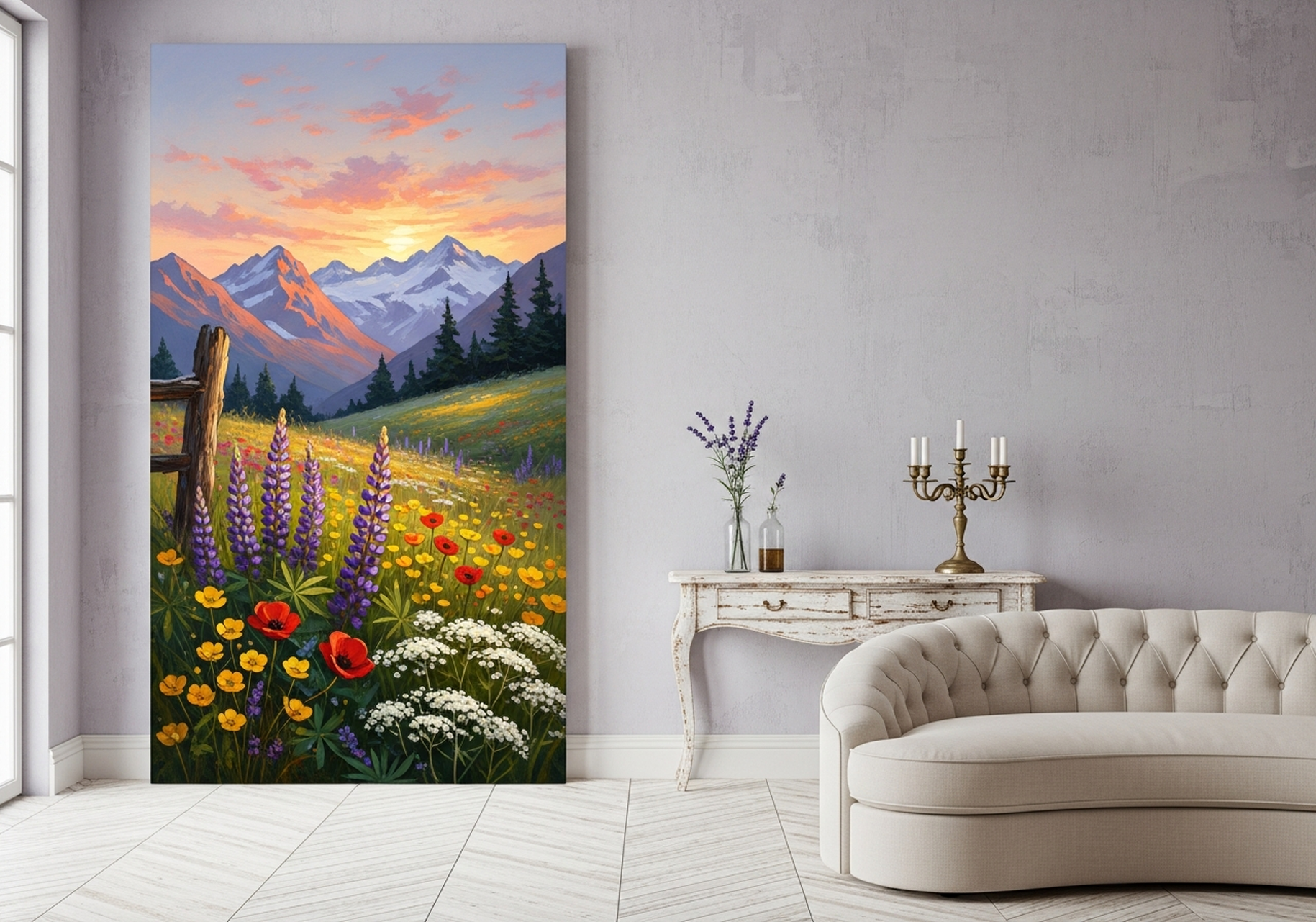
3. Wildflower Meadow Canvas Wall Art | Mountain Landscape Oil Painting
Few subjects carry as much inherent lightness as a wildflower meadow in full bloom. The combination of bright yellows, soft purples, and lush greens against an open sky creates a palette that reads as optimistic and airy in almost any lighting condition. The oil painting style adds a warm, textured depth that canvas prints render beautifully. Hang this in a dark living room above a sofa for an instant sense that the exterior wall has opened up to a sun-drenched landscape. It also works exceptionally well in dark dining areas where the warmth of the colors complements candlelight and warm-toned pendant lighting.
View the Wildflower Meadow Canvas
4. Sunbeam Forest Canvas Wall Art | Old Growth Redwood Oil Painting
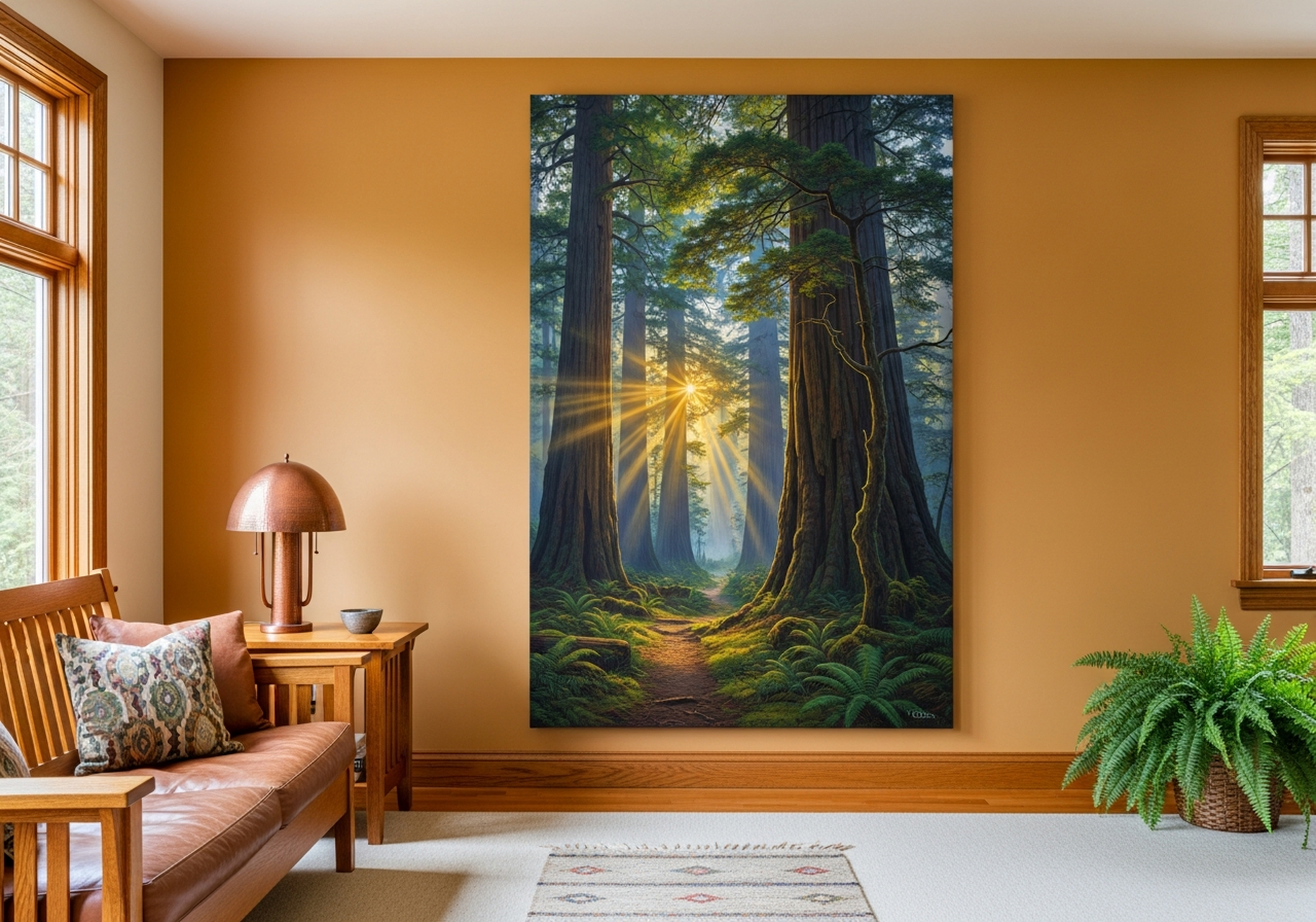
This piece is particularly clever for dark rooms because its subject matter is literally the depiction of light entering a dark space. The sunbeams filtering through the old-growth redwood canopy create shafts of warm golden and amber light that read as actual illumination rather than merely decorative color. The result is a canvas that seems to glow under ambient lighting, and the implied height of the ancient trees draws the eye upward, making low ceilings feel taller. This is one of our strongest recommendations for north-facing bedrooms where you want warmth and the sense of dappled morning light even on grey winter mornings.
View the Sunbeam Forest Canvas
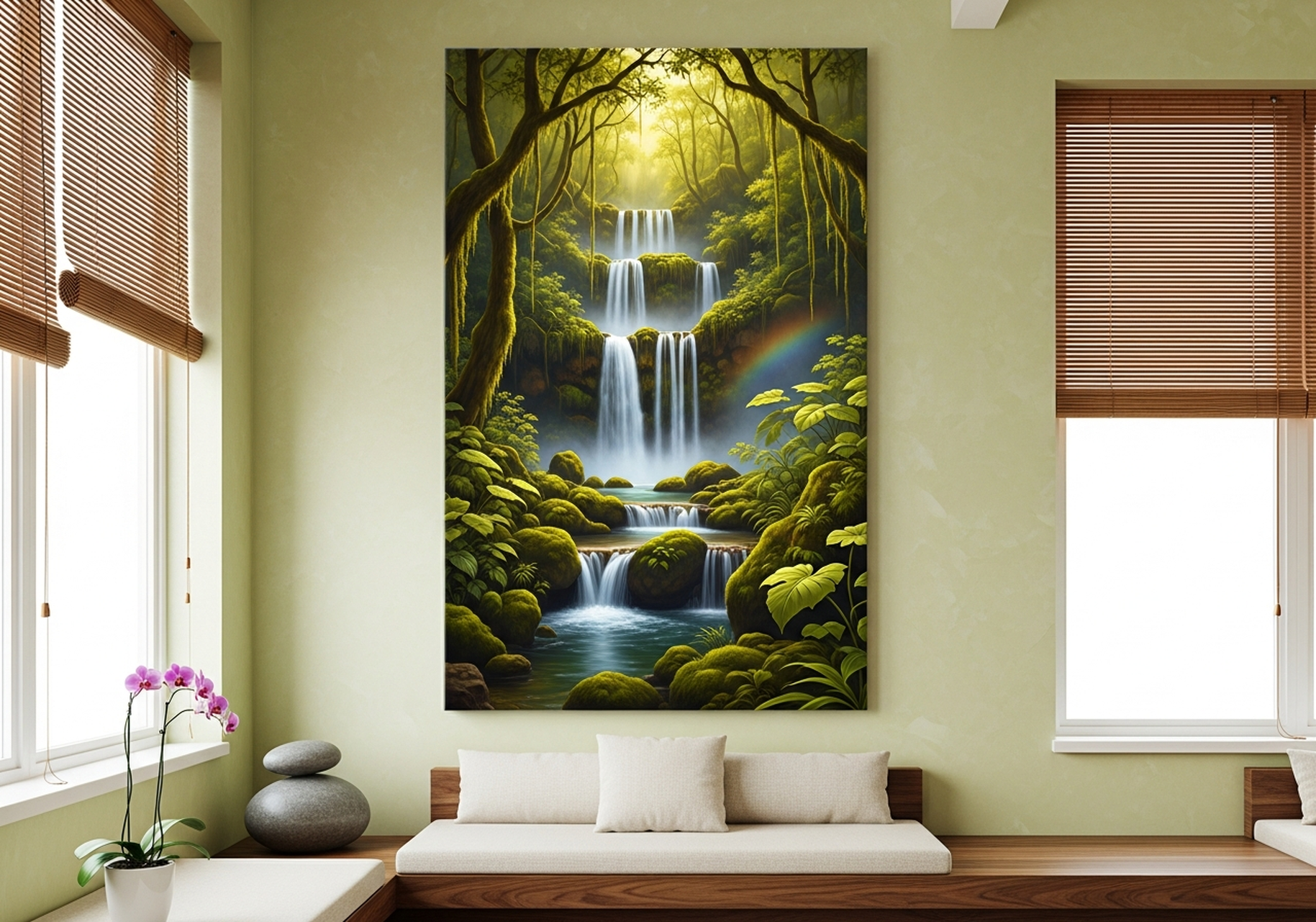
5. Waterfall Canvas Wall Art | Tropical Forest Painting | Zen Decor
A waterfall scene brings three of the most effective elements for brightening dark rooms together in a single canvas: moving water, lush green foliage, and implied natural light filtering through a forest canopy. The whites and soft greys of the cascading water act as bright focal points that draw the eye even under dim lighting, while the tropical greens introduce a freshness that makes the room feel alive. The zen quality of this piece also makes it ideal for a dark bathroom or a meditation corner where you want a calming, natural atmosphere rather than stimulating energy. It pairs beautifully with warm-toned LED lighting set at a low level.
6. Elk Canvas Wall Art | Watercolor Wildlife Reflection Painting
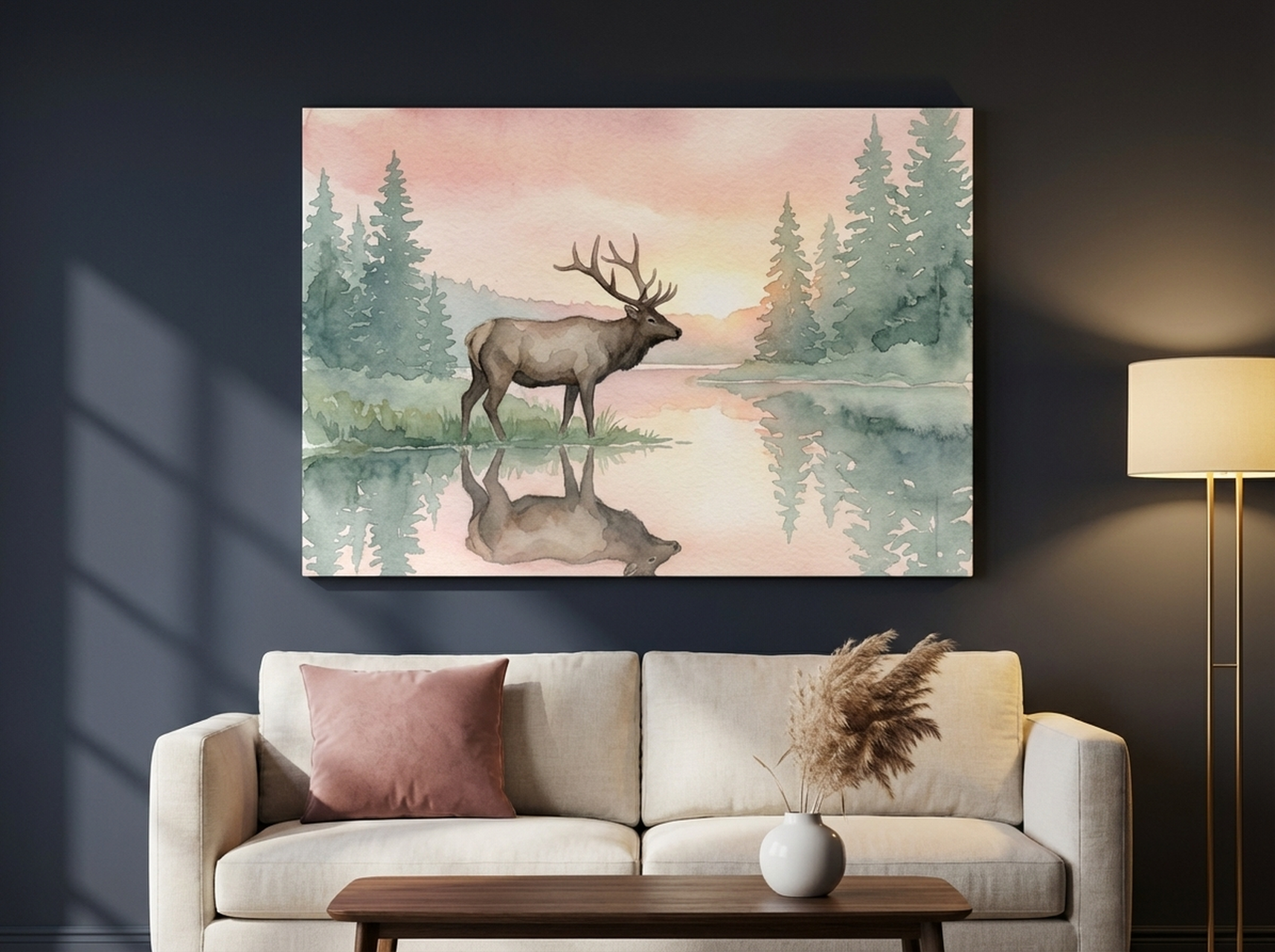
The watercolor style of this elk canvas gives it a soft, diffuse quality that performs well in low-light rooms. The muted blues, soft ambers, and pale creams of the palette blend harmoniously without introducing harsh contrasts that can feel jarring in dim spaces. The reflective lake surface doubles the implied sky light within the composition, adding extra visual brightness through that mirror effect. The majestic elk and misty mountain background bring a sense of open wilderness that expands the room's perceived depth considerably. This piece is especially strong in dark entryways and hallways where a single statement piece needs to carry significant visual weight.
View the Elk Watercolor Canvas
5 Common Mistakes When Decorating Dark Rooms With Art
- Choosing art that's too small. This is the single most common error. Small prints in a dark room disappear completely. Always scale up. A piece that feels almost too large in a well-lit room is often exactly the right size for a dark one. When in doubt, go one size larger than your instinct suggests.
- Using predominantly dark palettes. Deep navy, charcoal, and black-heavy abstracts are stunning art choices, but placing them in an already dark room compounds the heaviness. If you love dramatic, dark art, choose a piece where at least 40 percent of the canvas is composed of lighter, contrasting tones so the overall visual impression remains balanced rather than oppressive.
- Hanging art too high. In dark rooms, art hung at the standard gallery height of 145-152 cm (57-60 inches) to center can disappear when ceiling shadows are taken into account. Dropping the center point to 140-150 cm (55-59 inches) from the floor keeps the piece within the zone of comfortable ambient lighting and creates a cozier, more grounded feel.
- Creating gallery walls of small pieces. Gallery walls work beautifully in bright rooms but fragment attention in dark ones. The eye needs a single clear focal point to anchor itself in a dim space. If you want multiple pieces, choose one large hero canvas and then add smaller complementary pieces around it rather than treating all pieces as equals.
- Ignoring the frame color. Dark frames in a dark room can make even a bright canvas feel heavy. In low-light spaces, consider light natural wood frames, white-painted frames, or floating frames with a thin profile. The frame becomes part of the overall light-reflecting surface area of the piece, and choosing a lighter option can meaningfully increase the brightness the canvas contributes to the room.
Frequently Asked Questions
What color wall art is best for a dark room?
Light blues and teals are the most reliably effective colors for dark rooms because they visually expand space while remaining calming. Warm yellows and golds are the best alternative if you want to add warmth rather than coolness. Both palettes outperform dark or heavily saturated art choices in low-light conditions because they create a visible focal point that the eye can find and hold even when ambient lighting is limited.
Does large or small art work better in a dark room?
Large art always outperforms small art in dark rooms. A single canvas of 80x100 cm (32x40 inches) or larger creates a commanding focal point that reads clearly under ambient lighting. Multiple small pieces fragment attention and can disappear into shadow, making the room feel busier and smaller rather than more open and inviting.
Can wall art make a dark room look bigger?
Yes, and significantly so. Landscape art with open skies, wide water scenes, or misty mountain horizons all create implied depth that the brain interprets as actual spatial distance. This perceptual effect genuinely increases the sense of room size without any physical change to the space. Bright focal points also draw the eye forward, which creates the impression that the back wall is farther away than it actually is.
What subjects should I choose for dark room wall art?
The best subjects are those that carry inherent spaciousness and lightness: open ocean and water scenes, sunrise and sunset landscapes, misty mountain valleys, sunbeam forest paintings, wildflower meadows, and waterfall scenes. These subjects combine bright palette tones with implied depth and natural light, which makes them particularly effective at visually transforming low-light rooms.
Should I use a frame or frameless canvas in a dark room?
A framed canvas in a light or natural wood tone is generally preferable in a dark room. The frame adds a clean boundary that helps the canvas read as a complete focal point against a dark wall, and a light-colored frame contributes additional reflective surface area. If you prefer the contemporary look of a frameless canvas, choose one with a gallery-wrapped edge in a neutral or light-toned color.
What's the best wall art for a north-facing room?
North-facing rooms receive only indirect, cool-toned daylight, which makes them feel particularly cold and dim. The best art choices for these spaces are warm-toned landscapes with golden or amber palettes, such as sunrise scenes, autumn forests, and sunbeam paintings. These warm tones counterbalance the coolness of northern light and make the room feel as though it has access to a sun-drenched outlook even when it physically does not.
Quick Reference Table
| Product | Best For | Dominant Colours | Link |
|---|---|---|---|
| Sea Turtle Canvas | Bathrooms, bedrooms, north-facing rooms | Aqua, turquoise, deep teal | View |
| Volcano Canvas | Home offices, studies, dramatic living spaces | Amber, ochre, soft lavender-grey | View |
| Wildflower Meadow Canvas | Living rooms, dining areas, hallways | Bright yellow, soft purple, fresh green | View |
| Sunbeam Forest Canvas | Bedrooms, reading corners, north-facing rooms | Warm gold, amber, deep forest green | View |
| Waterfall Canvas | Bathrooms, meditation spaces, dark kitchens | Lush green, soft white, misty grey | View |
| Elk Watercolor Canvas | Entryways, hallways, living rooms | Soft amber, pale cream, muted blue | View |
Final Thoughts: Art as Your Best Lighting Tool
Dark rooms are not a design problem to be solved by adding more lamps. They are an opportunity to let art do the work that windows cannot. When you choose the right piece, scaled appropriately, placed at the right height, with a palette that pulls light from wherever it exists in the room, the result is not just a brighter wall. The entire atmosphere of the space shifts. Rooms that once felt closed and heavy start to feel intimate and intentional. The art becomes a destination in itself, a focal point that makes people pause when they walk in rather than hurry through.
Every piece in our collection is available as a high-quality framed canvas print on museum-grade materials. Whether you are working with a basement bedroom, a north-facing sitting room, or a long internal hallway, there is a piece in our collection designed to make it feel like somewhere you want to be.
Explore the full range and find your room's brightest moment at HEVA Unique Art Gallery.