Botanical Wall Art: Bring the Garden Indoors
The Heva Team
Art Curators & Interior Design Enthusiasts · April 1, 2026 · 20 min read
Discover the best botanical wall art to bring nature indoors. From wildflower prints to lush forest scenes, learn about biophilia, styling tips, and our top picks.
Botanical Wall Art: Bring the Garden Indoors
There is something deeply human about wanting to live surrounded by plants. Long before the era of houseplant influencers and cottagecore mood boards, people were pressing flowers between book pages, painting ferns on parlor walls, and hanging hand-painted herb charts in their kitchens. That pull toward greenery, toward leaf and petal and root, is not a trend. It is wired into us. Scientists call it biophilia - the innate human need to connect with living systems - and it explains why a single botanical print on a bare wall can make a room feel warmer, calmer, and more alive.
Botanical wall art has never truly gone out of style. It has simply evolved: from the precise scientific illustrations of 16th-century herbalists, to the lush engravings of Victorian parlors, to today's mix of vintage prints, tropical watercolors, and minimalist leaf studies. Whatever your interior style, there is a botanical print that belongs in your home.
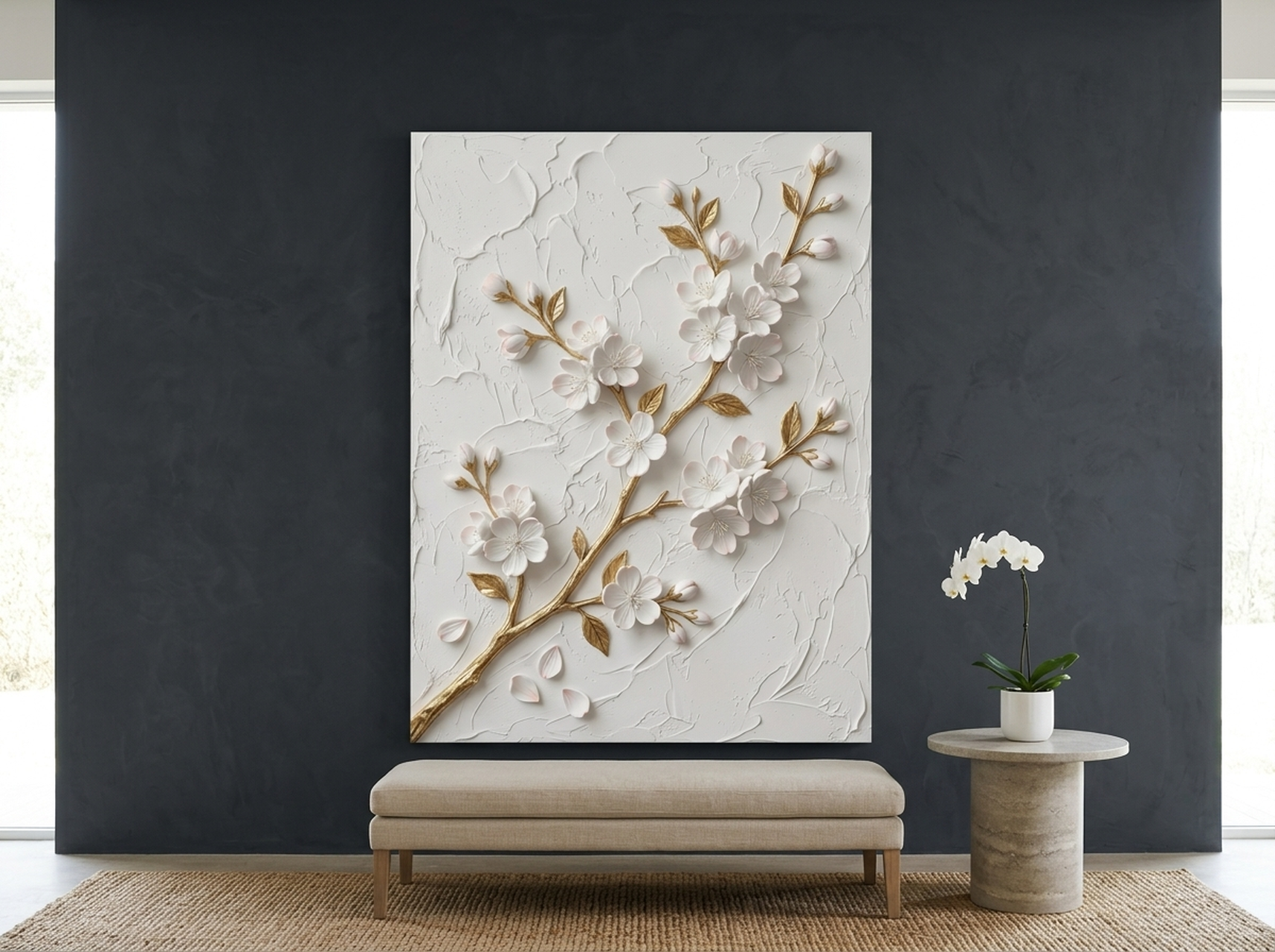
Cherry Blossom Sculptural Relief Canvas - one of our most popular botanical pieces.
Ready to browse? Explore our full botanical wall art collection here.
A Brief History of Botanical Art: From Herbalists to Instagram
Botanical illustration is one of the oldest forms of scientific and artistic documentation in human history. The earliest known illustrated herbals date back to the ancient Greeks, but it was in the 16th century that botanical art truly flourished. Otto Brunfels, working with the gifted artist Hans Weiditz, published Herbarum Vivae Eicones (Living Images of Plants) between 1530 and 1536 - a landmark work that depicted plants with unprecedented naturalism, capturing wilted leaves and broken stems rather than idealized forms. These images were not decorative. They were survival tools, helping apothecaries and physicians identify medicinal plants with confidence.
The Age of Exploration (roughly the 15th through 17th centuries) accelerated botanical art enormously. Explorers brought artists aboard their ships specifically to document the extraordinary plants they encountered in the Americas, Asia, and Africa. Institutions like the Royal Botanic Gardens at Kew became repositories of thousands of new species, each requiring careful illustration. The work was painstaking, precise, and stunningly beautiful.
By the Victorian era, botanical illustration had become both a science and a social art form. New printing technologies made engravings of newly introduced plants widely available through popular magazines such as Paxton's Flower Garden and Curtis's Botanical Magazine. Botany was considered one of the few respectable scientific pursuits for educated women, and artists like Anne Pratt produced more than 20 illustrated books that influenced both science and interior taste. The Victorians hung botanical prints in their parlors, pressed specimens into albums, and embroidered floral motifs onto every available surface. For them, nature in the home was a mark of refinement and curiosity.
The 20th century brought modernism and a brief turn away from florals, but botanical art never disappeared. It resurfaced powerfully in the 1970s with the houseplant boom, again in the early 2000s with the rise of scandi-style botanical posters, and most recently with the explosion of cottagecore, biophilic design, and the global obsession with houseplants that grew out of the pandemic years. Today, a quick scroll through Instagram or Pinterest reveals millions of people hanging botanical prints, gallery walls of pressed fern studies, and oversized tropical leaf canvases. The medium has changed. The human need has not.
For a deeper dive into botanical illustration's rich history, DailyArt Magazine has an excellent overview tracing the art from antiquity to the modern day.
Why Botanical Art Works in Any Room: The Biophilia Effect
The reason botanical wall art feels so immediately right in a home is not simply aesthetic. It is neurological. In 1984, biologist Edward O. Wilson published his landmark book Biophilia, in which he proposed that humans possess an innate, genetically encoded tendency to seek connections with other living systems. We evolved over hundreds of thousands of years in close relationship with the natural world. Our nervous systems learned to read the presence of plants as a signal of safety, clean air, and life-sustaining resources. When we see a painting of a lush forest or a watercolor of wildflowers, some part of our brain processes it as nature - and responds accordingly.
The research supporting this is substantial. Studies have shown that exposure to natural imagery, even representations of nature rather than the real thing, can lower cortisol levels, reduce anxiety, improve mood, and increase cognitive performance. A 2012 review published in the journal Health and Place found that visual contact with nature, including images and artwork, produced measurable reductions in physiological stress markers. A 2022 meta-analysis in Frontiers in Psychology (available via PubMed Central) examined emotional evidence for the biophilia hypothesis across dozens of studies and confirmed that exposure to natural elements, including visual representations, consistently supports well-being across physiological, psychological, and cognitive dimensions.
In our experience helping customers style their homes, the most consistent feedback we receive is that botanical prints make a space feel calmer and more grounded. Customers who add a large forest canvas to a home office report that the room feels less pressured. Those who hang a wildflower print in a nursery say the space feels gentler. This is not coincidence. It is biophilia at work.
Biophilic design, the discipline that applies these principles to architecture and interiors, has moved from academic journals into mainstream home design over the last decade. Design publications like Swyft Home identify biophilic design as one of the defining interior trends of the 2020s, with botanical wall art as one of the most accessible entry points for homeowners.
You do not need to fill your home with living plants (though that is lovely too). A well-chosen piece of botanical wall art delivers a meaningful dose of the same neurological benefit, with zero watering required.
Also see our guide to biophilic design and nature wall art for wellness for a deeper look at how to apply these principles room by room.
Choosing the Right Botanical Style: Wildflower, Tropical, Vintage, Minimalist
Botanical art is a broad category. Knowing which style suits your space makes the selection process much easier. Here is a breakdown of the four main styles and where each works best.
Wildflower and Meadow
Watercolor wildflower prints - daisies, poppies, lavender, clover, forget-me-nots rendered in loose, expressive brushwork - are the most universally loved botanical style. They suit nurseries, bedrooms, kitchens, and living rooms with equal ease. The palette tends toward soft creams, blush pinks, sage greens, and dusty mauves, which integrate naturally with both neutral and colorful interiors.
Best placement: Above a cot or dresser in a nursery (45-60 cm / 18-24 inches above the furniture). As a focal point above a bed headboard (centered, 15-20 cm / 6-8 inches above the headboard). In a kitchen breakfast nook, sized to 50 x 70 cm / 20 x 28 inches or larger.
Tropical and Forest
Tropical botanicals - monstera leaves, bird of paradise, palm fronds, rainforest waterfalls - bring drama and lush visual weight. These prints suit larger walls and rooms that benefit from a strong focal point. They work especially well in living rooms, home offices, and bathrooms where you want to create a sense of escape.
Best placement: As a statement piece on the largest wall of a living room, sized at 60-70% of the wall's width. In a bathroom behind the soaking tub or facing the mirror. Ideal canvas sizes: 60 x 90 cm / 24 x 36 inches up to 90 x 120 cm / 36 x 48 inches.
Vintage and Scientific Illustration
Inspired by the herbalists and Victorian naturalists, this style features precise, engraving-style renditions of plants: labeled herbs, detailed cross-sections, antique color palettes of ochre, umber, and faded green. This style suits studies, libraries, farmhouse kitchens, and dining rooms. It pairs beautifully with dark wood furniture and warm lighting.
Best placement: In a grid arrangement of 4-6 matching prints, each 30 x 40 cm / 12 x 16 inches, spaced 5 cm / 2 inches apart. Above a kitchen counter or dining sideboard.
Minimalist Botanical
Single stems, isolated leaves on white backgrounds, abstract botanical forms - this style is the most versatile and the easiest to integrate into modern or Scandi interiors. The restraint of a single monstera leaf on a white canvas can be more striking than a complex composition. These prints also work well in series: three matching prints of different botanical specimens, uniformly framed.
Best placement: In a hallway or stairwell as a series. Above a desk as a single large statement at 50 x 70 cm / 20 x 28 inches. As part of a gallery wall with other minimalist artwork.
For more room-specific inspiration, see our posts on kitchen wall art ideas and spring wall art ideas to refresh your home.
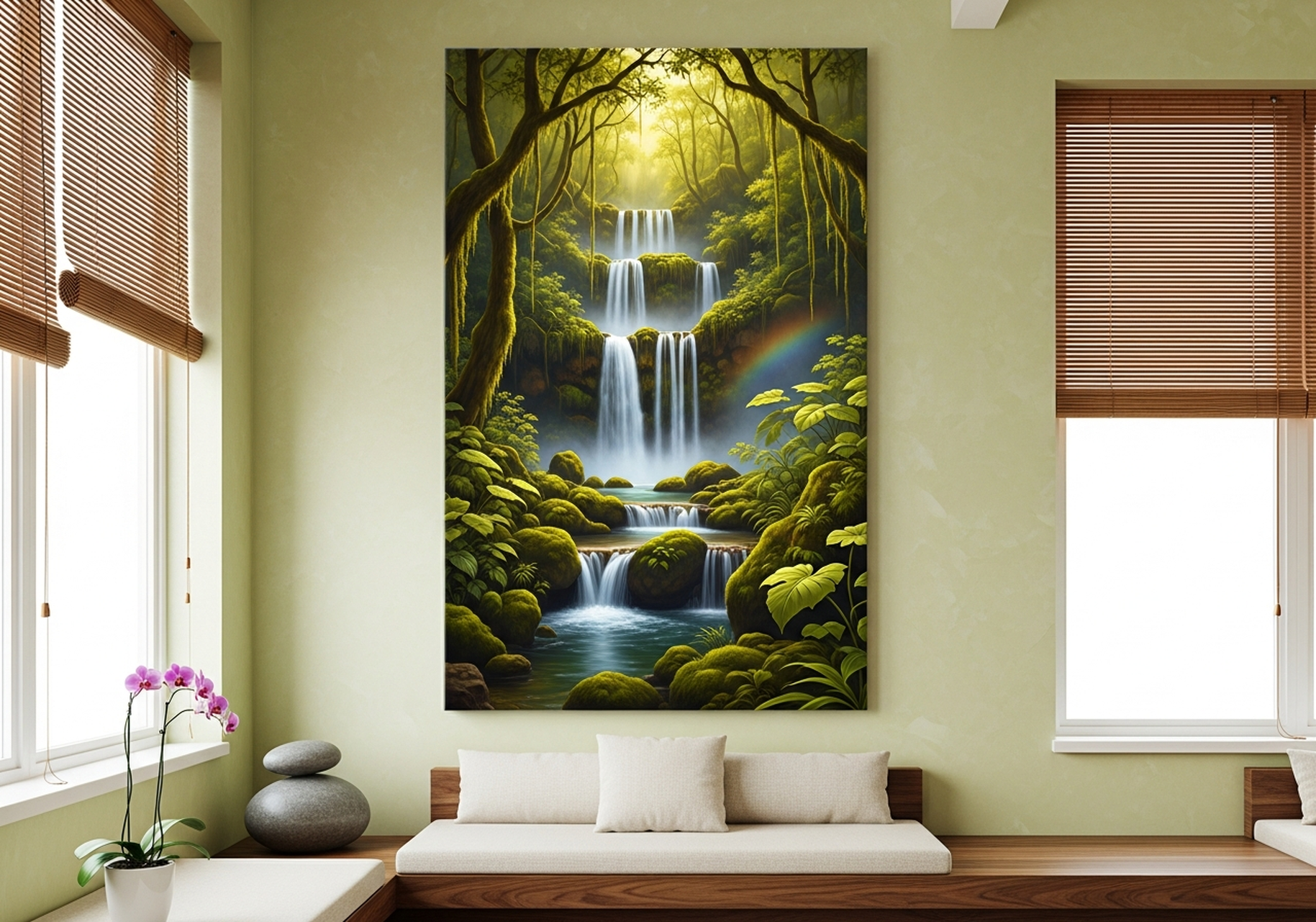
Feature: Waterfall Tropical Forest Canvas
If there is one piece that captures everything botanical wall art can be, it is this waterfall forest painting. The composition pulls you in like a deep breath: cascading water, layered tropical foliage, the blue-green light that filters through a rainforest canopy. It is simultaneously a botanical print and a landscape, a meditation and a decor statement. In our experience, this is the canvas that customers describe as the one that changed their room. Hang it in a bathroom for a true spa-like retreat, or anchor a living room sofa wall with it for a dramatic focal point that earns comments from every guest.
View the Waterfall Forest Canvas
Also available in multiple sizes. See all sizes of the Waterfall Forest Canvas.
Our 6 Top Botanical Wall Art Picks
1. Baby Lamb Wildflower Watercolor Nursery Canvas
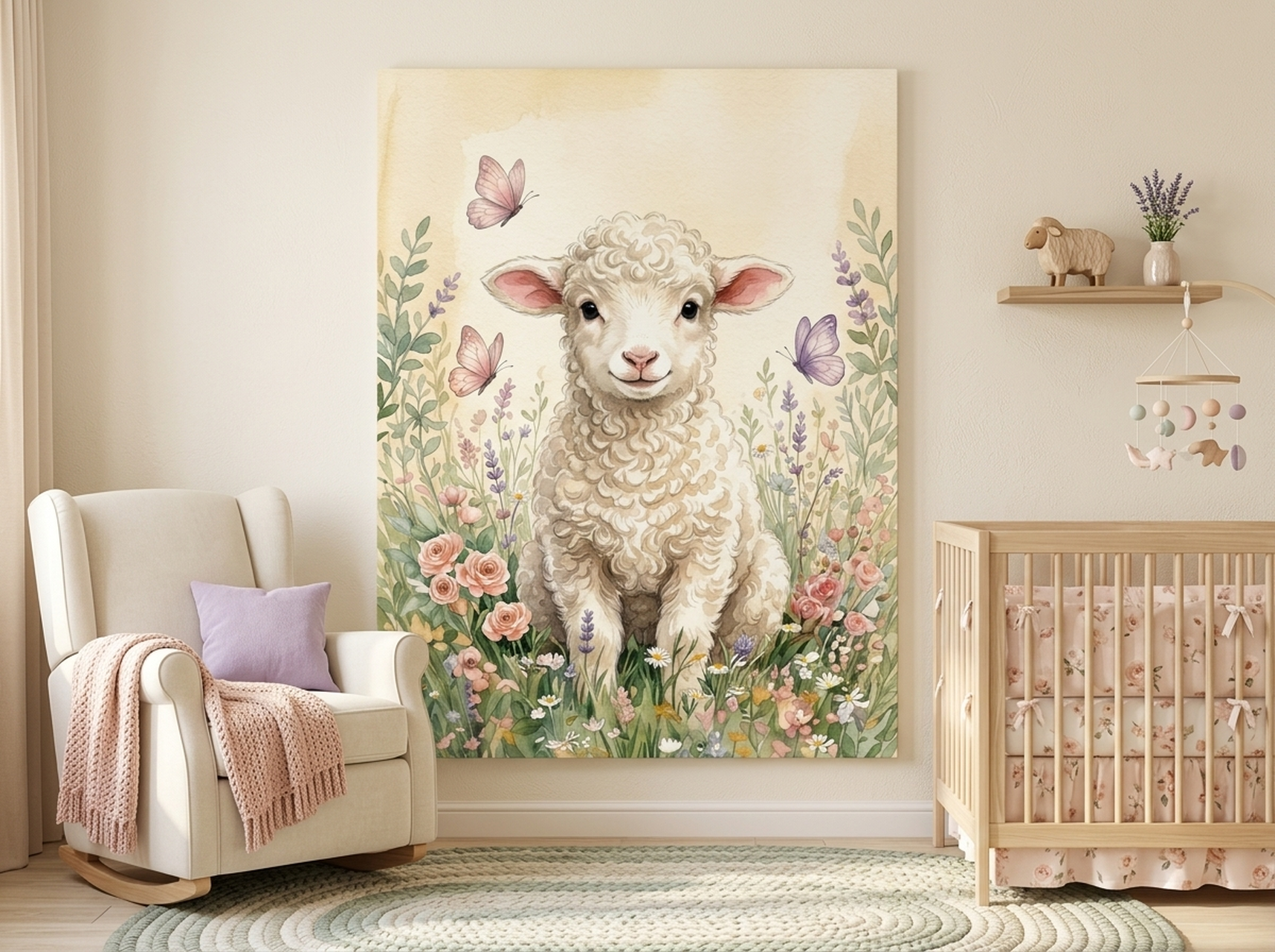
This is hands-down one of our most beloved nursery pieces. A gentle watercolor baby lamb stands in a soft meadow of wildflowers, painted in the kind of muted, tender palette that feels like a lullaby made visible. The botanical detail is exquisite: identifiable wildflower species rendered with loose, confident brushwork that gives the scene life without overwhelming its tenderness. In our experience, this print works in nurseries for both newborns and toddlers, and it transitions beautifully into a child's room as they grow. Hang it 45-60 cm (18-24 inches) above the cot rail for optimal visual balance, at a size of 50 x 70 cm (20 x 28 inches) or larger.
View the Baby Lamb Wildflower Canvas
Ships on premium gallery-wrap canvas. Learn more about the Baby Lamb Wildflower Canvas.
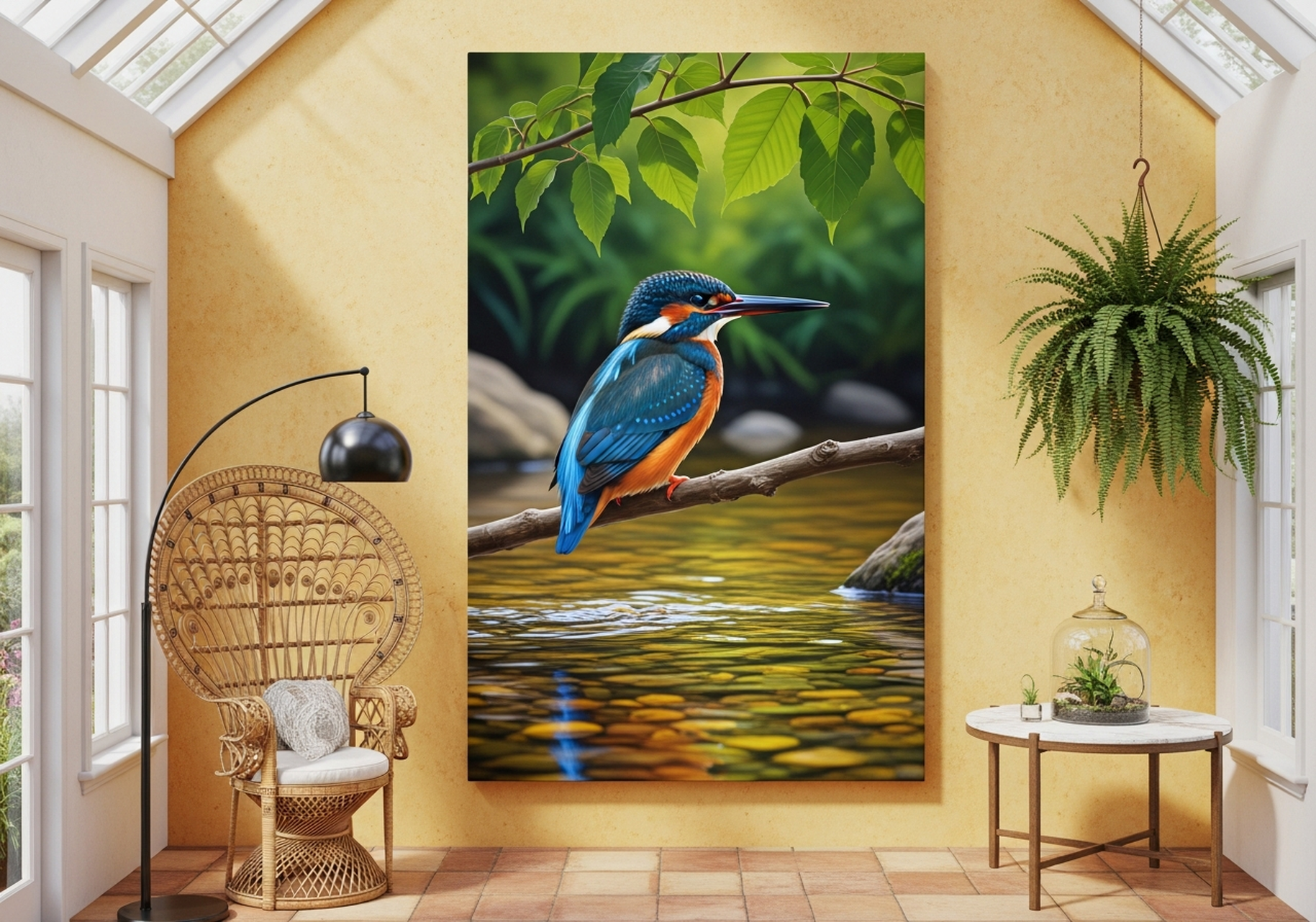
2. Kingfisher River Bird Canvas Wall Art
Few subjects marry botanical and wildlife art as elegantly as a kingfisher. This canvas places the vivid electric-blue bird against a richly painted riverbank scene: reeds, overhanging branches, reflections in still water. The botanical backdrop is as compelling as the subject itself, and the combination creates the kind of layered, story-rich image that rewards long looking. It is an excellent choice for a garden room, a sunroom, or a living room styled around natural materials. It also belongs in a hallway, where its narrow vertical energy and intense color create an immediate impression. Sizes from 60 x 90 cm (24 x 36 inches) suit most residential walls well.
A nature lover favourite. View full details of the Kingfisher Canvas.
3. Artichoke Botanical Canvas Wall Art
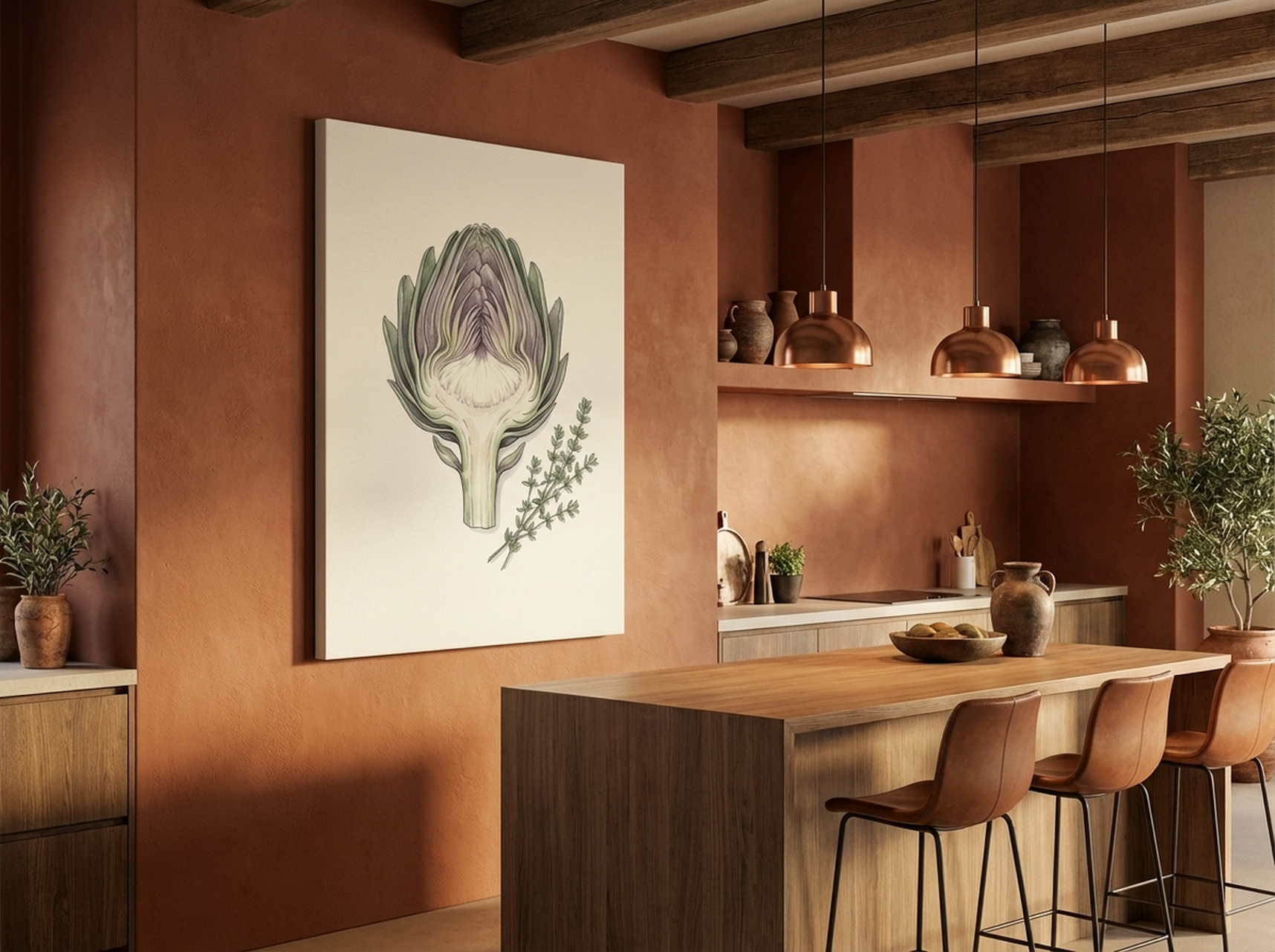
The artichoke is one of the most architecturally beautiful vegetables, and this canvas does full justice to its sculptural drama. Painted in the tradition of the great Victorian botanical illustrators, it presents the artichoke with a precise, almost reverent attention to its layered structure and muted silver-green color. This is exactly the kind of print those 19th-century kitchen-garden enthusiasts would have recognized and admired. In our experience, this piece transforms a kitchen or dining room wall instantly, lending the space the warmth of a working farmhouse and the refinement of a gallery. Hang it at 40 x 50 cm (16 x 20 inches) above a kitchen counter, or in a set of two or three botanical food prints for a collected, personal feel. It also pairs beautifully with the cottagecore aesthetic we discuss in our cottagecore wall art guide.
View the Artichoke Botanical Canvas
Perfect for kitchen and dining. See all sizes of the Artichoke Canvas.
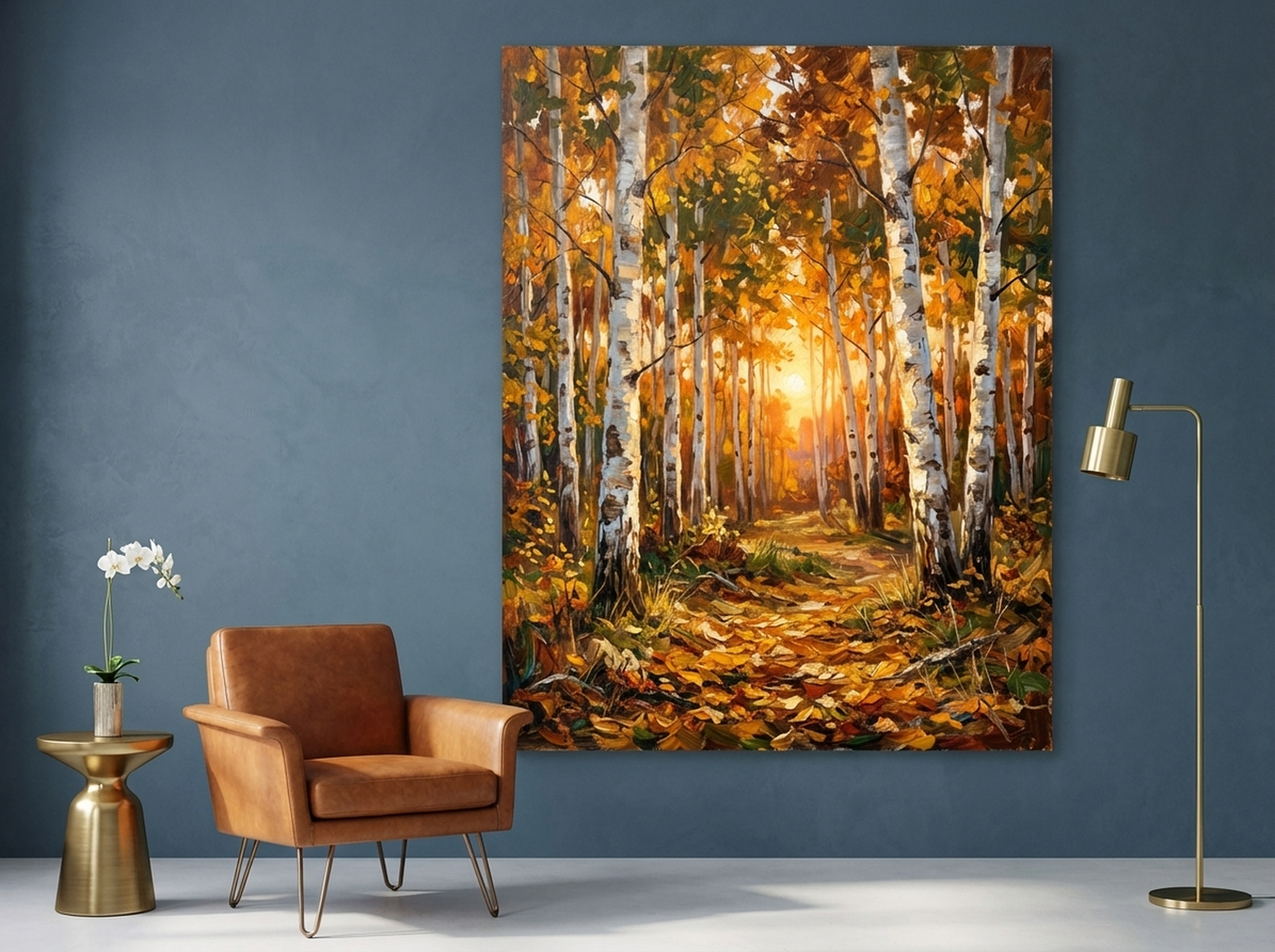
4. Birch Forest Autumn Trees Oil Painting Canvas
Where wildflower prints bring the garden inside, this birch forest canvas brings the entire autumn woodland. The composition is a classic oil-painting treatment of silver-white birch trunks receding into a warm haze of gold and amber foliage, the kind of scene that seems to hold an entire season's worth of feeling. Botanically, birch is one of the most distinctive and symbolically rich trees in Northern European tradition, associated with renewal, clarity, and the turn of the year. In our experience, this canvas is a statement piece that commands a large wall. It works best at 75 x 100 cm (30 x 40 inches) or larger on a feature wall in a living room, bedroom, or study. The warm autumnal palette bridges the gap between summer botanical freshness and the deeper tones of a winter interior.
Available in sizes from 30x40 cm (12x16 in) to 90x120 cm (36x48 in). View the Birch Forest Canvas options.
5. Sunflower Daisy Botanical Nursery Canvas
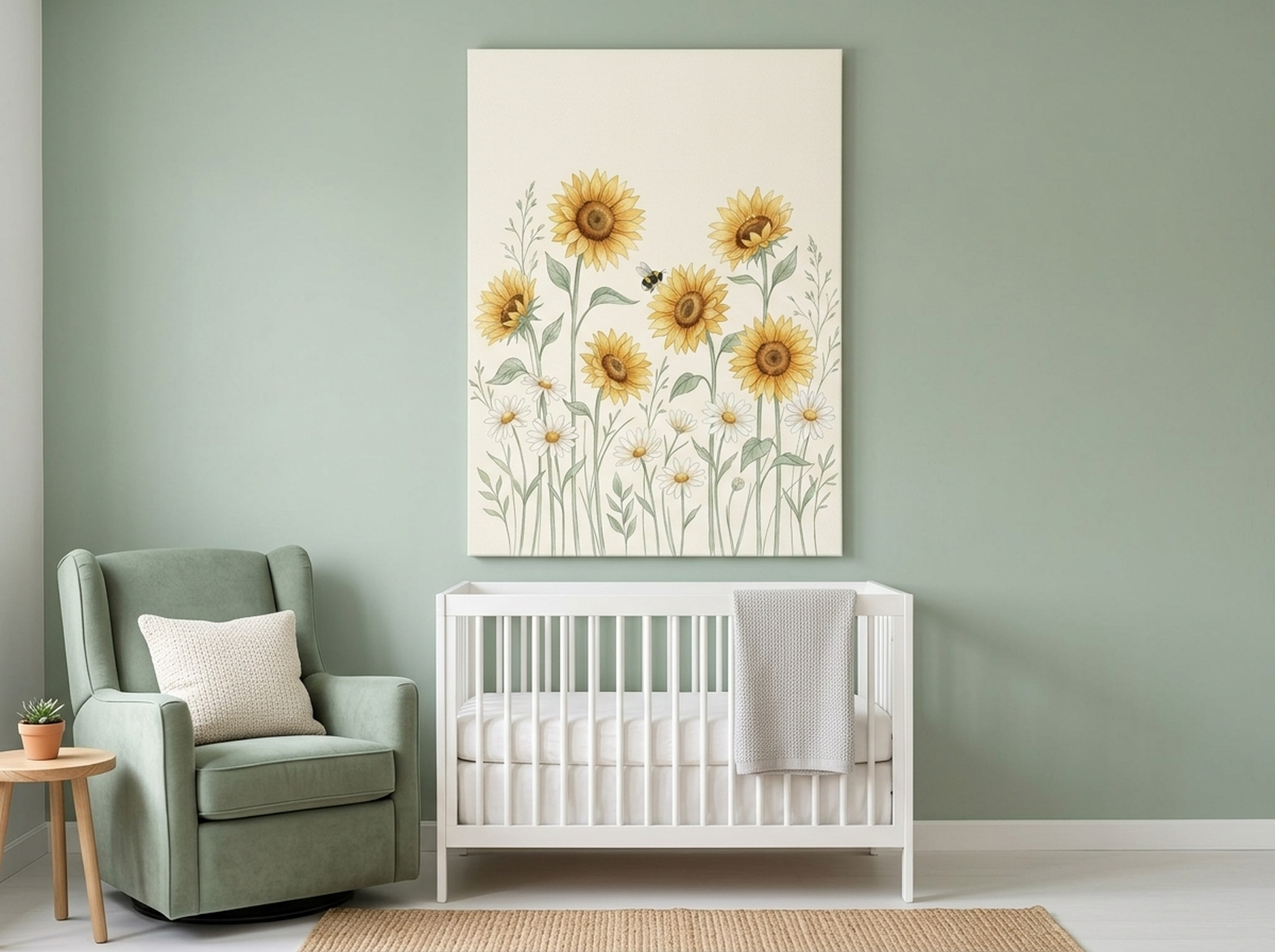
Sunflowers and daisies are perhaps the most universally cheerful botanical subjects in the history of art, and this boho wildflower canvas captures them with an energy and warmth that is hard to resist. The palette is golden, earthy, and sun-soaked, painted in a loose, expressive style that nods to both meadow realism and abstract expressionism. It is labelled as a nursery print, and it is genuinely beautiful in that context, but in our experience this piece works in living rooms, kitchens, and anywhere a room needs a lift of natural warmth and positivity. The boho styling also makes it an excellent companion to macrame wall hangings, rattan furniture, and natural-fiber textiles. Hang it centered above a sofa at 60-90 cm (24-36 inches) above the cushion line for maximum impact.
View the Sunflower Daisy Canvas
Cheerful in any space. Browse Sunflower Daisy Canvas sizes.
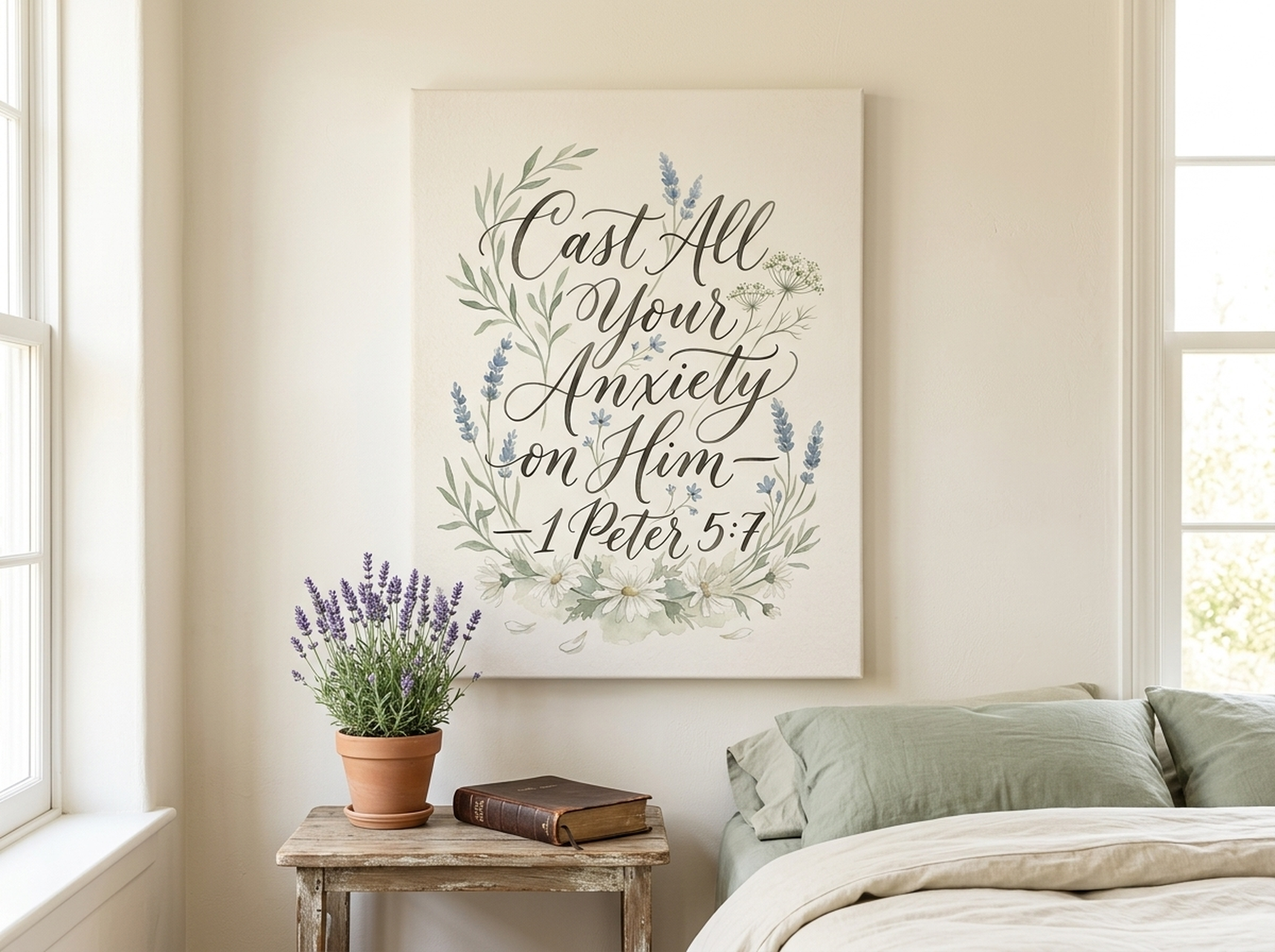
6. 1 Peter 5:7 Botanical Calligraphy Christian Canvas
This piece brings together two of the oldest traditions in visual culture: botanical illustration and sacred calligraphy. The verse from 1 Peter 5:7, "Cast all your anxiety on him because he cares for you," is rendered in elegant lettering framed by intricate botanical detail, a composition that would not have looked out of place in a Victorian parlor or a medieval illuminated manuscript. It is the kind of print that carries both beauty and meaning, making it a deeply personal gift for a wedding, a new home, or a moment of difficulty. In our experience, this works as a bedroom piece, an entryway statement, or a meaningful centerpiece in a prayer room or study. The botanical framing gives it a timeless quality that sits comfortably in contemporary and traditional interiors alike.
View the Botanical Calligraphy Canvas
A meaningful and beautiful gift. See full details of the Scripture Botanical Canvas.
How to Create a Botanical Gallery Wall
A botanical gallery wall is one of the most rewarding decorating projects you can undertake. When it comes together, it transforms a plain wall into something that feels curated, personal, and genuinely alive. Here is how to do it well.
Step 1: Choose a Unifying Theme
The most successful botanical gallery walls have an internal logic. This might be a color palette (all cream, sage, and warm ochre), a medium (all watercolor, or all oil-painting style), a botanical subject (all flowering plants, or all trees), or a mood (all loose and impressionistic, or all precise and scientific). You do not need to match perfectly, but there should be a reason the prints belong together. Mixed botanical styles can work, but anchor them with consistent framing.
Step 2: Select Frames That Belong to the Same Family
Consistent framing is the single most powerful tool for making a gallery wall look intentional rather than accidental. Natural wood frames in the same finish, or all-black frames, or all-white frames, will unify even a wildly varied collection of prints. If you want to mix frame styles, limit yourself to two: one dominant and one accent.
Step 3: Plan on Paper Before You Drill
Trace each frame on brown paper or newspaper. Cut out the shapes, tape them to the wall with painter's tape, and live with the arrangement for a day before committing. The relationship between frames matters as much as the individual prints. Aim for gaps of 5-8 cm (2-3 inches) between frames for a tight, gallery feel, or 10-15 cm (4-6 inches) for a looser, more relaxed arrangement.
Step 4: Anchor with One Large Piece
A botanical gallery wall usually benefits from one hero piece that anchors the composition. Everything else orbits around it. The hero piece should be the largest canvas in the arrangement and should sit at or just below eye level (approximately 145-150 cm / 57-59 inches from the floor to the center of the piece).
Step 5: Vary the Sizes Deliberately
A gallery wall of all-same-size prints looks like a grid, which can feel stiff. Varying sizes creates rhythm: one large anchor, two medium pieces, two or three smaller prints. The variety is what gives the wall a collected, living feeling. For botanical gallery walls, popular size combinations include: one 60 x 90 cm (24 x 36 inches) hero piece, two 40 x 50 cm (16 x 20 inches) midsize prints, and two or three 20 x 30 cm (8 x 12 inches) accent pieces.
For more gallery wall inspiration, see our guide to nature wall art that brings the outdoors inside.
5 Common Botanical Decor Mistakes (And How to Avoid Them)
1. Hanging Art Too High
This is the single most common wall art mistake, and it affects botanical prints as much as any other kind. Art hung too high disconnects from the furniture below it and floats awkwardly in the upper third of a room. The correct position is to center the artwork at approximately 145-150 cm (57-59 inches) from the floor, which is approximately eye level for a standing adult. When hanging above a sofa or bed, the bottom edge of the frame should be 15-20 cm (6-8 inches) above the furniture.
2. Choosing a Print That Is Too Small for the Wall
A small botanical print on a large wall looks lost and apologetic. As a rule of thumb, a piece of art or a gallery arrangement should cover 55-65% of the width of the wall or furniture it sits above. If your sofa is 200 cm (79 inches) wide, your art or arrangement should be at least 110-130 cm (43-51 inches) wide.
3. Mixing Too Many Competing Botanical Styles
Wildflower watercolors, precise Victorian engravings, tropical modernist prints, and abstract leaf studies can all look beautiful individually. Together on the same wall without a unifying logic, they create visual noise rather than visual harmony. Choose one style as your foundation and let others play a supporting role.
4. Ignoring the Room's Natural Light
Botanical prints with delicate watercolor details can look washed out in rooms with very bright south-facing light, or muddy in very dark rooms. In a bright room, prints with stronger contrast and bolder color hold their presence. In darker rooms, prints with lighter, airier palettes and good tonal contrast will prevent the wall from feeling heavy.
5. Treating Botanical Art as an Afterthought
The most common reason a botanical print fails to deliver on its promise is that it was hung after everything else was decided. In our experience, the homes where botanical wall art truly sings are those where the print was one of the first decisions, and the furniture, textiles, and color palette were built around it. Treat your botanical art as a starting point, not a finishing touch.
Frequently Asked Questions About Botanical Wall Art
- What is botanical wall art?
- Botanical wall art is any artwork depicting plants, flowers, trees, or other vegetation, including wildflower watercolors, tropical leaf canvases, vintage scientific illustrations, forest landscapes, and pressed-plant studies. It ranges from precise scientific illustration to loose impressionistic painting, and suits almost any interior style.
- What size botanical wall art should I choose for my living room?
- For a living room, your botanical art or arrangement should cover 55-65% of the wall width above your sofa. For a sofa that is 200 cm (79 inches) wide, choose a single canvas of at least 90 x 120 cm (36 x 48 inches) or a gallery arrangement that spans 110-130 cm (43-51 inches) wide. Hang it so the bottom edge is 15-20 cm (6-8 inches) above the sofa back.
- What botanical wall art works best in a bathroom?
- Tropical forest scenes, waterfall paintings, fern studies, and loose watercolor botanicals all work beautifully in bathrooms. They reinforce the spa-like association between water, greenery, and relaxation. Choose canvas prints rather than paper prints in bathrooms, as canvas handles humidity better. Our Waterfall Tropical Forest canvas is an especially popular choice for bathrooms.
- Is botanical wall art still on trend in 2026?
- Yes. Botanical wall art is one of the most enduring design trends because it is rooted in biophilia, the innate human need to connect with nature, rather than in passing fashion. Design publications consistently list botanical prints and biophilic design among the leading home decor trends for 2025 and 2026.
- What rooms suit botanical wall art best?
- Botanical wall art works in virtually every room. Wildflower prints suit nurseries, bedrooms, and kitchens. Tropical and forest canvases work well in living rooms, bathrooms, and home offices. Vintage botanical illustrations are a natural fit for studies, libraries, and dining rooms.
- How do I style a botanical gallery wall?
- Start with a unifying theme such as a consistent palette, medium, or botanical subject. Choose frames from the same family. Plan your arrangement on paper before drilling. Anchor with one large piece at eye level, vary print sizes to create rhythm, and maintain 5-8 cm (2-3 inches) between frames for a gallery feel.
Quick Reference Table: Botanical Art Styles by Room
| Room | Best Botanical Style | Recommended Size | Hang Height (center) |
|---|---|---|---|
| Living Room | Tropical / Forest / Wildflower | 90x120 cm / 36x48 in | 145-150 cm / 57-59 in |
| Bedroom | Wildflower / Minimalist | 60x90 cm / 24x36 in | 15-20 cm / 6-8 in above headboard |
| Bathroom | Tropical / Waterfall | 50x70 cm / 20x28 in | 145-150 cm / 57-59 in |
| Kitchen / Dining | Vintage Illustration / Vegetable | 40x50 cm / 16x20 in (set of 2-3) | 145-150 cm / 57-59 in |
| Nursery | Wildflower / Soft Watercolor | 50x70 cm / 20x28 in | 45-60 cm / 18-24 in above cot |
| Study / Library | Vintage Scientific / Forest | 60x80 cm / 24x32 in | 145-150 cm / 57-59 in |
| Hallway | Minimalist / Series of 3 | 30x40 cm / 12x16 in each | 145-150 cm / 57-59 in |
Bring the Garden In: Your Next Step
Botanical wall art is not decorating. It is a small, daily act of reconnecting with the living world. Whether you are drawn to the precise drama of a Victorian artichoke print, the joyful looseness of a sunflower watercolor, the meditative stillness of a birch forest, or the wild freshness of a meadow full of lambs and wildflowers, there is a botanical canvas that belongs on your wall.
In our experience, the right botanical print does not just fill a space. It changes the feeling of a room in a way that is difficult to articulate but immediately felt by everyone who enters. That is the biophilia effect in action, and it is available to you in a single well-chosen canvas.
For more inspiration, explore our guides to nature wall art that brings the outdoors inside and farmhouse wall art with rustic charm. Or browse the full collection below and find the botanical piece that speaks to your space.