Biophilic Design: Nature Wall Art for Wellness at Home
The Heva Team
Art Curators & Interior Design Enthusiasts · April 1, 2026 · 17 min read
Use nature wall art to bring biophilic design into your home. Forest scenes, botanicals, and organic textures that boost wellness and calm any space.
Science confirms what every nature lover already knows: surrounding yourself with natural imagery reduces cortisol, lowers blood pressure, and genuinely makes you happier. That is the promise of biophilic design -- and wall art is its most powerful, most affordable tool. You do not need a garden terrace or a floor-to-ceiling window. One well-chosen canvas can change how a room feels in seconds.
Ready to browse? Explore the full nature wall art collection at HEVA Unique Art Gallery and find the piece that speaks to your space.
What Is Biophilic Design?
Biophilic design is the practice of integrating natural elements, patterns, and imagery into the built environment to support human health and wellbeing. The word comes from biophilia -- literally "love of life" -- a term popularized by Harvard biologist Edward O. Wilson in his 1984 book of the same name. Wilson proposed that humans carry an evolutionary, genetically encoded affinity for other living things and natural systems. We spent 300,000 years living outdoors; our nervous systems are still calibrated for it.
Modern biophilic design translates this instinct into architecture and interiors. It encompasses living walls, water features, natural materials, views of greenery -- and art. Specifically, visual representations of nature that trigger the same neurological pathways as the real thing.
The reason wall art is the most practical biophilic tool is simple: not everyone can install a living moss wall or rent a penthouse with a forest view. But anyone can hang a canvas. And according to the research, a well-chosen landscape or botanical print produces effects that are physiologically real -- not merely decorative.
For more on how nature art transforms a room, see our guide: How Nature Wall Art Brings the Outdoors Inside Your Home.
The Science: Nature Art and Wellbeing
The research base for biophilic design is substantial and growing. Here is what the peer-reviewed literature actually shows:
Stress Reduction and Cortisol
A landmark meta-analysis published in Health & Place found that exposure to nature -- including visual exposure through imagery -- consistently reduces self-reported stress, physiological stress markers, and negative affect. Participants who viewed nature photographs showed lower salivary cortisol than those who viewed urban scenes or blank walls. The effect begins within minutes.
A widely-cited study available through PubMed Central (PMC4217555) documents the physiological stress-recovery response triggered by natural scenes, including reduced skin conductance, lower heart rate, and faster recovery from psychological stressors. The mechanism is activation of the parasympathetic nervous system -- the body's rest-and-repair mode.
Attention Restoration Theory
Psychologists Rachel and Stephen Kaplan developed Attention Restoration Theory (ART) in the 1980s and 1990s, proposing that natural environments replenish directed-attention capacity -- the focused, effortful cognitive mode we use for work and problem-solving. Unlike urban stimuli (which demand attention), natural scenes hold it effortlessly through what the Kaplans called "fascination." Even a glance at a nature print during a work break can partially restore cognitive resources.
Research from PubMed Central (PMC6150574) confirms that nature exposure -- including simulated exposure via imagery -- improves performance on attention tasks and reduces mental fatigue, with effects detectable after just 10-40 minutes of passive exposure.
Sleep Quality
Nature imagery in the bedroom has been linked to improved sleep quality in multiple observational studies. The mechanism is twofold: reduced pre-sleep cortisol (due to the calming effect of natural scenes) and psychological associations between nature and safety, which ease the hypervigilance that prevents sleep onset. Forest greens and soft blue-greens are particularly effective because they mimic twilight light spectra that the circadian system reads as "time to rest."
For a deeper look at bedroom art selection, see our guide: Bedroom Wall Art Ideas: Set the Mood for Better Sleep.
Fractal Patterns and Neural Reward
Neuroscientist Richard Taylor's work -- referenced in a study indexed on PubMed (PMID 25549479) -- demonstrates that the fractal geometry found in nature (tree branches, coastlines, cloud formations) activates reward pathways in the human visual cortex. Human eyes are specifically tuned to process fractal patterns with a dimension between 1.3 and 1.5 -- exactly the range found in most natural landscapes. Wall art that faithfully captures this geometry produces measurable stress reduction of up to 60%.
Types of Biophilic Wall Art
Biophilic art falls into two broad categories, and understanding the difference helps you choose the right piece for each room and goal.
Direct Nature Representation
This is the most straightforward category: paintings, photographs, and prints that depict actual natural subjects. Subcategories include:
- Landscapes and seascapes: Forests, mountains, valleys, fjords, waterfalls, ocean scenes, and aerial views of terrain. These provide the broadest biophilic field of view and work well as statement pieces in large rooms.
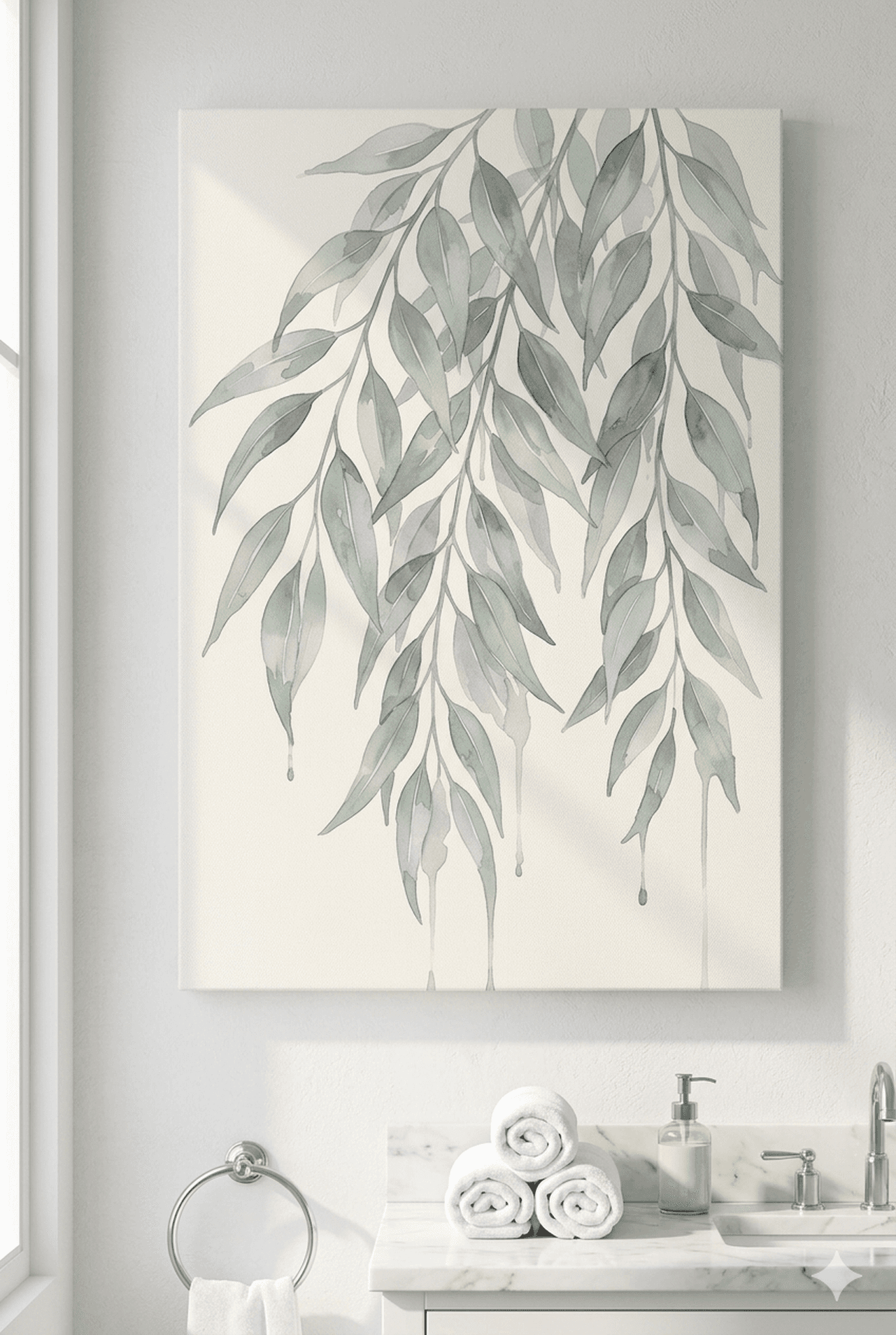
- Botanicals and florals: Individual plants, flowers, leaves, and garden scenes. More intimate in scale, botanicals are ideal for smaller rooms, hallways, and bathrooms where large landscapes would feel overwhelming.
- Wildlife in habitat: Birds, deer, aquatic creatures depicted in their natural environment -- not portrait-style against neutral backgrounds. The habitat context is key; it triggers the same spatial awareness and "aliveness" cues as a real outdoor scene.
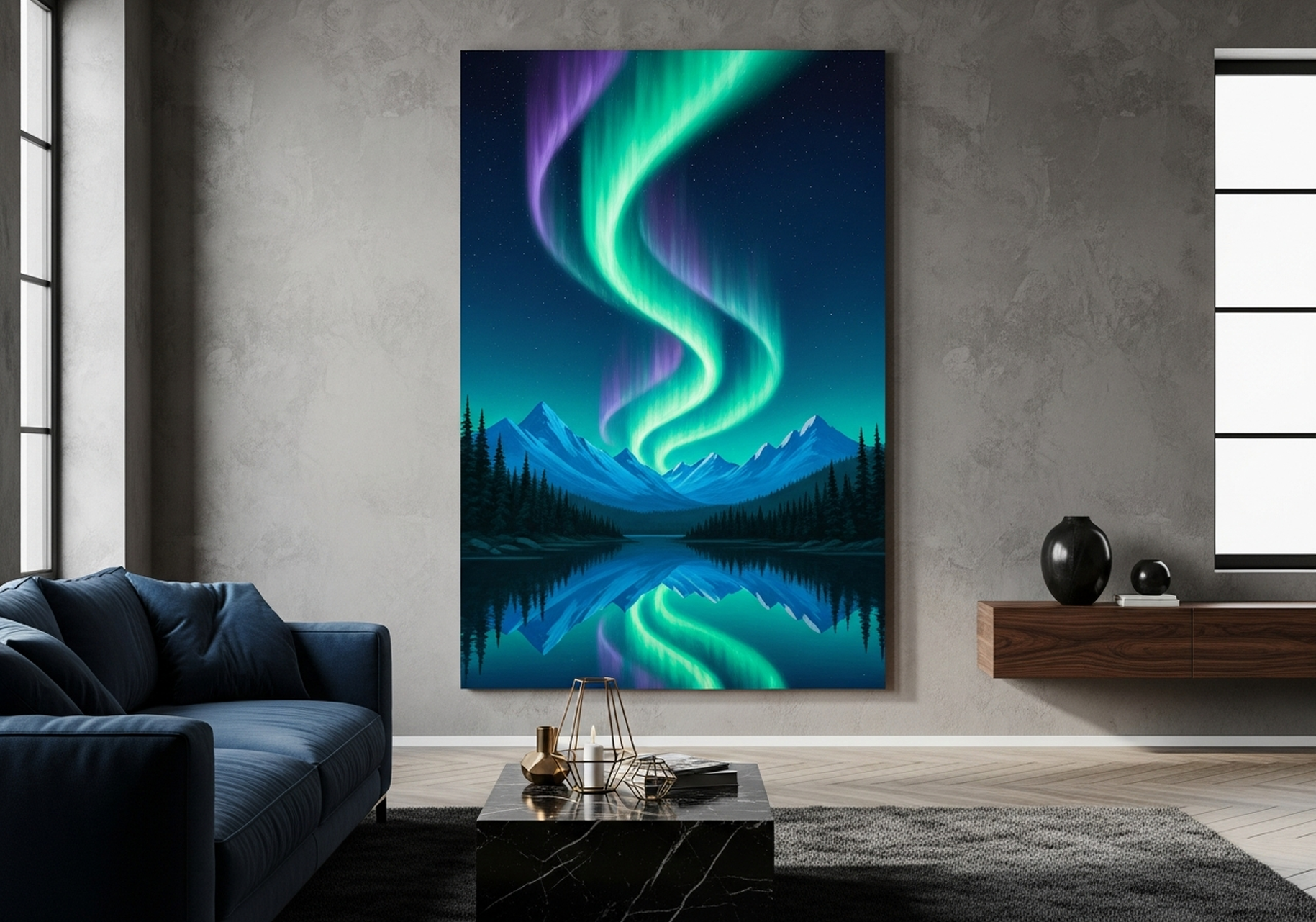
- Atmospheric phenomena: Aurora borealis, sunrise and sunset, mist, fog, and rain over natural terrain. These combine landscape with light and movement cues, producing strong parasympathetic activation.
Indirect Nature Representation
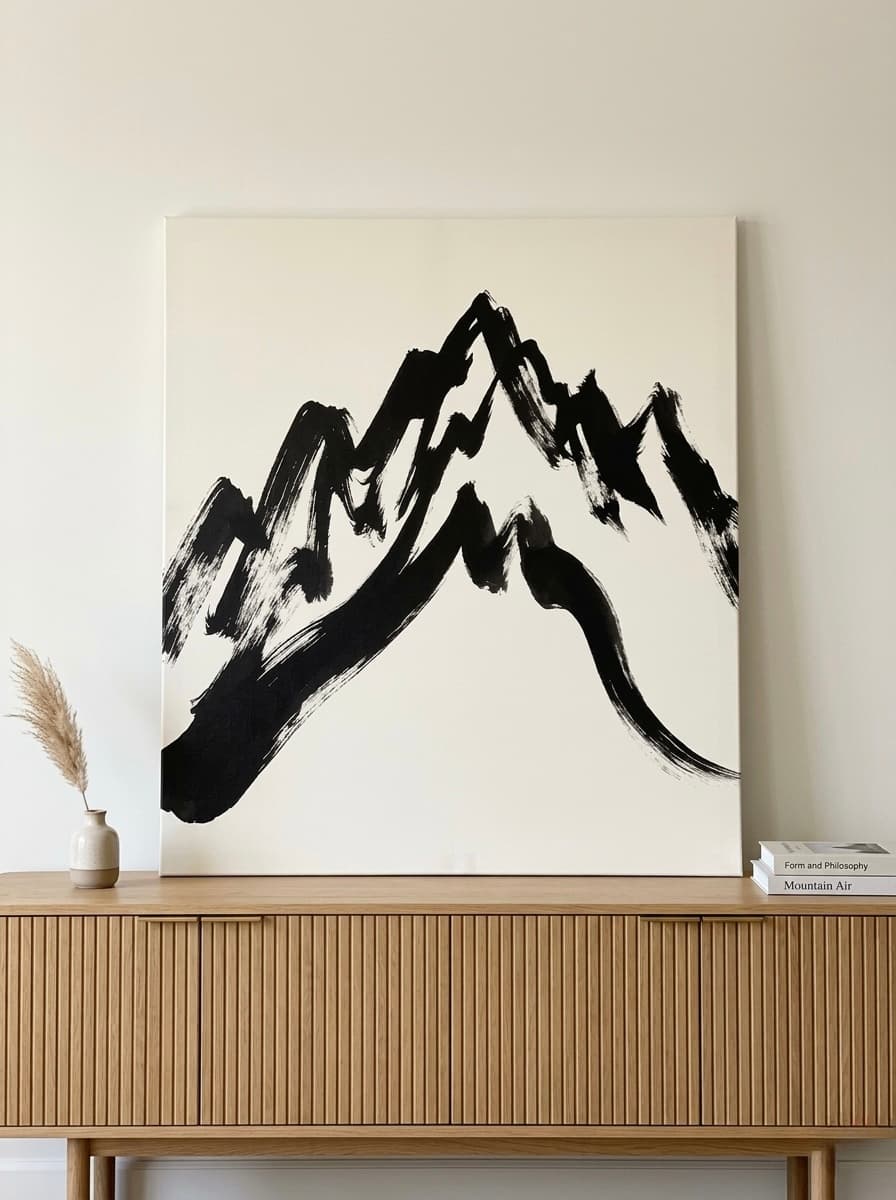
Indirect biophilic art does not depict specific landscapes or plants, but borrows nature's visual vocabulary: organic flowing shapes, fractal geometry, natural color palettes, and the textures of wood, stone, and water. Abstract expressionist works in forest greens and earth tones, impasto paintings with thick, branch-like brushwork, and minimalist prints with botanical silhouettes all fall here. They produce biophilic benefits without literal representation -- useful when you want a more contemporary or gallery-style aesthetic.
For guidance on wildlife specifically, see: Wildlife Wall Art for a Nature-Inspired Living Room.
Color Psychology of Biophilic Art
Color is the most immediate lever in biophilic art selection. The specific hues in a piece determine its physiological effect before you consciously register the subject matter. Here is how to read a nature print's palette:
Forest Green
The most psychologically studied color in nature art. Forest greens reduce heart rate and lower anxiety through association with safe, resource-rich environments. Works in any room but is most powerful in bedrooms and living spaces where relaxation is the goal. Look for muted, slightly grey-green tones rather than saturated emerald.
Water Blue and Sky Blue
Blues promote focused calm -- the alert but relaxed state ideal for work. Coastal and waterscape art in blue tones is particularly effective in home offices and study rooms. Deep navy blue has the added effect of promoting depth perception, making small rooms feel larger.
Earth Tones (Amber, Ochre, Terracotta)
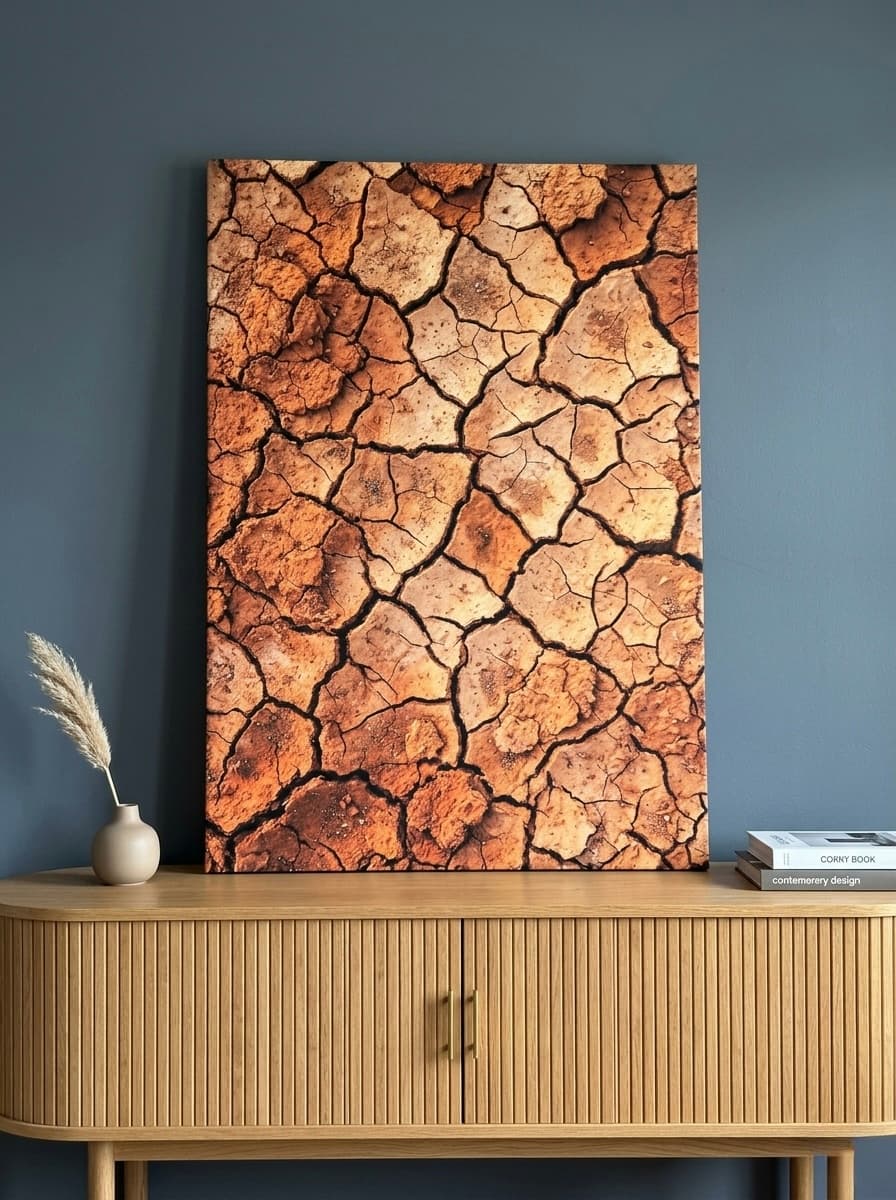
Warm earth tones -- the colors of soil, sandstone, and autumn foliage -- produce psychological grounding. They signal physical security and warmth, making them ideal for living rooms, dining areas, and any space where you want people to feel settled and comfortable.
Sunrise and Dusk Tones
Peach, rose, soft gold, and lavender appear in transitional light moments -- dawn and dusk. These tones are associated with low-threat, high-beauty moments in nature and produce a mild euphoric response. Perfect for bedrooms and wellness spaces.
For a full guide to using color in wall art selection, see: Wall Art Color Guide: Colors That Pop in Every Room and The Psychology of Colors in Wall Art.
Room-by-Room Biophilic Design Guide
Bedroom: Forest and Soft Nature for Deep Sleep
The bedroom is your most important biophilic canvas. Sleep quality is directly impacted by pre-sleep cortisol levels, and nature art is one of the few interior design tools proven to lower them. Choose soft, cool-green forest scenes, birch trees, or meadow landscapes. Avoid dramatic red sunsets or high-contrast wildlife scenes that stimulate rather than calm. The ideal palette is forest green, soft grey-green, and morning mist blue.
Placement: center the work above the bed headboard, at eye level when seated. Size: for a standard queen or king, a 60 x 90 cm (24 x 36 inch) canvas or a diptych totaling 90 cm wide is ideal.
Living Room: Dramatic Landscapes for Presence and Connection
The living room is where you want impact. A large, immersive landscape -- a misty mountain valley, a fjord, a sunbeam-lit forest -- creates the psychological sense of standing at the edge of a vast natural space. This "prospect" view (looking out over open terrain from a position of safety) is one of the most universally preferred visual experiences in human psychology. It signals abundance, possibility, and freedom.
Go large: 90 x 120 cm (36 x 48 inch) or 60 x 90 cm (24 x 36 inch) minimum for a sofa wall. Earth tones and forest greens work best in living areas. Aurora borealis and atmospheric sky scenes also create exceptional focal points.
Bathroom: Coastal and Water Art for Ritual Calm
Bathrooms are small spaces used for brief but mentally significant transitions -- waking up, winding down. Water-themed art -- coastal birds, river scenes, waterfall details, aquatic botanicals -- amplifies the psychological effect of water already present in the room. Blues and teal greens reinforce the sensory environment. Choose pieces that are intimate in scale: 30 x 40 cm (12 x 16 inch) to 40 x 60 cm (16 x 24 inch) is typically right.
See our coastal wall art guide for more inspiration.
Home Office: Botanical and Green for Focus
Attention Restoration Theory is most practically applicable in the home office. Place a botanical or soft green landscape within your peripheral vision -- not directly in front of you (which can become a distraction) but visible when you look up from your screen. Botanical close-ups (leaves, ferns, wildflowers), lush green forest canopy views, and soft watercolor plant studies are the best choices. The steady, intricate detail of botanical art provides micro-restorative moments throughout the day.
Biophilic Art Sizing Guide
Getting scale right is critical. An undersized piece looks like an afterthought and fails to produce the immersive effect biophilic design depends on. Use this guide:
| Room / Wall | Recommended Size (cm) | Recommended Size (inches) | Format |
|---|---|---|---|
| Living room sofa wall | 90 x 120 cm or larger | 36 x 48 in or larger | Landscape / Statement |
| Bedroom above headboard | 60 x 90 cm | 24 x 36 in | Landscape or portrait |
| Home office (desk view) | 45 x 60 cm | 18 x 24 in | Square or portrait |
| Bathroom | 30 x 40 cm | 12 x 16 in | Portrait or square |
| Hallway | 30 x 60 cm or diptych | 12 x 24 in | Vertical portrait |
6 Curated Biophilic Art Picks from HEVA
Each piece below was selected for its biophilic potency: genuine natural subjects, scientifically supported color palettes, and artwork quality that holds up at large scale.
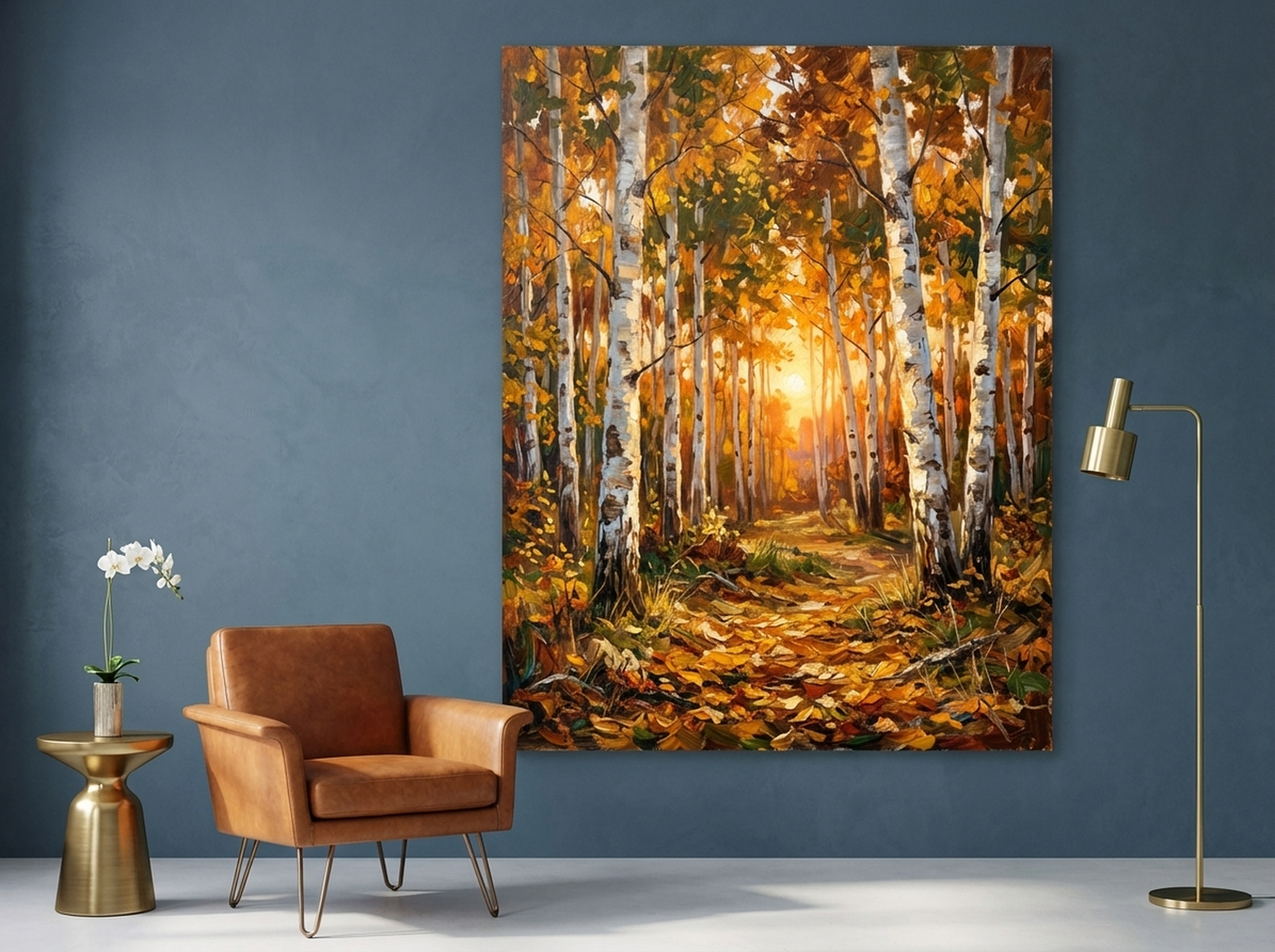
1. Birch Forest Canvas Wall Art
Few biophilic subjects are more psychologically potent than a birch forest in autumn. The vertical repetition of white trunks creates the natural fractal geometry that Richard Taylor's research identifies as maximally stress-reducing. The warm amber and gold tones of the canopy deliver earth-tone grounding while the soft forest-floor light signals safety and shelter. This piece is ideal for a bedroom or living room where you want the combined effect of warmth and calm. The oil painting technique adds texture that holds visual interest at close range -- critical for pieces hung in frequently occupied rooms.
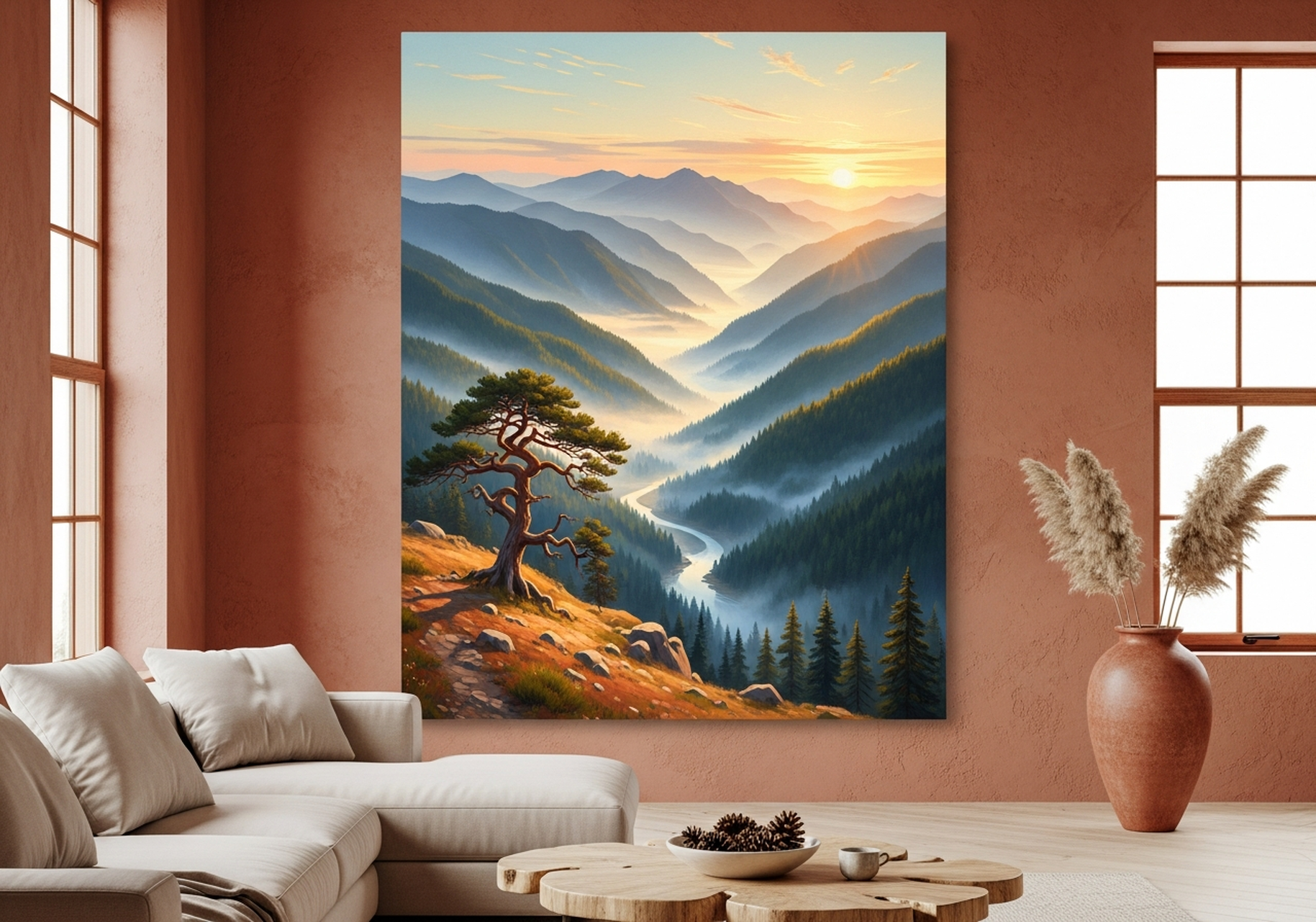
2. Misty Mountain Valley Sunrise
This oil painting delivers the full "prospect and refuge" experience that evolutionary psychologists identify as humanity's most deeply preferred landscape type: an elevated vantage point looking out over a vast, mist-filled valley at sunrise. The amber and gold morning light triggers associations with abundance and new possibility. The mist creates soft, romantic depth that draws the eye through layers of the composition -- producing the extended visual engagement that activates Attention Restoration. Hang this in your living room as the dominant statement piece, or behind a home office desk to provide restorative perspective during long work sessions.
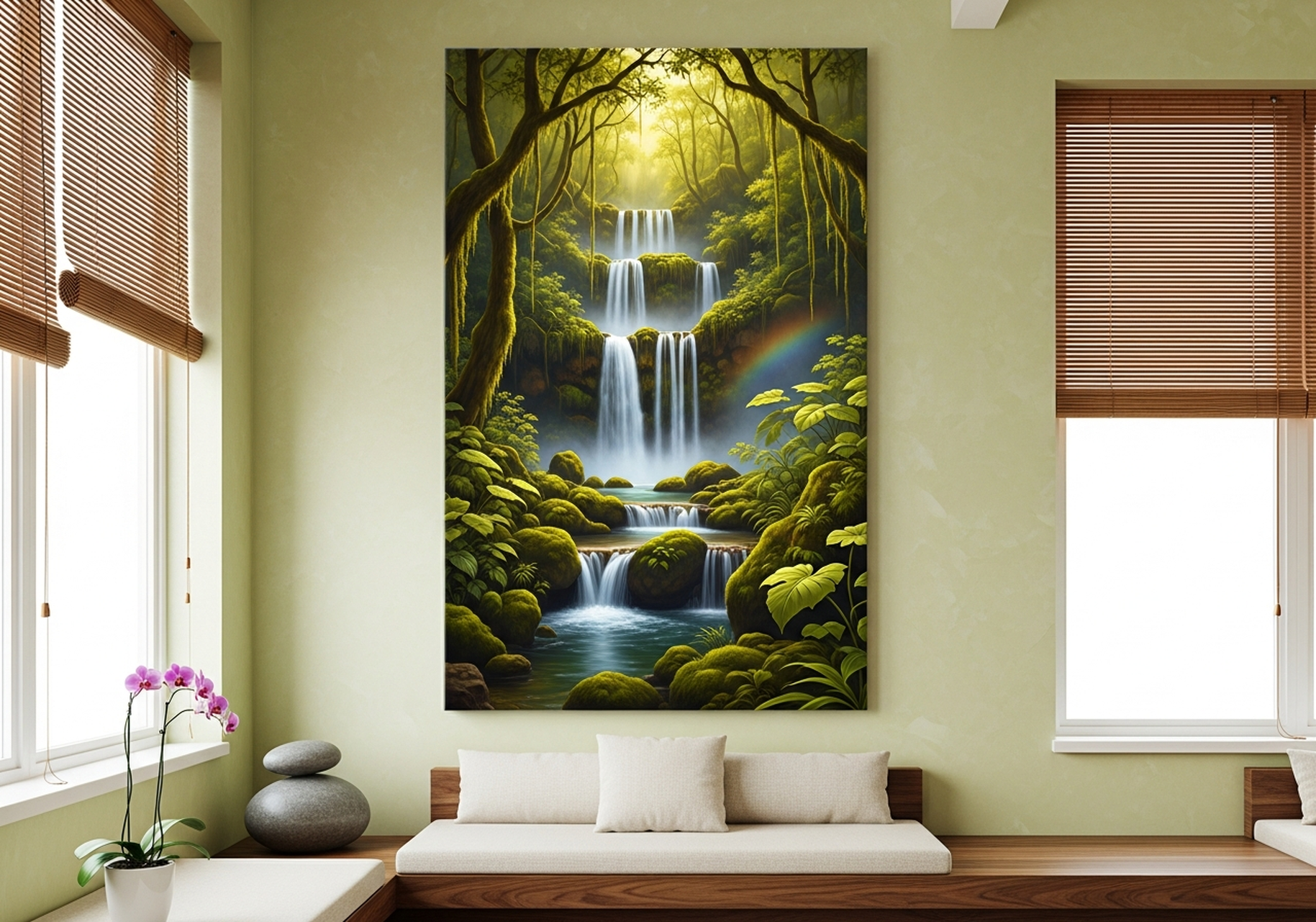
3. Waterfall Tropical Forest
Water in motion is one of the most powerful biophilic stimuli available in art form. The visual suggestion of movement -- white water cascading through lush green tropical foliage -- engages the brain's motion-detection systems without overstimulation, producing a meditative focus state. This is the same mechanism behind the calming effect of fountain sounds. The deep greens of the tropical forest surround the falls with maximum biophilic saturation. This piece works exceptionally well in a bathroom (amplifying the water environment), a bedroom (for deep pre-sleep calm), or a meditation or yoga space. The framed presentation makes it immediately ready to hang.
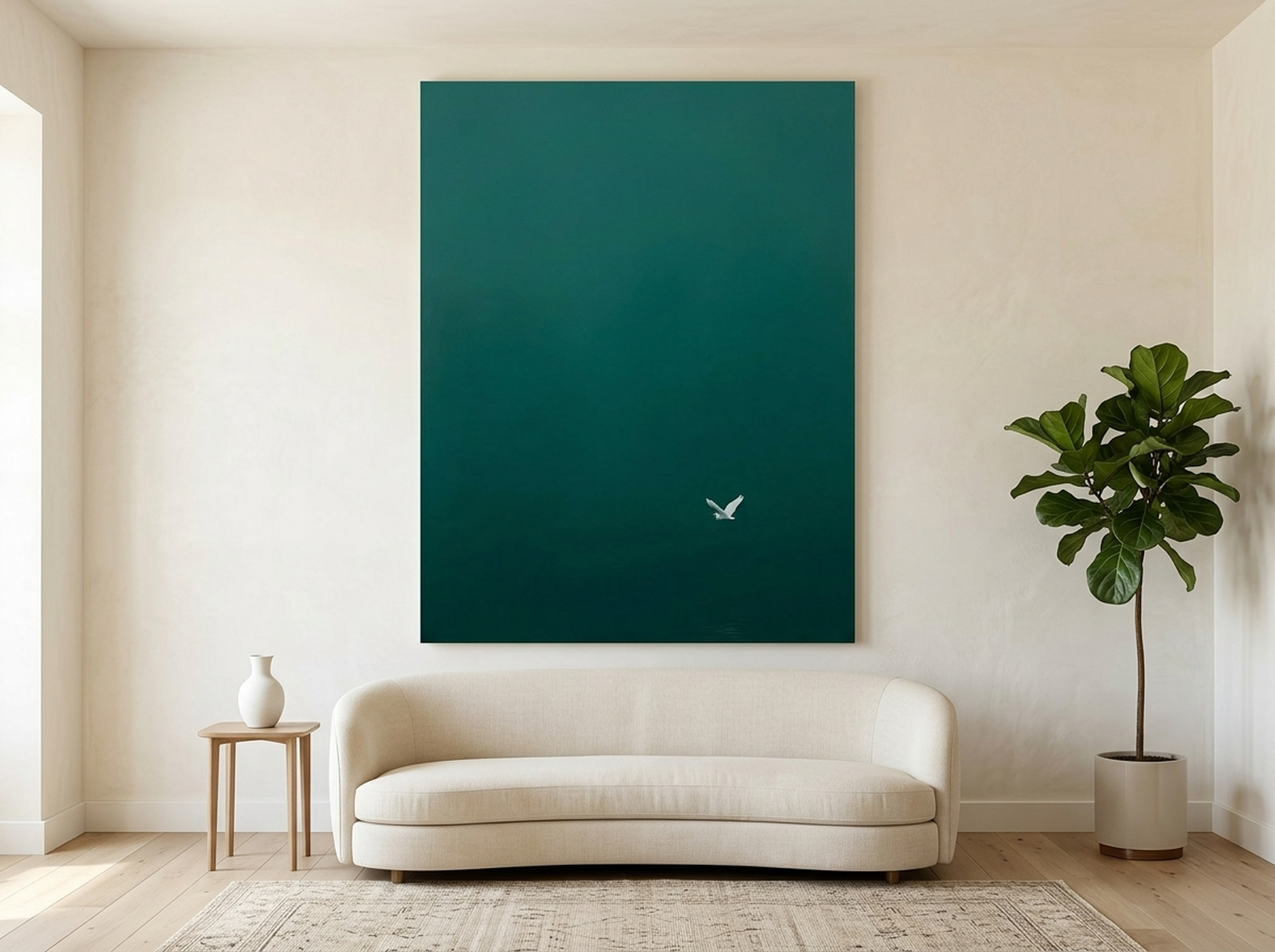
4. Egret Coastal Minimalist Print
This minimalist egret print achieves something deceptively sophisticated: it provides strong biophilic benefit (a real coastal bird in its natural habitat, rendered in living teal greens) while maintaining the clean, contemporary visual language of modern interiors. The egret as a subject is particularly effective in biophilic design -- its stillness and alertness mirror the focused calm that nature art is meant to produce. The teal-green palette suppresses the visual noise that cluttered rooms generate, making this an ideal piece for bathrooms, bedrooms, and home offices. It also works beautifully as part of a gallery wall anchored by larger landscape pieces.
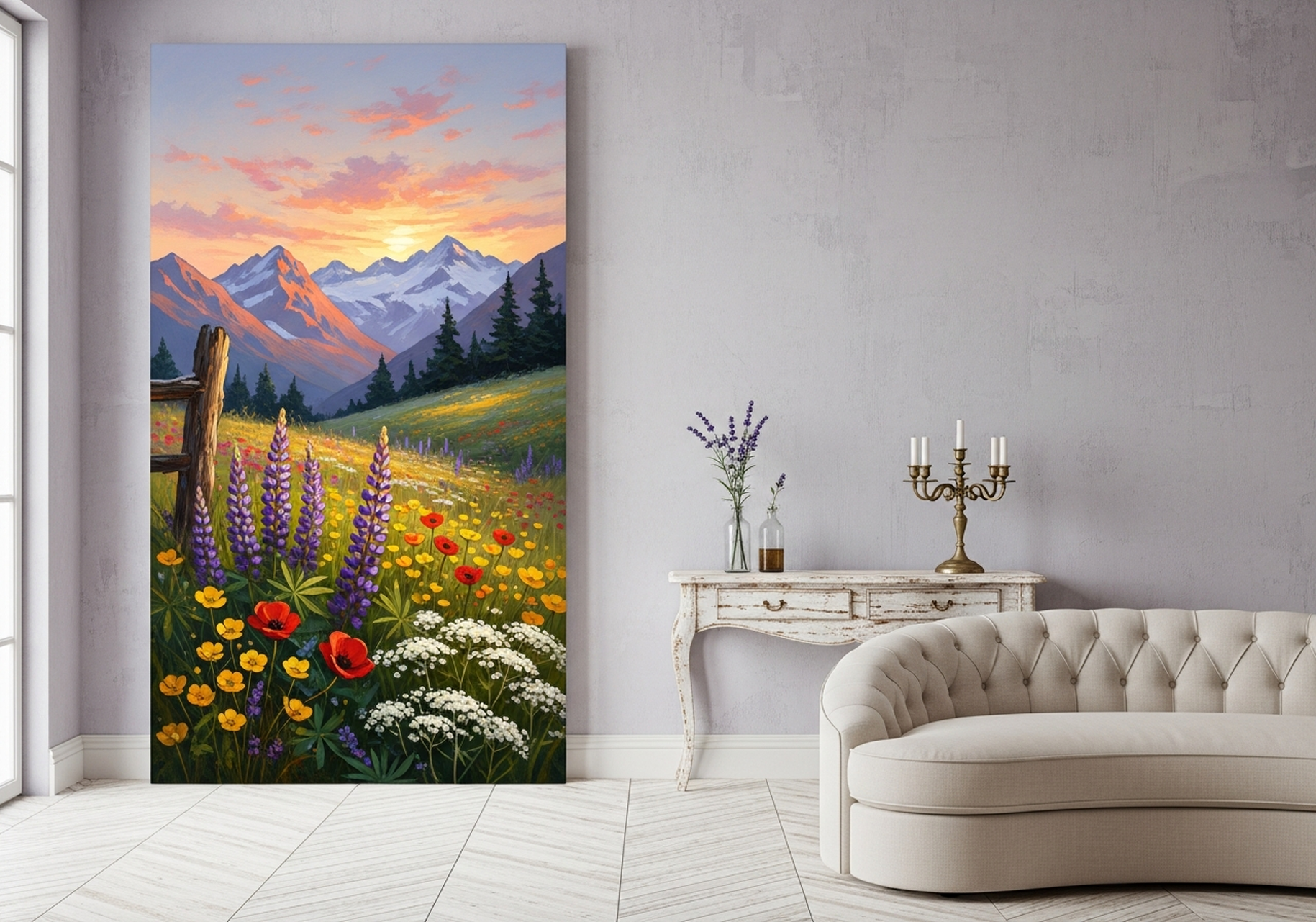
5. Wildflower Meadow Mountain Landscape
This oil painting is a biophilic double-act: a wildflower-strewn meadow (one of the highest-biodiversity visual environments, triggering strong reward responses) set against a mountain backdrop (the ultimate prospect view). The combined effect is exceptionally rich -- your eye moves from the intimate detail of individual blooms to the vast scale of the peaks, exercising both focused and expansive attention. Wildflowers specifically trigger associations with seasonal change, natural abundance, and freedom. The multi-toned palette -- greens, soft purples, golden yellow, sky blue -- delivers the broadest possible biophilic color response in a single piece. Ideal for a living room focal wall or a large bedroom feature.
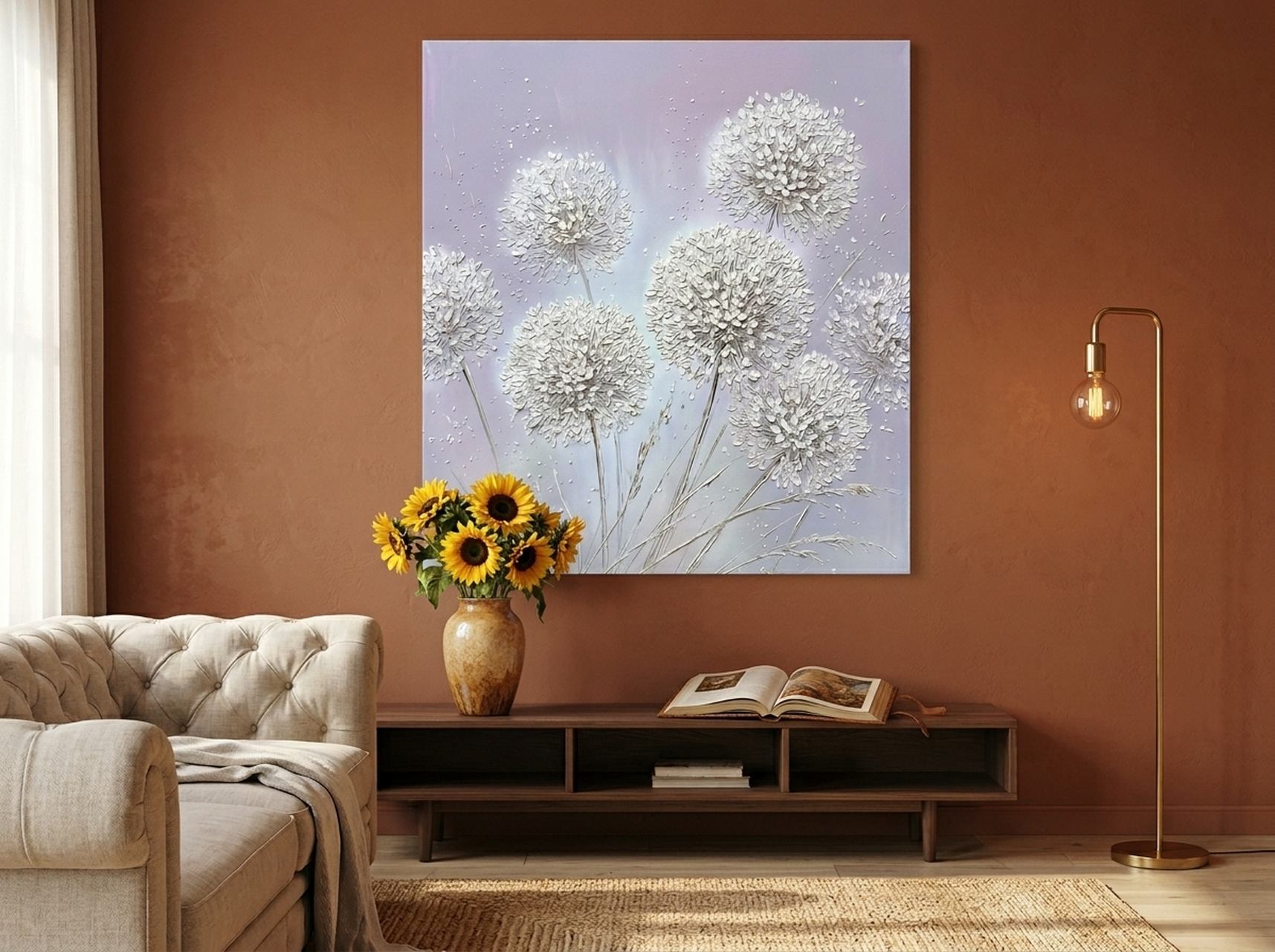
6. Allium Floral Impasto Painting
The allium -- globe-shaped, fractal in its floret structure, otherworldly in scale -- is one of the most biophilically effective botanical subjects available. Its spherical geometry is a literal expression of the natural fractal patterns that Taylor's research links to maximum stress reduction. The impasto technique adds physical dimensionality to the piece: thick ridges of lavender and purple pigment that create shifting shadow patterns with changing light -- a subtle simulation of nature's constant movement. The soft lavender palette is ideal for bedrooms (lavender has documented sleep-promoting associations) and any room where you want to blend contemporary art with natural wellness. This piece bridges the line between direct and indirect biophilic art.
5 Common Biophilic Art Mistakes to Avoid
-
Choosing oversaturated or digitally artificial-looking prints
Nature art printed in overly saturated, neon-bright colors fails to trigger the biophilic response. Your brain recognizes it as artificial. Look for artwork with naturalistic color rendering -- slightly muted, complex tones that mirror what you would actually see in a forest or meadow. Oil painting reproductions and photographic prints with accurate color grading work best.
-
Hanging art too small
A 30 x 40 cm nature print on a large living room wall is not biophilic design -- it is decoration. Biophilic art needs scale to create the immersive spatial impression that activates the parasympathetic nervous system. Always buy one size larger than your instinct tells you. If you are unsure, tape a piece of paper to the wall at your intended dimensions and live with it for 24 hours before ordering.
-
Mismatching art to room function
A dramatic, high-contrast volcano landscape or an intense wildlife scene may be visually spectacular, but it is a poor choice for a bedroom where the goal is sleep. Match the energy of the piece to the purpose of the room. Calming, soft nature for rest spaces; expansive prospect views for living areas; intimate botanicals for work spaces; water themes for bathrooms.
-
Ignoring the room's existing color palette
The biophilic palette of your art should dialogue with your room. Forest greens work beautifully in neutral rooms but can feel overwhelming in already heavily green-toned spaces. Earth-tone landscapes sing against white or grey walls. Match complementarily, not identically -- use the art to introduce a natural note the room currently lacks.
-
Treating all nature subjects as equally biophilic
Not all nature art is equally effective for wellbeing. Threatening subjects (predators in attack poses, storm-dark skies, barren winter scenes without warmth cues) can trigger vigilance rather than restoration. Stick to subjects associated with safety, abundance, and shelter: flowering plants, calm water, sunlit forests, meadows, and wildlife in peaceful natural contexts. Even the season matters -- summer and autumn landscapes outperform stark winter scenes for stress reduction.
Frequently Asked Questions
What is biophilic design wall art?
Biophilic design wall art refers to prints, paintings, and photography that depict natural scenes -- forests, waterfalls, botanicals, wildlife, and landscapes -- chosen specifically to create a psychological and emotional connection to nature inside your home. It is the most accessible expression of biophilic design principles.
Does nature wall art actually reduce stress?
Yes. Multiple peer-reviewed studies confirm that viewing nature imagery lowers cortisol levels, reduces blood pressure, and activates the parasympathetic nervous system. Even passive exposure -- a painting on your wall -- produces measurable physiological benefits documented in studies available through PubMed and the National Institutes of Health.
What types of nature art are best for a bedroom?
For bedrooms, choose soft, cool-toned nature scenes: misty forests, birch trees, meadows at dawn, or gentle water scenes. Avoid high-contrast or visually busy landscapes. Forest greens and morning blues support melatonin production and signal the brain that it is time to rest.
How large should nature wall art be in a living room?
For a living room, the art should occupy 55-65% of the wall width above your sofa. A single statement landscape in the 60 x 90 cm (24 x 36 inch) to 90 x 120 cm (36 x 48 inch) range is ideal. Undersized art looks timid and fails to create the immersive biophilic effect.
Can I use biophilic wall art in a home office?
Absolutely. Research on Attention Restoration Theory shows that nature scenes replenish directed-attention fatigue. Placing botanical or green forest art within your field of view at your desk has been shown to improve concentration and reduce mental fatigue during prolonged work sessions.
What colors should I look for in biophilic wall art?
Forest greens reduce anxiety and lower heart rate. Soft blues (water, sky) promote focus and calm. Earth tones -- amber, terracotta, warm brown -- create psychological grounding. Avoid neon or oversaturated versions of these colors; natural, slightly muted tones produce the strongest biophilic response.
Quick Reference: Biophilic Art by Room and Goal
| Room | Wellness Goal | Best Subject | Best Colors | Suggested Pick |
|---|---|---|---|---|
| Bedroom | Sleep, calm | Forest, meadow, botanical | Soft green, lavender, mist blue | Birch Forest / Allium Floral |
| Living Room | Presence, connection | Landscape, mountain, aurora | Earth tones, amber, forest green | Misty Valley / Wildflower Meadow |
| Bathroom | Transition, ritual calm | Coastal, water, birds | Teal, water blue, soft green | Egret Coastal / Waterfall Forest |
| Home Office | Focus, attention restoration | Botanical, green forest | Forest green, blue-green | Allium Floral / Birch Forest |
| Hallway / Entry | Decompression, arrival | Sunrise landscape, vertical forest | Warm amber, soft green | Misty Valley |
Bring Nature Home Today
Biophilic design wall art is the simplest, most evidence-backed upgrade you can make to your home's wellness environment. Every piece in the HEVA nature collection is crafted at the scale and quality standard that genuine biophilic benefit requires.
Browse All Nature Wall ArtFree US shipping. Ready-to-hang. Printed to order.