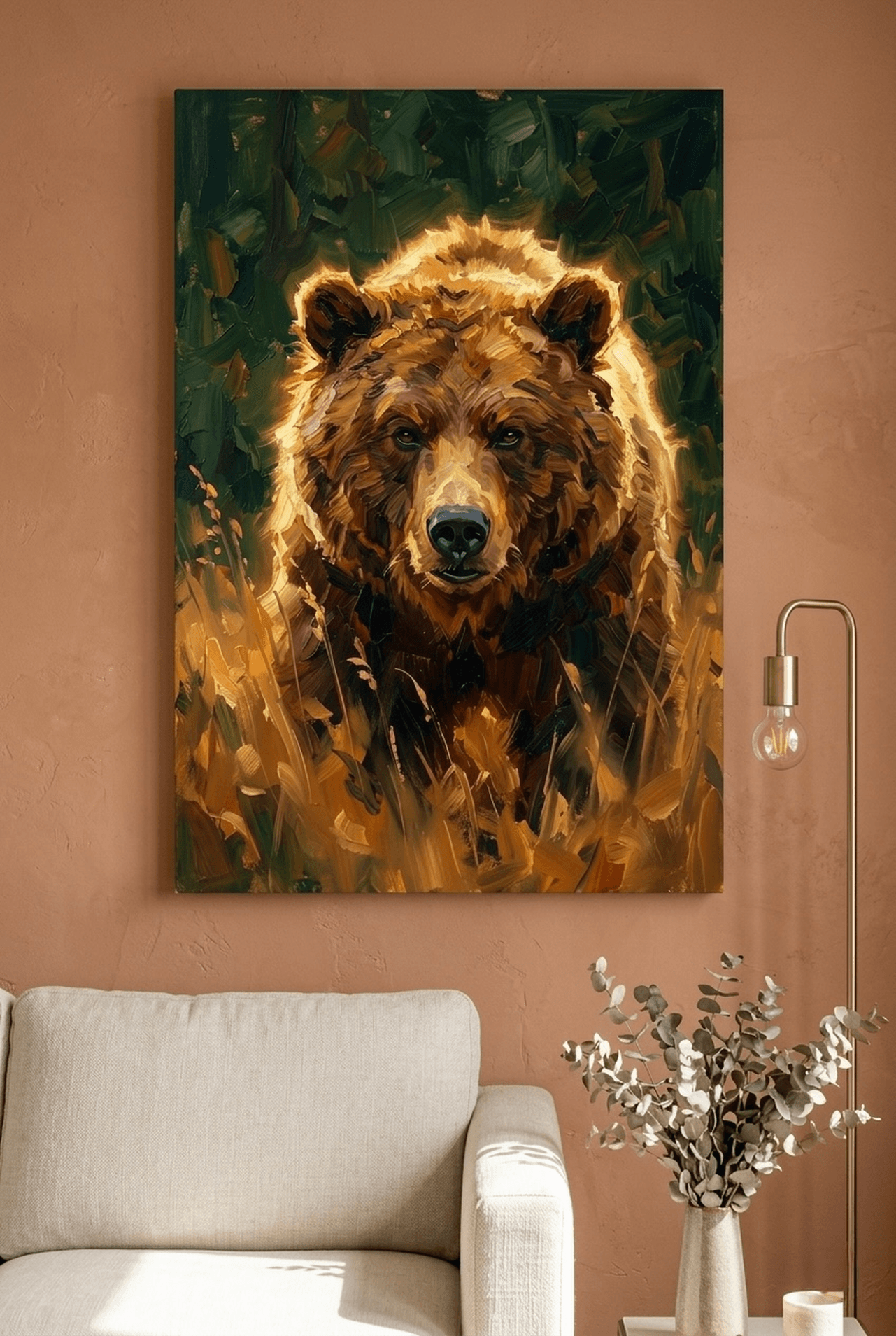
Framed Canvas Wall Art for Modern Home Decor
The Heva Team
Art Curators & Interior Design Enthusiasts · April 1, 2026 · 14 min read
Is framed canvas wall art worth it? Compare framed vs gallery wrap, learn what to look for, and discover our top framed picks for every room.
Why Framing Transforms a Canvas Print Into Fine Art
There is a moment every art lover recognizes: you unbox a new canvas print, hold it against the wall, and something feels almost right but not quite finished. That feeling has a name. It is the difference between a canvas and framed canvas wall art. A frame does not simply border a piece; it completes it. It signals intention, permanence, and craftsmanship. Framing turns a reproduction into a statement, and a statement into a room-defining focal point.
Whether you are decorating a formal dining room, a cozy bedroom, or a grand living space, understanding the upgrade from bare canvas to framed canvas wall art will help you choose pieces you will love for decades. This guide covers everything: frame types, sizing math, conservation glass, common mistakes, and our top six picks that are ready to hang the moment they arrive.
Ready to browse? Explore the full collection at HEVA Unique Art Gallery and find your next framed canvas wall art piece today.
Framed vs. Gallery Wrap: When Each Works Best
The debate between framed canvas and gallery wrap canvas comes down to architecture, room style, and personal intention. Neither is universally superior; each excels in specific contexts.
Gallery Wrap: Clean, Modern, Effortless
A gallery wrap canvas has the image printed around the sides of the stretcher bars, creating a seamless look with no frame required. This works exceptionally well in modern, minimalist, and Scandinavian-style interiors where clean lines dominate. The canvas floats visually against the wall, demanding attention without architectural punctuation.
Gallery wrap is ideal when: the room uses open shelving and minimal trim work; the color palette is neutral and restrained; you want the art to feel casual and approachable; or you are working with a tight budget and need a complete look without extra cost.
Framed Canvas: Classic, Formal, Intentional
Framed canvas wall art suits traditional, transitional, and maximalist spaces. The frame acts as a visual boundary that separates the artwork from the wall, giving the composition weight and gravitas. In a room with crown molding, wainscoting, decorative trim, or antique furniture, a frame echoes those architectural cues and creates visual harmony.
Framing is the right choice when: the room has ornate or detailed architectural features; you want the piece to read as fine art rather than decor; the canvas is a portrait, landscape, or representational subject; or you are creating a gallery wall where consistent framing creates cohesion.
See our deeper comparison in Framed vs. Unframed Canvas: Which Is Better? and Canvas Wall Art vs. Framed Prints for a side-by-side breakdown.
Frame Types Explained: Floating Frame, Traditional Frame, Shadow Box
Not all frames are the same. Choosing the right frame profile changes how the art reads in the room and how much the frame itself competes with the image.
Floating Frame
A floating frame is specifically designed for canvas prints. The canvas sits inside the frame with a visible gap between the canvas edge and the frame molding, typically 3 to 6 mm (0.12 to 0.24 inches). This gap creates a shadow line that makes the canvas appear to float in space. The effect is contemporary and dramatic. Floating frames work best with abstract art, bold color fields, and modern photography. The frame is visible but does not compete with the image because the gap creates a visual pause.
Traditional Frame
A traditional frame sits flush against the canvas edge, much like a frame around a print or photograph. The molding contacts the canvas directly at the perimeter. Traditional frames come in enormous variety: slim metal profiles for contemporary interiors, ornate gold leaf profiles for classical rooms, rustic barn wood for farmhouse aesthetics. This is the most versatile frame type and the most common choice for representational art: portraits, landscapes, botanicals, and still lifes.
Shadow Box Frame
A shadow box frame creates depth between the glazing and the canvas by using a deep rabbet or spacer. The canvas recedes behind the glass, creating a three-dimensional effect that adds drama. Shadow boxes are less common for canvas art but are used for mixed-media pieces, three-dimensional elements, and archival presentations where the canvas must not contact glazing. Conservation-grade shadow boxes with UV acrylic are the gold standard for long-term art preservation, according to Cassens Fine Art's guide to museum-grade archival framing.
Size Guide: How a Frame Changes Your Wall Math
This is the step most buyers skip and most regret later. A frame adds physical dimension to every side of a canvas, and that changes your wall calculations significantly.
Frame Width Standards
- Slim floating frame: adds approximately 2.5 cm (1 inch) per side
- Standard floating frame: adds approximately 4 to 5 cm (1.5 to 2 inches) per side
- Traditional ornate frame: adds 5 to 8 cm (2 to 3 inches) per side
- Wide gallery frame: adds up to 10 cm (4 inches) per side
Practical Example
A 50 x 70 cm (20 x 28 inch) canvas with a standard 5 cm floating frame becomes 60 x 80 cm (24 x 32 inches) on the wall. If you are fitting art above a sofa that is 180 cm (71 inches) wide, a framed piece that reads 60 cm wide will look proportionate. A framed piece that reads 120 cm wide will dominate the space. Always measure the framed dimension, not the canvas dimension, when planning placement.
Wall-to-Art Ratio Rule
For single pieces, the framed artwork should cover 50 to 75 percent of the available wall width. For gallery walls, the entire arrangement should follow the same ratio. Read our complete guide on how to choose wall art size for your living room for room-specific formulas. For hanging placement and height, our complete hanging guide covers every scenario with illustrated measurements.
Conservation Glass vs. Standard Glass: What the Difference Means for Your Art
Most framed canvas wall art is sold without glazing because canvas prints are inherently more UV-resistant than paper prints. However, when glass or acrylic is added for protection or aesthetic reasons, the choice of glazing matters enormously for longevity.
Standard Glass
Standard float glass transmits approximately 90 percent of visible light and blocks very little UV radiation. It provides basic physical protection from dust and handling but offers minimal defense against fading. Reflective glare can also obscure the image depending on the room's lighting conditions.
UV-Filtering Glass and Acrylic
Conservation-grade UV glass or acrylic blocks 97 to 99 percent of harmful UV rays while maintaining excellent clarity. Products like Tru Vue Optium Museum Acrylic filter out 99 percent of UV radiation and add anti-reflective and anti-static properties. According to American Frame's UV protection guide, UV-filtering glazing is the single most effective step you can take to prevent color fading in displayed artwork.
Canvas-Specific Recommendation
For canvas prints without glazing, positioning is the primary defense: avoid direct sunlight, use indirect or LED lighting, and maintain stable humidity below 55 percent. If you do add glazing to a framed canvas, always use spacers to prevent the glazing from contacting the canvas surface, which can cause moisture trapping and mold. For luxury pieces you intend to keep for decades, conservation acrylic with UV filtering is worth every penny.
6 Framed Canvas Wall Art Picks for Every Room
Each piece below is available as a ready-to-hang framed canvas wall art print. All arrive fully assembled with hanging hardware included.
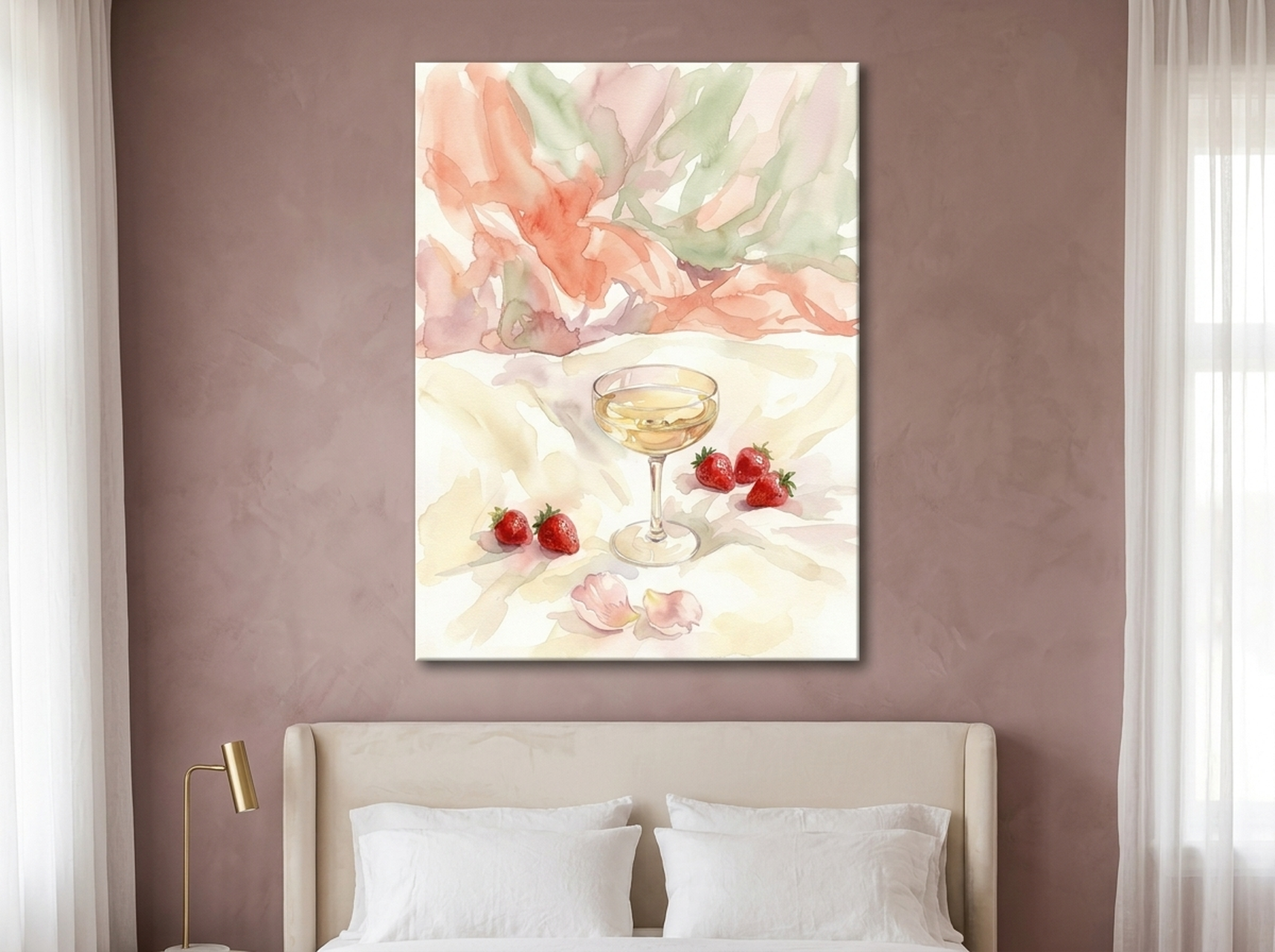
1. Champagne Strawberry , Romantic Bedroom Art
Soft watercolor washes in blush, champagne, and gold create an atmosphere of romantic luxury. The Champagne Strawberry canvas is ideal for master bedrooms, reading nooks, and powder rooms where warmth and femininity set the tone. Pair it with a slim gold floating frame to echo the champagne tones and create a cohesive, editorial look. Shop the Champagne Strawberry Canvas.
2. White Horse , Living Room Statement
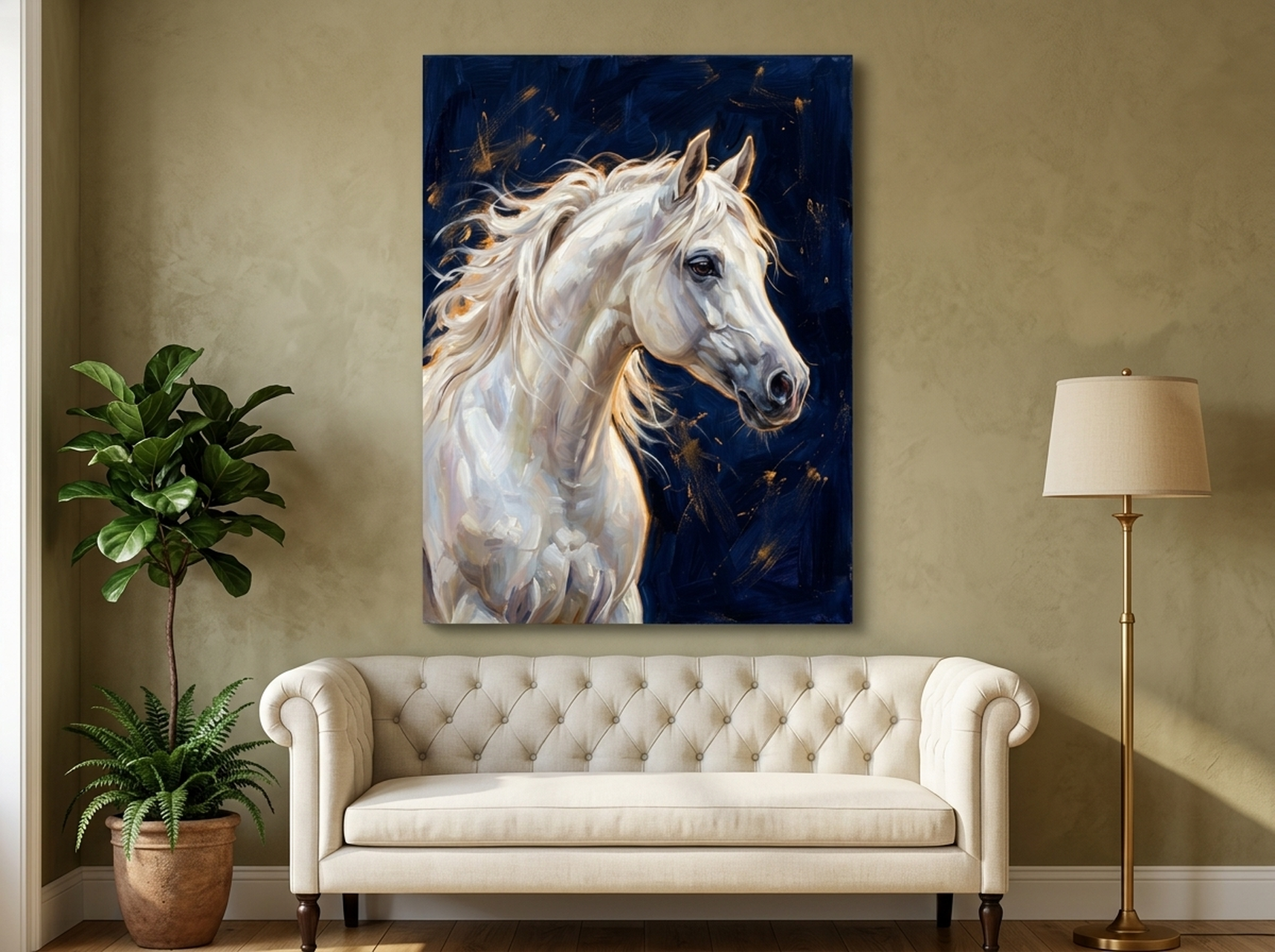
This impasto-style oil painting captures a white horse in dramatic navy and gold, rendered with visible textural brushwork that reads as fine art at any scale. The painting demands a substantial frame: a wide, dark walnut or matte black traditional frame amplifies the navy tones and grounds the composition. Hang above a sofa or fireplace for maximum impact. Shop the White Horse Canvas.
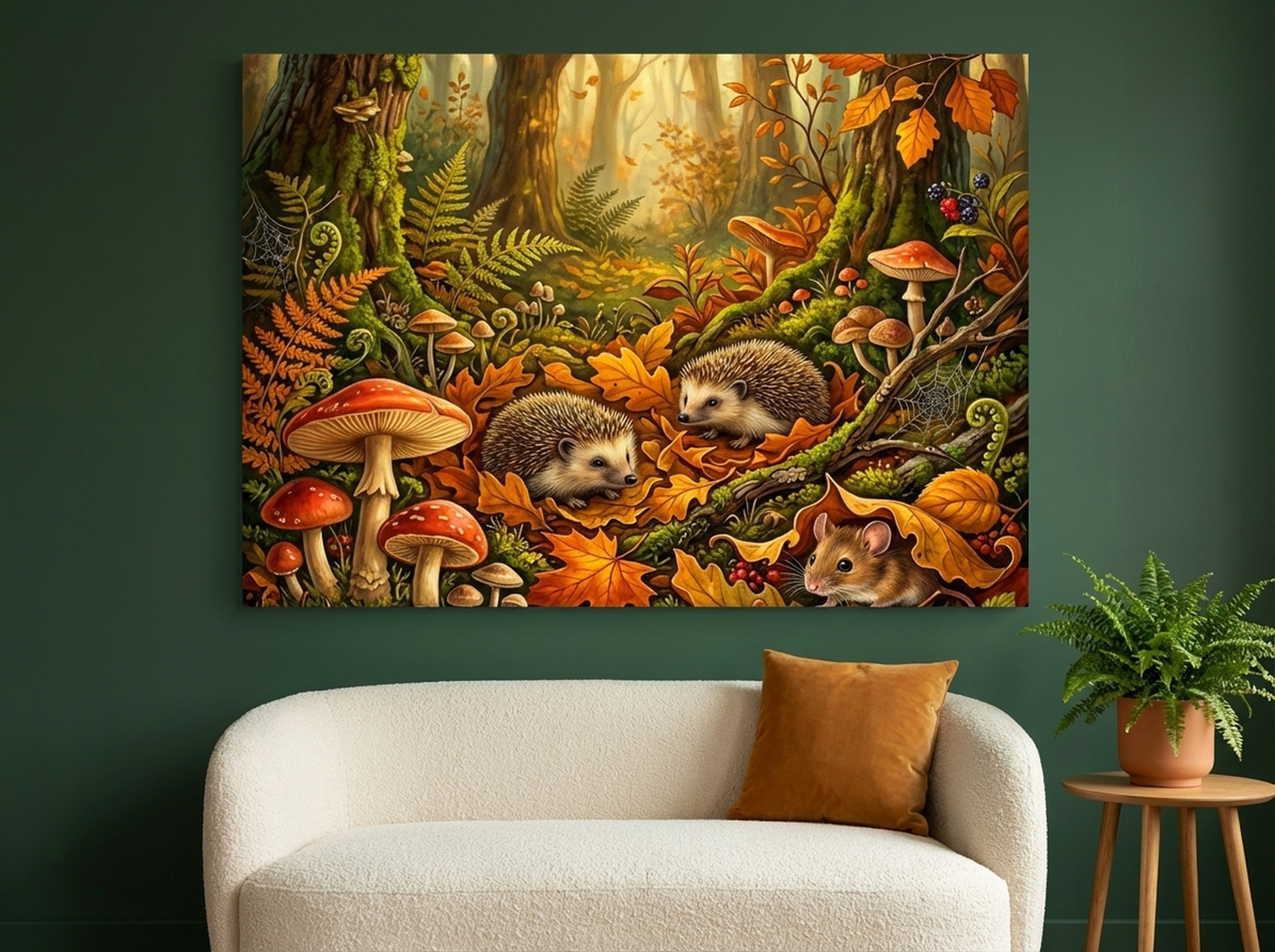
3. Hedgehog Forest , Nursery and Nature Rooms
Botanical detail and woodland charm make the Hedgehog Forest canvas a standout in nurseries, children's rooms, and nature-inspired living spaces. The painting combines soft greens, earth tones, and delicate floral elements with a charming wildlife subject. A natural wood frame in light oak or maple reinforces the botanical, organic feeling without overpowering the gentle palette. Shop the Hedgehog Forest Canvas.
4. Herbs and Figs Still Life , Kitchen and Dining Room
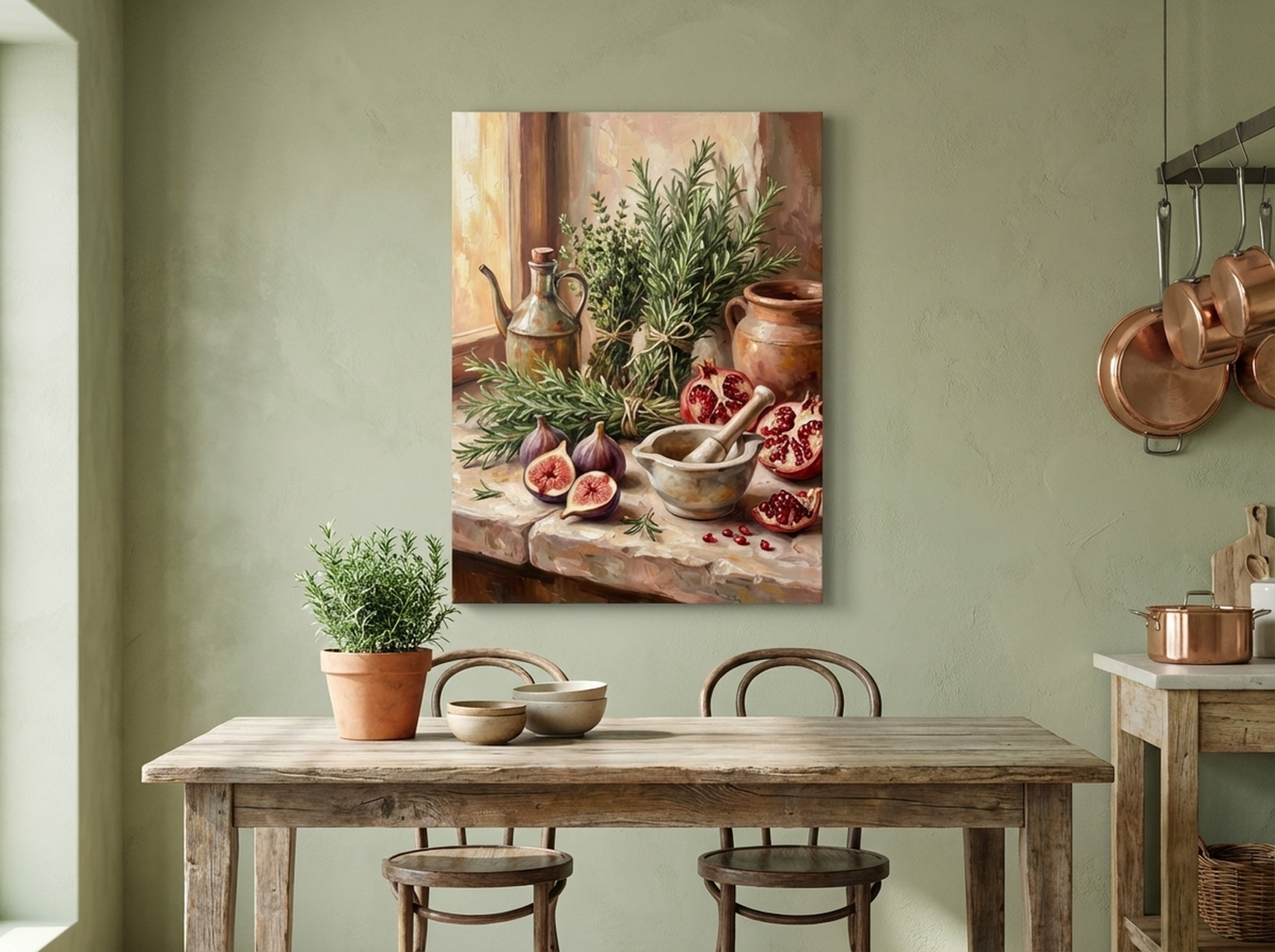
Painted in the impressionist tradition with loose, expressive brushwork, this still life of herbs and figs brings Mediterranean warmth to kitchens and dining rooms. The color story of deep greens, purple figs, and warm ochre tones pairs beautifully with terracotta tile, wooden cabinetry, and linen textiles. A simple black or aged gold traditional frame completes the art-kitchen aesthetic. Shop the Herbs and Figs Canvas.
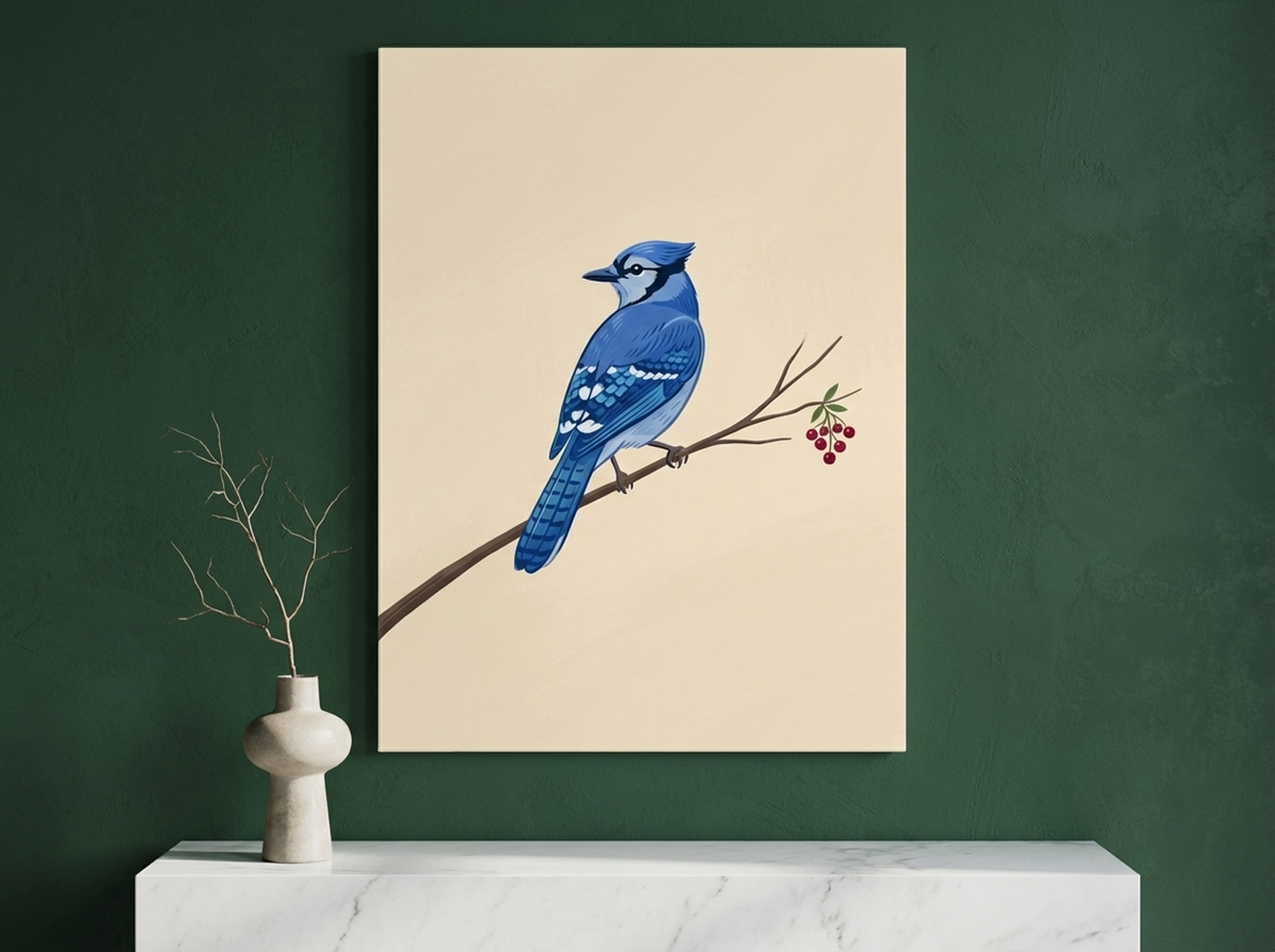
5. Blue Jay , Minimalist Hallway and Office
The Blue Jay canvas is a study in restraint: a single bird rendered in vivid cobalt and white against a clean background, with botanical accents that root the subject in nature. The minimalist composition suits home offices, hallways, and reading rooms where a single carefully chosen piece carries more weight than a crowded gallery wall. A thin black floating frame keeps the modern editorial feel intact. Shop the Blue Jay Canvas.
6. Great Grey Owl , Study and Library
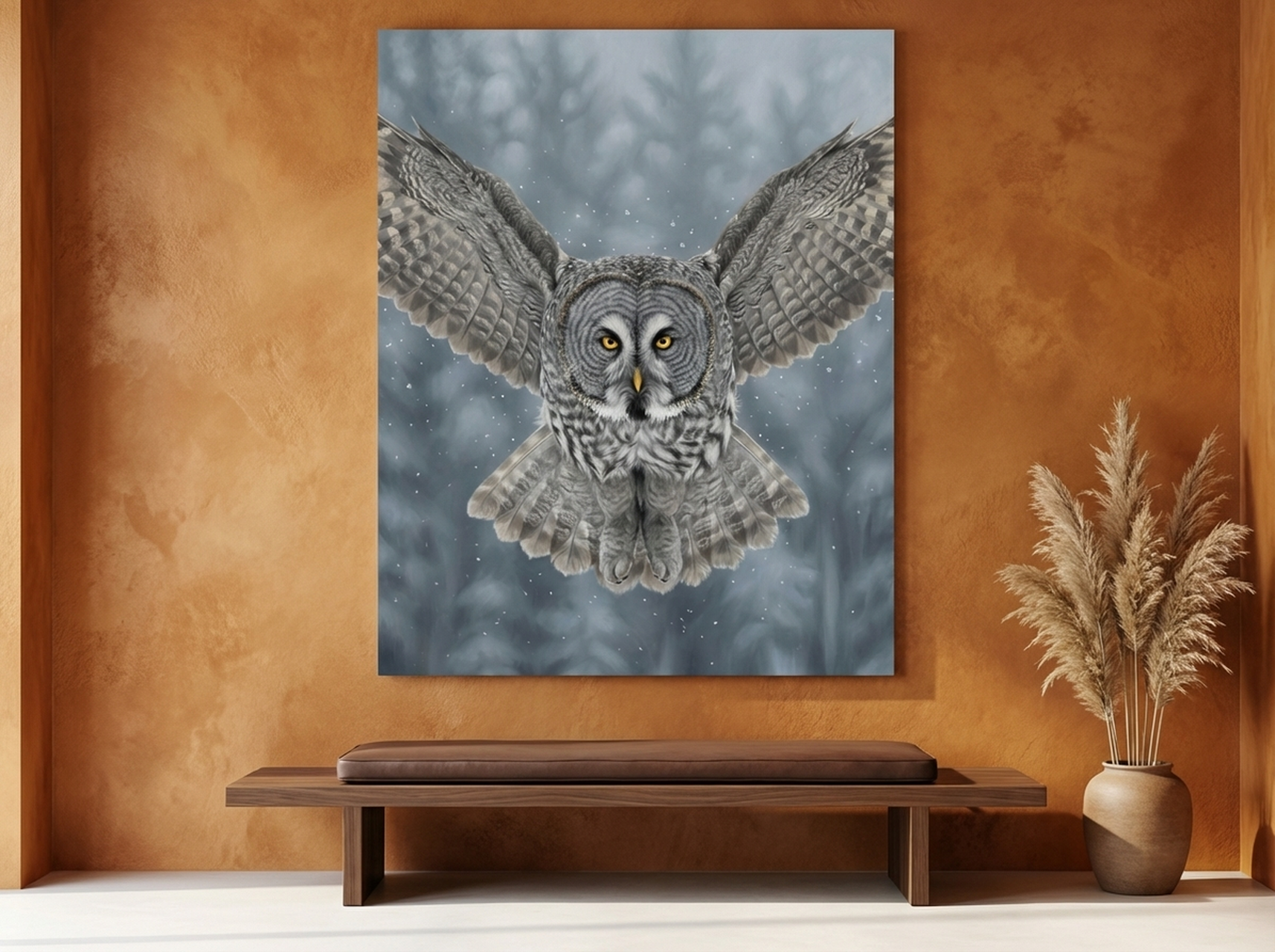
Wingspan spread, the Great Grey Owl commands attention in a painting that captures motion, texture, and the drama of wildlife photography translated into oil painting style. The warm grey tones and dramatic composition suit studies, libraries, and masculine spaces where gravitas matters. A deep walnut or weathered silver traditional frame complements the feather tones and gives the piece the authority it deserves. Shop the Great Grey Owl Canvas.
Placement Guide: Heights, Spacing, and Measurements
The standard gallery rule is that the center of any artwork should hang at eye level, which in most residential spaces is 145 to 152 cm (57 to 60 inches) from the floor. However, this is a starting point, not a fixed rule.
Single Piece Placement
- Center of artwork: 147 cm (58 inches) from floor is the widely accepted standard
- Above a sofa: bottom edge of frame should sit 15 to 20 cm (6 to 8 inches) above the sofa back
- Above a bed: bottom edge should sit 15 to 25 cm (6 to 10 inches) above the headboard
- Above a fireplace mantel: bottom edge 10 to 15 cm (4 to 6 inches) above the mantel shelf
Gallery Wall Spacing
- Between frames: 5 to 8 cm (2 to 3 inches) for cohesion; 10 to 15 cm (4 to 6 inches) for an airy editorial feel
- Mixed sizes: align center points horizontally, not top or bottom edges
- Symmetrical arrangements: use equal spacing on all sides for formal rooms
Hardware for Heavy Framed Canvases
For framed canvas prints over 4.5 kg (10 lbs), use two hanging points rather than one. French cleats (Z-bar hangers) distribute weight across a wide horizontal span and are the most secure option for large or heavy framed pieces. According to MOMAA's canvas hanging hardware guide, always choose hardware rated 25 to 50 percent above the artwork's actual weight to safely handle dynamic loads. Locate wall studs with a stud finder for the most secure installation; for drywall without studs at the desired location, use toggle bolts rated for the weight of your framed piece.
For a complete step-by-step walkthrough with diagrams, see our complete wall art hanging guide. Once hung, lighting makes all the difference: our gallery lighting guide explains how to use picture lights and track lighting to make framed canvas wall art glow.
5 Common Mistakes to Avoid When Choosing and Hanging Framed Canvas Wall Art
- Measuring the canvas, not the frame. Always measure the total framed dimension before ordering or placing. A 61 x 91 cm (24 x 36 inch) canvas with a 5 cm frame becomes 71 x 101 cm (28 x 40 inches) on the wall. That difference matters on a narrow wall or in a tight hallway.
- Hanging too high. The most common hanging mistake is placing art at eye level for the tallest person in the room rather than the average. The 147 cm (58 inch) center rule exists because it works for nearly everyone. Going higher isolates the art from the furniture below and breaks the visual connection between the room's elements.
- Choosing a frame that competes with the art. An ornate gold baroque frame on a spare minimalist canvas creates dissonance. The frame should amplify the art, not argue with it. Match frame weight and style to the character of the image: bold art can carry a bold frame; delicate art calls for a restrained one.
- Ignoring the room's existing metals and finishes. If your room has brushed nickel hardware, a polished gold ornate frame will feel out of place. Frame metals should coordinate with the room's dominant metal tones within one to two steps on the warm-cool spectrum.
- Placing framed canvas in direct sunlight without UV protection. Even high-quality canvas prints will fade over years of direct UV exposure. Position framed pieces away from direct sunlight, or use UV-filtering glazing. Conservation acrylic that blocks 99 percent of UV radiation is the most effective long-term protection available.
Quick Reference Table
| Product | Frame Style Recommendation | Best Room | Link |
|---|---|---|---|
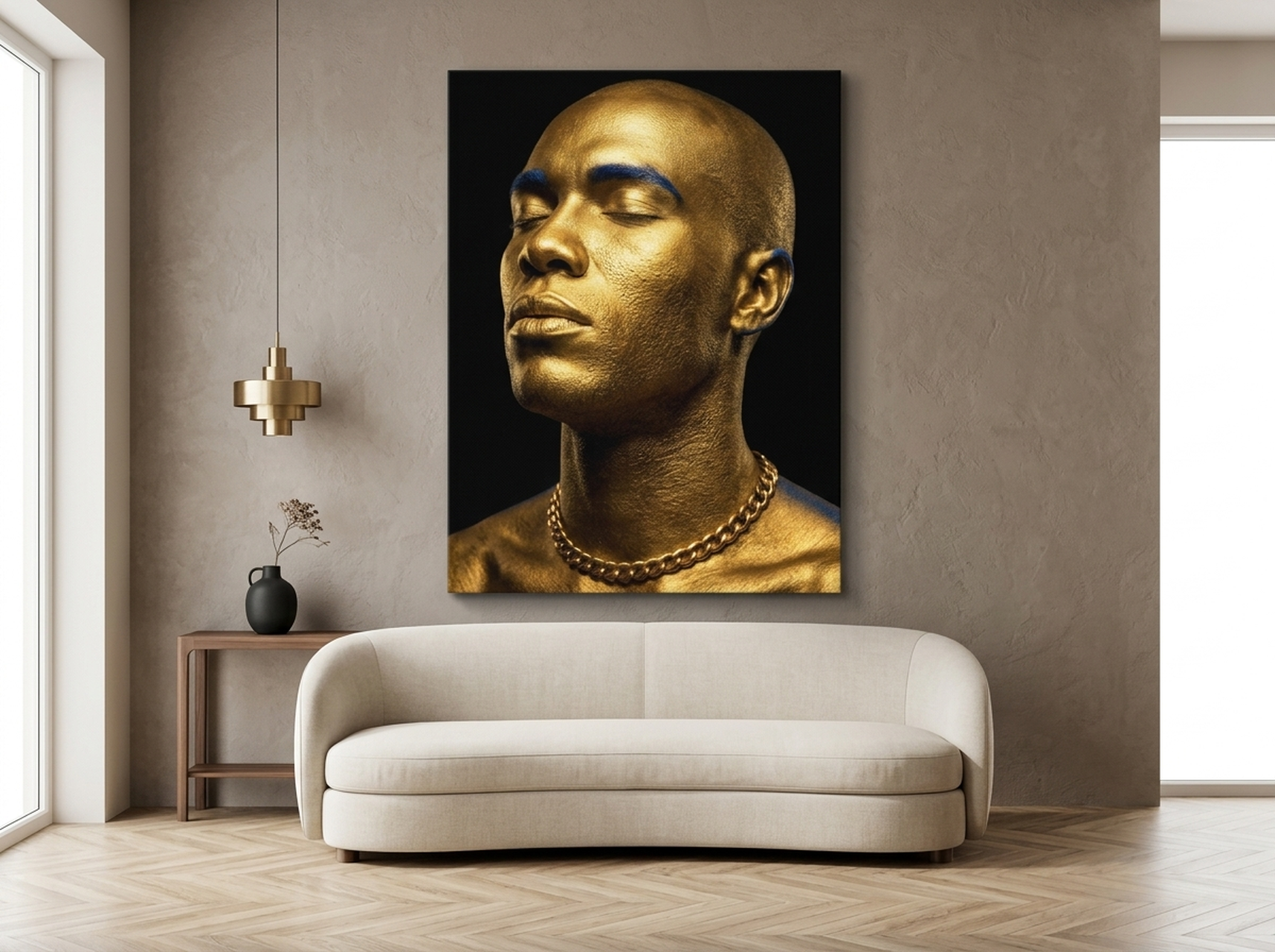
| Gold King Portrait | Wide matte black floating frame | Living room, entryway | View |
| Champagne Strawberry | Slim gold floating frame | Bedroom, powder room | View |
| White Horse | Wide walnut or black traditional | Living room, above fireplace | View |
| Hedgehog Forest | Light oak or maple traditional | Nursery, nature room | View |
| Herbs and Figs Still Life | Black or aged gold traditional | Kitchen, dining room | View |
| Blue Jay | Thin black floating frame | Home office, hallway | View |
| Great Grey Owl | Deep walnut or silver traditional | Study, library | View |
Frequently Asked Questions About Framed Canvas Wall Art
Is framed or unframed canvas better?
Neither is universally better; the right choice depends on your room style and intent. Framed canvas wall art suits classic, traditional, and formal rooms where architectural detail is present. Unframed gallery wrap canvas works best in modern, minimalist, and casual spaces. Framing elevates a canvas to fine art status and adds a polished, finished look that unframed canvas cannot replicate in traditional interiors.
How do I hang a heavy framed canvas wall art piece safely?
For framed canvas prints over 4.5 kg (10 lbs), use two hanging points rather than one and choose hardware rated 25 to 50 percent above the piece's actual weight. French cleats or Z-bar hangers are the most secure option for large or heavy framed pieces. Locate wall studs with a stud finder for the most solid anchor point. On drywall without studs at your desired location, use toggle bolts rated for the full weight of the framed artwork.
What is a floating frame for canvas art?
A floating frame is a frame style designed specifically for canvas art where a visible gap of 3 to 6 mm (0.12 to 0.24 inches) exists between the canvas edge and the inner frame molding. This gap creates a shadow line that makes the canvas appear to float inside the frame, giving a contemporary, gallery-quality look. Floating frames are ideal for abstract art, bold compositions, and modern interiors.
Does framing a canvas protect it from fading?
A standard frame provides physical protection but not UV protection unless conservation glazing is added. To protect framed canvas wall art from fading, use UV-filtering acrylic glazing that blocks 97 to 99 percent of harmful UV radiation. Even without glazing, positioning the artwork away from direct sunlight and using LED lighting instead of incandescent or halogen bulbs significantly reduces UV-induced fading.
How high should I hang framed canvas wall art?
The standard is to hang framed canvas wall art so its vertical center sits at 147 cm (58 inches) from the floor. Above furniture such as a sofa or bed, the bottom edge of the frame should be 15 to 20 cm (6 to 8 inches) above the furniture. This creates a visual connection between the art and the furniture below, avoiding the common mistake of hanging art too high and disconnecting it from the room.
How do I choose the right frame color for my canvas?
Choose a frame color that appears in or complements the canvas's color palette, then cross-reference it with the room's existing metal tones and wood finishes. For a portrait or representational painting, a frame that picks up a dominant color in the artwork creates visual cohesion. For abstract or bold art, a neutral black, white, or natural wood frame keeps the focus on the image. Avoid frames that exactly match the wall color, which causes the artwork to disappear rather than stand out.
Find Your Perfect Framed Canvas Wall Art Piece
Framed canvas wall art is one of the most effective upgrades you can make to a room. The frame signals craft and permanence; the canvas brings color, texture, and life. Together, they create the kind of focal point that makes a house feel like a curated home.
Every piece in the HEVA collection is designed to deliver that fine art feeling at an accessible price. From romantic botanicals to dramatic wildlife portraits, each canvas is created with the care and intention that framing deserves to showcase. If you are ready to build a collection that reflects your style and stands the test of time, explore our full range of framed canvas wall art and find the piece that belongs on your wall.
For ideas on where to start, browse our luxury wall art that looks expensive guide or see how others are using statement art in large canvas wall art statement ideas.