Maximalist Wall Art: Bold and Beautiful Decor
The Heva Team
Art Curators & Interior Design Enthusiasts · April 1, 2026 · 14 min read
Discover bold maximalist wall art that transforms plain rooms into dramatic statements. Our top picks for living rooms, bedrooms and more.
You have repainted the walls, rearranged the furniture, and still something feels flat -- like the room is whispering when it should be singing. That is the gap maximalist wall art is built to fill. This guide shows you exactly how to choose, layer, and hang bold statement pieces that turn any ordinary room into a space that stops people in their tracks.
Ready to browse? Explore our full maximalist wall art collection -- or keep reading for our top picks and expert tips.
What You Will Find in This Guide
- What Is Maximalist Wall Art? (And Why It Works)
- Maximalist Colour Psychology: More IS More
- How to Layer Maximalist Art Without Visual Chaos
- Our 6 Top Maximalist Wall Art Picks
- Placement Guide for Maximalist Spaces
- 5 Common Maximalist Mistakes to Avoid
- FAQ
- Quick Reference Table
What Is Maximalist Wall Art? (And Why It Works)
Maximalist wall art is any piece -- or curated collection of pieces -- that leans into abundance, drama, and visual richness rather than restraint. Think oversized canvases saturated with jewel tones, intricate animal portraits edged in gold leaf detail, layered botanical prints that spill colour from floor to ceiling. In maximalism, the rule is simple: if a little is good, more is better -- provided every addition is intentional.
The design world has been watching maximalism surge back into the mainstream, and the psychology backs it up. According to Residence Supply's analysis of the 2025-26 maximalism wave, spaces filled with vibrant colours and personal artifacts trigger an immediate serotonin response -- the "dopamine decor" effect -- giving rooms a sense of joy and energy that minimalist schemes struggle to match. In our experience, clients who switch from blank white walls to a bold maximalist arrangement describe the change as walking into an entirely different home, not just a redecorated room.
Crucially, maximalism is not the same as clutter. The distinction is curation. Every piece in a maximalist space earns its place by contributing colour, texture, or narrative to the whole. A single extraordinary canvas -- a Mughal-inspired elephant rendered in centuries-old miniature painting detail -- does more maximalist heavy lifting than a dozen generic prints ever could. We have found that starting with one showstopping anchor piece and building outward is the most reliable path to a maximalist room that feels intentional rather than overwhelming.
Maximalist Colour Psychology: More IS More
Colour is the engine of maximalism. Research published in Frontiers in Psychology and reviewed by PMC (National Institutes of Health) found a significant correlation between interior colour saturation and mood elevation -- high-saturation environments were linked to increased energy levels and positive affect among study participants. That is the science behind why walking into a room hung with deep burgundy, emerald, and gold art feels so immediately alive.
In practice, maximalist colour psychology works through contrast and repetition. You choose two or three dominant colours from your anchor artwork and echo them across cushions, rugs, and secondary prints. A canvas featuring terracotta, black, and gold automatically tells you exactly which accent colours will unify the rest of the space. The art leads; the room follows. Bold does not mean chaotic -- it means committed.
One data point worth noting: Stoneside's 2026 interior design colour report found that jewel tones such as sapphire, emerald, and ruby rank highest for perceived luxury in residential spaces -- a key insight if you want your maximalist room to read as sophisticated rather than busy. Pairing these rich hues with a dark or neutral wall colour anchors the palette and lets the art breathe.
How to Layer Maximalist Art Without Visual Chaos
Layering is where most first-time maximalists stumble. The goal is density with hierarchy -- every wall should have a clear focal point that the eye lands on first, with supporting pieces that add depth without competing. Here is the framework we use.
Step 1 -- The Anchor: Choose one large canvas as the visual anchor. For a standard living room wall of 300 cm (118 inches) wide, the anchor piece should span at least 100 cm (39 inches) -- roughly one-third of the wall width. Hang it so the centre of the canvas sits at eye level: approximately 145-150 cm (57-59 inches) from the floor.
Step 2 -- The Supporting Cast: Add two to four smaller works around the anchor. Leave 5-8 cm (2-3 inches) of gap between frames so each piece retains breathing room. In our experience, mixing portrait and landscape orientations in the supporting pieces adds dynamism without adding confusion.
Step 3 -- The Unifying Thread: Even in a fully maximalist arrangement, one element should tie everything together -- a shared colour family, a consistent frame finish, or a recurring motif (florals, animals, geometric shapes). This thread is what separates a maximalist gallery wall from a random assortment of frames.
For more on gallery wall arrangements and sizing, see our guides on oversized wall art ideas for big empty walls and abstract wall art ideas for every room.
Featured Look
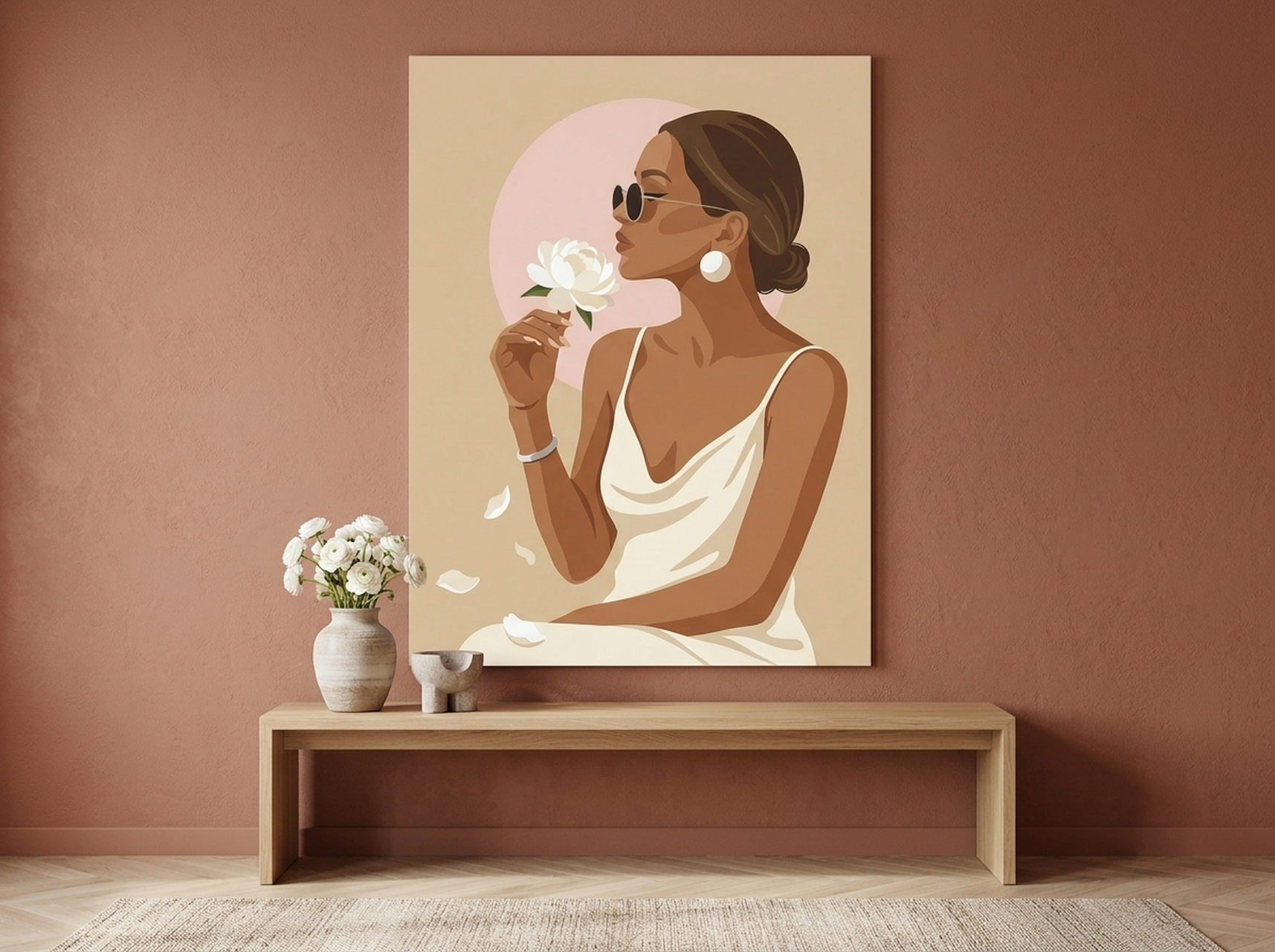
Woman Peony Canvas Wall Art -- a bold fashion editorial flat vector print that anchors any maximalist gallery wall with its high-contrast pink, black, and floral palette.
Our 6 Top Maximalist Wall Art Picks
We have curated six pieces that each bring something distinct to a maximalist scheme -- from Baroque animal portraiture to sculptural relief prints. Every one of these works as a standalone statement or as part of a layered gallery wall.
1. White Tiger Bathtub Canvas Wall Art
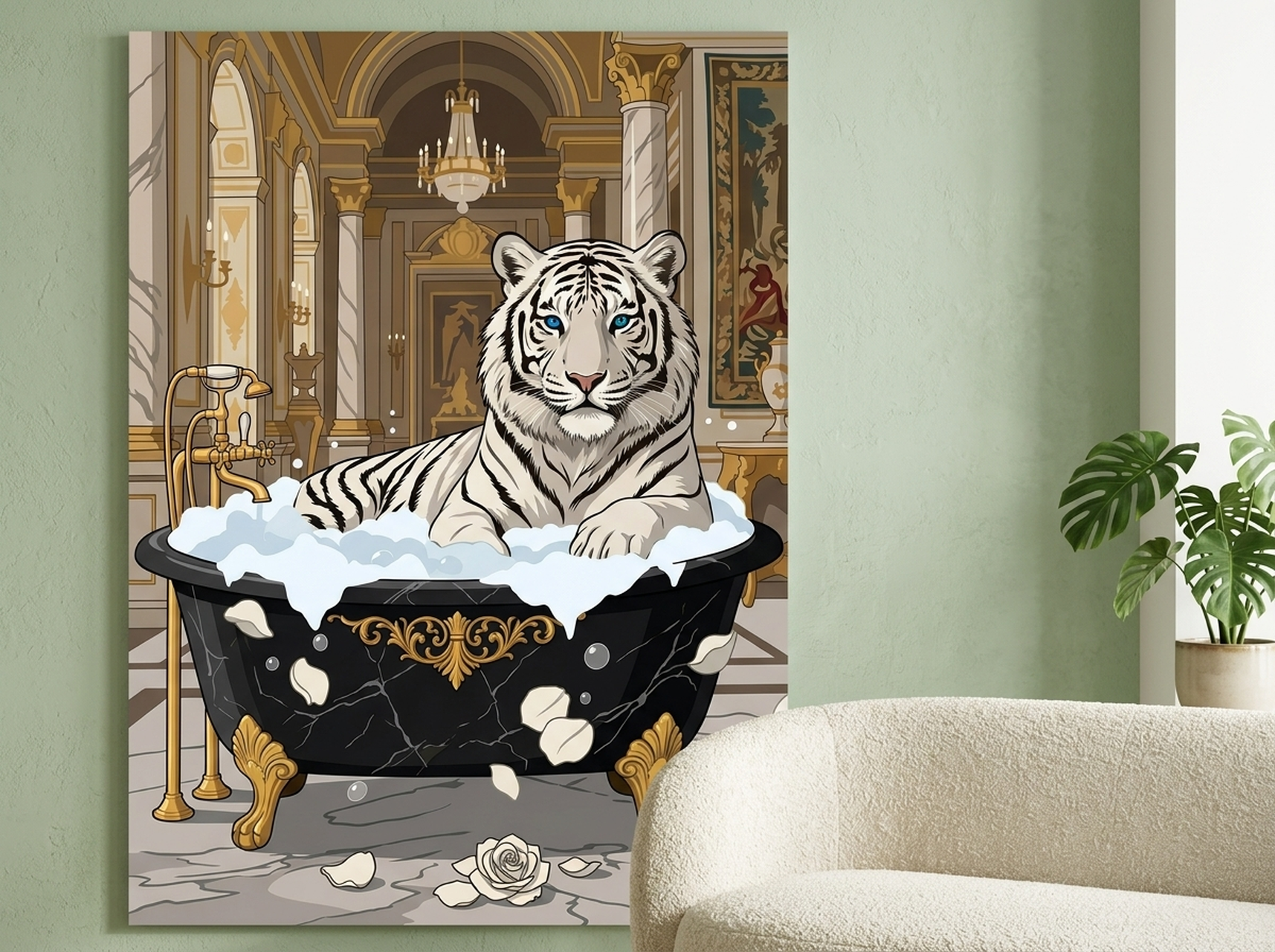
A white tiger reclining in a claw-foot bathtub surrounded by lush botanicals -- this piece is pure maximalist fantasy. The contrast between the tiger's stark white coat and the deep, jewel-toned floral surroundings creates immediate visual drama that works especially well in bathrooms, home offices, and any space where you want an unexpected conversation starter. We have found that this print pairs beautifully with dark charcoal or forest green walls. The luxury animal digital print format means the detail is crisp at any canvas size, from a compact 30 x 40 cm (12 x 16 inches) to a room-defining 100 x 133 cm (39 x 52 inches).
View the White Tiger Bathtub Print
2. Curated Objects Collage Canvas Print
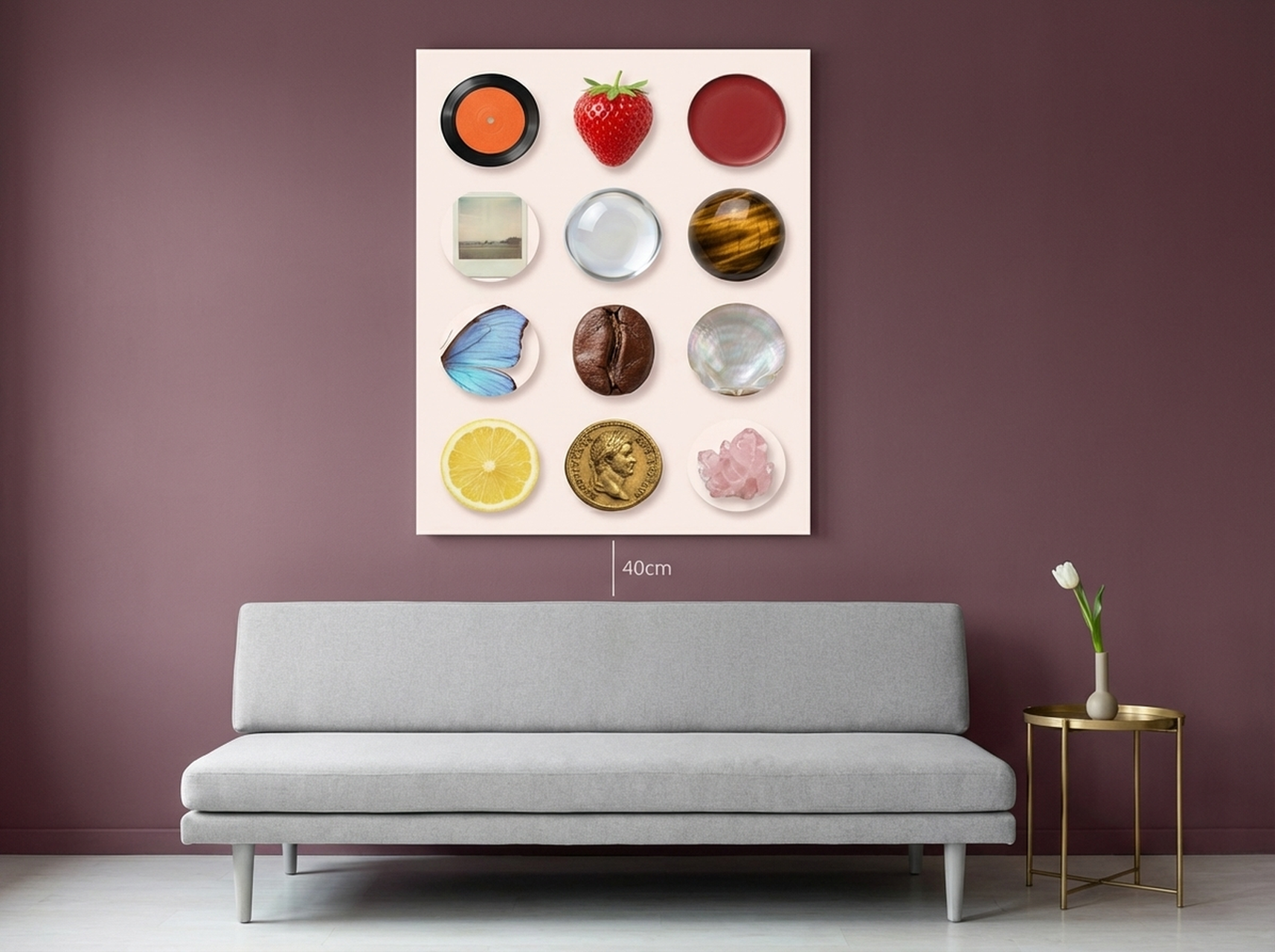
This blush pink maximalist collage is one of the most versatile pieces in our range. It layers perfume bottles, botanicals, pearls, and editorial fragments into a composition that feels simultaneously vintage and completely contemporary. The dominant blush and cream palette makes it a natural fit for living rooms and bedroom feature walls where you want maximalism with a softer, more feminine energy. In our experience, this print is the one that gets the most questions from visitors -- the layered collage format rewards close inspection, revealing new details each time. It is an ideal choice for anyone easing into maximalism who wants impact without an aggressive colour statement.
View the Curated Objects Collage
3. Lioness Canvas Wall Art -- Baroque Burgundy and Gold
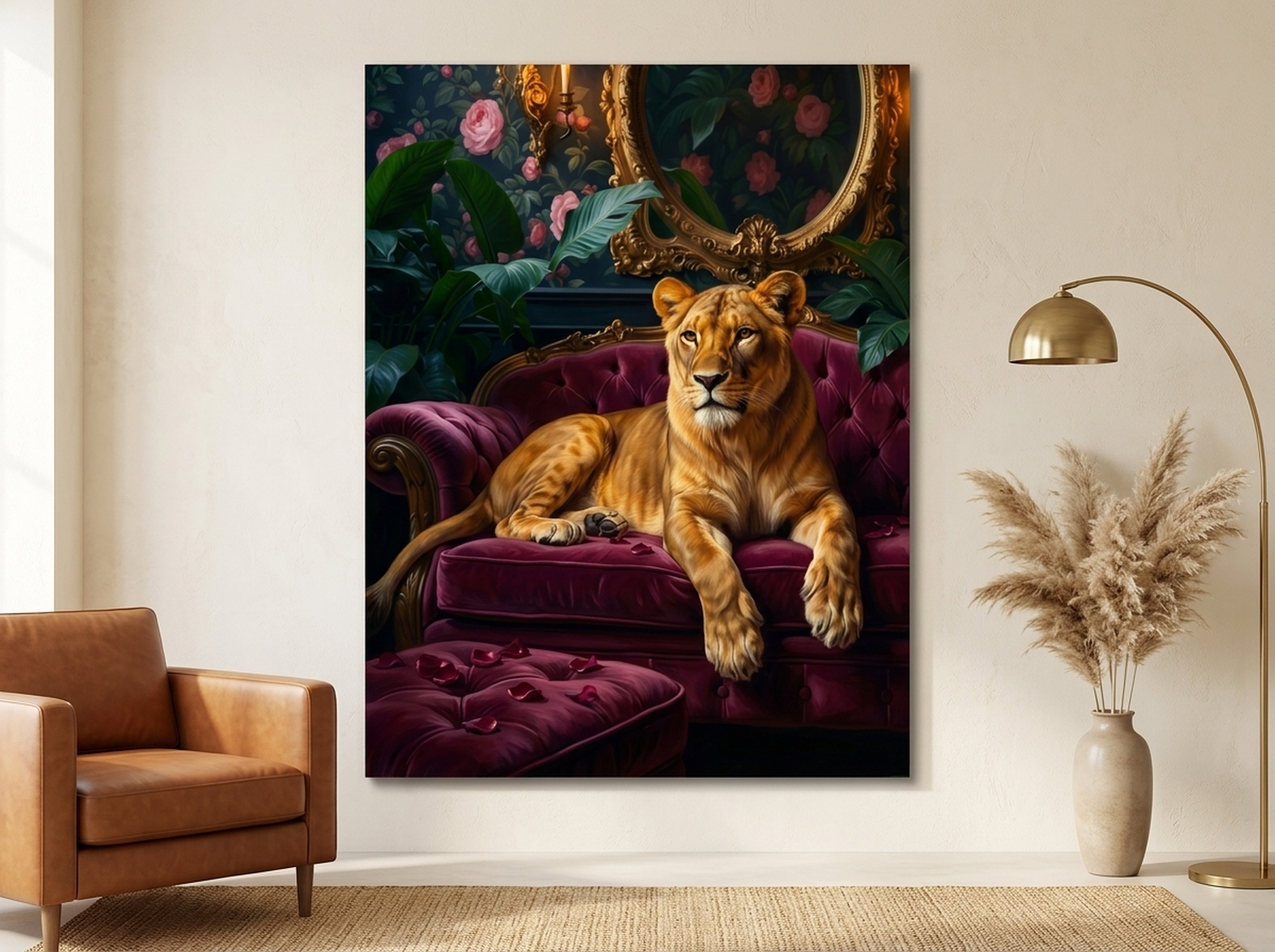
Rich burgundy, aged gold, and the commanding presence of a lioness rendered in Baroque portrait style -- this canvas is a masterclass in regal maximalism. The colour palette of deep wine reds and burnished golds is precisely what interior designers mean when they talk about jewel tones creating perceived luxury, a finding supported by Stoneside's 2026 colour research. The painting's classical portrait format gives it an art-historical gravitas that elevates any living room, dining room, or study. We have found it pairs exceptionally well with dark wood furniture and statement lighting. Hang it large -- at least 80 x 100 cm (31 x 39 inches) -- so the lioness commands the wall as she deserves.
View the Lioness Baroque Canvas
4. Cherry Blossom Canvas Wall Art -- Sculptural Relief
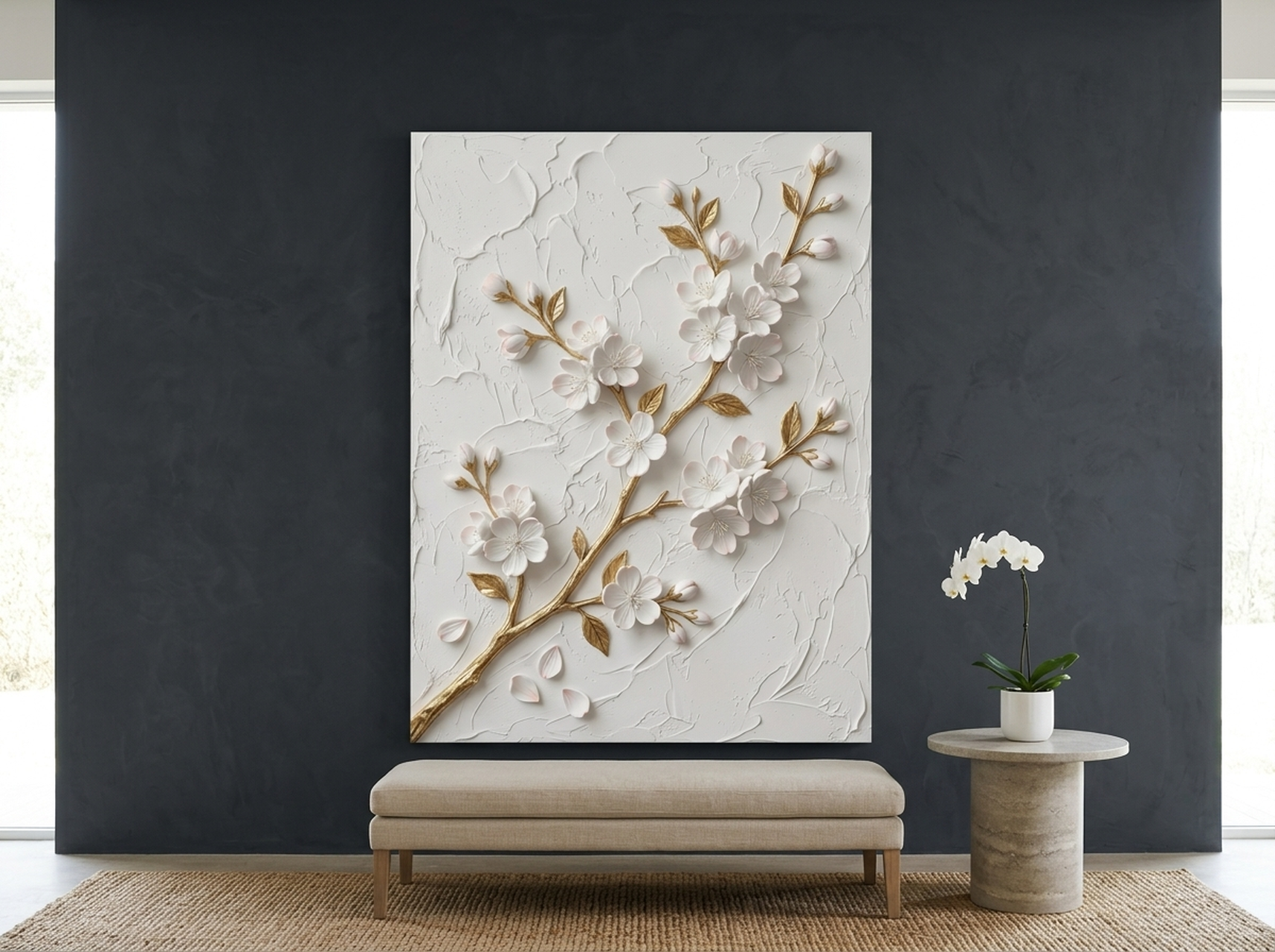
Not all maximalism announces itself with saturated colour. This cherry blossom relief print makes its statement through texture and dimension -- the sculptural white and gold surface mimics the appearance of hand-carved plaster, giving it a three-dimensional presence that photographs cannot fully capture. This piece is particularly effective in rooms that already carry bold colour elsewhere (think jewel-toned sofas or patterned rugs) and need a focal point that adds richness without colour competition. The white and gold palette reads as fresh and luminous against both dark and light walls. In our experience, this print consistently surprises people in person -- the sculptural relief detail is far more dramatic at full canvas size than any product photo suggests.
View the Cherry Blossom Relief Print
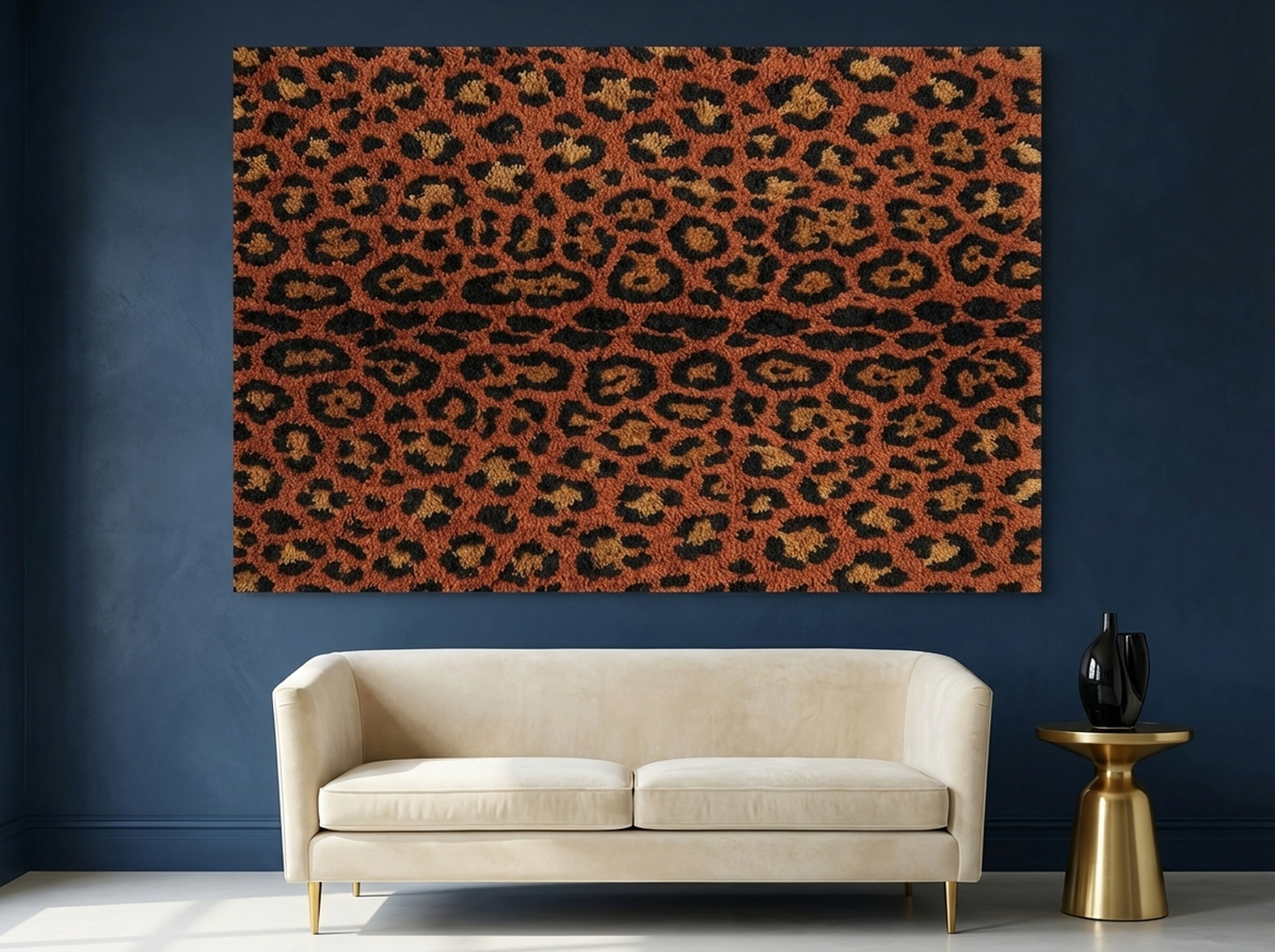
5. Leopard Print Canvas Wall Art -- Terracotta Bold Maximalist
Animal print is one of maximalism's most enduring signatures, and this terracotta leopard canvas brings the trend into 2026 with a warm, earthy palette that feels both bold and liveable. The terracotta, burnt orange, and warm cream tones work beautifully with the current wave of "warm maximalism" -- spaces that layer richness without the coolness of traditional jewel tones. This print is an excellent anchor for living rooms with rattan furniture, ceramic accessories, or warm-toned rugs. It also works as a statement piece in a hallway or entryway where you want an immediate impression of personality. We have found that pairing it with the Lioness Baroque canvas (above) in a gallery arrangement creates an extraordinary layered animal-motif wall.
View the Leopard Terracotta Canvas
6. Champagne Strawberry Canvas Wall Art -- Watercolour Bedroom Romantic
Maximalism in the bedroom calls for a different register -- still abundant and layered, but with a romantic softness that makes the space feel like a retreat rather than a showroom. This champagne and strawberry watercolour canvas delivers exactly that. The loose, painterly washes of blush pink, champagne gold, and deep red create a composition that feels lush and intimate without overwhelming. It is the kind of piece that looks different at different times of day -- romantic in warm evening light, fresh and graphic in morning sun. We have found this print works equally well as a standalone large format (75 x 100 cm / 30 x 39 inches) above a bed headboard or as part of a layered bedroom gallery alongside botanical and abstract prints.
View the Champagne Strawberry Canvas
Placement Guide for Maximalist Spaces
Getting the placement right is just as important as choosing the right art. These are the measurements and principles we use across all the maximalist rooms we style.
Eye-Level Hanging: The standard rule is to position the centre of any single canvas at 145-150 cm (57-59 inches) from the floor. This applies whether you are hanging one piece or using it as the centrepiece of a gallery wall. In rooms with ceilings above 280 cm (110 inches), you can push this to 155 cm (61 inches) to prevent the art from feeling trapped low on the wall.
Above Furniture: When hanging art above a sofa, console, or bed, the bottom edge of the frame should sit 20-25 cm (8-10 inches) above the furniture's top surface. For a sofa that is 90 cm (35 inches) tall, that puts the bottom of your art at approximately 110-115 cm (43-45 inches) from the floor -- well within the standard comfort range.
Wall Coverage for Maximalism: Unlike minimalist approaches where a single small piece floats on a large wall, maximalism thrives on coverage. Aim for your art arrangement to cover 55-65% of the wall width and 50-60% of the wall height. For a typical living room feature wall of 350 cm x 240 cm (138 x 94 inches), that means your gallery arrangement should span roughly 192-227 cm wide (75-89 inches) and 120-144 cm tall (47-56 inches).
Gallery Spacing: Within a multi-piece arrangement, maintain 5-8 cm (2-3 inches) between frames. Too little gap and the arrangement reads as one mass; too much and the composition fragments. We have found that 6 cm (2.4 inches) is the sweet spot for most gallery walls.
For more on wall sizing and placement, see our dedicated guides on the best wall art for living room styles in 2026 and luxury wall art that looks expensive at home.
5 Common Maximalist Mistakes to Avoid
- Confusing maximalism with clutter. Every piece in your arrangement should be chosen deliberately. If you cannot articulate why a specific print is on the wall, it is probably not earning its place. Curated abundance is the goal -- not accumulated mess.
- Ignoring the unifying thread. Bold, varied pieces still need something in common -- a colour family, a frame finish, a recurring motif. Without a unifying thread, even beautiful individual pieces can fight rather than harmonise. See our wall art colour guide for help building a cohesive palette.
- Hanging everything too high. This is one of the most common mistakes in any decorating style, but it is especially damaging in maximalism where pieces need to relate to furniture and each other. Stick to the 145-150 cm (57-59 inches) centre-height rule.
- Using only small pieces. Maximalism needs at least one large anchor piece to work. A wall covered in small prints without an anchor feels restless and scattered. Start big, then layer smaller pieces around it.
- Forgetting scale relationships. The art should relate in scale to the furniture below it. A large sofa needs large art; a slim console can support something more modest. Mismatched scale makes the arrangement feel accidental rather than designed.
Also see our guide on dark academia wall art and decor ideas for inspiration on building deeply layered, richly detailed maximalist schemes in darker colour palettes.
Frequently Asked Questions
What is maximalist wall art?
Maximalist wall art refers to bold, richly detailed, or large-scale artwork that embraces abundance and visual complexity rather than restraint. It typically features saturated colours, intricate patterns, dramatic subjects (animals, botanicals, portraiture), and strong contrast -- all chosen to make a confident visual statement rather than blend quietly into the background.
How do I choose maximalist art without the room feeling cluttered?
The key is curation and the unifying thread. Choose pieces that share at least one common element -- a colour family, a frame finish, a recurring motif -- and designate one piece as the clear anchor that the eye returns to. We have found that limiting your core palette to three colours across all the pieces in a gallery wall keeps maximalism feeling intentional rather than chaotic.
What size should maximalist wall art be?
For a feature wall in a standard living room, aim for an anchor piece of at least 80-100 cm wide (31-39 inches). The total art arrangement should cover 55-65% of the wall width. For single-piece maximalist statements, we recommend going as large as the space allows -- pieces of 100 x 133 cm (39 x 52 inches) or larger create the most dramatic impact.
What colours work best for maximalist wall art?
Jewel tones -- sapphire, emerald, burgundy, amethyst -- are the classic maximalist palette and have been shown by interior colour research to register as luxurious and energising. Warm maximalism uses terracotta, burnt orange, deep mustard, and cream for a softer, more earthy richness. Gold accents work across both palettes and add an instant sense of opulence.
Can maximalist wall art work in a small room?
Yes -- in fact, a bold single canvas in a small room can make the space feel larger and more intentional than a scattering of small prints. The key is to choose one large statement piece rather than multiple competing elements, and to ensure the art shares colour notes with other elements in the room so everything reads as part of a unified scheme rather than an overcrowded collection.
How do I hang maximalist art at the right height?
The universal rule is to position the centre of the canvas at eye level: 145-150 cm (57-59 inches) from the floor. When hanging above furniture such as a sofa or bed, the bottom edge of the frame should clear the furniture's top surface by 20-25 cm (8-10 inches). For gallery walls, keep 5-8 cm (2-3 inches) of space between frames.
Quick Reference Table
| Product | Best For | Dominant Colours | Link |
|---|---|---|---|
| White Tiger Bathtub | Bathroom, office, conversation starter | White, deep green, jewel tones | View |
| Curated Objects Collage | Living room, bedroom feature wall | Blush pink, cream, antique gold | View |
| Lioness Baroque Canvas | Living room, dining room, study | Burgundy, gold, warm brown | View |
| Cherry Blossom Relief | Any room needing texture over colour | White, gold, soft neutral | View |
| Leopard Terracotta Canvas | Living room, hallway, entryway | Terracotta, burnt orange, cream | View |
| Champagne Strawberry Canvas | Bedroom, romantic spaces | Blush pink, champagne, deep red | View |
Ready to Transform Your Walls?
Maximalist wall art is not about more for the sake of more -- it is about choosing pieces that genuinely move you and arranging them with enough intention that every element reinforces the others. Whether you start with the regal gravitas of the Lioness Baroque canvas, the sensuous layering of the Curated Objects Collage, or the quiet drama of the Cherry Blossom Relief, the goal is the same: a room that speaks before anyone says a word.
Browse our complete collection, save pieces to compare, and use the sizing guide above to map out your arrangement before you buy. Great maximalist rooms are designed, not assembled. Explore our full maximalist wall art collection and find the piece that starts it all.