Abstract Wall Art: Transform Any Room
The Heva Team
Art Curators & Interior Design Enthusiasts · March 23, 2026 · 15 min read
Room-by-room guide to choosing abstract wall art for your living room, bedroom, kitchen, office, hallway, and bathroom. Colour tips, hanging measurements, and 6 curated picks.
You have been staring at that empty wall for weeks. You know it needs something, but every framed print you consider feels predictable, and you walk away without buying a thing. Abstract wall art solves this problem because it does not demand a single interpretation. Instead, it adapts to the mood of the room, the light at different hours, and the personality of whoever lives there. This guide breaks down exactly how abstract art transforms bedrooms, kitchens, offices, bathrooms, and hallways so you can pick the right piece for every space in your home.
Ready to browse? Explore the full abstract wall art collection, or keep reading for our top picks and expert tips.
What You Will Find in This Guide
- Why Abstract Art Works in Every Room
- The Colour Science Behind Abstract Art
- Living Room: Set the Tone for Your Entire Home
- Bedroom: Create a Personal Retreat
- Kitchen: Add Energy Where You Need It
- Home Office: Fuel Focus and Creativity
- Hallway: Make Your Entrance Unforgettable
- Bathroom: Turn a Functional Space Into a Spa
- How to Hang Abstract Art: Practical Measurements
- Common Mistakes to Avoid
- Frequently Asked Questions
- Quick Reference Table
Why Abstract Art Works in Every Room
Representational art ties itself to one subject. A landscape painting belongs in a living room; a fruit bowl print fits the kitchen. Abstract wall art escapes that limitation. A composition of deep teal brushstrokes can feel meditative in a bedroom, energising in a hallway, and sophisticated in a dining space. The same piece reads differently depending on the wall colour behind it, the furniture beside it, and the natural light flooding through windows at different hours.
A 2019 study published in Frontiers in Psychology found that viewing visual art activates reward circuits in the brain linked to positive emotional states. Abstract art, in particular, engages the viewer's imagination more actively because there is no single correct reading. That open-ended quality makes abstract pieces versatile enough to anchor a living room gallery wall one year and a home office the next.
If you are new to abstract art, our Ultimate Guide to Choosing Abstracts covers the fundamentals of style, colour theory, and composition. This guide builds on that foundation with room-specific advice.
The Colour Science Behind Abstract Art
Colour is not decoration. It is a physiological trigger. A review of theoretical and empirical work in Frontiers in Psychology (via PubMed Central) confirmed that colour wavelengths influence heart rate, cortisol levels, and cognitive performance. Cool tones in the 450 to 490 nanometre range (blues and teals) lower arousal, while warm tones above 590 nanometres (reds, oranges, golds) stimulate alertness and appetite.
This matters when you choose abstract wall art because the dominant palette determines the emotional atmosphere of the room. A piece heavy in cobalt blue and silver will calm a bedroom, while the same wall space filled with coral, gold, and magenta will energise a dining area. Our Psychology of Colors in Wall Art guide dives deeper into matching hues to room functions.
When shopping for abstract art, identify the dominant colour first, then ask yourself: does this room need more calm, more energy, or more focus? The answer narrows your search immediately.
Living Room: Set the Tone for Your Entire Home
The living room is the first space guests experience and the room where your family spends the most waking hours. Abstract art here needs to do double duty: it must feel welcoming enough for everyday life and striking enough to anchor conversations. The safest approach is to choose a piece with warm neutrals and one or two accent colours that echo your existing soft furnishings.
Hang the piece so its centre sits 150 cm (59 inches) from the floor, which is standard gallery height. Above a sofa, leave 15 to 20 cm (6 to 8 inches) between the top of the backrest and the bottom of the frame. The artwork should span roughly two-thirds the width of the sofa to feel proportional.
For a deeper look at sizing and placement in the living room, see our Best Abstract Wall Art for Your Living Room guide.
Our Pick: Fluid Abstract Landscape
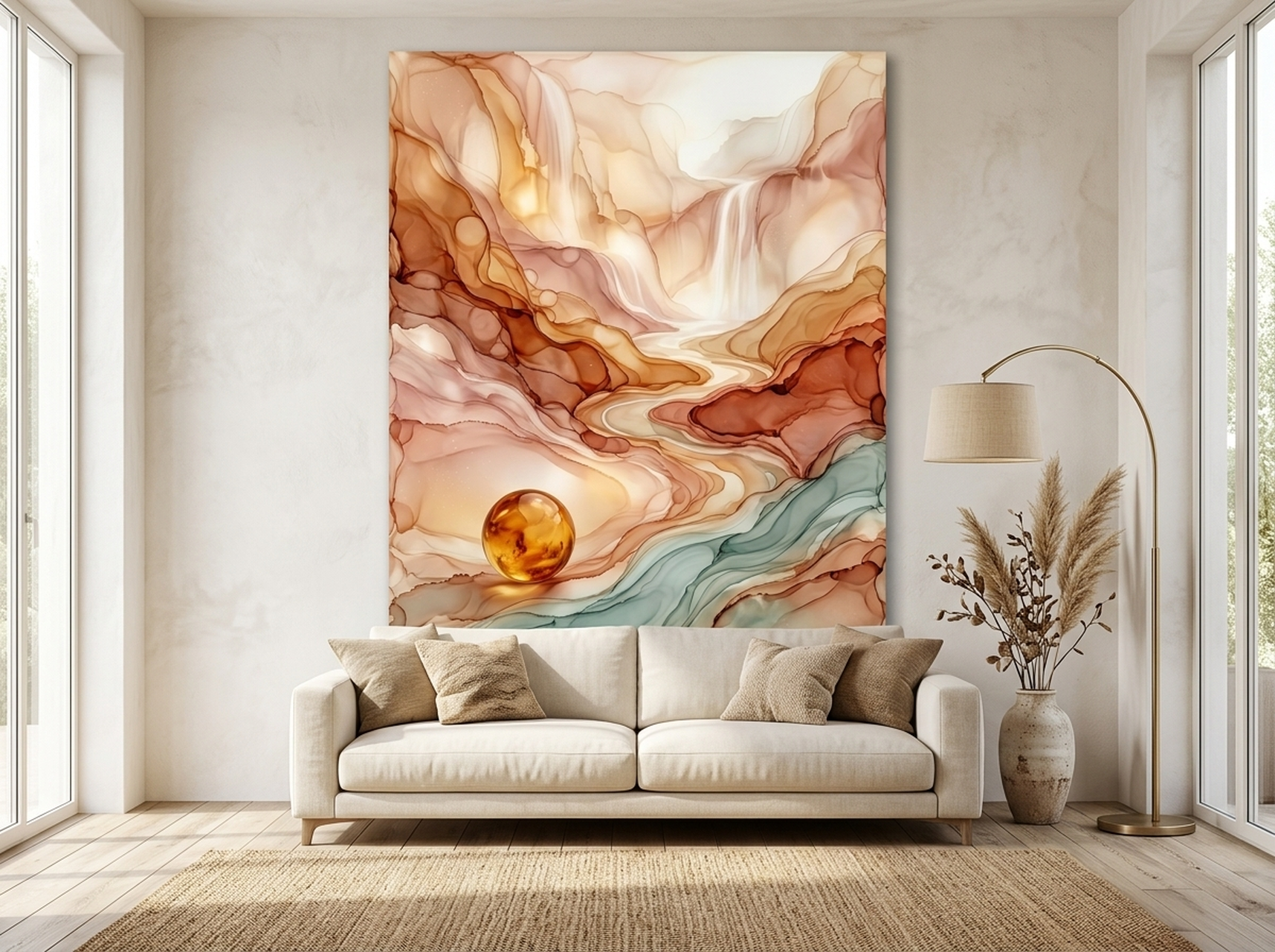
This canvas captures the fluidity of a distant horizon using layered gold, amber, and teal. The warm palette anchors neutral living rooms without overwhelming existing decor. Broad, sweeping strokes create visual movement that draws the eye across the composition, making it an ideal focal point above a sofa or console table. The cream and pink undertones pair beautifully with linen upholstery, and the teal accents add just enough contrast to keep the piece interesting at every glance.
View the Fluid Abstract Landscape
Bedroom: Create a Personal Retreat
The bedroom is where you start and end every day, so the art on its walls shapes your mood more than any other room. Abstract wall art for bedrooms should prioritise calm over stimulation. Avoid large areas of saturated red or bright orange, which raise heart rate and delay sleep onset. Instead, lean toward soft gradients, muted earth tones, or cool monochromes.
Hang bedroom art 20 to 25 cm (8 to 10 inches) above the headboard. If you do not have a headboard, treat the pillow line as your reference and position the frame so its bottom edge sits about 100 cm (39 inches) from the floor. A single large piece works better than a cluster in bedrooms because fewer visual elements create a sense of order that supports relaxation.
Our Pick: Geometric Starburst
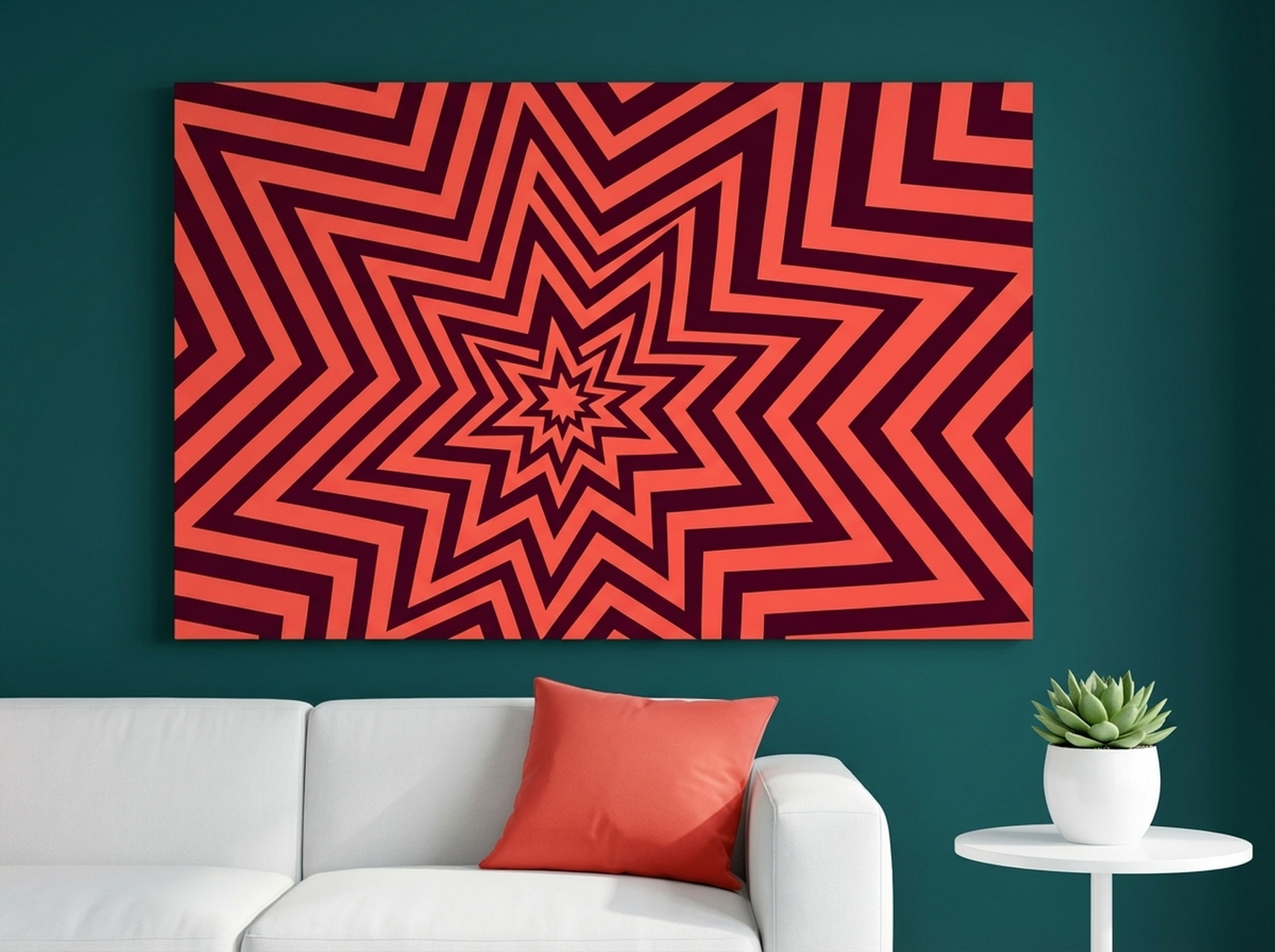
This retro-inspired starburst radiates concentric rings of coral, red, and warm orange from a central point. The op art pattern creates a hypnotic depth effect that gives the eye something to explore without adding visual clutter. Hung above a bed with neutral bedding, it becomes a bold focal point that grounds the entire room in confident warmth. The monochromatic warm palette keeps the composition unified, so even though the pattern is striking, it never feels chaotic. Pair it with warm-toned wood nightstands and cream linens for a cohesive seventies-modern bedroom.
Kitchen: Add Energy Where You Need It
Kitchens thrive on warmth and energy. This is the room where people gather, cook, and share meals, so the art should reflect that communal spirit. Abstract pieces with warm palettes (golds, peaches, lavenders) or food-adjacent imagery rendered in an abstract style add character without competing with the functional surfaces around them.
Place kitchen art where it will not be splashed by cooking liquids or exposed to direct steam. The wall beside the dining nook, the space above a breakfast bar, or the area between upper cabinets and countertops are all excellent positions. Keep frames at least 45 cm (18 inches) away from the stove to protect the finish. Standard hanging height in kitchens is slightly lower than living rooms: centre the piece at 140 to 145 cm (55 to 57 inches) from the floor because viewers are often seated.
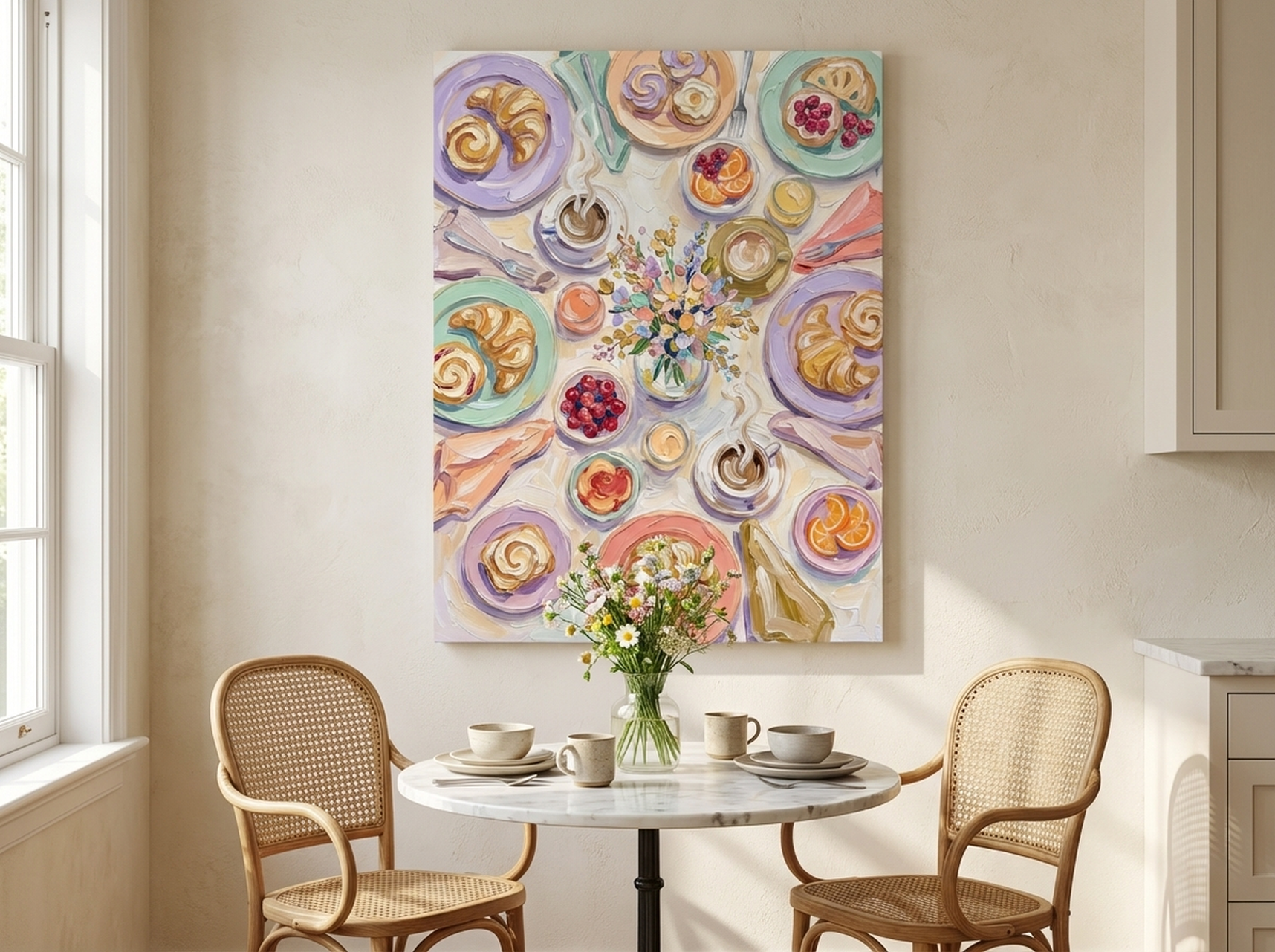
Our Pick: Abstract Brunch Table
This canvas reimagines a brunch spread through an abstract lens, blending lavender, mint, peach, and gold into a joyful composition that feels right at home near a dining table. The soft colour palette prevents the piece from overwhelming a busy kitchen while the food-adjacent subject matter connects naturally to the room's purpose. Floral accents woven through the still life add an organic softness that balances hard kitchen surfaces like marble counters and stainless appliances. Hang it in a breakfast nook or above a sideboard for maximum visual impact.
View the Abstract Brunch Table
Home Office: Fuel Focus and Creativity
A home office demands art that supports concentration during deep work and sparks creative thinking during brainstorming. The sweet spot is a piece with enough visual interest to prevent the room from feeling sterile, but enough restraint to avoid distraction. Geometric abstracts work exceptionally well in offices because their structured compositions suggest order and precision while the absence of literal imagery keeps the mind free to wander during creative pauses.
Position office art directly in your sightline when you look up from the desk. For most seated desk setups, this means the centre of the piece should sit about 120 to 130 cm (47 to 51 inches) from the floor. If you take video calls, consider what appears behind you on camera. An abstract piece in your background signals creativity and taste without revealing personal details to colleagues and clients.
Our Pick: Woman and Horse Geometric
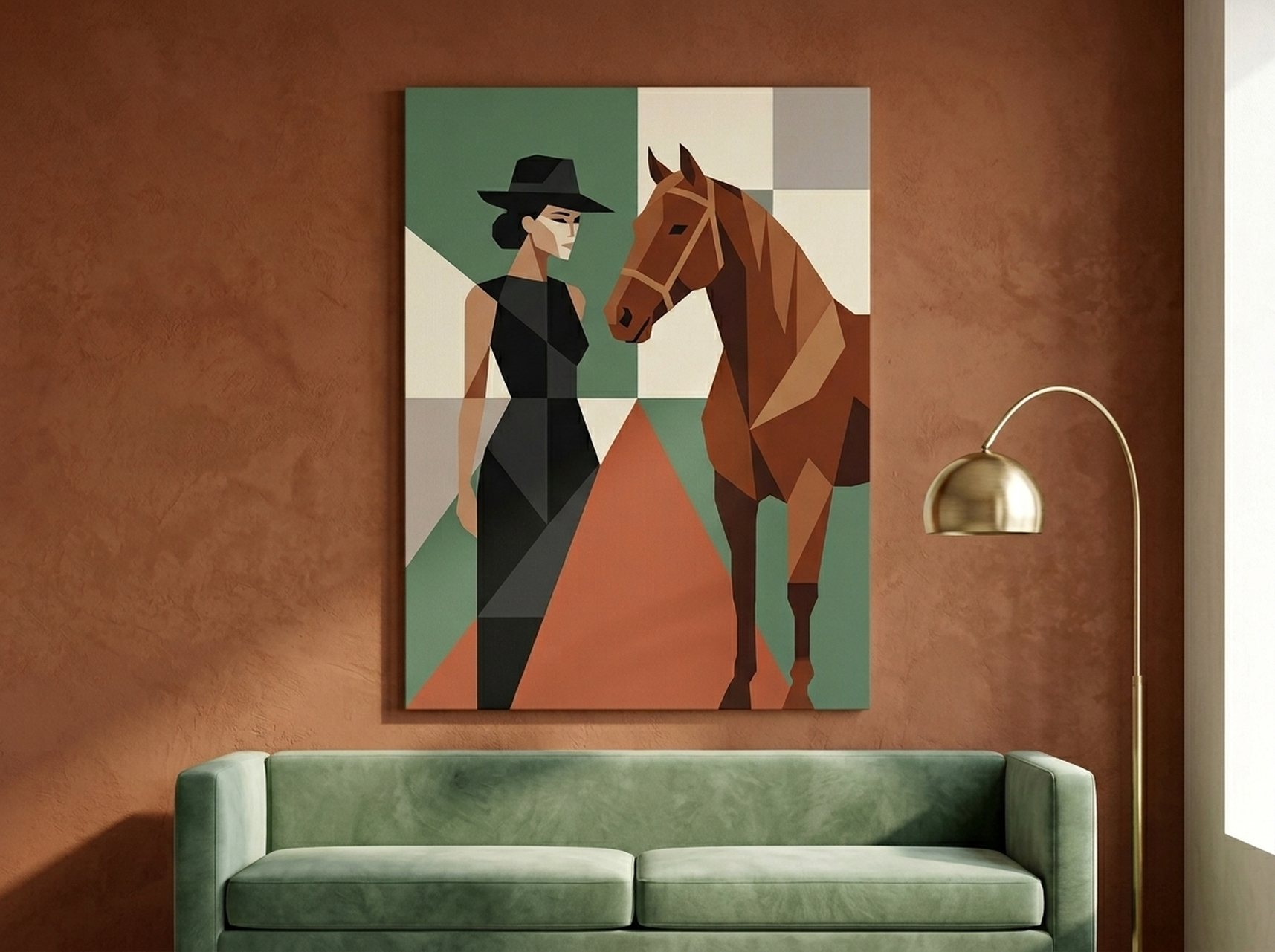
This geometric composition breaks the human and equine form into angular planes of sage, terracotta, cream, and black. The structured layout mirrors the precision a home office demands, while the organic subject matter adds a grounding warmth that prevents the space from feeling clinical. Sage tones have been shown to reduce eye fatigue during long screen sessions, making this palette a practical choice for the room where you spend the most focused hours. The earthy terracotta accents pair well with walnut desks and leather accessories, creating a study-like atmosphere.
View the Woman and Horse Geometric
Hallway: Make Your Entrance Unforgettable
Hallways are transition spaces. People move through them quickly, which means art here must communicate impact in seconds. Vertical or narrow-format abstract pieces work best because hallways are typically long and narrow. Choose bold, high-contrast compositions that read clearly from a distance of 3 to 4 metres (10 to 13 feet) so guests register the artwork the moment they step through the door.
In narrow hallways, hang the art at standard gallery height: 150 cm (59 inches) to centre. If the hallway is wider than 120 cm (47 inches), consider a pair of matching abstract pieces hung symmetrically on opposing walls. Lighting is often limited in hallways, so choose pieces with lighter backgrounds or metallic accents (gold, silver) that catch and reflect whatever light is available. For more hallway-specific inspiration, read our Hallway Wall Art Ideas guide.
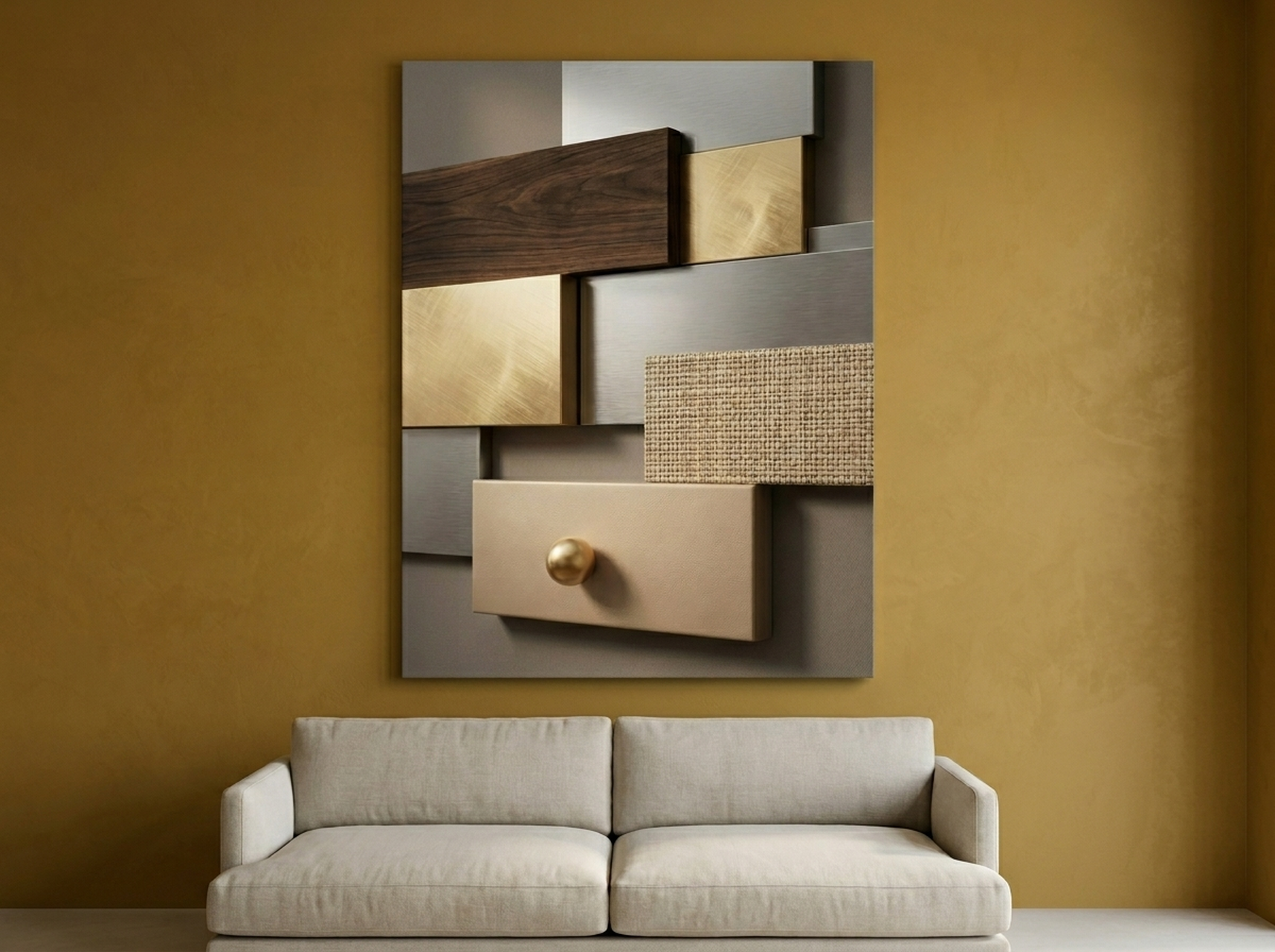
Our Pick: Geometric Texture Panels
These textured geometric panels combine walnut, gold, silver, and cream in a triptych-like arrangement that commands attention the moment you enter a hallway. The metallic gold and silver elements catch ambient light and create a shimmer that makes narrow spaces feel more expansive. The structured grid pattern brings architectural precision that complements hallway mouldings and door frames. Each panel offers a different geometric motif, giving the eye a journey to follow as guests walk past. The warm brown and gold palette works with both light and dark wall colours, making this piece adaptable to any entryway.
View the Geometric Texture Panels
Bathroom: Turn a Functional Space Into a Spa
Bathrooms are the most overlooked room for wall art, yet they offer one of the highest returns on visual impact because expectations are so low. A single well-chosen abstract piece transforms a utilitarian bathroom into a space that feels intentional and luxurious. The key constraint is moisture. Choose framed canvas prints rather than paper prints, and hang them away from direct water splash zones: at least 60 cm (24 inches) from the shower or bathtub edge.
Bathrooms are typically small, so scale the art down compared to living room standards. A piece 40 to 60 cm (16 to 24 inches) wide works well above a toilet or beside a vanity mirror. Cool palettes (teals, emeralds, navy) reinforce the water-adjacent theme and create a spa-like atmosphere. If your bathroom has warm-toned tiles, pick an abstract with both warm and cool elements to bridge the palette.
Our Pick: Bear Abstract in Emerald and Gold
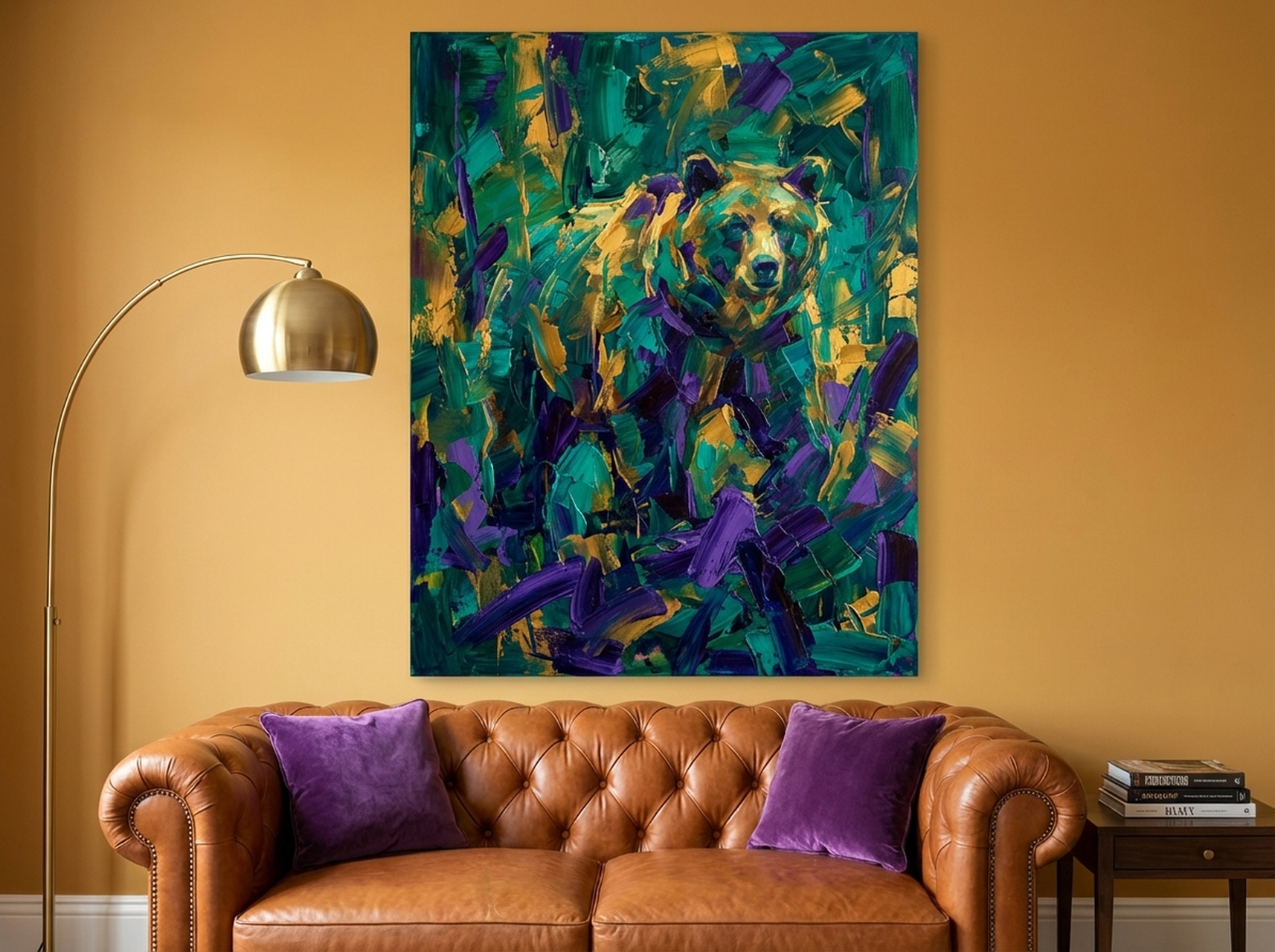
This abstract grizzly bear emerges from layers of emerald, teal, gold, and deep purple in a composition that feels both powerful and calming. The jewel-tone palette mirrors the colours you find in high-end spa interiors: deep greens, rich golds, and accents of violet. The brushwork is loose and expressive, which softens the subject matter and keeps the piece firmly in abstract territory. Hung above a freestanding bathtub or beside a vanity, it adds an unexpected layer of sophistication that elevates the entire bathroom. The dark background tones work particularly well against white tile and marble surfaces.
View the Bear Abstract in Emerald and Gold
How to Hang Abstract Art: Practical Measurements
No matter which room you are decorating, these measurements apply to most abstract wall art installations. For a comprehensive step-by-step tutorial with tools and hardware recommendations, see our How to Hang Wall Art guide.
- Standard gallery height: Centre the piece at 150 cm (59 inches) from the floor. This works in living rooms, hallways, and dining areas.
- Above furniture: Leave 15 to 20 cm (6 to 8 inches) between the top of the furniture and the bottom of the frame.
- Above a headboard: 20 to 25 cm (8 to 10 inches) of clearance from the headboard top.
- Proportion rule: The artwork width should be 60 to 75 percent of the furniture width below it.
- Grouped pieces: If hanging two or more canvases together, space them 5 to 8 cm (2 to 3 inches) apart so they read as a single composition.
- Staircase walls: Follow the angle of the staircase, keeping 150 cm from each step to the centre of the nearest frame.
- Eye-level adjustment: If most viewing happens while seated (kitchen nook, home office), lower the centre point to 120 to 130 cm (47 to 51 inches).
Common Mistakes to Avoid
1. Choosing Art That Is Too Small for the Wall
A 30 cm (12-inch) canvas on a 3-metre (10-foot) wall looks like an afterthought. Measure the wall first, then follow the proportion rule: the art should fill at least 50 to 75 percent of the available horizontal space above the furniture. When in doubt, go one size larger than your instinct suggests.
2. Ignoring the Room's Colour Temperature
A cool blue abstract in a room painted warm terracotta creates visual tension. Before purchasing, hold a sample of your wall paint next to the artwork image on your screen. If the undertones clash (cool art on warm walls, or vice versa), look for a piece that bridges both temperatures with a neutral like cream, grey, or black.
3. Hanging Art Too High
The most common hanging mistake is positioning art at the height of the person who hung it, rather than at the standard 150 cm (59 inches) centre. This is especially problematic above sofas, where artwork hung too high disconnects from the furniture below and floats awkwardly in empty wall space.
4. Matching Art to the Room Too Literally
You do not need a kitchen print in the kitchen or a bathroom print in the bathroom. Abstract art's greatest strength is its versatility. A geometric piece in emerald and gold can anchor a bathroom, a hallway, or a dining room equally well. Choose based on colour palette and emotional effect, not literal subject matter.
5. Neglecting Lighting
Even the most beautiful abstract canvas will look flat and dull on a poorly lit wall. If natural light does not reach the wall, add a picture light or an adjustable track light aimed at the artwork from a 30-degree angle. This creates gentle shadows that reveal texture and depth in the brushwork.
Frequently Asked Questions
Does abstract wall art work in traditional interiors?
Yes. Abstract art actually complements traditional interiors more effectively than many people expect. The contrast between ornate furniture and a fluid abstract canvas creates visual tension that makes both elements stand out. Choose an abstract piece with a colour palette that echoes one accent colour already present in the room, such as the gold in a picture frame or the navy in a throw pillow, and the pairing will feel intentional.
What size abstract art should I choose for a small room?
In rooms smaller than 10 square metres (108 square feet), a single medium piece measuring 50 to 70 cm (20 to 28 inches) wide usually works best. Avoid clustering multiple small pieces, which can make a compact room feel cluttered. One bold, well-placed canvas creates a focal point that actually makes the room feel larger by drawing the eye to a single destination.
How do I pick abstract art when I am not sure what I like?
Start with colour rather than style. Identify three colours you already love in your wardrobe, your furniture, or your kitchen accessories. Then search for abstract art that features at least two of those three colours. This approach almost always produces a piece that feels natural in your space because it connects to choices you have already made instinctively.
Can I mix different styles of abstract art in one home?
You can, as long as you maintain a connecting thread between rooms. The easiest thread is colour: if every abstract piece in your home shares at least one common colour (even a neutral like cream or black), the collection feels cohesive when you walk from room to room. Mixing geometric and fluid styles within the same colour family works particularly well.
Is framed canvas better than unframed for abstract art?
Framed canvas gives abstract art a finished, gallery-quality look that suits living rooms, hallways, and offices where you want a polished appearance. The frame also protects the canvas edges from dust and damage. For a more casual or contemporary feel, gallery-wrapped canvas with painted edges can work in bedrooms and creative studios. All of our abstract canvases come framed and ready to hang.
Quick Reference Table
| Product | Best For | Dominant Colours | Link |
|---|---|---|---|
| Fluid Abstract Landscape | Living Room | Gold, Amber, Teal | View |
| Geometric Starburst | Bedroom | Coral, Red, Orange | View |
| Abstract Brunch Table | Kitchen | Lavender, Mint, Peach | View |
| Woman and Horse Geometric | Home Office | Sage, Terracotta, Cream | View |
| Geometric Texture Panels | Hallway | Walnut, Gold, Silver | View |
| Bear Abstract Emerald Gold | Bathroom | Emerald, Teal, Gold | View |
Abstract wall art is not about understanding what the artist meant. It is about choosing a composition and palette that support the life you live in each room. Whether you need calm in the bedroom, energy in the kitchen, or a statement in the hallway, an abstract canvas gives you the freedom to build the atmosphere you want without locking yourself into a single subject.
Ready to find your piece? Browse the full abstract wall art collection and transform every room in your home.