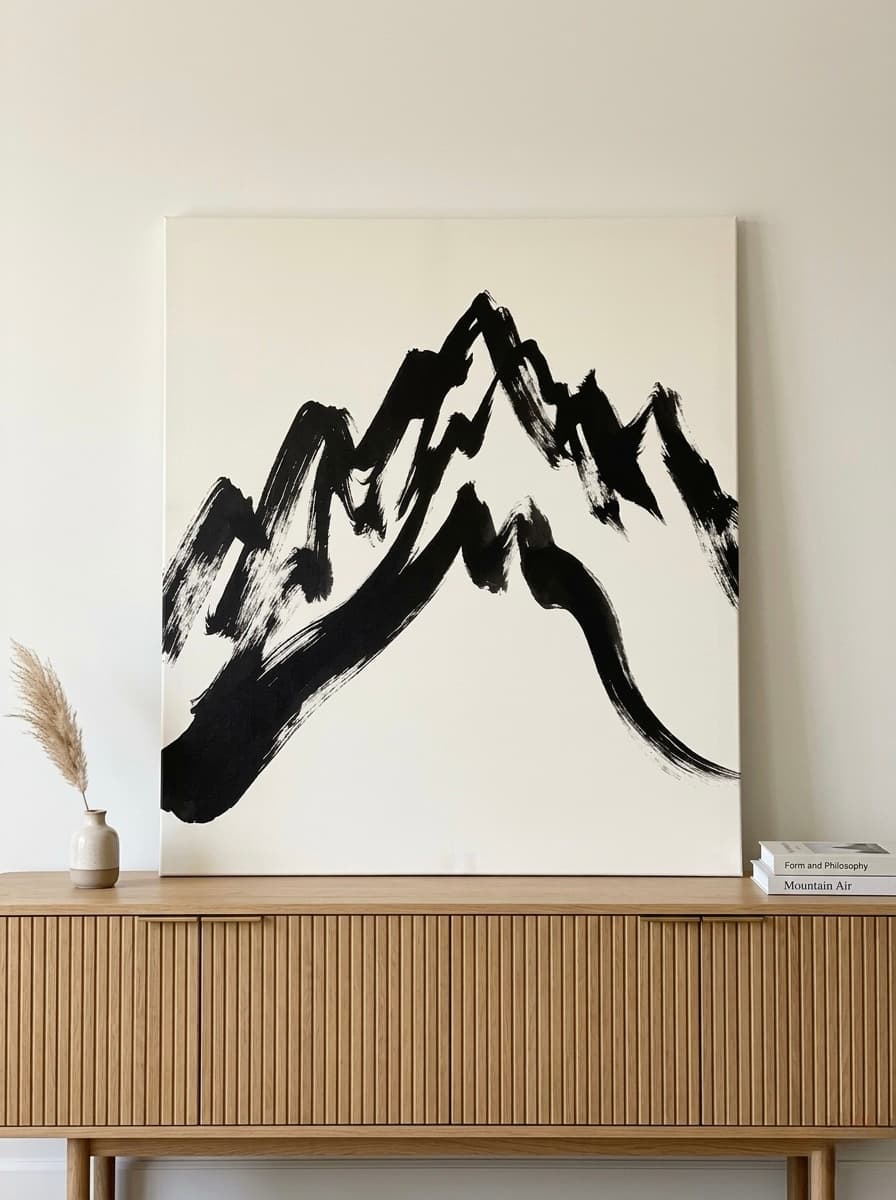
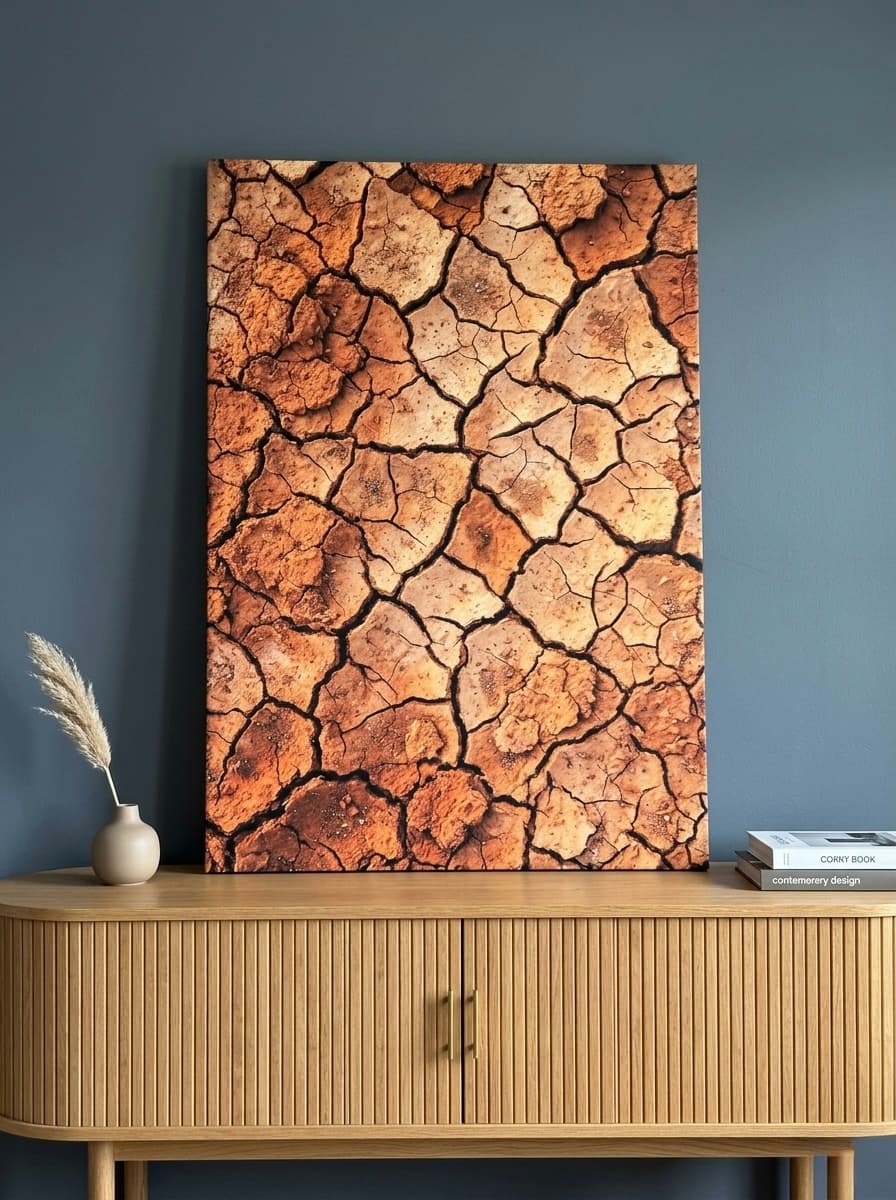
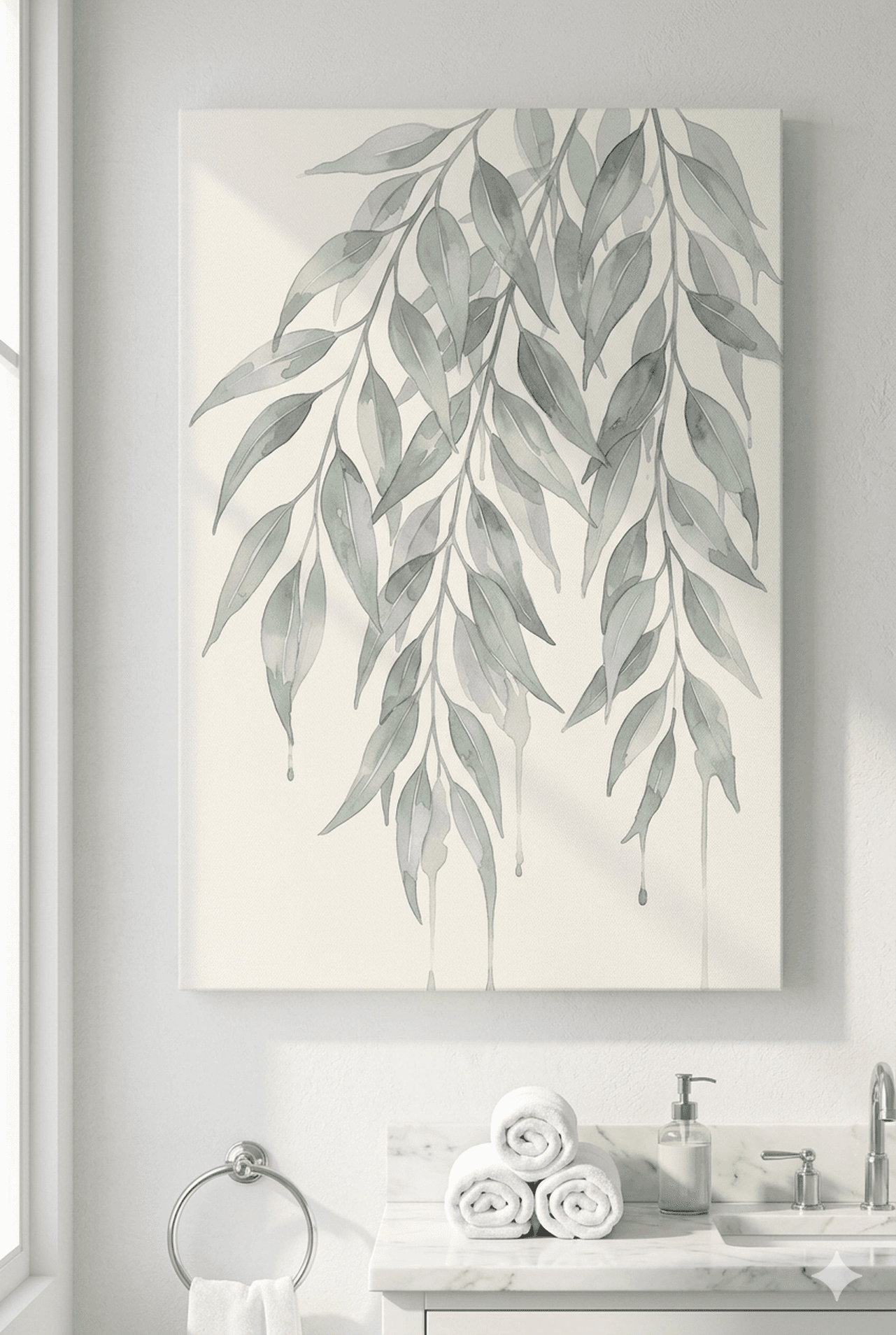
Accent Wall Art for Living Room: Focal Point Guide
The Heva Team
Art Curators & Interior Design Enthusiasts · April 1, 2026 · 18 min read
Learn how to use accent wall art to create a focal point in any room. Expert tips on size, placement, and bold statement pieces that transform spaces.
There is one design move that interior professionals reach for again and again when a room feels flat, disconnected, or simply forgettable: the accent wall anchored by a single, bold piece of art. Done right, it stops you the moment you walk through the door. It draws the eye, communicates the personality of the space, and gives every other element in the room something to relate to. Done wrong, it disappears into the wall or fights everything around it. In this guide we walk through exactly how to get it right, from choosing the correct scale to pairing art with wall color and selecting statement pieces that hold their own.
Whether you are starting from scratch in a new home or trying to rescue a room that never quite came together, accent wall art is the single highest-return design decision you can make. The investment is modest. The visual impact is transformative.
Ready to browse statement pieces? Explore our full collection: Shop All Wall Art at HEVA Unique Art Gallery
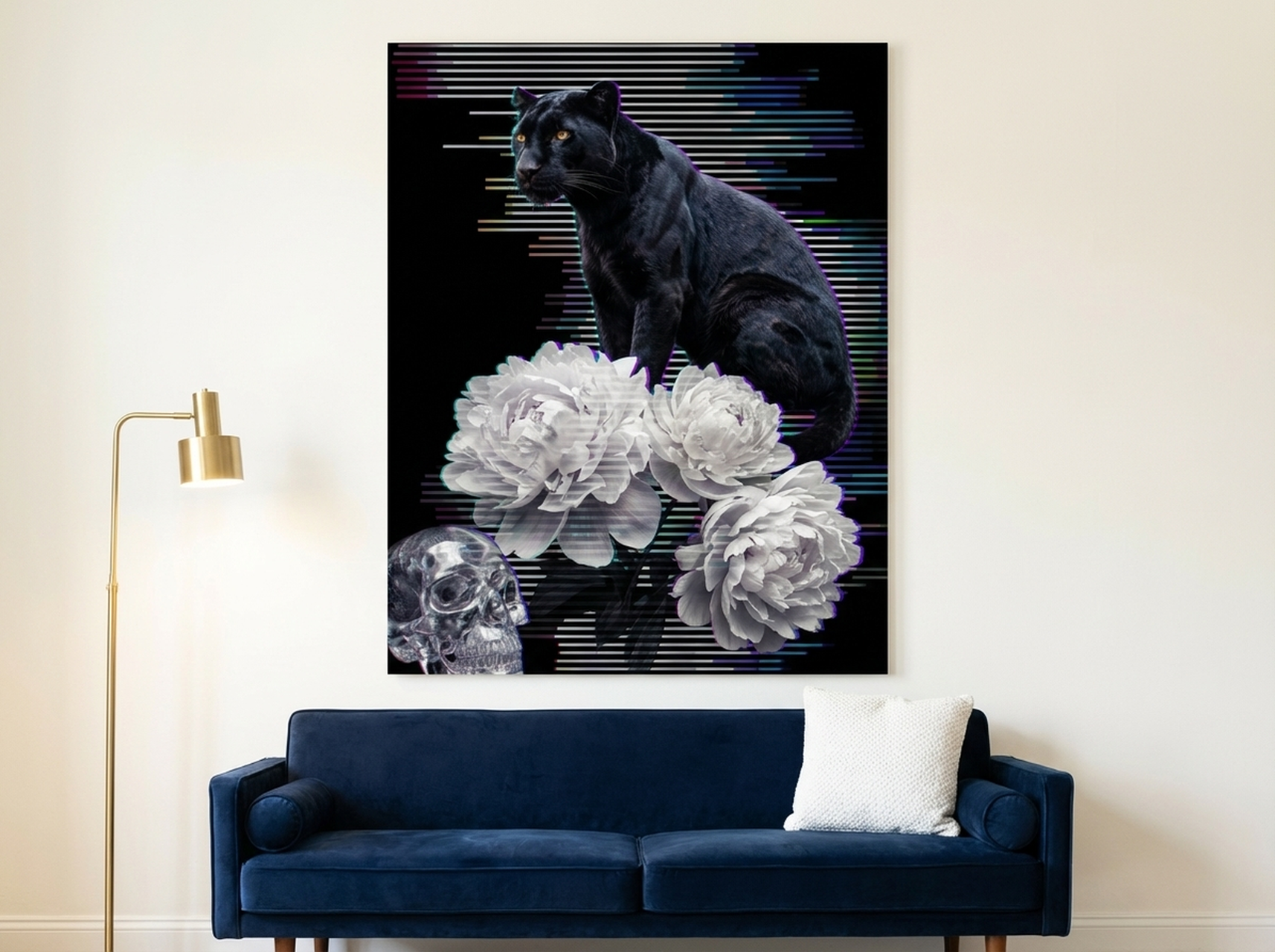
What Makes a Good Focal Point?
A focal point is the element in a room that your eye travels to first. Every well-designed space has one. Without it, the eye wanders aimlessly, reading the room as a collection of unrelated objects rather than a coherent environment. According to design guidance published by Eden House of Art, a focal point creates a visual anchor that organizes the entire room around a single commanding element, giving every other piece of furniture and decor a reference point to respond to.
Three factors determine whether an art piece can carry this responsibility:
Scale
Size is the most common place people go wrong. A piece that is too small reads as decoration, not as a statement. As a general rule, a single focal point artwork on an accent wall should be a minimum of 80 cm (32 inches) wide. For sofas and large walls, the sweet spot is art that spans two-thirds of the wall or furniture width. On a 240 cm (94-inch) wide wall, that means aiming for a canvas between 160 cm and 180 cm (63 to 71 inches) wide. If a single oversized canvas is not in the budget, a tightly grouped diptych or triptych at the same total width achieves the same visual mass.
In our experience, the single biggest mistake homeowners make is choosing a piece that is too small. If you are unsure between two sizes, always size up.
Contrast
A focal point must have enough tonal or color contrast with its surroundings to register as a distinct element. Art hung on a wall of the same value (both mid-tone, both very dark, both very light) will disappear. The most effective pairings are high-contrast: deep charcoal or navy walls with warm gold or white art; crisp white walls with saturated, bold canvases; warm terracotta walls with cool-toned or graphic black-and-white pieces.
Placement
The center of any artwork used as a focal point should sit at eye level, approximately 145 to 152 cm (57 to 60 inches) from the floor to the center of the canvas. This is standard gallery height and feels natural to the human eye. When placing art above furniture, maintain a gap of 15 to 20 cm (6 to 8 inches) between the top of the furniture and the bottom of the frame. Any more and the art floats disconnected from the room. Any less and the two elements feel cramped.
How to Choose Art for an Accent Wall
Accent wall art operates differently from art you place in a gallery wall or on a secondary wall. It carries the visual weight of the entire room, so your selection criteria need to reflect that responsibility.
Scale Up by 20 to 30 Percent
Whatever size feels right when you are browsing online, go bigger. Screens compress perception and rooms have depth that photographs cannot capture. If your instinct says 60 x 80 cm (24 x 31 inches), the wall probably needs 80 x 100 cm (31 x 39 inches) minimum. We have found that clients who follow this rule almost never regret it, while those who play it safe consistently wish they had gone larger.
Single Statement Piece vs Gallery Wall
Both approaches can create a powerful focal point, but they work differently. A single large canvas delivers instant authority and maximum drama. It suits rooms where simplicity and calm confidence are the design goal: minimalist bedrooms, modern living rooms, sophisticated home offices. A gallery wall creates energy, story, and layered interest. It suits spaces that are warmer and more eclectic in character: reading nooks, dining rooms, hallways.
For pure focal point impact on an accent wall, a single large statement piece almost always outperforms a gallery arrangement of equal total size. The eye resolves a single image instantly. A gallery arrangement requires the eye to navigate and piece together, which is rewarding but less commanding.
Use Bold Colors and Strong Imagery
Accent wall art is not the place for subtle, quiet pieces. Muted tones and delicate compositions read as background elements. Reach for saturated palettes, strong compositional lines, high contrast imagery, or graphic pattern. The art should be able to hold a room on its own, even before the furniture arrives.
According to Designers Circle HQ, accent walls in 2026 are becoming more intentional and textural than ever, with homeowners pairing bold wall treatments with equally bold art to create spaces that feel curated rather than decorated.
Style Pairings: Wall Color and Art Type
The pairing between wall color and art type is where accent wall design either succeeds brilliantly or falls flat. Here are the combinations we have seen work most consistently.
Dark Accent Walls and Warm Gold Art
Deep navy, charcoal, forest green, or matte black walls create a luxurious backdrop that makes warm-toned art glow. Gold, copper, amber, and cream tones against a dark wall read as dramatic and refined. This pairing works especially well in living rooms, dining rooms, and primary bedrooms. The contrast is striking without being jarring.
White and Off-White Accent Walls and Bold Colorful Statement Pieces
White walls let the art carry all the color energy. This is the most forgiving pairing for bold and maximalist pieces because the wall never competes. A vivid abstract, a saturated wildlife portrait, or a graphic pop-art piece can reach its full expressive potential against a clean white ground. This pairing suits contemporary, Scandinavian, and gallery-style interiors.
Warm Neutral Walls and High-Contrast Black and White Art
Warm whites, linen, greige, and warm taupe walls pair beautifully with high-contrast black and white photography, charcoal drawings, or graphic monochrome canvases. The warmth of the wall softens what might otherwise feel stark, while the contrast of the art provides the focal punch the room needs.
Terracotta and Rust Walls and Cool-Toned Art
Warm earthy wall colors create an excellent foil for cooler art tones: steel blue, grey, deep teal, or purple-toned canvases. Complementary color pairings like this create visual tension that feels sophisticated rather than safe.
Our 6 Top Accent Wall Art Picks
We curated these six pieces specifically for their ability to anchor an accent wall. Each one has the scale, the visual weight, and the boldness to become the focal point of a room. All are available as premium canvas prints.
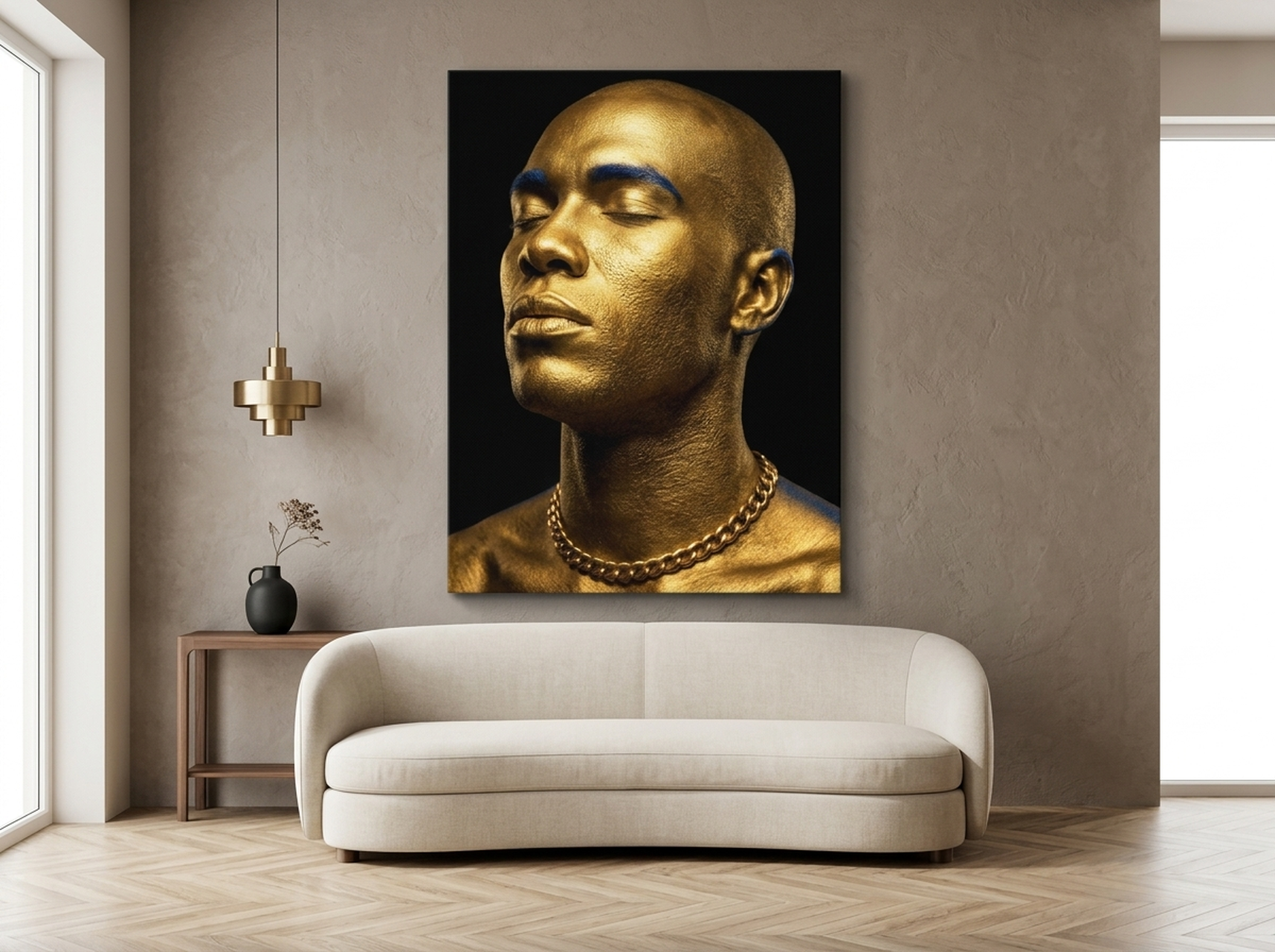
Gold King Portrait Canvas - Editorial Metallic Luxury
This editorial metallic portrait commands attention the moment it lands on a dark accent wall. The interplay of gold and deep black creates a visual hierarchy that draws the eye from across the room, making it one of our strongest focal point pieces. We recommend pairing it with a deep charcoal, navy, or forest green accent wall where the gold tones can truly ignite. In a room with warm gold hardware and brass fixtures, this piece creates a cohesive design language that feels intentional and collected rather than decorated. The bold editorial styling reads as gallery-quality, elevating any living room, bedroom, or home office instantly.
View the Gold King Portrait Canvas
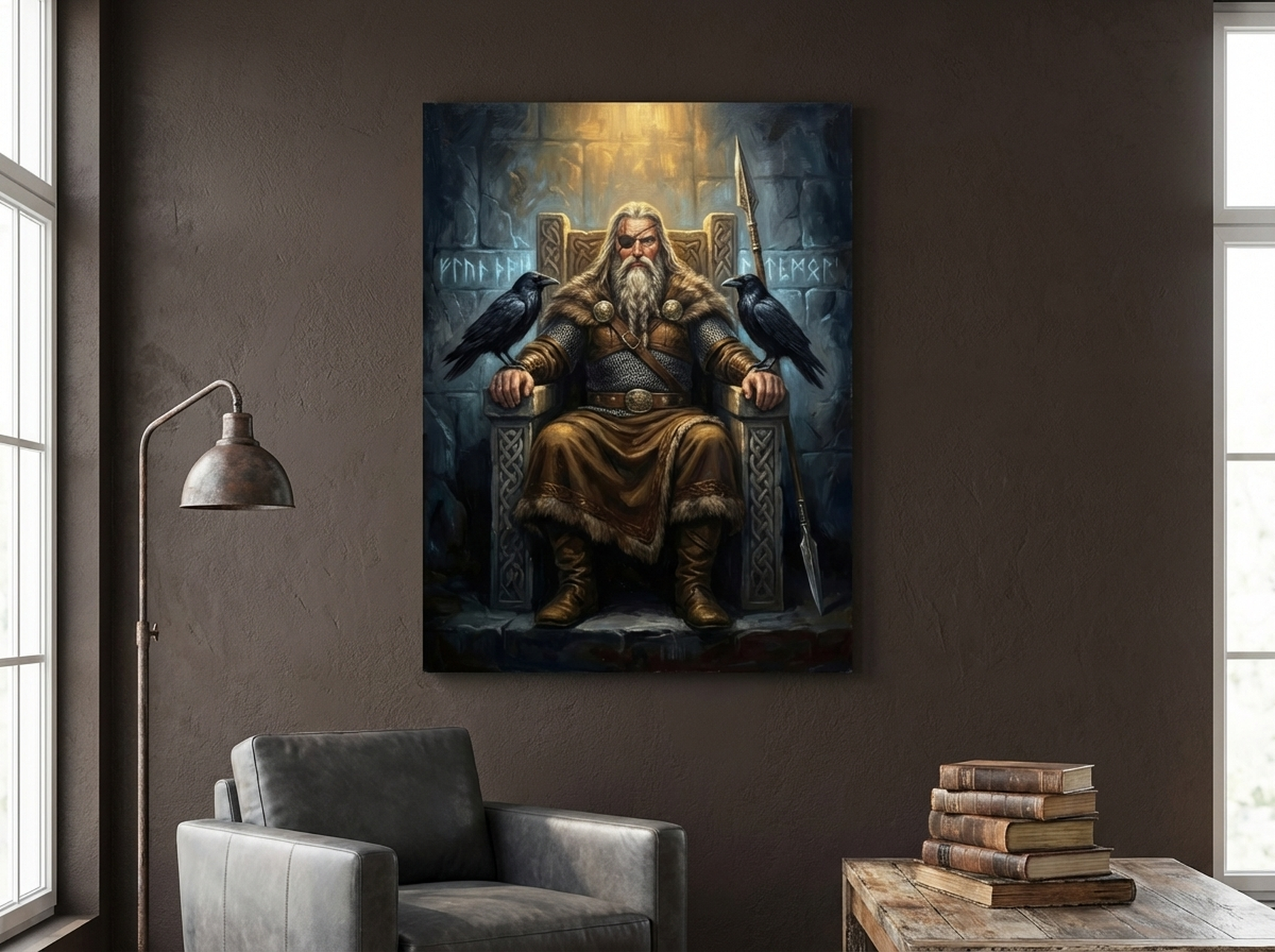
Odin Norse God Canvas - Viking Mythology Storm Grey
For a statement wall that communicates depth, history, and mythological power, this Odin portrait is unmatched. The storm grey palette and swirling compositional energy create a piece that grows with continued viewing, revealing new details each time. On a dark slate or charcoal accent wall it delivers a moody, dramatic atmosphere that transforms a room from ordinary to extraordinary. We have found it works especially well in home offices, libraries, and reading rooms where a commanding, intellectual atmosphere is the design goal. The oil painting treatment adds painterly texture that photographs simply cannot capture fully.
View the Odin Norse God Canvas
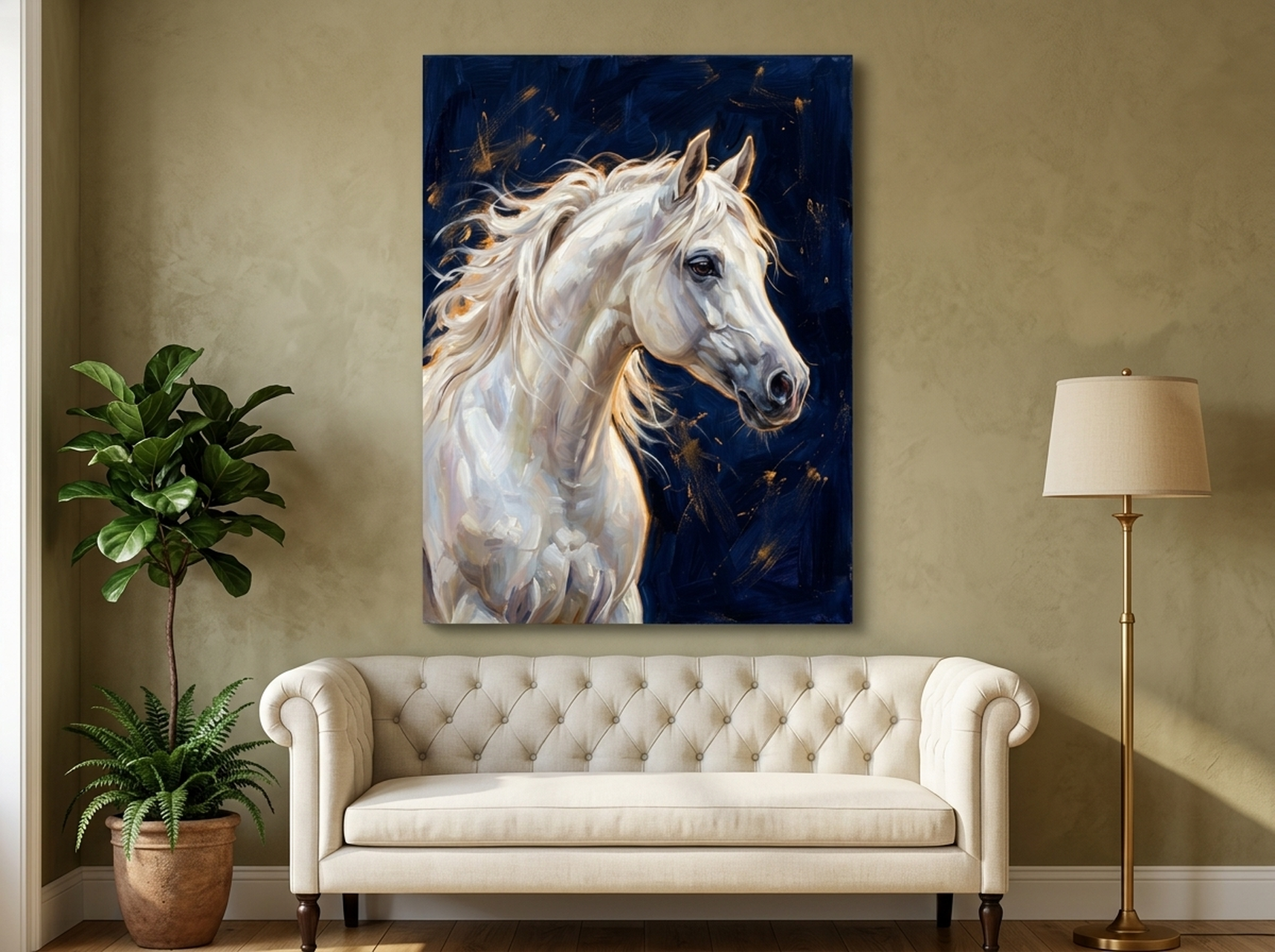
White Horse Impasto Canvas - Navy and Gold Living Room
This impasto-style white horse portrait brings movement, energy, and painterly richness that transforms any accent wall into a gallery-caliber installation. The navy and gold palette is one of the most timeless and versatile in interior design, transitioning seamlessly between traditional, transitional, and contemporary rooms. Against a crisp white accent wall it pops with graphic clarity. Against a deep navy wall it creates a tonal harmony where the horse seems to emerge from the background. In our experience, this is one of the most universally appealing pieces in the collection, drawing positive reactions from guests across virtually every design sensibility. (source: Architectural Digest)
View the White Horse Impasto Canvas
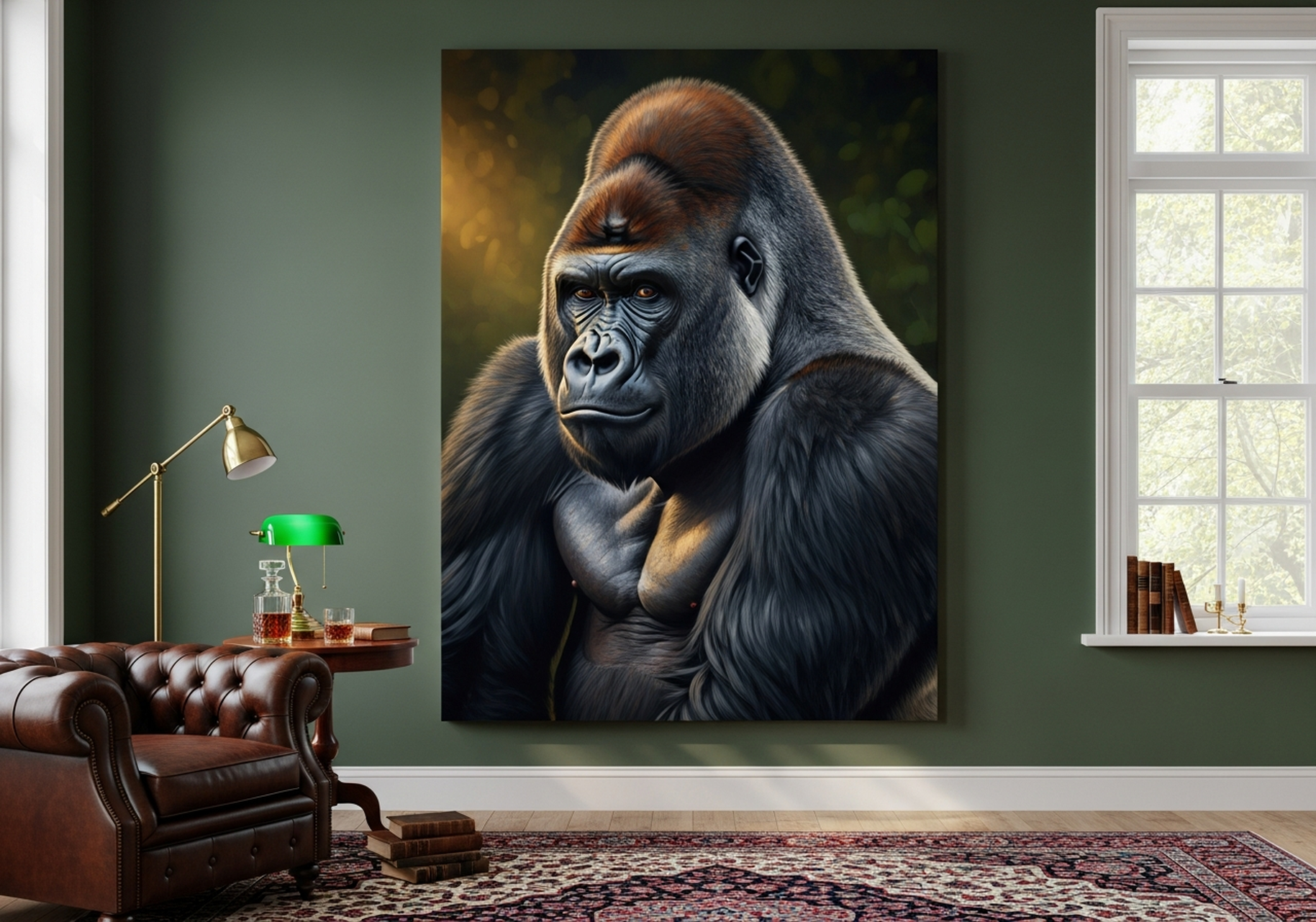
Silverback Gorilla Canvas - Wildlife Portrait Statement
Raw, powerful, and undeniably commanding, this silverback gorilla portrait is designed for rooms that want to make a bold, unapologetic statement. The close-up portrait format fills the canvas with presence, making it one of the most effective single-piece focal point options in the collection. On a warm neutral accent wall it creates a stunning contrast between the refined setting and the primal, elemental subject matter. We recommend large-format sizing for this piece, as the detail in the facial expression deserves to be experienced at scale. It works beautifully in contemporary living rooms, bold dining rooms, and any space where an unexpected design choice is welcome.
View the Silverback Gorilla Canvas
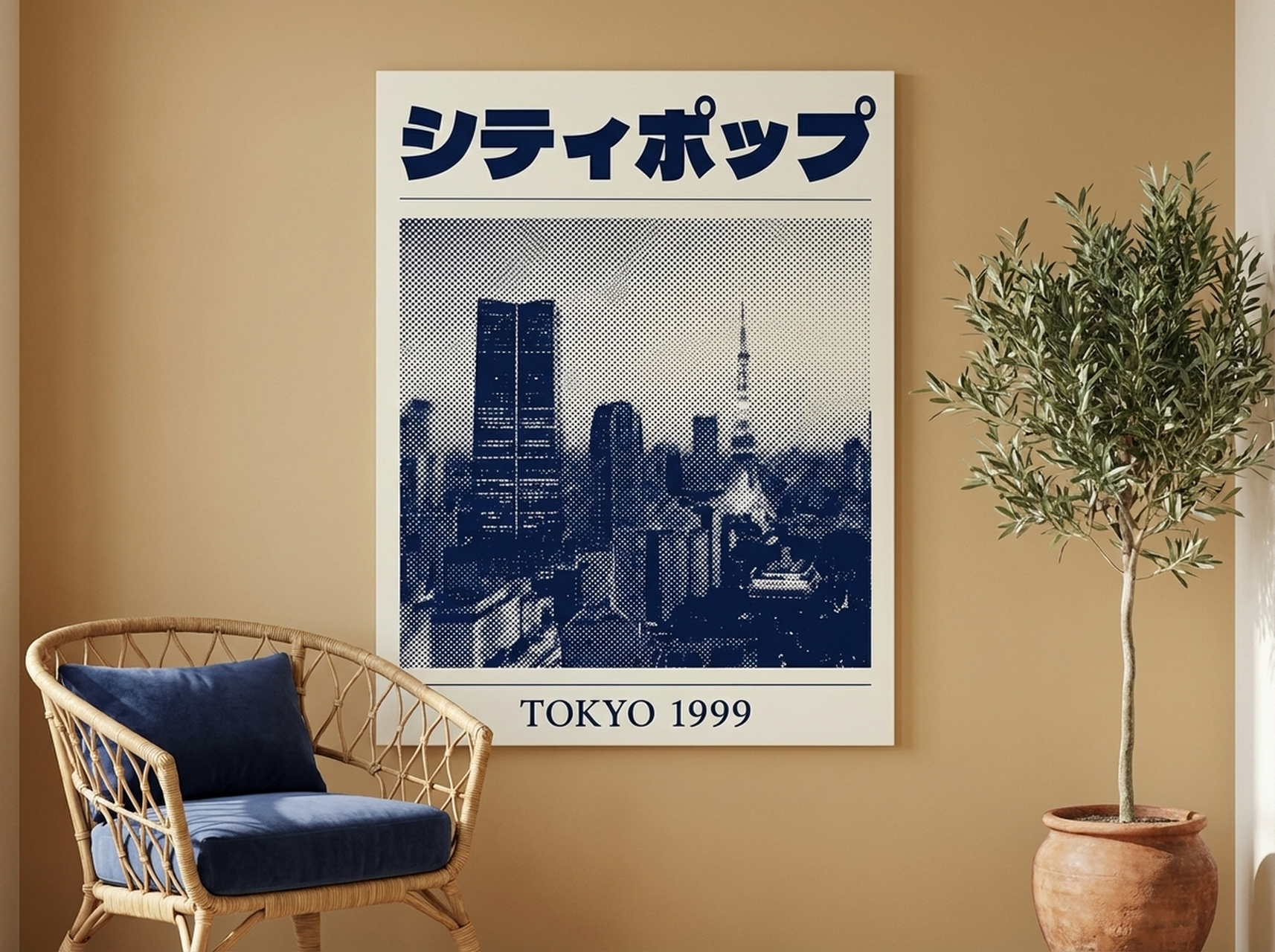
Tokyo City Pop Retro Canvas - Japanese Halftone Navy Blue
This retro Japanese city pop canvas brings graphic energy, cultural depth, and a distinctly contemporary aesthetic that works in modern, eclectic, and maximalist interiors. The halftone print technique and navy blue palette give it a strong graphic presence that reads clearly from across a room, exactly what a focal point piece demands. Against a white accent wall it delivers pure poster-art impact. Against a warm terracotta or rust wall, the navy creates a striking complementary contrast. We have found this piece resonates especially with design-aware buyers who appreciate art that references cultural history while feeling completely current and relevant.
View the Tokyo City Pop Canvas
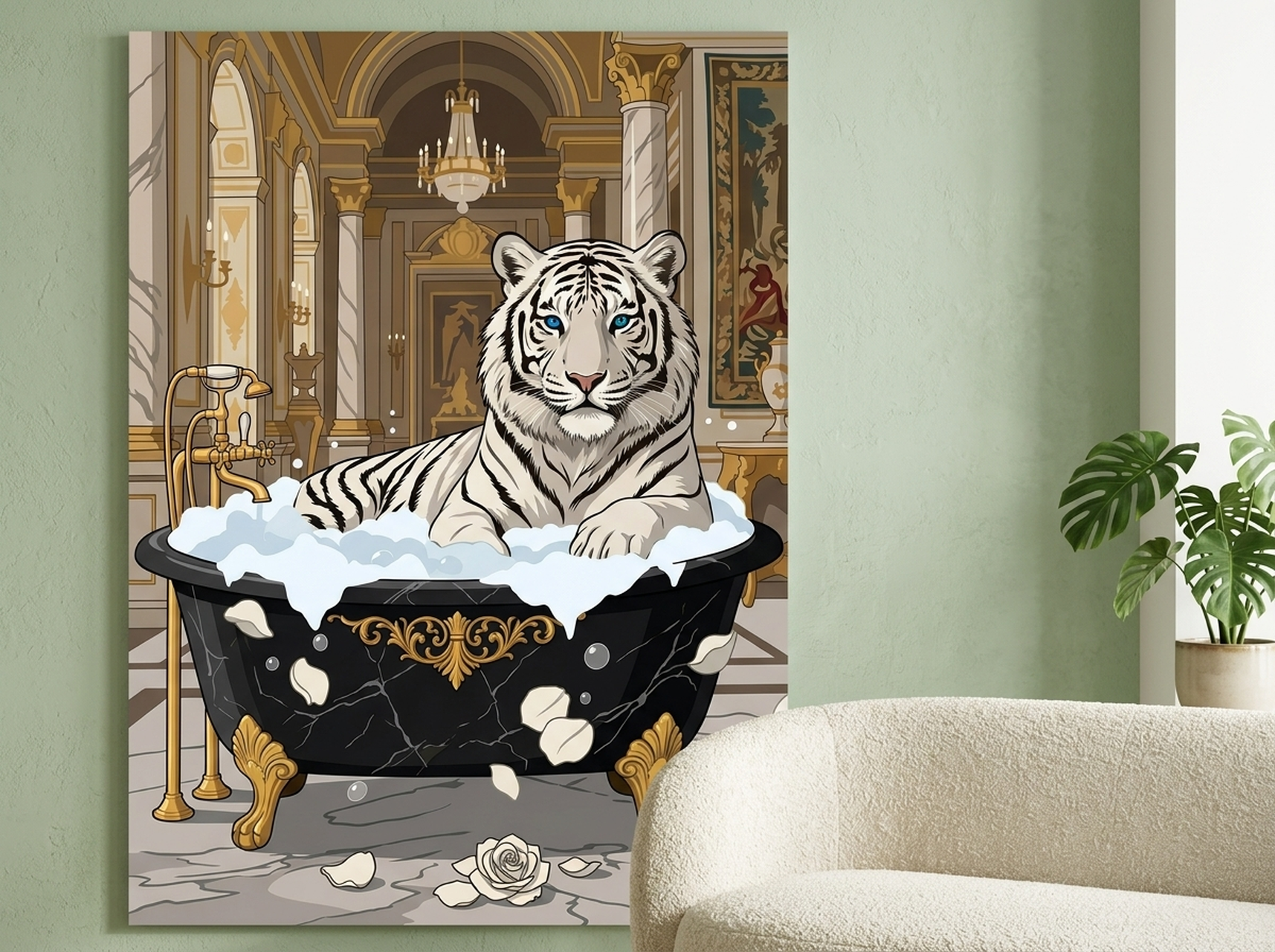
White Tiger Bathtub Canvas - Luxury Maximalist Humor
For rooms that prize personality, wit, and maximalist design confidence, this white tiger bathtub canvas is the statement piece that guests will talk about. The juxtaposition of the wild and the domestic creates an image that is genuinely surprising and genuinely funny, which makes it one of the most memorable focal points in any space. Far from frivolous, this kind of knowing, playful art is a hallmark of the most confident and well-composed interiors. On a dark jewel-toned accent wall, the white tiger pops with striking clarity. On a white or off-white wall it leans into its irreverent, pop-art quality. Either way, it owns the room.
View the White Tiger Bathtub Canvas
Placement Guide: Measurements and Heights
Getting placement right is as important as choosing the right piece. Even the most powerful canvas will underperform if it is hung at the wrong height or positioned incorrectly relative to the furniture below it.
Standard Eye-Level Hanging
The center of any single focal point artwork should sit at 145 to 152 cm (57 to 60 inches) from the floor. This is standard gallery height and has been refined over decades of exhibition practice. It places the most important part of the image at the natural resting height of the human gaze.
Art Above a Sofa
When hanging art above a sofa or console, the bottom edge of the frame should sit 15 to 20 cm (6 to 8 inches) above the top of the furniture. The art should span approximately 55 to 65 percent of the sofa's width. For a standard 200 cm (79-inch) sofa, that means art between 110 and 130 cm (43 to 51 inches) wide. For a maximalist focal point statement, extending to 75 percent of sofa width at 150 cm (59 inches) wide creates a bolder, more contemporary look.
Art as a Standalone Accent Wall Focal Point
When the art is the sole element on an accent wall with no furniture below it, center it horizontally on the wall and position the center at eye level at 145 to 152 cm (57 to 60 inches) from the floor. For very large canvases at 150 cm (59 inches) tall or more, the center height can rise slightly to 155 to 160 cm (61 to 63 inches) to keep the top of the canvas from feeling uncomfortably close to the ceiling in standard-height rooms.
Room-by-Room Size Reference
- Living room accent wall (standard width 300 to 400 cm / 118 to 157 in): single canvas 100 to 150 cm wide (39 to 59 in), or triptych spanning 180 to 240 cm (71 to 94 in)
- Bedroom accent wall behind headboard: canvas spanning 60 to 80 percent of bed width; for a king bed at 193 cm (76 in) that means 116 to 154 cm (46 to 61 in) wide
- Home office feature wall: single statement piece 80 to 120 cm wide (31 to 47 in) positioned behind the desk chair at seated eye level
- Dining room accent wall: one large canvas 90 to 130 cm wide (35 to 51 in) centered on the wall at or slightly above buffet height, or gallery arrangement spanning the full wall width
- Hallway accent wall: tall vertical canvas 50 to 70 cm wide (20 to 28 in) by 80 to 120 cm tall (31 to 47 in), or a horizontal piece 90 to 130 cm wide (35 to 51 in) by 60 to 80 cm tall (24 to 31 in)
For more detailed advice on sizing art to your specific walls, see our guide: How to Choose Wall Art Size for Your Living Room. For oversized pieces specifically, our guide on Oversized Wall Art Ideas for Big Empty Walls covers every room in detail.
5 Common Accent Wall Art Mistakes to Avoid
- Going too small. This is the most common and most damaging mistake. A piece that is too small for its wall disappears visually and makes the room feel unsettled. Always measure your wall and use the sizing guidelines above before purchasing. When in doubt, size up.
- Hanging too high. Art hung near the ceiling loses its connection to the human scale of the room and starts to feel like an afterthought. Keep the center at 145 to 152 cm (57 to 60 inches) from the floor regardless of ceiling height.
- Choosing a piece with no contrast to the wall. A mid-tone art piece on a mid-tone wall will always disappear. Consider the value relationship between wall and art as carefully as you consider color. If your wall is dark, choose art with light or warm elements. If your wall is light, choose art with saturation and depth.
- Scattering too many competing focal points. A room can only have one true focal point. If you have a bold accent wall with art and also a large patterned rug and also a statement lighting fixture all fighting for attention simultaneously, the room will feel chaotic. Let the art lead and support it with quieter, complementary elements.
- Ignoring the furniture relationship. Art on an accent wall does not exist in isolation. It needs to relate to the furniture below or in front of it in terms of width, visual weight, and color family. Art that is dramatically wider or narrower than the sofa below it breaks the visual relationship the room needs to feel cohesive.
For a comprehensive hanging checklist, see our Complete Guide to Hanging Wall Art.
Frequently Asked Questions
What art makes a good focal point?
Art that makes a good focal point has three qualities: sufficient scale (at least 80 cm / 32 inches wide for a single piece), strong contrast with the wall behind it, and bold imagery or color that commands attention from across the room. Portraits, wildlife, abstract pieces with strong compositional lines, and graphic art all perform well as focal points. Delicate, small-scale, or muted pieces rarely have the visual authority to anchor a room.
How big should accent wall art be?
For a typical living room accent wall of 300 to 360 cm (118 to 142 inches) wide, a single focal point canvas should be 100 to 150 cm (39 to 59 inches) wide. Above a sofa, art should span 55 to 65 percent of the sofa's total width. Always size up if you are uncertain between two options. In our experience, art that is too large is extremely rare, while art that is too small is the most common mistake in residential interiors.
What color art looks best on a dark accent wall?
Warm tones perform best on dark accent walls. Gold, cream, amber, warm white, and copper read as luminous against deep charcoal, navy, or forest green backgrounds. Cool-toned art (pale blue, grey, lavender) can also work on dark walls but tends to read as more muted. Avoid mid-tone art that blends into the wall without sufficient contrast.
Should accent wall art match the room's color scheme?
Art does not need to match the room's color scheme exactly, but it should share at least one color relationship with the space. An anchor color that appears in both the art and elsewhere in the room, whether in a throw pillow, rug, or piece of furniture, creates the feeling of a curated, intentional space rather than art that was simply placed on a wall. The strongest accent wall arrangements have art that introduces a new color while echoing existing tones.
Can a single piece of art really transform a room?
Yes, and this is one of the most well-documented observations in interior design. A large, bold, well-placed canvas changes the visual hierarchy of an entire room. It gives the eye a destination, organizes the space around a center of gravity, and communicates the design personality of the room more directly than any other single element. We have seen rooms that were completely unremarkable become genuinely striking after the addition of one correctly sized, correctly placed focal point canvas.
Where should I hang art on an accent wall?
Center the art horizontally on the accent wall and hang it at eye level with the center of the canvas at 145 to 152 cm (57 to 60 inches) from the floor. If hanging above furniture, position the bottom edge of the frame 15 to 20 cm (6 to 8 inches) above the top of the furniture. For rooms with very high ceilings above 280 cm (110 inches), you can raise the center height slightly to 155 cm (61 inches) to maintain the relationship between art and ceiling, but resist the temptation to push art higher than this.
Quick Reference Table
| Product | Statement Style | Best Wall Color | Link |
|---|---|---|---|
| Gold King Portrait | Editorial Luxury Metallic | Deep Charcoal, Navy | View |
| Odin Norse God Canvas | Mythological Drama | Slate, Charcoal, Black | View |
| White Horse Impasto | Classic Equine Elegance | Navy, White, Cream | View |
| Silverback Gorilla Canvas | Bold Wildlife Power | Warm Neutral, Taupe | View |
| Tokyo City Pop Canvas | Graphic Retro Cultural | White, Terracotta, Rust | View |
| White Tiger Bathtub Canvas | Maximalist Luxury Humor | Jewel Tones, White | View |
The Accent Wall You've Been Waiting For
An accent wall anchored by the right art is not a small upgrade. It is a transformation. The room you walk into every day shifts from a collection of furniture and painted surfaces into a space that has intention, energy, and a clear design identity. The research is consistent and the principle is simple: choose a piece with enough scale, enough contrast, and enough visual authority to command the wall, hang it at the right height, and let it do its work.
Every piece in this guide was chosen because it can deliver that transformation. Whether you are drawn to the mythological power of the Odin canvas, the editorial luxury of the gold king portrait, the painterly grace of the white horse, or the knowing wit of the tiger bathtub, each one has what it takes to become the focal point your room has been missing.
Browse the full collection and find your statement piece: Shop All Wall Art at HEVA Unique Art Gallery
For more guidance on building the perfect art display, explore our related guides: Large Canvas Wall Art Statement Ideas, Best Wall Art for Living Rooms in 2026, and our complete Gallery Wall Layout Ideas and Rules.