Modern Wall Art for Open Floor Plans: Flow Tips
The Heva Team
Art Curators & Interior Design Enthusiasts · April 1, 2026 · 13 min read
Learn how to use wall art in open floor plans to define zones and create visual flow. Size, placement, and style tips for connected spaces.
Open floor plans are one of the most sought-after features in modern homes. The sweeping, connected spaces feel airy, social, and effortlessly contemporary. But when it comes to hanging wall art, that beautiful openness can quickly become a decorating puzzle. Without walls to anchor each room, how do you know where to hang what? How do you keep one large artwork from feeling lost, or avoid making your living area bleed visually into the dining zone?
The answer lies in understanding how wall art can work as a spatial tool, not just a decorative one. In an open floor plan, the right art in the right place does the work that walls once did: it defines zones, sets visual boundaries, and ties the whole space together in a seamless flow.
Ready to browse pieces that work in open layouts? Explore our full wall art collection and find the perfect anchor for every zone in your home.
Zone Creation: Using Art to Define Areas
In a traditional home, walls do the zoning for you. In an open floor plan, you need visual anchors to perform the same job. Wall art is one of the most powerful anchors available because it draws the eye, signals purpose, and creates a psychological boundary without blocking light or sightlines.
The key principle is scale. To effectively define a zone in an open floor plan, you need a piece that is large enough to command authority in the space. Interior designers consistently recommend artwork that is at least 90 to 120 cm wide (36 to 48 inches) for open-plan living areas. Anything smaller tends to disappear into the expanse of an open space, looking decorative rather than structural.
Think of each zone as needing its own focal point. The living area needs one anchor wall, ideally above or behind the sofa. The dining zone needs its own piece, typically hung above a sideboard or centered on the adjacent wall. When each zone has its own dedicated art moment, the eye reads them as separate spaces even without physical barriers.
According to Hardt Studio's guide on open floor plan cohesion, establishing distinct focal points is one of the most reliable ways to create zone separation while maintaining overall design harmony. The art does not need to be radically different in each zone; it simply needs to be purposeful and correctly scaled.
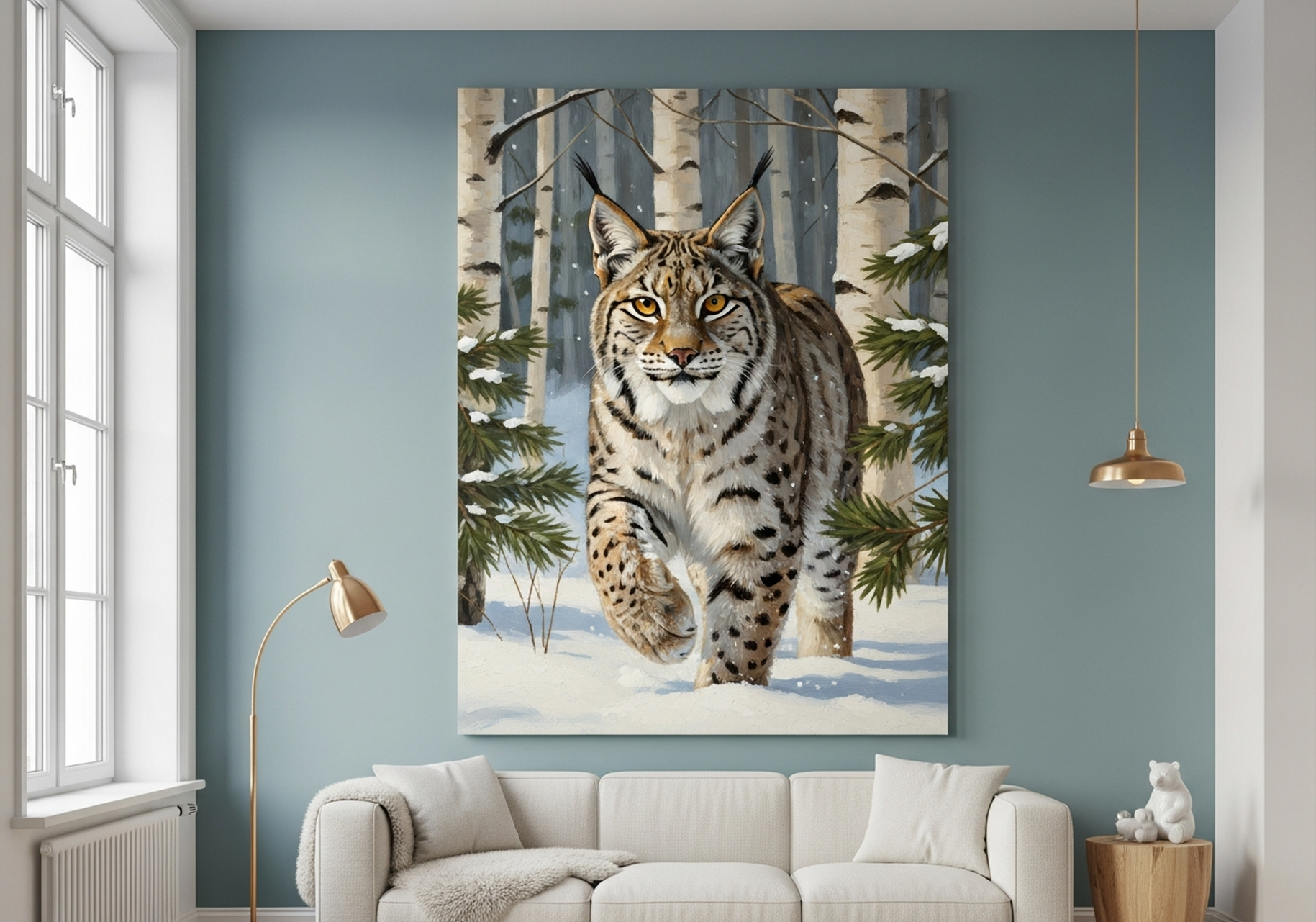
This Lynx Canvas Wall Art in a winter birch forest oil painting style is a perfect hero piece for an open plan living zone. Its dramatic vertical composition and cool Nordic palette commands attention and anchors a seating area without competing with adjacent spaces.
For a deeper dive into sizing art correctly for your main living zone, read our guide on how to choose wall art size for your living room.
Color Flow: Connecting Zones Visually
One of the biggest risks in decorating an open floor plan is visual fragmentation. If the art in each zone operates in a completely different color world, the space can feel choppy and chaotic rather than flowing and connected. Color is the thread that should weave through every zone and tie the whole floor together.
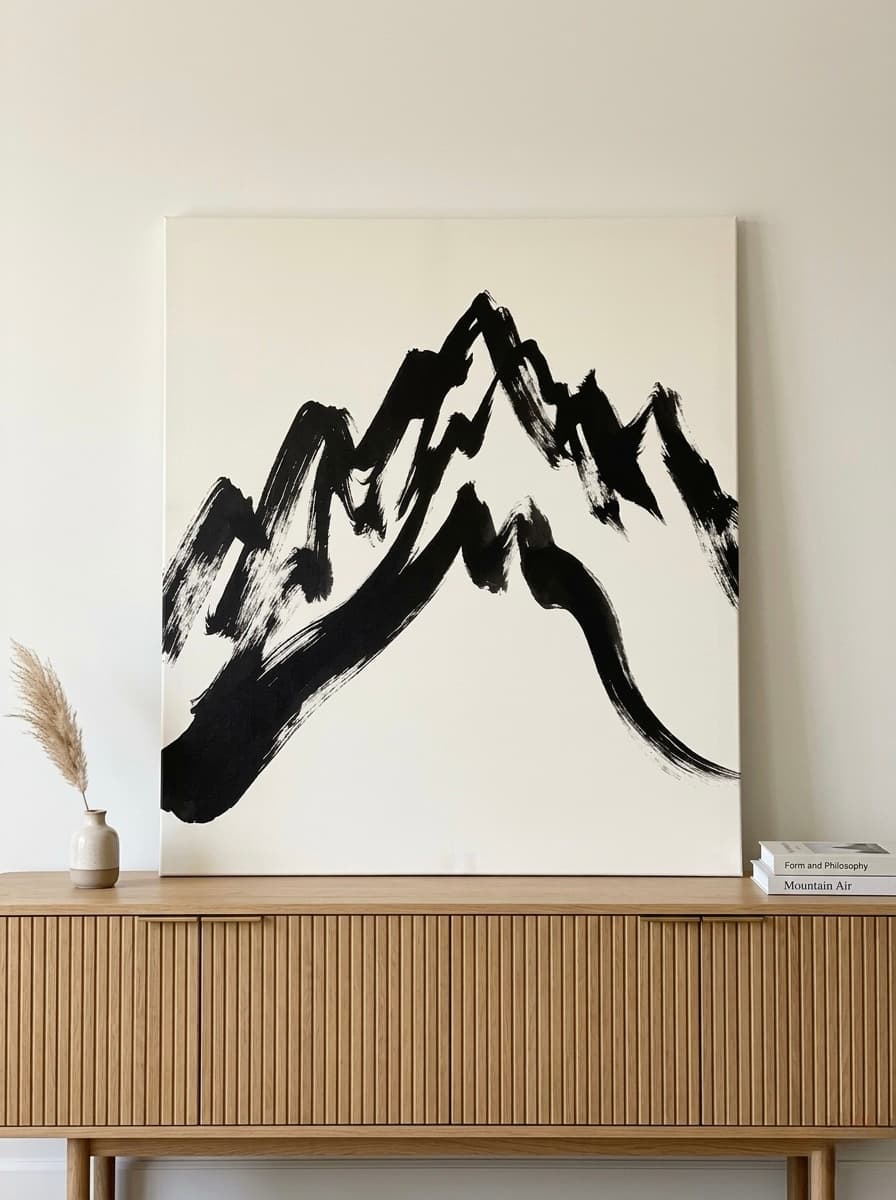
The approach that works best for open floor plans is a shared palette with zonal variation. Choose two to three base tones that will appear across all your art choices, then allow each piece to express those tones differently. For example, if warm earthy neutrals are your thread, your living zone might feature a sweeping mountain landscape with amber and terracotta, while your dining zone carries a wildlife portrait with warm brown tones and muted backgrounds.
The result is a space where the eye moves fluidly from zone to zone because there is always a familiar color note to land on. Homes and Gardens describes this as a foundational principle of interior zoning: using color and visual elements to create both separation and harmony simultaneously.
Warm neutrals, consistent undertones, and nature-inspired palettes are particularly well-suited to open floor plans because they read as cohesive across large distances. Cool greys, blues, and greens from nature scenes also work beautifully, especially when matched with consistent furniture upholstery tones.
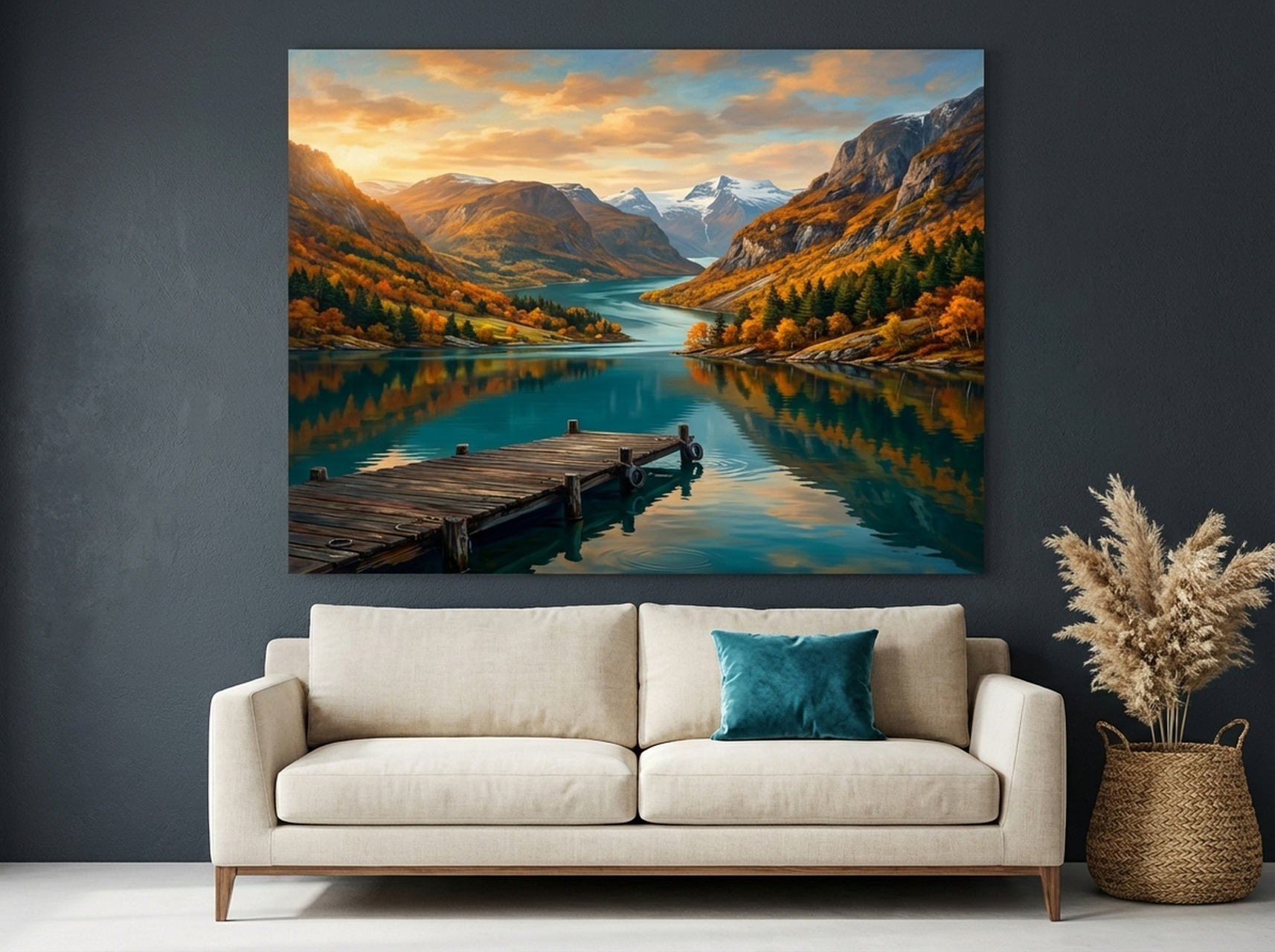
The Norwegian Fjord Mountain Canvas brings rich autumn warmth across its landscape, making it a reliable color anchor for living or dining zones that need earthy grounding. Pair it with the Misty Mountain Valley piece in an adjacent zone for seamless palette continuity.
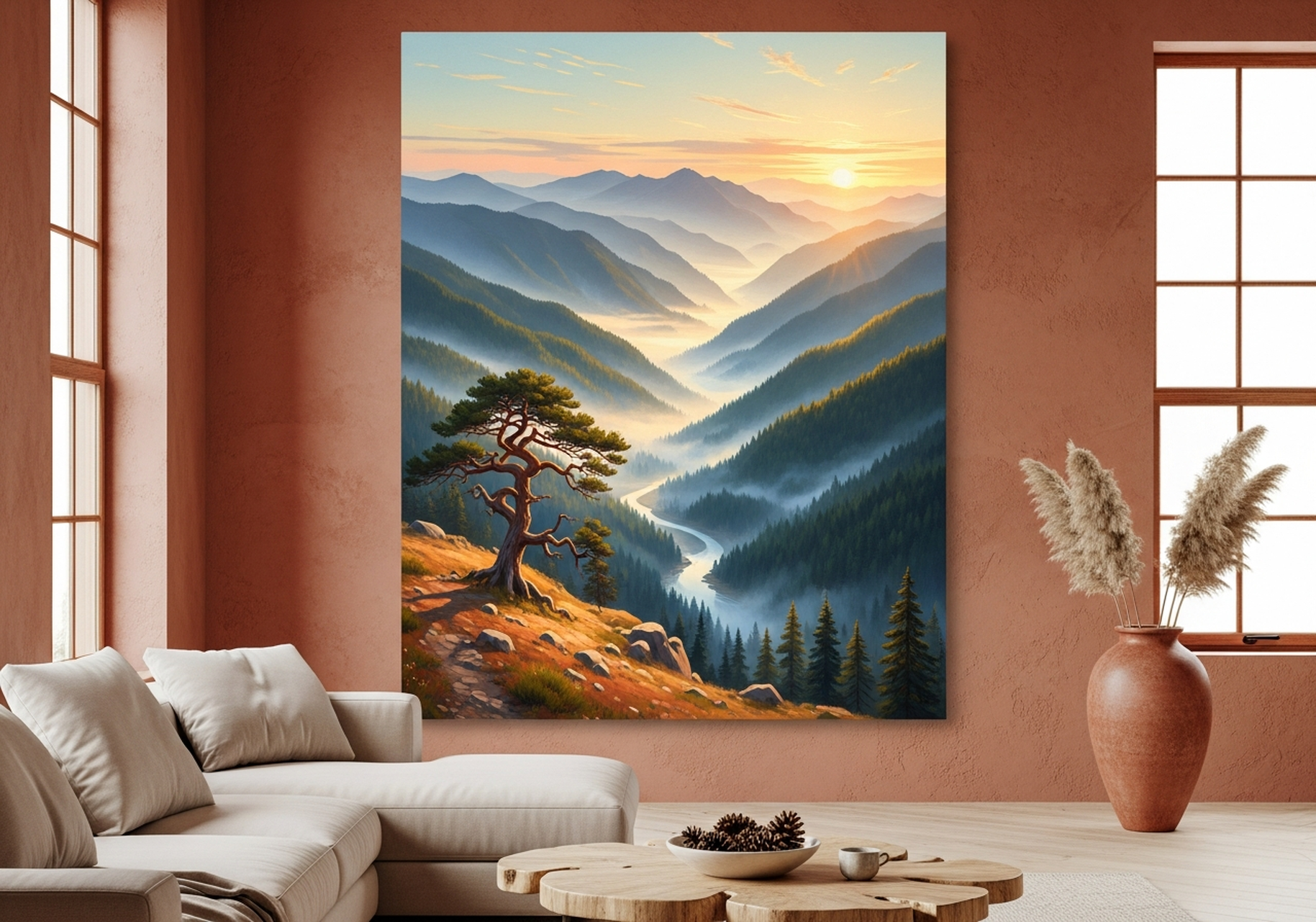
The Misty Mountain Valley Canvas carries warm sunrise golds and misty blues, offering a tonal bridge between warm and cool palettes. In an open floor plan, this kind of transitional piece is invaluable for maintaining flow from one zone to the next.
Scale Rules: Getting the Size Right
Scale is where most people go wrong in open floor plans. They choose pieces that would work perfectly in a traditional room but look underpowered in the context of an open layout. Here are the professional measurements to follow:
- Sofa rule: Your wall art should span at least two-thirds of your sofa's width. For a standard 220 cm (87-inch) sofa, that means a minimum piece width of 145 cm (57 inches). For a smaller 180 cm (71-inch) sofa, aim for at least 120 cm (47 inches) wide.
- Hanging height: The center of your artwork should sit approximately 145 to 152 cm (57 to 60 inches) from the floor, which aligns with average eye level. In open plan rooms with high ceilings, you may go slightly higher, up to 160 cm (63 inches) at center.
- Floor clearance: The bottom of the piece should sit at least 20 to 25 cm (8 to 10 inches) above the top of any sofa or console it hangs above.
- Zone anchor size: For a primary living zone anchor in an open floor plan, pieces should be a minimum of 120 cm (48 inches) wide. For secondary zones like dining or entry, 90 to 100 cm (36 to 40 inches) wide is sufficient.
- Gallery walls in open plans: Treat the entire gallery wall arrangement as a single unit. The combined footprint of the arrangement should follow the same two-thirds sofa rule.
For more detail on gallery wall layouts in open spaces, our gallery wall layout ideas and rules guide walks through exact spacing and composition principles. (source: Architectural Digest)
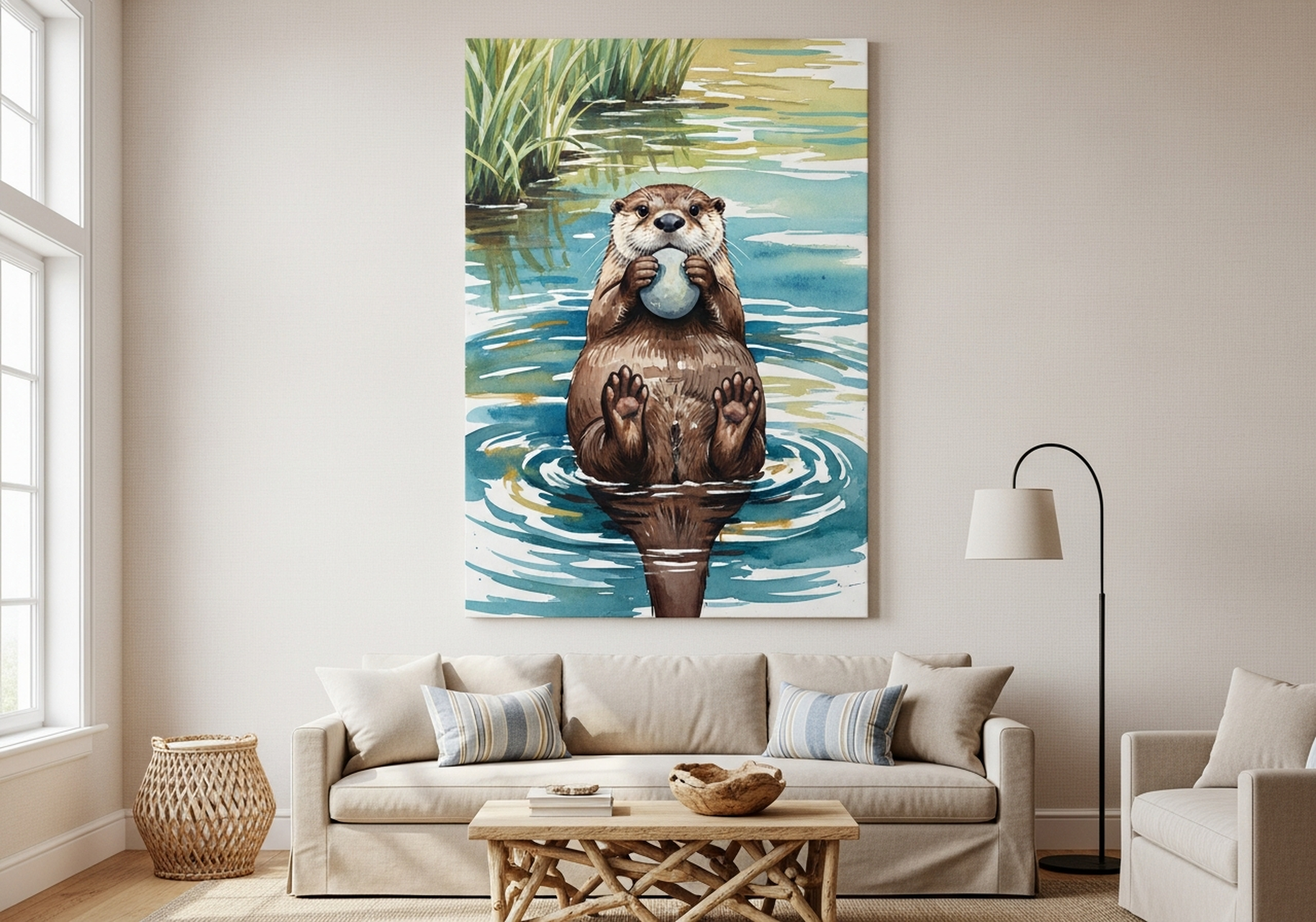
The Otter River Watercolor Canvas with its playful coastal energy works beautifully in a breakfast nook or informal dining zone within an open plan. Size it at 90 cm (36 inches) wide minimum to hold its own in the open space.
6 Wall Art Picks for Open Floor Plans
We selected these six pieces specifically for their ability to anchor zones, carry a palette, and scale appropriately in open floor plan settings. Each one earns its place not just as decoration but as a spatial tool.
1. Mountain Lion Canvas Wall Art
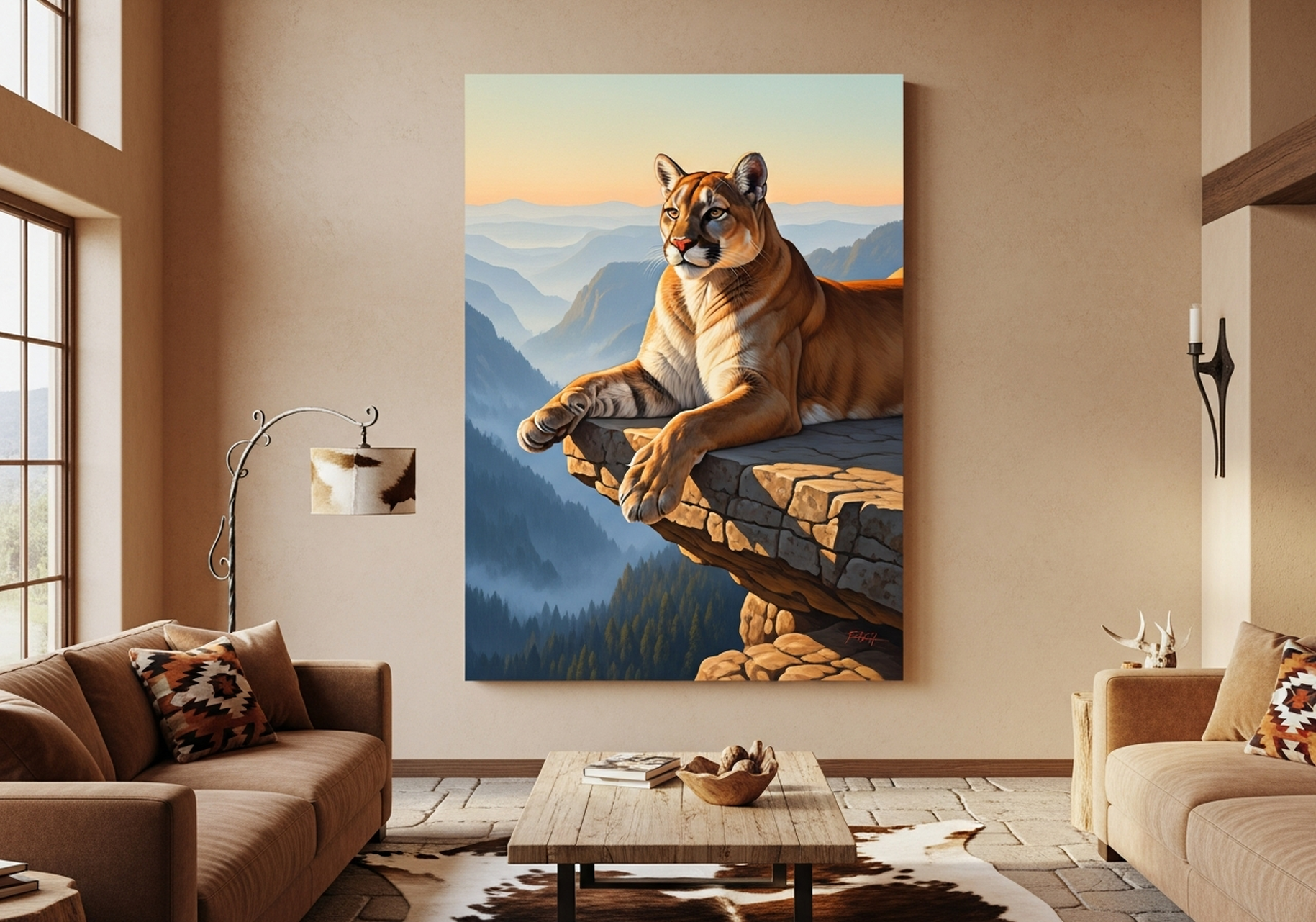
The Mountain Lion Canvas Wall Art brings commanding energy to a living zone. The intense gaze of the cougar creates an instant focal point, pulling the eye and holding it. The warm amber and earthy tones integrate naturally with wood floors, leather sofas, and natural textiles common in Western-inspired open plans. Recommended size: 120 cm (48 inches) wide as a zone anchor.
2. Egret Minimalist Canvas Wall Art
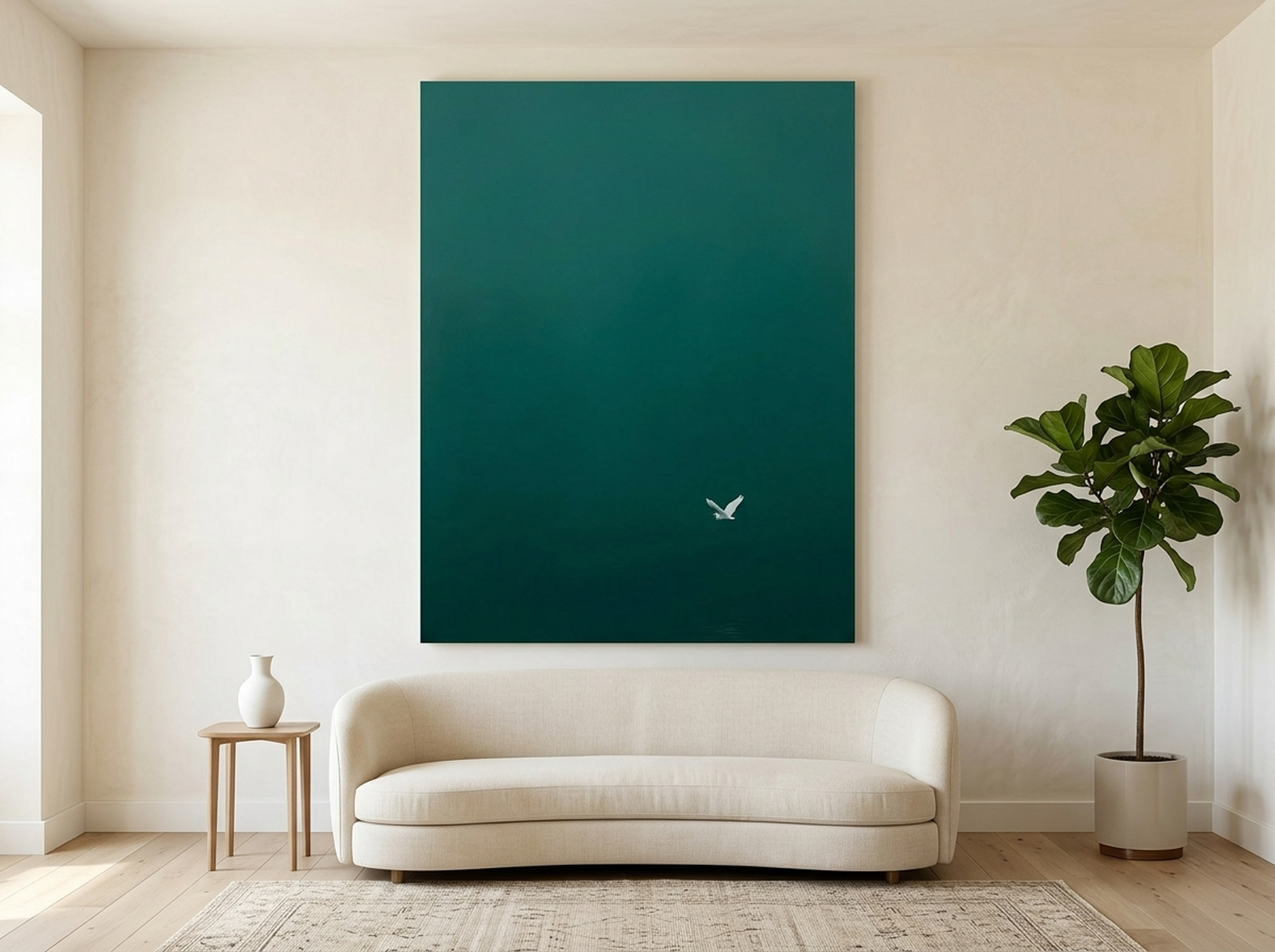
The Egret Minimalist Canvas in teal and soft green is a masterclass in doing more with less. Its clean lines and negative space make it ideal for a dining zone or bedroom alcove in an open plan, where you want presence without visual noise. The teal palette bridges coastal and contemporary styles. Recommended size: 90 cm (36 inches) wide as a secondary zone accent.
3. Black Panther Glitch Art Canvas Print
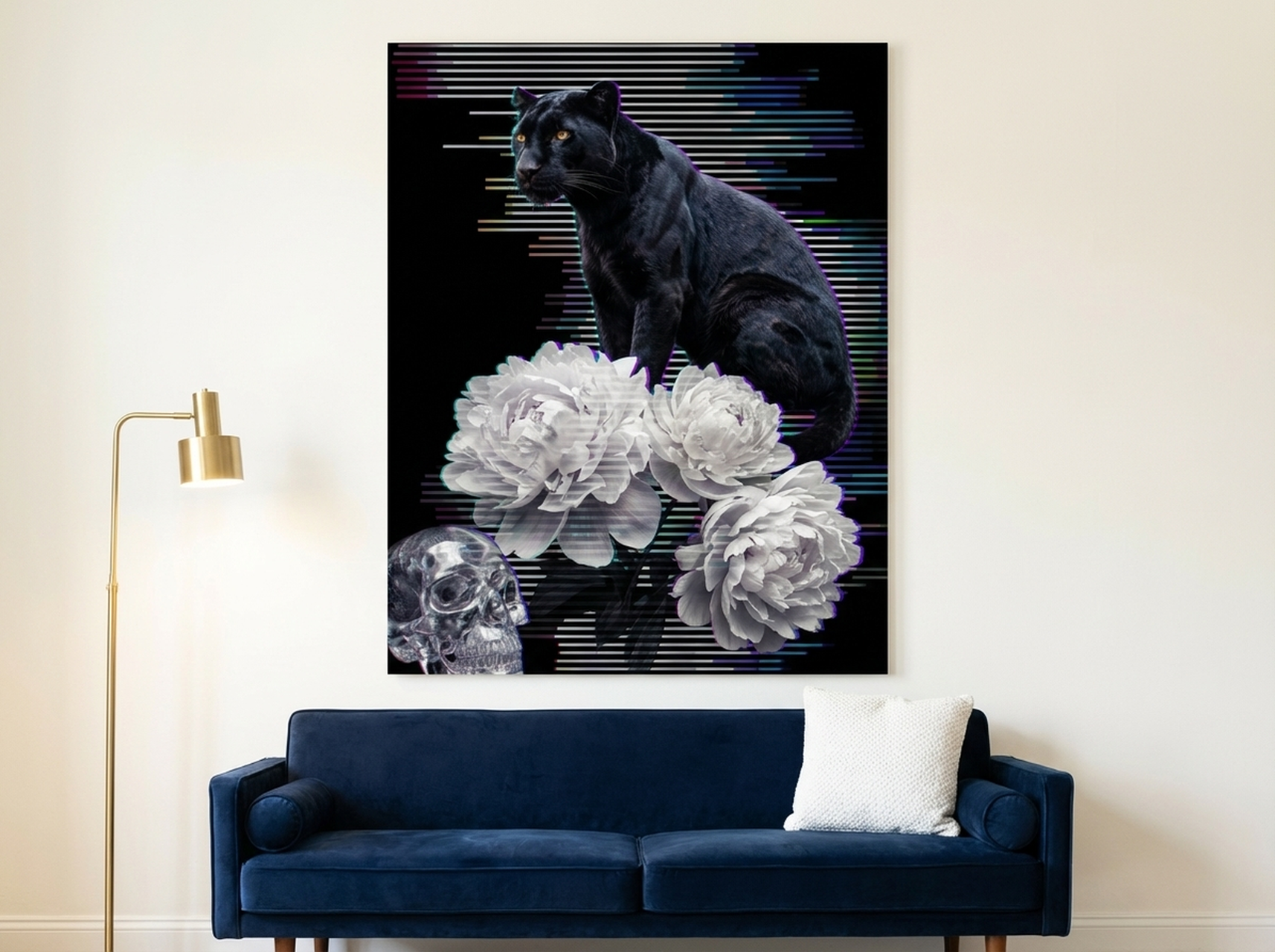
The Black Panther Glitch Art Canvas is built for the statement wall in a modern or eclectic open plan. Its dark floral gothic vaporwave energy creates a strong visual stop, making it perfect for defining the primary living zone in a loft, studio, or contemporary open layout. Pair with dark furniture, metallics, or bold textiles. Recommended size: 120 cm (48 inches) or larger for maximum impact as a primary anchor.
Looking for more large-format ideas? See our full guide on large canvas wall art statement ideas.
Placement Guide with Specific Measurements
Use this guide to position wall art in each zone of your open floor plan with precision:
Primary Living Zone
- Art width: minimum 120 cm (48 inches), ideally 150 cm (60 inches) for large walls
- Center of art: 150 to 152 cm (59 to 60 inches) from floor
- Bottom edge: 20 to 25 cm (8 to 10 inches) above sofa back
- Horizontal position: centered on the sofa or centered on the wall behind the sofa
Dining Zone
- Art width: 90 to 120 cm (36 to 48 inches)
- Center of art: 150 cm (59 inches) from floor when standing, or 120 cm (47 inches) when the art is intended to be viewed while seated
- Best placement: centered above a sideboard, buffet, or the wall adjacent to the table
- Clearance above sideboard: minimum 15 cm (6 inches) above the surface
Entry or Transition Zone
- Art width: 60 to 90 cm (24 to 36 inches)
- Center of art: 145 cm (57 inches) from floor
- Purpose: signal the transition from entry to living zone; use a complementary palette piece, not a competing focal point
Bedroom Alcove or Office Nook in Open Plan
- Art width: 60 to 90 cm (24 to 36 inches)
- Center of art: 145 cm (57 inches) from floor
- Use smaller, quieter pieces with lower contrast that zone the space without creating visual tension
For a complete hanging technique walkthrough, read our complete guide to hanging wall art.
5 Common Mistakes to Avoid in Open Floor Plan Wall Art
- Hanging art too small. A 50 to 60 cm (20 to 24 inch) piece on a large open wall will look lost and decoratively timid. In open floor plans, err large. When in doubt, size up. A piece that feels slightly large in the store will look perfectly scaled on your wall.
- Using completely different palettes in each zone. Each zone can have its own personality, but if the art in the living zone is warm rust and ochre and the dining zone art is cool teal and slate with no connecting notes, the space will feel fractured. Choose a unifying thread before you buy.
- Hanging art too high. This is the single most common wall art mistake in any space, but it is especially problematic in open floor plans with tall ceilings. Hanging art at 180 to 200 cm (71 to 79 inches) at center disconnects it from the furniture and fails to define the zone. Keep the center between 145 and 155 cm (57 and 61 inches) from the floor.
- Placing art without considering sightlines. In open floor plans, art is visible from multiple angles and distances. Before hanging, stand in each zone and look across the space. A piece that looks right when you are standing directly in front of it may read awkwardly from the kitchen or the hallway. Choose placement based on how it reads from the entire open space, not just from one vantage point.
- Over-decorating every wall. The temptation in a large open space is to fill every wall. Resist it. Empty wall space in an open floor plan is not a failure; it is breathing room. Two or three strong, correctly scaled pieces will always outperform eight small ones scattered across the walls. Let each piece be a statement rather than a filler.
For ideas on maximizing a single statement wall, see our guide on oversized wall art ideas for big empty walls.
Frequently Asked Questions
What size wall art is best for an open floor plan?
For a primary living zone in an open floor plan, wall art should be at least 120 cm (48 inches) wide, and ideally 150 cm (60 inches) or larger for expansive walls. Secondary zones like dining areas work well with pieces that are 90 to 120 cm (36 to 48 inches) wide. The key rule is that the artwork should span at least two-thirds of the sofa or furniture piece it anchors above.
How do you create zones with wall art in an open floor plan?
To create zones with wall art, assign each area its own dedicated focal point. In the living zone, hang a large-scale piece above or behind the sofa. In the dining zone, place a separate piece above a sideboard or on the adjacent wall. Each zone's art should be large enough to command that space visually, and the pieces should share a connecting color palette so the overall space reads as cohesive rather than fragmented.
How high should wall art be hung in an open floor plan with high ceilings?
Even in rooms with high ceilings, the center of your wall art should be between 145 and 155 cm (57 and 61 inches) from the floor, aligning with average eye level. In very tall open spaces you can go up to 160 cm (63 inches) at center, but resist the temptation to push art higher just because the ceiling allows it. Art hung too high disconnects from the furniture and loses its ability to define the zone below.
What style of wall art works best for open floor plans?
Nature-inspired landscapes, wildlife portraits, and scenic pieces with consistent tonal palettes work particularly well in open floor plans. These subjects tend to carry warm or cool undertones consistently across the canvas, making it easier to create visual flow from zone to zone. Abstract art can also work well if it shares a limited, cohesive palette. Avoid busy, high-contrast patterns in open plan settings as they can create visual noise that disrupts the sense of flow.
Can you use a gallery wall in an open floor plan?
Yes, gallery walls work very well in open floor plans when properly scaled. Treat the entire gallery wall arrangement as a single unit. The combined footprint of all pieces should span at least two-thirds of the furniture width below it. Use consistent framing (same frame color or material) and a unified color palette across all pieces so the gallery reads as one cohesive element rather than a collection of unrelated items. For a detailed walkthrough, see our gallery wall layout ideas guide.
How many art pieces should you have in an open floor plan?
In a standard open plan that combines living and dining areas, two to three anchor pieces is the ideal number: one primary piece for the main living zone, one secondary piece for the dining zone, and optionally one transitional or accent piece for an entry nook or hallway. Resist the urge to fill every wall. In open floor plans, fewer, larger, well-placed pieces always create a more polished and spatially coherent result than many small pieces scattered throughout the space.
Quick Reference Table
| Product | Zone Use | Recommended Size | Link |
|---|---|---|---|
| Lynx Winter Birch Forest Canvas | Primary living zone hero | 120 cm / 48 in wide | View |
| Norwegian Fjord Mountain Canvas | Living or dining zone anchor | 120 cm / 48 in wide | View |
| Misty Mountain Valley Canvas | Transitional or dining zone | 90-120 cm / 36-48 in wide | View |
| Otter River Watercolor Canvas | Breakfast nook or informal dining | 90 cm / 36 in wide | View |
| Mountain Lion Cougar Canvas | Primary living zone focal point | 120 cm / 48 in wide | View |
| Egret Minimalist Teal Canvas | Secondary zone accent | 90 cm / 36 in wide | View |
| Black Panther Glitch Art Canvas | Statement wall in modern open plan | 120 cm / 48 in or larger | View |
Final Thoughts: Let Art Do the Work
Open floor plans give you freedom, but that freedom requires intention. Without the structure of walls, wall art becomes one of your most essential design tools. The right piece in the right zone, hung at the right height and scaled to fit, transforms an ambiguous open space into a series of purposeful, connected rooms that flow naturally from one to the next.
Start with the largest zone first. Choose a piece that is generously sized, anchors the seating arrangement, and sets the tonal palette for the rest of the space. Then work outward, zone by zone, letting each subsequent piece complement rather than compete with the primary anchor. Keep the palette connected. Keep the scale appropriate. Keep the placement precise.
The result is a home that feels designed rather than decorated, where every square meter of wall space is working in service of the whole.
Ready to find pieces that will define every zone in your open floor plan? Browse the full HEVA wall art collection and start building your open plan art strategy today.