Wall Art for Low Ceilings: Visual Tricks That Add Height
The Heva Team
Art Curators & Interior Design Enthusiasts · April 6, 2026 · 16 min read
You love your home. The light that pours in through the windows, the furniture you chose with care, the colors on the walls. But there is that one thing that nags at you every time you walk into the living room: the ceiling. It sits a little too close, a little too heavy, making the whole space feel compressed no matter what you do. You have tried everything, or so it seems. The truth is, wall art for low ceilings is one of the most effective tools available, and most people are not using it correctly.
The right art, placed in the right way, does not just decorate a room. It reshapes how your brain perceives the room. It pulls your gaze upward, creates a sense of vertical movement, and makes a ceiling that measures 7.5 feet (228 cm) feel like it stretches up to the sky. This guide walks you through exactly how to make that happen, with specific art styles, sizing recommendations, placement rules, and six hand-picked products that work beautifully in low-ceiling rooms.
Browse our full wall art collection to find pieces that will transform how your room feels today.
Why Vertical Art Works Magic for Low Ceilings
Your brain processes rooms by tracking lines. Horizontal lines, like wide furniture, long shelves, and landscape paintings, signal width and spread. Vertical lines, like tall bookshelves, floor-to-ceiling curtains, and vertical wall art, signal height and space. This is not a design theory. It is human visual psychology, deeply wired from millions of years of scanning environments to understand how large and safe a space is.
When you hang a tall, narrow canvas on a wall in a low-ceiling room, you are placing a strong vertical signal directly in the viewer's line of sight. The eye follows the line of the artwork upward, and as it does, the brain recalibrates its estimate of the room's height. The ceiling does not actually move, but your perception of it does. Studies in environmental psychology have consistently shown that vertical elements in interior spaces are perceived as increasing ceiling height by as much as 20 percent compared to rooms with horizontal elements.
This is why art for low ceiling rooms should almost always be tall rather than wide. A canvas that measures 12 inches (30 cm) wide and 36 inches (91 cm) tall is not just a proportion preference. It is a visual instruction to your brain: look up, the room is tall, you have space to breathe.
The effect is even stronger with certain types of imagery. A painting of a single tall flower stem, a slender egret in flight, a narrow botanical illustration, or an abstract piece with strong vertical brushstrokes all amplify the upward movement of the eye. The subject of the art and its orientation work together to create a compounding effect that makes even 7-foot (213 cm) ceilings feel dramatically more open.
For more ideas on using art to reshape perceived space, read our guide on wall art that makes rooms look bigger.
Choosing the Right Art Style
Not all art works equally well in low-ceiling rooms. The style, color palette, subject matter, and composition all play a role in whether a piece helps the room feel taller or inadvertently makes it feel more compressed. Here is what to look for when choosing wall art for small rooms and spaces with low ceilings.
Minimalist Art
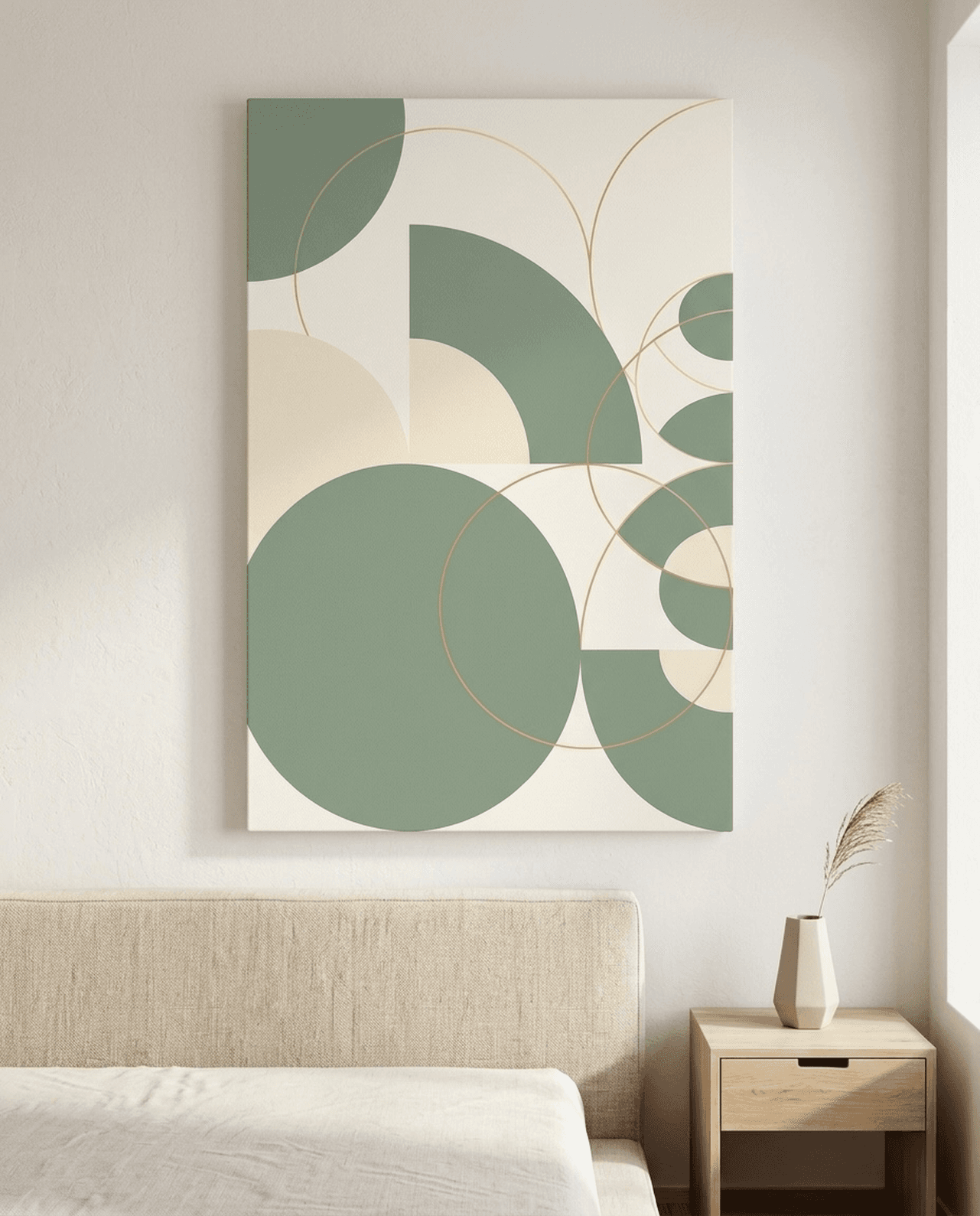
Minimalist wall art is the single most powerful tool for low-ceiling rooms. A piece with abundant negative space, a simple subject, and a restrained palette does several things simultaneously: it creates visual breathing room, it avoids adding visual weight to the ceiling plane, and it lets the vertical dimension of the canvas speak without competition from a busy composition.
Look for pieces where the subject occupies only a portion of the canvas, leaving generous empty space above and below. This empty space is not wasted. It is doing active work, creating the perception of airiness and height.
Botanical and Floral Prints
Botanical illustrations have been interior design favorites for centuries, and for good reason. A single flower stem, a tall orchid, a lotus flower rising from still water, these subjects are naturally vertical. They carry upward movement built into their form. A botanical print in a pale, airy palette is ideal for a low-ceiling room because it combines vertical subject matter with light, expansive color.
Vertical wall art featuring botanicals works especially well in bedrooms and dining rooms, where the ceiling tends to feel most oppressive. The organic shapes of stems and petals also soften the hard geometric line of the ceiling, making the boundary between wall and ceiling feel less abrupt.
Bird and Nature Prints
Birds in flight are one of the most effective imagery choices for low-ceiling spaces. The subject itself implies upward movement, freedom, and open sky. A minimalist bird print on a light or neutral background carries a sense of vertical space that is almost impossible to replicate with other subject matter.
Abstract Vertical Art
Abstract pieces with strong vertical compositions, tall thin shapes, upward brushstrokes, or elongated forms work beautifully in low-ceiling rooms. The key is choosing pieces where the visual energy moves vertically rather than horizontally. Avoid abstract art with strong horizontal bands or wide sweeping compositions.
Color and Palette
Light colors expand space. Dark colors compress it. For wall art in low-ceiling rooms, favor pieces with white or cream backgrounds, pale botanical greens, soft teal, blush, ivory, or gold accents. These colors reflect light and create a sense of airiness. If you love bold color, use it as an accent within an otherwise restrained composition rather than as a dominant background.
See our post on abstract wall art ideas for every room for more guidance on choosing art by style and mood.
Sizing and Placement Guide
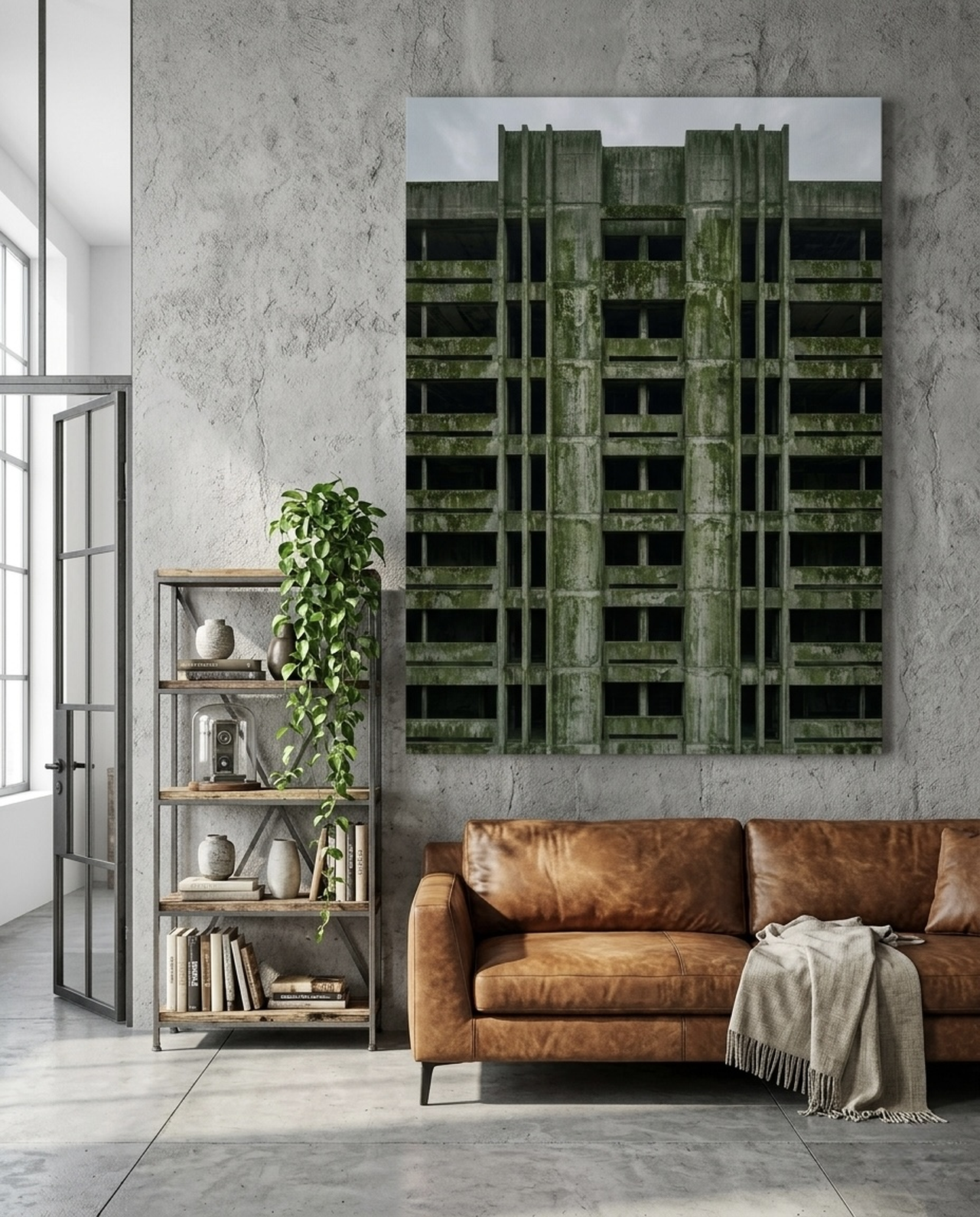
Getting the sizing and placement right is just as important as choosing the right art. Even a perfectly chosen vertical print will lose its height-adding effect if it is hung too low or if it is the wrong size relative to the wall.
Ideal Canvas Sizes for Low-Ceiling Rooms
The golden ratio for low-ceiling rooms is a canvas that is at least twice as tall as it is wide. Here are the most effective sizes:
- Small accent: 8 inches x 24 inches (20 cm x 61 cm)
- Standard single piece: 12 inches x 36 inches (30 cm x 91 cm)
- Statement piece: 16 inches x 40 inches (41 cm x 102 cm)
- Bold focal point: 20 inches x 40 inches (51 cm x 102 cm)
Avoid square canvases (12x12, 16x16, 20x20) and landscape-oriented canvases (wider than tall) in low-ceiling rooms. These proportions emphasize the horizontal plane and will make the ceiling feel lower, not higher.
Hanging Height
The standard rule for hanging art is to center it at 57 to 60 inches (145 to 152 cm) from the floor. In a low-ceiling room, you should break this rule deliberately. Hang your art 2 to 4 inches (5 to 10 cm) higher than standard, positioning the center of the piece at 62 to 66 inches (157 to 168 cm) from the floor. This higher placement shifts the visual weight of the room upward and creates a stronger connection between the art and the ceiling, making both feel more elevated.
Wall Placement
Place vertical art on walls that you see when entering the room or when seated. These are the primary sightlines where the vertical movement will have the most psychological impact. Avoid placing tall narrow art in corners or at the edges of walls where it will be seen only peripherally.
Spacing Between Multiple Pieces
If you are creating a gallery wall in a low-ceiling room, arrange pieces in a vertical column rather than a horizontal row. Space them 2 to 3 inches (5 to 8 cm) apart vertically. The column format reinforces the upward visual movement and avoids the horizontal spread that would draw attention to the ceiling's low height.
Room-Specific Recommendations
For a low-ceiling bedroom measuring 10 x 12 feet (305 x 366 cm): one 16x40 inch (41x102 cm) vertical canvas centered above the headboard, hung so the top of the canvas is 6 to 8 inches (15 to 20 cm) below the ceiling. For a low-ceiling living room: one large 20x40 inch (51x102 cm) statement piece on the focal wall, supplemented by two 8x24 inch (20x61 cm) accent pieces flanking it in a vertical arrangement.
If you are navigating a particularly tricky space, our guide on wall art for awkward spaces, corners, and nooks offers targeted advice for unusual layouts.
6 Perfect Picks for Low-Ceiling Rooms
Each of the six pieces below was selected specifically for its ability to add visual height to a room. They share three qualities: vertical or upward-oriented composition, a light or restrained palette, and a minimalist or botanical subject that does not compete with the ceiling line. Every one is available as a canvas print from Heva Unique Art Gallery.
1. Egret Canvas Wall Art
The egret is one of nature's most elegant vertical subjects. A bird with a long neck, long legs, and wide wings catching air, it is a living illustration of upward movement. The product with UUID cdf0e3a7-fc93-41c9-8272-0c875ac51c0d pairs this beautiful subject with a teal-green minimalist palette that reads as light and airy against any wall color. Hang it at 64 inches (163 cm) center height for maximum height-adding effect.
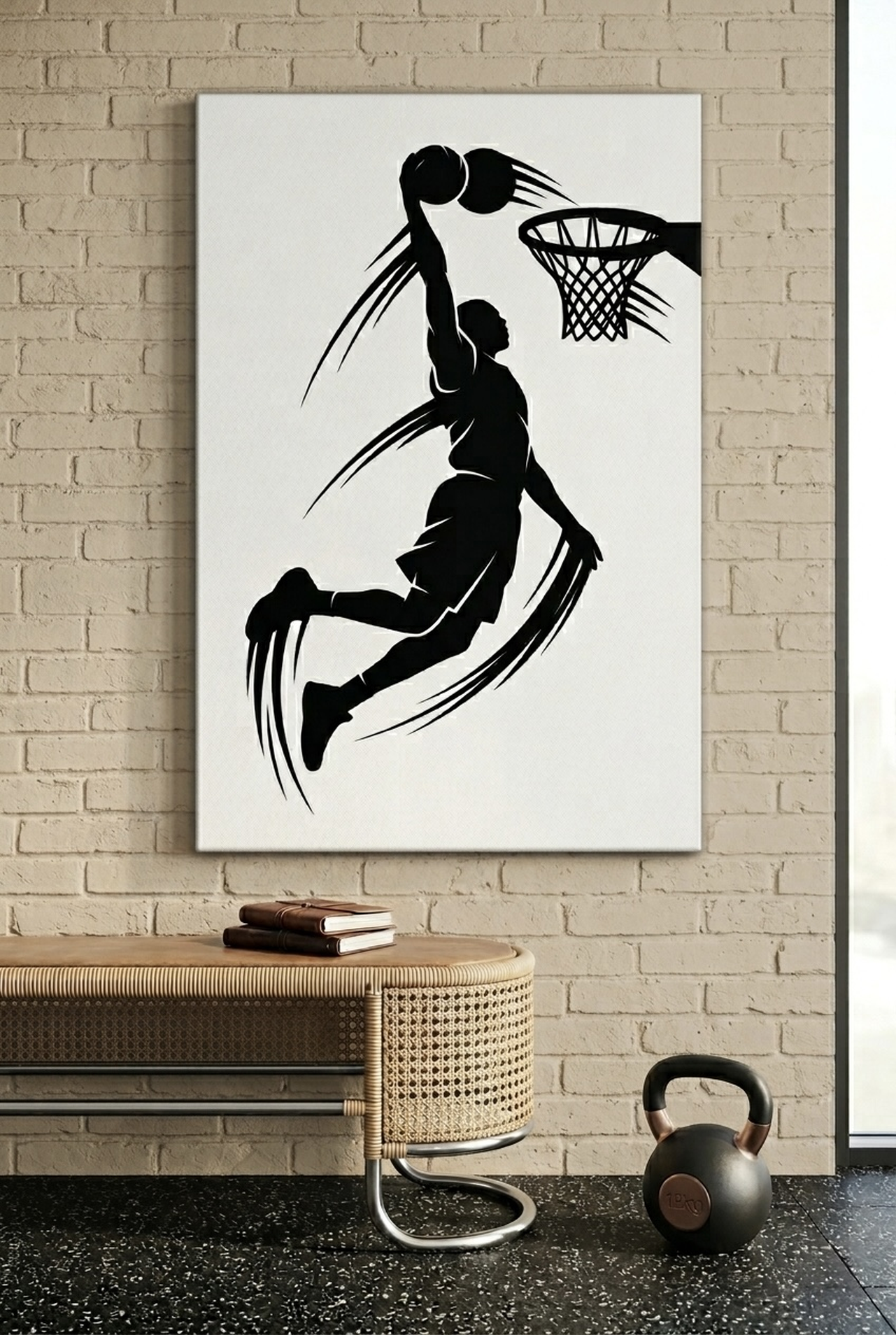
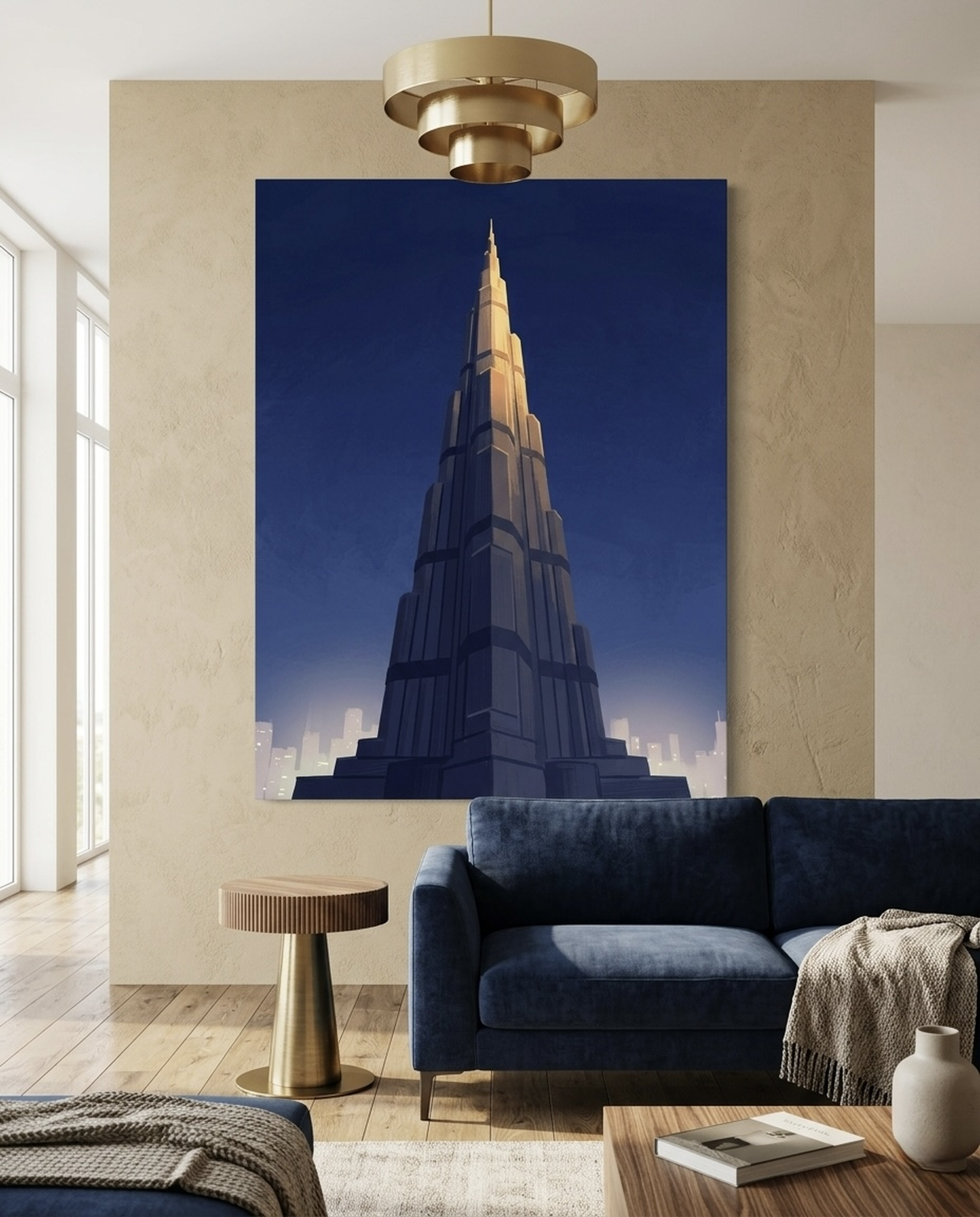
2. White Orchid Botanical Print
Orchid stems are one of the most naturally vertical subjects in botanical art. This white orchid illustration features a slender stem rising gracefully from the base of the canvas to the top, making it ideal wall art for small rooms and spaces where height is at a premium. The product UUID c2375e4c-b398-4465-a549-21ae4d366658 renders the orchid in pale cream and white tones that keep the composition light and expansive. Place this above a console table or nightstand where the vertical line will anchor the room.
3. Lotus Flower Gold Leaf Print
The lotus is a powerful symbol of elevation and upward growth, rising from water toward light. The piece with UUID 5e0a82a2-bd6c-49ed-9994-4d53d478cce7 renders this subject in striking black and gold, a combination that adds warmth and sophistication without darkening the room. The gold accents catch light and create a luminous quality that makes the wall feel further away. This is an excellent choice for dining rooms and entryways with low ceilings where you want a statement piece with real presence.
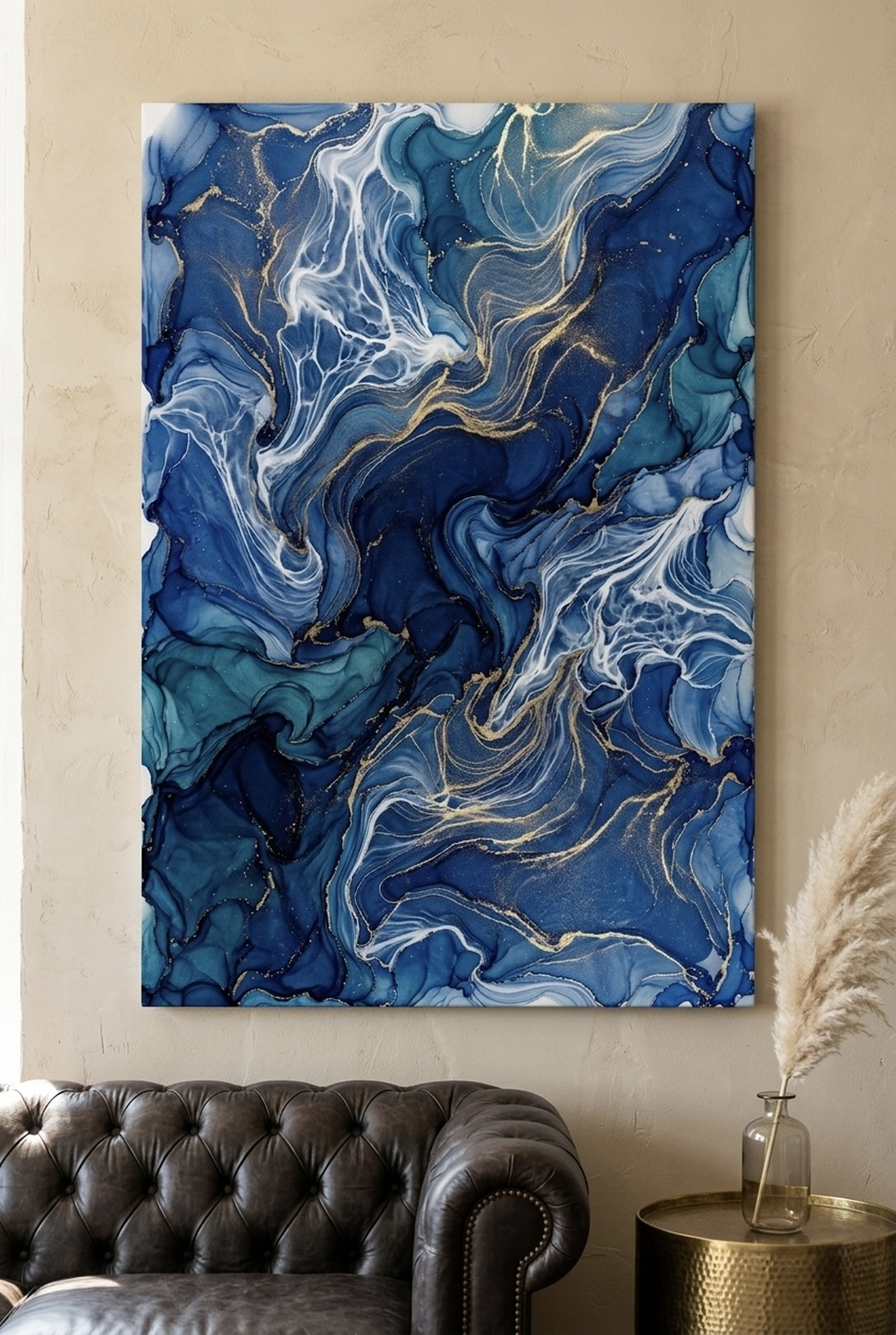
4. Allium Floral Impasto Print
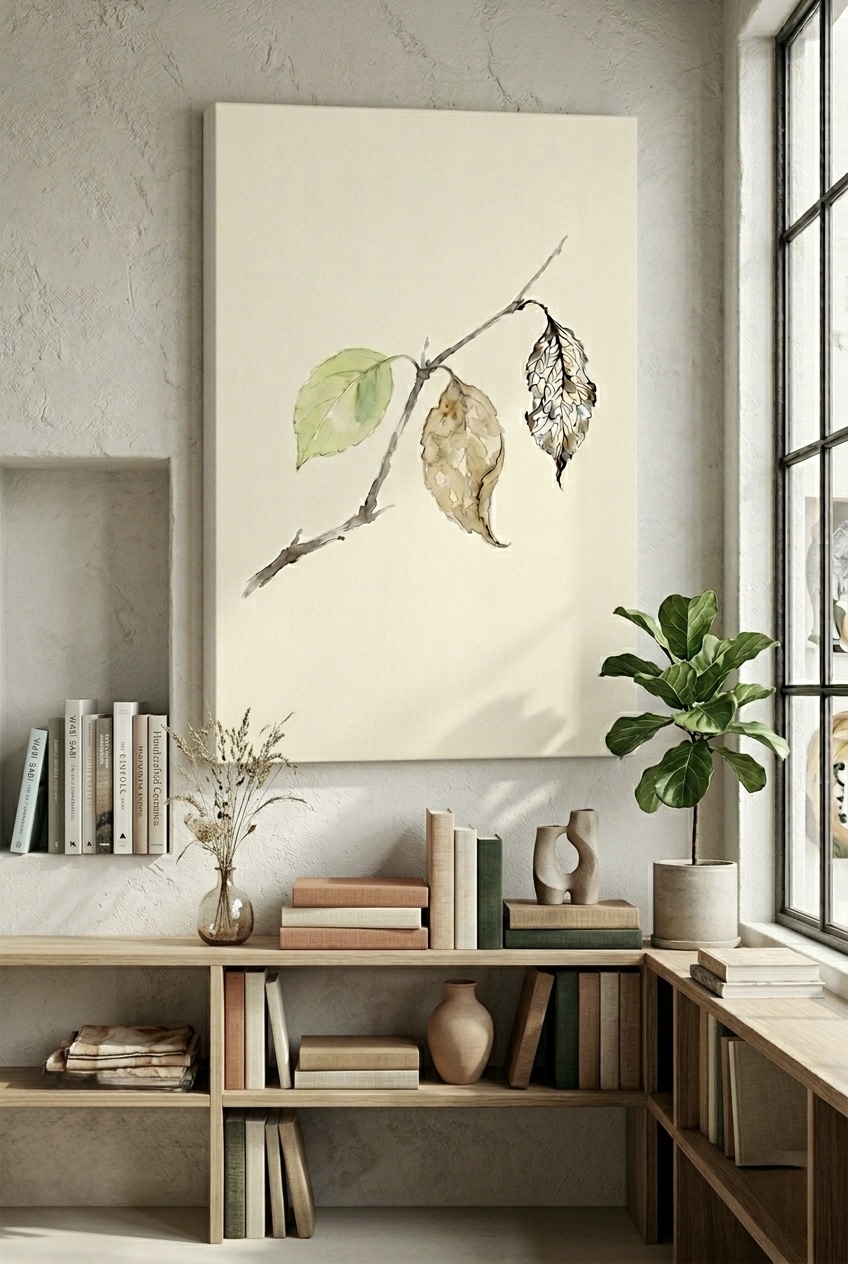
The allium flower, with its tall thin stem and perfect spherical bloom, is a natural height-adding subject. Product UUID fdadae51-b43b-4011-b62f-4f27dc1338b4 captures the allium in an impasto style with a lavender and silver palette that is at once modern and elegant. The long visible stem makes the vertical movement explicit, while the soft palette keeps the composition from feeling heavy. This piece is particularly effective in low-ceiling living rooms and studios where you want art that feels artistic and intentional.
5. Woman Peony Fashion Print
The human figure is one of the most naturally vertical subjects in art. This fashion editorial piece featuring a woman with peony florals, UUID 253ee1e8-fde5-4654-9eb5-03513e40080c, uses a flat vector style in champagne and ivory tones to create a piece that is both contemporary and height-enhancing. The standing figure creates a strong vertical axis, while the flat design style keeps visual weight minimal. This is a beautiful choice for bedrooms and dressing areas where a low ceiling meets a desire for elegant, fashion-forward decor.
6. Yin Yang Cranes Japanese Ink Print
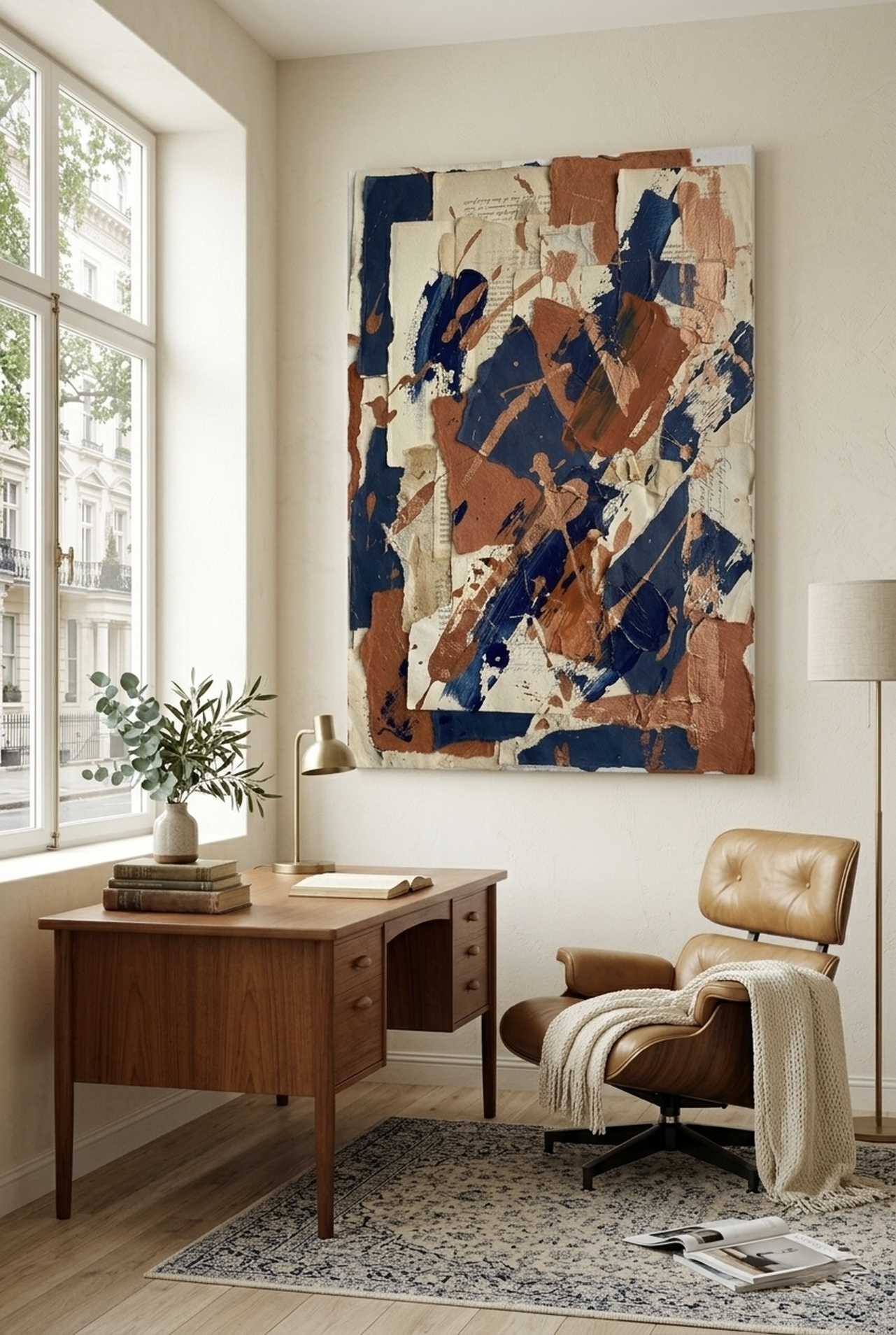
Cranes are an iconic symbol in Japanese art, representing longevity, grace, and upward aspiration. The yin yang cranes piece with UUID 74bfda20-8dc9-4820-8bbf-11c2d705ce23 renders two cranes in dramatic black, white, and red in a classic ink painting style. The birds in motion create strong diagonal lines that move upward through the composition, while the minimal background keeps the space feeling open. This piece brings a sense of zen calm and visual height that is ideal for living rooms, meditation spaces, and any low-ceiling room that needs a focal point with genuine artistic depth.
5 Common Mistakes to Avoid
Even with the right art, common placement and selection errors can undo all the work you have done to add visual height. Here are the five most frequent mistakes people make when choosing and hanging wall art low ceilings rooms, and how to avoid each one.
Mistake 1: Hanging Art Too Low
The most common mistake in low-ceiling rooms is following the standard 57-inch center rule without adjustment. In a low-ceiling room, this places the center of the art in the lower half of the wall, visually weighting the room downward. Always hang art 2 to 4 inches higher than standard in low-ceiling spaces. The top of the canvas should ideally be within 6 to 10 inches (15 to 25 cm) of the ceiling to create a strong visual connection between the art and the ceiling plane.
Mistake 2: Choosing Wide, Horizontal Art
Landscape-oriented canvases, wide panoramic prints, and art arranged in horizontal rows all emphasize the width of a room at the expense of its height. In a low-ceiling room, these choices are visually counterproductive. If you have a piece you love that is horizontal, consider placing it lower on the wall and pairing it with a tall narrow piece above it to reintroduce vertical movement.
Mistake 3: Using Dark, Heavy Compositions
Art with very dark backgrounds, dense compositions, or heavily saturated colors adds visual weight to the wall and makes the ceiling feel lower. This does not mean you must avoid color entirely. But in a low-ceiling room, favor pieces where light and air are dominant, with color appearing as accent rather than ground.
Mistake 4: Overcrowding the Wall
More art does not mean more height. A wall covered with many small pieces creates visual noise that draws the eye sideways and downward rather than upward. In low-ceiling rooms, less is more. One or two well-chosen vertical pieces will do more for the room's perceived height than a dozen small prints arranged in a grid. If you want a gallery wall effect, keep it to a single vertical column of three pieces maximum.
Mistake 5: Ignoring the Rest of the Room
Vertical wall art works best as part of a coordinated approach to the room. Pair your tall vertical art with other height-emphasizing choices: floor-to-ceiling curtains hung just below the ceiling molding, tall bookshelves, floor lamps rather than table lamps, and furniture with visible legs that lets the eye travel to the floor. Art is powerful, but it is most powerful in a room where everything is working together to signal height and space.
For guidance on choosing between single large pieces and multiple smaller ones in any room, see our post on small vs large wall art: which to choose.
Frequently Asked Questions
What type of wall art works best for low ceilings?
Tall, vertical pieces work best for low ceilings. A single narrow canvas measuring 12 inches (30 cm) wide by 36 inches (91 cm) tall draws the eye upward and creates the illusion of added height. Minimalist prints with clean lines, botanical illustrations, and bird prints on light backgrounds are especially effective.
How high should I hang art in a room with low ceilings?
Hang art higher than you normally would, placing the center of the piece at or slightly above eye level, around 60 to 66 inches (152 to 168 cm) from the floor. Positioning artwork closer to the ceiling rather than the middle of the wall draws the eye upward and makes the ceiling feel farther away.
Should I use one large piece or multiple small pieces in a low-ceiling room?
For low ceilings, a single tall vertical piece is more effective than multiple small pieces. Small pieces tend to spread the eye horizontally, which emphasizes the width rather than the height of the room. If you prefer a gallery wall, arrange pieces in a vertical column rather than a horizontal row.
What colors in wall art help low ceilings feel higher?
Light, airy colors work best. Whites, creams, soft greens, pale blues, and gold tones create an open, expansive feel. Dark, heavily saturated pieces can close in a space visually. Choose art with a light or white background and subjects rendered in delicate, restrained palettes.
Can minimalist wall art make a room feel taller?
Yes, minimalist wall art is one of the most powerful tools for visually raising a ceiling. Clean compositions, generous negative space, and simple botanical or abstract subjects keep the eye moving upward without adding visual weight that would make the ceiling feel lower.
What size art should I choose for a low-ceiling room?
Choose portrait-oriented canvases that are taller than they are wide. Ideal sizes for low-ceiling rooms include 12x36 inches (30x91 cm), 16x40 inches (41x102 cm), and 20x40 inches (51x102 cm). Avoid square or landscape-oriented canvases as these emphasize width over height.
Quick Reference Table
| Art Choice | Effect on Low Ceiling | Recommended Size | Hang Height (center) |
|---|---|---|---|
| Vertical botanical print | Excellent - draws eye up | 12x36 in (30x91 cm) | 64 in (163 cm) |
| Minimalist bird print | Excellent - upward movement | 16x40 in (41x102 cm) | 64 in (163 cm) |
| Abstract vertical art | Good - vertical lines help | 20x40 in (51x102 cm) | 65 in (165 cm) |
| Square canvas | Neutral - neither helps nor hurts | 16x16 in (41x41 cm) | 60 in (152 cm) |
| Landscape/horizontal art | Negative - emphasizes width | Avoid in low-ceiling rooms | N/A |
| Dark, busy composition | Negative - adds visual weight | Avoid in low-ceiling rooms | N/A |
| Vertical gallery column | Excellent - amplifies height | 3x (8x24 in / 20x61 cm) spaced 3 in apart | Top piece at 72 in (183 cm) |
Wall art for low ceilings is not about trickery. It is about understanding how the eye moves through a room and giving it a compelling reason to move upward. The right vertical canvas, hung at the right height, in a restrained and airy palette, genuinely transforms how a room feels. Not just how it looks, but how it feels to stand in it, live in it, breathe in it.
Every piece in our collection is printed on premium gallery-quality canvas and designed to bring beauty and intention to your home. Whether you are working with a studio apartment, a converted basement bedroom, or a charming older home with characterful low ceilings, the right art is waiting for you.