Sage Green Wall Art: The 2026 Color Trend Guide
The Heva Team
Art Curators & Interior Design Enthusiasts · May 21, 2026 · 11 min read
Sage green is the calm color trend of 2026. Six canvas picks, color pairings, room-by-room placement, and sizing tips for a soft, modern look.
If you have been scrolling Pinterest or watching interior designers on TikTok, you have probably noticed one shade taking over the feed: soft, dusty, slightly muted sage green. It is the color of eucalyptus stems, weathered linen, and that one calming jumper everyone owns. Sage green wall art has quietly become the most-requested color story of 2026, and the reason is simple. It works with almost every interior style without ever feeling loud.
Ready to browse? Explore our botanical and sage-toned collection or keep reading for our top picks and expert tips on bringing this trend home.
What You Will Find in This Guide
- Why sage green is the 2026 color story
- The psychology of sage green at home
- How to pair sage green with other colors
- Our six favorite sage green canvas picks
- Room-by-room placement guide
- Sizing, hanging height, and lighting
- Common mistakes to avoid
- Sage green wall art FAQ
- Quick reference table
Why Sage Green Is the 2026 Color Story
Sage sits on the cool, dusty side of the green family. It is closer to gray than emerald, and that gentle desaturation is exactly why it has overtaken brighter greens in trend forecasts this year.
Sherwin-Williams has named several sage-adjacent tones in its recent annual color collections, and Benjamin Moore's October Mist drew sustained attention as a soft sage neutral that pairs beautifully across rooms. The bigger story is that homeowners are gravitating away from cold gray walls and toward warmer, plant-inspired tones that feel grounded without becoming saturated or "trendy" in a way that dates quickly.
In our experience helping customers choose canvases, sage green has the rare quality of feeling both fresh and timeless. A buyer might style it in a Japandi bedroom today and a cottagecore guest room three years from now, and the piece still works.
The Psychology of Sage Green at Home
Green sits in the middle of the visible light spectrum, and that physiological midpoint matters. A 2015 randomized crossover study published in the Journal of Physiological Anthropology found that even brief interaction with indoor plants reduced both psychological stress and autonomic nervous system activity. Sage-toned art is not a literal plant, but it carries the same visual cues the brain associates with restorative environments.
What makes sage different from a vivid forest green is its low chroma. The muted quality means the brain reads it as a "rest" color, similar to how it processes soft beige or pale gray, while still carrying the calming associations of nature. That is why sage tends to land best in bedrooms, reading nooks, and bathrooms rather than high-energy rooms like home gyms.
The Environmental Protection Agency notes that adults in the United States spend roughly 90 percent of their time indoors, so the color cues on our walls have an outsized effect on mood. Choosing a nature-inspired tone like sage is one of the simplest ways to nudge an indoor space toward something more restorative.
How to Pair Sage Green With Other Colors
Sage is forgiving, but a few pairings sing louder than others. Here are the four combinations we recommend most often.
Sage and warm cream
This is the safest, most universally flattering pairing. Cream walls let sage do the talking, and the combination reads as soft, lived-in, and grown-up. Add a natural oak frame or rattan accent to anchor the look.
Sage and dusty pink
For bedrooms and feminine reading corners, sage and a chalky pink create a balanced, modern romantic palette. The pink keeps the room from drifting too neutral while sage prevents the pink from feeling overly sweet.
Sage and terracotta
If you want warmth and a slightly bohemian edge, pair sage with terracotta, rust, or burnt orange. These earthy complements pull from opposite sides of the color wheel and feel especially good in Mediterranean and Southwestern-leaning interiors.
Sage and black
For a sharper, more contemporary mood, frame sage canvases in matte black and pair them with charcoal or navy textiles. The contrast prevents sage from leaning rustic and pushes it toward gallery-quality modern.
For a deeper dive into mixing these tones across a whole room, our guide to mixing wall art styles walks through how to keep a multi-piece arrangement cohesive.
Our Six Favorite Sage Green Wall Art Picks
Below are six pieces from our gallery that capture the breadth of sage green's range, from minimalist abstract to soft botanical to vintage woodland.
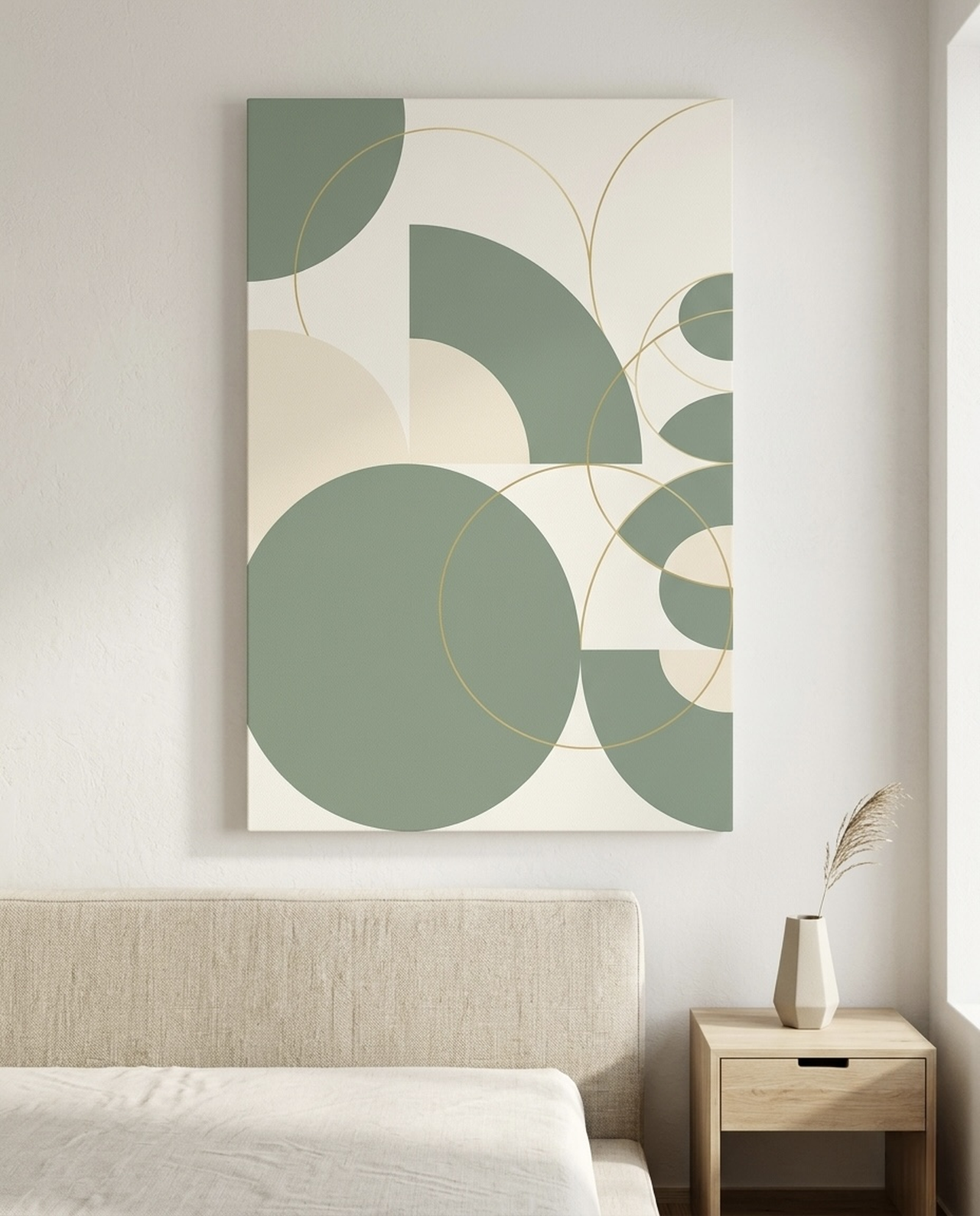
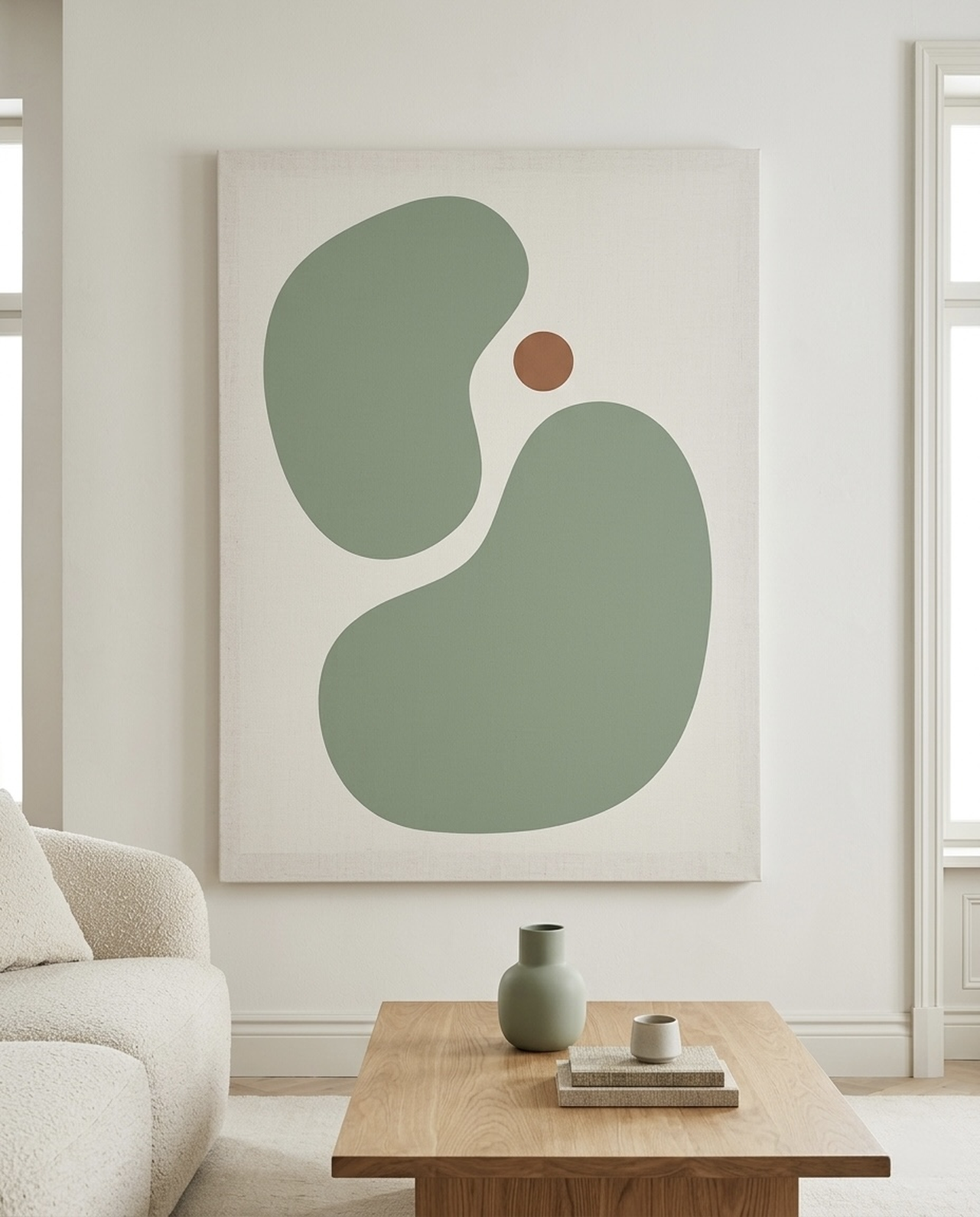
1. Sage Green Organic Shapes Canvas
This is sage at its most modern. Soft, hand-painted organic shapes float across a cream background in three values of sage, giving the piece quiet movement without any single dominant focal point. It works particularly well above a low cream or oat-colored sofa where the negative space lets the canvas breathe.
We recommend the 24 by 36 inch (61 by 91 cm) size for a single sofa and the 30 by 40 inch (76 by 101 cm) size if you have an open wall over a console table. See the Sage Green Organic Shapes Canvas.
2. Eucalyptus Branches Watercolor Canvas
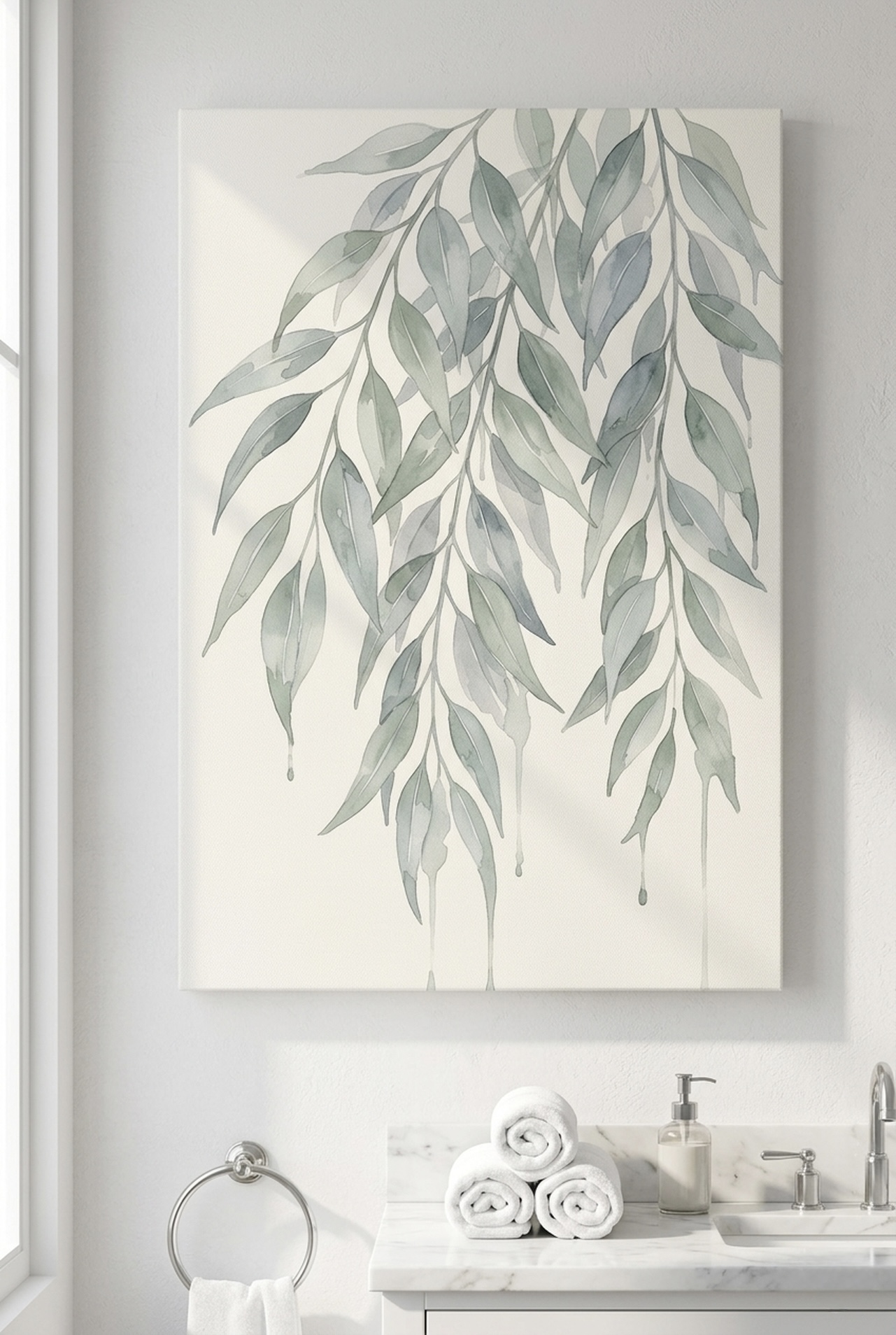
If you love the idea of sage but want something more representational, eucalyptus is the gateway. The leaves carry a true silvery sage tone, and the soft watercolor handling here keeps the piece from feeling like a botanical poster. It is one of the most-requested calming bedroom canvases in our shop.
Our customers tell us this one looks particularly striking in a portrait orientation, hung above a dresser or beside a reading chair. Explore the Eucalyptus Branches Watercolor Canvas.
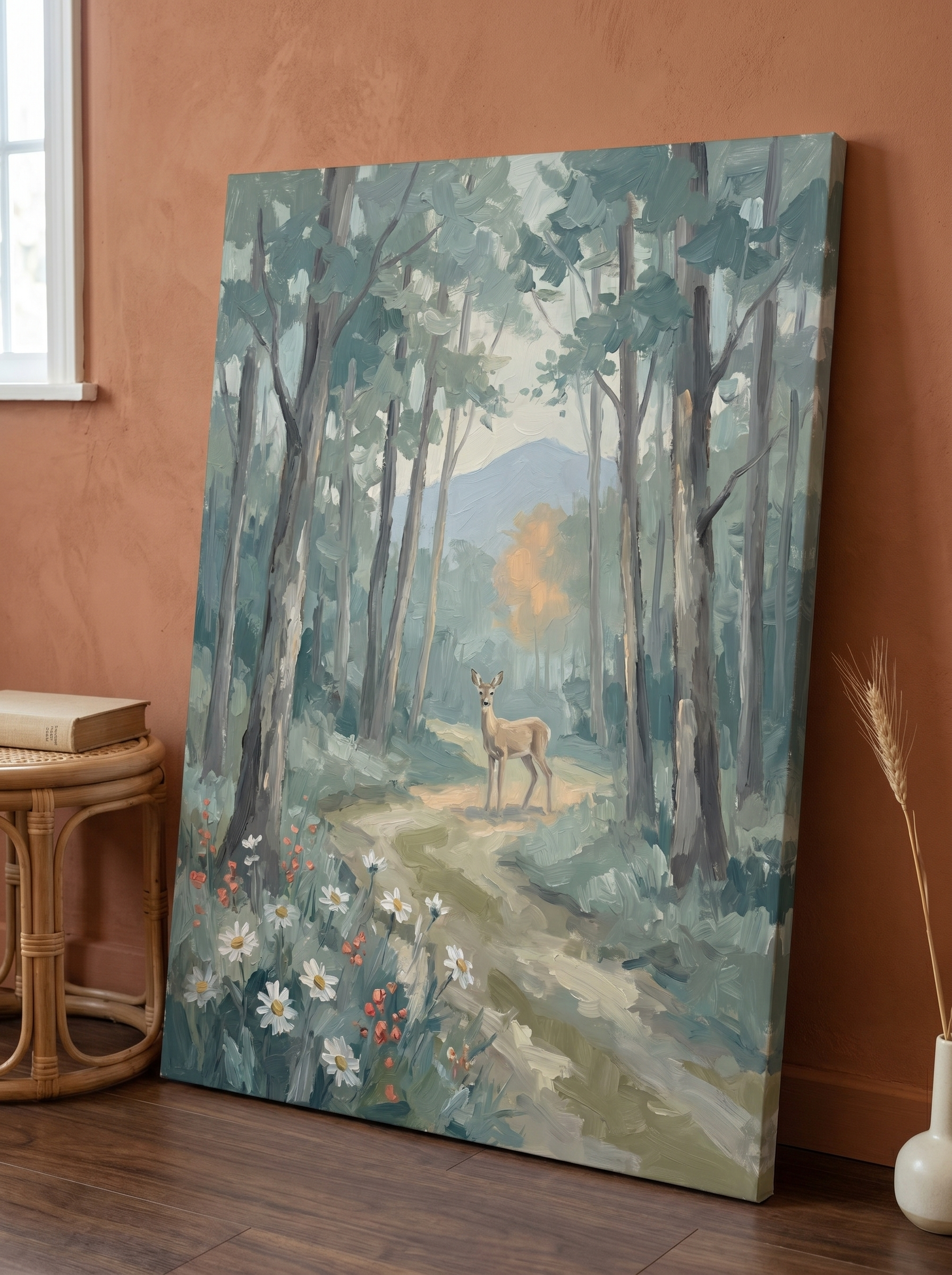
3. Forest Deer Wildflower Path Canvas
For anyone whose home leans cabin, woodland, or cottagecore, this vintage-styled landscape brings sage into a narrative scene. The mossy greens layer beautifully with creamy wildflowers and a soft fawn-colored deer, evoking the kind of dusty oil paintings you would find in a grandparent's reading room. It is a quiet, story-rich piece rather than a graphic statement.
This canvas pairs especially well with warm wood paneling and tan leather. View the Forest Deer Canvas.
4. Coastal Sage Palm Tree Canvas
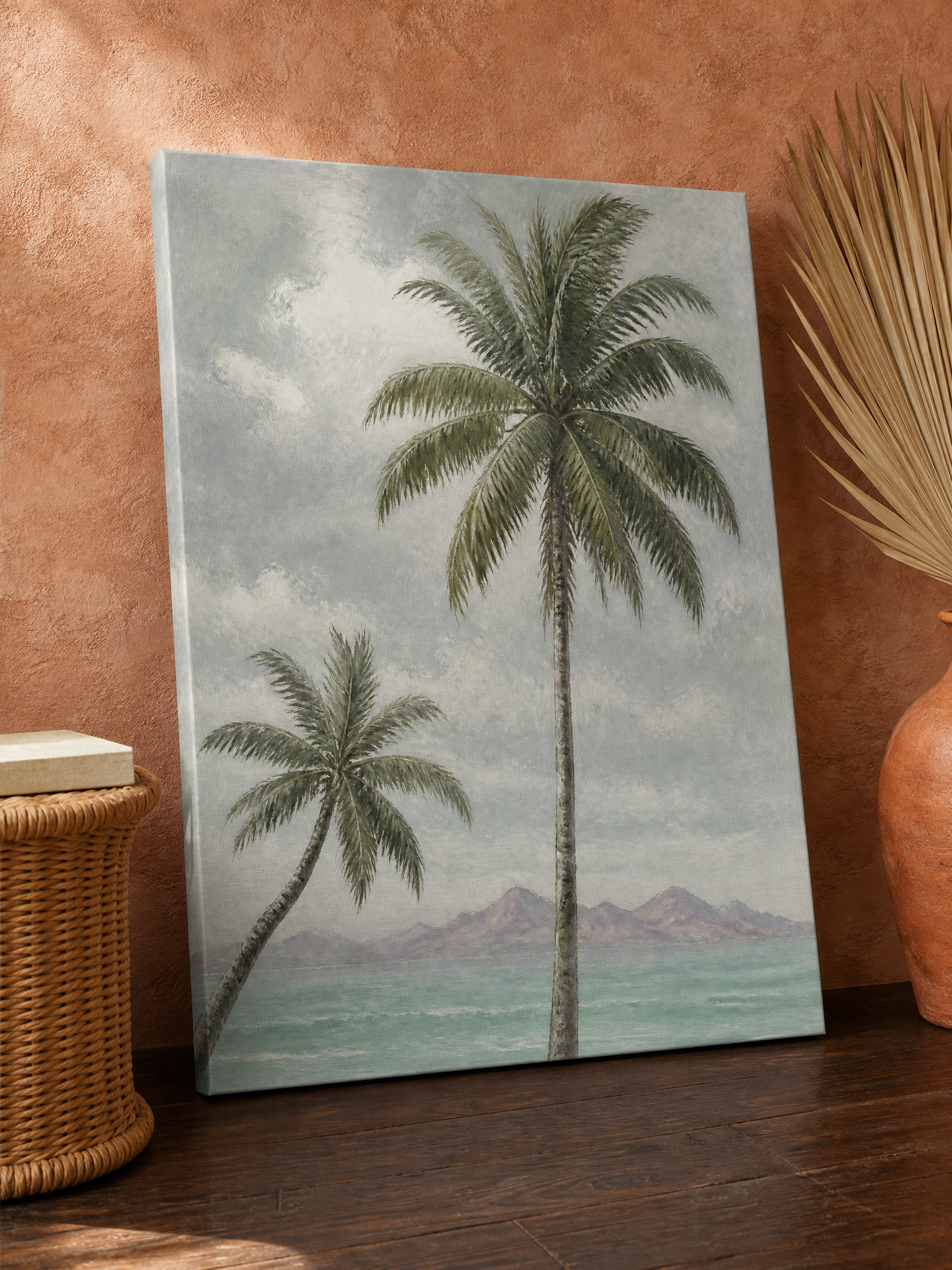
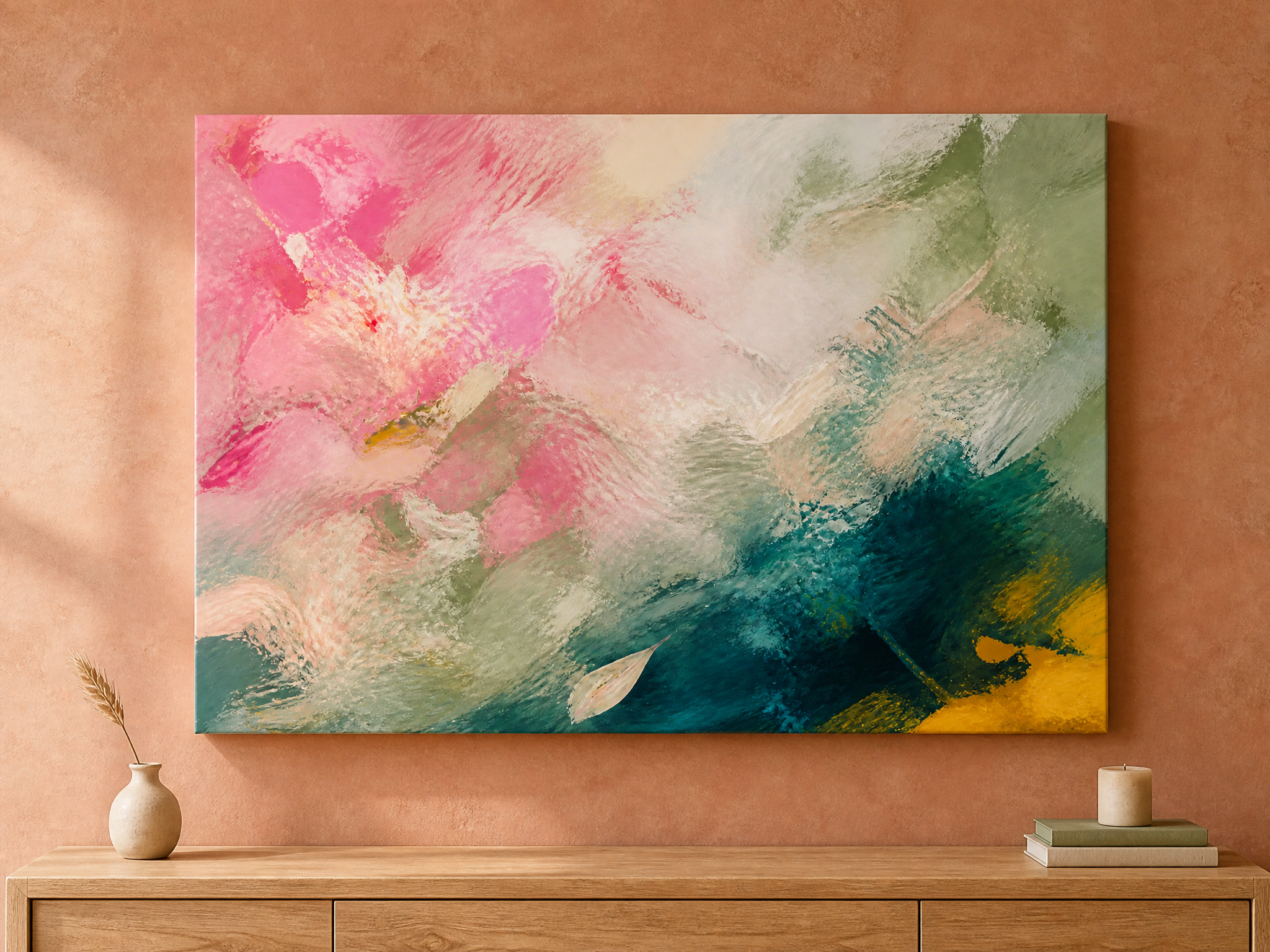
Most coastal art leans hard into blue. This canvas takes the opposite approach: a single hand-painted palm in dusty sage with muted cream backdrop, more reminiscent of a Mediterranean villa than a typical beach print. It is the kind of piece that quietly elevates a coastal grandmother room without ever shouting "beach house."
It looks especially good paired with rattan, woven jute, and bleached oak. Browse the Coastal Sage Palm Tree Canvas.
5. Pink Sage Abstract Expressionist Canvas
This is our favorite illustration of how sage pairs with dusty pink. The brushwork is loose and confident, with sage and chalk-pink fields layered into a calm but expressive composition. We recommend it for primary bedrooms, soft offices, and any room where you want a hint of romance without the room reading sweet.
Try it above a velvet bench or a tufted headboard for maximum contrast. Discover the Pink Sage Abstract Canvas.
6. Mid-Century Modern Dandelion Canvas
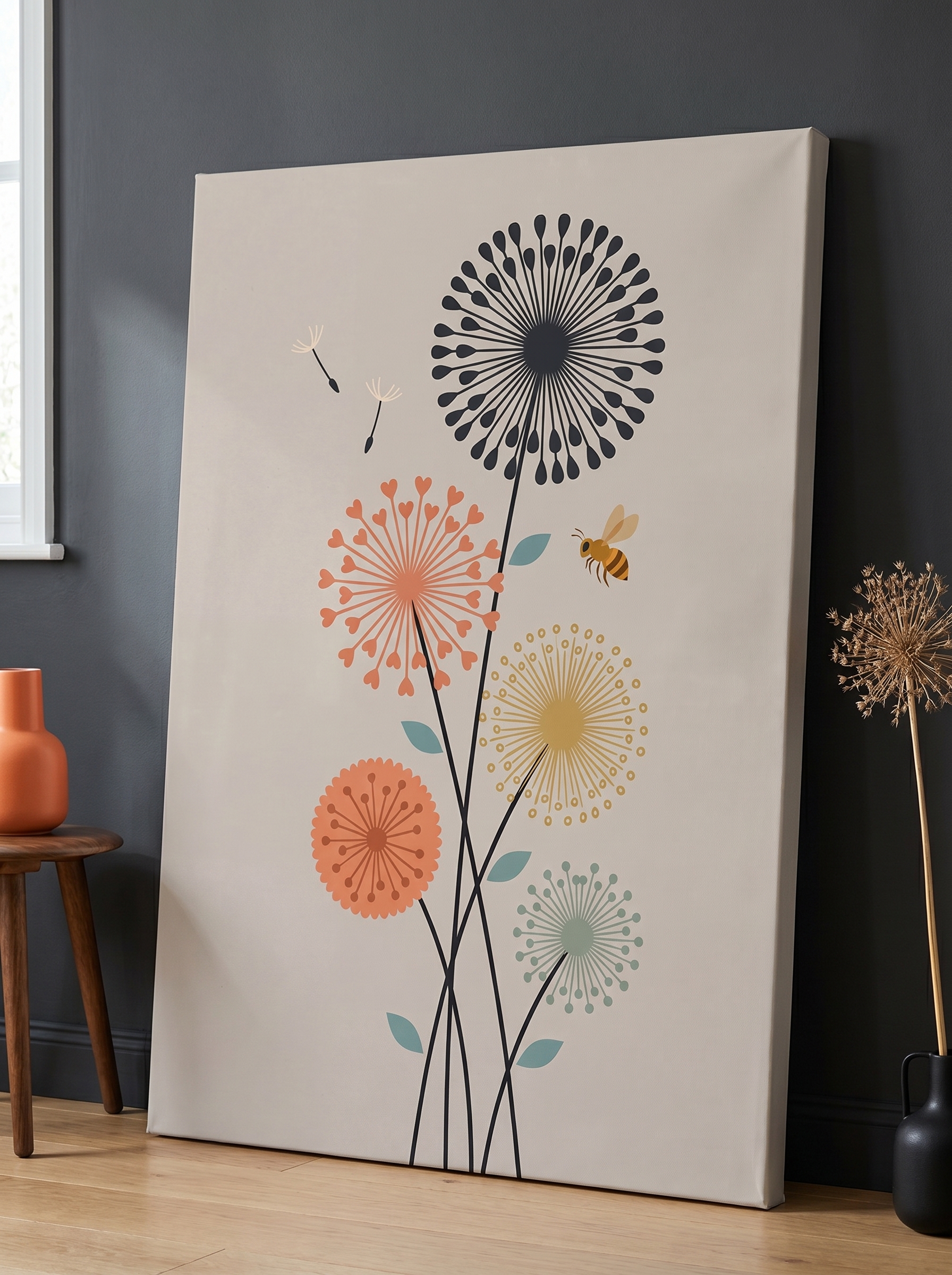
For anyone whose home leans warm and retro, this piece shows how sage plays in a more vibrant palette. The stylized dandelion sits in a graphic colorblock background of mustard, coral, and sage, giving you the entire 1960s palette in a single piece. It is the easiest way to anchor a mid-century modern living room without resorting to literal Eames-era reproductions.
This canvas works especially well above a teak credenza or a walnut sideboard. View the Mid-Century Dandelion Canvas.
Room-by-Room: Where Sage Green Works Best
Bedrooms
Sage is arguably the single best color choice for the bedroom. The desaturated quality dampens visual stimulation, which research on bedroom design consistently links to better wind-down behavior. We recommend hanging sage canvas art either above the headboard or on the wall opposite the bed so it is the first thing you see in the morning.
Living Rooms
In the living room, sage shines as the bridge color between warm woods and cool textiles. A large sage canvas above a cream or oatmeal sofa gives the room a grounded, gallery-like feel. Avoid putting sage art on a heavily patterned wallpaper. Let it sit on a calm wall and become the focal point.
Home Offices
Sage is one of the few greens that does not feel sleepy in a workspace. Because it sits closer to gray than emerald, the brain reads it as a neutral, which keeps focus sharp while still cueing the calming associations of nature. It is also one of the safer choices for video-call backgrounds.
Bathrooms
Sage and white create one of the most spa-like color combinations available. Stick to canvases with sealed surfaces for humid rooms and avoid hanging directly above a shower where moisture is heaviest. Our bathroom wall art guide covers placement specifics if your space tends to get steamy.
Nurseries
Sage is a wonderful gender-neutral nursery option that does not lean too sweet or too sterile. Pair sage canvases with creamy whites, warm wood crib frames, and a single accent color like dusty peach or soft mustard to keep the room feeling soft but not flat.
Sizing, Hanging Height, and Lighting
Sizing is where most homeowners stumble. The rule we keep coming back to: your art should occupy 60 to 75 percent of the width of the furniture beneath it. For a standard 84 inch (213 cm) sofa, that means a canvas between 50 and 63 inches (127 to 160 cm) wide.
For hanging height, the museum standard is to center the piece at 57 to 60 inches (145 to 152 cm) from the floor. In rooms where most viewing happens seated, drop that center point by about 6 to 8 inches (15 to 20 cm). Sage canvases reward this slightly lower placement because the soft tones are easiest to appreciate at close-to-eye level.
Lighting matters more for sage than for darker colors. Because sage has low chroma, harsh overhead lighting can flatten the canvas and make it read closer to gray. We recommend warm bulbs in the 2700 to 3000 Kelvin range and, where possible, a small picture light angled from above. For a full primer, see our guide to lighting wall art like a gallery.
Common Mistakes to Avoid
Hanging sage art on a sage-painted wall
Tone-on-tone walls look serene in theory and disappear in practice. If your wall is already painted sage, choose a piece where sage is a supporting color, not the dominant one. Otherwise the canvas will visually merge into the wall and lose all impact.
Pairing sage with cool gray
Sage looks alive next to warm cream and dusty earth tones. Against cool gray, it tends to read sickly. If your sofa or rug is a cool gray, lean toward a sage piece with warm cream undertones to balance the room.
Going too small
Because sage is a soft, low-contrast color, an undersized canvas vanishes on a big wall. When in doubt, size up. A 30 by 40 inch (76 by 101 cm) canvas almost always reads better than a 16 by 20 inch (40 by 51 cm) in a primary room.
Mixing too many sage shades
Sage has a wide range, from dusty mossy versions to almost-mint cooler versions. In a single room, stick to one sage family. Mixing a cool sage with a warm sage in the same gallery wall reads chaotic, not curated.
Forgetting the frame finish
A glossy black frame can pull sage toward a stark, modern look that may clash with a soft, cottagey room. Choose your frame deliberately. Natural oak feels organic, matte black feels gallery-modern, and warm walnut bridges both.
Sage Green Wall Art FAQ
Is sage green a trendy color or a timeless one?
Both. Sage has been peaking in interior design forecasts since around 2022 and is still rising. Because the tone is muted and nature-derived, it ages much more gracefully than higher-chroma greens like emerald or lime, so a sage canvas you buy today will still feel right in five years.
What colors should I never pair with sage?
Bright cool blues and pure cool grays are the two pairings we steer customers away from. Sage has warm undertones, so cool colors clash. Avoid icy whites too. Pick a warm cream or off-white instead.
Does sage green work in a small room?
Yes, and arguably better than in a large room. Sage's low saturation means it expands rather than crowds a small space, especially when paired with cream walls. Stick to one or two pieces rather than a busy gallery wall.
Can I mix sage green with other green wall art?
You can, but be careful with chroma. Sage and forest green can coexist if the rest of the room is calm, but sage and bright kelly green almost always fight. The safer approach is to pair sage with botanical pieces that have sage as one of several colors, not a competing green.
What style of frame looks best with sage canvas art?
For most rooms we recommend natural oak or warm walnut, which echoes sage's organic feel. Matte black works for modern interiors where you want crispness, and unframed canvas suits very minimal or boho rooms. Avoid ornate gold unless you are committing to a maximalist or art deco direction.
How do I know if a green canvas is true sage and not just olive or mint?
True sage has a dusty, slightly gray quality. Olive leans warmer and yellower. Mint leans cooler and brighter. If the green reads soft, slightly muted, and reminds you of dried herbs or eucalyptus, it is sage. When shopping online, check the lifestyle photo on a soft cream wall. That backdrop reveals the true undertone fastest.
Quick Reference Table
| Canvas | Best For | Dominant Colors | Link |
|---|---|---|---|
| Sage Green Organic Shapes | Modern living rooms | Cream, three values of sage | View |
| Eucalyptus Branches Watercolor | Soft bedrooms, reading nooks | Silvery sage, cream | View |
| Forest Deer Wildflower Path | Cabins, cottagecore rooms | Mossy sage, cream, fawn | View |
| Coastal Sage Palm Tree | Mediterranean and coastal grandmother | Dusty sage, cream | View |
| Pink Sage Abstract | Romantic modern bedrooms, soft offices | Chalk pink, sage | View |
| Mid-Century Dandelion | Retro and mid-century living rooms | Mustard, coral, sage | View |
Bringing Sage Home
Sage green works because it does not demand attention. It rewards the spaces where you spend the most time, layers beautifully across styles, and refuses to date the way bolder color trends do. Whether you are styling a calm bedroom, anchoring a modern living room, or finally addressing that awkward wall in the hallway, a well-chosen sage canvas can do the heavy lifting.
For a wider view of how sage fits into broader interior trends, our Japandi wall art guide and our neutral wall art guide both lean into sage's quiet power. When you are ready, browse the full sage and botanical collection and pick the piece that fits your space best.