Dining Room Wall Art: Size, Placement & Style Guide for 2026
The Heva Team
Art Curators & Interior Design Enthusiasts · May 11, 2026 · 12 min read
Designer rules for dining room wall art. Exact sizes, seated hanging heights, warm color palettes, and six framed canvases that work for any table style.
A bare wall above the dining table is the single biggest reason a beautifully styled room still feels unfinished. Get this one wall right and the chairs look intentional, the lighting feels warmer, and every Sunday dinner suddenly looks Pinterest-ready.
This guide walks through the exact sizing, hanging height, and color rules our team uses for every dining room project, then ends with six framed canvases we keep recommending to real customers in 2026.
Ready to browse? Skip ahead to our full dining room wall art collection, or keep reading for our top picks and the placement tips a frame shop will not tell you.
What You Will Find in This Guide
- Why the dining room deserves real art
- How big should dining room wall art be?
- How high to hang art above a dining table
- Choosing colors that work with food and conversation
- Our 6 favorite dining room canvases for 2026
- How to style a dining room gallery wall
- Common dining room wall art mistakes
- Quick reference table
- Dining room wall art FAQs
Why the Dining Room Deserves Real Art
Dining rooms are the rare space in a home where guests sit still for an hour at a time. Eyes settle on whatever is on the wall. That is why a thoughtful canvas earns its keep more here than in almost any other room.
In our experience styling hundreds of homes, the dining room is also the most under-decorated room in the house. Buyers spend their budget on the table and chairs, then leave the wall behind the head seat completely blank. Even a single statement piece can shift the whole mood of a meal from functional to memorable.
A well-chosen canvas also softens the acoustics. Hard surfaces like glass tables, wood floors, and bare walls create a loud, echoey room. Adding a large framed print absorbs just enough sound to make conversation feel calmer, especially in modern open-plan homes where the dining area sits next to a kitchen.
Studio McGee makes a similar point in their guide on hanging art: art belongs in the rooms where people actually pause, not just hallways and stairwells. The dining table is the ultimate pause point.
How Big Should Dining Room Wall Art Be?
Here is the rule designers actually follow: your wall art should be between 60 and 75 percent of the width of the dining table or buffet beneath it. Any smaller and it looks like a postage stamp floating in space. Any larger and it visually pushes the table forward.
So if your dining table is 72 inches (183 cm) long, the artwork above it should measure roughly 43 to 54 inches (109 to 137 cm) across. For a 60-inch (152 cm) table, aim for 36 to 45 inches (91 to 114 cm) wide.
When the wall behind the table is wider than the table itself, you have two options. A single oversized piece anchors the room with maximum drama. A triptych or paired prints flanking a mirror or sconce splits the visual weight more evenly and works beautifully in formal dining rooms.
For round tables, the math is slightly different. Measure the diameter, then aim for art that is roughly the same width as that diameter, minus 10 inches (25 cm) on either side. A 48-inch (122 cm) round table looks best with art around 28 to 38 inches (71 to 97 cm) wide.
If you are still uncertain, our wall art size guide for every room and furniture pairing includes a printable chart with every common table dimension.
How High to Hang Art Above a Dining Table
This is where most people go wrong. The standard advice of hanging art so the center sits 57 inches (145 cm) from the floor is correct for hallways and entryways, but it is too high for a dining room.
Here is why. In a hallway, you experience art standing up. In a dining room, you experience it sitting down for an hour or more. That changes everything.
Lower the center of the artwork to roughly 51 to 53 inches (130 to 135 cm) from the floor. This puts the visual midpoint closer to seated eye level, which sits between 44 and 48 inches (112 to 122 cm) depending on chair height.
Decorating Den makes a similar case in their guide on hanging art at the right height, noting that seated rooms need a lower center than gallery walls.
The gap between the top of the table and the bottom of the frame matters too. Leave 6 to 10 inches (15 to 25 cm) of breathing room.
Closer than 6 inches and the canvas looks like it is sitting on the table. Wider than 10 inches and the art floats off into nowhere, especially if your ceilings are 9 feet or higher.
For buffets, sideboards, or credenzas, you can shrink that gap to 4 to 6 inches (10 to 15 cm) because the furniture is taller and the visual connection needs to stay tight. The DIY Playbook calls this out in their walkthrough on common art hanging mistakes, where hanging too high is the number one error.
One more rule: always center the art on the table or buffet, not on the wall. The table is the visual anchor of the room, so the artwork should align with whatever sits beneath it, even if that means it is slightly off-center on the wall itself.
Choosing Colors That Work With Food and Conversation
Color matters more in a dining room than people think. Certain palettes make a room feel hungry and warm. Others make it feel sterile and rushed. The difference often comes down to two or three color decisions on the wall.
Warm earth tones like terracotta, burnt umber, deep ochre, and sage green are the strongest dining room performers. They reflect the colors of food, wood, and candlelight, which makes the room feel like it was designed for eating. These palettes also flatter skin tones under warm bulbs, which matters when guests stay for hours.
Soft neutrals like cream, oat, and warm gray work beautifully in formal dining rooms where you want the food and tablescape to be the visual star. Pair them with a single accent piece in a bold color rather than a busy multi-color canvas.
Deep moody colors like burgundy, navy, and forest green create an intimate, restaurant-like atmosphere that works especially well in north-facing rooms or rooms with low natural light. We covered this trend in detail in our dark and moody interiors guide.
What to avoid? Cool blues and stark whites read clinical under dinner-party lighting, and aggressive primary colors can compete with the food. Pantone publishes a useful annual color of the year report if you want to anchor your dining palette to a current trend, but the warm-earth-tones rule has held for decades.
One designer trick: pick a canvas where the dominant color appears somewhere else in the room at small scale. A burgundy canvas pairs with a burgundy candle or napkin. A sage canvas echoes a sage runner. This three-point repetition is the single fastest way to make a room look professionally styled.
Our 6 Favorite Dining Room Canvases for 2026
These six framed canvases are the ones we keep recommending to customers buying for a dining room or breakfast nook. Each is available in multiple sizes and frame finishes, with US shipping included.
1. Figs and Blackberries Vintage Botanical
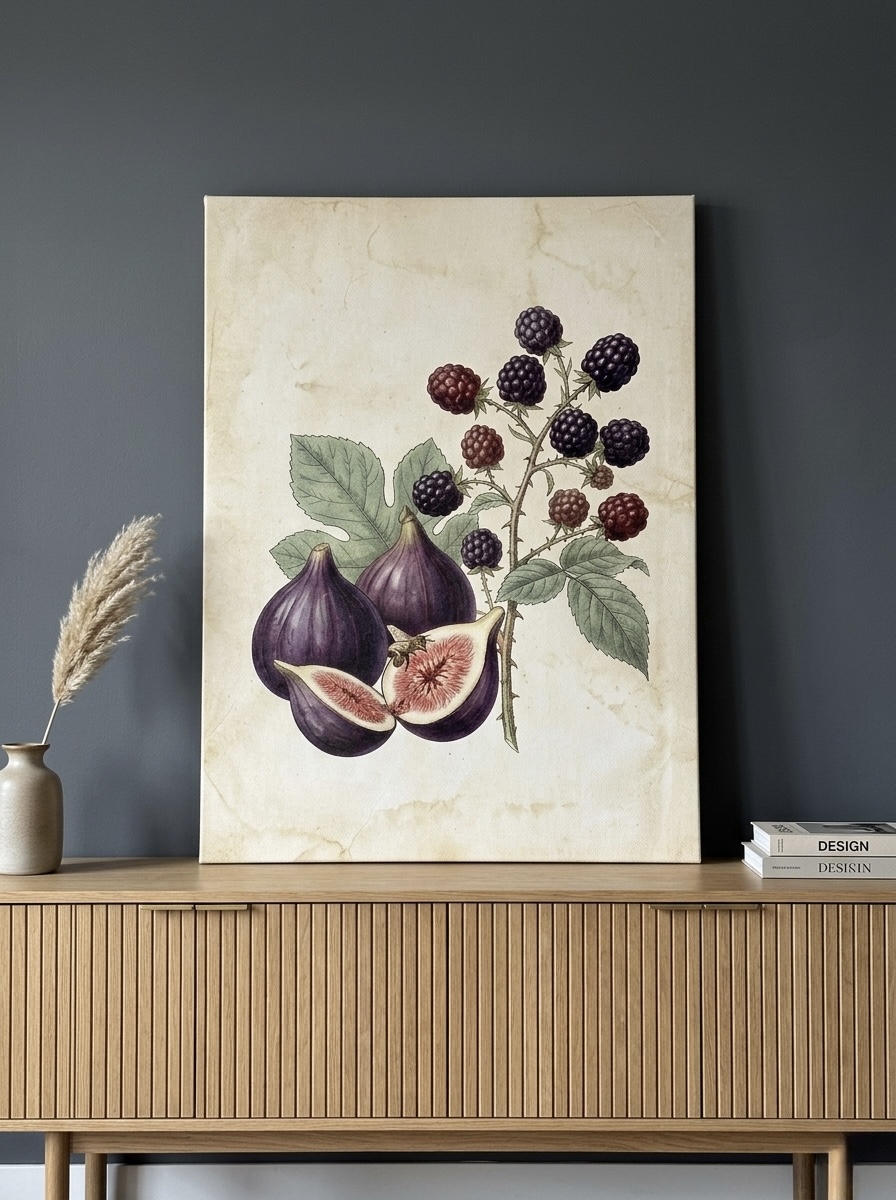
This is the canvas we recommend most often for traditional and farmhouse dining rooms. The cream background keeps the room light, while the burgundy figs and sage leaves echo classic dining textiles like linen napkins and rattan placemats. The brushwork is loose enough to feel hand-painted, not mass-produced.
It pairs beautifully with espresso wood tables, brass pendant lights, and any room where you serve seasonal cheese boards or autumn dinners. The vertical orientation also works well over narrow buffets or sideboards where a wide canvas would not fit.
Shop the Figs and Blackberries canvas
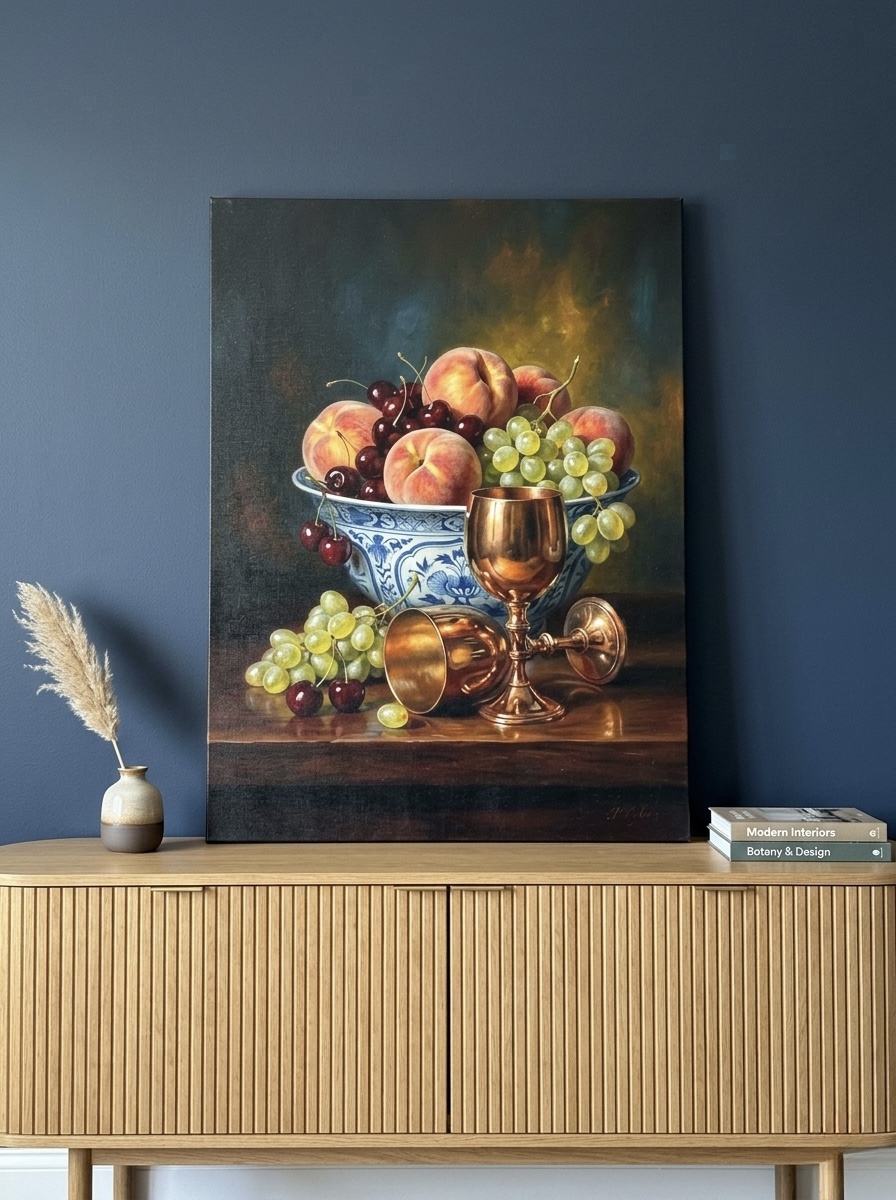
2. Peaches and Cherries Dutch Golden Age Still Life
For formal dining rooms with traditional millwork, wainscoting, or heavy wood furniture, nothing beats a Dutch Golden Age still life. This piece pulls from the deep golds, terracottas, and teals of 17th-century Flemish painters, which means it sits comfortably in homes styled with antique brass, leather chairs, or velvet drapery.
The aged-canvas finish gives it that "inherited from a grandmother" patina that designers are charging thousands of dollars to recreate. We especially love it in candlelit rooms, where the gold tones come alive after sunset.
See the Peaches and Cherries still life
3. Lemon Branches in Vase Mediterranean
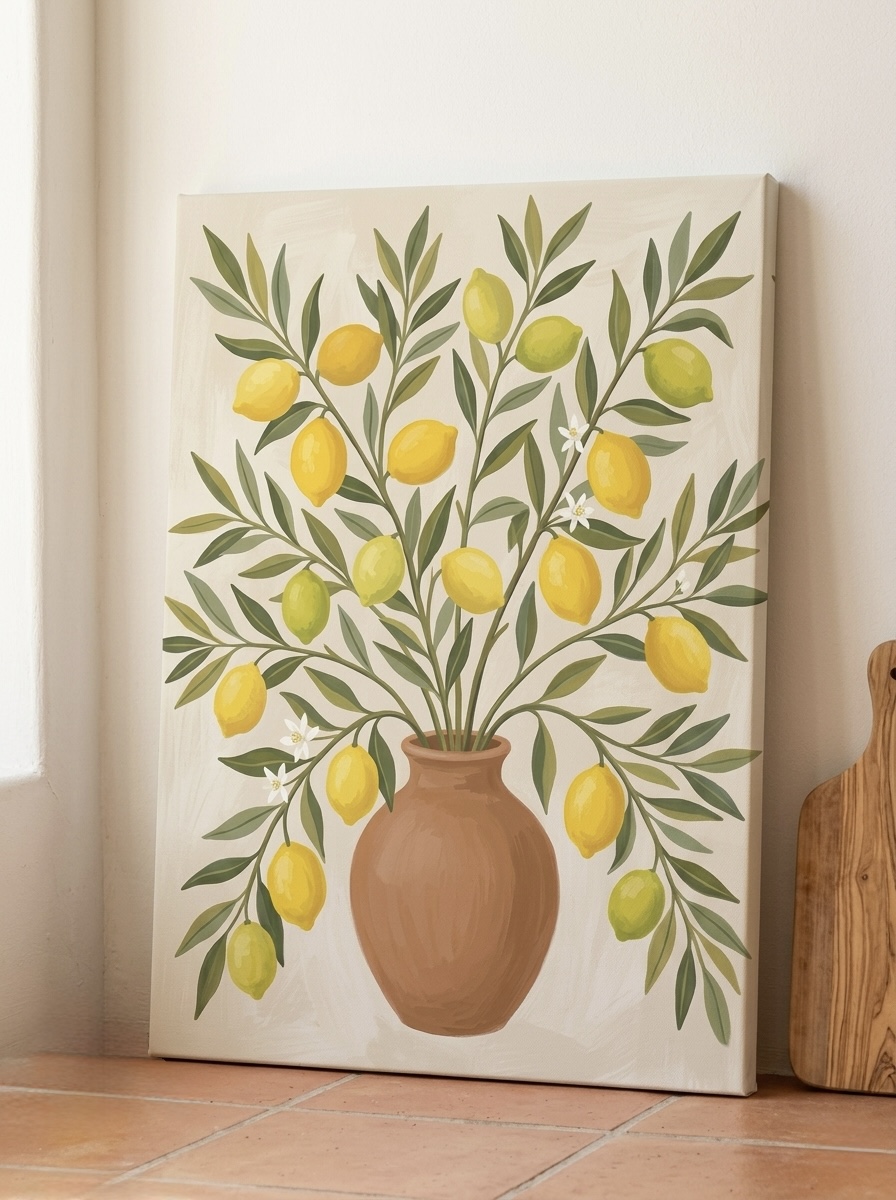
If your dining room leans bright, white-walled, or coastal Mediterranean, this lemon branch canvas is the easiest sell in our entire catalog. The citrus yellow and sage green palette feels like a Sicilian lunch in July, and the terracotta vase echoes any pottery, planters, or tile work already in the room.
This piece sings in breakfast nooks, sunny dining rooms with natural light, and any home with a coastal or Tuscan style. It also bridges kitchen and dining beautifully if those rooms share a wall.
Discover the Lemon Branches canvas
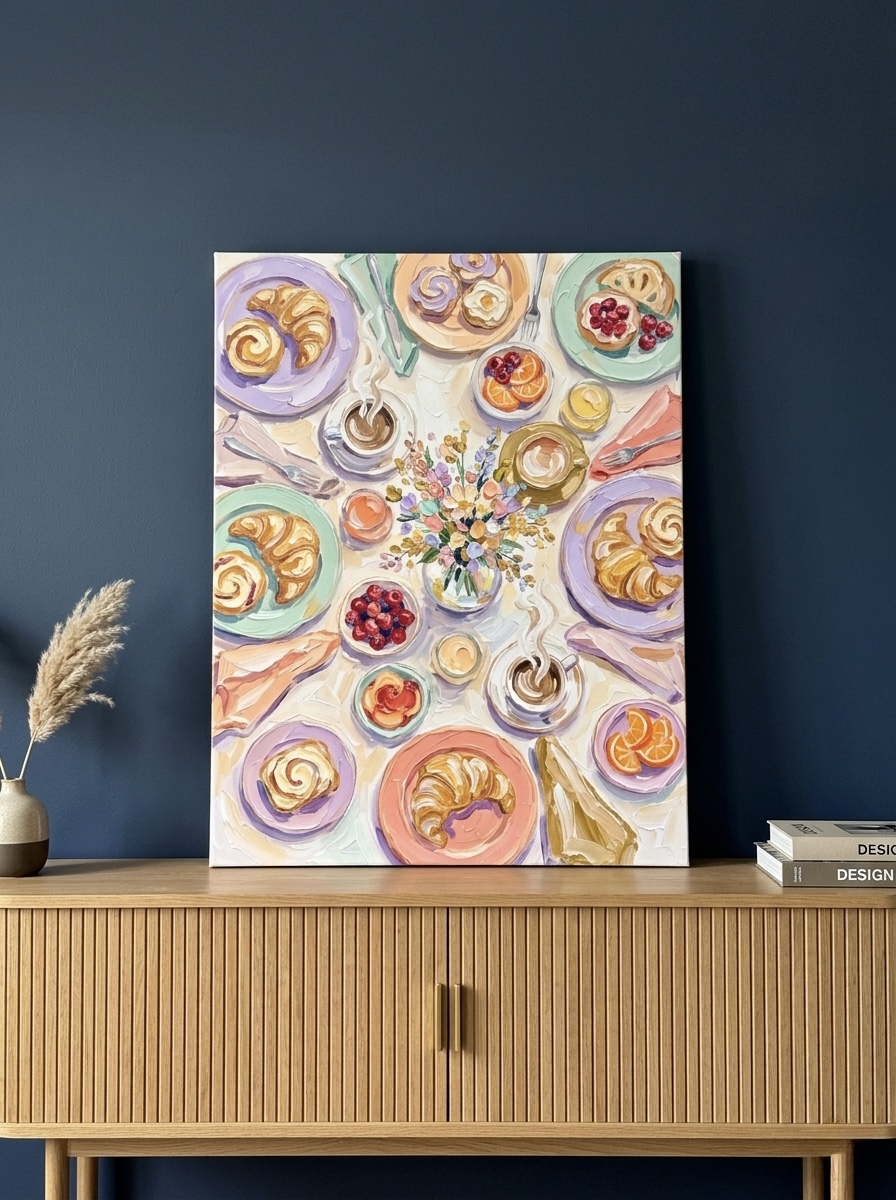
4. Abstract Brunch Table
This is our pick for modern, eclectic, or "we love color" homes. The lavender, mint, peach, and gold palette captures the energy of a long Sunday brunch with friends, which is exactly the feeling most people want in their dining room without admitting it.
It pairs especially well with rattan or boucle chairs, light wood tables, and rooms styled by anyone who loves Jungalow, Justina Blakeney, or modern boho. Our customers tell us this one becomes a conversation starter every single time.
View the Abstract Brunch Table print
5. Croissant and Coffee French Bistro
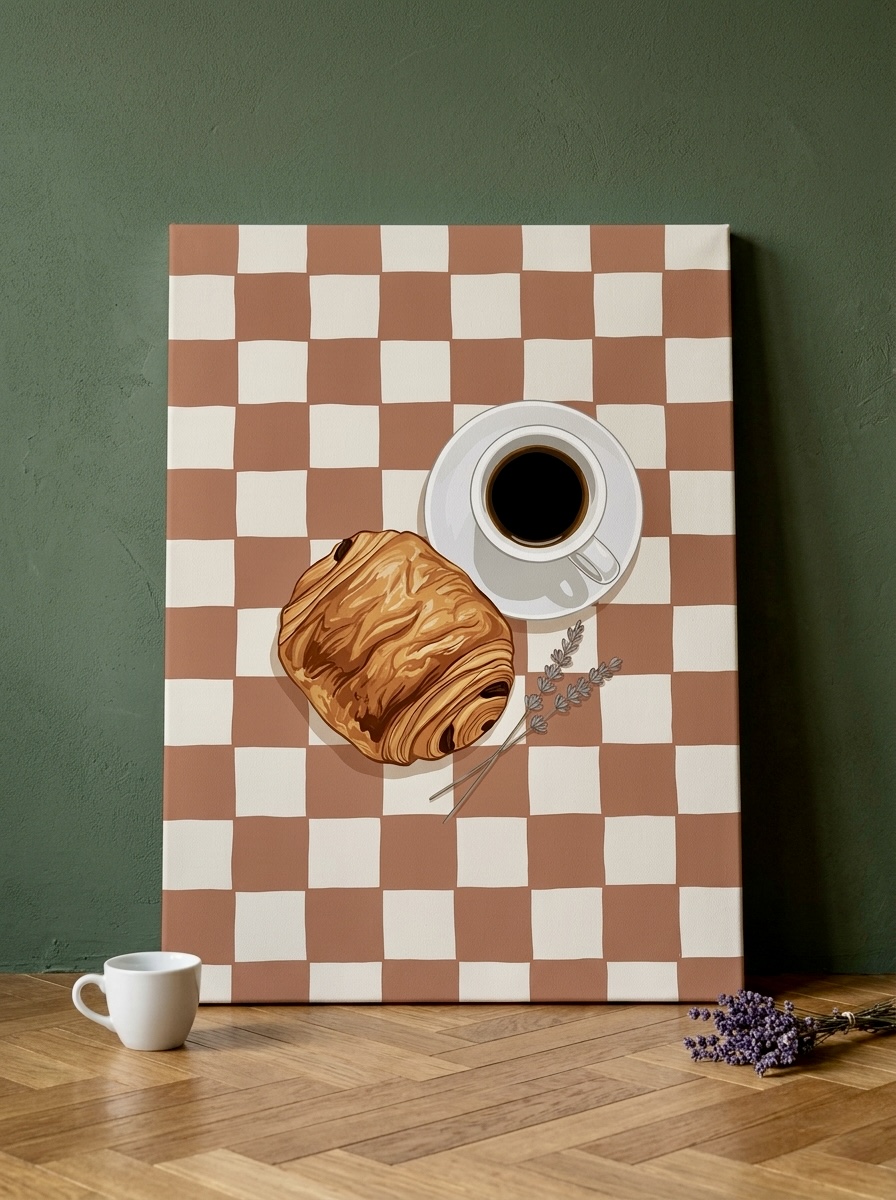
For breakfast nooks, coffee bars, and any kitchen-dining combo with a Parisian or French country lean, this print delivers exactly the right amount of charm without tipping into kitsch. The golden cream and coffee brown palette is endlessly forgiving, working with both modern and traditional rooms.
Hang it solo over a small bistro table or pair it with a vintage cafe sign or chalkboard menu for a layered, lived-in look. It is also one of our most-gifted pieces for housewarmings and weddings.
Browse the Croissant and Coffee canvas
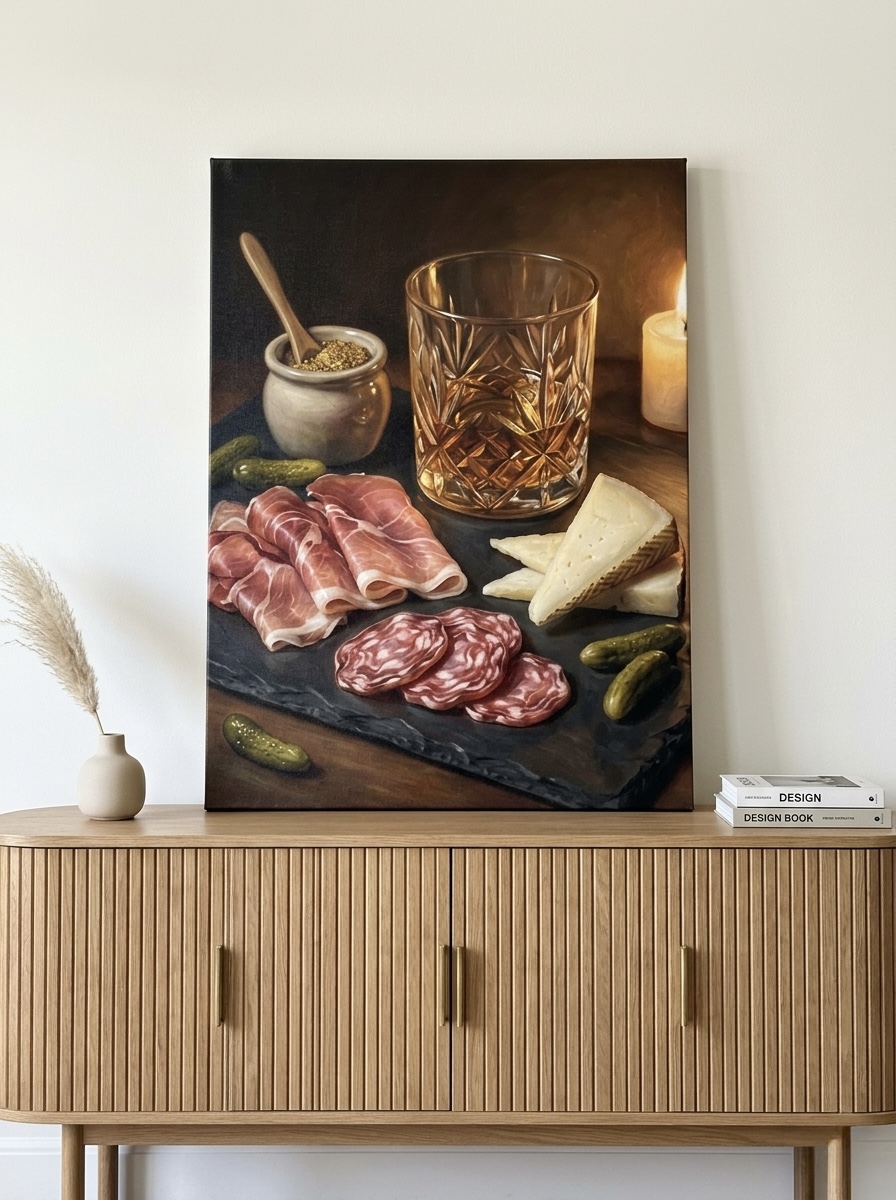
6. Whiskey and Charcuterie Classical Still Life
This is the canvas we send to anyone styling a dark, masculine, restaurant-energy dining room. The black background and gold accents read sophisticated rather than gloomy, and the whiskey-bottle-and-cheese-board subject matter signals "this is a room where adults gather," which is exactly the vibe high-end dining rooms aim for.
It works beautifully against navy, forest, or even oxblood-painted walls, and pairs perfectly with brass sconces and leather dining chairs. We have customers using this in basement bars, wine cellars, and formal dining rooms with equal success.
Shop the Whiskey and Charcuterie print
How to Style a Dining Room Gallery Wall
Sometimes one canvas is not enough. If your dining wall is wider than 96 inches (244 cm) or your ceilings are 10 feet (305 cm) or higher, a gallery wall can fill the space more elegantly than a single oversized piece.
Start with one anchor piece, usually 24 by 36 inches (61 by 91 cm) or larger, placed at the visual center. Build outward with two to four smaller frames in coordinating finishes. Keep the gap between frames consistent at 2 to 3 inches (5 to 8 cm). Anything wider and the grouping looks scattered.
For symmetry, use a grid layout with matching frames and identical mat widths. For a more relaxed, collected look, mix portrait and landscape orientations but keep the color palette unified. Three to five colors maximum across the entire grouping.
If you are styling a gallery wall for the first time, our single piece versus gallery wall comparison breaks down which approach fits which room type. Skip the gallery wall in tight dining rooms under 12 by 14 feet (366 by 427 cm). It will feel cluttered.
Common Dining Room Wall Art Mistakes
After styling hundreds of dining rooms, we see the same five mistakes again and again. Avoid these and your room will already be in the top 10 percent.
Mistake one: hanging too high. The 57-inch (145 cm) rule does not apply in dining rooms. Drop your center to 51 to 53 inches (130 to 135 cm) from the floor for seated viewing.
Mistake two: choosing art that is too small. A 16 by 20 inch (41 by 51 cm) print floating above a 72-inch (183 cm) table looks like a forgotten afterthought. Always go bigger than your instinct says.
Mistake three: ignoring lighting. A canvas that looks rich in daylight can read muddy under warm pendant bulbs. Check the dominant colors against your dining room lighting before you commit. We covered this in our guide on wall art for white walls, where lighting tone is the deciding factor.
Mistake four: matching the art too literally to the food you serve. A wine-themed canvas behind a wine cabinet feels redundant. Choose art that complements the room visually, not thematically.
Mistake five: skipping the buffet entirely. If your dining wall includes a buffet or sideboard, that surface deserves its own art moment, usually one piece centered above the furniture at 4 to 6 inches (10 to 15 cm) of clearance. Treating it as separate from the main table wall makes the room feel layered and intentional.
Quick Reference Table
| Canvas | Best For | Dominant Colors | Link |
|---|---|---|---|
| Figs and Blackberries | Farmhouse, traditional | Cream, burgundy, sage | View piece |
| Peaches and Cherries | Formal, classical | Gold, terracotta, burgundy | View piece |
| Lemon Branches in Vase | Coastal, Mediterranean | Citrus yellow, sage, cream | View piece |
| Abstract Brunch Table | Modern, eclectic, boho | Lavender, mint, peach, gold | View piece |
| Croissant and Coffee | Breakfast nook, French country | Terracotta, cream, coffee brown | View piece |
| Whiskey and Charcuterie | Dark, formal, restaurant-style | Black, gold, brown | View piece |
Dining Room Wall Art FAQs
What size canvas should I buy for a dining room?
Measure your dining table or buffet width, then choose art that is 60 to 75 percent of that width. For a 72-inch table, that means 43 to 54 inches wide. Going bigger than 75 percent visually crowds the table, while smaller looks lost on the wall.
How high should I hang art above my dining table?
The center of the artwork should sit 51 to 53 inches from the floor, which is lower than the standard 57-inch rule. Leave 6 to 10 inches of clearance between the top of the table and the bottom of the frame so the two elements feel visually connected.
Is one big canvas or a gallery wall better for a dining room?
One large canvas works better in most dining rooms because it creates a focal point without competing with the table setting. Choose a gallery wall only if your dining wall is wider than 96 inches and you have 10-foot or higher ceilings, otherwise it can feel cluttered.
What colors work best for dining room wall art?
Warm earth tones like terracotta, burgundy, sage, and gold consistently outperform cool tones in dining rooms because they flatter food and warm lighting. Deep moody colors like navy or forest green also work beautifully for evening-focused, intimate dining spaces.
Should dining room art match the kitchen?
If the dining room and kitchen share an open floor plan, the art should coordinate rather than match exactly. Pull one accent color from your kitchen palette into the dining canvas, but choose different subject matter so the two zones feel related rather than identical.
Will canvas wall art warp from food smells or humidity?
High-quality giclee canvas prints on solid wood frames hold up fine in dining rooms with normal cooking humidity. Avoid hanging art directly above a stovetop or in a room with persistent steam, but standard dining room conditions pose no real risk to the canvas or frame.
Bring Your Dining Room Together
The dining room is where the people you love sit still for an hour at a time. It deserves art that earns that attention. Pick the canvas that fits your color story, hang it at the right height for seated viewing, and the whole room will feel finished in a single afternoon.
Browse our dining room canvas collection for the full range, or explore our canvas size guide for every room if you want to nail the dimensions before you choose a style. Every piece ships free across the US in solid wood frames with hanging hardware included.