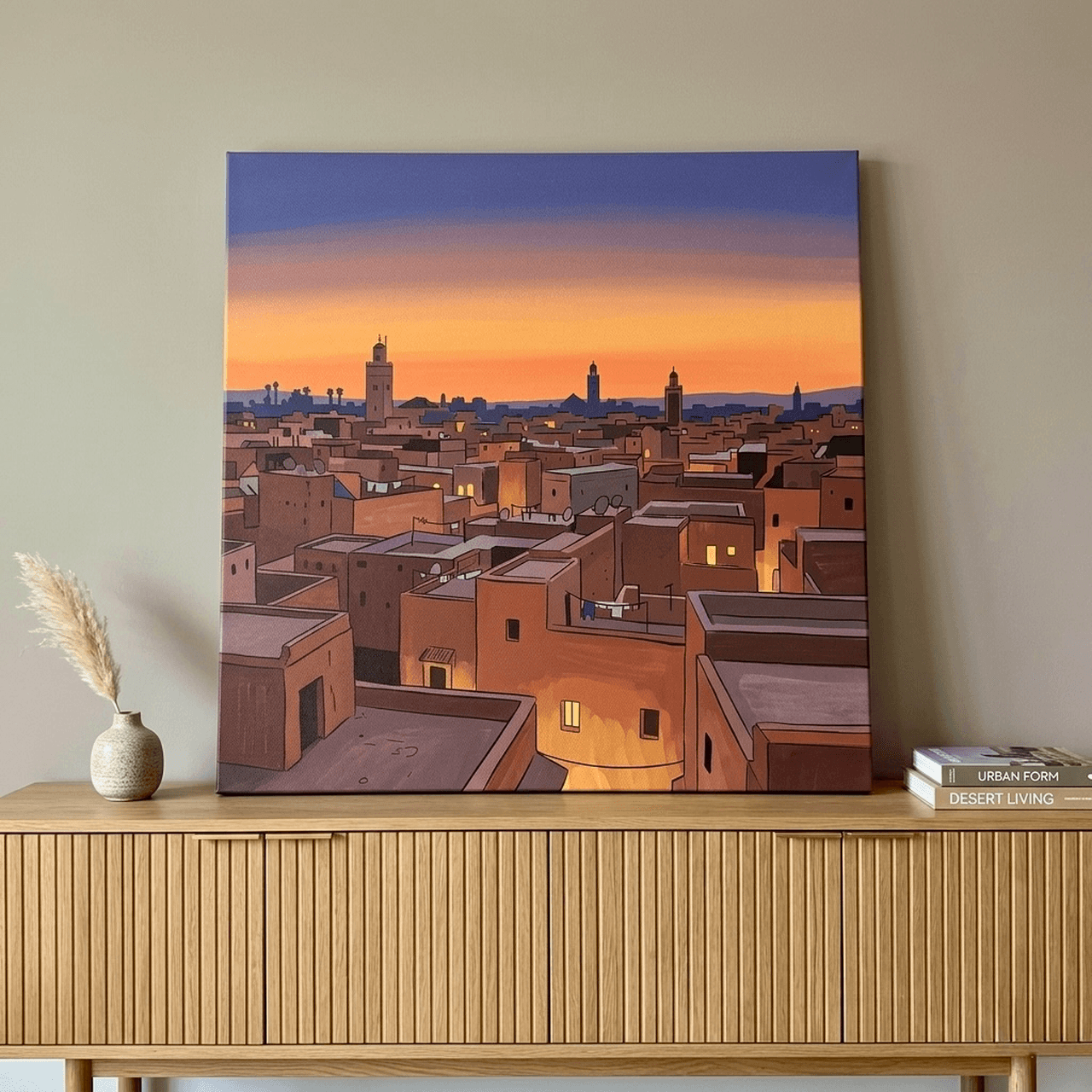
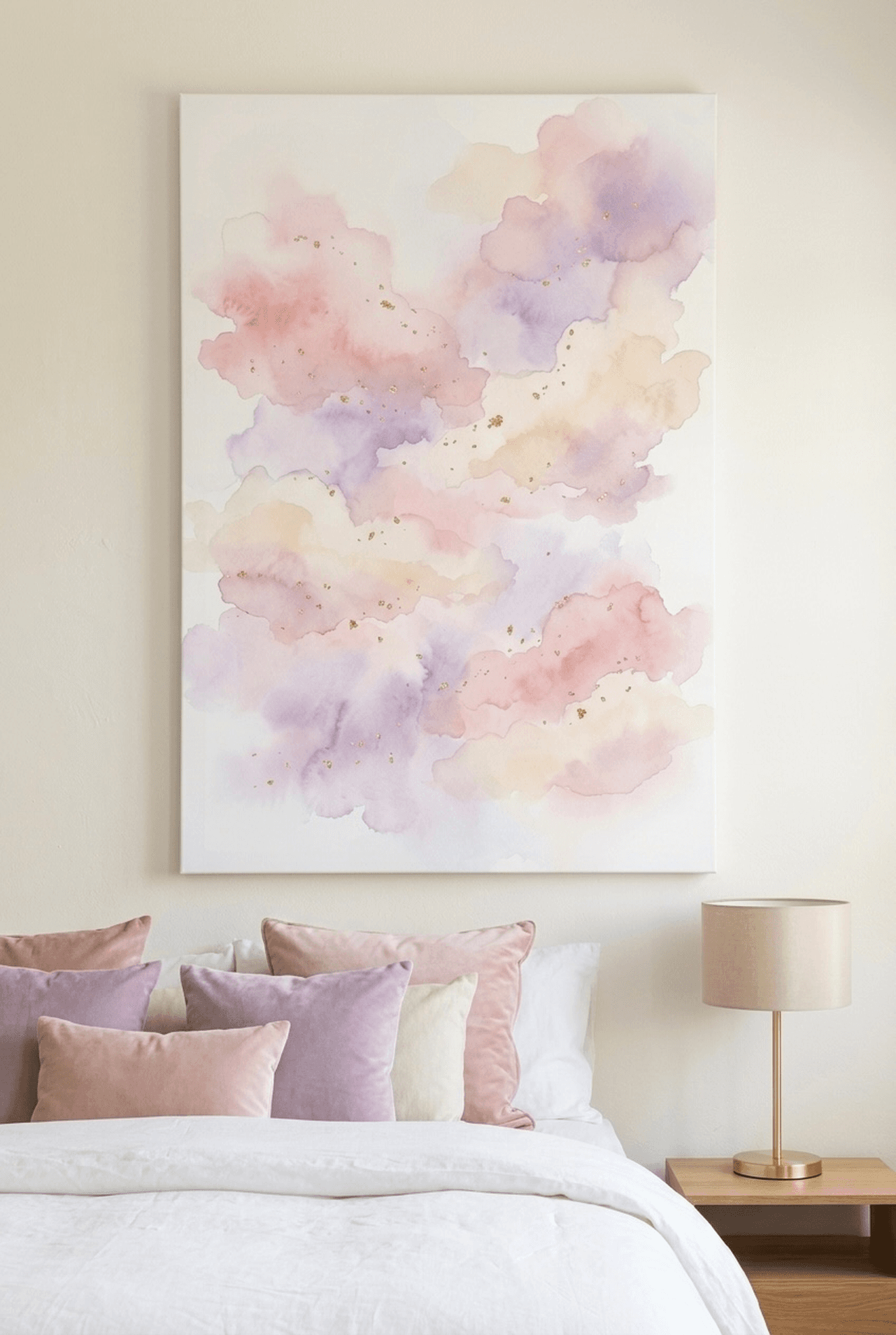
Wall Art Size Guide: Exactly What Size to Choose for Every Room
The Heva Team
Art Curators & Interior Design Enthusiasts · April 18, 2026 · 15 min read
Not sure what size canvas to buy? This wall art size guide covers every room with charts in inches and cm, the 2/3 rule, furniture sizing, and exact hanging heights.
You found the perfect piece of art, ordered it, hung it up, and then your heart sank. It looked enormous on the website but now it barely registers on the wall. Or worse, it is so large it overwhelms every piece of furniture in the room. Getting wall art sizing right is one of the most common frustrations in home decorating, and this wall art size guide will fix that problem for good.
This guide gives you exact measurements in both inches and centimeters for every major room and furniture combination. Use the charts, follow the formulas, and you will never order the wrong size again.
Browse our full canvas art collection
The Golden Rule of Wall Art Sizing
Interior designers rely on one core principle when choosing art: the two-thirds rule. Your artwork should cover roughly two-thirds (67%) of the wall space or the furniture it hangs above. This ratio is grounded in visual proportion and is used by professional decorators worldwide.
Here is how to apply it in practice. Measure the width of the wall (or the furniture below the wall). Multiply that number by 0.67. The result is your target artwork width. For example, a sofa that is 84 inches (213 cm) wide calls for art that is roughly 56 inches (142 cm) wide.
That does not mean you need a single massive canvas. A gallery wall, a triptych, or a diptych spread across that span works just as well. What matters is that the visual mass of the art fills about two-thirds of the space.
The two-thirds rule also applies vertically for tall walls. If your ceiling is 10 feet (305 cm) high, you have roughly 8 feet (244 cm) of usable wall above your furniture. Two-thirds of that is about 64 inches (163 cm) of visual real estate. You do not need to fill all of it, but your art arrangement should feel substantial within that zone.
There is a secondary guideline worth knowing: the minimum size rule. Art that is smaller than 16x20 inches (41x51 cm) will look lost on any wall larger than a bathroom. In most living rooms and bedrooms, 24x24 inches (61x61 cm) is the practical minimum for a single piece to make an impact.
According to Architectural Digest, one of the most common decorating errors is choosing art that is too small. The two-thirds rule is the simplest way to avoid that mistake.
Keep in mind that room scale matters too. A large open-plan living area with high ceilings calls for art that is proportionally larger than the same sofa would need in a compact apartment. Always consider the room's overall volume, not just the furniture width.
Room-by-Room Size Guide
Each room in your home has a different ceiling height, furniture scale, and viewing distance. The table below translates those differences into specific size recommendations for a single focal piece of art. For gallery walls, increase the total width by 20 to 30 percent.
| Room | Typical Wall Width | Recommended Art Size (inches) | Recommended Art Size (cm) | Best Style |
|---|---|---|---|---|
| Living Room (large) | 12 to 16 ft (366 to 488 cm) | 40x60 to 48x72 in | 102x152 to 122x183 cm | Abstract, landscape, statement |
| Living Room (average) | 10 to 12 ft (305 to 366 cm) | 30x40 to 40x50 in | 76x102 to 102x127 cm | Abstract, nature, figurative |
| Bedroom (master) | 10 to 14 ft (305 to 427 cm) | 36x36 to 40x60 in | 91x91 to 102x152 cm | Calm abstract, botanicals, figure |
| Bedroom (guest or child) | 8 to 10 ft (244 to 305 cm) | 24x24 to 30x40 in | 61x61 to 76x102 cm | Nature, geometric, line art |
| Dining Room | 10 to 12 ft (305 to 366 cm) | 30x40 to 36x48 in | 76x102 to 91x122 cm | Bold abstract, food art, landscape |
| Kitchen | 6 to 8 ft (183 to 244 cm) | 18x24 to 24x30 in | 46x61 to 61x76 cm | Food, botanical, geometric |
| Hallway (wide) | 4 to 6 ft (122 to 183 cm) | 12x36 to 18x36 in (vertical) | 30x91 to 46x91 cm | Vertical landscape, figure, abstract |
| Hallway (narrow) | 2 to 4 ft (61 to 122 cm) | 8x24 to 12x30 in (vertical) | 20x61 to 30x76 cm | Vertical prints, photography |
| Home Office | 8 to 10 ft (244 to 305 cm) | 24x30 to 30x40 in | 61x76 to 76x102 cm | Motivational, abstract, landscape |
| Bathroom (large) | 4 to 6 ft (122 to 183 cm) | 16x20 to 20x24 in | 41x51 to 51x61 cm | Botanical, abstract, spa-style |
| Entryway | 6 to 8 ft (183 to 244 cm) | 20x30 to 30x40 in | 51x76 to 76x102 cm | Statement, bold abstract, landscape |
These are guidelines, not rigid rules. A 30x40 inch (76x102 cm) canvas can look spectacular in a smaller room when it is the only art piece. Conversely, a large room with many design elements may call for smaller, curated groupings rather than one oversized piece.
Sizing Art Above Furniture
Furniture anchors your art. The relationship between the two determines whether your wall looks intentional or accidental. Below are specific guidelines for the most common furniture-and-art pairings, with measurements in both inches and centimeters.
Art Above a Sofa
The sofa is the most common art anchor in the home. Apply the two-thirds rule strictly here: your art width should be 60 to 75 percent of the sofa length.
| Sofa Length | Sofa Length (cm) | Target Art Width (in) | Target Art Width (cm) |
|---|---|---|---|
| 60 in (loveseat) | 152 cm | 36 to 45 in | 91 to 114 cm |
| 72 in | 183 cm | 43 to 54 in | 109 to 137 cm |
| 84 in | 213 cm | 50 to 63 in | 127 to 160 cm |
| 96 in | 244 cm | 57 to 72 in | 145 to 183 cm |
The bottom edge of the art should sit 6 to 8 inches (15 to 20 cm) above the sofa back. This keeps the art and furniture visually connected rather than floating separately on the wall.
Art Above a Bed
Above a bed, width is usually dictated by the headboard or the mattress. Aim for art that is roughly as wide as the headboard, or up to the width of the mattress itself.
| Bed Size | Mattress Width (in) | Mattress Width (cm) | Recommended Art Width (in) | Recommended Art Width (cm) |
|---|---|---|---|---|
| Twin | 38 in | 97 cm | 24 to 36 in | 61 to 91 cm |
| Full / Double | 54 in | 137 cm | 36 to 48 in | 91 to 122 cm |
| Queen | 60 in | 152 cm | 40 to 54 in | 102 to 137 cm |
| King | 76 in | 193 cm | 48 to 60 in | 122 to 152 cm |
| California King | 72 in | 183 cm | 48 to 60 in | 122 to 152 cm |
Hang the art 4 to 6 inches (10 to 15 cm) above the headboard. If you have no headboard, center the art at about 60 inches (152 cm) from the floor to the bottom edge of the piece.
Art Above a Dining Table
Dining room art usually goes on the wall adjacent to the table, not directly above it. When placing art on a side wall, use the room's wall width to determine size. When hanging art above a buffet or sideboard in the dining room, the buffet becomes the anchor.
Sideboard or buffet width is typically 48 to 72 inches (122 to 183 cm). Art above a buffet should be 60 to 75 percent of the buffet width, hanging 6 to 8 inches (15 to 20 cm) above the surface.
Art Above a Fireplace
The mantel is a natural art frame. Art above a fireplace should match the mantel width as closely as possible, or be slightly narrower. For a standard 48-inch (122 cm) mantel, a 40 to 48 inch (102 to 122 cm) wide piece looks intentional and balanced.
The bottom of the art should sit 4 to 6 inches (10 to 15 cm) above the mantel surface. If there is no mantel, the bottom edge should clear the firebox opening by at least 12 inches (30 cm) for safety and visual separation.
For guidance on proportions in real interior spaces, see the Houzz wall art sizing guide, which includes room photos with measurements.
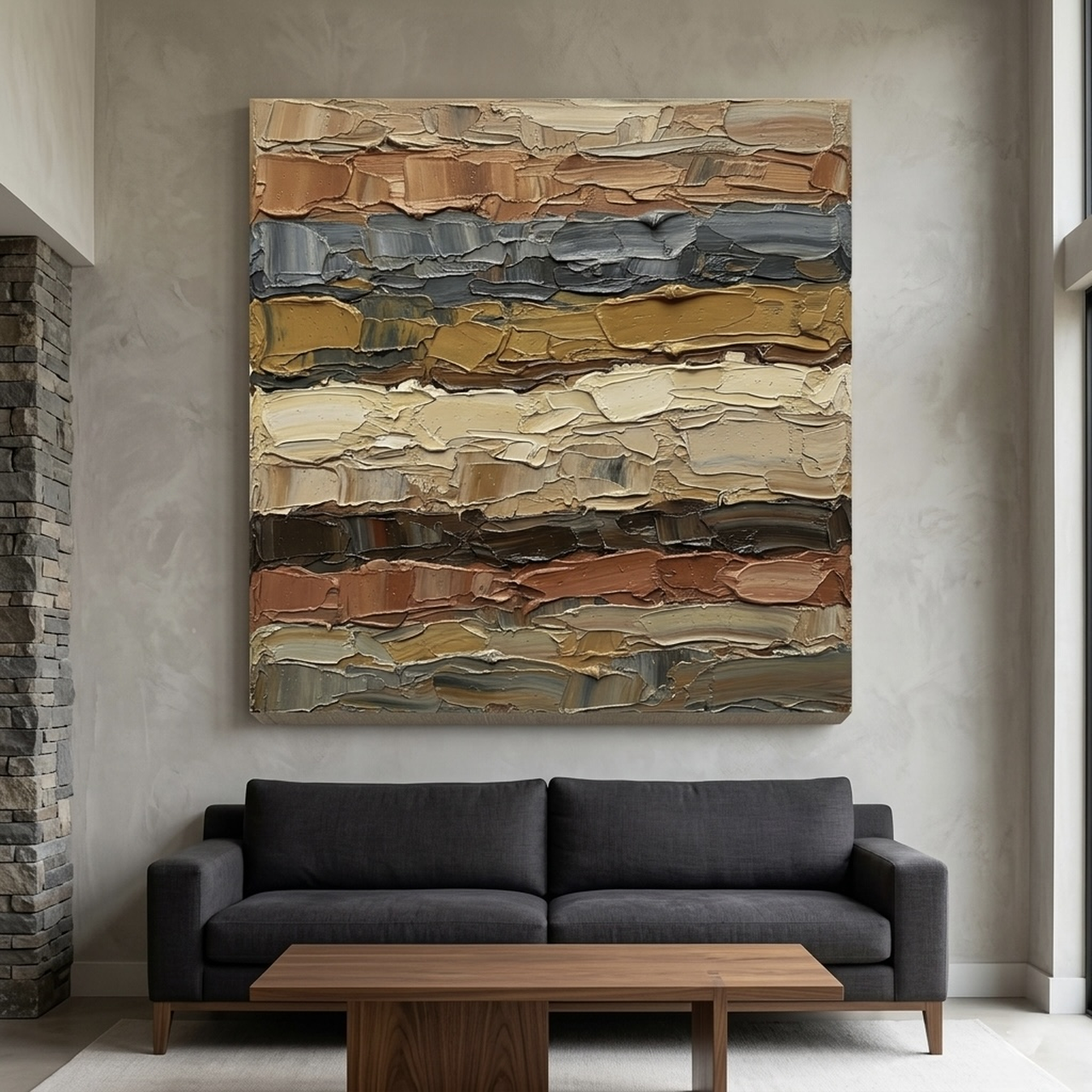
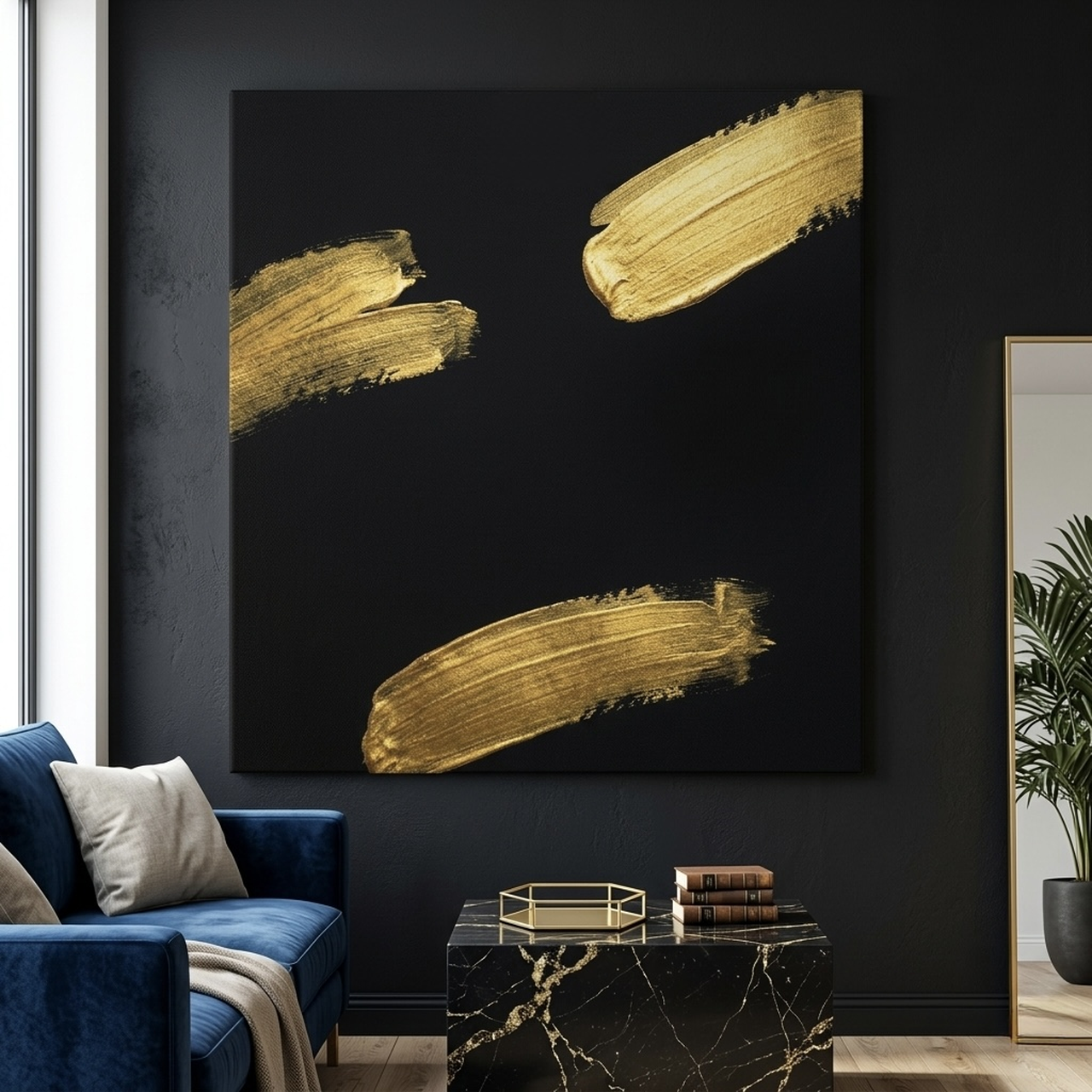
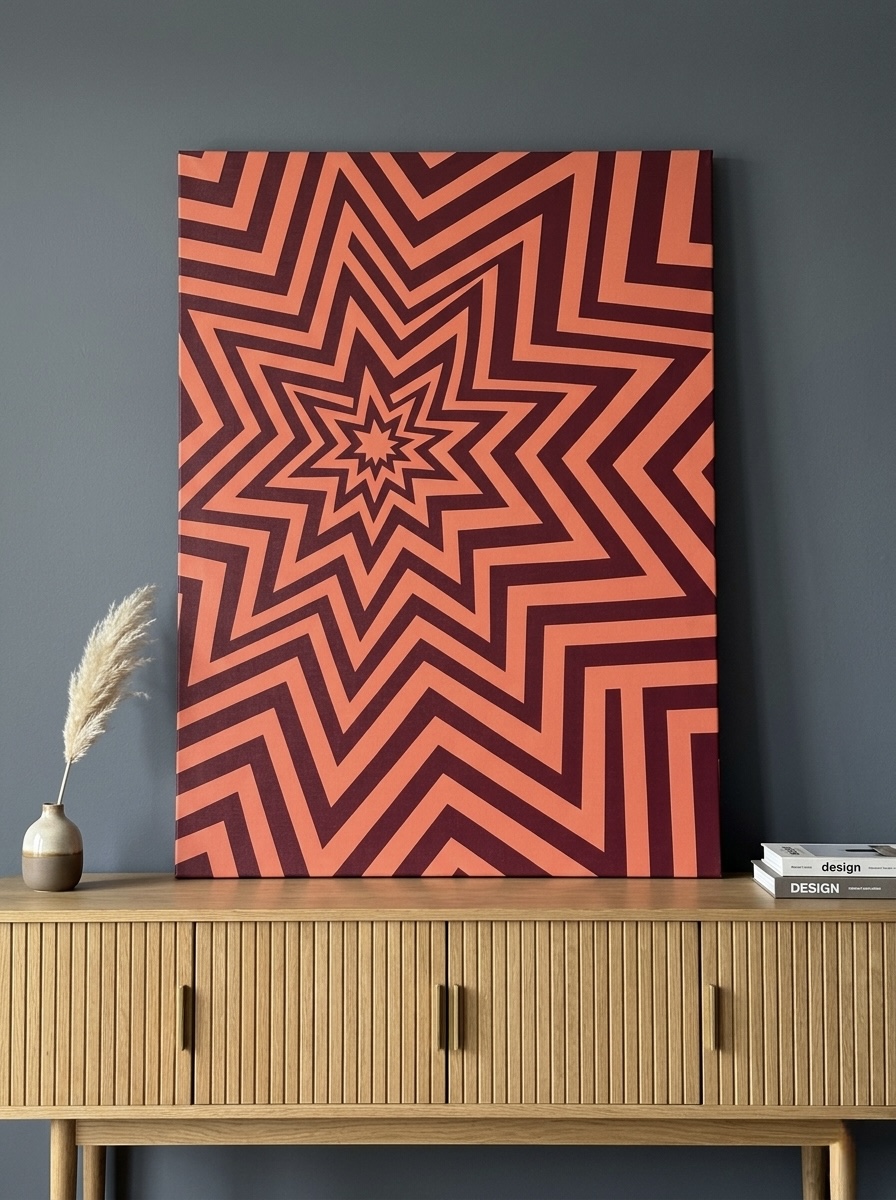
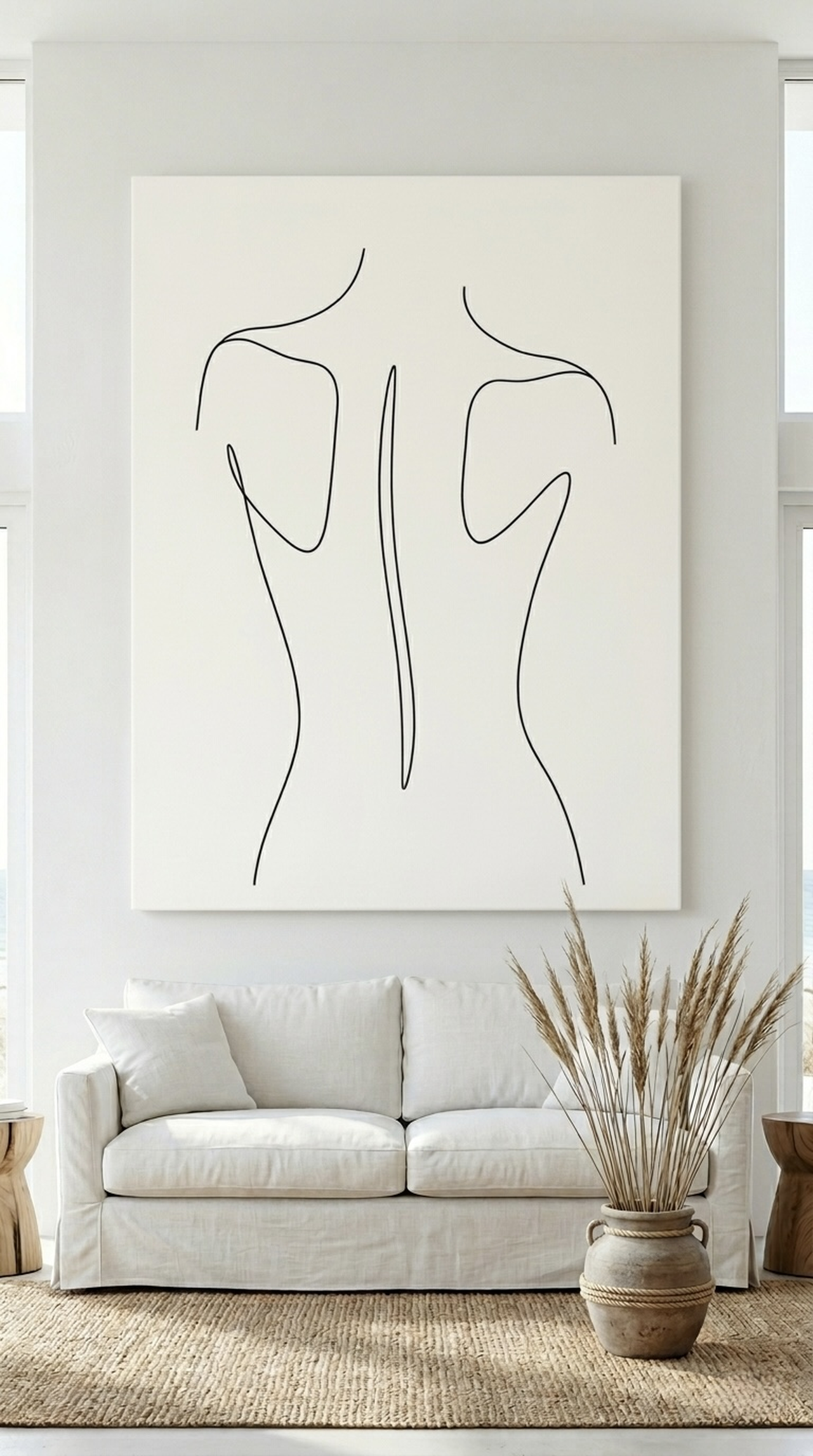
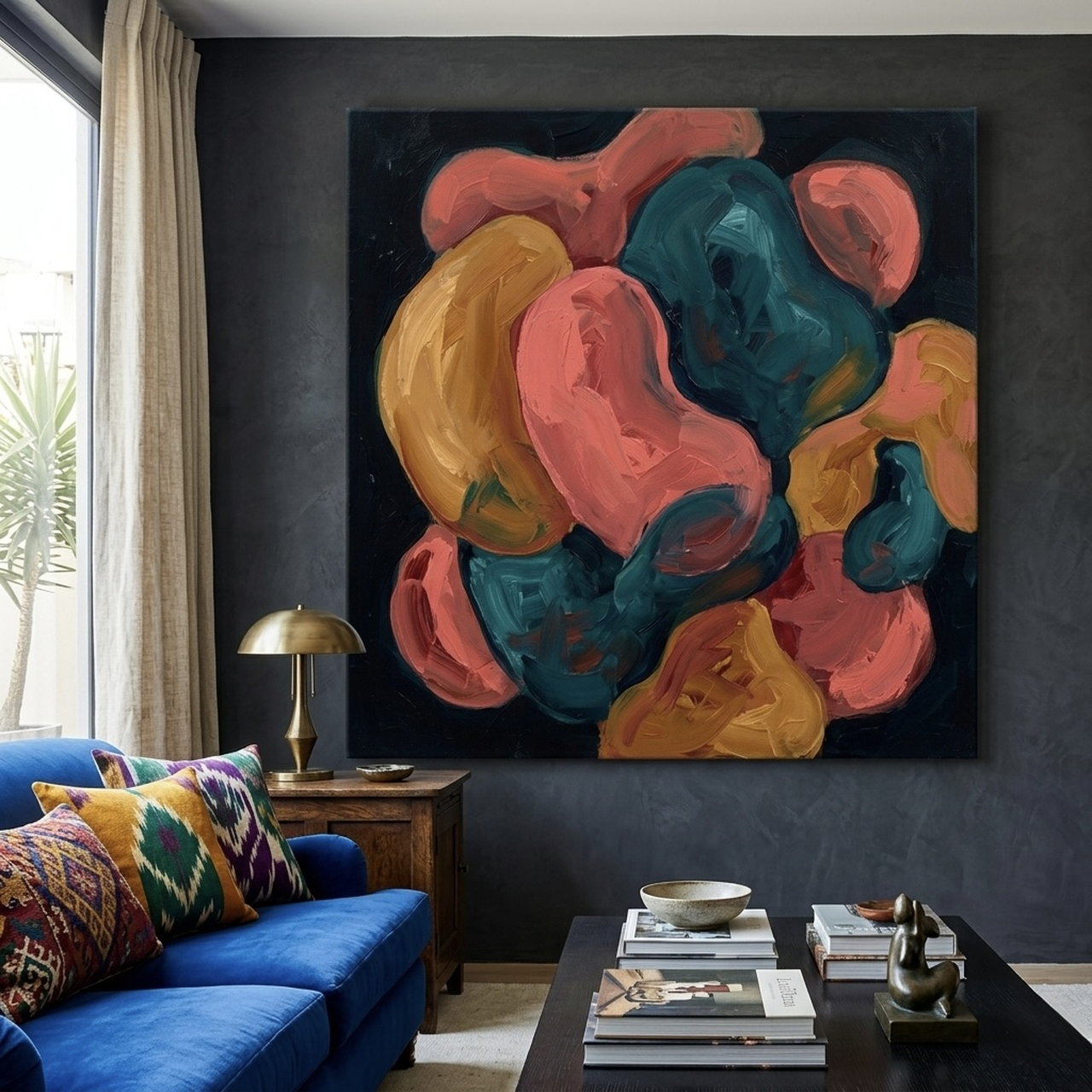
Canvas Art Sized for Every Room
Every piece below is available in multiple sizes, so you can pick the exact dimensions that suit your wall. Use the size guide above to choose with confidence.

Hanging Height Guide
Even perfectly sized art looks wrong when hung at the wrong height. Museum curators hang art so the center of the piece is at 57 to 60 inches (145 to 152 cm) from the floor. This places art at average eye level and is the standard used in galleries worldwide.
In practice, that means the center of your art should land between 57 and 60 inches (145 to 152 cm) from the floor, regardless of wall height. When in doubt, use 58 inches (147 cm) as your target center point.
| Art Height (in) | Art Height (cm) | Top of Art From Floor (in) | Top of Art From Floor (cm) | Bottom of Art From Floor (in) | Bottom of Art From Floor (cm) |
|---|---|---|---|---|---|
| 20 in | 51 cm | 68 in | 173 cm | 48 in | 122 cm |
| 24 in | 61 cm | 70 in | 178 cm | 46 in | 117 cm |
| 30 in | 76 cm | 73 in | 185 cm | 43 in | 109 cm |
| 36 in | 91 cm | 76 in | 193 cm | 40 in | 102 cm |
| 40 in | 102 cm | 78 in | 198 cm | 38 in | 97 cm |
| 48 in | 122 cm | 82 in | 208 cm | 34 in | 86 cm |
When hanging art above furniture, use the furniture rule instead of the floor rule. Position the bottom edge of the art 6 to 8 inches (15 to 20 cm) above the top of the sofa, headboard, or console table. This keeps art and furniture visually connected.
For staircases, use the floor of the landing as your reference point. Keep the center of each piece at 57 to 60 inches (145 to 152 cm) from the nearest floor level, adjusting for the stair rise as you go.
According to Better Homes and Gardens, the 57-to-60-inch center rule is the single most reliable formula for hanging art at the right height in any room.
5 Common Sizing Mistakes to Avoid
Knowing what to do is half the battle. Knowing what to avoid is equally important. These five mistakes account for most sizing frustrations in home decorating.
- Choosing art that is too small. A single 16x20 inch (41x51 cm) print on a large living room wall looks like a postage stamp. It draws attention to how much empty wall surrounds it rather than to the art itself. Use the two-thirds rule to find your minimum size.
- Hanging art too high. Art hung above eye level creates a disconnected, formal feel. The 57-to-60-inch (145-to-152-cm) center rule exists for a reason. When art feels too high, it stops being part of the room and starts floating above it.
- Ignoring furniture scale when selecting size. Art does not exist in isolation. A 24x24 inch (61x61 cm) canvas may look substantial at the art store but will disappear above an 84-inch (213-cm) sofa. Always measure your furniture first.
- Buying art that matches the wall color too closely. Art that blends into the wall has no visual impact. Sizing matters less if contrast is absent. Consider the wall color when choosing both the art and its frame color.
- Using too many small pieces instead of one well-sized piece. A gallery wall of twelve 5x7 inch (13x18 cm) prints covers the same area as a single 24x36 inch (61x91 cm) canvas but creates a cluttered, restless look. When in doubt, go bigger and simpler.
Frequently Asked Questions
What size wall art is best for a living room?
For most living rooms, a single piece of 30x40 inches (76x102 cm) to 40x60 inches (102x152 cm) works well above a sofa. Apply the two-thirds rule: the art width should be 60 to 75 percent of the sofa length. Larger rooms with high ceilings can go up to 48x72 inches (122x183 cm) or use a gallery wall arrangement.
How high should I hang wall art?
The center of any wall art should sit 57 to 60 inches (145 to 152 cm) from the floor. This matches average eye level and is the standard used in museums and galleries. When hanging art above furniture, position the bottom edge 6 to 8 inches (15 to 20 cm) above the furniture top instead of using the floor measurement.
What size art should I hang above a queen bed?
A queen mattress is 60 inches (152 cm) wide. Aim for art that is 40 to 54 inches (102 to 137 cm) wide. A single 40x40 inch (102x102 cm) or 48x24 inch (122x61 cm) canvas works well. Hang it 4 to 6 inches (10 to 15 cm) above the headboard, or center it at 60 inches (152 cm) from the floor if there is no headboard.
Can I use a large canvas in a small room?
Yes, and often it is the better choice. A single large canvas in a small room creates a sense of depth and focus. Multiple small pieces can make a small room feel cluttered and busy. Keep the large piece on one wall only and keep surrounding decor minimal for the best result.
What is the two-thirds rule for wall art?
The two-thirds rule states that your art should cover roughly 67 percent of the width of the wall or the furniture it hangs above. To apply it, measure the furniture or wall width and multiply by 0.67. The result is your target art width. This proportion is the foundation of most professional interior design recommendations for wall art sizing.
How do I size art for a gallery wall?
Treat your gallery wall as a single large piece. The total width of the arrangement should follow the two-thirds rule relative to the furniture or wall below. Lay the arrangement on the floor first, then transfer to the wall. Keep consistent spacing between frames (2 to 3 inches or 5 to 8 cm) and center the arrangement as a unit at 57 to 60 inches (145 to 152 cm) from the floor.
Quick Reference: Wall Art Size Chart
Save or bookmark this table for your next shopping session. All measurements are given in both inches and centimeters.
| Situation | Recommended Size (inches) | Recommended Size (cm) | Notes |
|---|---|---|---|
| Above a 60 in loveseat | 36 to 45 in wide | 91 to 114 cm wide | Single piece or diptych |
| Above an 84 in sofa | 50 to 63 in wide | 127 to 160 cm wide | Triptych or large single |
| Above a queen bed | 40 to 54 in wide | 102 to 137 cm wide | 4-6 in above headboard |
| Above a king bed | 48 to 60 in wide | 122 to 152 cm wide | 4-6 in above headboard |
| Above a fireplace mantel | Match mantel width | Match mantel width | 4-6 in above mantel surface |
| Large living room wall | 40x60 to 48x72 in | 102x152 to 122x183 cm | 2/3 of wall width |
| Bedroom feature wall | 36x36 to 40x60 in | 91x91 to 102x152 cm | Above headboard or dresser |
| Dining room side wall | 30x40 to 36x48 in | 76x102 to 91x122 cm | At eye level, 57-60 in center |
| Kitchen accent wall | 18x24 to 24x30 in | 46x61 to 61x76 cm | Away from steam and splatter |
| Home office feature wall | 24x30 to 30x40 in | 61x76 to 76x102 cm | Behind or beside desk |
| Hallway (narrow) | 8x24 to 12x30 in vertical | 20x61 to 30x76 cm | Vertical orientation |
| Bathroom accent | 16x20 to 20x24 in | 41x51 to 51x61 cm | Away from direct moisture |
| Standard hanging height | 57 to 60 in from floor (center) | 145 to 152 cm from floor (center) | Museum standard, works everywhere |
| Above furniture gap | 6 to 8 in above furniture top | 15 to 20 cm above furniture top | Connects art to furniture visually |
| Minimum size (any room) | 16x20 in (bathroom) / 24x24 in (other rooms) | 41x51 cm / 61x61 cm | Smaller looks like a postage stamp |
Choosing the right size is the single most impactful decision you make when buying wall art. Get it right and even a simple print transforms a room. Get it wrong and even an expensive piece can look out of place.
Use this wall art size guide every time you shop. Measure your furniture, apply the two-thirds rule, and use the charts above to confirm your choice. Then focus on finding art that moves you.
Every canvas at Heva Unique Art Gallery ships in multiple sizes, from 6x6 inches (15x15 cm) all the way up to 36x36 inches (91x91 cm) and beyond, so you can get the exact dimensions you need for your space.
Shop canvas wall art in the size that fits your room at hevauniqueartgallery.com