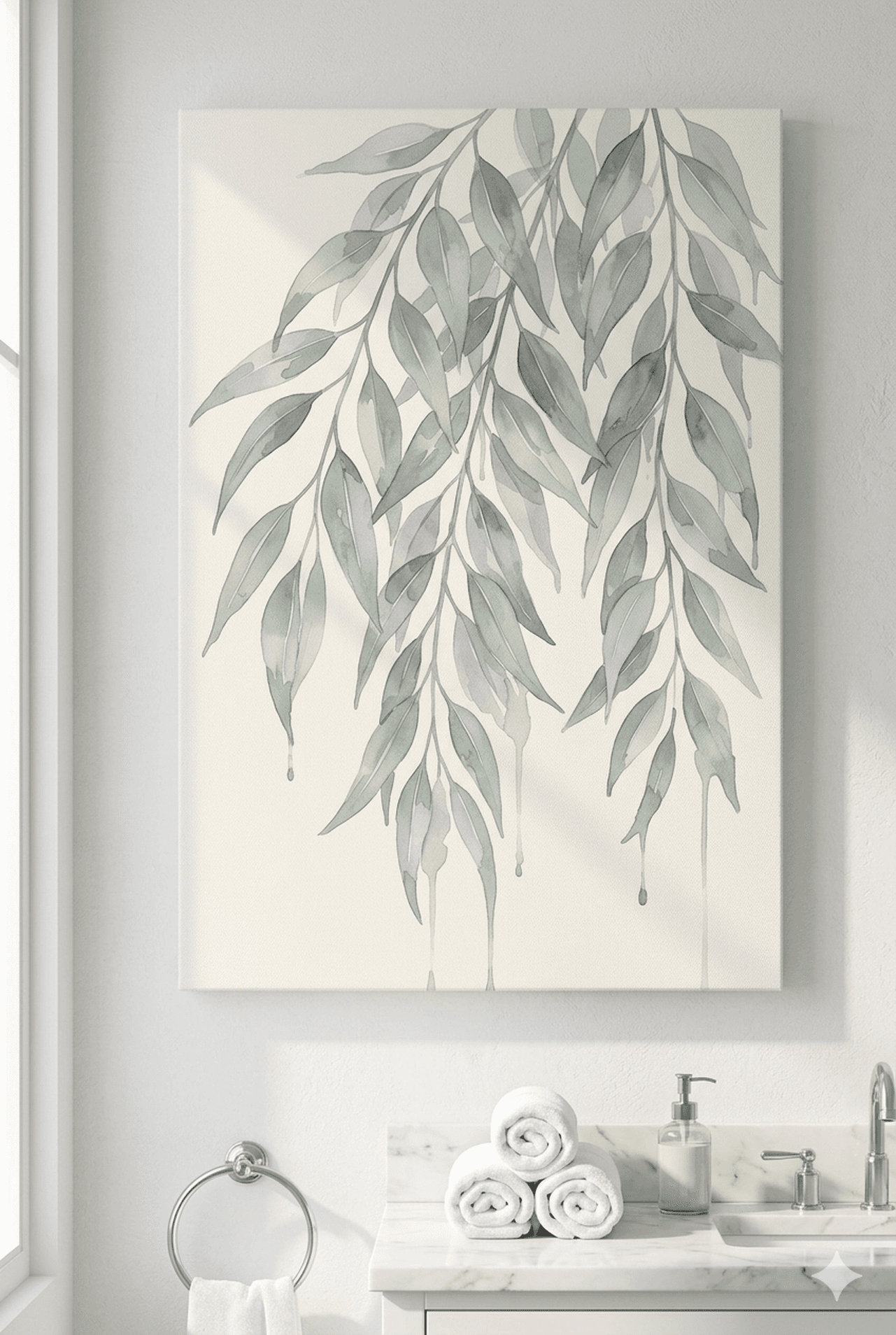
Small vs Large Wall Art: How to Choose the Right Size for Every Wall
The Heva Team
Art Curators & Interior Design Enthusiasts · April 3, 2026 · 14 min read
One of the most common questions people face when choosing wall art is also one of the simplest to get wrong: should I go small or large? The answer is not purely aesthetic; it is a decision that intersects with the architecture of your space, the function of the room, the furniture arrangement, and the emotional effect you want to create. Get it right, and a single piece of art can transform a room. Get it wrong, and even a beautiful piece will feel lost, overwhelming, or simply out of place. This guide gives you every tool you need to make the right size decision, every time.
Explore our full range of sizes in the Nature and Wildlife collection here.
Why Art Size Is the Most Underrated Decorating Decision
Walk into any professionally designed interior, and one thing will immediately stand out: the art is always the right size. This is not an accident. Interior designers spend significant time deliberating on scale precisely because it has such an outsized effect on how a room feels. A space with correctly scaled art feels intentional, sophisticated, and complete. A space where art is the wrong size feels awkward, unfinished, or amateurish, even if the art itself is beautiful.
The reason size has such a powerful effect is that it governs the visual hierarchy of a room. Large art commands attention and establishes the emotional tone of the space. It tells the eye where to go first and sets the scale against which all other elements are measured. Small art, by contrast, invites closer inspection, works as a complement to larger pieces, and creates moments of discovery rather than statements of intent.
Neither approach is inherently better than the other. The right choice depends entirely on the specific wall, room, furniture arrangement, and effect you are trying to create. The mistake most people make is defaulting to small art because it feels safer, less expensive, or less committal. In reality, small art on a large wall is one of the most common and most easily avoidable decorating errors in home design.
For more context on how art interacts with your room's overall design, see our guide on how to choose wall art size for your living room and our post on large wall art ideas for statement pieces.
When to Choose Large Wall Art
Large art, typically pieces 80 cm (32 inches) and above in their longest dimension, is the right choice in specific situations. Understanding these situations will help you commit to scale with confidence rather than uncertainty.
Big Empty Walls: If you have a wall that is more than 1.5 m (60 inches) wide with nothing on it, small art will look lost. The wall will feel unfinished and the art will look like an afterthought. Large art on a big wall creates a focal point that anchors the room and gives the eye a place to rest.
Statement Living Rooms: The living room is where large art most often makes sense. Above the sofa, above the fireplace, or on a dedicated feature wall, an oversized canvas creates the dramatic, gallery-quality effect that makes a living room feel intentional and beautiful. Interior designers refer to this as "making the wall do the work": one large piece performs better than multiple small ones in most living room configurations.
High-Ceilinged Rooms: In rooms with ceilings above 2.7 m (9 feet), proportionally larger art is necessary to maintain visual balance. A small print in a room with soaring ceilings looks diminished and awkward. Larger vertical canvases or arrangements of significant scale are needed to fill the visual space created by tall ceilings.
Minimalist Interiors: In a minimalist space with few decorative elements, a single large statement piece carries enormous visual weight and justifies the restraint of everything around it. The minimalist philosophy of "less but better" applies perfectly to art: one large, exceptional piece is more powerful than many smaller, less considered ones.
Feature Walls: When you have a designated feature wall, large art is almost always the right choice. The feature wall is built around a single strong element, and art is often that element. Scale and confidence are essential: a timid small print on a feature wall defeats the entire purpose.
When to Choose Small Wall Art
Small art, pieces under 60 cm (24 inches), has its own specific and appropriate contexts. The key is using small art deliberately rather than by default.
Gallery Walls: Gallery walls are built from multiple smaller pieces working together. A collection of pieces between 20 and 50 cm (8 to 20 inches) creates a cohesive arrangement that functions as a single large visual element. The power of a gallery wall comes from the relationship between the pieces, not from any single element. This is one of the few contexts where small art is the right choice by design.
Narrow Walls: A wall that is less than 60 cm (24 inches) wide, such as a thin strip between doorways or windows, is suited only to small vertical art. Large art on a narrow wall will feel crowded and uncomfortable. A slim vertical piece or a small framed print sits well in these architectural constraints.
Intimate Spaces: Bathrooms, closets, reading nooks, and small studies benefit from smaller art that feels proportional to the intimacy of the space. Large art in a small bathroom feels overwhelming rather than impressive. Smaller pieces that you can appreciate up close create a sense of thoughtful curation in intimate spaces.
Supporting Roles: Small art works beautifully as a supporting element to a larger main piece. On either side of a large central canvas, smaller complementary pieces create visual rhythm without competing for attention. This is the gallery principle: a hero piece flanked by supporting works.
Shelves and Ledges: Art leaned against a wall on a shelf or picture ledge is almost always small to medium in scale. This approach allows for flexible rearrangement and layering, which is a powerful styling tool in contemporary interiors. Small art is essential for shelf-based styling.
The Measuring Guide: Get Specific
Good art sizing is based on actual measurements, not guesses. Here is the specific framework used by interior designers to determine the right art size for any wall and any room.
The Sofa Rule: Art above a sofa should be 50 to 75 percent of the sofa's width. For a 2 m (80-inch) sofa, look for art between 100 and 150 cm (40 to 60 inches) wide. Leave 20 to 30 cm (8 to 12 inches) of space between the top of the sofa cushions and the bottom of the frame.
The Fireplace Rule: Art above a fireplace should be no wider than the fireplace mantel. The ideal width is 75 to 90 percent of the mantel width, with at least 15 cm (6 inches) of clearance above the mantel for heat protection.
The Wall Coverage Rule: Art on an open wall with no furniture below it should cover 60 to 75 percent of the wall's width. For a 2.4 m (96-inch) wide wall, this means art between 145 and 183 cm (57 to 72 inches) wide, which might be achieved by a single large piece or a gallery arrangement.
The Height Rule: Regardless of size, always hang art so the center of the frame is at eye level: approximately 145 to 152 cm (57 to 60 inches) from the floor. In seated areas like dining rooms, you can adjust down to 130 to 140 cm (51 to 55 inches). This rule applies equally to small and large art.
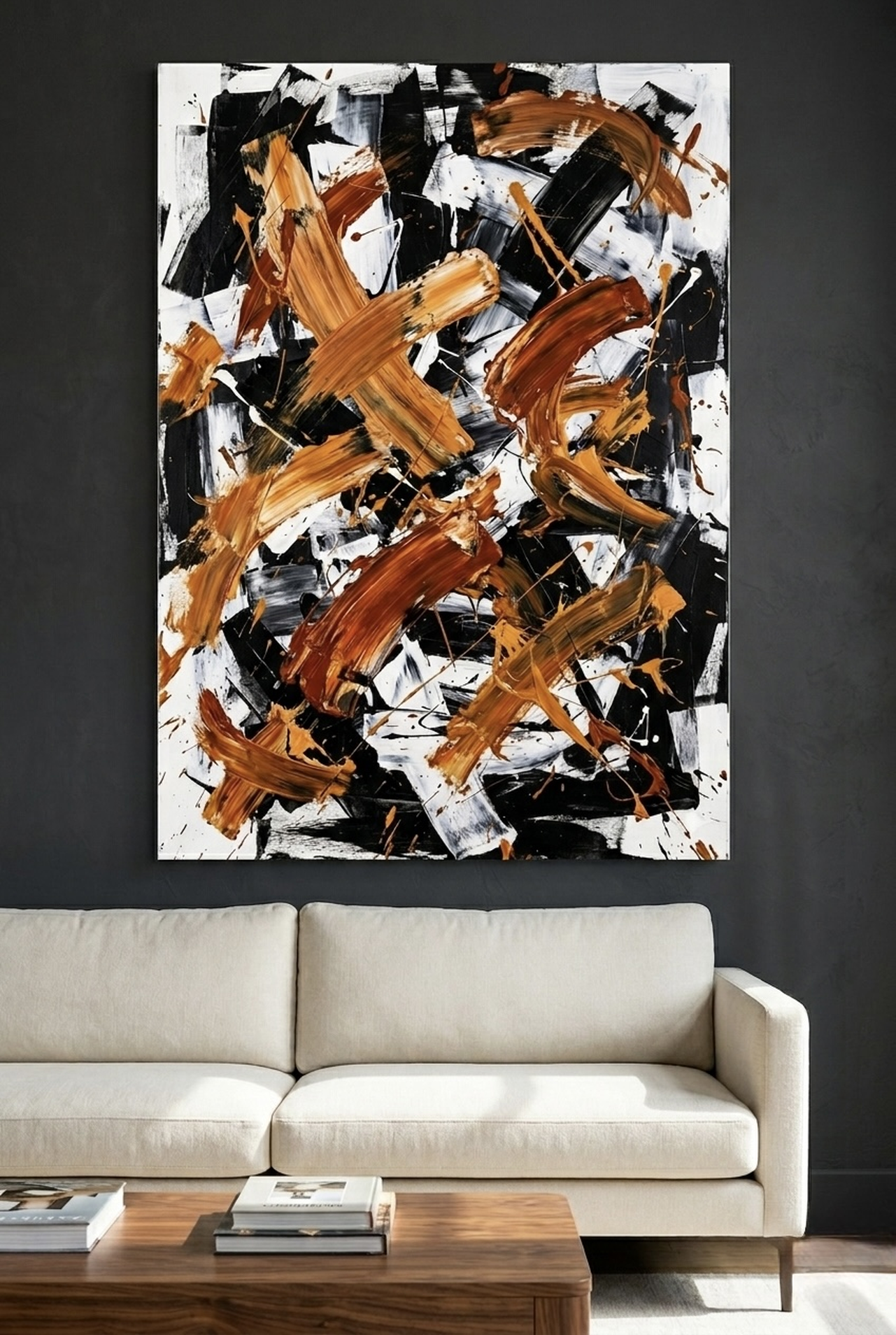
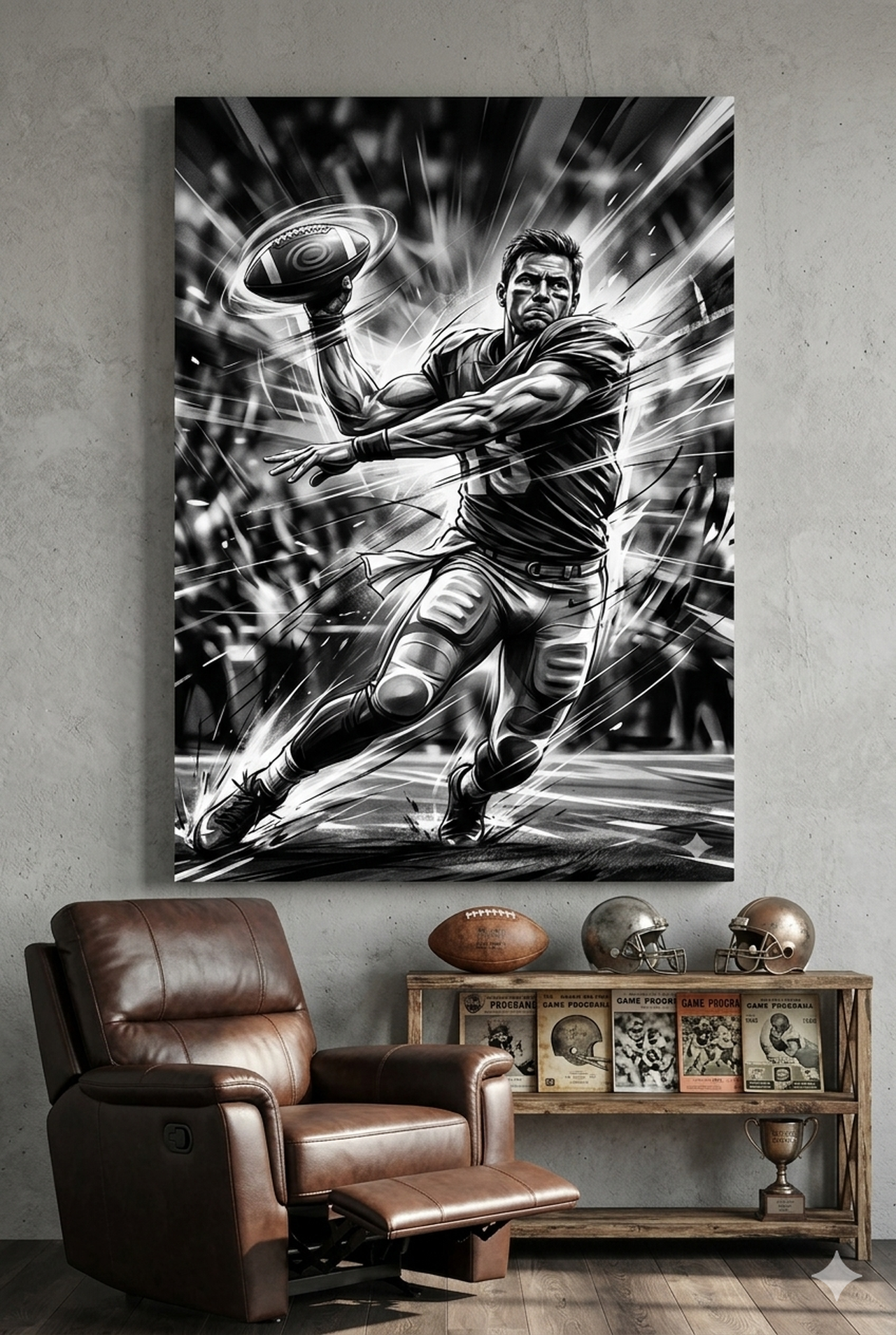
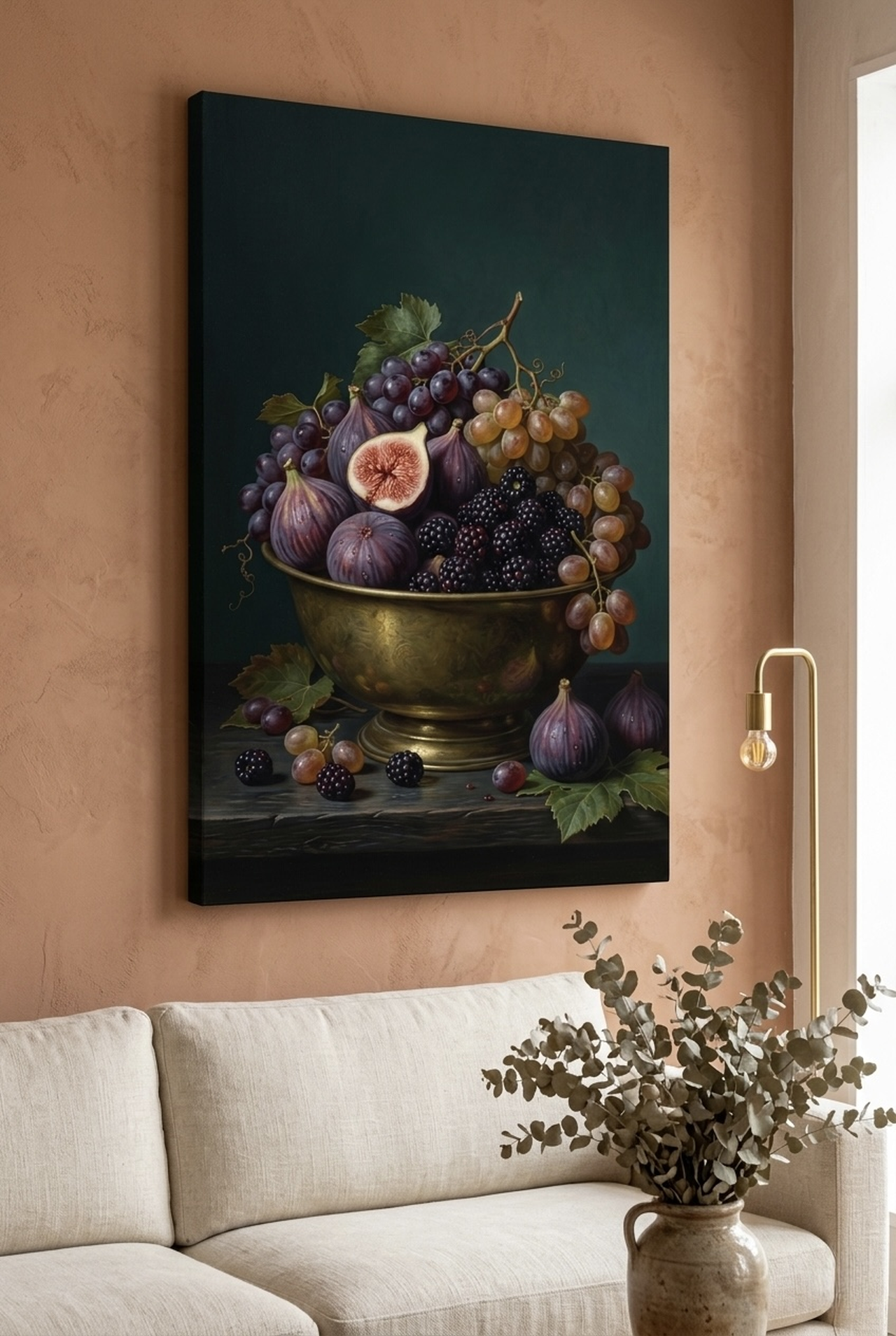
6 Wall Art Picks Across Size Ranges
These six pieces demonstrate how different sizes work across different contexts: from smaller accent pieces to large statement canvases that anchor a room.
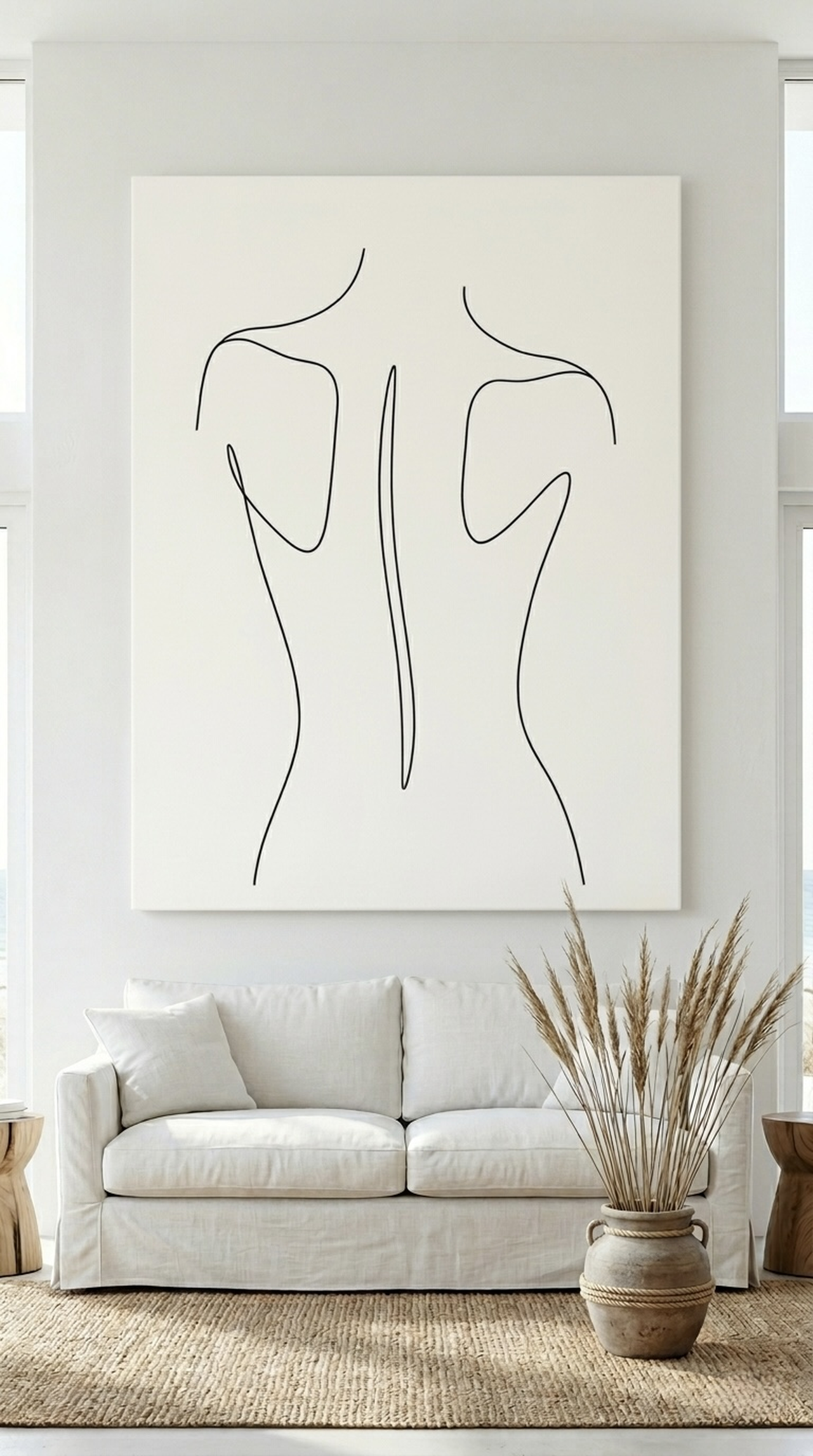
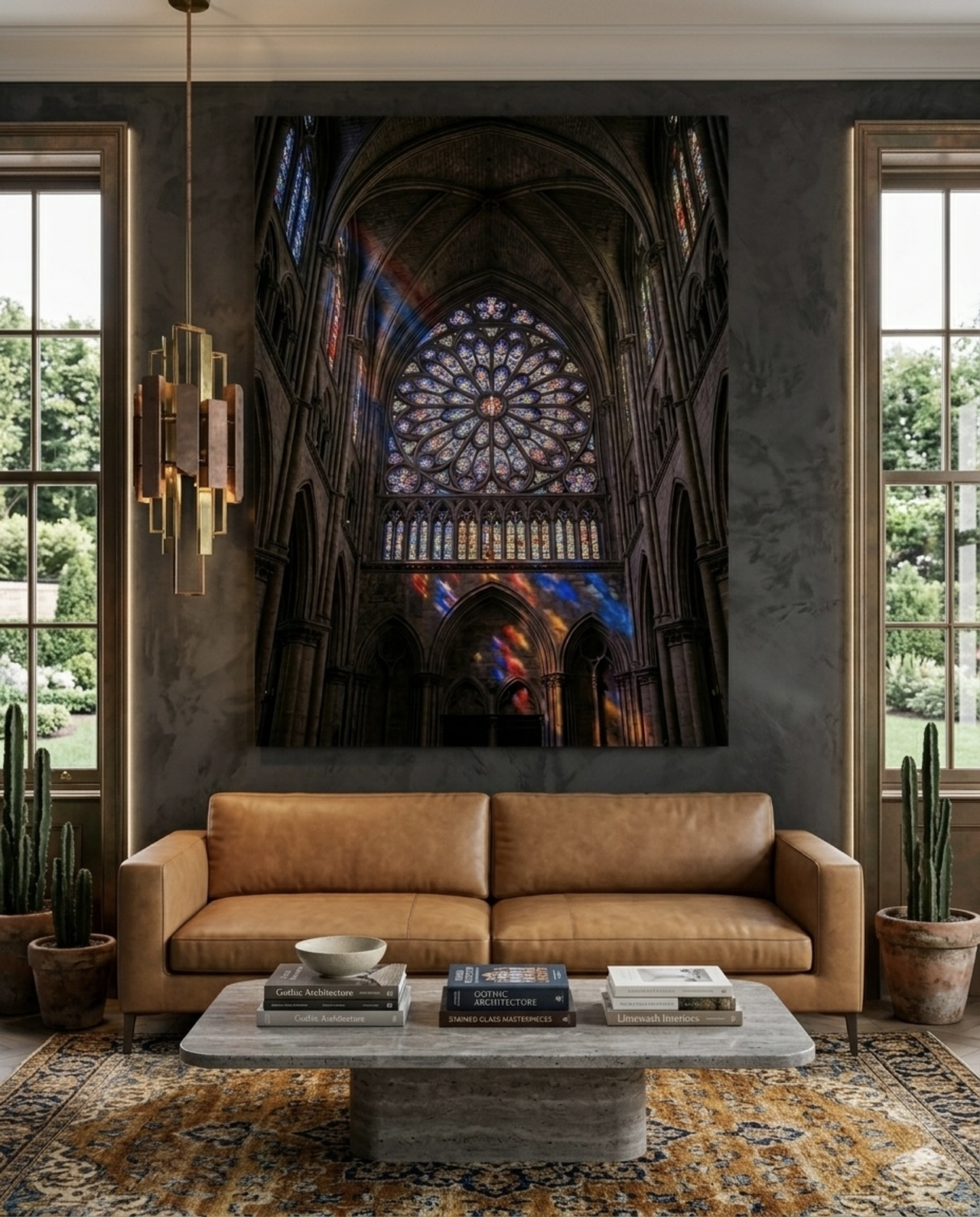
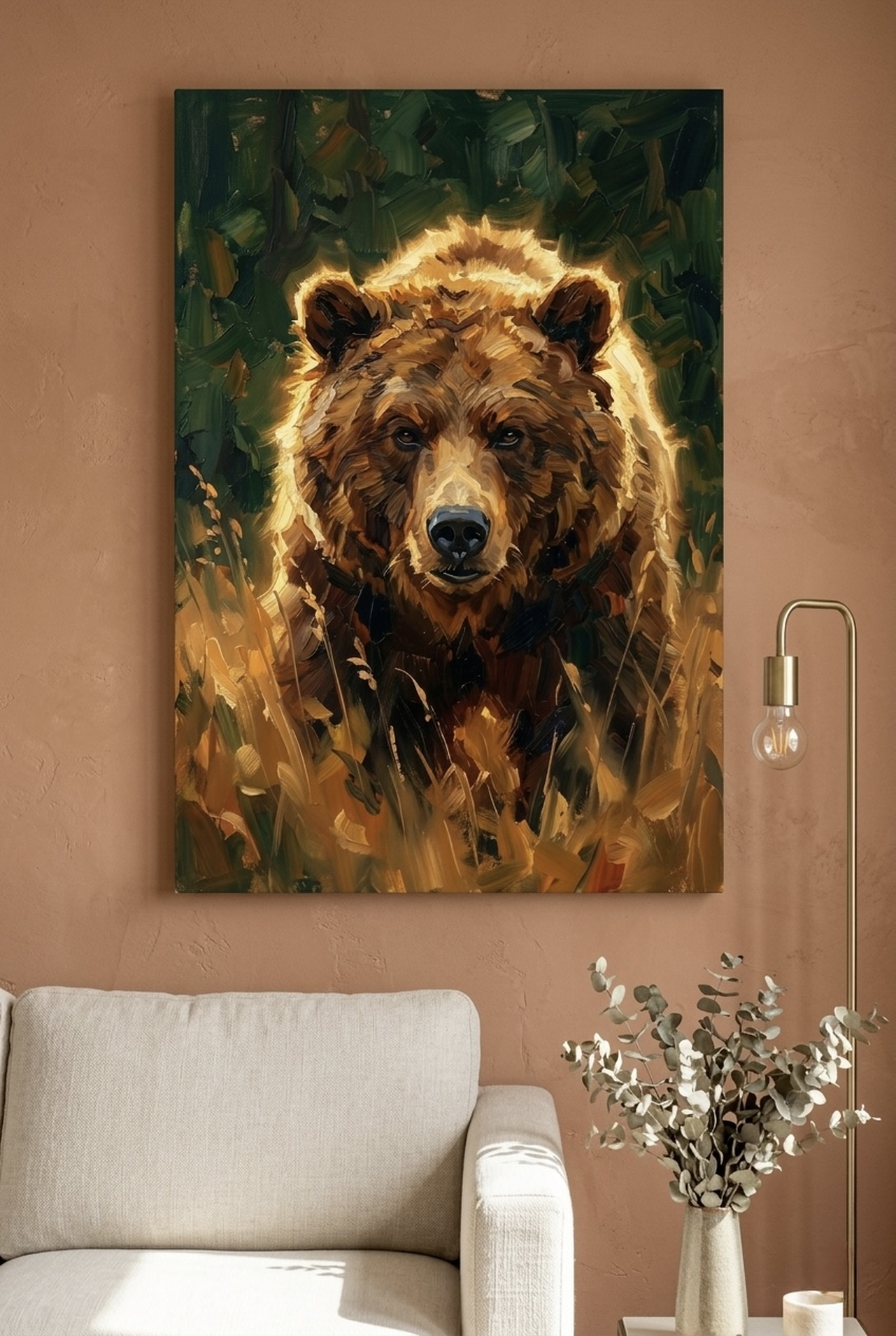
Placement Rules That Make Every Size Work
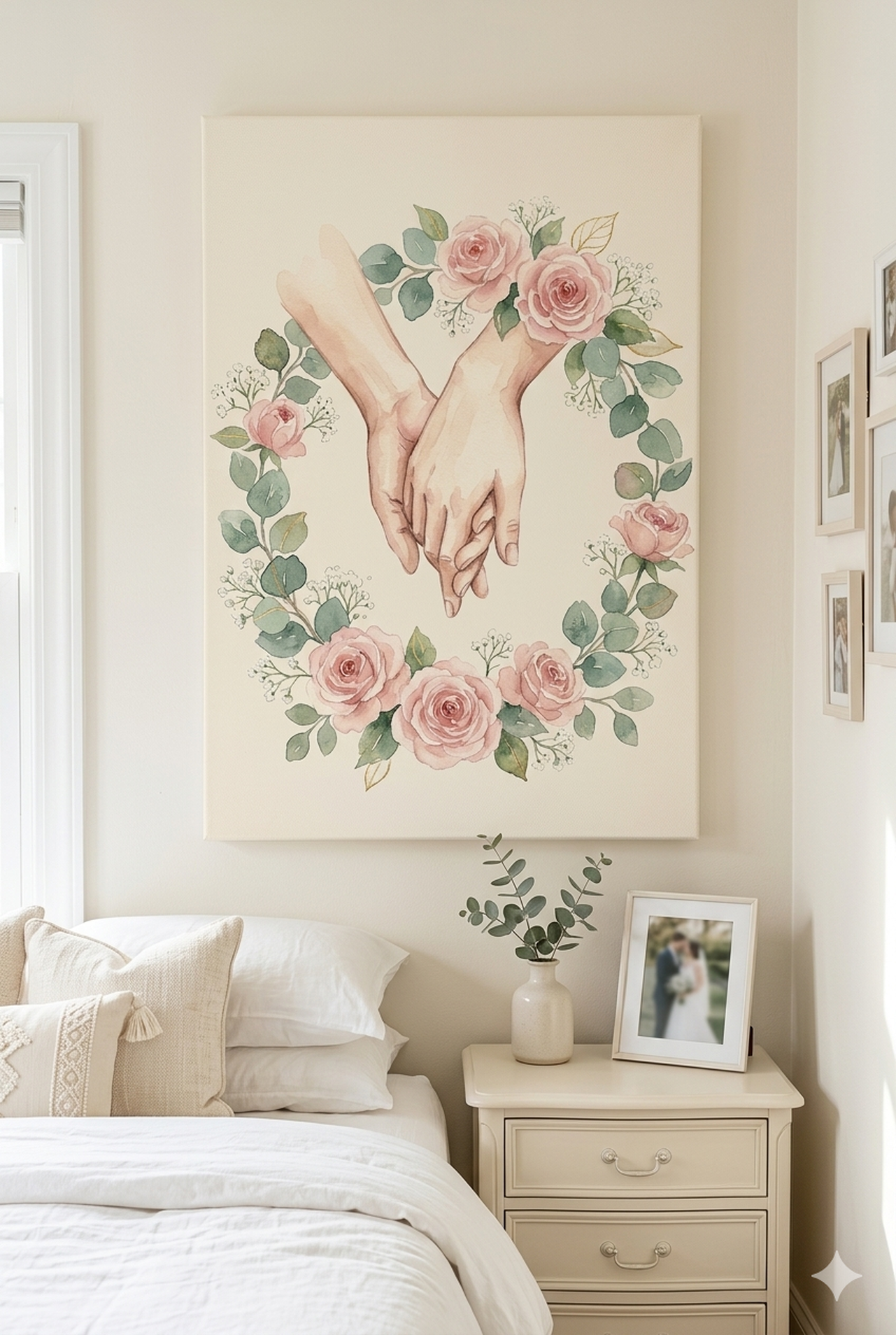
Once you have chosen the right size, proper placement ensures your art achieves its maximum effect in the space.
The Eye Level Rule: Always hang art so the center of the frame is at 145 to 152 cm (57 to 60 inches) from the floor. This is the universal gallery standard and it applies regardless of whether your art is small or large. Breaking this rule is the single most reliable way to make art feel amateur in an otherwise well-designed space.
Breathing Room: Art needs space around it to breathe. For large art on an open wall, aim for at least 20 to 30 cm (8 to 12 inches) of clear wall space on each side. For small art in a gallery arrangement, maintain consistent spacing of 5 to 8 cm (2 to 3 inches) between frames. Consistent spacing is the signature of a professional gallery wall.
Relationship to Furniture: Art should always be in deliberate visual dialogue with the furniture beneath or beside it. It should neither crowd the furniture nor float disconnected above it. The 20 to 30 cm (8 to 12 inches) gap between the top of sofa cushions and the bottom of the frame is the standard relationship for sofa walls.
Natural Lighting: Consider where natural light falls in the room and what time of day you spend the most time in the space. Art positioned so that direct sunlight falls across it can create glare and accelerate fading. Position art where it receives indirect or diffused light for the best visual result and the longest lifespan.
5 Common Size Mistakes to Avoid
- Going Too Small By Default: This is by far the most common wall art sizing mistake. People choose small art because it feels safer and less expensive. But small art on a large wall is a decorating error that undermines everything around it. Always measure before buying and commit to the scale your wall actually needs.
- Hanging Art Too High: Art hung at ceiling height disconnects from the human scale of the room and from the furniture below it. The 57 to 60-inch center-of-frame rule exists for a reason: use it consistently.
- Mismatching Art to Room Scale: Very large art in a very small room can feel oppressive and claustrophobic. Very small art in a large room looks lost and unintentional. Scale art to the room, not to your general preferences.
- Choosing All the Same Size: In a gallery wall, visual interest comes from variation in frame sizes. Using all identical sizes creates monotony. Mix large anchor pieces with medium and small supporting pieces for a professionally curated result.
- Not Accounting for Frames: Remember that the size of the art and the size of the frame are different things. A 60 cm (24-inch) canvas in a 10 cm (4-inch) frame is actually 80 cm (32 inches) total. Factor in the frame dimension when calculating whether your art will fit the wall space you have in mind.
Frequently Asked Questions
How do I know what size wall art to choose?
Measure the wall width first. Art should cover 50 to 75 percent of the wall's width for open walls, and 50 to 75 percent of your sofa's width when hanging above furniture. Always err toward slightly larger rather than too small. Use painter's tape to mock up the size on the wall before purchasing for a clear visual guide.
Is large wall art better than small wall art?
Neither is inherently better: the right choice depends entirely on the wall, room, and effect you want to create. Large art creates drama and presence on significant walls. Small art works beautifully in gallery arrangements, intimate spaces, and as supporting elements alongside larger pieces. The mistake is defaulting to small because it feels safer, when the space actually needs larger scale.
What size wall art should I hang above a sofa?
Art above a sofa should be 50 to 75 percent of the sofa's width. For a standard 2 m (80-inch) sofa, look for art between 100 and 150 cm (40 to 60 inches) wide. Leave 20 to 30 cm (8 to 12 inches) of clear space between the top of the sofa cushions and the bottom of the frame.
Can you mix large and small wall art in the same room?
Yes, and this is often the most sophisticated approach. A large anchor piece on the main wall paired with smaller accent pieces on secondary walls creates visual hierarchy and interest. In gallery wall arrangements, mixing large, medium, and small frames creates the professional, curated look that interior designers aim for.
What is the rule for wall art size in a living room?
In a living room, art above the sofa should be 50 to 75 percent of the sofa's width. Art on an open feature wall should cover 60 to 75 percent of the wall width. Always hang at the 57 to 60-inch (145 to 152 cm) center-of-frame height standard. Single large statement pieces generally outperform multiple small pieces on the main wall of a living room.
How large is too large for wall art?
Art is too large when it extends beyond the width of the furniture below it, when it crowds into corners, or when the room is so small that the piece dominates rather than anchors the space. In practice, art that is less than the full wall width and maintains at least 20 cm (8 inches) of clear wall space on each side is almost never too large for a typical residential wall.
Quick Reference Table
| Wall Situation | Recommended Art Width | Metric | Size Category |
|---|---|---|---|
| Above a 2 m (80 in) sofa | 100 to 150 cm | 40 to 60 in | Large |
| Above a 1.5 m (60 in) sofa | 76 to 114 cm | 30 to 45 in | Medium to large |
| Open feature wall (2.4 m wide) | 145 to 183 cm | 57 to 72 in | Very large or gallery |
| Narrow hallway wall (60 cm wide) | 30 to 45 cm | 12 to 18 in | Small |
| Gallery wall (multiple pieces) | Mix: 20 to 80 cm per piece | 8 to 32 in per piece | Small to medium |
| Bedroom above a queen bed | 120 to 160 cm | 47 to 63 in | Large |
Choosing between small and large wall art is ultimately about matching the visual weight of the art to the visual needs of the space. When you do this well, the art feels inevitable: as if the wall was always waiting for exactly that piece at exactly that scale. Browse the full collection at Heva Unique Art Gallery where every piece is available in multiple sizes to suit any wall, any room, and any vision. Visit us at hevauniqueartgallery.com today.