
Large Wall Art Ideas for Living Room Statement Walls
The Heva Team
Art Curators & Interior Design Enthusiasts · February 24, 2026 · 13 min read
A big empty wall needs a big bold statement. Here is how to choose large wall art that fills the space perfectly.
You have a big, beautiful wall staring back at you, and that single 20 by 20 centimetre (8 by 8 inch) print you hung above the sofa looks like a postage stamp on an envelope. Sound familiar? Large walls demand large art, and getting the scale right is one of the most impactful design decisions you can make in any room. This guide walks you through the science of sizing, the art of placement, and six bold statement pieces from our collection that are built to command attention on expansive walls.
Ready to browse? Explore our full wall art collection, or keep reading for our top picks and expert tips.
Why Scale Matters More Than You Think
Interior designers have known for decades that the relationship between wall space and art size shapes the entire feel of a room. A piece that is too small for a large wall creates visual tension. Your eye searches for an anchor and finds nothing substantial enough to hold its attention. Research in environmental psychology shows that people perceive rooms as more cohesive and relaxing when artwork proportions align with the architecture around them.
The sweet spot for large wall art is covering roughly 60 to 75 percent of the available wall width above your furniture. For a wall with no furniture below it, you can push even larger. A canvas measuring 61 by 91 centimetres (24 by 36 inches) will fill a space above a standard sofa beautifully, but if your sofa spans 213 centimetres (84 inches), consider going up to 122 by 183 centimetres (48 by 72 inches) or pairing two complementary pieces. Emily Henderson, a well-known interior stylist, recommends that art above furniture should be at least two-thirds the width of the piece beneath it to create visual harmony.
If you are trying to figure out the right dimensions for your specific room, our guide to choosing the perfect wall art size for your living room breaks down every measurement you need.
Sizing Your Art to Your Wall: The Numbers
Before you shop, grab a tape measure. Here are the specific ratios that professional designers use:
- Above a sofa (183 to 213 cm / 72 to 84 inches wide): Your canvas should be 110 to 152 cm (43 to 60 inches) wide. This fills roughly two-thirds of the sofa width and creates a grounded, intentional look.
- Above a bed (queen, 152 cm / 60 inches wide): Aim for a piece that is 91 to 122 cm (36 to 48 inches) wide. Centre it with the headboard, not the wall.
- Above a console table (122 cm / 48 inches wide): A canvas measuring 76 to 91 cm (30 to 36 inches) wide works perfectly. Leave at least 10 cm (4 inches) of table visible on each side.
- Large empty wall with no furniture: This is your chance to go bold. A single oversized piece 122 by 183 cm (48 by 72 inches) or larger can anchor an entire room. Alternatively, create a gallery wall arrangement spanning the same footprint.
One trick that professionals use: cut a piece of kraft paper or newspaper to your target dimensions and tape it to the wall with painter's tape. Live with it for a day. This simple test will confirm whether your chosen size feels right before you commit to a purchase.
Placement Height: The 145 cm Rule
Gallery curators worldwide hang artwork so that the centre of the piece sits at 145 cm (57 inches) from the floor. This puts the visual focal point at average eye level and creates a consistent, museum-quality feel throughout your home. Studio McGee, one of the most trusted names in interior design, confirms this rule in their guide to hanging art correctly.
Here is how to calculate the exact hook placement for any canvas:
- Measure the total height of your framed canvas in centimetres.
- Divide that number by two. This gives you the distance from the top edge to the centre.
- Subtract that number from 145 cm. The result is the distance from the floor to your hanging hook.
For example, if your canvas is 91 cm (36 inches) tall: half of 91 is 45.5 cm, and 145 minus 45.5 equals 99.5 cm (39.2 inches). Your hook goes 99.5 cm up from the floor.
Exception: When hanging above furniture, the bottom edge of the canvas should sit 15 to 20 cm (6 to 8 inches) above the top of the sofa, headboard, or table. If following the 145 cm rule would push the art too high above the furniture, prioritise the 15 to 20 cm gap instead. This keeps the art visually connected to the piece below it rather than floating awkwardly.
Our 6 Statement Picks for Large Walls
Each of these pieces is a gallery-quality framed canvas print that ships ready to hang. We selected them specifically for their ability to command attention on large walls, whether in a living room, bedroom, hallway, or dining space.
1. Volcano Canvas Wall Art
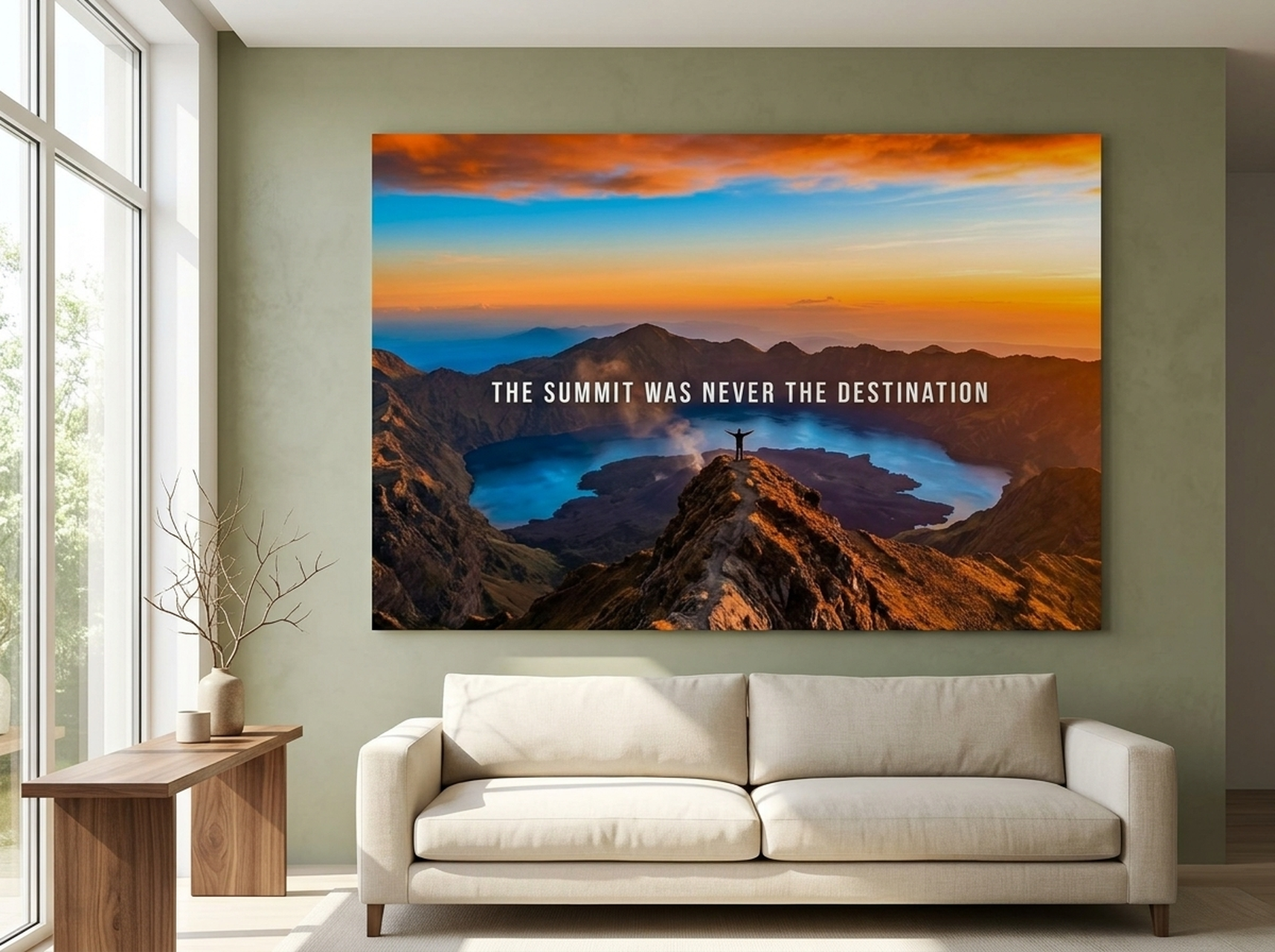
This volcanic summit landscape captures the raw power of nature in rich amber and orange hues that radiate warmth across a large wall. The photography-style print draws the eye upward from the rocky foreground to the glowing summit, creating a natural sense of depth that makes your wall feel even more expansive. It pairs beautifully with earth-tone living rooms, warm-toned dining spaces, and modern lofts with exposed brick or concrete.
Hang this piece above a long sofa or as the focal point of a hallway gallery. The warm palette complements leather furniture, wooden shelving, and neutral walls in shades of cream, taupe, or charcoal. For maximum impact, choose the largest available size and let it dominate the wall solo.
View the Volcano Canvas Wall Art
2. Misty Valley Landscape Canvas Wall Art
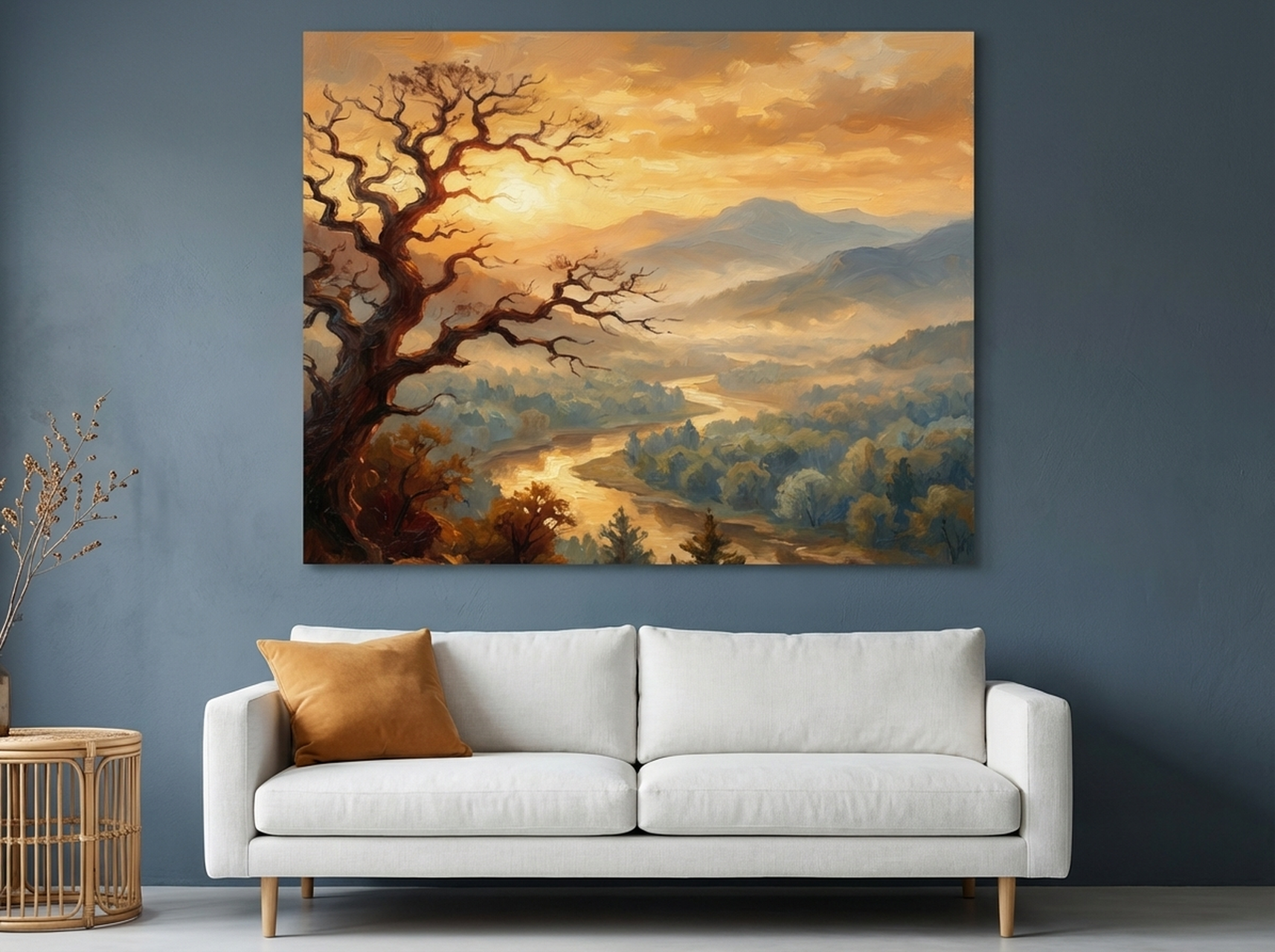
Morning mist hangs over a winding river valley in this atmospheric landscape that brings an almost meditative calm to large walls. The soft amber light blending into forest greens creates a colour palette that works in nearly any room without clashing with existing decor. The wide panoramic composition is naturally suited to horizontal wall spaces above sofas, beds, and console tables.
This piece is ideal for bedrooms where you want a serene focal point, or for living rooms with cool-toned furniture that needs a warm counterbalance. The depth of the misty layers draws the eye into the scene, making the wall behind it feel like a window to the outdoors. Pair it with natural linen textiles and wooden accents for a cohesive organic aesthetic.
View the Misty Valley Landscape
3. Fluid Abstract Landscape Canvas Wall Art
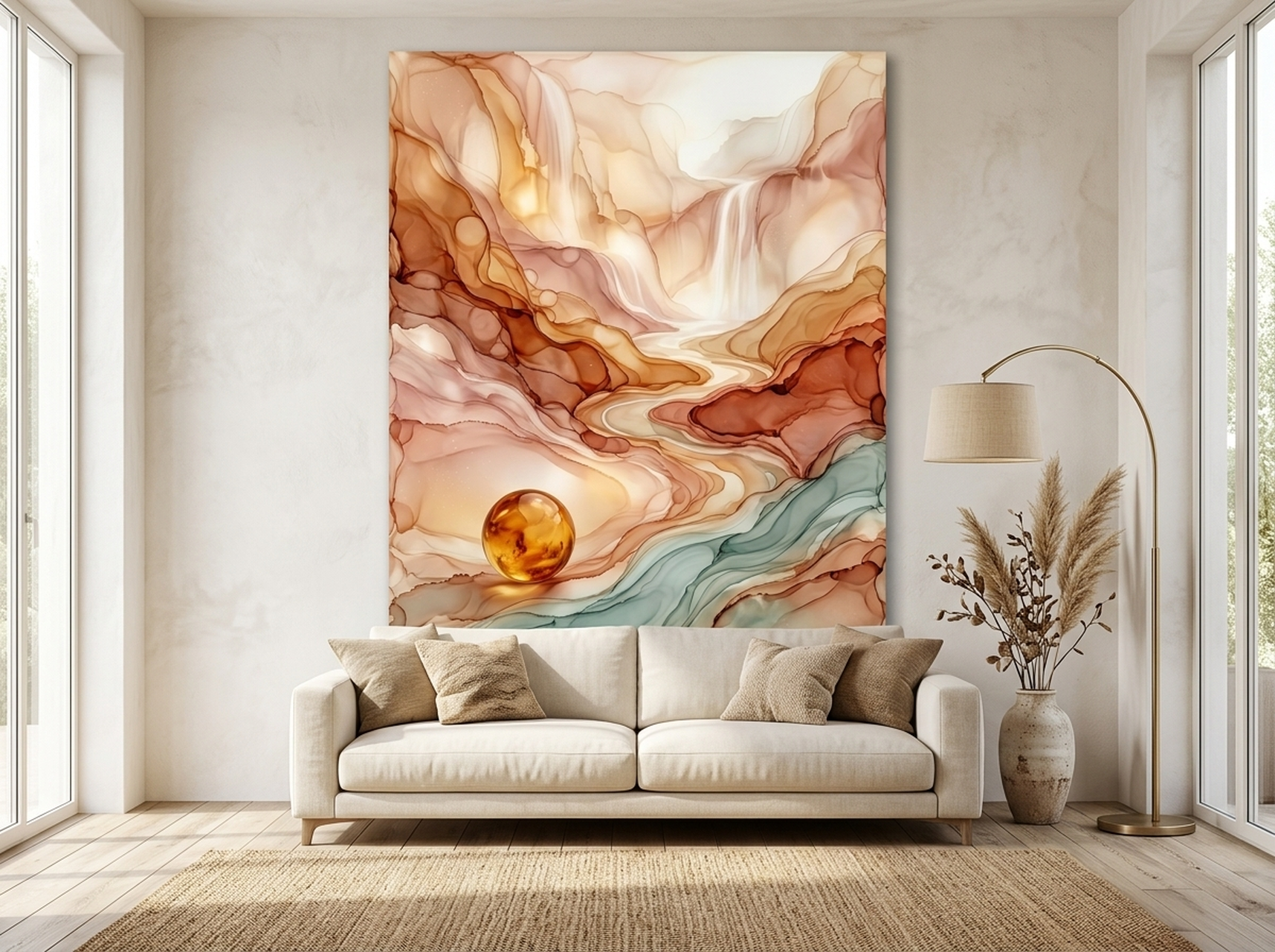
Where traditional landscapes use recognisable forms, this fluid abstract interpretation dissolves mountains and horizons into sweeping bands of gold, amber, and slate. The result is a piece that reads as both landscape and pure colour field, making it one of the most versatile large-wall options for homeowners who want something bold without being overly literal. The gold tones catch ambient light beautifully, shifting in warmth throughout the day.
Hang this in a contemporary living room above a low-profile sectional, or let it anchor a modern dining room. It pairs especially well with gold or brass hardware, matte black fixtures, and furniture in neutral tones like mushroom, ivory, or graphite. If you love abstract art, our guide to the best abstract wall art for living rooms has even more options.
View the Fluid Abstract Landscape
4. Oversized Rose Canvas Wall Art
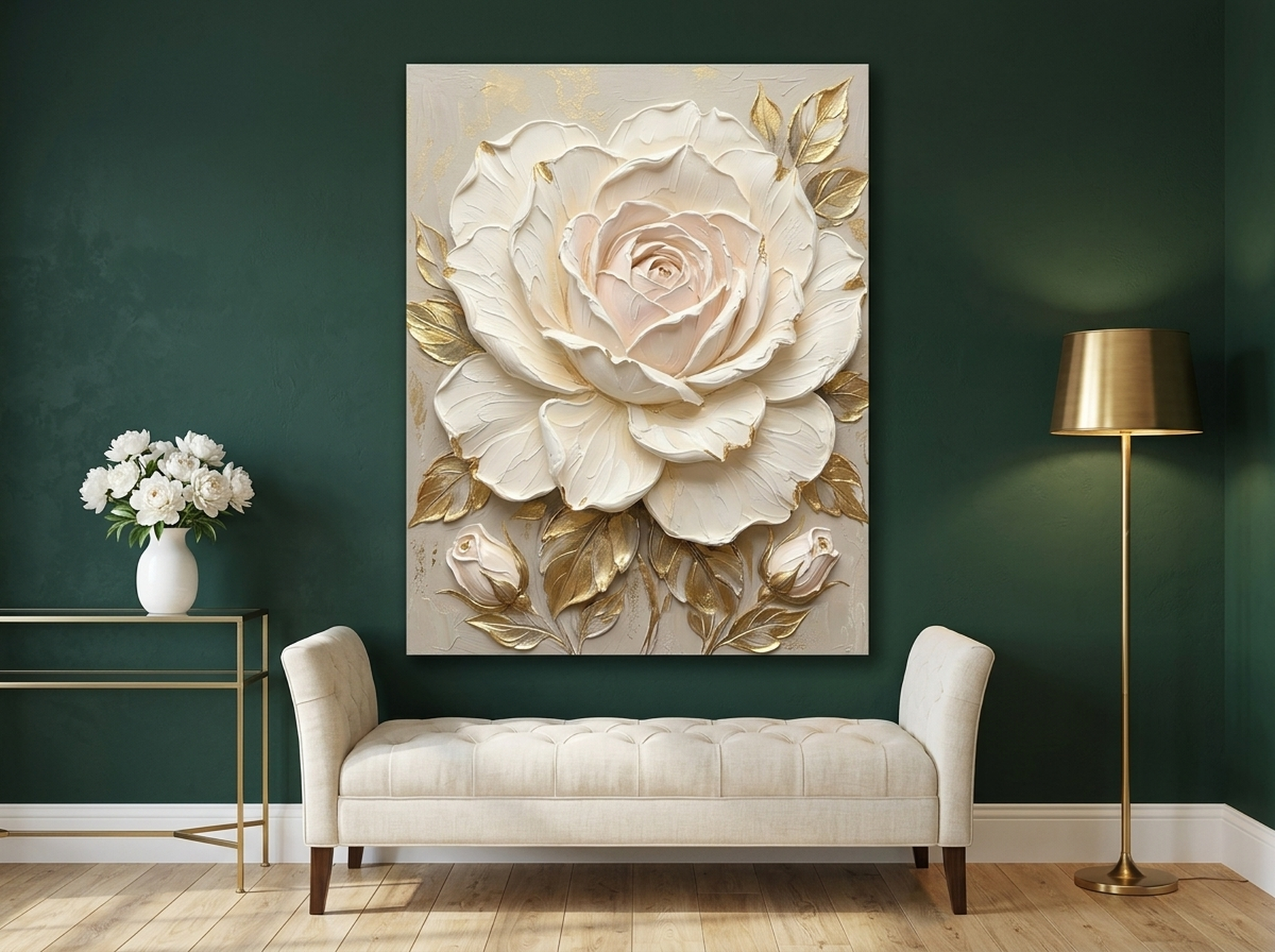
Sometimes the most dramatic statement comes from a single subject rendered at a monumental scale. This oversized rose in creamy ivory and warm gold uses an impasto-style technique that gives the surface visible texture, almost as though the petals were painted with thick, deliberate brushstrokes. When printed at a large size, the petal details become immersive, turning the canvas into an experience rather than just decoration.
This piece was designed with bedrooms in mind. It is stunning above a king-size headboard where its soft, romantic palette creates a relaxing atmosphere. It also works beautifully in a formal sitting room, a luxury bathroom, or a bridal boutique. The cream and gold tones complement blush pink, sage green, and warm white interiors without ever feeling heavy.
View the Oversized Rose Canvas
5. Dolomites Mountain Canvas Wall Art

The Italian Dolomites are among the most photographed mountain ranges in the world, and this crimson-and-gold interpretation captures why. Jagged peaks catch the last light of a setting sun, while deep shadows carve dramatic contrast across the rock face. The colour intensity of this piece means it can hold its own on even the largest walls without fading into the background.
This is a living room powerhouse. Hang it above your primary seating area in a room with warm wood floors, deep leather seating, or a stone fireplace surround. The crimson tones pick up beautifully on burgundy accent cushions or terracotta pottery. In an open-plan space, it can serve as the visual anchor that defines the lounge zone. If you want to learn the proper technique for hanging a piece this size, check out our complete guide to hanging wall art.
View the Dolomites Mountain Canvas
6. Norwegian Fjord Mountain Canvas Wall Art
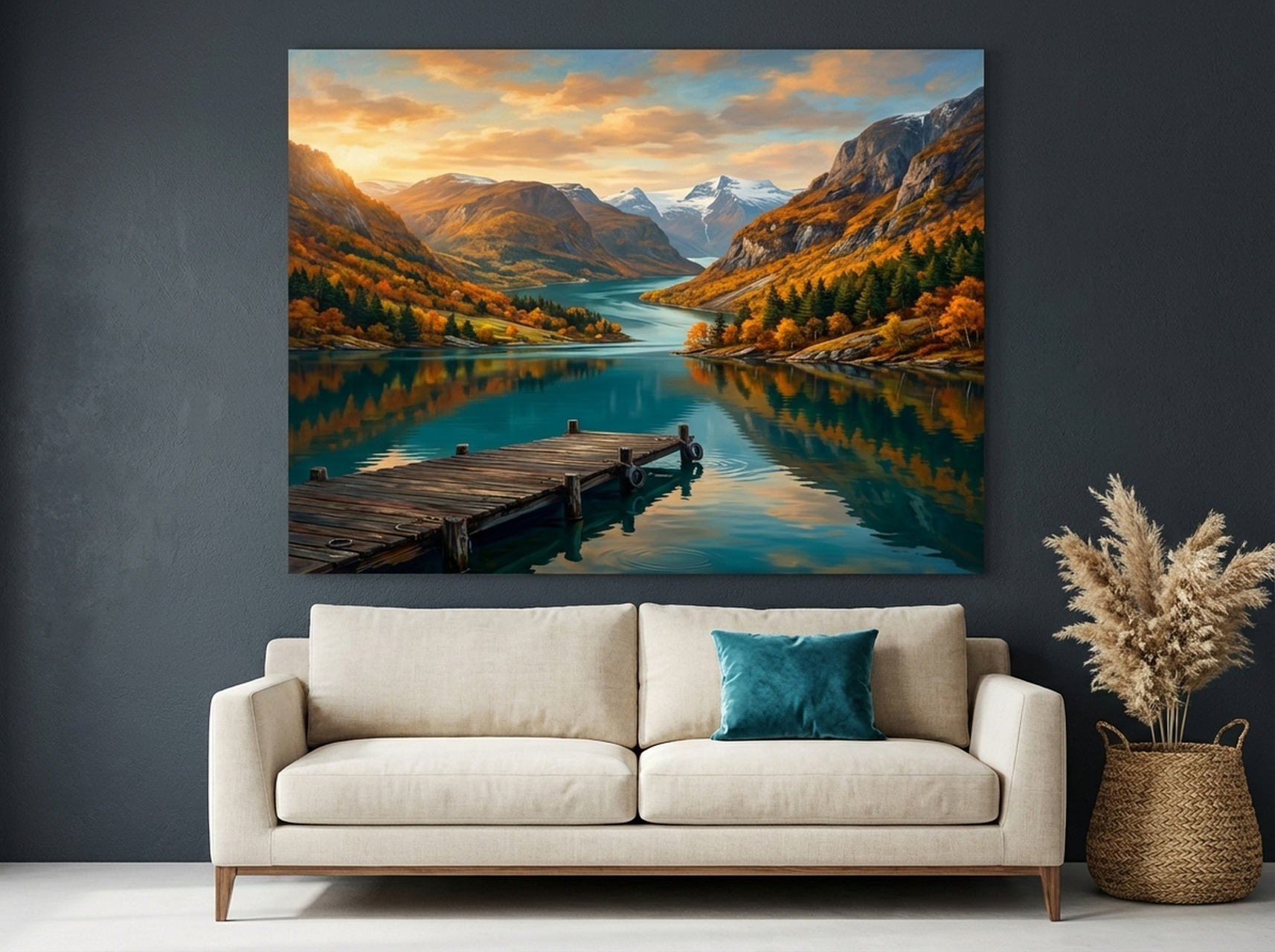
If you prefer cooler tones, this Norwegian fjord painting delivers the same large-wall presence as the Dolomites piece but through an entirely different palette. Deep teal waters reflect towering mountains cloaked in green and grey, with soft atmospheric perspective that gives the scene remarkable depth. The horizontal composition stretches across the canvas in a way that naturally fills wide wall spaces.
This piece thrives in Scandinavian-inspired interiors with light oak furniture, white or pale grey walls, and linen upholstery. It is also a strong choice for home offices, reading nooks, and coastal-themed rooms where blue-green tones feel natural. The calming palette has been shown in colour psychology studies to reduce perceived stress, making it a smart pick for spaces where relaxation matters most.
View the Norwegian Fjord Mountain Canvas
How to Hang Large Canvas Art Safely
Large canvas prints are surprisingly light compared to glass-framed art, but you still need to hang them properly to avoid damage to both the art and your wall. Here is a step-by-step method that works every time:
- Find a wall stud. Use an electronic stud finder or knock along the wall and listen for the change from hollow to solid. Wall studs are typically spaced 40 to 61 cm (16 to 24 inches) apart. For canvases wider than 76 cm (30 inches), you want at least one hook in a stud.
- Mark the centre point. Measure the wall section and mark the horizontal centre with a light pencil dot. Then measure up 145 cm (57 inches) from the floor and mark the vertical centre.
- Calculate hook placement. Measure from the top of the canvas down to the hanging wire when taut (usually 5 to 8 cm / 2 to 3 inches). Subtract that distance from your vertical centre mark. That is where your hook goes.
- Use the right hardware. For drywall without a stud, use a toggle bolt or heavy-duty picture hook rated for at least twice your canvas weight. A 61 by 91 cm (24 by 36 inch) framed canvas typically weighs 2.7 to 4.5 kg (6 to 10 pounds).
- Level it. After hanging, place a small spirit level on top of the frame. Adjust until the bubble is centred. Step back 3 metres (10 feet) and check that the canvas looks straight from viewing distance.
Pro tip: If your wall has no stud where you need it, use two hooks spaced 30 cm (12 inches) apart. This distributes the weight and prevents the canvas from tilting over time.
Common Mistakes to Avoid With Large Wall Art
Even experienced decorators make these errors. Avoid them and your art will look intentional from day one.
Mistake 1: Going Too Small
This is the number one error. People buy a piece they love at a size that felt big in the shop, then hang it on a 3-metre-wide (10-foot) wall where it looks lost. Always measure your wall first and target the 60 to 75 percent coverage rule. When in doubt, go larger. A canvas that fills the space will look confident; one that is too small will look like an afterthought.
Mistake 2: Hanging Too High
The most common instinct is to hang art at standing eye level, which pushes it too high when you are seated on a sofa or lying in bed. Remember: the centre of the piece should be at 145 cm (57 inches) from the floor when there is no furniture below it, or 15 to 20 cm (6 to 8 inches) above the top of the furniture when there is.
Mistake 3: Ignoring the Room's Colour Temperature
A cool-toned blue landscape on a wall surrounded by warm terracotta accents and golden lighting will feel disconnected. Match the dominant colour temperature of your art to the room. Warm rooms pair with warm art (ambers, golds, earth tones). Cool rooms pair with cool art (blues, greens, greys). Neutral rooms are the exception and can handle either.
Mistake 4: Forgetting About Lighting
Large art needs light to look its best. Position a picture light 15 to 20 cm (6 to 8 inches) above the frame, or use adjustable track lighting from 1.5 metres (5 feet) away at a 30-degree angle. Natural light from a nearby window is ideal during the day, but avoid direct sunlight hitting the canvas for extended periods as it can fade colours over time.
Mistake 5: Centring on the Wall Instead of the Furniture
When art hangs above a sofa, bed, or table, it should be centred on the furniture, not on the wall. If your sofa is pushed to one side of a room, the art follows the sofa. This keeps the visual grouping tight and intentional rather than creating an awkward gap on one side.
Frequently Asked Questions
What size canvas is considered large wall art?
In the art and home decor industry, large wall art generally refers to any piece measuring 61 cm (24 inches) or more on its shortest side. Common large canvas sizes include 61 by 91 cm (24 by 36 inches), 76 by 102 cm (30 by 40 inches), and 91 by 122 cm (36 by 48 inches). Oversized wall art starts at around 102 by 152 cm (40 by 60 inches) and goes up from there. The right size for your space depends on the wall dimensions and the furniture below it.
Can one large piece work better than a gallery wall?
Yes. A single oversized canvas creates a clean, modern focal point that is easier to hang and maintain than a multi-piece gallery wall. It works especially well in minimalist, contemporary, or Scandinavian interiors where visual simplicity is key. Gallery walls are better when you want to showcase variety, mix frame sizes, or tell a story through multiple images. If you are unsure, start with one large piece and add smaller works around it later.
How far above a sofa should I hang large wall art?
The bottom edge of the canvas should sit 15 to 20 cm (6 to 8 inches) above the top of the sofa back. This spacing keeps the art visually connected to the furniture without crowding it. If the gap is larger than 25 cm (10 inches), the art will look like it is floating disconnected from the seating below.
Do your canvas prints come framed and ready to hang?
Yes. Every canvas print ships in a sturdy frame with pre-installed hanging hardware. Choose from four frame colours: black, white, espresso, or natural wood. The canvas is printed on premium matte material and arrives ready to hang the same day it is delivered.
What wall colours work best behind large art?
Neutral wall colours like white, off-white, light grey, and warm beige are the most versatile backgrounds for large wall art because they let the artwork be the star. If you have a bold accent wall in a deep colour like navy, charcoal, or forest green, choose art with lighter or contrasting tones so it pops rather than blending in. Avoid hanging art with similar tones to the wall colour, as it will disappear visually.
Quick Reference Table
| Product | Best For | Dominant Colours | Link |
|---|---|---|---|
| Volcano Canvas Wall Art | Living rooms, lofts, hallways | Amber, orange, charcoal | View |
| Misty Valley Landscape | Bedrooms, living rooms | Amber, forest green, mist | View |
| Fluid Abstract Landscape | Contemporary living rooms, dining rooms | Gold, amber, slate | View |
| Oversized Rose Canvas | Bedrooms, sitting rooms, boutiques | Cream, ivory, gold | View |
| Dolomites Mountain Canvas | Living rooms, open-plan spaces | Crimson, gold, deep shadow | View |
| Norwegian Fjord Mountain | Home offices, bedrooms, coastal rooms | Teal, green, grey | View |
Ready to Fill That Big Wall?
Every piece in our collection is a gallery-quality framed canvas print that arrives ready to hang. Free US shipping on all orders.
A large wall does not have to feel empty or intimidating. With the right piece at the right scale, it becomes the most exciting design opportunity in your home. Measure your space, pick a canvas that matches your room's colour temperature, hang it at the correct height, and let the art do the rest. Whether you choose a dramatic volcanic landscape, a serene fjord scene, or an abstract gold composition, the right statement piece will transform that blank wall into the centrepiece of your room.


