Mediterranean Coastal Wall Art for Warm Spaces
The Heva Team
Art Curators & Interior Design Enthusiasts · April 1, 2026 · 18 min read
Bring warm Mediterranean charm into your home with wall art inspired by Greece, Italy and coastal living. Discover the colour palette, room placement tips, and top canvas picks.
Mediterranean Wall Art for Warm, Sun-Drenched Spaces
There is a particular kind of hunger that sets in on a grey February afternoon. Not hunger for food, but for light. For warmth. For the specific sensation of sun-baked stone underfoot and the smell of salt air coming in off a blue sea. You cannot fly to Santorini every time the weather turns grim, but you can bring something of that feeling home. The right piece of mediterranean wall art does exactly that: it anchors a room in warmth, floods it with colour, and whispers of olive groves and terracotta rooftops every single day of the year.
In our experience, no other design movement translates so naturally from the travel dream to the living room wall. The palette is generous. The subject matter is joyful. And the textures -- sun-faded plaster, rough linen, hand-thrown clay -- feel genuinely at home in modern interiors without any effort at all.
This guide covers everything: what defines the Mediterranean style, the colour science behind why it makes us feel good, how to size and place art by room, our top product picks, and the five decorating mistakes that undercut an otherwise beautiful scheme. Let us start.
Ready to browse? Explore the full Mediterranean wall art collection and find your perfect piece today.
What Makes Mediterranean Style? Colours, Textures, Warmth
The Mediterranean design tradition is not one style but a family of styles united by geography and climate. Greece, Italy, Spain, Morocco, Turkey, and the south of France each bring their own accents, but they share a devotion to natural materials, handcrafted objects, and a palette pulled directly from the landscape around them.
According to the Little Greene Mediterranean Interior Design Guide, the style is defined by three core qualities: an abundance of natural light, the use of raw and artisan materials, and a relaxed layering of colour that mimics the way sunlight moves across a plastered wall from morning to dusk. These qualities make it one of the most liveable and enduringly popular interior aesthetics in the world.
Colour is the foundation. The five anchor hues of Mediterranean design are:
- Terracotta and clay -- the warm reddish-brown of sun-baked roof tiles and handthrown pots, found throughout Tuscany, Andalucia, and the Greek islands.
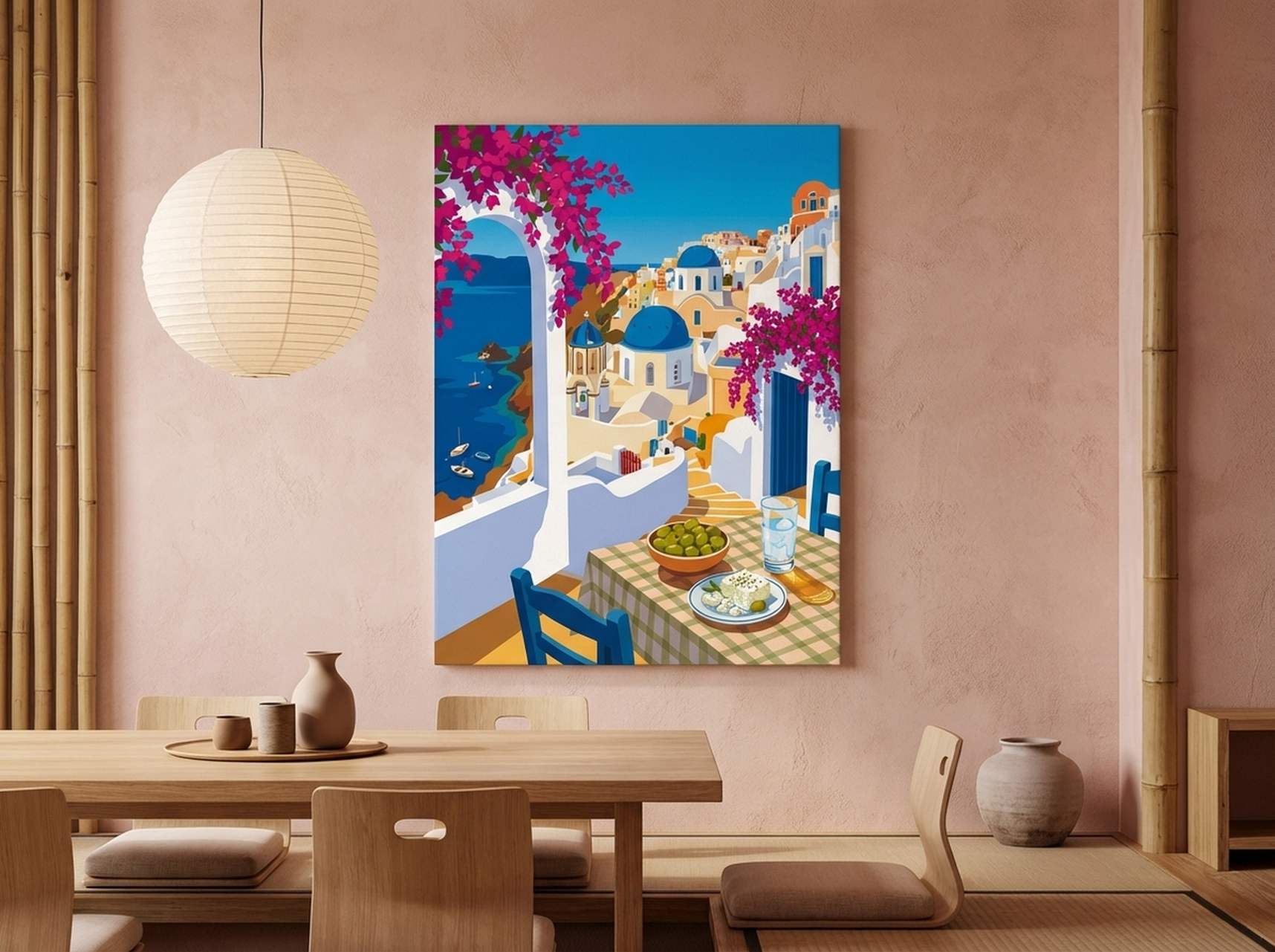
- Aegean blue -- the deep, slightly mineral cerulean of Greek whitewashed walls and the sea itself. Traditional Greek painters mixed limestone powder with copper-based pigments to achieve this unmistakable shade.
- Ochre and golden yellow -- the hue of iron-oxide-rich Italian and French soils, of saffron plaster, and late-afternoon light on stone.
- Whitewash white and sandy cream -- the chalky neutral that reflects heat and provides breathing room between richer colours.
- Olive green and sage -- muted, dusty greens that mirror the groves stretching from Spain to Greece and serve as the perfect grounding neutral.
Texture is equally important. Rough-plastered walls, unglazed tile, woven linen, aged timber, and wrought iron all play a role. When translated into wall art, this means you should lean toward pieces with visible brushwork, oil-paint impasto, or a hand-rendered quality. Slick, hyper-realistic digital prints tend to feel out of place in a Mediterranean scheme -- the style rewards the imperfect and the handmade.
Subject matter draws from coastal and agricultural life: harbour views, taverna scenes, olive branches, birds, citrus groves, mountain landscapes, and ceramic still lifes. Each of these subjects carries the implicit warmth of the region without requiring an explicit postcard image.
As Whispering Bold's comprehensive Mediterranean design guide notes, the modern interpretation of this style strips away heavy ornamentation and lets the colour and material quality do the heavy lifting. That makes it surprisingly compatible with contemporary interiors.
Mediterranean Colour Palette: The Science Behind the Warmth
Why do Mediterranean colours feel so immediately good? The answer is not merely aesthetic. There is genuine psychophysiological research behind the effect these hues have on our nervous systems.
Colour psychology research cited by ArchiVinci's colour psychology in interior design overview shows that warm colours -- the yellows, ochres, terracottas, and warm reds that define the Mediterranean palette -- stimulate the release of serotonin and create physiological sensations of warmth and sociability. Studies have shown that subjects in warm-toned rooms rate the ambient temperature as higher than it actually is, which is why a terracotta accent wall genuinely makes a north-facing room feel less cold.
Biophilic design research takes this further. Biophilic design is the practice of incorporating natural references -- including nature-derived colour, texture, and pattern -- into built environments to support human health and wellbeing. The ochre-and-sage palette of a Tuscan farmhouse is, in biophilic terms, a simulation of the savannah landscape that human brains are hardwired to find safe and restorative. Warm golden tones suggest open, sunlit terrain. Muted greens suggest healthy vegetation and food sources. Deep blue suggests water. All three are processed as environmental safety signals.
In practical terms, this means that hanging a piece of mediterranean wall art in Aegean blue and terracotta does more than look attractive. It sends a low-level signal to the nervous system that says: warm, safe, abundant. That is an unusually powerful thing to ask of a canvas print.
The regional palette also carries cultural memory. Most people in the northern hemisphere associate terracotta, cobalt, and sun-bleached white with holidays, rest, and pleasure. That associative layer is activated every time the eye lands on the artwork, making the room feel psychologically different even when nothing else has changed.
In our experience, the most effective Mediterranean art for mood is work that uses the warm-cool contrast deliberately: terracotta or ochre fields with Aegean blue accents, or whitewash grounds with deep olive and sienna marks. This contrast is not just visually dynamic; it maps directly onto the most emotionally resonant Mediterranean landscapes.
Mediterranean Art by Room: Dining Room, Kitchen, Living Room
Different rooms call for different aspects of the Mediterranean tradition. Here is how to match subject matter and scale to each space.
Dining Room
The dining room is the most natural home for Mediterranean wall art. The tradition of the convivial meal -- long tables, shared food, lingering conversation -- is central to the culture of every Mediterranean nation. Art that reflects this world enhances the activity of the room.
Best choices: taverna scenes, still lifes with food and wine, coastal harbour views, olive branch paintings. Recommended sizing: a single large canvas (90 x 60 cm / 35 x 24 inches minimum) centred on the main wall, or a horizontal diptych spanning at least 120 cm / 47 inches. Hang the centre of the artwork at 145 cm / 57 inches from the floor, which is the standard eye level for a standing viewer and aligns well with the eye level of a seated diner.
For more on the dining room specifically, see our Dining Room Wall Art Complete Style Guide.
Kitchen
Mediterranean kitchens are working, fragrant, sociable spaces. Art here should celebrate food culture without feeling too precious. Oil painting prints of pasta making, market produce, or ceramic pottery work brilliantly. Scale down slightly from dining room sizes: 60 x 45 cm (24 x 18 inches) to 76 x 61 cm (30 x 24 inches) suits most kitchen walls without competing with cabinetry.
Avoid very dark or very complex imagery in kitchens. The room benefits from pieces that read quickly and clearly. Bold subject matter, clean backgrounds, and warm ochre or terracotta tones keep the energy lively without being busy. Read more in our dedicated kitchen wall art ideas guide.
Living Room
The living room allows for the most expressive Mediterranean statement. A large landscape -- coastal, mountain, or pastoral -- can anchor an entire seating arrangement and set the tonal key for the whole room. Recommended minimum above a sofa: the artwork should span at least 55 to 60 percent of the sofa width. For a standard 210 cm (83 inch) three-seater, that means a canvas of at least 115 to 125 cm (45 to 49 inches) wide.
Nature subjects -- kingfishers, herons, egrets near water, canyon landscapes -- all have strong Mediterranean resonance when rendered in an oil-painting style with a warm palette. For a deeper look at nature-themed art in the home, see our nature wall art guide.
Bedroom
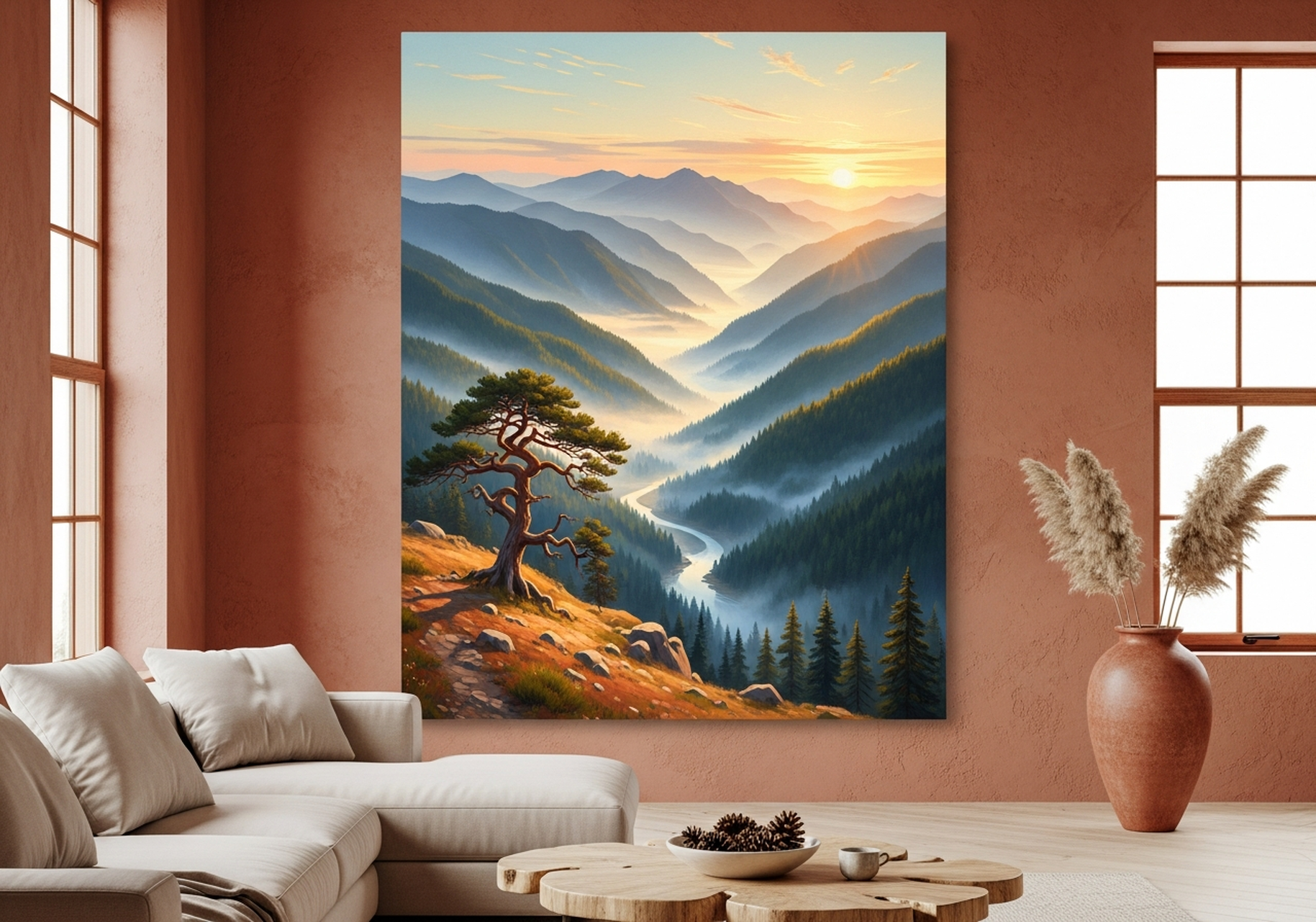
Mediterranean bedrooms suit calmer, more restful imagery. Coastal mist, mountain valleys in soft morning light, or botanical subjects in muted tones create the sense of waking in a Provencal farmhouse rather than a generic hotel room. Keep colour saturation moderate; the Aegean blues and ochres should be present but not at full intensity. A 75 x 50 cm (30 x 20 inches) canvas above a bedside table or a 90 x 60 cm (35 x 24 inches) piece above a headboard works well.
Our Top 6 Mediterranean Wall Art Picks
Every piece below is available as a gallery-quality canvas print, ships ready to hang, and has been chosen specifically for its ability to carry the warmth and spirit of Mediterranean living into a modern home.
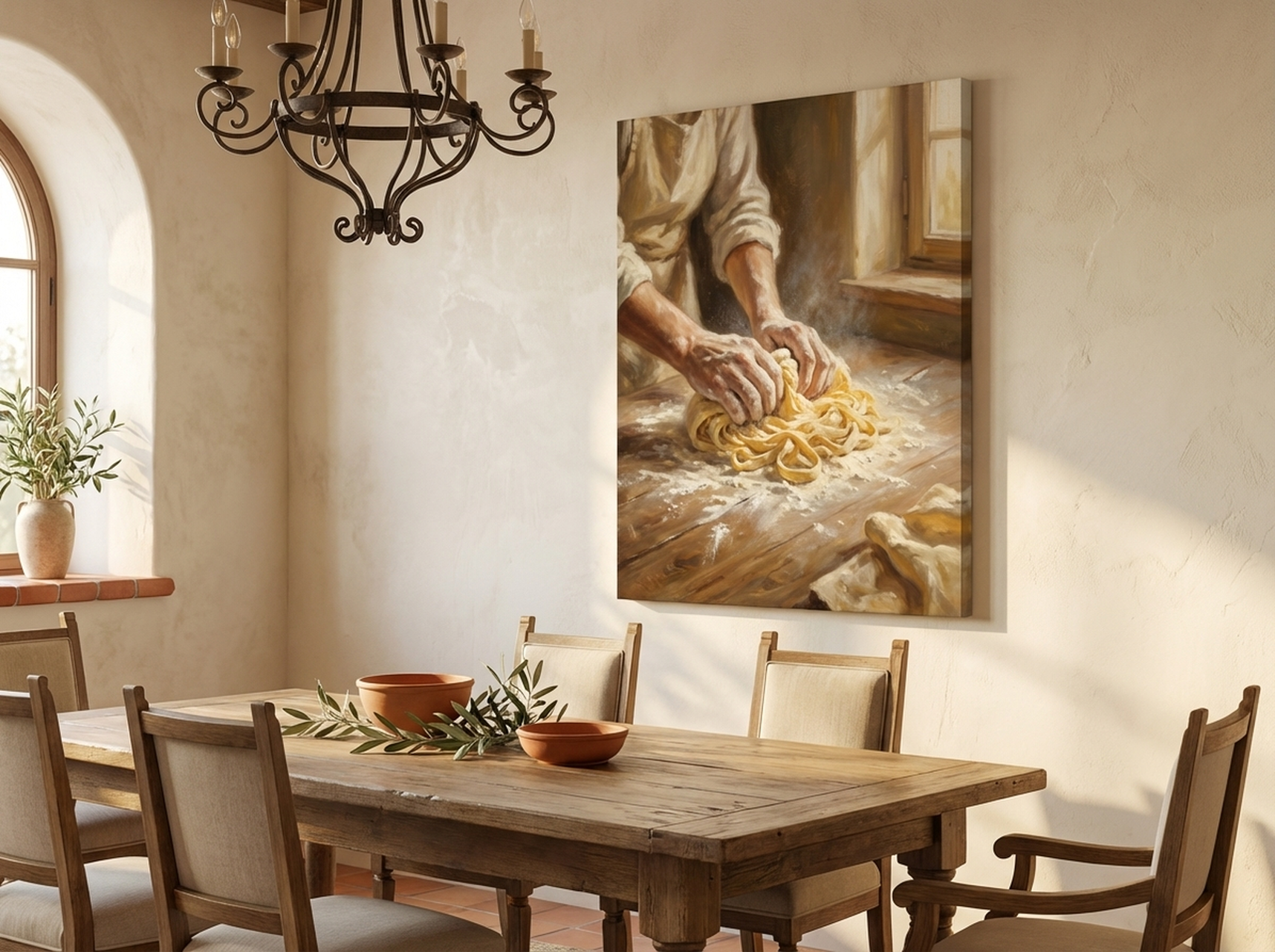
1. Pasta Making Canvas Wall Art
This oil-painting-style canvas captures the ancient ritual of handmade pasta with loose, confident brushwork and a palette rooted in golden ochre, warm wheat, and dusty terracotta. It is a piece that celebrates the Italian kitchen as a place of craft and pleasure rather than mere utility. In our experience, it works equally well in a kitchen (60 x 45 cm / 24 x 18 inches) and a dining room (90 x 60 cm / 35 x 24 inches), and it pairs beautifully with warm wood surfaces and terracotta tile floors. The Tuscan light quality in the painting elevates any room that needs warmth and a sense of culinary heritage. View the Pasta Making Canvas here.
2. Egret Canvas Wall Art
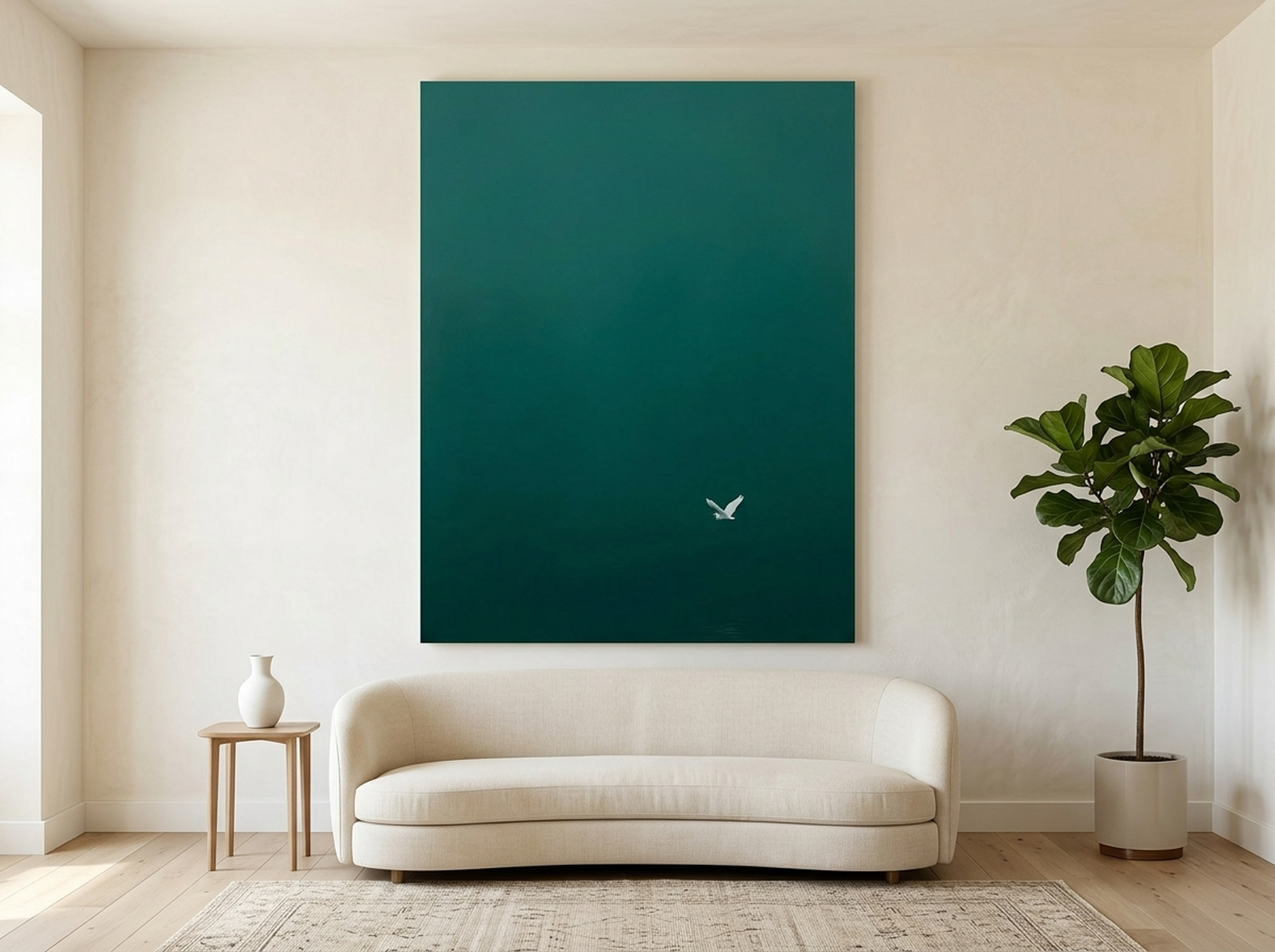
The great egret is one of the iconic birds of Mediterranean wetlands, a common sight along the reed-fringed edges of lagoons and estuaries from the Camargue to the Nile Delta. This minimalist print renders it with striking simplicity against a muted teal-green ground that sits perfectly within a coastal Mediterranean palette. The stillness of the image is almost meditative. It is an excellent choice for a bedroom or a calm reading corner where the Aegean-adjacent colour brings tranquillity without the loudness of a full landscape. Recommended size: 60 x 80 cm (24 x 31 inches) in portrait orientation. It connects naturally with the broader theme of Mediterranean bird life and coastal living. See the Egret Canvas here.
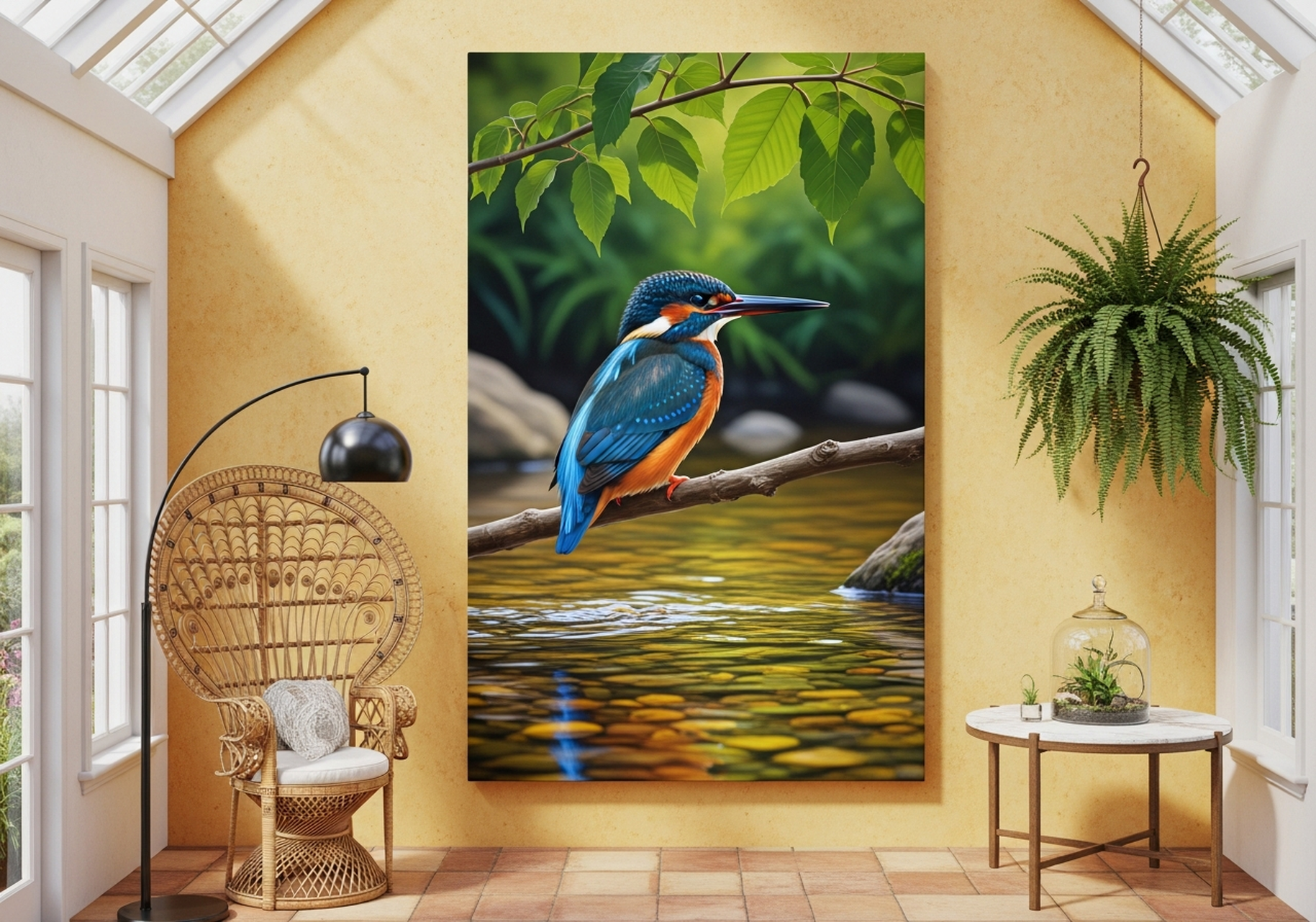
3. Kingfisher Canvas Wall Art
The kingfisher is a bird of rivers and coastal margins, its electric blue plumage one of the most vivid natural expressions of the Aegean colour family. This painterly canvas captures it at rest, poised above water, in a composition that feels equally at home in a garden room, a sunroom, or a coastal-themed living space. The jewel-like blue of the bird acts as a natural accent colour, pulling the Mediterranean palette into focus without requiring you to paint a single wall. In our experience, kingfisher art works especially well in rooms with neutral walls and natural linen or rattan furniture, where the colour contrast is sharp and satisfying. See our nature wall art guide for more ideas on placing bird art effectively. View the Kingfisher Canvas here.
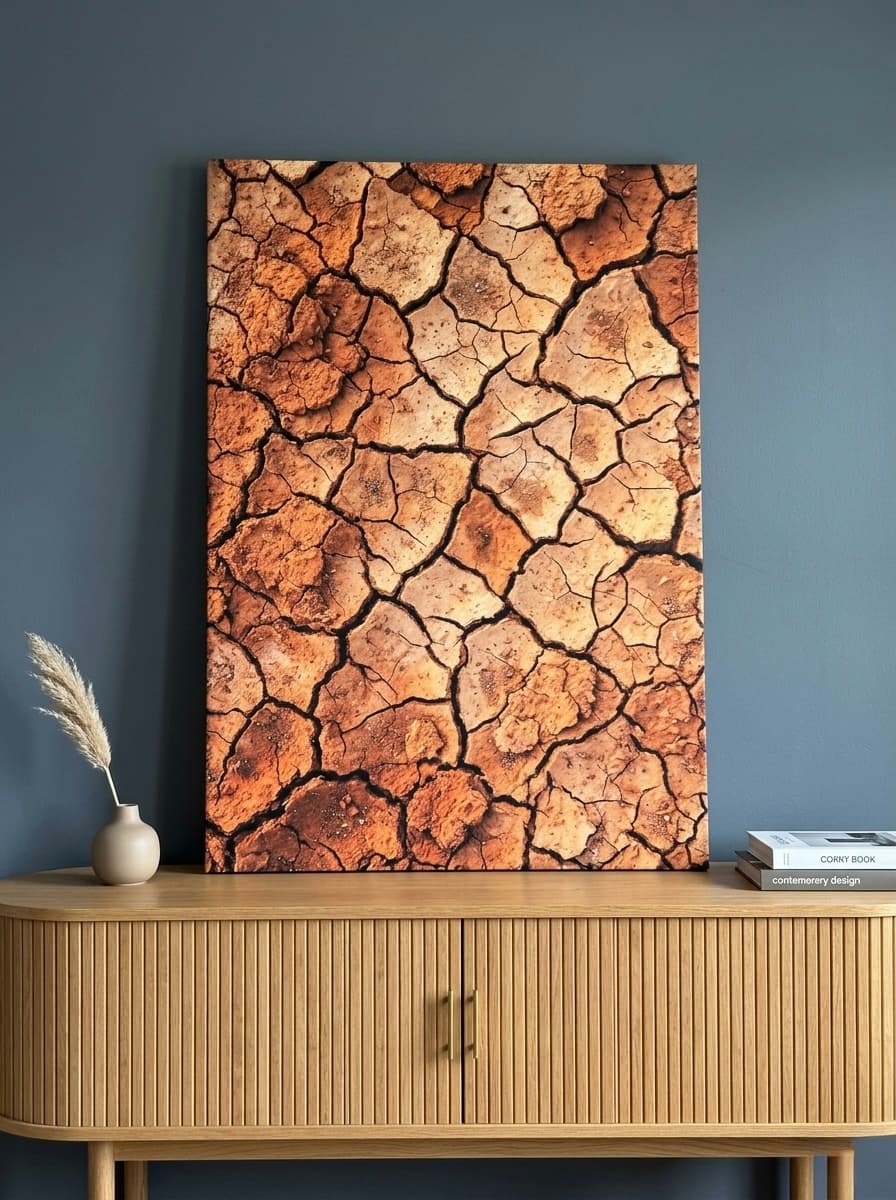
4. Canyon Strata Canvas Wall Art
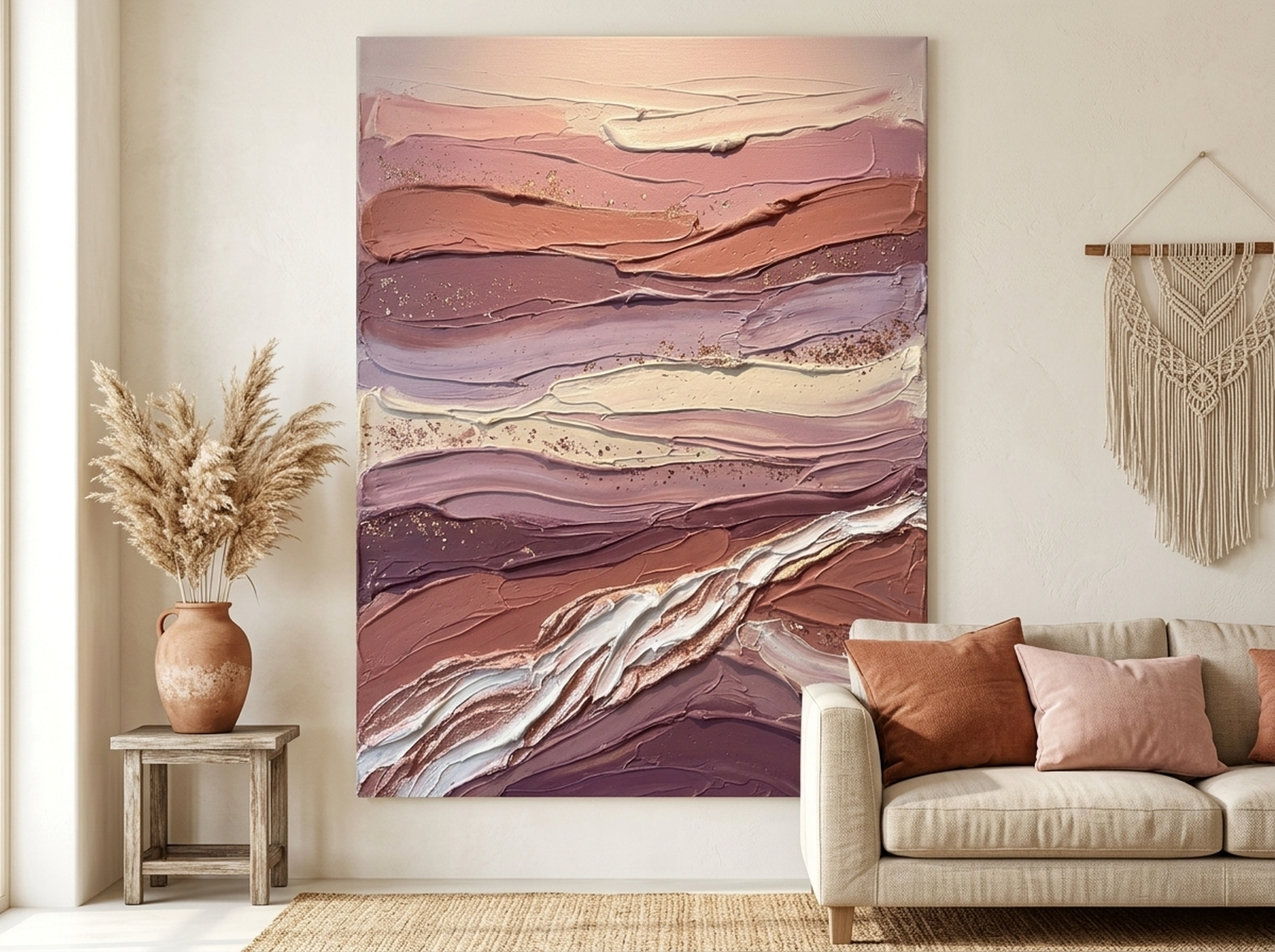
The canyon landscape shares its colour DNA entirely with the Mediterranean earth palette. Layers of red oxide, burnt sienna, sandy ochre, and chalky cream read as geological strata but feel immediately familiar to anyone who has looked at a Moroccan ksour or a Tuscan hillside in late afternoon. The impasto technique gives this piece physical presence -- the paint has texture and depth that rewards close inspection. It anchors a living room wall with geological permanence. This is the piece for a large feature wall (120 x 80 cm / 47 x 31 inches or larger) in a room with natural stone or wooden floor, where the earthen tones create a seamless transition between the floor plane and the wall. Pair with terracotta cushions and a woven jute rug for full effect. View the Canyon Strata Canvas here.
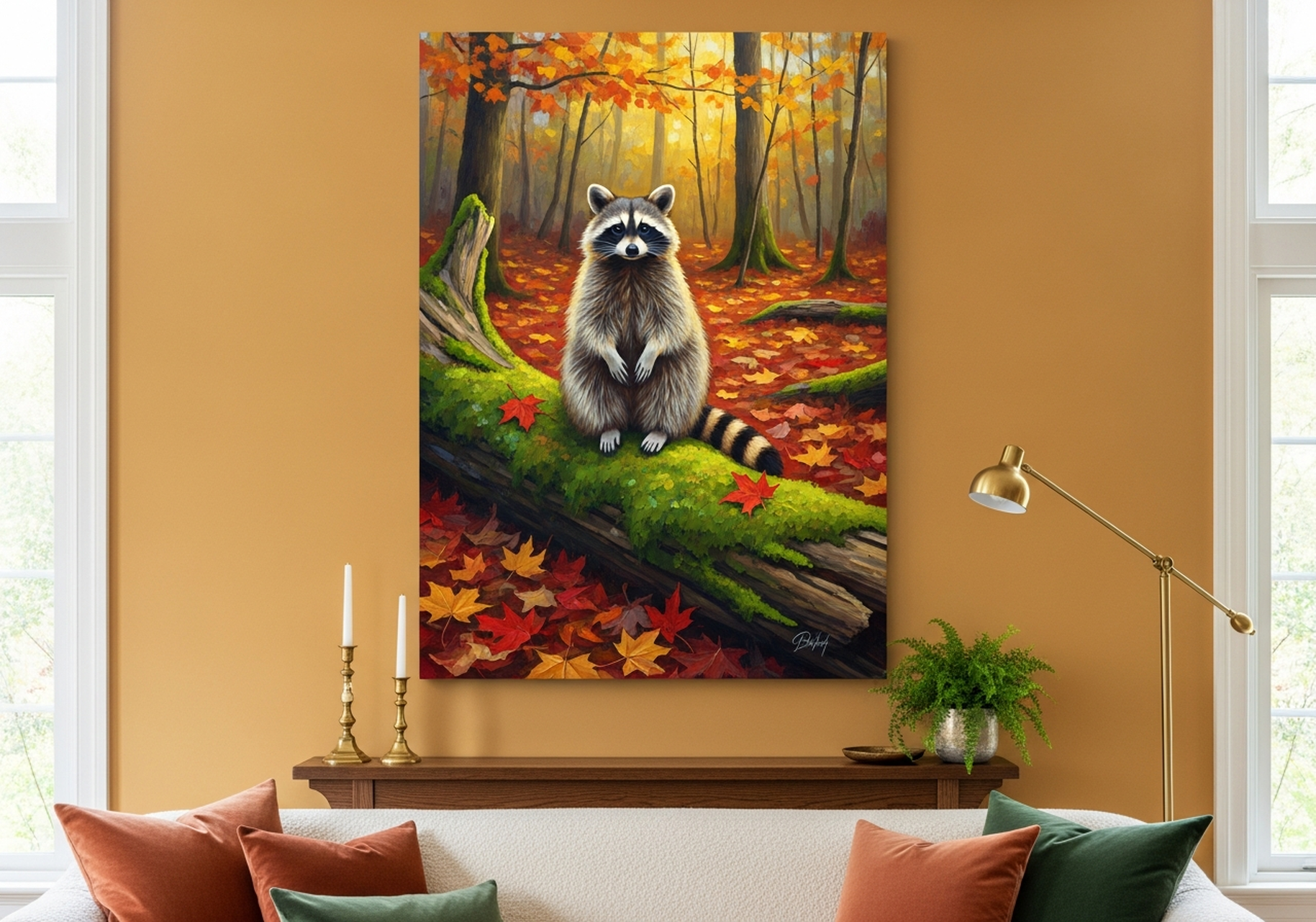
5. Raccoon Autumn Woodland Canvas Wall Art
This piece brings the warm, amber-rich palette of an autumn woodland into the Mediterranean earth tone family with considerable charm. The raccoon is rendered with the kind of affectionate, unhurried attention typical of the best natural history oil painting tradition, surrounded by golden leaves and russet undergrowth in tones that map directly onto the ochre and sienna range. In our experience, this print sits beautifully in a cottage-style living room or a study with warm timber furniture, where the autumnal palette deepens the sense of warmth and shelter. It is an unexpected choice for Mediterranean theming but one that works because the colour family is identical. Recommended size: 80 x 60 cm (31 x 24 inches) as a standalone statement piece. View the Raccoon Woodland Canvas here.
View the Raccoon Woodland Canvas
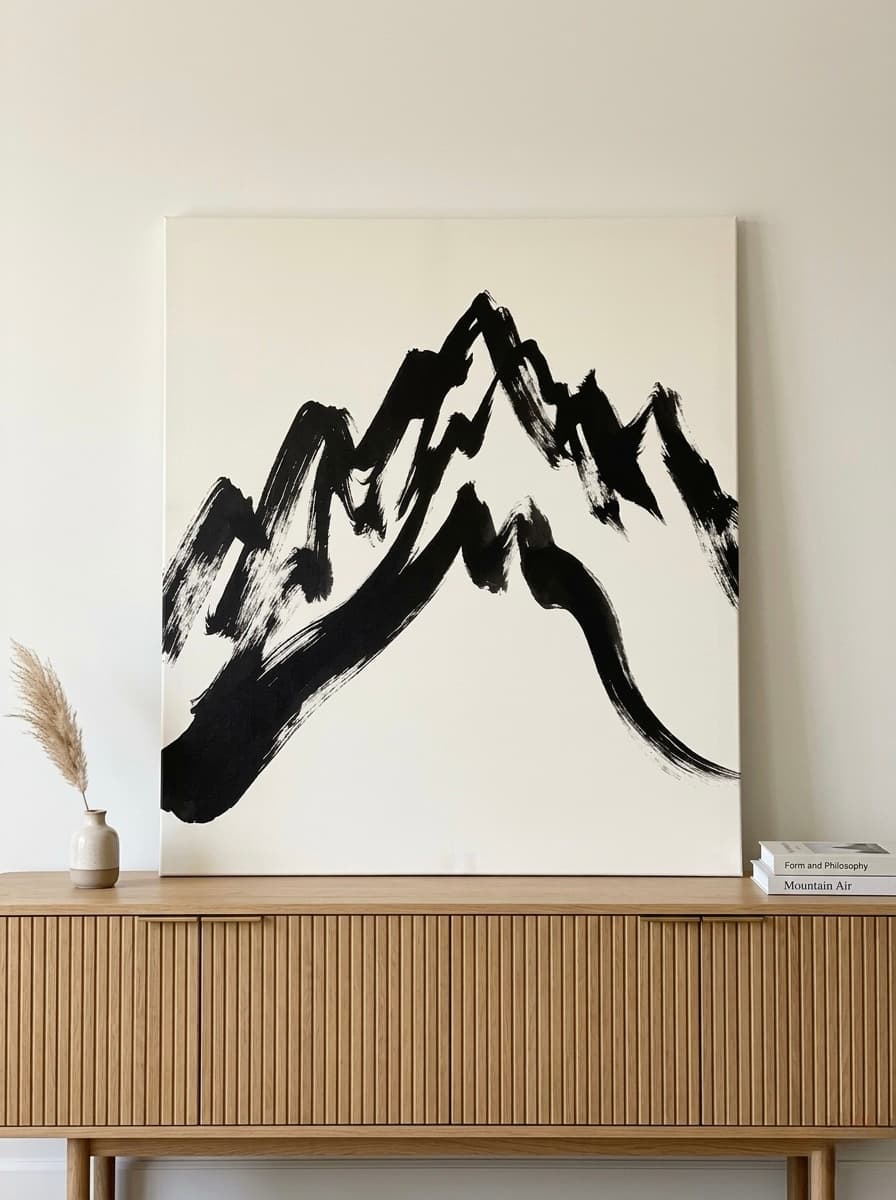
6. Dear Mountains Canvas Print
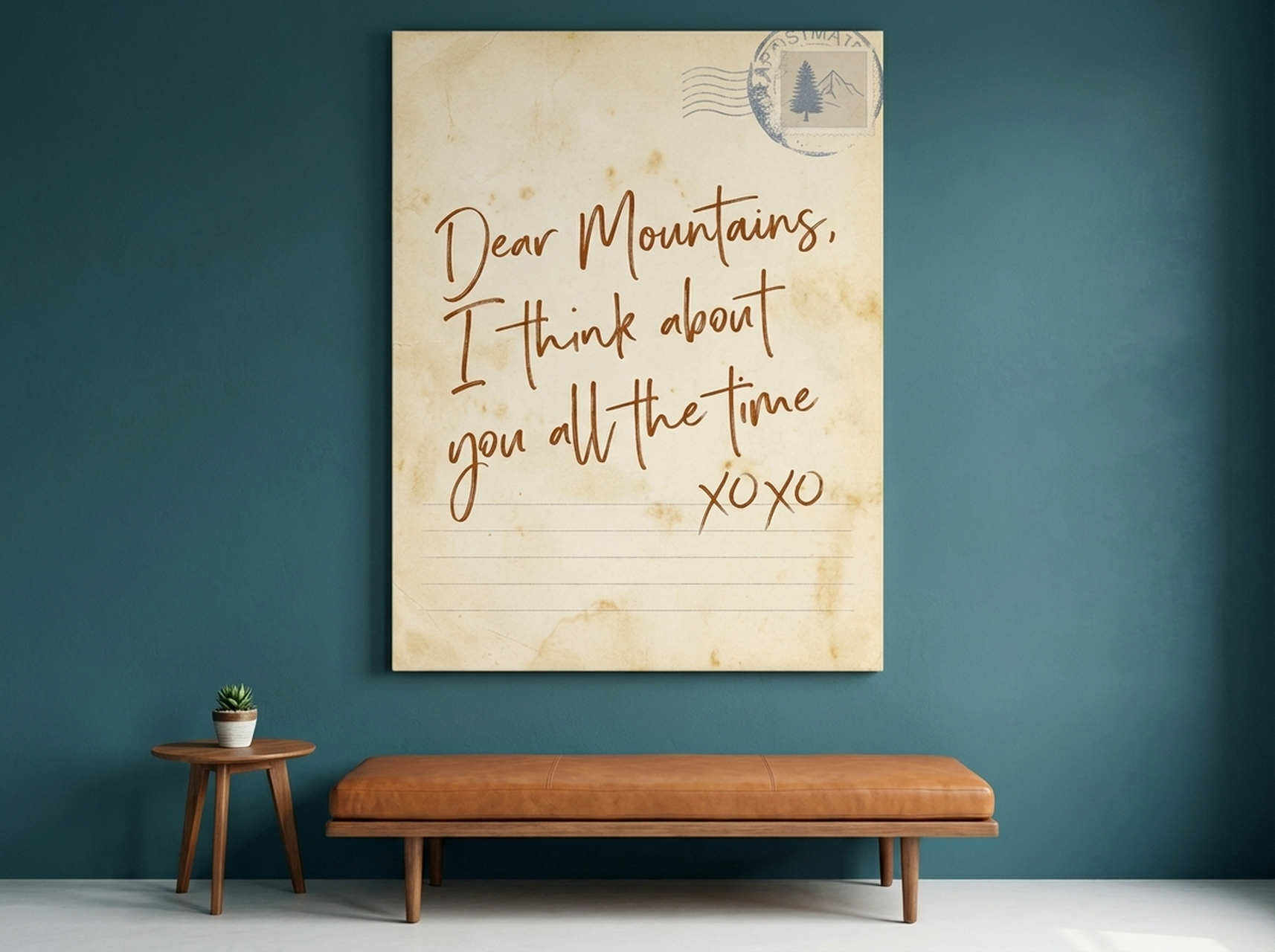
The mountains of the Mediterranean -- the Apennines, the Pyrenees, the Greek highlands, the Atlas -- are as defining of the regional identity as the sea. This typographic canvas speaks to the hiker, the dreamer, and the person who finds the mountains as restorative as the coast. The cottagecore typography style translates well into Mediterranean-adjacent schemes, particularly in hallways, home offices, and bedrooms where an aspirational note suits the space. In our experience, typographic art with warm, earthy backgrounds grounds a gallery wall that might otherwise feel too busy with purely painterly pieces. It adds verbal warmth to visual warmth, reinforcing the mood with language. If you are building a gallery wall for a living room, include a colour guide from our wall art colour guide to ensure cohesion. View the Dear Mountains Canvas here.
View the Dear Mountains Canvas
Placement Guide for Mediterranean Art
Getting the placement right is as important as choosing the right piece. A beautiful canvas at the wrong height or in the wrong proportion to the furniture around it loses most of its impact. Here are the rules we follow.
Standard Hanging Height
The centre of any artwork should sit at approximately 145 cm (57 inches) from the floor. This is the average eye level for a standing adult and the standard used by most art galleries worldwide. It applies regardless of ceiling height. If your ceilings are very high, resist the temptation to hang art higher. Higher art on high walls makes the room feel taller, not more intimate.
Above a Sofa
Leave 15 to 20 cm (6 to 8 inches) of space between the top of the sofa back and the bottom edge of the canvas. The artwork width should be 55 to 65 percent of the sofa width. For a 210 cm (83 inch) sofa, that means a canvas of 115 to 136 cm (45 to 54 inches) wide. Anything narrower will look stranded and disconnected from the furniture below it.
Above a Dining Table
The bottom edge of the artwork should sit 25 to 30 cm (10 to 12 inches) above the top of the table surface. The artwork should be no wider than the table itself. For a standard 180 x 90 cm (71 x 35 inch) dining table, a canvas of 130 to 160 cm (51 to 63 inches) wide reads as generous and proportionate.
Above a Bed
Leave 15 to 25 cm (6 to 10 inches) between the top of the headboard and the bottom of the canvas. The artwork should be 60 to 75 percent of the bed frame width. For a standard UK kingsize (150 cm / 59 inch wide bed), that is 90 to 112 cm (35 to 44 inches) of canvas width.
Gallery Walls with Mediterranean Art
Gallery walls suit Mediterranean themes particularly well because the style favours layering and accumulation. Use a common thread -- either a consistent colour (all pieces in the ochre-terracotta range, for example) or a consistent subject matter (all coastal or all botanical) -- to give the arrangement coherence. Maintain a gap of 5 to 8 cm (2 to 3 inches) between frames. For help matching pieces to your existing furniture, see our guide to choosing art that matches your furniture.
5 Common Mediterranean Decorating Mistakes
1. Choosing Too Many Competing Anchor Colours
The Mediterranean palette is rich, but it is not a free-for-all. Pick one or two anchor colours -- say, terracotta and whitewash -- and let the others appear only as accents. Rooms that try to use cobalt blue, terracotta, ochre, and olive green simultaneously end up feeling chaotic rather than warm and layered. The real Mediterranean room is actually quite restrained in its use of colour; the warmth comes from the quality and quantity of natural light, not from the number of colours present.
2. Hanging Art Too High
This is the single most common hanging mistake in every style, but it is especially damaging in Mediterranean interiors because the style depends on a sense of human scale and domesticity. Art that floats at ceiling height looks institutional. Keep the centre at 145 cm (57 inches) from the floor, every time.
3. Choosing Prints That Are Too Small
A small canvas on a large wall does not look minimal. It looks afterthought. In a Mediterranean scheme, where the walls are often whitewashed and relatively bare, a piece of art needs to hold its own as an object. Go larger than feels comfortable initially. A piece that covers 60 to 75 percent of the available wall width above furniture is almost always more effective than one that covers 40 percent.
4. Mixing Glossy and Matte Finishes Indiscriminately
Mediterranean interiors favour matt, chalky, and tactile surfaces. A glossy canvas print next to rough linen and unglazed tile creates a jarring surface tension. All of our canvas prints have a satin-matte finish that holds its own in these material contexts without screaming "printed reproduction."
5. Ignoring Existing Light Conditions
Mediterranean art looks most alive in warm, directional light. A north-facing room with cool, flat light will wash out a terracotta painting. If your room is cool-lit, compensate with warm-toned artificial lighting (2700K to 3000K bulbs positioned to wash across the canvas) or lean into the contrast deliberately by choosing Aegean blue-dominant pieces that are designed to sing in cooler light. In our experience, picture lights are one of the most underused tools in domestic art hanging and make a transformative difference to any canvas in any light condition.
Frequently Asked Questions
- What colours define Mediterranean wall art?
- The defining colours are terracotta, Aegean blue, ochre yellow, whitewash white, sandy cream, and olive green. These are drawn directly from the natural landscape and traditional architecture of Greece, Italy, Spain, Morocco, and southern France.
- Which rooms suit Mediterranean wall art best?
- The dining room and kitchen are the most natural fit because Mediterranean culture centres on food, cooking, and communal eating. Living rooms also work very well with larger landscape canvases. Bedrooms benefit from calmer, more muted pieces in the Mediterranean palette.
- How large should Mediterranean wall art be above a sofa?
- The artwork should be 55 to 65 percent of the sofa width. For a standard 210 cm (83 inch) sofa, this means a canvas of approximately 115 to 136 cm (45 to 54 inches) wide. The bottom edge should sit 15 to 20 cm (6 to 8 inches) above the top of the sofa back.
- Does Mediterranean wall art work in modern interiors?
- Yes. Modern Mediterranean design strips away heavy ornamentation and works with clean lines and minimal clutter. A single large canvas in terracotta, ochre, or Aegean blue tones can bring warmth and character to a contemporary neutral interior without any stylistic conflict.
- What subjects are most typical in Mediterranean art?
- Coastal scenes, harbour and taverna views, food and kitchen subjects (pasta, olive oil, market produce), birds of coastal wetlands (egret, kingfisher, heron), botanical subjects (olive branches, citrus, bougainvillea), and landscape paintings of mountains, canyons, and pastoral scenes in warm earth tones.
- At what height should I hang Mediterranean wall art?
- The centre of the artwork should be at approximately 145 cm (57 inches) from the floor. This applies regardless of ceiling height. For art above furniture, leave a gap of 15 to 25 cm (6 to 10 inches) between the top of the furniture and the bottom edge of the canvas.
Quick Reference Table
| Room | Recommended Size | Best Subject | Key Colour |
|---|---|---|---|
| Dining Room | 90 x 60 cm (35 x 24 in) min | Taverna, food, coastal harbour | Terracotta, ochre |
| Kitchen | 60 x 45 cm (24 x 18 in) | Pasta, produce, pottery | Warm ochre, sienna |
| Living Room | 120 x 80 cm (47 x 31 in)+ | Landscape, canyon, bird art | Aegean blue, earth tones |
| Bedroom | 75 x 50 cm (30 x 20 in) | Misty landscape, bird, botanical | Muted teal, sandy cream |
| Hallway | 50 x 70 cm (20 x 28 in) portrait | Typography, single bird, minimal | Warm white, sage green |
Ready to Bring the Mediterranean Home?
The Mediterranean tradition is one of the great gifts of world interior design: warmth without fussiness, colour without chaos, beauty without effort. A single well-chosen canvas can shift the emotional temperature of a room in a way that no paint colour, no new sofa, and no amount of scatter cushions quite manages.
In our experience, the clients who are happiest with their art choices are those who trust their instinct toward warmth and then commit. If a piece of terracotta, ochre, or Aegean blue canvas art stops you in your scroll, that is the piece. Hang it large, at eye level, and let it do its work.
View the Mountain Valley Canvas
Browse all our mediterranean wall art prints and find the piece that will make your home feel like summer year-round. For further reading on building a cohesive art scheme, see our guides on coastal wall art and our full wall art colour guide.