Japandi Wall Art for Calm, Minimal Spaces
The Heva Team
Art Curators & Interior Design Enthusiasts · March 31, 2026 · 14 min read
Find the perfect Japandi wall art for calm, minimal spaces. Japanese simplicity meets Scandinavian warmth in prints that bring quiet elegance to any room.
There is a particular kind of quiet that settles over a well-designed Japandi room. It is not the cold silence of an empty space, nor the anxious hush of a room afraid to be touched. It is the deep, breathing stillness of a place that has been intentionally stripped back to what matters: natural materials, honest craft, and art that earns its place on the wall by saying exactly what needs to be said and nothing more.
Japandi, the design philosophy that fuses Japanese wabi-sabi with Scandinavian hygge, has moved from a niche interior trend to the defining aesthetic of the mid-2020s. And nowhere is its influence more visible, or more transformative, than in the art people are choosing for their walls.
This guide covers everything you need to find the right japandi wall art for your home: the philosophy behind the style, the exact colors and proportions that make it work, the mistakes that break the spell, and a hand-picked selection of pieces from our collection that embody the aesthetic at its best.
Ready to browse? Visit our full Japandi and minimalist art collection and filter by mood, color, or subject to find your perfect piece.
What is Japandi Design?
Japandi is not a single designer's invention or a trend manufactured by a mood board committee. It emerged organically from two cultures that, despite being separated by thousands of miles, had arrived at strikingly similar conclusions about what makes a home feel truly liveable.
On one side: Japanese design philosophy, shaped over centuries by Buddhist principles, Zen aesthetics, and a profound relationship with the natural world. On the other: Scandinavian design, forged by long winters, limited daylight, and a cultural premium on warmth, functionality, and skilled handcraft.
Both traditions share a deep suspicion of excess. Both value materials allowed to show their age and imperfection. Both prize the artisan's touch over the machine's precision. And both understand that a home's purpose is not to impress visitors but to restore the people who live in it.
When you combine them, you get Japandi: an interior style defined by functional simplicity, natural materials, a warm neutral palette, and art that adds meaning without adding noise.
Design outlets including Dezeen have tracked Japandi's rise as one of the most searched interior aesthetics of the 2020s, and the momentum shows no sign of slowing. For more on related aesthetics, see our guide to Japanese wall art for zen modern homes.
The Philosophy Behind Japandi Art: Wabi-Sabi Meets Hygge
To choose Japandi wall art well, you need to understand the two philosophies at its core, because they shape not just what you choose, but how you live with it.
Wabi-Sabi: Beauty in Imperfection and Impermanence
Wabi-sabi is a Japanese worldview that finds beauty in things that are imperfect, incomplete, and impermanent. A cracked ceramic glaze. A hand-carved wooden bowl with uneven edges. A painting where the brushstrokes are visible, where you can feel the artist's hand rather than a printer's precision.
According to Japan Guide, wabi-sabi draws from Zen Buddhism and the tea ceremony tradition, where simplicity and naturalness were elevated to the highest form of aesthetic refinement. In contemporary interiors, it translates to art that looks handmade, subjects drawn from nature, and a resistance to the glossy, mass-produced perfection that defines mainstream decor.
Wabi-sabi art does not shout. It invites you to slow down and look more carefully. A lotus rendered in a few brushstrokes. A crane in watercolor that lets the paper breathe. A composition where the empty space is as deliberate as the painted marks.
Hygge: Warmth, Coziness, and the Art of Atmosphere
Hygge (pronounced "hoo-ga") is the Danish and Norwegian concept of creating a particular quality of warmth and coziness in everyday life. It is less a philosophy than a feeling, the specific contentment of a candlelit room on a dark evening, of textures that invite you to reach out and touch, of a home that feels held together by softness rather than sharp angles.
In art terms, hygge means warmth over coolness, organic over geometric, gentle subject matter over provocative abstraction. It leans toward images of nature, animals, and botanicals that evoke a sense of the world outside brought indoors in its gentlest form.
Where They Meet
Japandi art sits at the intersection of these two sensibilities. It has wabi-sabi's restraint and reverence for natural subjects, and hygge's warmth and atmospheric quality. The result is art that feels calm but not cold, minimal but not sterile, simple but never simplistic. It rewards living with over time, revealing more the longer you look.
For a deeper exploration of minimalist art principles, see our guide to minimalist wall art: less is more.
The Japandi Color Palette for Wall Art
Color is where Japandi can be most easily misunderstood. The palette is not simply "neutral" or "beige." It is a specific warmth register, and getting it wrong is the single quickest way to make a Japandi room feel flat, sterile, or disconnected.
Colors to Choose
- Warm white: creamy, not blue-toned. Think raw linen, not copy paper.
- Undyed linen and oatmeal: the base neutrals of both Japanese and Scandinavian interiors.
- Warm grey: greige rather than blue-grey, with undertones of beige or stone.
- Sage green: muted, dusty, and pulled toward grey. The color of dried herbs, not fresh grass.
- Soft black: used as an accent, never a dominant. Think ink lines rather than painted blocks.
- Nude and blush: warm pinks with orange or brown undertones, not cool candy pinks.
- Terracotta: used sparingly as an earthy accent to add depth without energy.
- Muted teal: when blue is needed, it should lean toward grey-green, the color of weathered celadon ceramics.
Colors to Avoid
- Cool blues: icy blues and periwinkle read as cold, disrupting Japandi's warmth.
- Stark white: pure optical white lacks the organic quality that defines both wabi-sabi and hygge aesthetics.
- Bright primaries: red, yellow, and blue at full saturation are far too energetic for a Japandi space.
- Neon or fluorescent accents: these are the antithesis of wabi-sabi's muted, aged palette.
- High-contrast rainbow compositions: Japandi art uses a maximum of three to four tones, and they should all be from the same warm family.
For a broader guide to choosing art by color, see our wall art color guide: colors that pop.
Sizing and Negative Space: The Rules Japandi Lives By
In most decorating traditions, the question of art size is practical: how much wall do you have to fill? In Japandi design, the question is inverted: how much wall are you willing to leave empty?
Negative space, the unmarked wall around a piece of art, is not wasted space in a Japandi interior. It is an active element of the composition. A crane on a vast expanse of wall is not just a painting; it is a statement about stillness and the value of silence. That breathing room is what makes the difference between art that feels deliberate and art that feels like it is simply occupying space.
Sizing Guidelines
| Wall Width | Recommended Art Width | Minimum Empty Border |
|---|---|---|
| 90 cm (36 in) | 36 to 63 cm (14 to 25 in) | 25 cm (10 in) all sides |
| 120 cm (47 in) | 48 to 84 cm (19 to 33 in) | 25 to 30 cm (10 to 12 in) |
| 150 cm (59 in) | 60 to 105 cm (24 to 41 in) | 30 cm (12 in) all sides |
| 200 cm (79 in) | 80 to 140 cm (31 to 55 in) | 30 cm (12 in) all sides |
Placement Rules for Japandi Spaces
- Hang at eye level: centre of the artwork at 145 to 155 cm (57 to 61 in) from the floor, or 25 cm (10 in) above furniture.
- Single statement piece over gallery wall: Japandi strongly prefers one carefully chosen piece over a cluster of smaller works.
- One room, one focal wall: art should anchor a single wall per room. Multiple decorated walls dilute the calm.
- Leave the adjacent walls bare: if you hang art on the wall behind your sofa, the walls on either side should be empty.
For more on choosing the right size for your specific room, see our guide on how to choose wall art size for your living room.
6 Japandi Wall Art Picks from Our Collection
Every piece below was selected against the Japandi criteria above: natural subject matter, warm neutral palette, handcrafted quality, and the kind of restraint that earns wall space rather than simply occupying it. (source: Britannica)
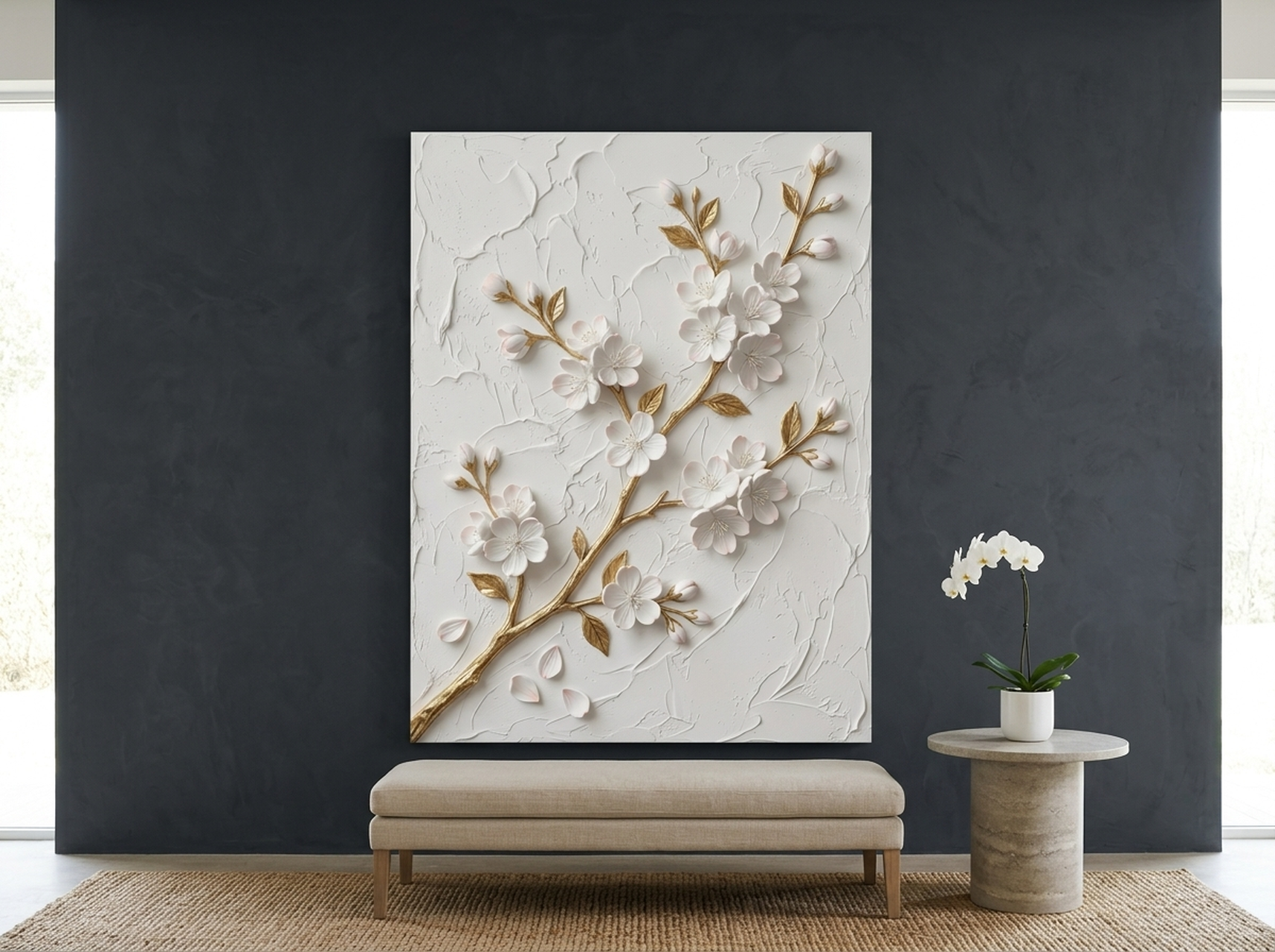
1. Cherry Blossom Canvas Wall Art | Sculptural Relief White Gold Print | Living Room Bedroom Decor
Pale sakura blossoms rendered in sculptural relief against soft white, this piece captures the wabi-sabi reverence for transient beauty. The muted gold accents echo the warm neutral palette essential to Japandi interiors, making it a natural anchor for a bedroom gallery wall or living room focal point.
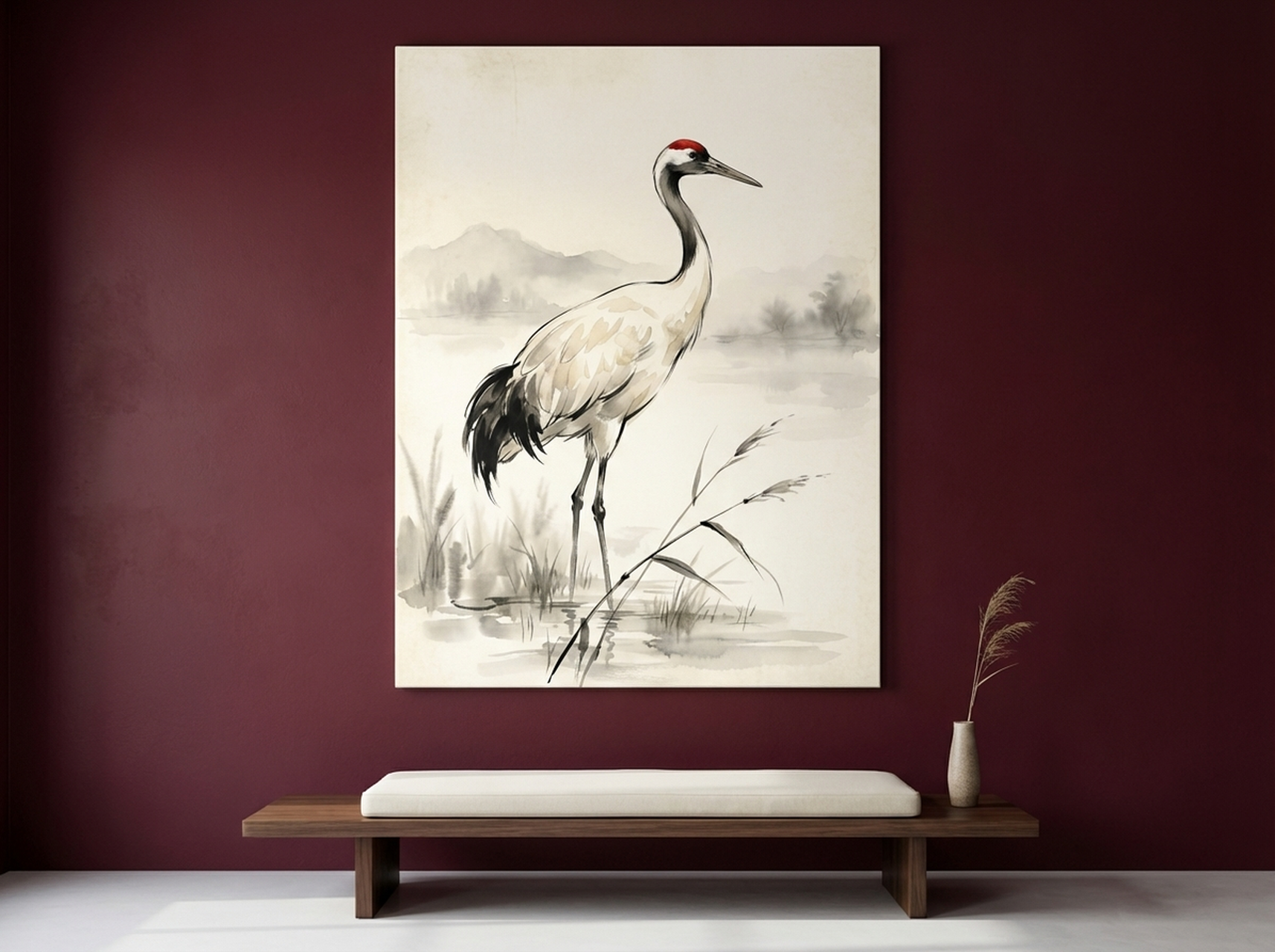
2. Crane Canvas Wall Art | Japanese Red Crown Crane Watercolor Painting | Framed Canvas Print, Ready to Hang
The red-crowned crane is one of Japan's most revered symbols, embodying longevity, grace, and balance. Painted in delicate watercolor washes of cream and muted rose, this piece introduces quiet movement without disrupting the stillness that Japandi interiors prize above all.
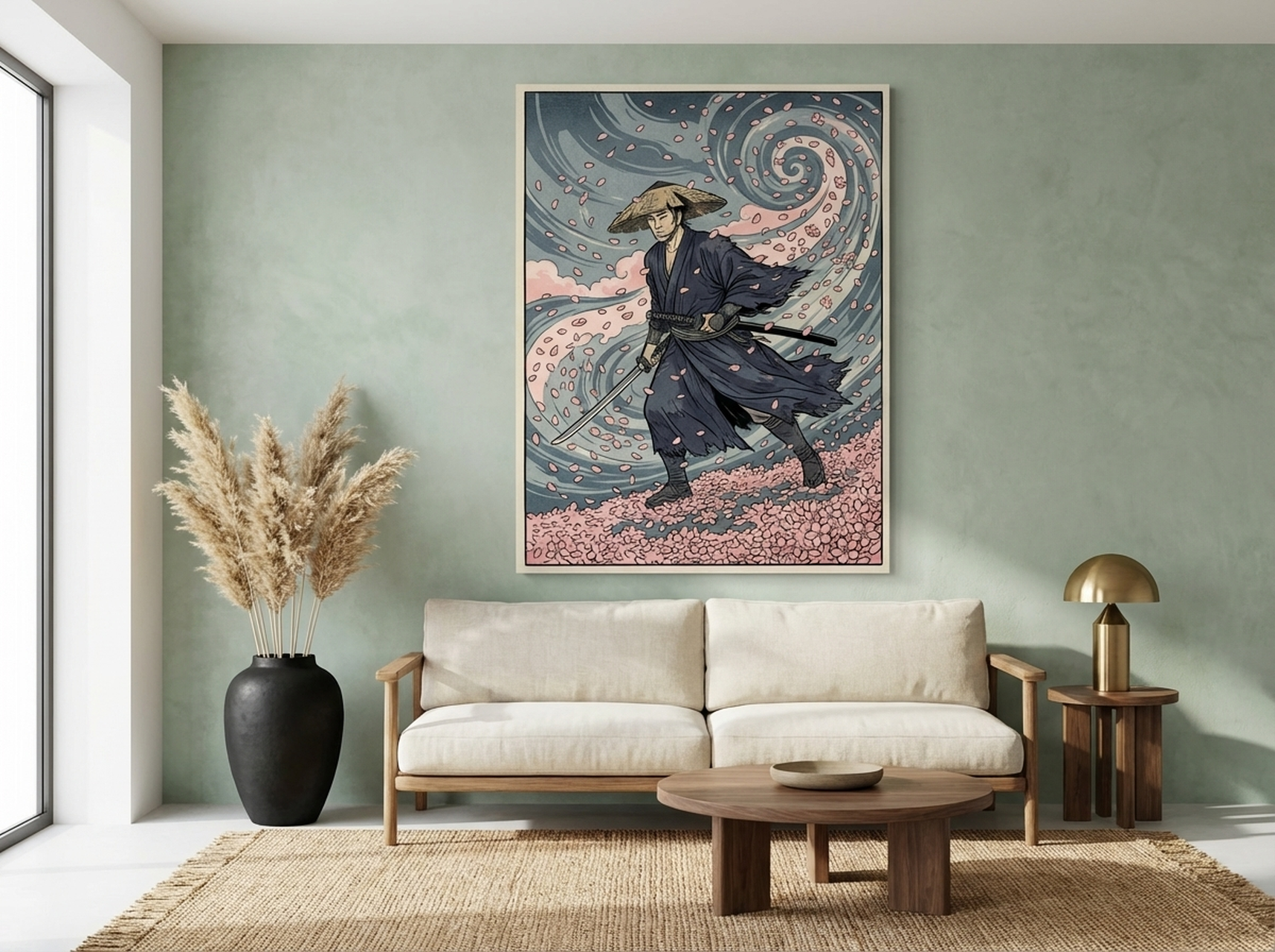
3. Ronin Samurai Cherry Blossom Canvas Wall Art | Ukiyo-e Japanese Print | Woodblock Style Decor | Grey Pink Art
Inspired by traditional ukiyo-e woodblock printing, this composition pairs a solitary samurai silhouette with falling cherry blossoms in muted grey and soft pink. The flat graphic style and restrained palette align beautifully with Japandi's respect for skilled craftsmanship and poetic understatement.
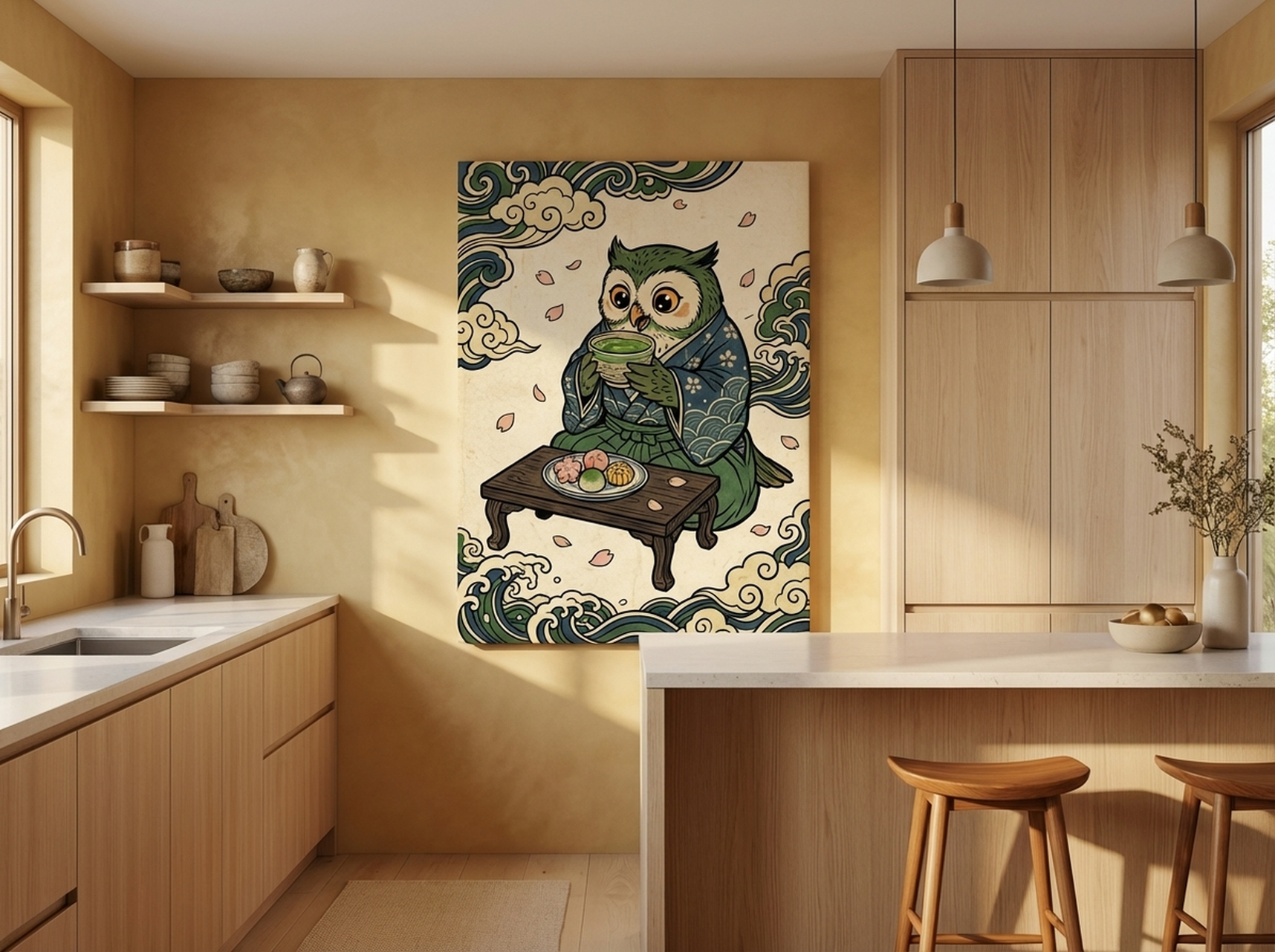
4. Owl and Matcha Tea Canvas Wall Art | Japanese Ukiyo-e Kitchen Print | Dining Room Framed Decor
A charming ukiyo-e-style composition featuring an owl beside a steaming bowl of matcha, this piece brings gentle warmth and whimsy to dining rooms or reading nooks. The earthy greens and warm cream tones mirror the natural material palette that Japandi design champions, while the folk-art linework nods to generations of Japanese craft.
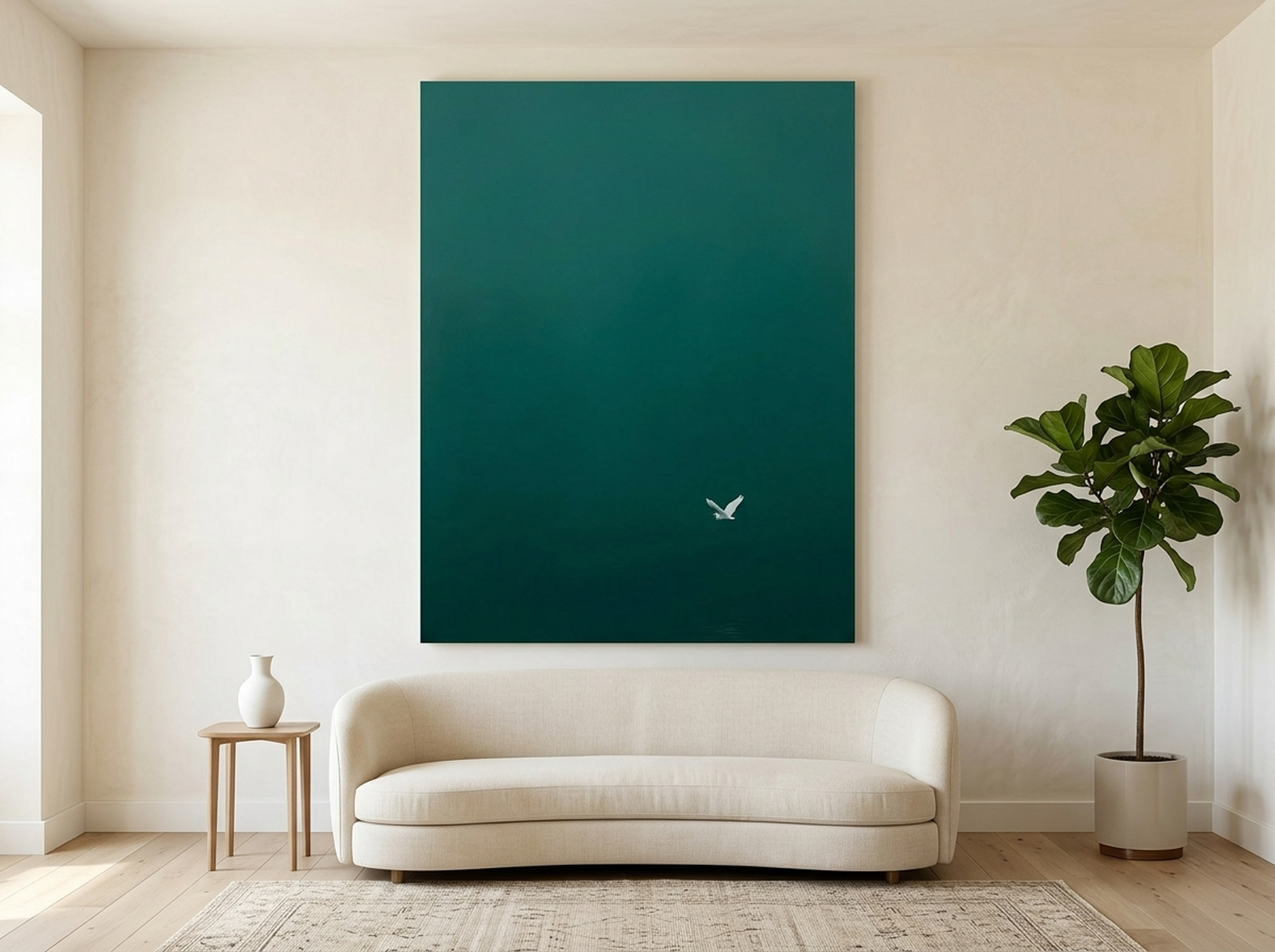
5. Egret Canvas Wall Art | Minimalist Bird Print | Teal Green Coastal Bedroom Decor
A single egret stands poised against a tranquil teal ground in this minimalist print. Negative space does the heavy lifting here, echoing the Japandi principle that what is left empty carries as much weight as what is shown. The soft, muted teal falls squarely within the approved Japandi palette of muted naturals.
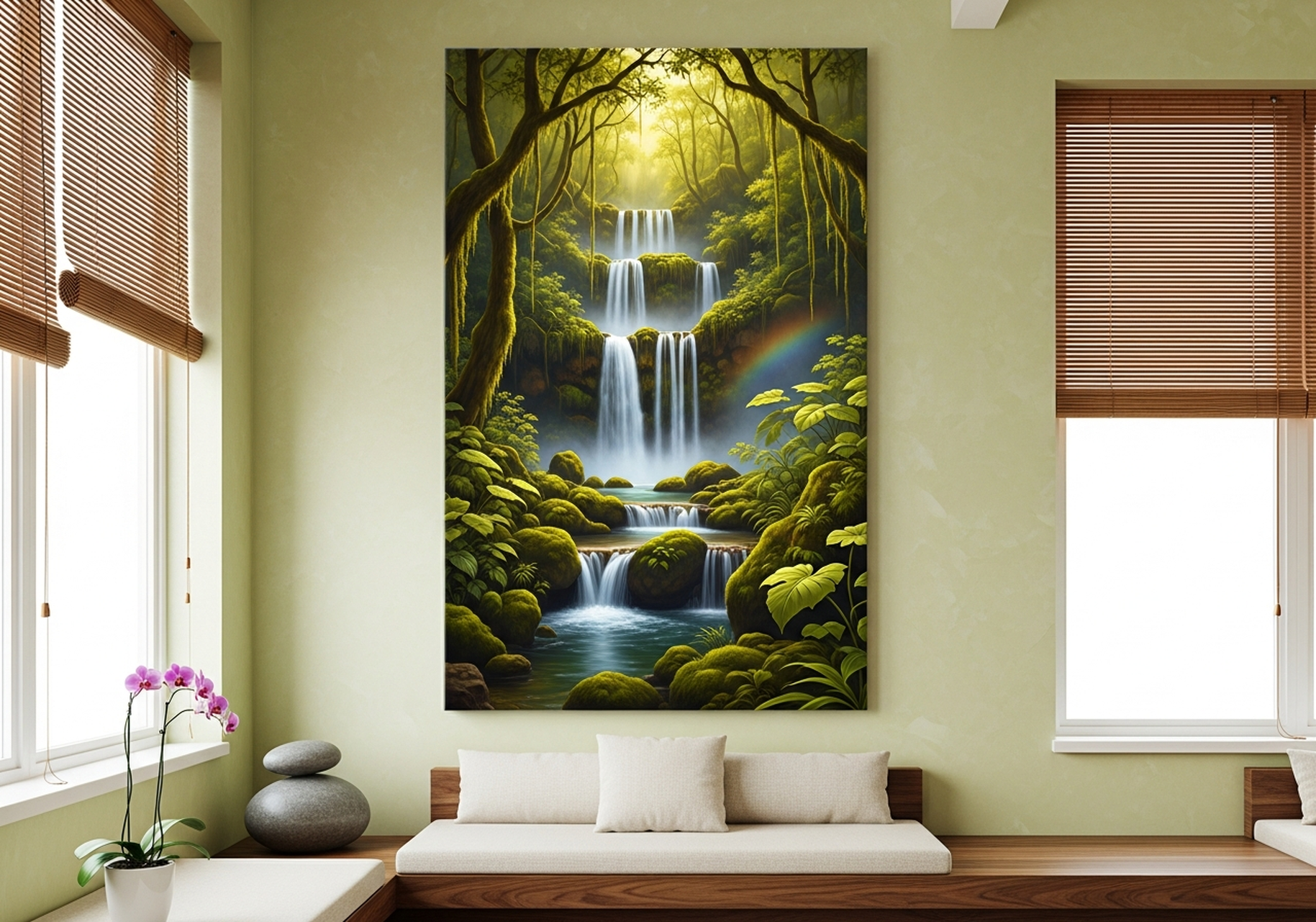
6. Waterfall Canvas Wall Art | Tropical Forest Painting Framed Print | Zen Bathroom Living Room Decor
Cascading water through lush green forest is a recurring motif in Japanese scroll painting, symbolising the ever-moving, impermanent flow of life central to wabi-sabi philosophy. The deep greens and misted whites of this piece bring organic freshness to bathrooms and meditation corners where Japandi spaces breathe most freely.
5 Common Japandi Decorating Mistakes
Getting Japandi right is less about following rules and more about avoiding the patterns that undermine it. Here are the five most common ways people inadvertently break the spell:
1. Overcrowding the Walls
Gallery walls, however beautifully curated, are fundamentally incompatible with Japandi aesthetics. The style requires breathing room, and a wall dense with frames, however individually lovely they are, creates visual noise that cancels the stillness the style is built on. One piece, hung with intention and surrounded by generous empty wall, will always outperform a cluster of ten.
2. Choosing Art That Is Too Colorful
Even art in broadly "neutral" tones can violate the Japandi palette if the colors lean cool or if they include strong contrast. A black-and-white photograph, for example, can work beautifully in a Japandi space, but a high-contrast graphic print in pure black and pure white will feel harsh. Aim for pieces where even the darkest tones have warmth in them.
3. Using the Wrong Frame Style
Heavy ornate frames, distressed antique gold, chunky barn-wood frames, and industrial black metal all conflict with Japandi. Choose thin natural wood in light oak, walnut, or ash tones, a slim matte black frame, or a clean canvas wrap with no frame at all. The frame should disappear into the wall, drawing attention to the art rather than to itself.
4. Ignoring Natural Materials in the Room
Japandi wall art does not exist in isolation. It belongs to a material ecosystem that includes linen, wood, stone, rattan, and ceramic. If the rest of the room is glossy surfaces, synthetic fabrics, and plastic furniture, even the most perfectly chosen Japandi art print will look incongruous. The art and the room should tell the same story about texture, warmth, and craft.
5. Treating It as a Single Aesthetic Layer
The most common mistake is choosing Japandi art as a stylistic finishing touch for a room that has not been designed with Japandi principles in mind. The art works best when the furniture is low and simple, the textiles are natural and undyed, the light sources are warm rather than cool, and the room has been edited, not decorated. Japandi art in a maximalist room reads as a single note in a chord that does not resolve.
For bedroom-specific advice on getting art placement right, see our guide to bedroom wall art ideas that set the mood.
Frequently Asked Questions About Japandi Wall Art
What is Japandi wall art?
Japandi wall art blends Japanese wabi-sabi aesthetics with Scandinavian minimalism. It typically features natural subjects, muted neutral palettes, generous negative space, and a handcrafted quality, all designed to create calm and intentional living spaces.
What colors work best for Japandi wall art?
The ideal Japandi palette includes warm white, undyed linen, warm grey, sage green, soft black, nude or blush, and terracotta. Avoid cool blues, stark pure white, and bright primary colors, as these undermine the warm, grounded feeling Japandi spaces require.
How big should Japandi wall art be?
For Japandi spaces, art should cover 40 to 70 percent of the wall width it occupies, with at least 25 to 30 centimetres (10 to 12 inches) of empty wall on all sides. Breathing room is not wasted space in Japandi design, it is an intentional design element.
What subjects suit Japandi wall art?
Cherry blossoms, cranes, lotus flowers, bamboo, koi fish, misty waterfalls, and minimal botanical illustrations all suit Japandi interiors. The key is choosing subjects from nature rendered with restraint, using flat or semi-abstract linework rather than hyper-realistic detail.
Can I mix Japandi art with other styles?
Yes, Japandi art pairs naturally with other minimal styles such as Scandi, organic modern, and wabi-sabi interiors. It works less well alongside maximalist, industrial, or highly colorful decor, as the contrast disrupts the sense of calm that defines Japandi design.
What frame style suits Japandi wall art?
Light natural wood frames, thin black frames, and frameless canvas wraps all suit Japandi aesthetics. Avoid ornate gold or silver frames, chunky distressed frames, and anything with decorative carving, as these add visual weight that conflicts with Japandi simplicity.
Quick Reference Table: Japandi Wall Art
| Category | Japandi Yes | Japandi No |
|---|---|---|
| Subjects | Cranes, cherry blossoms, lotus, bamboo, misty landscapes, single botanicals | Busy cityscapes, tropical maximalism, pop art, graphic text-heavy prints |
| Colors | Warm white, greige, sage, soft black, nude, muted teal, terracotta | Cool blue, neon, bright primaries, stark pure white, high-contrast rainbow |
| Style | Watercolor, ink wash, ukiyo-e, minimal relief, soft botanical illustration | Hyper-realistic photography, pop art, maximalist pattern, graffiti |
| Frames | Light natural wood, slim matte black, frameless canvas wrap | Ornate gold, chunky distressed, heavy industrial metal |
| Scale | 40 to 70% of wall width, 25 to 30 cm empty border | Too small (floating), too large (crowding edges), gallery wall clusters |
| Quantity | One statement piece per room, one decorated wall maximum | Gallery walls, every wall decorated, art on every surface |
| Our picks | Cherry Blossom Relief Print | Japanese Red Crown Crane | Ukiyo-e Samurai Cherry Blossom | Owl and Matcha Tea Ukiyo-e Print | Minimalist Egret Bird Print | Zen Waterfall Forest Painting |
Find Your Piece of Calm
Every piece in our Japandi and minimalist collection is chosen for its ability to bring genuine stillness to a space. No clutter. No noise. Just art that earns its place on your wall.
Browse the Full CollectionLooking for more inspiration? Explore our guide to abstract wall art: the ultimate guide, or browse the full range at HEVA Unique Art Gallery.