Modern Wall Art for Contemporary Homes
The Heva Team
Art Curators & Interior Design Enthusiasts · March 26, 2026 · 17 min read
Discover modern wall art for contemporary homes. Clean lines, bold abstracts, and minimalist prints that define the look of 2026 interiors.
Modern Wall Art for Contemporary Homes: The Complete 2026 Guide
The art hanging on your walls is not decoration. It is the vocabulary of your home -- the statement that tells guests, and yourself, exactly what kind of space this is. A contemporary home with no art feels like a sentence without a subject. The right modern wall art, on the other hand, anchors a room, defines its emotional temperature, and transforms four walls into a living environment worth spending time in.
This guide covers everything: what makes art truly "modern," which styles suit which rooms, how to size and place pieces with precision, and six hand-picked canvases from the HEVA collection that hit every note -- abstract, geometric, Japanese-influenced, and luxury metallic.
Ready to browse the full collection? Explore modern wall art at HEVA Unique Art Gallery and find your statement piece today.
What Makes Wall Art "Modern"?
The word "modern" is used loosely in home decor -- sometimes meaning anything made after 2010, other times referring to a specific 20th-century art historical period. For the purposes of choosing wall art for a contemporary home, it helps to understand both meanings.
In art history, Modern Art spans roughly 1860 to 1970. It begins with Impressionism's break from academic realism and accelerates through Cubism, Futurism, Expressionism, Abstract Expressionism, and Minimalism. What unites these movements is a shared conviction: art does not need to represent the world literally to be meaningful. As the Tate Museum defines abstract art, it is work that "does not attempt to represent an accurate depiction of a visual reality but instead uses shapes, colours, forms and gestural marks to achieve its effect."
For contemporary homes, "modern wall art" means pieces that carry this spirit -- works characterized by:
- Abstraction over representation -- shapes, color fields, and gestural marks rather than realistic scenes
- Geometric precision or expressive freedom -- either crisp lines or bold brushwork, rarely decorative pattern for its own sake
- Edited palettes -- usually two to four colors with high contrast, rather than the full spectrum of traditional landscape painting
- Scale and intention -- modern pieces are sized to make a statement, not fill a gap
- Material awareness -- stretched canvas, floating frames, and archival prints rather than gilded ornate frames
Understanding this gives you a framework for choosing. You are not just picking something you like -- you are selecting a piece that participates in a conversation about what contemporary living looks like.
Key Styles for Contemporary Homes
Modern wall art is not one thing. Within the broad category, several distinct movements translate exceptionally well to residential interiors. Here is a breakdown of the four most relevant for today's homes.
Abstract Expressionism
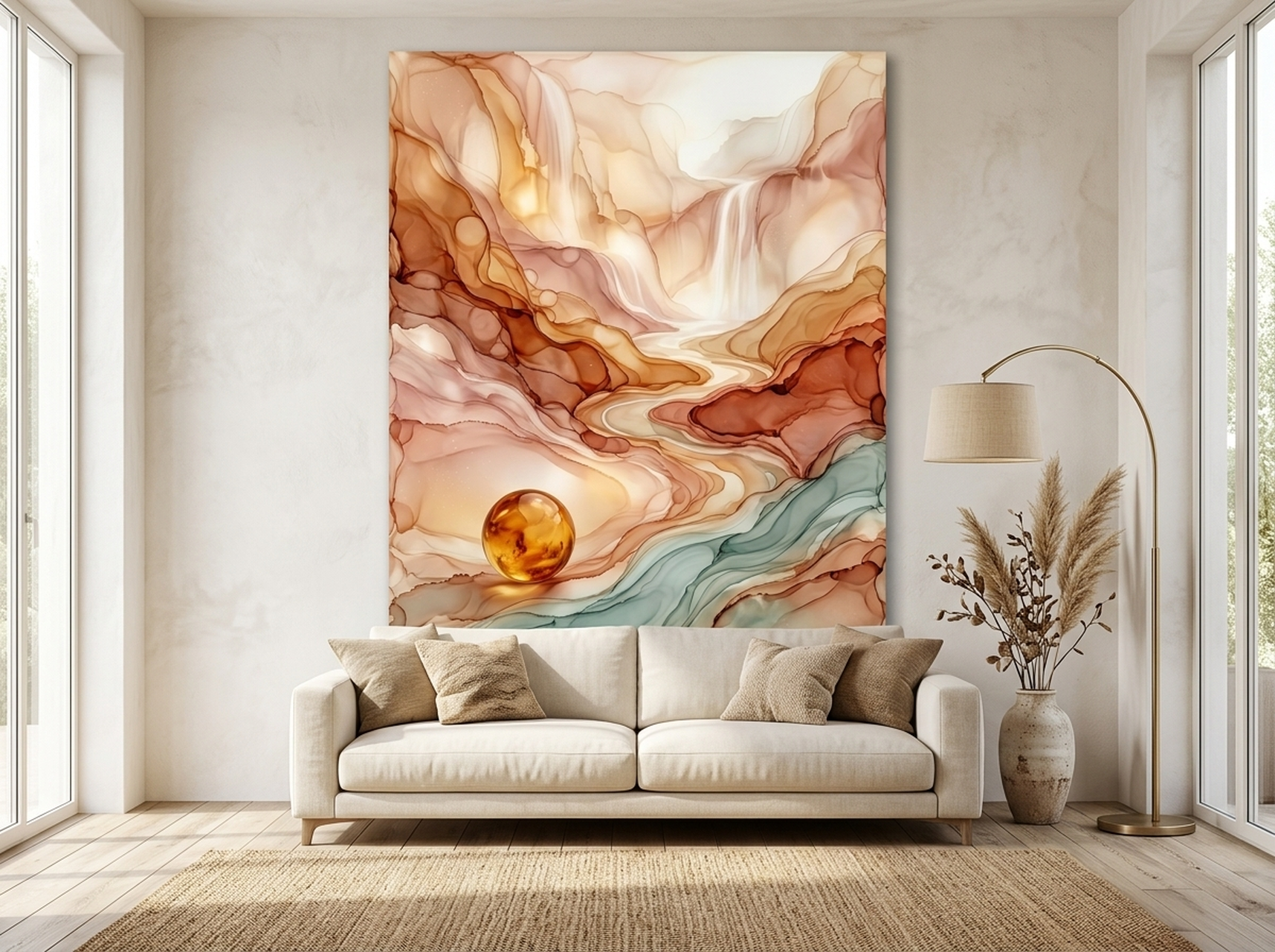
Born in New York in the 1940s, Abstract Expressionism placed raw emotional energy above everything else. Artists like Mark Rothko and Willem de Kooning used large canvases, gestural brushstrokes, and bold color contrasts to bypass the rational mind and speak directly to feeling. The Guggenheim describes Abstract Expressionism as work that "conveys strong emotion and often focuses on the act of painting itself." For home interiors, this style creates a focal point that does not demand intellectual explanation -- it simply feels right in the room. Gold, amber, deep navy, and charcoal are the dominant palettes. Best rooms: living rooms, dining rooms, home offices where creative energy is welcome.
Minimalism
Where Abstract Expressionism pours in, Minimalism strips away. Emerging in the 1960s, Minimalist art asks: what is the least amount of visual information required to create a meaningful composition? The answer is usually a lot less than you think. A single bold geometric form on a neutral ground. Two contrasting textures. A line that bisects the canvas. For contemporary interiors, Minimalism is a natural fit -- it shares the same values as clean-lined Scandinavian and Japanese-influenced furniture design. Learn more in our dedicated guide: Minimalist Wall Art: Less is More.
Japanese-Influenced and Zen Art
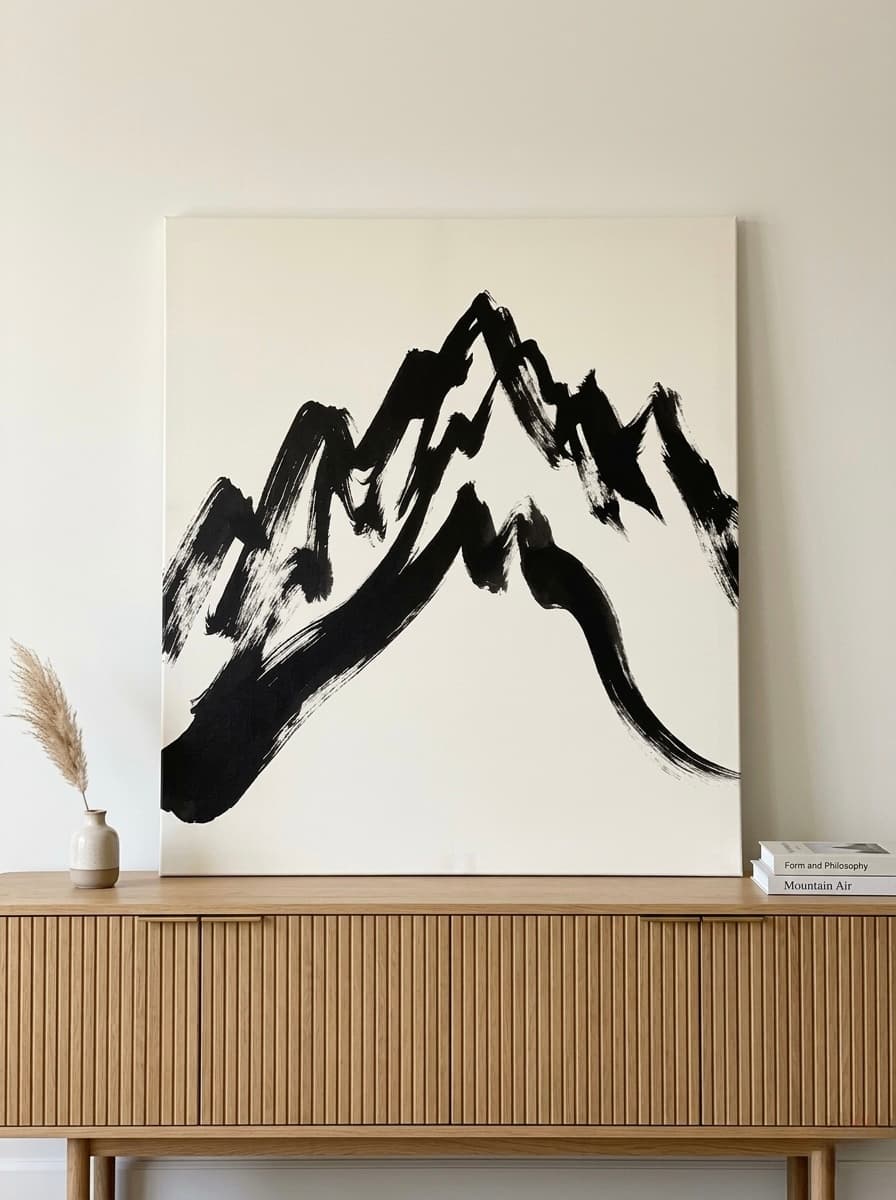
Japanese aesthetics -- particularly the concepts of ma (negative space), wabi-sabi (beauty of imperfection), and the Zen ink painting tradition -- have profoundly shaped Western modern design. Japanese-influenced wall art tends to feature high contrast black and white compositions, natural motifs (cranes, bamboo, waves, blossoms), and a deliberate use of empty space as an active compositional element. This style is especially powerful in bedrooms, meditation spaces, and any room designed for rest rather than stimulation. See our full exploration: Japanese Wall Art: Zen Modern Home Decor.
Geometric and Architectural Abstraction
Geometric abstraction draws from Bauhaus principles -- the belief that good design integrates fine art, craft, and architecture. Grids, triangles, interlocking panels, and tessellating patterns create visual rhythm that suits the clean lines of contemporary architecture. Gold and metallic finishes add warmth; teal and navy add depth. Geometric pieces are among the most versatile in a modern home because they do not compete with furniture or textiles -- they organize the visual field without dominating it. For a deep dive into abstract art history and style choices, see our Abstract Wall Art Ultimate Guide.
Color Theory for Modern Interiors
Choosing art in isolation is one of the most common errors buyers make. Art does not exist in a vacuum -- it is always in conversation with the walls, furniture, textiles, and light around it. A systematic approach to color prevents expensive mistakes.
The foundation is the 60-30-10 rule, a standard in interior design:
- 60% dominant neutral -- walls, large furniture, flooring (white, greige, charcoal, natural wood)
- 30% secondary tone -- sofa, curtains, area rug (a richer neutral or muted hue)
- 10% accent -- throw pillows, art, objects (your one bold statement)
Your wall art typically carries the 10% accent. This is why a single gold abstract canvas on a white wall can transform an entire room -- because it is designed to be the accent, not competing with anything else.
For modern art specifically, three pairings work consistently well:
- Black, white, and one metallic (gold or silver) -- the most versatile palette, works with any existing furniture
- Deep navy or teal on cream or off-white -- elegant and calming, suits living rooms and bedrooms equally
- Warm neutrals (cream, tan, terracotta) with a single geometric black element -- organic warmth with modern precision
A key principle: repeat the accent color at least once elsewhere in the room. If your canvas has gold tones, echo that in a lamp base, a picture frame, or a cushion. This creates visual cohesion and makes the art feel intentional rather than arbitrary. For a deeper dive, see our Wall Art Color Guide: Colors That Pop.
The editors at Elle Decor consistently emphasize that the relationship between wall color and art is more important than either element alone -- the combination creates the room's emotional signature.
How to Size Modern Art
Undersized art is the single most common mistake in residential interior design. A small painting on a large wall reads as an afterthought, not a statement. Modern art in particular suffers when undersized -- the scale is part of the aesthetic language.
Use this formula as your starting point:
Art width = 57% to 75% of wall width
For a 200 cm (79") wall: aim for 114 to 150 cm (45 to 59") wide
For a 150 cm (59") wall: aim for 86 to 113 cm (34 to 44") wide
For a 250 cm (98") wall: aim for 143 to 188 cm (56 to 74") wide
When hanging above furniture, the art should be wider than the furniture piece or very close to it. A canvas narrower than the sofa it hangs above creates imbalance. The safe minimum: art should be at least two-thirds the width of the sofa (e.g., a 183 cm sofa calls for art at minimum 122 cm wide).
Single vs. Gallery Wall
A single oversized canvas (60 x 80 cm minimum for most walls, 90 x 120 cm for a real statement) communicates confidence and restraint -- the modern aesthetic. A gallery wall of three to five smaller pieces works when the pieces share a visual theme: the same color palette, or the same frame style. Mixing without a unifying element tends toward visual noise, which is the opposite of what modern design values.
For a detailed breakdown of sizing in every room, see our guide: How to Choose Wall Art Size for Your Living Room. And for statement-making large pieces: Large Canvas Wall Art: Statement Ideas.
Placement Guide
Once you have the right piece at the right size, placement determines whether it succeeds or disappears. Here are the standard measurements, in both centimetres and inches:
| Location | Center height from floor (cm) | Center height from floor (inches) | Notes |
|---|---|---|---|
| Standing eye level (general) | 145 to 152 cm | 57 to 60" | Standard for all hanging art |
| Above sofa | 15 to 25 cm above sofa back | 6 to 10" above sofa back | Art bottom to sofa top |
| Above fireplace mantel | 15 to 20 cm above mantel surface | 6 to 8" above mantel | Do not over-scale in narrow chimney breasts |
| Dining room | 130 to 137 cm | 51 to 54" | Seated eye level |
| Hallway | 145 cm | 57" | Keep to one wall to avoid tunnel effect |
| Bedroom (above bed) | 15 to 20 cm above headboard | 6 to 8" above headboard | Width should be two-thirds of bed width or wider |
Practical tip: Before you hammer a nail, tape cut newspaper or kraft paper to the wall in the exact dimensions of your canvas. Live with the template for 24 hours. This simple step eliminates almost all post-hanging regret.
6 Curated Modern Art Picks from HEVA
The following six pieces represent the best of the HEVA collection for contemporary home styling -- each one selected for its visual clarity, color range, and versatility across room types.
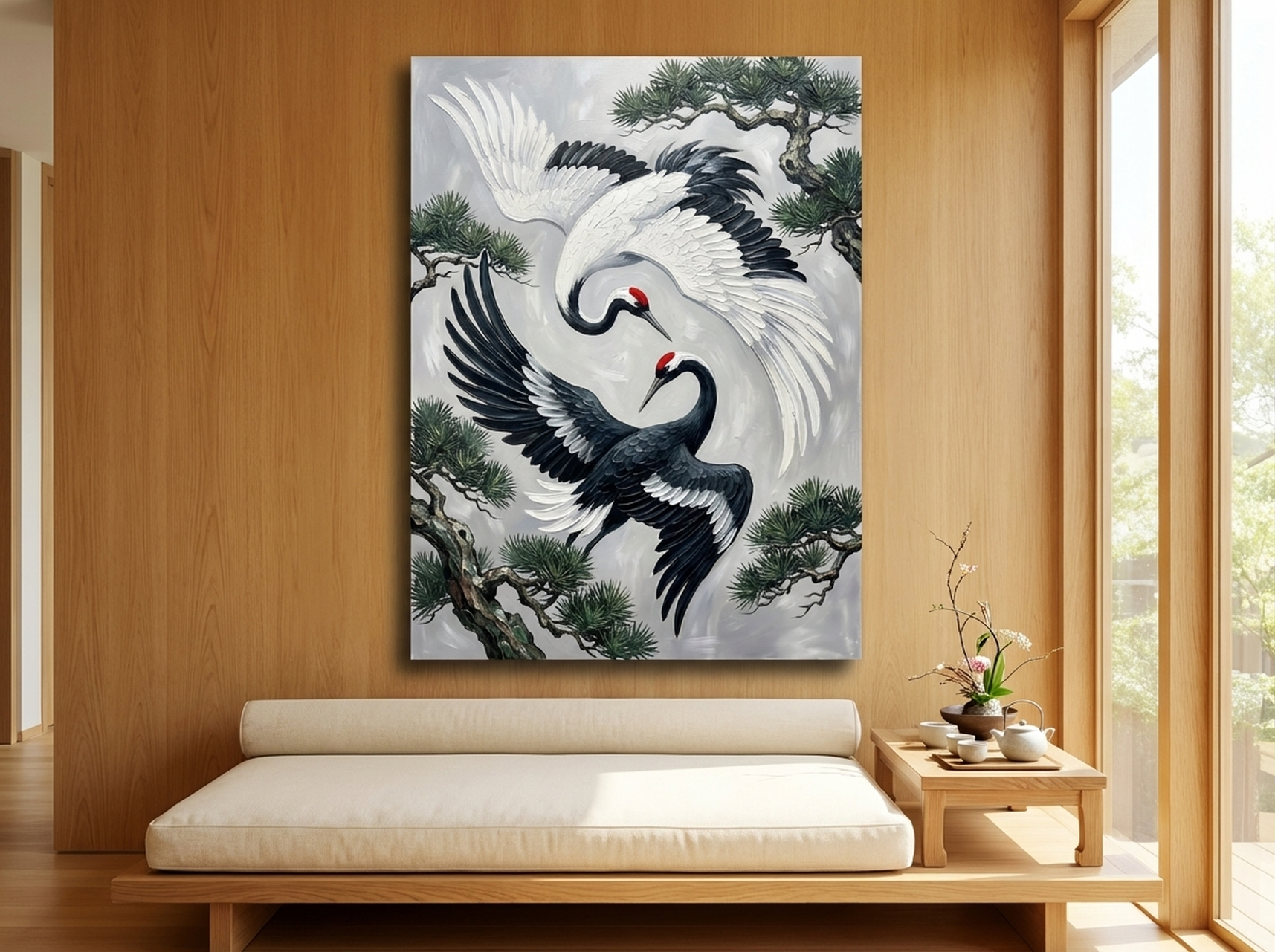
1. Yin Yang Cranes -- Japanese Ink Zen Composition
This piece channels the 1,200-year tradition of Japanese ink wash painting (sumi-e) through a modern compositional lens. Two cranes in a yin-yang formation, rendered in bold black and white with a single red accent, create a work of remarkable visual clarity. The cranes carry Zen symbolism -- balance, longevity, and grace -- while the composition itself is as contemporary as anything produced in a New York studio. The palette of black, white, and red is one of the most versatile combinations in modern interior design, pairing equally well with warm wood tones, cool grays, and neutral linens. Best for: bedroom feature wall, living room, meditation space. $55.48
2. Islamic Geometric Star -- Teal and Gold Arabesque
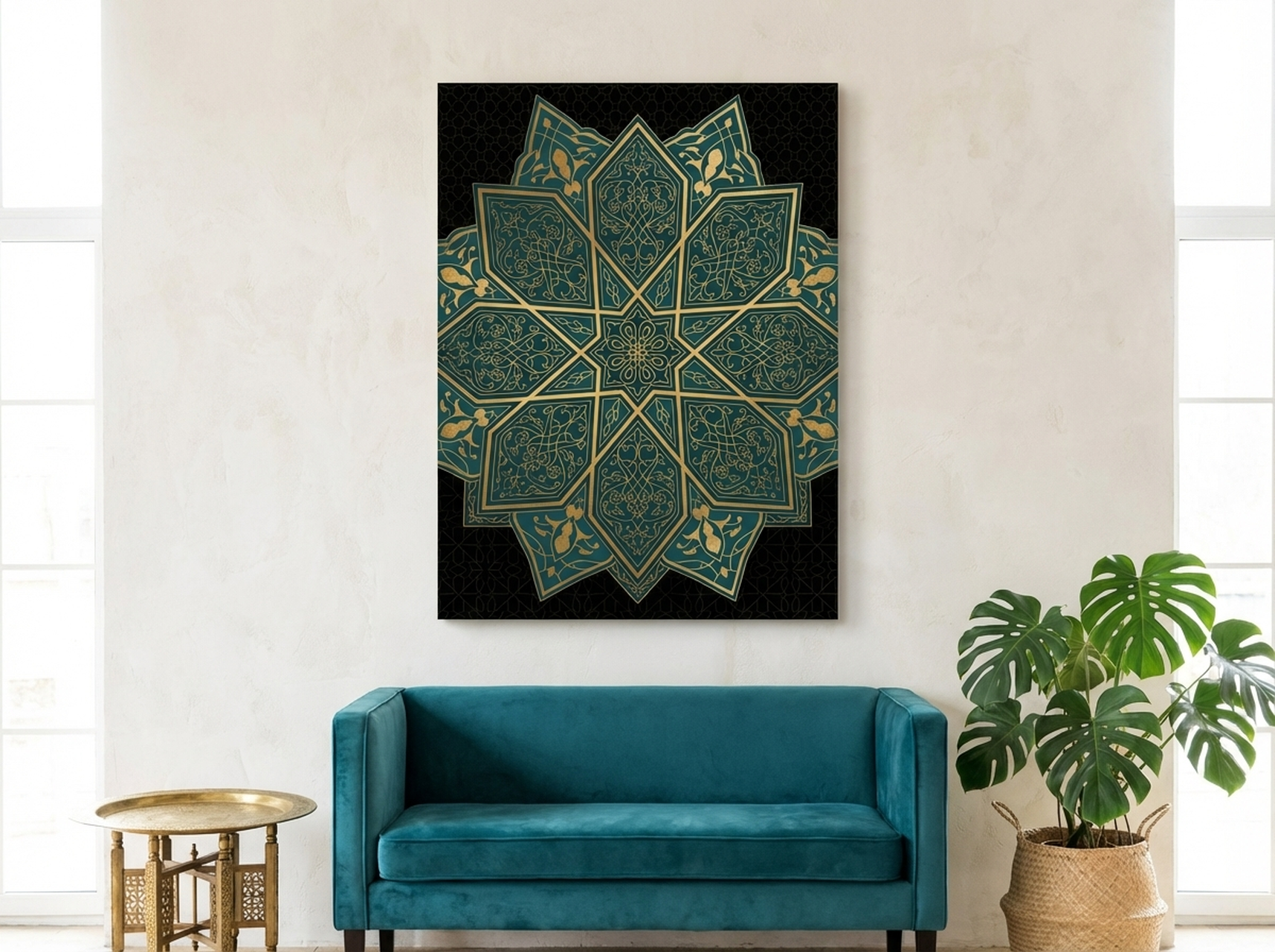
Islamic geometric art is one of the most mathematically sophisticated visual traditions in human history -- and one of the most overlooked in Western contemporary interiors. This Zellige-inspired star pattern takes the interlocking geometry of Moroccan tilework and scales it to canvas, creating a piece that is simultaneously ancient and contemporary. The teal and gold palette reads as luxury without ostentation -- a combination that interior designers have consistently championed for its ability to work with both cool-toned and warm-toned rooms. This is a conversation piece that rewards close examination. The more you look, the more pattern within pattern you discover. Best for: living room focal wall, dining room, entryway. $55.48
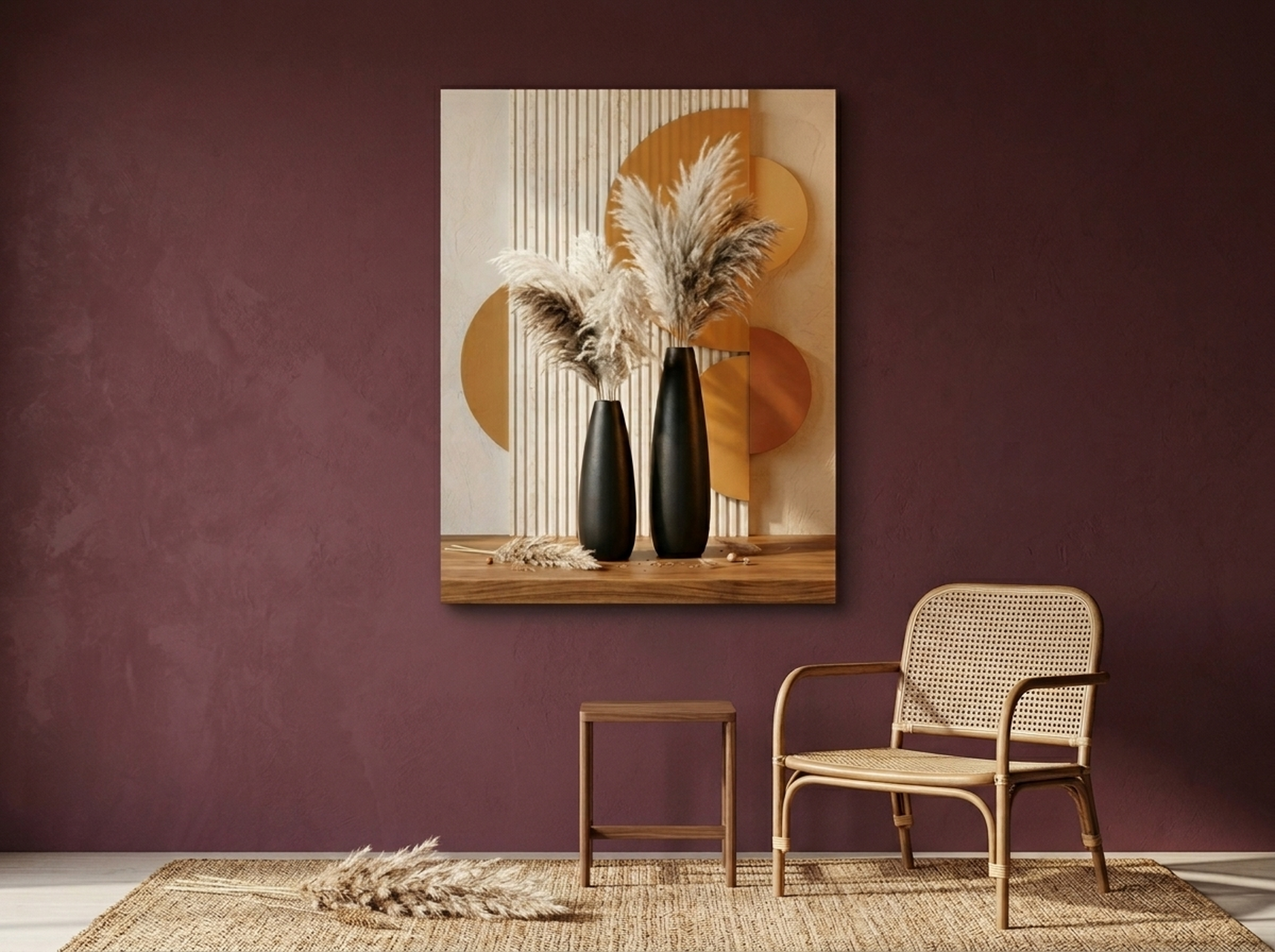
3. Pampas Vases -- Sculptural Black and Gold Luxury
The still-life tradition runs from 17th-century Dutch masters to contemporary photographers. This piece belongs to the modern chapter of that tradition -- pampas grass arrangements in sculptural vases, rendered in a palette of black, cream, and warm gold that sits perfectly within the current wave of organic modern interiors. Unlike floral prints, which can read as traditional, this composition is architectural in its structure: the negative space between the vases is as considered as the subjects themselves. The result is a piece that feels collected rather than purchased -- the kind of art that a designer would find in a gallery and bring home. Best for: living rooms with warm neutrals, bedrooms, master bathrooms (gallery wall anchor). $55.48
4. Gold King Portrait -- Editorial Metallic Black Luxury
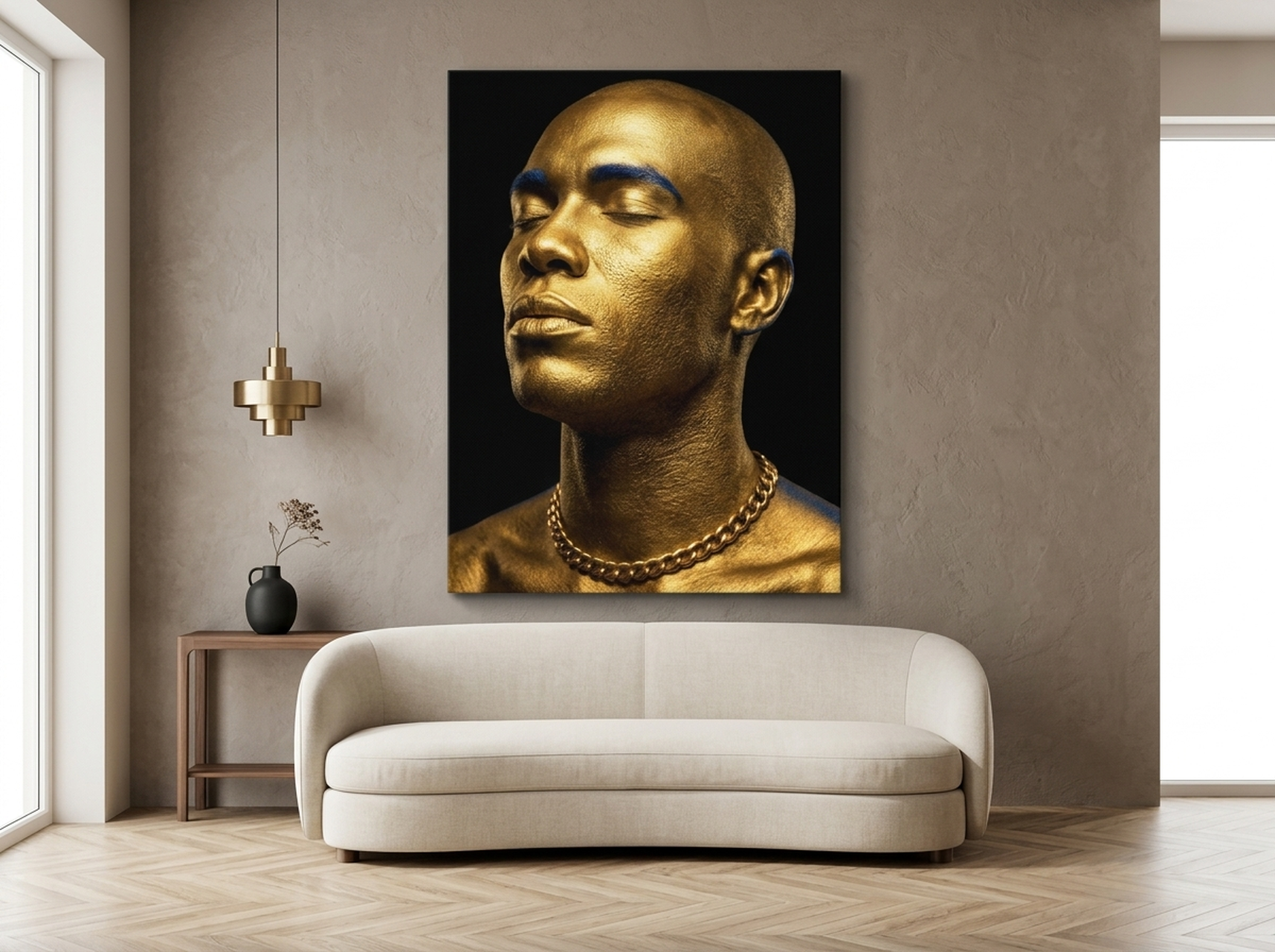
Bold, unapologetic, and unmistakably contemporary -- this portrait canvas operates in the tradition of what gallerists call "editorial fine art." The subject is rendered in deep blacks and metallic golds, a palette that reads differently in every light condition: warm and rich under incandescent light, graphic and powerful under daylight. This is the kind of piece that art advisors place in hotel lobbies, restaurant corridors, and the living rooms of collectors who want art that makes a statement the moment you walk through the door. The gold tones connect it to luxury interiors without requiring a traditionally formal decor scheme. It works as well in a stark, minimal white room as it does in a richly layered one. Best for: entryways, living room feature walls, home offices where confidence is the goal. $55.48
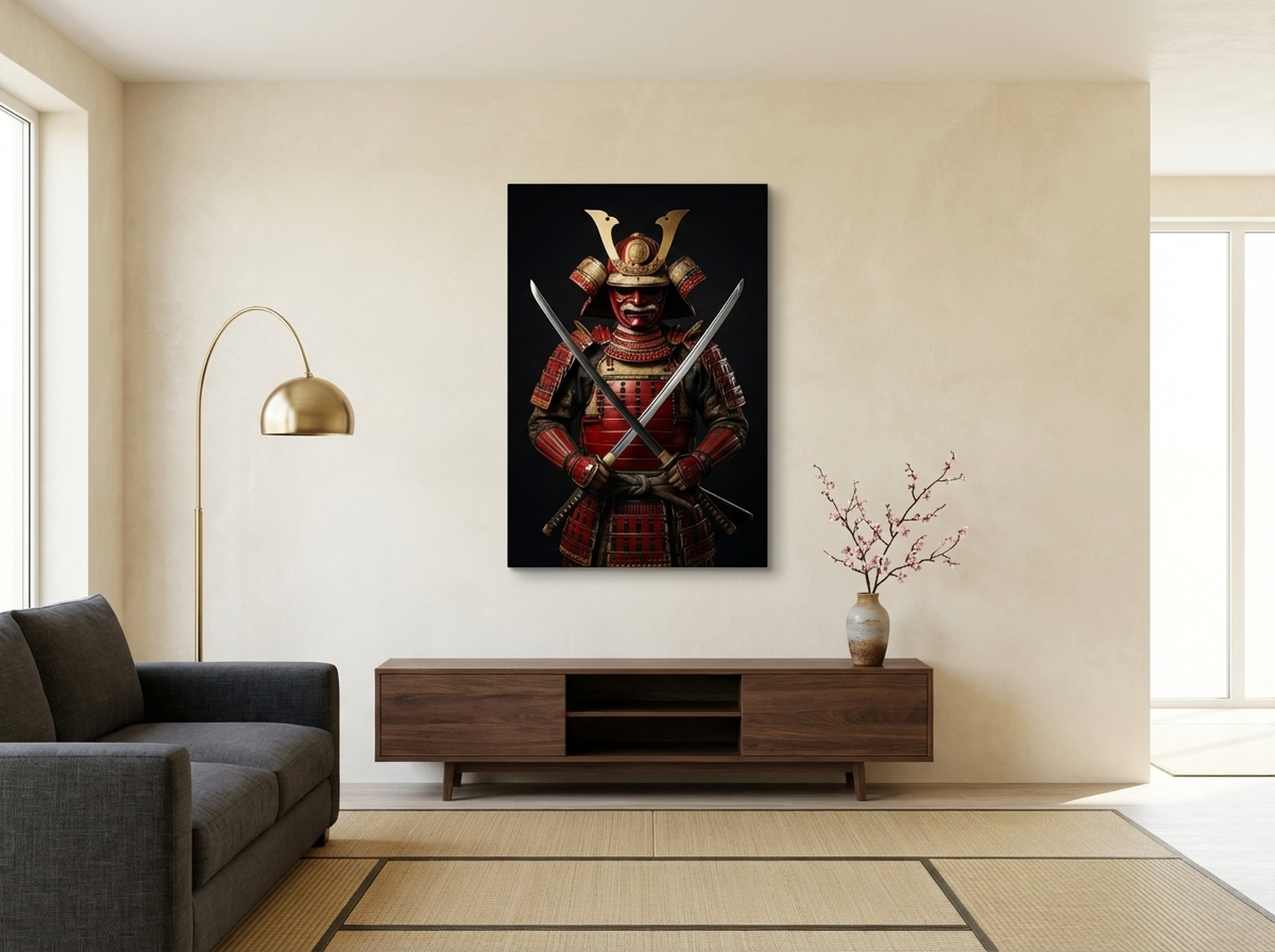
5. Samurai Armor -- Japanese Warrior Dark Drama
There is a reason Japanese samurai armor has been exhibited in the world's greatest museums -- from the Metropolitan Museum of Art to the Tokyo National Museum. It is a complete visual system: every element of the design, from lacquered scales to gilded mon crests, serves both function and aesthetics simultaneously. This canvas brings that design intelligence to your wall, rendered in a dark, dramatic palette of black, red, and gold. The composition is cinematic but the aesthetic is contemporary -- it reads more like high-end editorial photography than historical illustration. This piece works in spaces where a sense of strength and depth is desired: home offices, libraries, dining rooms, and any living space designed to impress. Best for: home office, dining room, living room with dark or warm interiors. $55.48
6. Klimt Urn Trio -- Gold Mosaic Art Nouveau Luxury
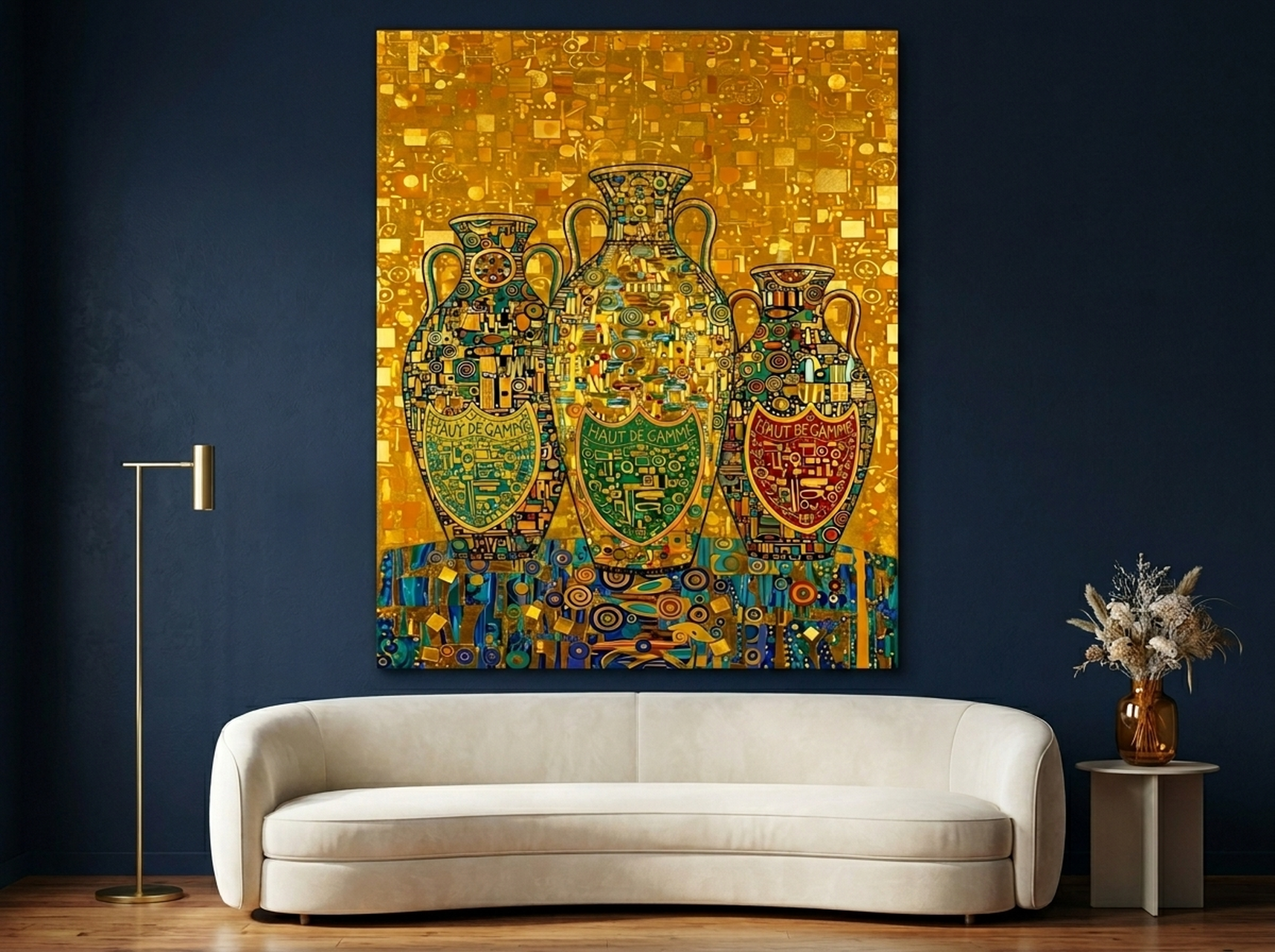
Gustav Klimt's gold phase, which produced "The Kiss" and the "Portrait of Adele Bloch-Bauer," remains one of the most sought-after aesthetic languages in interior design -- because gold mosaic and jewel-tone pattern never goes out of style in luxury spaces. This urn trio takes that aesthetic and applies it to a contemporary composition: three vessels rendered in Klimt's characteristic flat gold planes, tessellated pattern fills, and saturated jewel-tone accents. The result is simultaneously Art Nouveau, Art Deco, and entirely modern. This piece anchors a room with warmth and opulence while remaining compositionally clean enough for contemporary spaces. The gold tones connect directly to metallic light fittings, hardware, and textured textiles. Best for: living rooms, dining rooms, master bedrooms, luxury entryways. $55.48
5 Common Mistakes When Hanging Modern Wall Art
Even with the right piece, execution matters. These are the five errors that interior designers see repeatedly -- and how to fix each one.
Mistake 1: Art Too Small for the Wall
A 40 x 50 cm print on a 300 cm wall is not art -- it is a postage stamp. Undersized art makes the room feel unfinished and the art feel unconfident. Fix: follow the 57 to 75 percent width rule. When in doubt, go bigger. A slightly oversized piece almost always looks better than an undersized one.
Mistake 2: Hanging Too High
Most people hang art at picture-rail height -- roughly 200 to 210 cm from the floor to the center. This places the art above comfortable viewing range and disconnects it from the furniture below. Fix: hang with the center of the artwork at 145 to 152 cm (57 to 60 inches) from the floor. This matches seated and standing eye level.
Mistake 3: Wrong Frame Style for Modern Art
Ornate gilded frames with heavy profile belong to traditional oil paintings. Modern canvases on stretcher bars are finished on their own -- no frame required. If you add a frame to a modern print, choose a thin black, white, or natural wood floating frame that creates visual separation without imposing a historical aesthetic on a contemporary piece.
Mistake 4: Ignoring Room Function and Emotional Tone
A high-energy Abstract Expressionist canvas with bold red gestural marks can be exhilarating in a home office -- and exhausting in a bedroom. Art communicates mood. Before choosing, ask: what do I want to feel in this room? Calm and restorative? Energized and inspired? Bold and impressive? Let that answer guide your style choice, not just the color match.
Mistake 5: No Connection to the Rest of the Room
Art that appears entirely disconnected from the room's palette -- different colors, different tone, different scale -- reads as an accident rather than a decision. You do not need to match exactly. But you should echo at least one color from the artwork somewhere in the room: a cushion, a rug, a lamp. This repetition is what makes a room feel designed rather than assembled.
Frequently Asked Questions
What is modern wall art?
Modern wall art refers to works created from roughly 1860 to 1970, encompassing movements like Abstract Expressionism, Minimalism, and Geometric Abstraction. In home decor, the term broadly covers art with clean lines, abstract forms, bold color contrasts, and a rejection of traditional representational styles.
How do I choose the right size modern art for my wall?
A reliable rule is that art should span 57 to 75 percent of the wall width it hangs on. For a 200 cm (79 inch) wall, that means a canvas between 114 cm and 150 cm (45 to 59 inches) wide. For a single sofa (183 cm / 72 inches), aim for a piece around 122 to 137 cm (48 to 54 inches) wide.
What colors work best with modern wall art?
Modern interiors typically use the 60-30-10 color rule: 60 percent neutral base, 30 percent secondary tone, and 10 percent bold accent. Your wall art should carry that 10 percent accent -- a single pop of gold, teal, red, or deep navy grounds the room without overwhelming it.
Where should I hang modern wall art?
The standard hang height is 145 to 152 cm (57 to 60 inches) from floor to the center of the artwork. Above a sofa, leave 15 to 25 cm (6 to 10 inches) of gap between the top of the sofa and the bottom of the frame.
Is modern art suitable for every room?
Yes. Abstract and geometric modern art works well in living rooms, home offices, and hallways. Japanese-inspired prints bring calm to bedrooms and meditation spaces. Luxury metallic pieces elevate dining rooms and entryways.
Do I need to frame modern canvas wall art?
Canvas prints on stretcher bars look finished without a frame. Adding a thin black or natural wood floating frame elevates the piece. Avoid heavy ornate frames with modern art -- they undercut the minimalist aesthetic.
Quick Reference: 6 HEVA Modern Art Picks
| Piece | Style | Palette | Best Room | Price | View |
|---|---|---|---|---|---|
| Yin Yang Cranes | Japanese / Zen | Black, white, red | Bedroom, living room | $55.48 | View |
| Islamic Geometric Star | Geometric luxury | Teal, gold, black | Living room, dining | $55.48 | View |
| Pampas Vases | Organic modern | Black, cream, gold | Living room, bedroom | $55.48 | View |
| Gold King Portrait | Editorial luxury | Black, gold, navy | Entryway, office | $55.48 | View |
| Samurai Armor | Japanese dramatic | Black, red, gold | Office, dining room | $55.48 | View |
| Klimt Urn Trio | Art Nouveau luxury | Gold, jewel tones | Living room, master bedroom | $55.48 | View |
The Right Modern Art Changes How a Room Feels
A contemporary home without art is a blueprint. Art is what makes it a home -- the evidence of decisions made, aesthetics chosen, a point of view committed to. Modern wall art, at its best, is not decoration: it is a clear statement about what you value in the world.
Whether you are drawn to the balance and stillness of Japanese ink paintings, the opulent precision of gold mosaic compositions, the bold confidence of editorial portraiture, or the quiet geometry of abstract minimalism, the HEVA collection has been built to give you real choice -- pieces with genuine visual intelligence, printed to archival quality on gallery-wrapped canvas.
Start with one statement piece. Hang it right. Let it teach you what your walls can do.
Browse all modern wall art at HEVA -- free shipping on orders over $50.