Islamic Wall Art for Living Room and Bedroom Decor
The Heva Team
Art Curators & Interior Design Enthusiasts · March 27, 2026 · 19 min read
Discover Islamic wall art featuring calligraphy, geometric patterns, and arabesque designs. A complete guide to faith-inspired decor for every room.
Islamic Wall Art: Calligraphy and Design for Every Home
For over fourteen centuries, Islamic art has turned the language of geometry into something that feels almost alive. Interlocking stars, spiralling arabesque vines, and the flowing curves of Arabic calligraphy create patterns so perfectly balanced they appear to expand outward from the canvas. That same visual richness, once reserved for mosque domes and royal palaces, is now available as museum-quality canvas prints that slip effortlessly into modern interiors. Whether you follow the faith or simply love the aesthetic, Islamic wall art brings a timeless depth that few other decorative traditions can match.
Ready to browse our full collection? Shop Islamic Wall Art at HEVA Unique Art Gallery and find a piece that speaks to your space.
A Brief History of Islamic Art
Islamic art emerged in the 7th century CE following the rapid spread of Islam across the Arabian Peninsula, Persia, North Africa, and Iberia. Early Muslim patrons commissioned art for mosques, madrasas, and palaces, and the artists they employed faced a distinctive creative constraint: classical Islamic theology discouraged figurative depictions of the divine, pushing craftspeople to express spiritual transcendence through abstract form instead.
The result was an explosion of geometric invention. Mathematicians and artists worked together to construct patterns based on the circle -- the shape without beginning or end, symbolising God's infinity. By the 9th century the tile workshops of Persia and the plasterwork studios of Andalusia were producing zellige and girih patterns of extraordinary intricacy. The Alhambra in Granada, built between the 13th and 14th centuries, remains the most celebrated surviving monument to this tradition.
In parallel, Arabic calligraphy developed as the highest art form in the Islamic world. Because the Quran was understood to be the literal word of God, the script that carried it was elevated to a sacred act. Calligraphers spent years mastering scripts such as Naskh, Thuluth, and Kufic, each with its own proportional rules and aesthetic character. A single beautifully rendered verse could command more reverence than any figurative painting.
Contemporary Islamic-inspired art synthesises these centuries of craft with modern printing technology and interior design sensibility. You can learn more about the historical scope of this tradition at the Metropolitan Museum of Art's Islamic Art collection, one of the most comprehensive in the world. See how this tradition connects to wider religious wall art in homes across cultures.
Today, Islamic wall art ranges from faithful reproductions of classical tile patterns to bold contemporary reinterpretations in unexpected colour palettes. The thread connecting all of them is a commitment to pattern, precision, and the idea that beauty itself is a form of remembrance.
Key Motifs and Their Spiritual Significance
Arabic Calligraphy
Calligraphy is the undisputed queen of Islamic art forms. Common subjects include the Bismillah ("In the name of God, the Most Gracious, the Most Merciful"), the 99 Names of Allah, Quranic verses, and poetry from Sufi masters such as Rumi. In a home setting, calligraphy prints create an immediate focal point while carrying personal or spiritual meaning for the household. Even viewers who cannot read Arabic instinctively respond to the rhythmic flow of the script, which functions simultaneously as image and word.
Geometric Tessellations
The geometric star -- particularly the eight-pointed rub el hizb and the twelve-pointed star used in Moroccan zellige -- is the signature shape of Islamic decorative art. These tessellations are constructed by subdividing the circle and are mathematically exact: every angle and proportion follows from a single generating circle drawn with a compass. The repetition of the pattern to infinity represents the unlimited nature of creation. In a modern interior, a geometric canvas brings structured calm and visual complexity without chaos. The pattern invites the eye to travel indefinitely, creating a meditative quality that few other art forms achieve.
Arabesque Patterns
The arabesque is a continuous flowing vine that branches and re-branches in perfect symmetry. It appears in carved stucco, inlaid wood, illuminated manuscripts, and woven textiles. Unlike geometric work, the arabesque is organic and rhythmic, evoking the growth of plants as a metaphor for the abundance of life. Modern arabesque prints pair especially well with dark or jewel-toned walls where the intricate lines can be read clearly. The style originated in 10th-century Baghdad and quickly spread westward through North Africa and into Moorish Spain, where it reached its most elaborate expression in the stucco ceilings of the Alhambra.
The Eight-Pointed Star and Sacred Geometry
Sacred geometry underpins the entire visual vocabulary of Islamic design. The number eight recurs constantly: eight-pointed stars, octagonal domes, eight-petal rosettes. In Islamic cosmology, eight is associated with the throne of heaven. When you hang a piece featuring this motif, you are bringing a layer of symbolic resonance that extends far beyond decoration. For a deeper look at how sacred geometry features across faith traditions, see our guide to faith-inspired wall art for sacred spaces.
Muqarnas and Three-Dimensional Patterning
While muqarnas -- the honeycomb vaulting seen in Persian and Moorish architecture -- cannot be fully reproduced on a flat canvas, contemporary prints inspired by this form create the illusion of three-dimensional depth through pattern layering. These pieces are particularly striking in rooms with high ceilings, where the upward-drawing quality of the design reinforces the architectural experience of the space.
Traditional Colour Palettes in Islamic Art
Colour in Islamic art was never arbitrary. Each hue carried cosmological, symbolic, and practical meaning drawn from the pigments and dyes available across the trade routes of the medieval Islamic world.
Lapis Lazuli Blue and Navy
Deep blue -- derived historically from lapis lazuli mined in Afghanistan -- represents divine infinity and the celestial sky. It is the colour most associated with the famous Iznik tiles of Ottoman Turkey and with the interior of Persian dome chambers. In a modern room, navy or deep teal Islamic art anchors a space and reads as sophisticated and grounded. It pairs exceptionally well with brass or gold frame finishes and with cream or white walls.
Gold and Brass
Gold in Islamic art represents heavenly light and divine generosity. Illuminated manuscripts used genuine gold leaf; architectural interiors featured gilded plasterwork and gold-painted ceramic tiles. A canvas with strong gold accents catches light differently across the day, giving the piece a living quality that photographs rarely capture fully. Gold pairs best with navy, deep green, charcoal, or black backgrounds. In contemporary interiors it bridges the gap between traditional and modern luxury aesthetics effortlessly.
Emerald Green
Green is the colour most closely associated with Paradise in Islamic tradition. It was the colour of the Prophet's banner and is found throughout Islamic architecture from Morocco to Indonesia. In a contemporary interior, emerald or jade green Islamic art pops against cream walls and coordinates effortlessly with natural materials like rattan, bamboo, and walnut wood. It is the most universally flattering of the traditional Islamic palette colours in modern interiors.
Terracotta, Saffron, and Burnt Orange
These warm earth tones are characteristic of North African and Andalusian Islamic art, where local clay pigments dominated. They bring warmth and an artisan quality to modern rooms and pair particularly well with the neutral greys and whites that dominate contemporary interior design. If your space feels cold or clinical, a terracotta-toned Moroccan-inspired canvas is often the quickest fix. Explore our wall art colour guide for more pairing advice across all styles and palettes.
Ivory and Cream
Neutral grounds allow the complexity of the pattern to breathe. Many classical Islamic manuscripts used ivory parchment precisely to keep the calligraphy legible and the eye focused on the script rather than the background. In a modern context, cream-ground geometric prints work in almost any room and any colour scheme, making them the safest starting point for anyone new to the style.
Placement Guide: Room by Room
Entranceway
The entrance is your home's first impression and a natural place for a bold statement piece. A single geometric canvas at 60x90 cm (24x36 in) hung at eye level -- centre at approximately 145 cm (57 in) from the floor -- immediately signals the aesthetic sensibility of the whole home. Choose a piece with strong contrast and a limited palette so it reads quickly as visitors arrive. A teal-and-gold geometric or a Moroccan cultural scene both work superbly here. (source: Britannica)
Living Room
The living room wall above a sofa is prime real estate for Islamic wall art. The optimal size here is 90x60 cm to 120x80 cm (36x24 in to 48x32 in) for a single canvas, or a triptych arrangement totalling 150x60 cm (60x24 in). The artwork should span 55-60% of the sofa width and sit 15-25 cm (6-10 in) above the top of the sofa back. A geometric star or arabesque print in teal and gold will hold the eye without competing with furniture. For more on sizing, read our complete living room wall art size guide.
Prayer Room (Musalla)
A dedicated prayer room deserves art that is intentionally chosen. Calligraphy prints featuring Quranic verses or the Bismillah are the traditional choice; geometric prints are equally appropriate. Avoid hanging art on the qibla wall if it might distract during salah; instead, place pieces on the side or back walls. Size: 50x70 cm (20x28 in) works well for focused spaces. Keep the palette serene -- deep blue, soft gold, or black on white.
Bedroom
The bedroom calls for art that is beautiful but not visually demanding. Intricate arabesque patterns in softer colours -- dusty blue, warm gold, sage green -- work well as the room's primary art piece. Hang above the headboard at 80x60 cm (32x24 in) minimum; for a king-size bed, consider 120x80 cm (48x32 in). The symmetry of geometric Islamic art has a genuinely calming effect that supports rest and introspection.
Hallway
Narrow hallways benefit from vertically oriented pieces. A 40x60 cm (16x24 in) portrait-format geometric canvas creates rhythm as you move through the corridor. Consider a series of three smaller pieces spaced evenly for a gallery corridor effect. See our gallery wall layout guide for spacing rules that keep the arrangement looking intentional rather than random.
Dining Room
A dining room wall benefits enormously from a bold, characterful canvas that gives guests something to talk about. A geometric starburst in rich terracotta or coral, or a large arabesque in navy and gold, works superbly here. Size recommendation: 100x70 cm (40x28 in) above a sideboard, or 120x90 cm (48x36 in) on a plain feature wall opposite the table. The dining room also tolerates more visual complexity than other rooms because meals give people extended time to appreciate the detail.
6 Hand-Picked Islamic Wall Art Pieces from HEVA
Every canvas in our collection is printed on premium artist-grade material with archival inks rated for 75+ years without fading. Here are six standout pieces chosen for their alignment with the Islamic art tradition and their versatility across different interior styles.
1. Islamic Geometric Star Canvas -- Arabesque Zellige Pattern
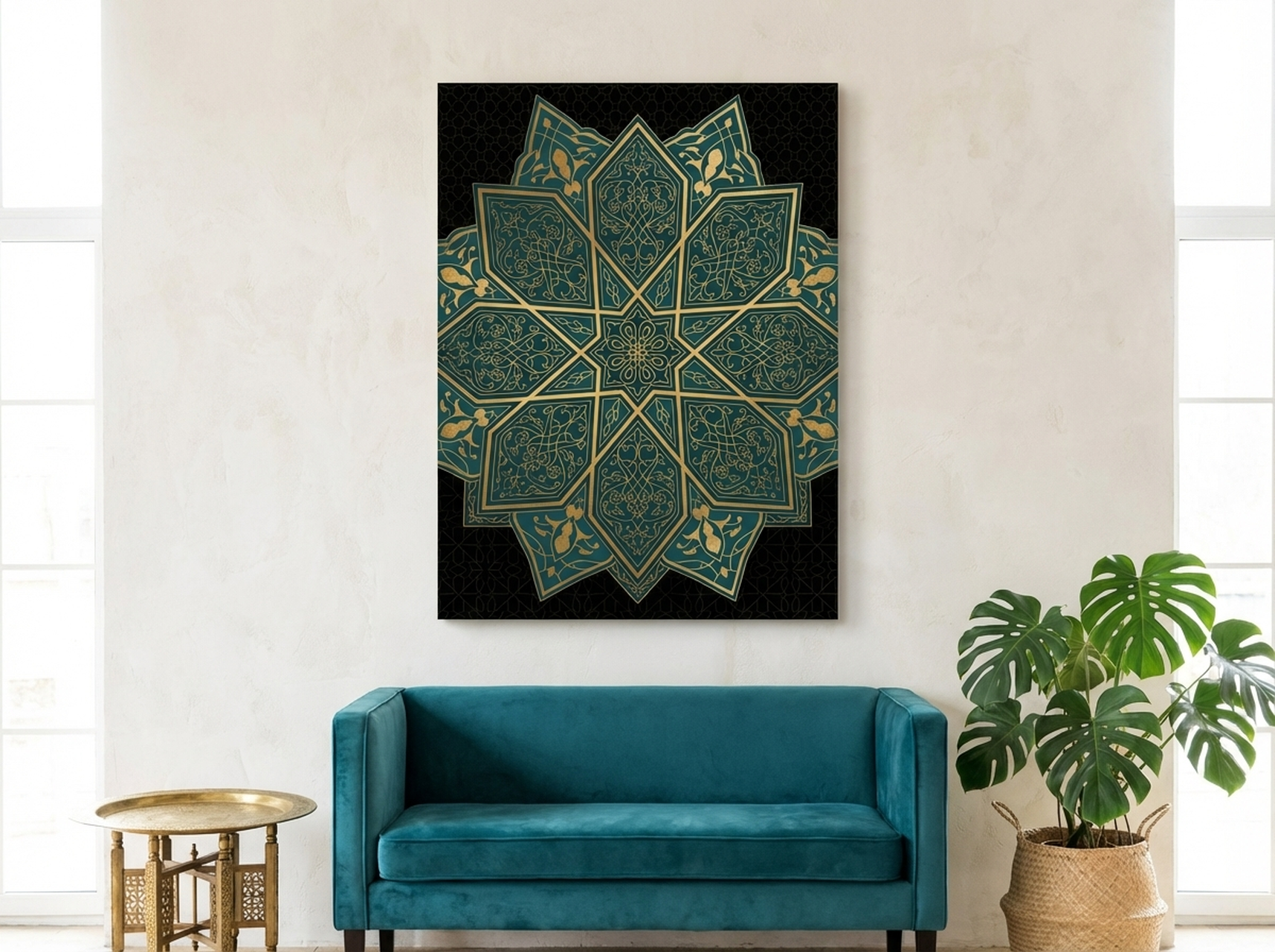
This is the centrepiece of our Islamic art collection and the most faithful to classical tradition. The design draws directly from Moroccan zellige tile work, with a twelve-pointed star that radiates outward through interlocking geometric units in a pattern that could have been lifted from the walls of the Bou Inania Medersa in Fez. The teal and gold palette is authentically North African -- teal for the glaze of traditional ceramic tile, gold for the metalwork and calligraphy that frames it. The black ground makes every line razor-sharp. This piece is equally at home in a living room, an entranceway, or a prayer room. At $55.48, it is outstanding value for a museum-quality canvas print.
View Islamic Geometric Star Canvas -- $55.48
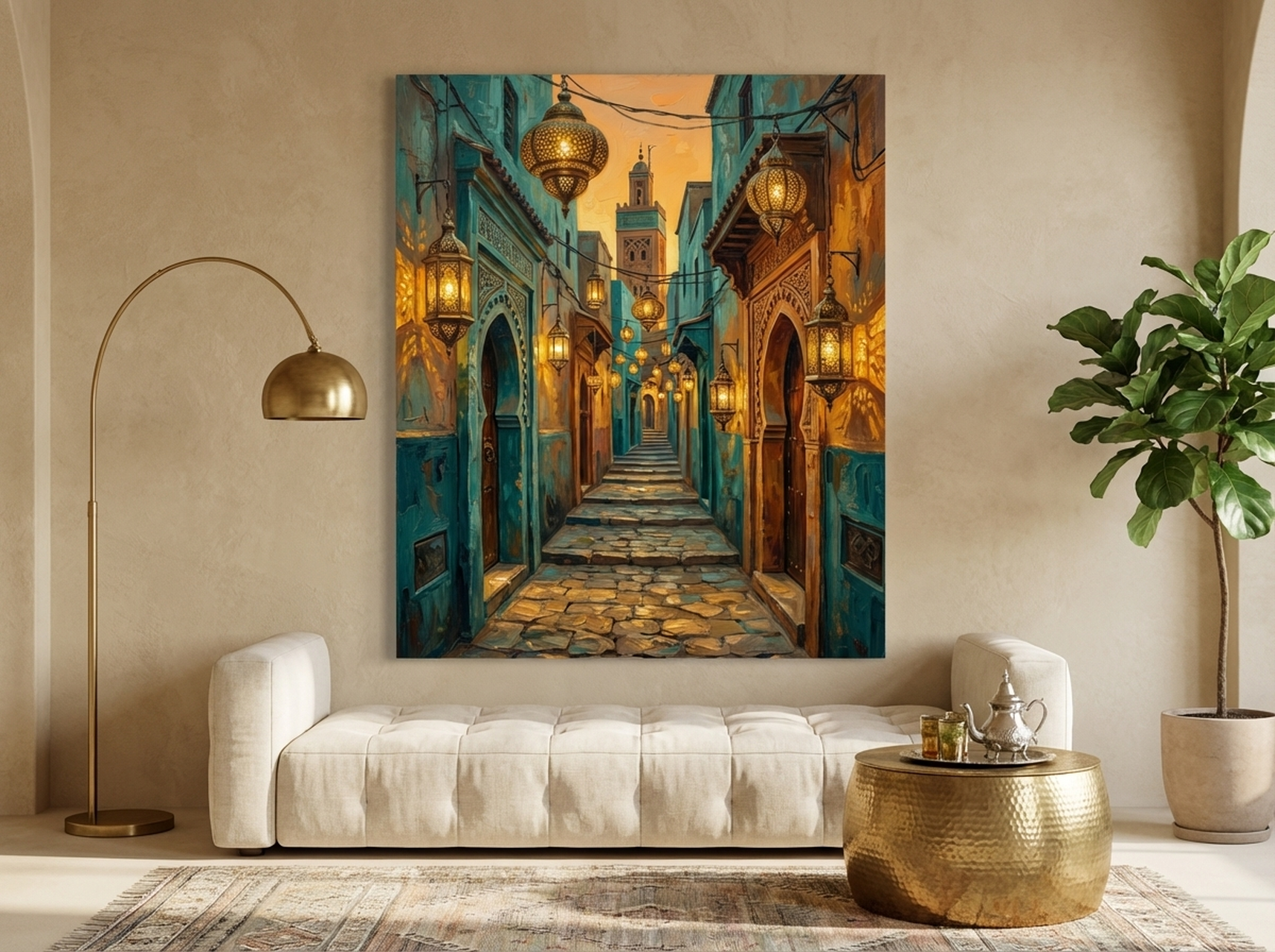
2. Moroccan Medina Canvas -- Oil Painting Lantern Alley
Where the Geometric Star is pure abstraction, this Moroccan Medina piece is atmospheric and narrative. Rendered in rich oil-painting style, it depicts a lantern-lit alleyway of the kind found in Marrakech, Fez, or Chefchaouen -- the beating heart of Islamic cultural life. The palette of teal, saffron, and terracotta is quintessentially North African and complements both cool and warm interiors. It works beautifully above a console table in a hallway, adding depth, warmth, and a sense of journey to a transitional space. If you want to evoke the sensory richness of Islamic cultural life without using abstract pattern, this is your piece.
View Moroccan Medina Canvas -- $55.48
3. Geometric Texture Panels -- Walnut Gold Abstract
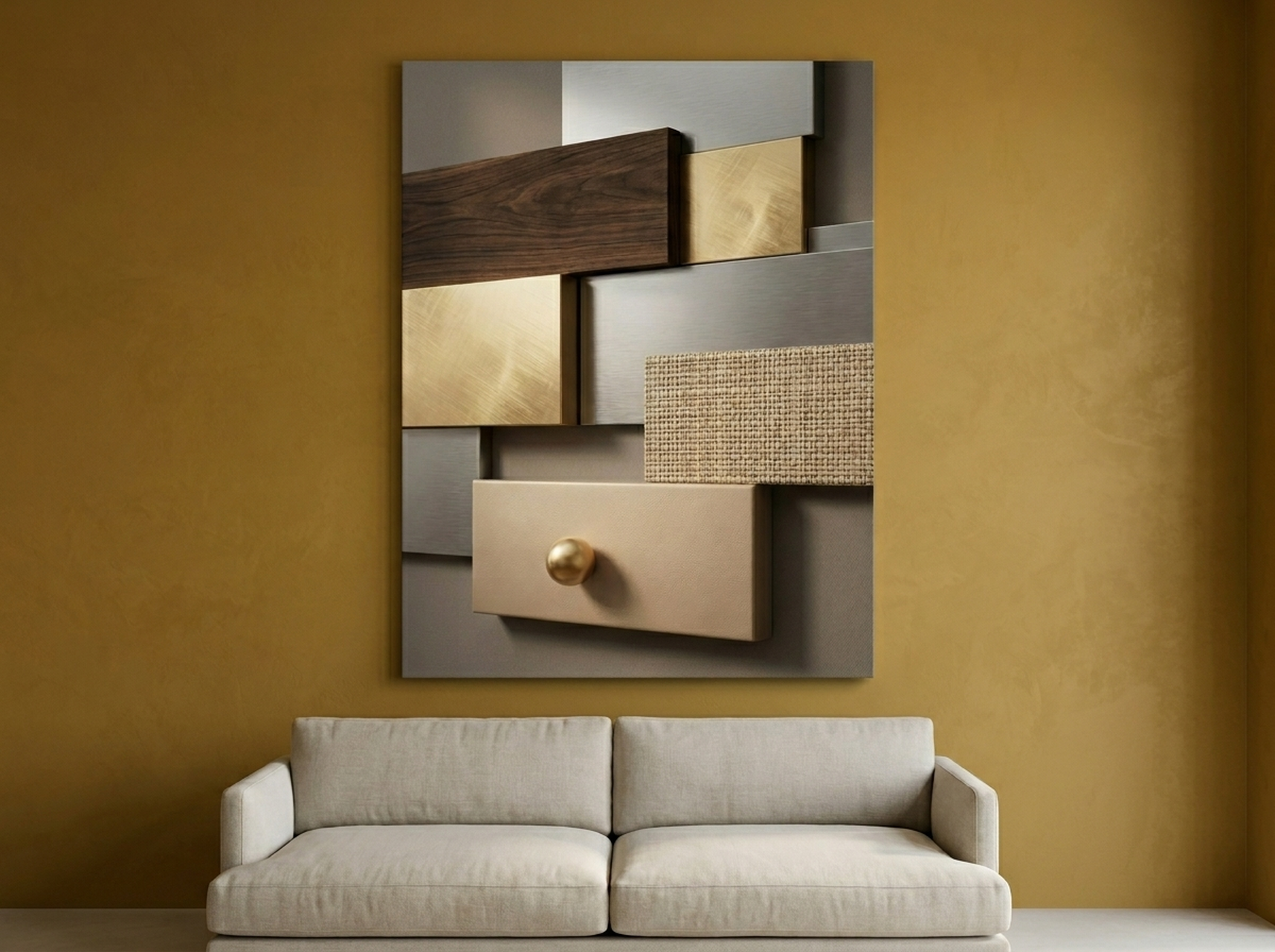
Not every home suits the bold teal-and-navy palette of classical Islamic art. For spaces built around warm neutrals -- cream walls, walnut furniture, linen sofas -- this Geometric Texture Panels print bridges traditional Islamic geometric composition with a contemporary earth-tone palette. The panels evoke the carved plasterwork and wooden mashrabiya screens of Islamic architecture, translated into a warm brown and gold format that reads as both modern and deeply rooted in craft. It is an ideal choice for a Scandinavian or Japandi interior that wants a hint of global visual culture without a loud colour statement.
View Geometric Texture Panels Canvas -- $55.48
4. Geometric Starburst Canvas -- Bold Op Art
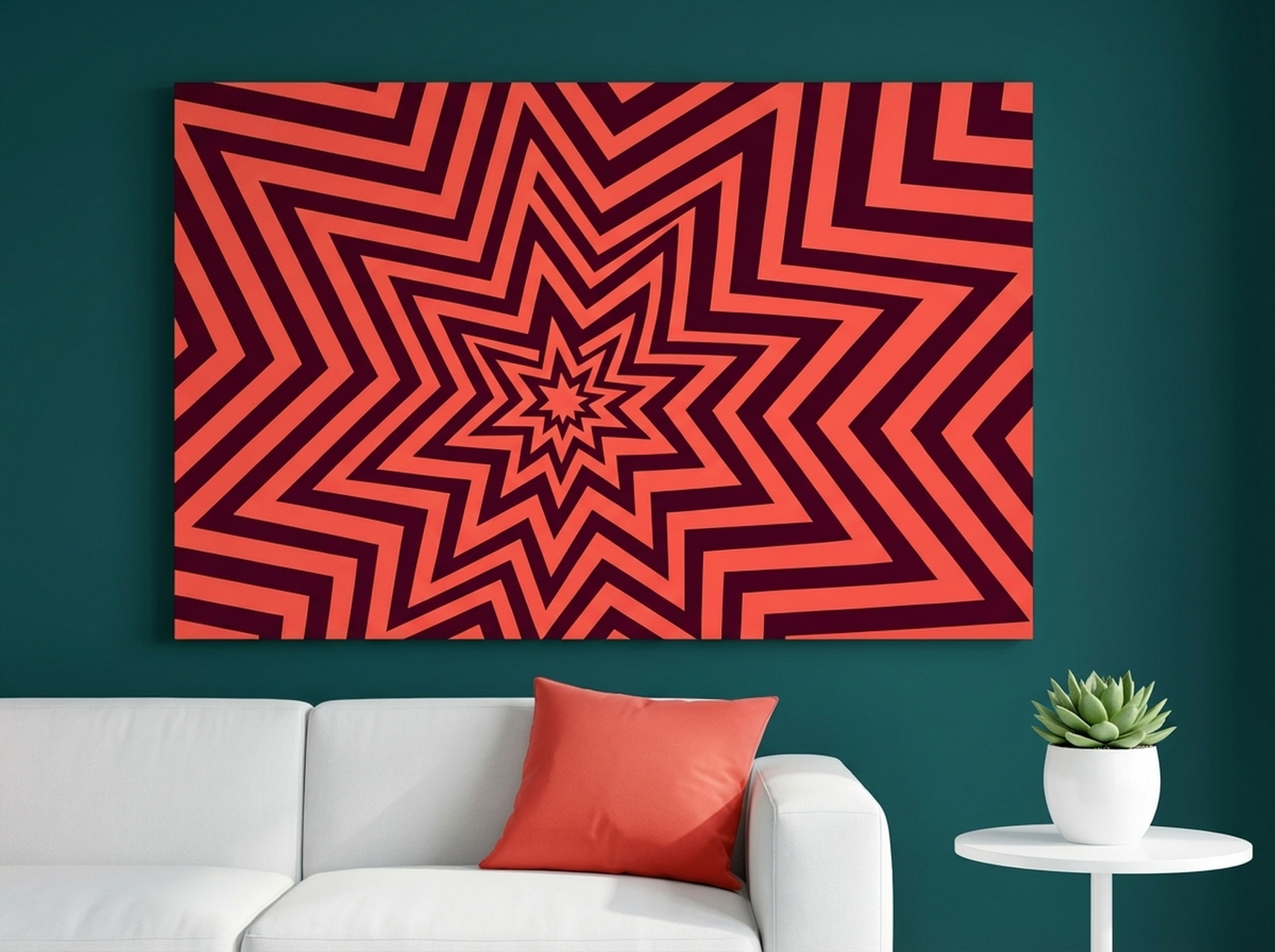
The radiating starburst is one of the most ancient motifs in Islamic geometric art, seen in everything from 9th-century mosaic floors to 21st-century textile design. This bold contemporary interpretation swaps the traditional blue-and-gold palette for coral, red, and burgundy -- a nod to the warm terracotta pigments of Andalusian Islamic architecture while feeling entirely fresh and contemporary. The optical energy of the design means it works as a genuine conversation piece in a dining room or home office. If your room needs warmth, dynamism, and a geometric anchor, this is a powerful choice.
View Geometric Starburst Canvas -- $55.48
5. Anubis Egyptian God Canvas -- Mandala Mythology
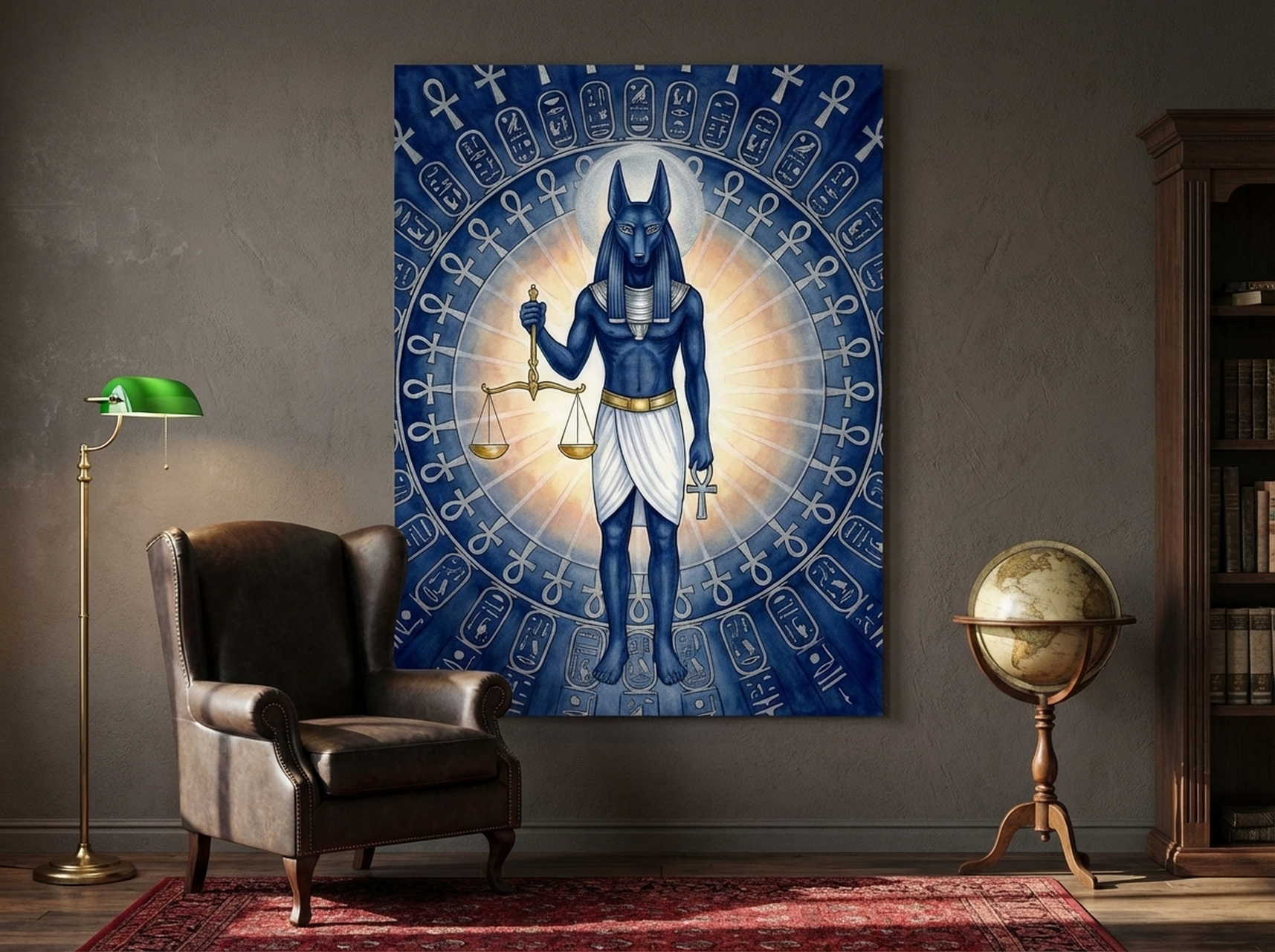
Islamic geometric art did not exist in isolation -- it developed in dialogue with the ancient visual cultures of Egypt, Persia, and Byzantium. This Anubis Mandala canvas honours that cross-cultural heritage, blending the sacred geometry of Islamic mandala patterning with Egyptian iconography against a midnight blue ground. For collectors drawn to the mystical and esoteric dimensions of art from the ancient Middle East and North Africa, this piece occupies a fascinating crossroads of traditions. The deep navy and silver palette is sophisticated and works particularly well in a study, library, or dark-walled feature room where it can command full attention.
View Anubis Mandala Canvas -- $55.48
6. Pampas Vases Canvas -- Sculptural Black Gold
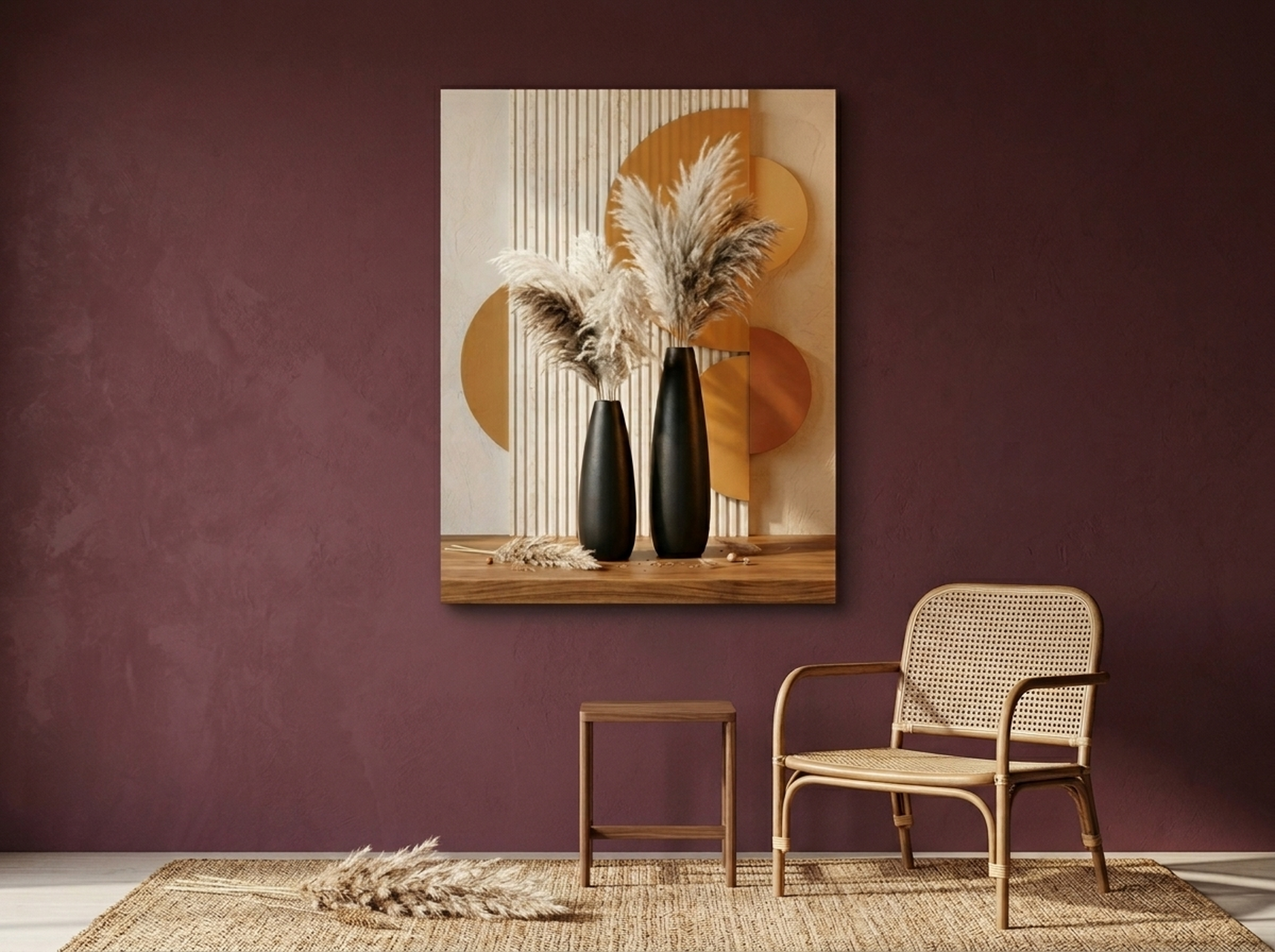
The decorative arts tradition in Islamic culture extends far beyond geometric pattern into the exquisite craft of ceramics, metalwork, and vessel design. The Islamic world produced some of history's finest pottery and brass inlay work, elevating everyday objects to the status of fine art. This Pampas Vases canvas in black and gold captures that sensibility in a format that works seamlessly in any contemporary room. The sculptural quality of the vessels and the rich black-and-gold palette reference Islamic luxury craft traditions. If you are building an Islamic-inspired interior but want something less overtly patterned as a complement, this piece bridges the aesthetic without the formality of a geometric print. (source: The Metropolitan Museum of Art)
5 Common Mistakes When Styling Islamic Wall Art
1. Hanging Too High
The single most common error in any wall art installation is hanging the piece too high. The centre of the artwork should sit at approximately 145-150 cm (57-59 in) from the floor -- roughly eye level for a standing adult. When hung above a sofa or console, allow 15-25 cm (6-10 in) of space between the top of the furniture and the bottom of the frame. Geometric and calligraphy pieces hung too high lose their impact because the viewer cannot engage with the detail that makes these works so rewarding to look at closely.
2. Choosing the Wrong Scale
A small geometric print on a large blank wall reads as an afterthought, not a statement. Islamic geometric art in particular depends on scale for its visual power: the interlocking pattern needs room to breathe and build. If your wall is wider than 1.5 m (5 ft), go larger than you think you need, or arrange multiple pieces. Conversely, a very large canvas in a small hallway can feel oppressive. Use our size guide to calibrate correctly before purchasing.
3. Clashing Colours With the Room
Islamic art offers an extraordinary range of palettes, so there is no excuse for a colour clash. Before purchasing, compare a paint swatch or fabric sample against the canvas image on screen. Teal-and-gold pieces need a neutral ground (cream, white, charcoal) to shine. Terracotta-and-saffron pieces can overpower rooms that already use warm tones heavily. When in doubt, a piece with a black or deep navy background is the safest anchor colour choice in any room scheme.
4. Mixing Too Many Motifs
Islamic art is intricate enough on its own. A wall featuring a geometric star canvas, an arabesque print, AND a calligraphy piece will compete with itself rather than creating harmony. Choose one dominant motif and let it lead. Use the remaining pieces in a gallery arrangement to complement rather than repeat. The Islamic design principle of tawhid (unity) applies here: a single strong focal point is more powerful than uncoordinated visual complexity. For guidance on creating cohesive arrangements, see our gallery wall layout guide.
5. Ignoring Lighting
Gold-accented canvases look dramatically different under warm incandescent light versus cool daylight LEDs. Test your piece at different times of day before committing to its permanent position. For the best long-term presentation, a warm-toned picture light (2700-3000K) mounted above the frame brings out gold and terracotta tones beautifully and adds a gallery quality to any room. Avoid positioning geometric prints opposite large uncurtained windows during peak sunlight hours, as the glare and reflections can flatten the pattern and wash out the colour.
Frequently Asked Questions
What makes Islamic wall art different from other decorative styles?Islamic wall art is distinguished by its intricate geometric tessellations, arabesque floral patterns, and Arabic calligraphy. Because Islamic tradition historically discouraged figurative representation, artists channelled creative energy into breathtaking repeating patterns and the art of sacred script, resulting in a visual language that is instantly recognisable and deeply meditative.
What size Islamic wall art should I choose for my living room?For a standard sofa wall, aim for a single canvas between 90x60 cm (36x24 in) and 120x80 cm (48x32 in). As a rule of thumb, the artwork should cover roughly 55-60% of the wall width above the sofa. For tall walls above 2.7 m (9 ft), consider a triptych or a larger statement piece up to 150x100 cm (60x40 in).
Which colours are traditional in Islamic art?Islamic art traditionally features deep lapis lazuli blue, representing divine infinity; rich gold, symbolising heavenly light; emerald green, the colour of paradise and the Prophet; terracotta and saffron, drawn from earthen pigments of North Africa and Persia; and ivory or cream as grounding neutrals. Contemporary pieces often translate these into navy, teal, warm gold, and burnt orange.
Can I hang Islamic art in a non-Muslim home?Absolutely. Islamic geometric and arabesque art is widely celebrated as fine decorative art with universal visual appeal. Pieces featuring pure geometry, Moroccan tile patterns, or arabesque flourishes are embraced in interiors of all backgrounds for their elegance, symmetry, and meditative quality. Calligraphy prints that carry specific religious meaning are equally welcome wherever the homeowner appreciates their beauty and significance.
How do I hang Islamic calligraphy correctly?Hang calligraphy at eye level, with the centre of the piece approximately 145-150 cm (57-59 in) from the floor. Ensure the text reads left to right in Arabic script direction. In a prayer room, orient the piece so it does not face toward or away from the qibla direction inadvertently. Use a spirit level and two wall fixings for any canvas wider than 60 cm (24 in) to prevent tilting over time.
What rooms are best suited for Islamic wall art?Islamic wall art excels in virtually every room. Geometric and arabesque pieces work beautifully in living rooms, hallways, and dining rooms where they can be appreciated at length. Calligraphy is a natural fit for prayer rooms and studies. Bedroom walls benefit from softer, more intricate mandala-inspired patterns in blues and golds that promote calm. Entranceways are a popular spot for a single bold geometric canvas that sets the tone for the home.
Quick Reference Table: Islamic Wall Art by Room
| Room | Recommended Size | Best Motif | Suggested Piece | Price |
|---|---|---|---|---|
| Living Room | 90x60 cm / 36x24 in | Geometric star / Arabesque | Islamic Geometric Star | $55.48 |
| Entranceway | 60x90 cm / 24x36 in | Bold geometric / Cultural scene | Moroccan Medina | $55.48 |
| Hallway | 40x60 cm / 16x24 in | Geometric panels | Geometric Texture Panels | $55.48 |
| Dining Room | 90x60 cm / 36x24 in | Starburst / Op art geometric | Geometric Starburst | $55.48 |
| Study / Library | 60x80 cm / 24x32 in | Mandala / Sacred geometry | Anubis Mandala | $55.48 |
| Bedroom | 80x60 cm / 32x24 in | Gold sculptural / Neutral luxury | Pampas Vases Gold | $55.48 |
Find Your Perfect Islamic Wall Art Piece
Islamic wall art is not a trend. It is a 1,400-year-old visual tradition that happens to translate perfectly into the contemporary home. Whether you are drawn to the mathematical precision of zellige geometric patterns, the meditative flow of arabesque vines, the atmospheric depth of a Moroccan medina scene, or the warm sculptural luxury of gold-and-black decor, there is a piece in our collection that was made for your space.
Every canvas ships ready to hang, printed on archival-quality material with inks that will not fade for generations. Our straightforward checkout and no-hassle returns mean there is nothing stopping you from transforming your walls today.
Shop Islamic Geometric Star Shop Moroccan Medina Shop Geometric Panels
Not sure where to start? Explore our broader ultimate guide to abstract wall art for inspiration across styles, or read our guide to religious wall art for a wider look at faith-inspired decor from around the world.