
How to Hide Wall Flaws and Imperfections with Art
The Heva Team
Art Curators & Interior Design Enthusiasts · April 6, 2026 · 19 min read
Most walls tell a story you did not plan to share: a crack from the last winter frost, a water stain from the upstairs bathroom, a patchy spot where a previous tenant hung something heavy. You do not need to repaint, replaster, or rent scaffolding. In our experience, the fastest, most beautiful fix is a well-chosen piece of wall art, placed with intention.
Ready to browse pieces that do double duty? Shop our full canvas collection here.
Why Art Works Better Than Paint for Hiding Flaws
Paint can minimize wall imperfections, but it rarely eliminates them. A high-gloss finish actually amplifies every ridge and dent by catching light at sharper angles. Flat and matte paints do a better job of absorbing light, but even they struggle against structural cracks, raised patches, or stains that bleed through multiple coats. According to Houzz's guide to hiding wall flaws, the most effective non-renovation solutions involve adding visual layers to the wall rather than painting over the problem.
Art works because it physically covers the area, draws the eye with color and texture, and adds decorative value at the same time. We have found that a single 76 cm by 102 cm (30 inch by 40 inch) canvas can conceal the majority of common household wall problems: hairline cracks, small water stains, nail-hole clusters, and uneven spackle patches. Unlike a repair job, which costs time and often requires professional help, a canvas goes up in minutes and comes down just as easily if you move or redecorate.
There is also a psychological effect worth noting. Designers call it visual hierarchy: when a dominant element exists on a wall, the brain ranks it first and processes everything else as secondary. A bold canvas with rich color or high contrast becomes the thing people notice, and the flaw behind it simply disappears from conscious attention. Our customers tell us they are frequently surprised that visitors never comment on what used to feel like an obvious eyesore.
Beyond concealment, art adds genuine character. A repaired wall looks repaired. A wall with a stunning canvas looks intentional, curated, and designed. That distinction matters when you are trying to create a home that feels elevated rather than merely functional.
Sizing Your Art to Cover the Problem
Size is the single most important variable when using art to hide wall flaws. Art that is too small will frame the imperfection rather than hide it, drawing more attention to the problem area. As a general rule, your chosen piece should extend at least 10 cm (4 inches) beyond the flaw in every direction.
For small flaws (under 15 cm or 6 inches across), such as a nail-hole cluster or a small stain, a canvas in the 40 cm by 50 cm (16 inch by 20 inch) range is usually sufficient. These pieces are easy to hang and work well in tight spaces like hallways and bathrooms.
For medium flaws (15 to 40 cm or 6 to 16 inches across), such as a patchy paint repair or a hairline crack running diagonally, move up to at least 60 cm by 80 cm (24 inches by 32 inches). This size starts to make a genuine design statement while providing reliable coverage.
For large flaws (over 40 cm or 16 inches), including water damage rings, large spackle patches, or areas where wallpaper was poorly removed, you need a statement-sized canvas: 90 cm by 120 cm (36 inches by 48 inches) or larger. According to the placement guide at About Wall Art, large-format pieces are also the most impactful design choice for living rooms and primary bedrooms, so there is no compromise involved. You get coverage and drama simultaneously.
For full-wall situations, such as a painted concrete wall with significant texture irregularity, consider a gallery wall arrangement spanning 150 to 200 cm (60 to 78 inches) wide. Treat the entire cluster as one visual unit and center it at 145 to 152 cm (57 to 60 inches) from the floor, which aligns with average eye height. This approach, used in galleries worldwide, ensures the composition reads as intentional rather than scattered.
Best Art Styles to Distract from Imperfections
Not all art styles are equally effective at hiding wall flaws. The goal is to choose something that keeps the eye moving across the canvas rather than settling into the wall surface around it.
Busy and layered compositions are your most powerful tool. Think mosaic-inspired patterns, intricate mandalas, or richly detailed oil-style paintings with multiple focal points. The eye constantly scans these pieces looking for the next interesting element, which means it never wanders to the imperfections nearby. We have found that pieces with 5 or more distinct visual elements in the composition are consistently the most effective at redirecting attention.
Dark backgrounds work especially well against lighter-colored walls. A canvas with a deep charcoal, midnight blue, or forest green background creates such a strong contrast with the wall that the flaw becomes invisible by comparison. The contrast itself becomes the focal point. This is particularly useful for water stains, which often leave a yellowish or brownish ring that stands out against white walls.
Bold, saturated color pulls the eye immediately and holds it. A canvas featuring jewel tones, rich golds, or vivid primary colors will dominate the visual field of an entire room. Interior designers call this the anchor effect: one powerful color statement organizes the entire space around it and subordinates everything else, including wall imperfections.
Large-scale typography and motivational prints are underrated for this purpose. The brain is naturally drawn to words and will attempt to read them before it processes anything else in the environment. A bold typographic canvas is essentially a visual interrupt that captures attention the moment someone enters the room.
Textured styles, including impasto-look paintings and rough-edged collage-style prints, also help because they introduce visual texture to the wall. When the art itself has texture and depth, a crack or patch on the surrounding wall reads as part of the overall aesthetic rather than a flaw.
Placement Techniques That Actually Work
Choosing the right art is only half the equation. Where and how you hang it determines whether the flaw disappears completely or simply gets partially masked.
Center over the flaw, not the furniture. The instinct is to center art over a sofa or bed, but when you are hiding a specific imperfection, center the canvas over the flaw itself first, then assess the relationship to furniture. In most rooms, these two centers will be close enough that the arrangement still looks intentional. If they differ by more than 15 cm (6 inches), use a gallery wall approach to bridge the gap.
Hang at eye level relative to the flaw. The standard hanging height of 145 to 152 cm (57 to 60 inches) from floor to canvas center works for most situations. However, if the flaw is lower (near baseboard level) or higher (near the ceiling), adjust accordingly and hang the canvas at a height where it naturally covers that zone without looking forced.
Use a frame with a wide border. A framed canvas with a 5 to 8 cm (2 to 3 inch) frame adds significant coverage area beyond the printed image. A 60 cm by 80 cm (24 inch by 32 inch) canvas in a 6 cm (2.5 inch) frame becomes effectively a 72 cm by 92 cm (28 inch by 36 inch) piece. This is a simple way to increase coverage without going up a canvas size.
Layer with additional elements when needed. If a single canvas does not provide sufficient coverage, consider a small gallery arrangement: one larger anchor piece flanked by 2 to 4 smaller prints. The cluster covers more wall area and looks like a deliberately designed vignette. Space pieces 5 to 8 cm (2 to 3 inches) apart for a cohesive gallery feel.
For corner flaws, position the art so it wraps into the corner visually: hang it closer to the corner than you normally would, so the eye travels from the canvas into the corner rather than stopping at the canvas and then landing on the flaw beside it.
6 Statement Pieces That Command Attention
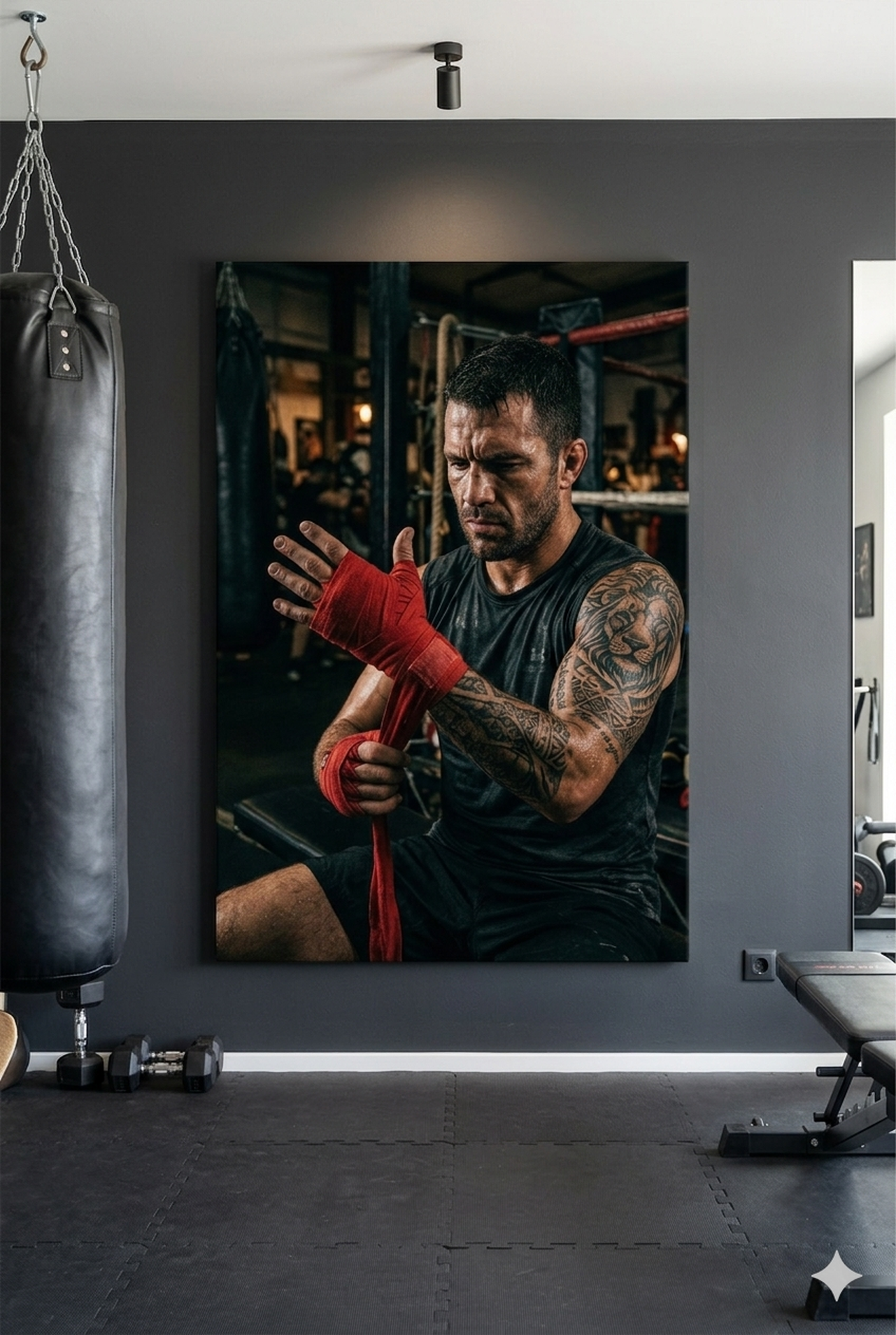
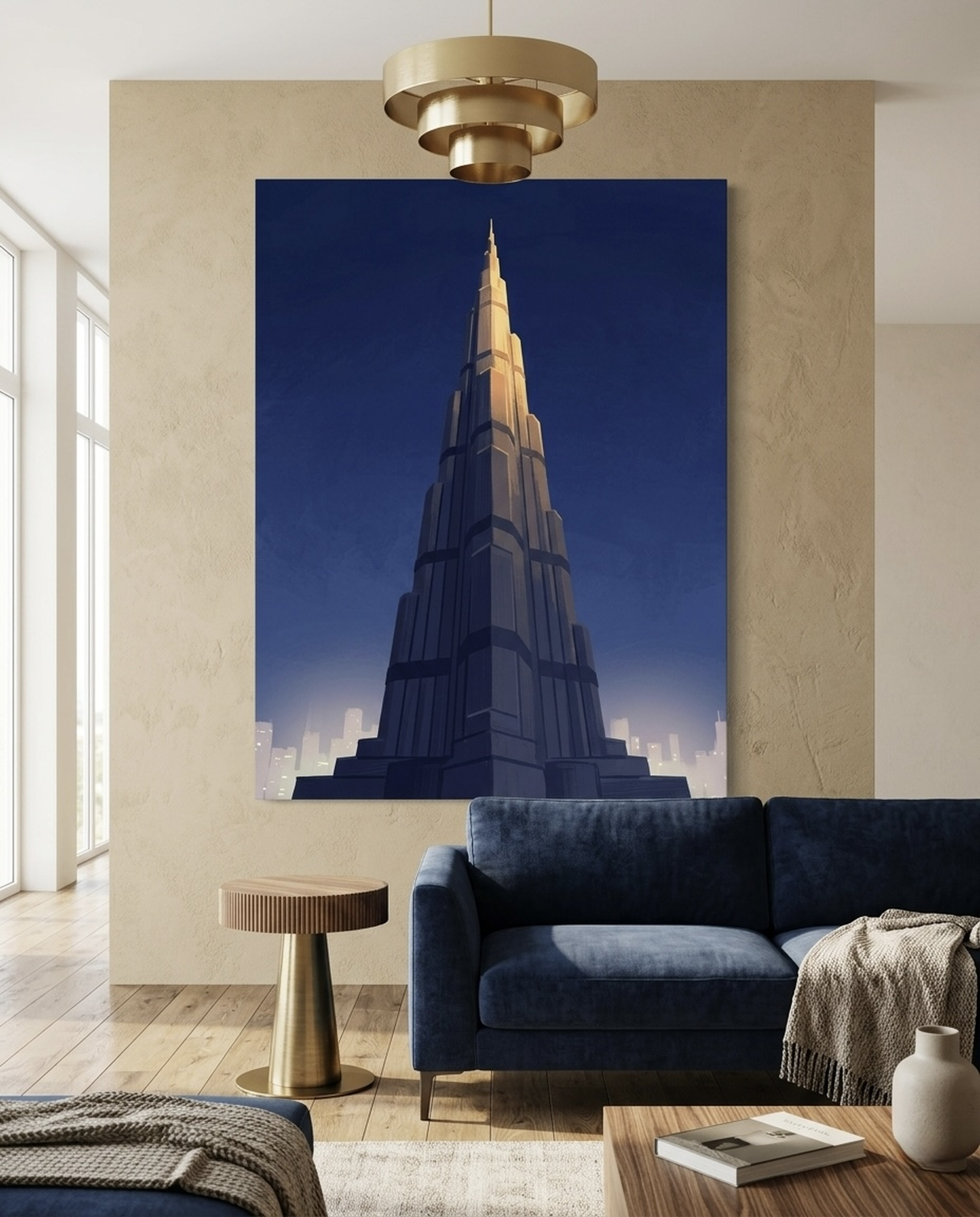
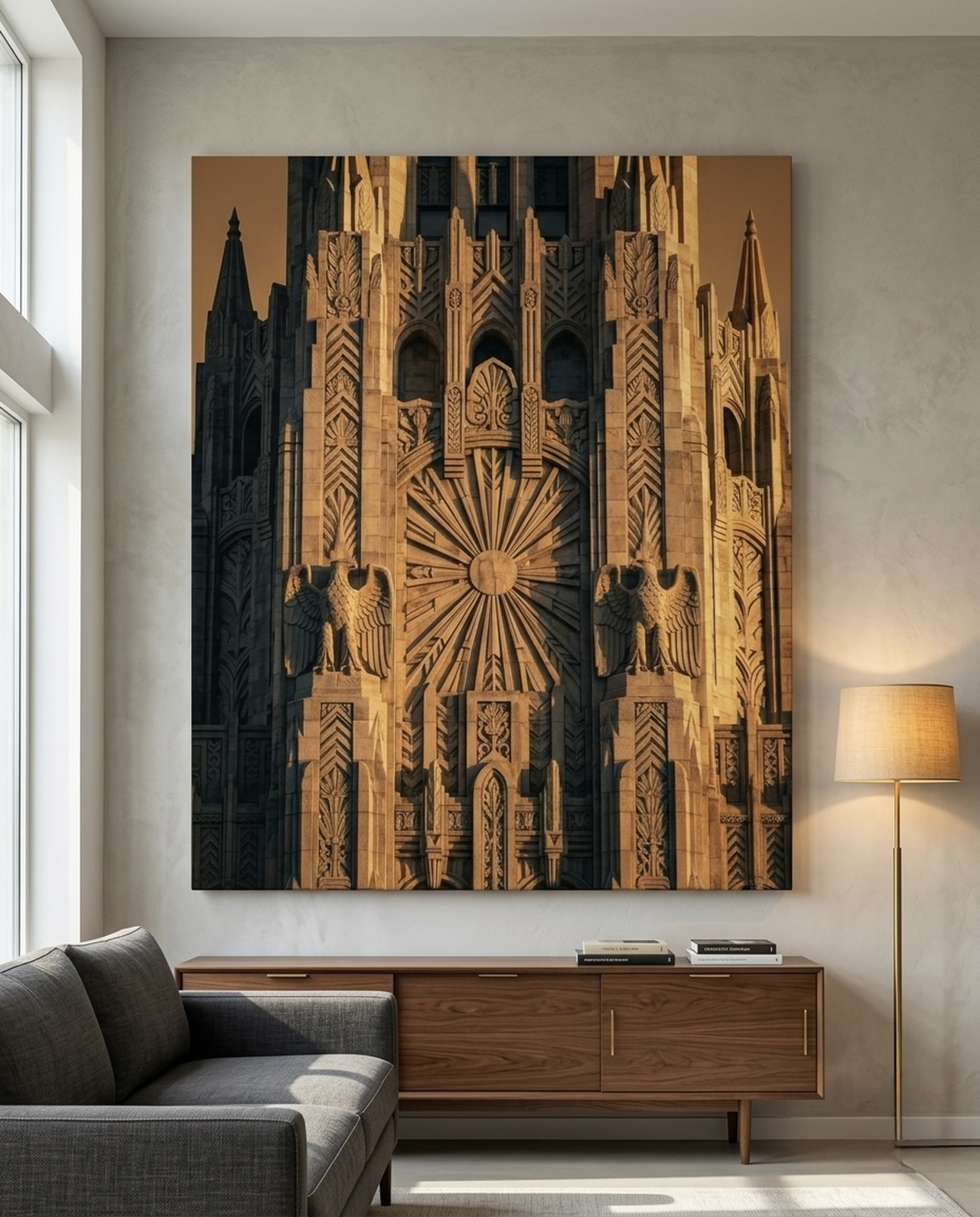
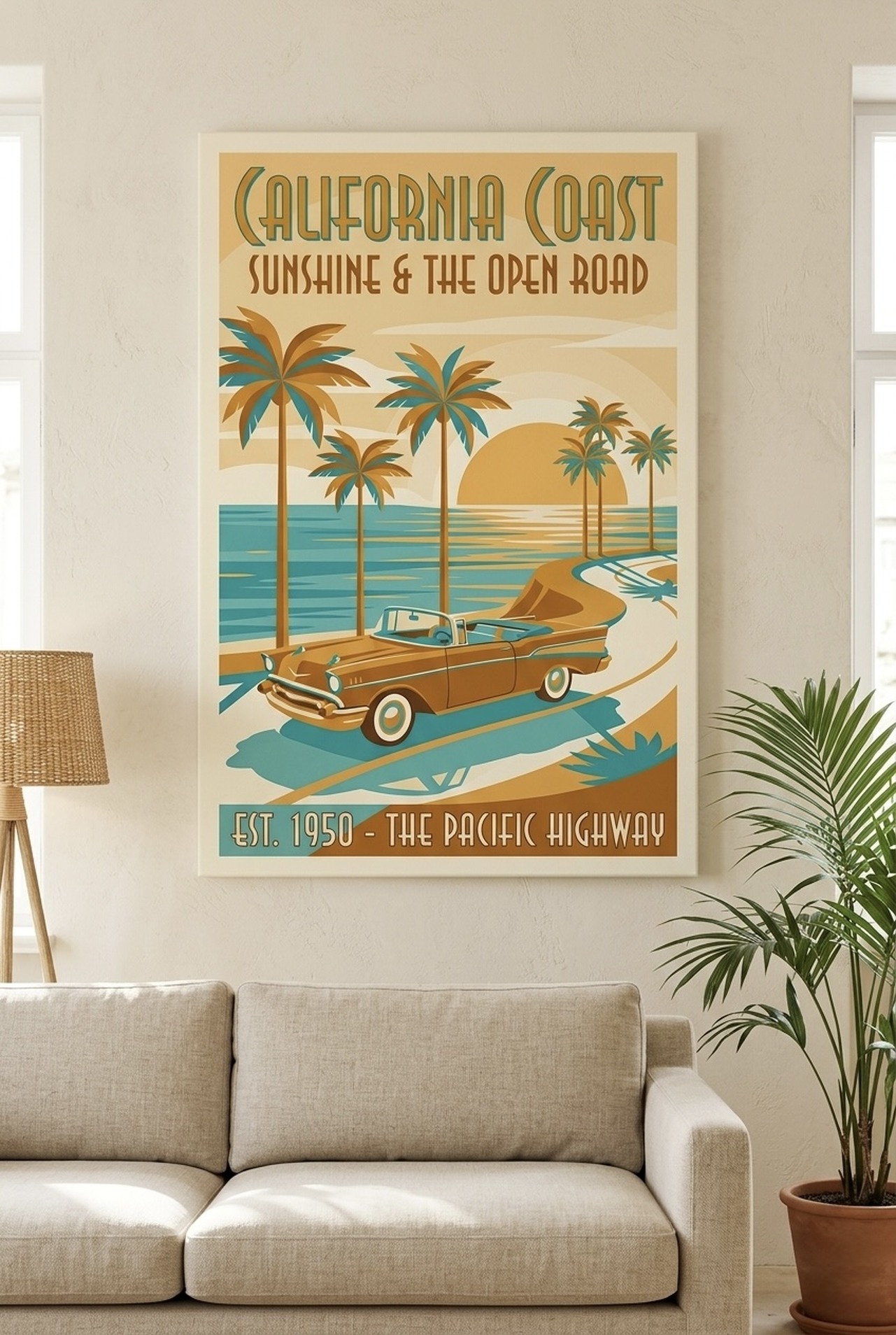
We have selected 6 canvases from our collection that are especially effective at hiding wall imperfections while making a genuine design statement. Each one offers the visual weight, detail, or contrast needed to redirect attention from flaws to beauty.
1. Motivational Plant Your Flag Canvas Wall Art
This bold typographic canvas is one of the most effective attention-holders in our collection. The large-scale lettering immediately captures the eye as you enter the room, and the layered street-art aesthetic gives the composition enough visual complexity to keep attention engaged. We recommend this piece for home offices, entryways, or any wall where a motivational note would feel at home. The strong contrast between the cream background and gold typography makes it especially effective at overshadowing nearby wall discoloration or patchy paint. Hang it at 145 cm (57 inches) from floor to center for maximum impact.
View Motivational Plant Your Flag Canvas Wall Art
2. Anubis Egyptian God Canvas Wall Art
The Anubis Mandala canvas combines intricate geometric patterning with a dramatic midnight-silver color palette, making it one of the most visually complex pieces in our catalog. With dozens of fine mandala elements radiating from the central figure, this canvas gives the eye so much to explore that nothing on the surrounding wall registers as notable. In our experience, highly detailed art like this is the gold standard for hiding textured wall damage, bubbling paint, or uneven spackle. It works beautifully in living rooms, meditation spaces, and master bedrooms. The dark background is particularly effective against light-colored walls with visible stains.
View Anubis Egyptian God Canvas Wall Art
3. Motivational Grit Definition Canvas Wall Art
Clean, bold typography on a navy and cream palette makes this piece a reliable workhorse for wall coverage. The large central word anchors the eye immediately, while the definition-style secondary text provides enough detail to sustain interest. This canvas is ideal for home gyms, offices, and teenage bedrooms where a motivational message adds meaning beyond pure aesthetics. The deep navy background provides excellent contrast against white or beige walls, effectively absorbing any visual noise from the surrounding surface. We have found that navy-background canvases are among the most consistent performers at hiding water stains and yellowing patches.
View Motivational Grit Definition Canvas Wall Art
4. Silverback Gorilla Canvas Wall Art
This oil-painting-style gorilla portrait is a commanding presence on any wall. The rich charcoal and forest-green palette creates deep contrast, and the painterly texture of the piece adds visual interest that extends well beyond the edges of the canvas itself. Our customers tell us this is one of the most conversation-starting pieces they have purchased, which is exactly what you want when you are drawing attention away from a wall problem. Hang it in a living room, study, or dining room where its bold character fits the mood. At larger sizes (90 cm by 90 cm or 36 inches by 36 inches), it covers a substantial wall area while functioning as a sophisticated focal point.
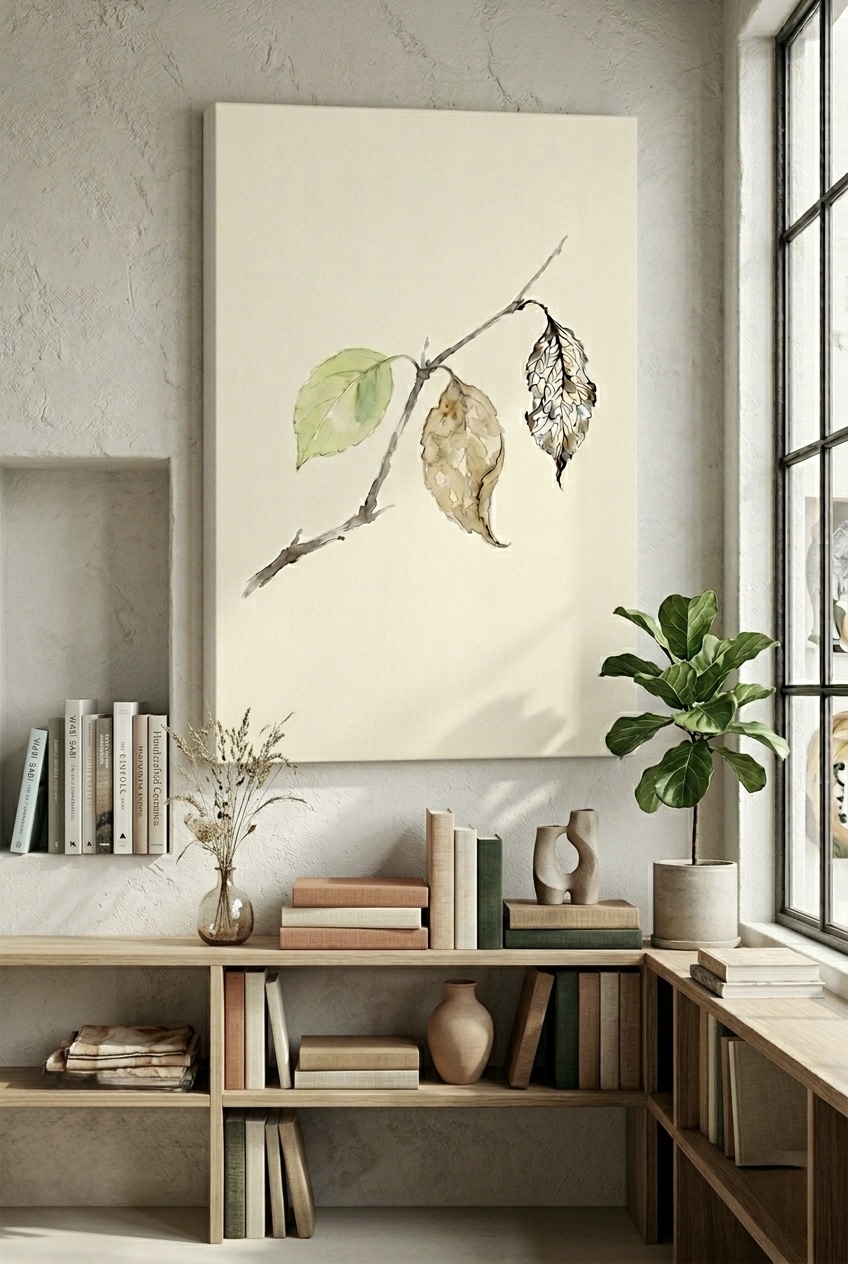
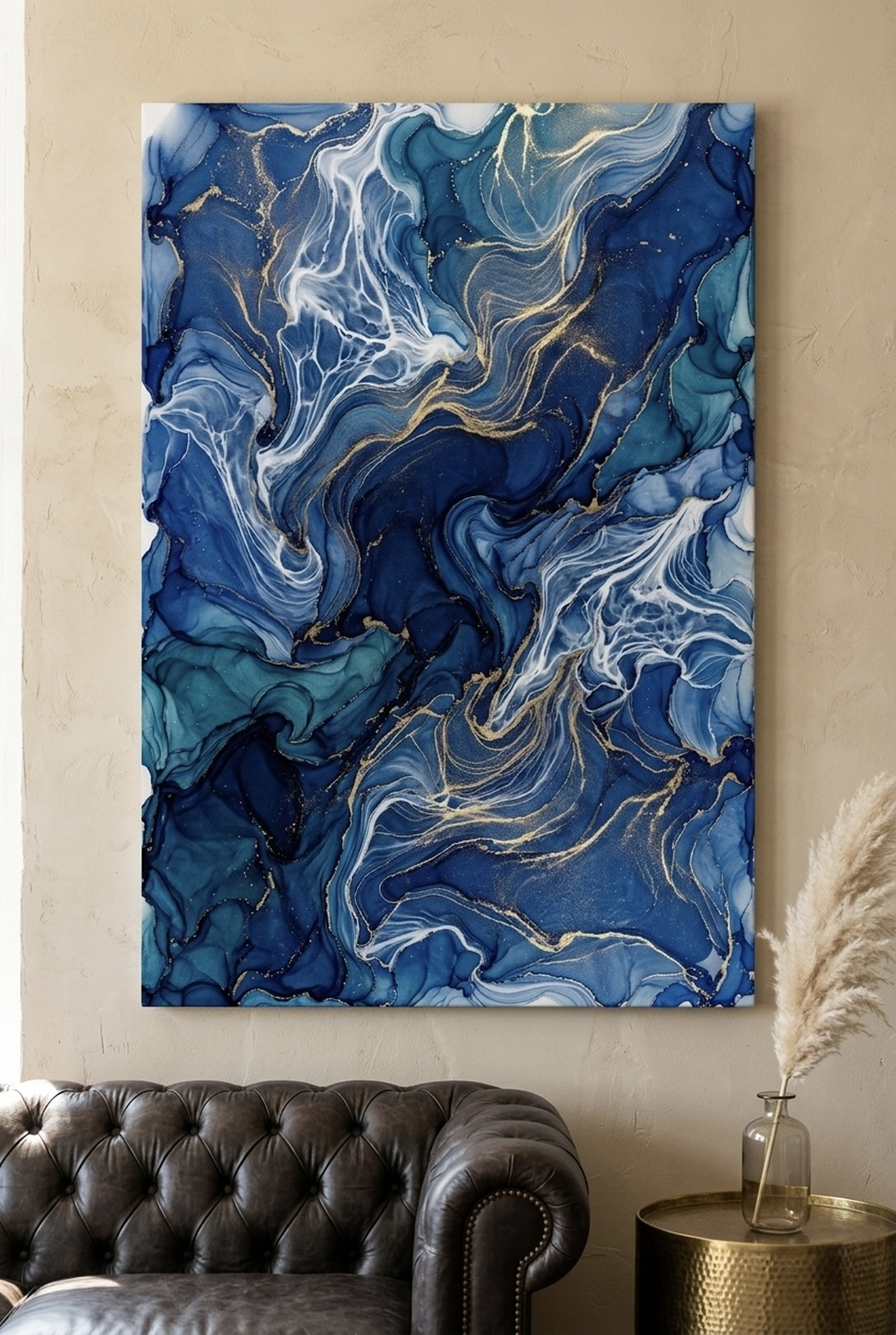
View Silverback Gorilla Canvas Wall Art
5. Arctic Animals Nursery Canvas Wall Art
Do not let the nursery label limit your imagination. This icy-blue arctic scene with detailed animal illustrations is charming enough for any room where you want a softer, story-driven focal point. The scene contains multiple animals at different scales, giving the eye a clear path to travel across the entire canvas rather than settling on any single point or the wall around it. In our experience, scenes with multiple characters or elements are particularly effective in spaces where children or guests spend extended time, because the art holds attention naturally over many viewings. Use this in nurseries, playrooms, or any casual living space where warmth and whimsy are the goal.
View Arctic Animals Nursery Canvas Wall Art
6. Moroccan Medina Canvas Wall Art
Rich saffron and teal tones bring the warmth of a Moroccan market to any wall, and the layered architectural details in this oil-style painting give it tremendous visual depth. The warm tones are exceptionally good at warming up cold, bright walls while simultaneously drawing the eye away from any surface imperfections. This piece works well in dining rooms, bohemian-style living areas, and any space where you want to introduce a sense of travel and culture. The compositional complexity, with multiple building facades, textures, and light sources, means the eye moves constantly across the surface. Our customers tell us it transforms plain or damaged walls into gallery-worthy features almost instantly.
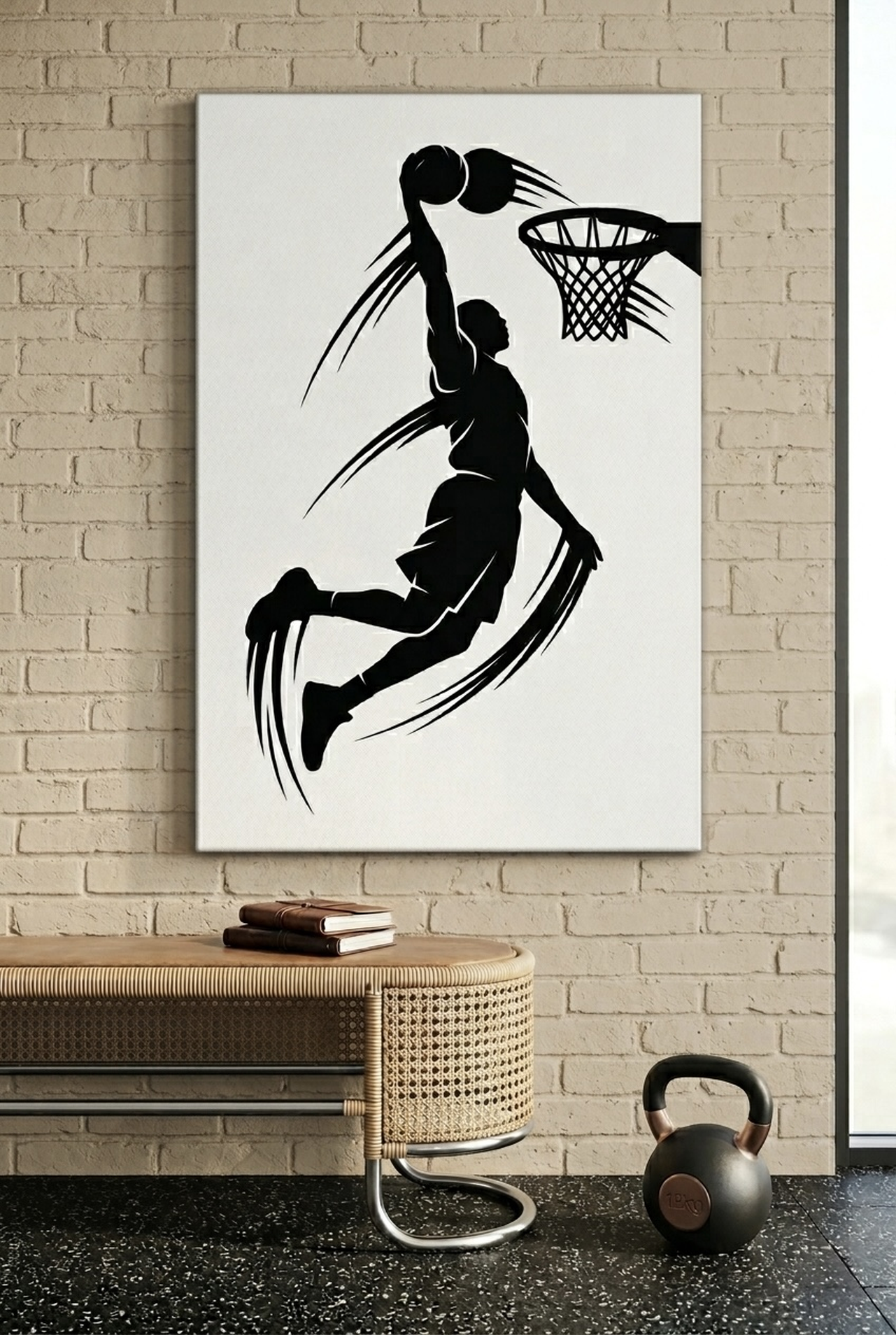
View Moroccan Medina Canvas Wall Art
Placement Guide: Measurements That Work
Getting the height and position right is as important as choosing the right canvas. Here are the specific measurements we recommend, refined through hundreds of customer installations.
Standard hanging height: Center of canvas at 145 to 152 cm (57 to 60 inches) from floor. This aligns with the average human eye level and is the universal gallery standard. When art sits at this height, it reads as intentional and professionally placed, which reinforces the impression that the wall is a designed feature rather than a problem area.
Above sofa: The bottom edge of the canvas should sit 20 to 25 cm (8 to 10 inches) above the sofa back. The canvas should span at least two-thirds of the sofa's width: for a 200 cm (79 inch) sofa, aim for a canvas at least 130 cm (51 inches) wide. Check our complete guide to hanging art above a sofa for detailed diagrams and size charts.
Above bed: Center horizontally over the headboard and hang so the bottom edge sits 15 to 20 cm (6 to 8 inches) above the headboard top. The canvas should be roughly 50 to 75 percent of the headboard's width. For a 150 cm (60 inch) queen headboard, ideal canvas width is 75 to 112 cm (30 to 44 inches).
Hallway placement: In narrow hallways (under 90 cm or 36 inches wide), keep canvas width to a maximum of 50 cm (20 inches) to avoid the space feeling cluttered. In wider hallways (90 cm to 120 cm or 36 to 48 inches), you can go up to 70 cm (28 inches) wide. Check our studio apartment wall art guide for more tips on art in tight spaces.
Gallery wall spacing: Maintain a consistent 5 to 8 cm (2 to 3 inch) gap between pieces. Treat the entire gallery cluster as a single unit: center that unit at eye height and over the furniture below it. For dark walls or rooms with low natural light, see our guide to art in dark rooms for specific contrast and color recommendations.
Creating a focal point with large canvas: A single large canvas (90 cm by 120 cm or 36 inches by 48 inches) can serve as a room's entire accent wall focal point. For tips on how to build around it with furniture and lighting, see our accent wall focal point guide.
5 Common Mistakes to Avoid
- Choosing art that is too small. This is the most frequent mistake we see. A canvas that does not fully cover the flaw draws the eye directly to the imperfection by framing it. Always measure the flaw first, then select art that extends at least 10 cm (4 inches) beyond it on all sides.
- Hanging too high. Art hung above 160 cm (63 inches) to the center starts to feel disconnected from the room and forces viewers to look up, which actually highlights the wall surface below it. Keep to the 145 to 152 cm (57 to 60 inch) standard unless you have ceilings above 300 cm (10 feet).
- Picking a style that is too minimal. Simple line art, single-subject prints with lots of white space, or very light-toned pieces do not redirect attention effectively. A minimal piece on a flawed wall just frames the negative space around the art, including the flaw. Choose rich, detailed, or bold compositions when coverage is the goal.
- Ignoring the frame's contribution to coverage. The printed area of a canvas is only part of the equation. A canvas without a frame loses edge coverage. A framed canvas or a canvas with a thick gallery wrap adds 3 to 6 cm (1 to 2.5 inches) of visual coverage on every side. Factor this into your sizing decision.
- Placing art directly over a wet or active stain. If a water stain is still wet or the underlying issue (a leak) has not been resolved, do not hang art over it. Moisture can damage the canvas and the hanging hardware. Fix the source of the moisture first, allow the wall to dry fully (at least 48 to 72 hours), and then hang your art over the dried, sealed stain.
Frequently Asked Questions
Can wall art really hide cracks?
Yes, wall art is one of the most effective ways to hide wall cracks without renovation. Choose a canvas that extends at least 10 cm (4 inches) beyond the crack on all sides and opt for a style with high visual complexity or dark backgrounds. Hairline cracks under 30 cm (12 inches) are reliably hidden by a single medium-to-large canvas. For longer structural cracks, a gallery wall arrangement spanning the full length of the crack is the best approach.
What size art do I need to cover a water stain?
Measure the stain at its widest and tallest points, then add at least 10 cm (4 inches) on each side. For a 20 cm by 20 cm (8 inch by 8 inch) stain, you need a canvas at least 40 cm by 40 cm (16 inches by 16 inches). For stains with irregular edges or bleached-out halos, go up a size to ensure the lighter transition area is also covered. Dark-background canvases are particularly effective at absorbing the visual contrast between the stain and the surrounding wall.
What art styles are best for distracting from wall flaws?
Compositions with high visual complexity work best: intricate mandalas, mosaic-style patterns, oil paintings with multiple focal points, and large-scale typography. Dark backgrounds (charcoal, navy, forest green, deep burgundy) create strong contrast that dominates the wall. Bold, saturated colors draw the eye immediately and hold it. Avoid minimal or light-toned pieces when the goal is concealment, as these tend to frame the surrounding wall rather than redirect attention from it.
How high should I hang art to cover a wall flaw?
If possible, center the art over the flaw rather than at a fixed height. The flaw should sit behind the central third of the canvas. If the flaw is at standard eye height (around 130 to 160 cm or 51 to 63 inches from the floor), the standard gallery hanging height of 145 to 152 cm (57 to 60 inches) to the canvas center will work naturally. For flaws that are higher or lower, adjust the hanging height to ensure the canvas covers the problem area rather than floating above or below it.
Can I hang art over a damp wall?
No. Hanging art over a damp or actively leaking wall risks damaging both the canvas and the hanging hardware. Resolve the source of the moisture first, then allow the wall to dry for at least 48 to 72 hours. Once dry, you can hang your canvas over the dried stain without risk. If you are concerned about recurrence, use rust-resistant hanging hardware and check the wall periodically.
Is it better to use a single large canvas or a gallery wall to hide flaws?
Both approaches work, and the right choice depends on the size and distribution of the flaws. A single large canvas is the simplest solution for a concentrated problem area and makes the boldest design statement. A gallery wall is better when the flaws are spread across a larger wall section or when you want to introduce variety and layered interest. Gallery walls also let you mix sizes and styles, which can be more versatile for rooms that evolve over time. Our guide to framed canvas art covers the benefits of both approaches in detail.
Quick Reference Table
| Wall Problem | Recommended Art Size | Best Placement | Style Tip |
|---|---|---|---|
| Small crack (under 15 cm / 6 in) | 40 x 50 cm (16 x 20 in) minimum | Center over crack at eye height | Bold colors or typography to redirect attention |
| Nail-hole cluster | 40 x 50 cm (16 x 20 in) or larger | Centered directly over the cluster | Busy pattern or detailed illustration |
| Water stain (ring or patch) | At least 10 cm (4 in) larger than stain on all sides | Center over stain; use wide-frame canvas | Dark background absorbs contrast from stain |
| Spackle patch (uneven texture) | 60 x 80 cm (24 x 32 in) or larger | Center over patch; frame adds extra coverage | Textured oil-style painting matches surrounding irregularity |
| Large diagonal crack (30 to 60 cm / 12 to 24 in) | 76 x 102 cm (30 x 40 in) or larger | Center on crack; extend beyond both ends | High-contrast or mosaic style to dominate the wall |
| Widespread damage (over 60 cm / 24 in) | Gallery wall spanning 150 to 200 cm (60 to 78 in) | Cluster centered at 145 cm (57 in) from floor | Mix sizes with one large anchor piece and 3 to 5 smaller works |
| Discolored or yellowed patch | 60 x 80 cm (24 x 32 in) minimum | Center directly over discoloration | Warm tones (gold, saffron, terracotta) blend with yellowing |
| Paint bleed or uneven sheen | 76 x 102 cm (30 x 40 in) or larger | Center over the uneven area | Bold saturated color creates stronger visual anchor than sheen difference |
Transform Your Walls Today
Every wall has a story. The imperfections on yours do not have to be part of it. With the right canvas, in the right size, hung at the right height, even the most stubborn cracks, stains, and patches become invisible behind a piece of art that genuinely makes your home more beautiful.
In our experience, the customers who invest in a statement canvas to solve a wall problem end up with something far better than a repaired wall: they end up with a room with a true focal point, a conversation piece, and a sense of intention that a plain painted wall could never deliver.
We ship within the US, and every canvas is ready to hang from day one. Browse our full collection and find the piece that transforms your most troubled wall into your favorite feature.