Studio Apartment Wall Art: Space Hacks That Actually Work
The Heva Team
Art Curators & Interior Design Enthusiasts · March 26, 2026 · 14 min read
The right studio apartment wall art does not just decorate, it restructures how a small space feels. Expert sizing rules, color strategies, placement guides and our top 6 picks.
You scroll through apartment decor inspiration and everything looks gorgeous, then you look up at your own studio walls and feel the gap. The space is tight, the ceiling might as well be breathing down your neck, and you're not sure if adding art will make it feel more alive or more claustrophobic. Here is the truth every interior designer knows: the right studio apartment wall art does not just decorate, it restructures how a small space feels. It draws the eye, expands perceived depth, and gives every square foot a sense of intention.
This guide gives you the exact sizing rules, color strategies, placement formulas, and product picks that transform a compact studio into a space that feels designed, not just furnished. Ready to browse our wall art collection? Or keep reading for our top picks and expert tips.
Why Wall Art Transforms Small Spaces
Before anything else, understand why this works. A bare wall in a studio apartment reads as a boundary, a hard visual stop that reminds the brain the room ends here. Art changes that signal entirely. A well-chosen piece creates a focal point that pulls the eye inward and forward, giving the perception of more depth than the physical dimensions allow.
Research in environmental psychology supports what designers have long observed: rooms with intentional visual focal points feel larger than identical rooms without them. The eye travels to the art, then returns, and that travel creates an internal sense of spaciousness. This is not a trick; it is how human visual processing works. For studio apartment wall art, this means a single strong piece on the right wall can functionally double how large a space feels to a visitor, and more importantly, to you every morning.
Beyond perception, art in a small space serves as an anchor for your decor story. Without it, even stylish furniture can feel like it is floating. The wall art gives everything else something to relate to, a color to echo, a mood to reinforce, a style to align with. Studios that feel cohesive almost always have one or two strong art moments doing organizational work that furniture alone cannot do.
The key is choosing art that works with the scale and flow of a compact room, not against it. That starts with sizing.
Sizing Rules for Studio Apartments
The most common mistake in small spaces is going too small with wall art. A tiny canvas on a large wall creates what designers call "floating art syndrome": the piece looks lost, the wall still feels empty, and the room feels smaller as a result. For studio apartments, the sweet spot is almost always larger than your instinct tells you.
Here are the core sizing rules to follow:
- Above a sofa or bed: The art should span 50 to 75 percent of the furniture width below it. For a standard 183 cm (72 inch) sofa, that means art between 91 and 137 cm (36 to 54 inches) wide. A single large piece works better than three small ones for small rooms.
- On a feature wall: Aim for art that covers at least 40 percent of the wall width. If your main wall is 300 cm (118 inches) wide, your art or arrangement should span 120 cm (47 inches) minimum.
- Vertical art in tight corridors: In narrow studio corridors or beside doors, tall vertical pieces (at least 76 cm / 30 inches tall) draw the eye up and make ceilings feel higher.
- Single statement vs gallery wall: For studios under 46 square meters (500 square feet), one oversized statement piece almost always outperforms a gallery wall. Fewer elements reduce visual clutter, which is the enemy of small spaces.
Standard canvas sizes that work well in studios include 40x50 cm (16x20 inch), 50x61 cm (20x24 inch), and 61x91 cm (24x36 inch). For living areas, the 51x76 cm (20x30 inch) or larger formats create that commanding presence without overwhelming the room.
For more on sizing principles across all room types, read our guide: How to Choose the Perfect Wall Art Size for Your Living Room.
Color Strategy for Small Rooms
Color in small space art is a lever, not just an aesthetic choice. Used correctly, it can visually expand a room; used poorly, it shrinks it further. The strategies below are what working interior designers apply consistently in studio apartments.
Match or Near-Match the Wall Tone
Art that shares a key tone with the wall behind it creates a seamless visual field that reads as continuous and spacious. A cream-toned abstract print on an off-white wall does not disappear; instead it creates depth through variation within a unified palette. This is the quiet luxury approach and it works exceptionally well in small spaces.
Use One Bold Accent
If your studio has neutral walls and furniture, one piece of art with a single bold accent color, think teal, burgundy, or deep gold, creates a focal point without visual chaos. The rule: that accent color should appear somewhere else in the room, even just in a pillow or a mug, to tie everything together.
Light Artwork Expands, Dark Artwork Anchors
Light-toned art with airy compositions makes walls feel further away. Dark, moody art brings walls forward, which can be intentional (creating a cozy nook feeling) but must be used knowingly in small spaces. If your studio is under 37 square meters (400 square feet), lean toward lighter palettes unless you are deliberately going for intimate and dramatic.
Avoid Busy Patterns at Large Scale
Highly detailed, busy patterns at large format can feel overwhelming in compact rooms. Abstract art with clear shapes, Japanese-influenced minimal compositions, and typography prints tend to work best for small space wall art because they have visual breathing room built in.
For a deeper dive into how color psychology affects room feel, see our post: The Psychology of Colors in Wall Art: A Complete Guide.
Our Top 6 Studio Apartment Wall Art Picks
These six pieces were selected specifically for studio apartment living. Each one works at scale, reads well from across a small room, and brings a focused aesthetic that anchors a compact space.
1. Geometric Texture Panels Canvas Wall Art
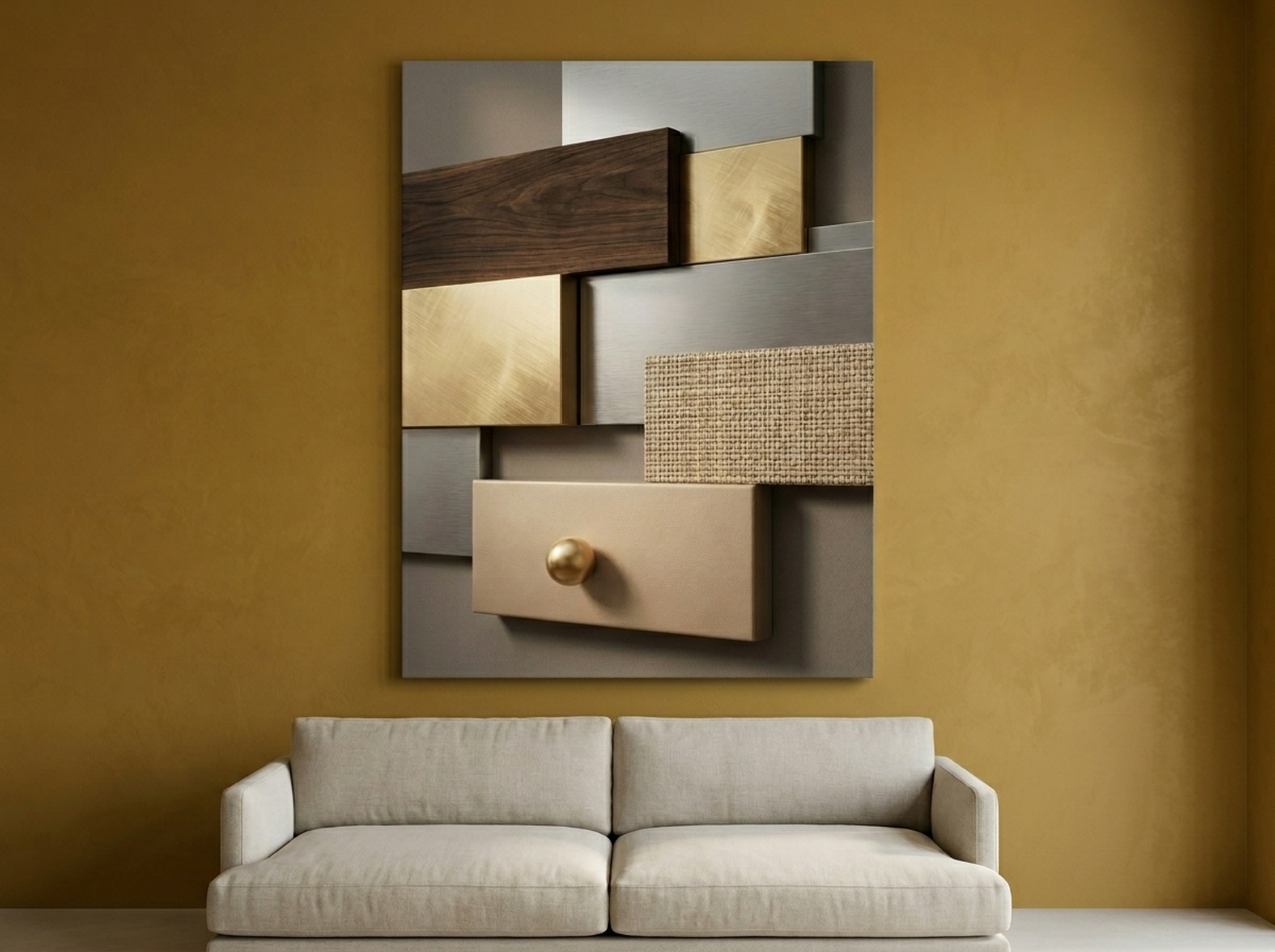
This walnut and gold abstract canvas brings warmth and structure to any studio wall. The geometric texture panels create visual depth without busy patterns, making the print feel expansive even in tighter rooms. The neutral brown, gold, and cream palette integrates seamlessly with Scandinavian, boho, and transitional studio setups. Hang it above your sofa or over a console table as the room's anchor point. The horizontal format is ideal for standard studio wall widths.
View the Geometric Texture Panels Canvas Wall Art
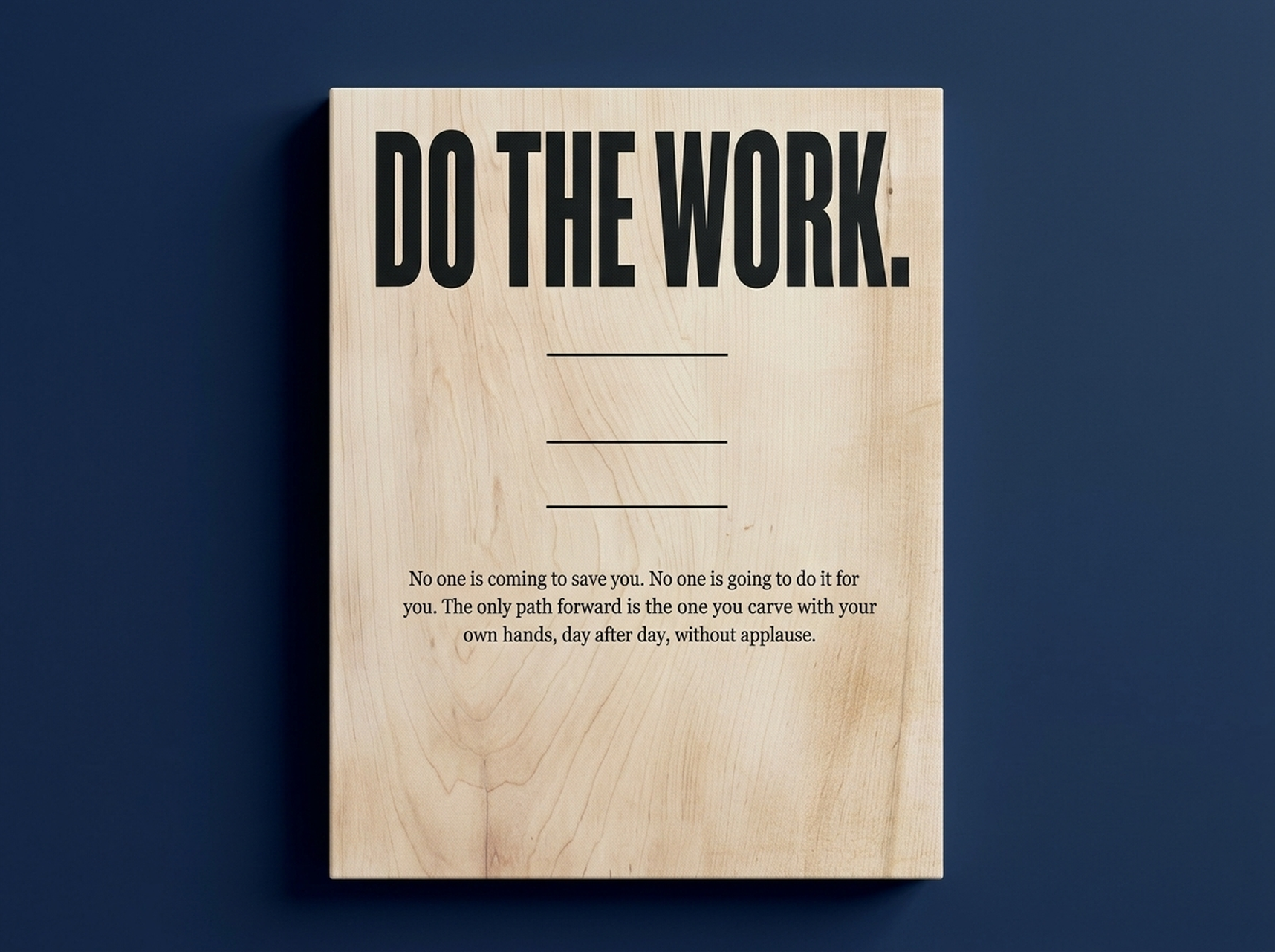
2. Motivational Do The Work Typography Print
Typography art is a smart choice for small space wall art because the negative space within the text itself creates visual breathing room. This cream and navy Do The Work print is clean, confident, and reads well from across a studio. It works especially well in a combined living-workspace situation, where a motivational anchor above a desk or behind a sofa doubles as aesthetic and functional intent. The minimal color palette keeps the room feeling uncluttered.
View the Do The Work Typography Canvas Print
3. Iceberg of Success Motivational Art

The Iceberg of Success illustration is a rare piece that combines conceptual depth with a light, airy color palette. The white, teal, and navy tones open up a wall visually, making it one of the best choices for small rooms that need both a focal point and a sense of openness. The ocean imagery draws the eye into a sense of depth, a classic trick for making a flat wall read as having dimension. Place it on the wall opposite your main window for maximum effect.
View the Iceberg of Success Canvas Art
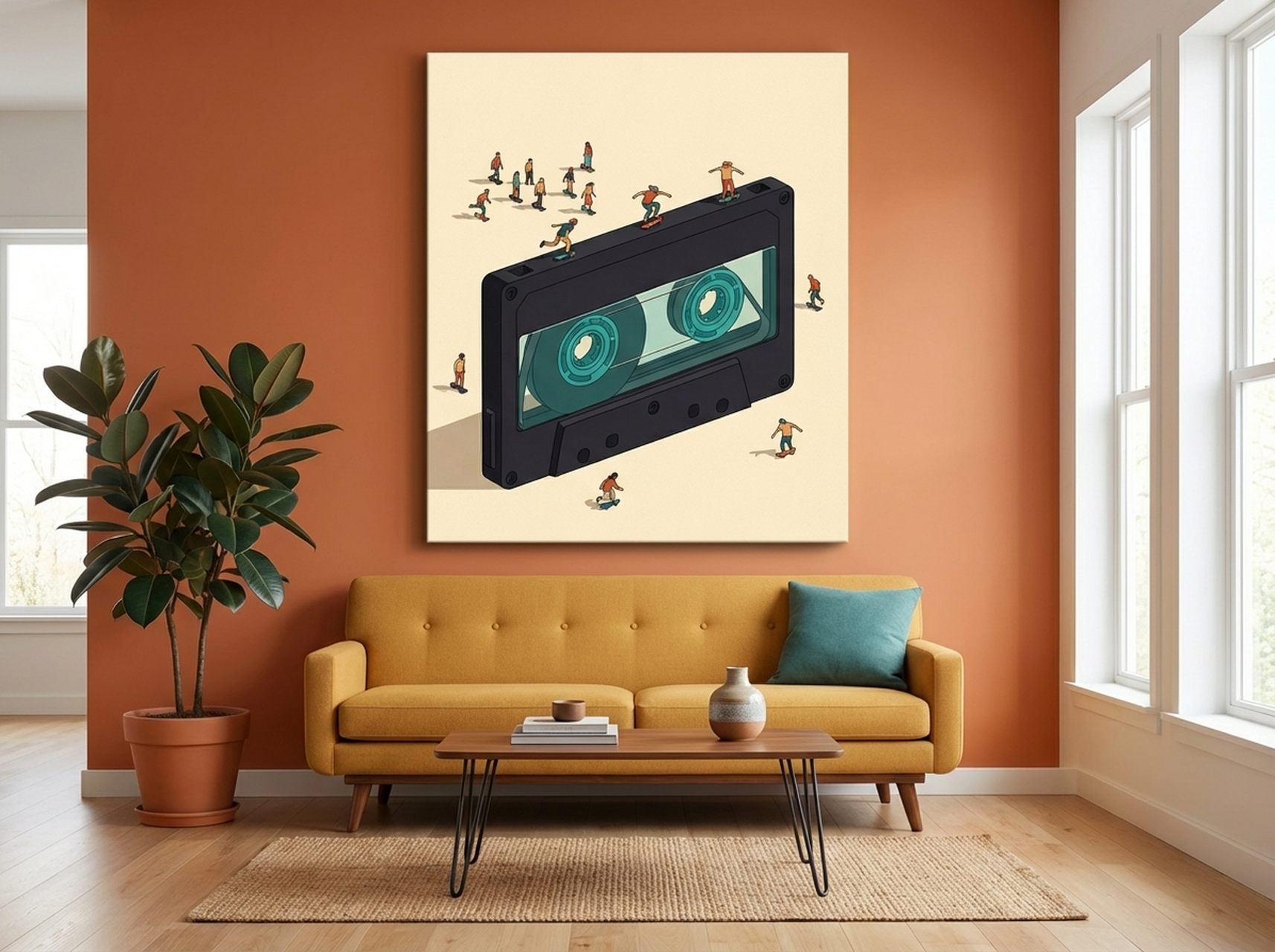
4. Giant Cassette Tape Surreal Wall Art
Surreal, nostalgic, and refreshingly unexpected, this Giant Cassette Tape canvas is the kind of apartment wall decor that makes visitors stop and comment. The cream and teal palette keeps it light and compatible with most studio color schemes, while the oversized cassette motif gives the room instant personality. For small rooms where you want to avoid generic decor, a conversation-starting piece like this creates a memorable identity without requiring more space or more art. Perfect for modern, eclectic, or retro-leaning studios.
View the Giant Cassette Tape Canvas Art
5. Klimt Urn Trio Canvas Wall Art
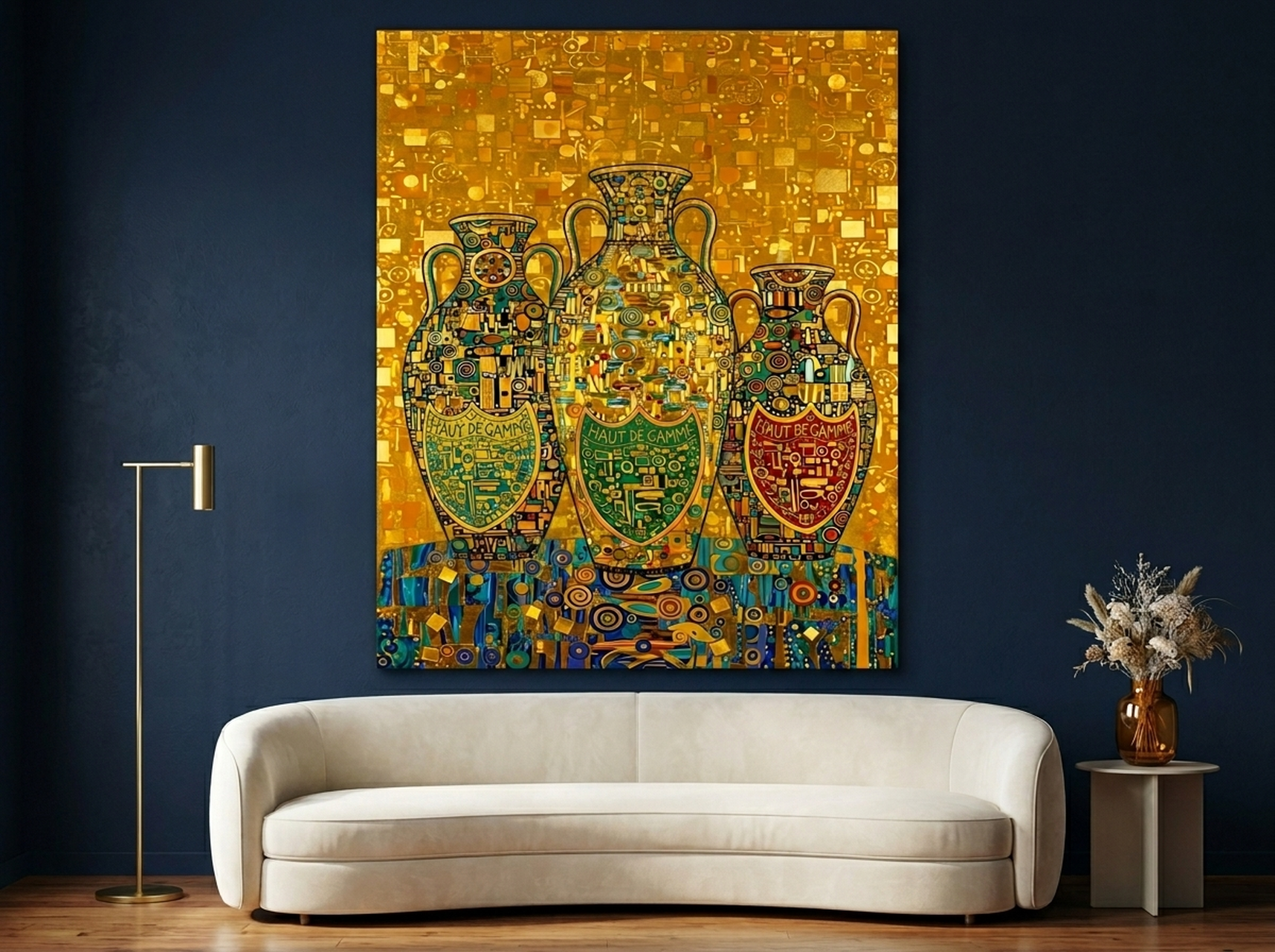
When a studio needs to feel elevated, gold-toned Art Nouveau art is one of the fastest routes there. The Klimt Urn Trio canvas brings deep teal, emerald, and gold mosaic detail that catches light and rewards close inspection. In a small room, art that rewards looking functions like a second focal point, anchoring attention and extending the time the eye lingers in a positive sensory experience. For studios with darker accent walls or moody lighting, this piece glows. It is also a strong choice for rental apartments where permanent changes are not an option.
View the Klimt Urn Trio Canvas Art
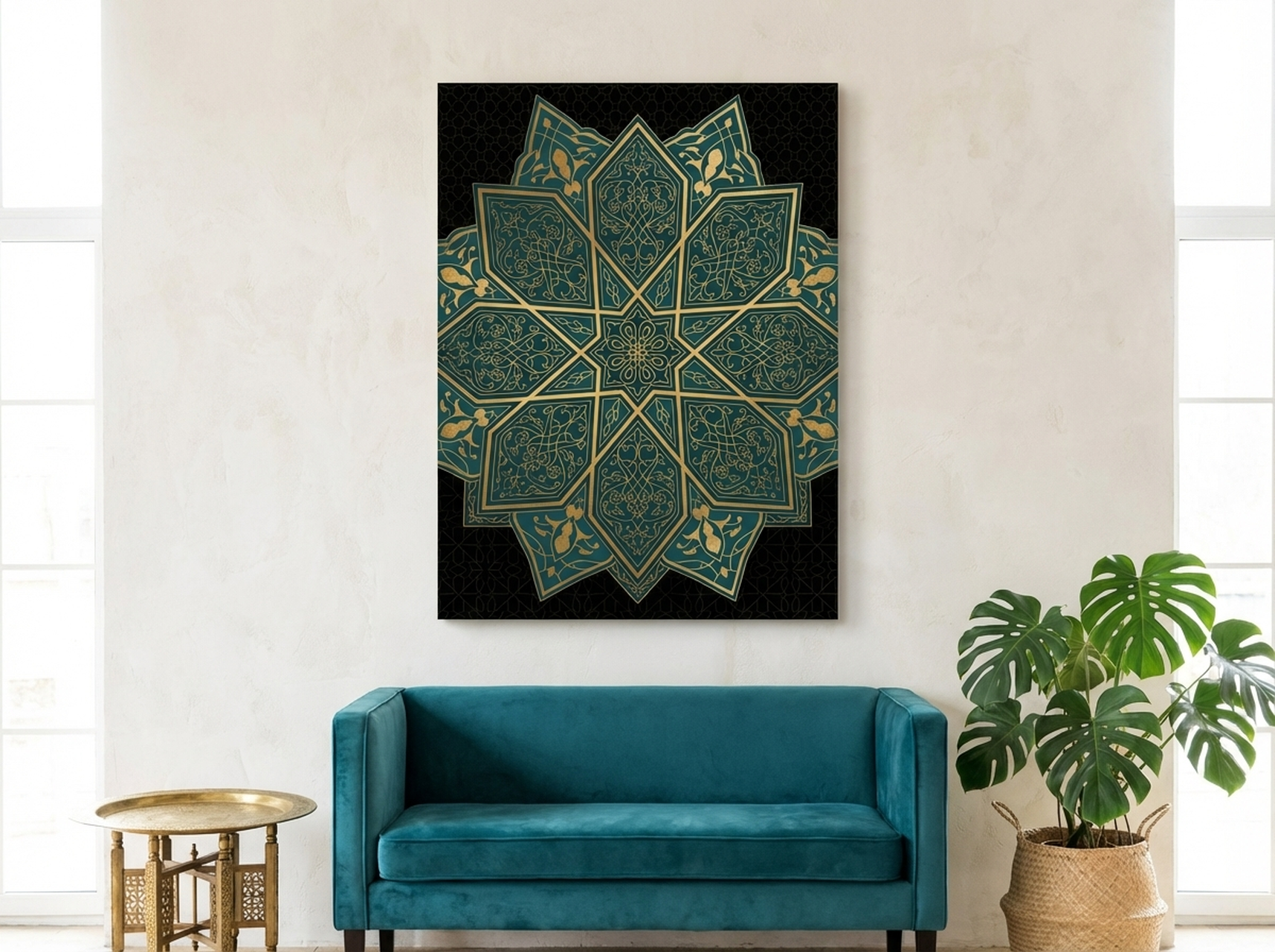
6. Islamic Geometric Star Canvas Wall Art
Geometric pattern art works particularly well in small spaces because the repetition creates a sense of order and visual rhythm that reads as intentional and calm. This Islamic Geometric Star canvas in black, teal, and gold brings a Moroccan-influenced elegance that pairs beautifully with contemporary, boho, and transitional studio styles. The pattern has enough visual complexity to be interesting but enough symmetry to avoid feeling chaotic, exactly what wall art for small rooms needs. Hang it centered above a bed or as a single statement on a dining-slash-living wall.
View the Islamic Geometric Star Canvas Art
Placement Guide with Measurements
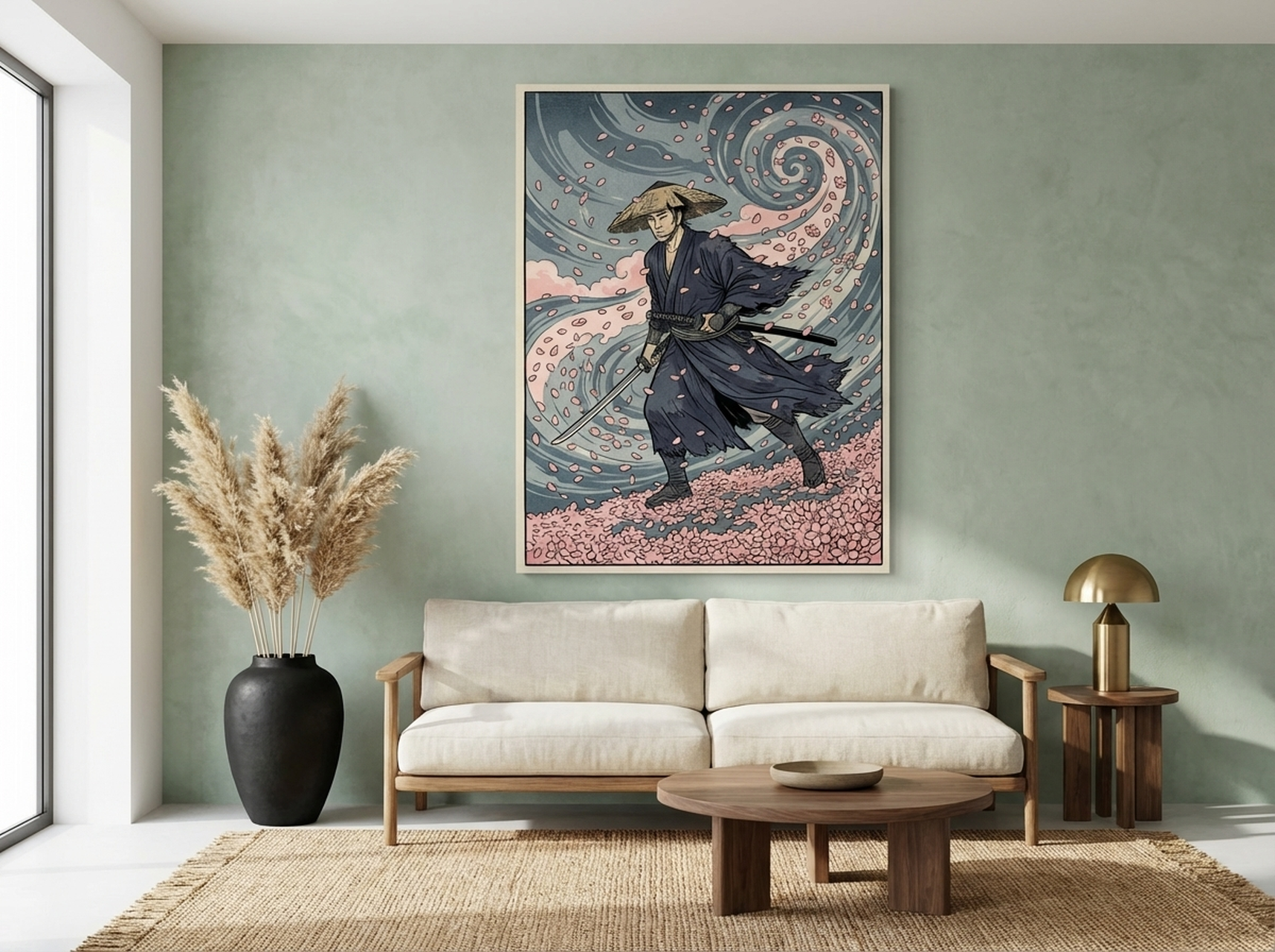
Placement is where most studio apartment decorating goes wrong. Getting the art up on the wall is only half the equation; the height and position determine whether it integrates into the room or feels like an afterthought.
Hang art at eye level: center the piece 145 to 152 cm (57 to 60 inches) from the floor. For a sofa, hang so the bottom edge sits 25 to 30 cm (10 to 12 inches) above the top cushion. This is the universal standard and it works because it aligns art with the average human sight line when standing and keeps a comfortable visual relationship when seated.
Here are the specific placement formulas for studio apartment zones:
Above the Sofa or Daybed
The art width should be 50 to 75 percent of the sofa length. For a 180 cm (71 inch) sofa, target art between 90 and 135 cm (35 to 53 inches) wide. Bottom edge of the art sits 25 to 30 cm (10 to 12 inches) above the sofa back. If using two pieces side by side, leave a gap of 5 to 8 cm (2 to 3 inches) between them and treat the pair as one unit in your sizing calculations.
Above the Bed (Studio Sleeping Zone)
In studios where the bed is against a wall, the art width should match 60 to 80 percent of the headboard or bed width. For a standard 140 cm (55 inch) double bed, that is 84 to 112 cm (33 to 44 inches) wide. Hang so the bottom edge is 20 to 25 cm (8 to 10 inches) above the headboard top. Vertical art hung above a low headboard creates a strong upward visual pull that makes the sleeping zone feel more defined and the ceiling feel higher.
Entry or Doorway Wall
For the narrow wall beside or opposite your front door, vertical pieces between 50 and 76 cm (20 and 30 inches) tall and no wider than 61 cm (24 inches) work best. This gives you a welcome moment without consuming visual real estate the eye needs to scan the room upon entry.
The Floating Wall (no furniture below)
When hanging art on a wall with no furniture anchoring it, create a visual anchor by placing the art's center at 145 to 152 cm (57 to 60 inches) from the floor. The piece should feel like a destination on that wall, not a postage stamp. Choose a size that reads as intentional from across the room, usually at least 61 x 76 cm (24 x 30 inches) for most studio wall spans.
For more on placement across all situations, see our guide: How to Hang Wall Art: The Complete Guide.
5 Common Mistakes to Avoid
- Hanging art too high: This is the most frequent error. Art hung near the ceiling disconnects from the furniture below and makes the room feel disjointed. Bring it down to eye-level center at 145 to 152 cm (57 to 60 inches) from the floor, always.
- Choosing art that is too small: A 20x25 cm (8x10 inch) print on a full-size wall creates a "postage stamp" effect that actually makes the room feel smaller, not bigger. Scale up. One large piece dominates and anchors far more effectively than several small ones.
- Ignoring the room's natural focal point: Every room has an architectural focal point, the main window, the longest wall, the wall the front door faces. Placing your best art there uses the room's natural structure rather than fighting it.
- Using too many competing styles: In a studio apartment, every element is visible from almost every other element. Mixing three or four distinct art styles creates visual noise. Choose one dominant aesthetic, abstract, zen, graphic, organic, and let it lead.
- Skipping the "step back" test: Before committing to a placement, use painter's tape to outline the art on the wall, then step back 3 to 4 meters (10 to 13 feet) and live with it for a day. The view from across the room is the one that matters most in a studio.
Frequently Asked Questions
What size wall art is best for a studio apartment?
For most studio apartments, a single piece at least 51 x 61 cm (20 x 24 inches) works better than smaller art. For main living walls, 61 x 91 cm (24 x 36 inches) or larger creates the focal point that makes the room feel intentionally designed. The key is scaling up rather than down.
Should I use one large piece or a gallery wall in a small studio?
One large piece is almost always better for studios under 46 square meters (500 square feet). Gallery walls introduce visual complexity that can feel overwhelming in compact rooms. A single strong canvas creates a focal point without adding clutter. If you want multiple pieces, limit it to two and treat them as one unit with tight spacing.
What art styles work best for small apartment wall decor?
Abstract art with clear compositions, Japanese or Japandi-influenced minimal prints, typography art with generous negative space, and geometric pattern art all work well for small spaces. These styles create visual interest without introducing the busyness that makes tight rooms feel cramped. Highly detailed realistic scenes can work but require careful sizing.
How do I make a studio apartment look bigger with wall art?
Choose art with light, airy color palettes. Hang it at correct eye level (center at 145 to 152 cm / 57 to 60 inches from the floor). Use art that creates a sense of depth, ocean scenes, abstract layers, perspective-based compositions. Place your primary art on the wall that faces the room's entry point so the eye is immediately drawn to a focal point upon entering.
Can I use dark or moody art in a small studio?
Yes, with intention. Dark art brings walls forward visually, which in a studio can create a cozy, intimate quality. If you want that effect, commit to it with a curated palette and controlled lighting. Avoid dark art on already dark or poorly lit walls, as this compounds the smallness effect. Use directional lighting (a picture light or angled floor lamp) to keep the piece glowing.
Where is the best place to hang wall art in a studio apartment?
The best placement is above the main seating (sofa or daybed), centered on the longest uninterrupted wall, or on the wall your eyes land on first when entering. These positions maximize the art's visual impact because they are the walls most frequently in your field of vision. Avoid placing art in corners or above furniture where it competes with sight lines to windows.
Quick Reference Table
| Product | Best For | Dominant Colors | Link |
|---|---|---|---|
| Geometric Texture Panels | Above sofa, transitional studios | Brown, Gold, Cream | View |
| Do The Work Typography | Work-from-home studios, minimalist decor | Cream, Black, Navy | View |
| Iceberg of Success | Feature wall, light-palette studios | White, Teal, Navy | View |
| Giant Cassette Tape | Eclectic, retro, personality-forward studios | Cream, Teal, Charcoal | View |
| Klimt Urn Trio | Elevated, moody, or dark-accent studios | Gold, Teal, Emerald | View |
| Islamic Geometric Star | Boho, contemporary, patterned accent wall | Black, Teal, Gold | View |
Your studio apartment is not a limitation; it is a constraint that, with the right art, becomes a strength. Compact spaces reward focused, intentional choices, and a single well-chosen canvas can do more for a small room than an entire furniture upgrade. Whether you go bold with the Cassette Tape print, serene with the Iceberg composition, or quietly luxurious with the Klimt Urn Trio, the result is a studio that feels designed, personal, and larger than its footprint. Browse our full collection of small space wall art and find the piece that makes your walls work harder.