Wall Art Over Fireplace: The Complete Size and Style Guide
The Heva Team
Art Curators & Interior Design Enthusiasts · April 9, 2026 · 15 min read
The wall above your fireplace is the most powerful piece of real estate in your home. It is where every eye travels when someone enters the room, the anchor that everything else in the space quietly orbits. A blank expanse above the mantel feels like a sentence that was never finished. Add the right canvas print, and something shifts: the room gains a soul. The fireplace stops being simply a heat source and becomes a conversation, an atmosphere, a statement about who you are and what you love. Wall art over fireplace placement is not a decorating detail; it is the defining decision that determines whether your living room feels curated or complete, whether guests sit forward and ask "where did you get that?" or whether the space fades into the background of their memory. This guide gives you every measurement, every rule, and every consideration you need to make that wall unforgettable.
Browse our fireplace wall art collection
The Golden Rule of Sizing: How Big Should Art Be Above a Fireplace?
Every interior designer worth their credential will tell you the same thing: when choosing wall art over a fireplace, bigger is almost always better than you initially think. The single most common mistake homeowners make is selecting a piece that looks perfectly proportioned on an e-commerce screen but arrives and appears to shrink against the wall. This happens because we underestimate the visual weight of a mantel, a surround, and the architectural presence of the fireplace itself.
The professional standard is this: your art should span between two-thirds and three-quarters the width of your mantel. If your mantel measures 60 inches (152 cm) wide, target a piece between 40 and 45 inches (102 to 114 cm) across. For a 48-inch (122 cm) mantel, aim for 32 to 36 inches (81 to 91 cm). A 72-inch (183 cm) mantel can comfortably carry art from 48 to 54 inches (122 to 137 cm) in width.
Vertical scale matters just as much. A square or portrait-oriented piece adds drama and draws the eye upward, especially valuable in rooms with standard 8-foot (244 cm) ceilings. Landscape-oriented art works beautifully above wide, low mantels and in rooms with tall ceilings where you want to anchor the eye rather than lift it. As a starting rule for height: for a standard 60-inch mantel, consider art in the 30-to-36-inch (76 to 91 cm) tall range when using landscape orientation, or 36 to 48 inches (91 to 122 cm) when using portrait format.
One more sizing principle: if you want to hang a gallery wall above the fireplace instead of a single statement piece, treat the entire gallery arrangement as one unit and apply the same two-thirds-to-three-quarters rule to its combined width. The visual mass of multiple smaller pieces together should still honor the mantel's proportions.
Choosing the Right Style for Your Fireplace Wall
Style selection for fireplace wall art requires balancing two sets of relationships: the art's relationship to the fireplace material, and the art's relationship to the room's overall personality. Get both right and the wall feels inevitable, as though the house was designed around that exact canvas.
Warm tones, including deep ochres, rusts, terracottas, and golds, mirror the amber light of an actual fire and create a cohesive visual warmth even when the hearth is cold. Abstract work in these palettes is particularly effective because it echoes the fluid, organic movement of flames without being literal about it. If your fireplace surround is brick or warm-toned stone, lean into this relationship. If your surround is white marble or painted plaster, you have the freedom to go cooler: deep navy, forest green, slate grey, or the silvery tones of graphic architectural photography.
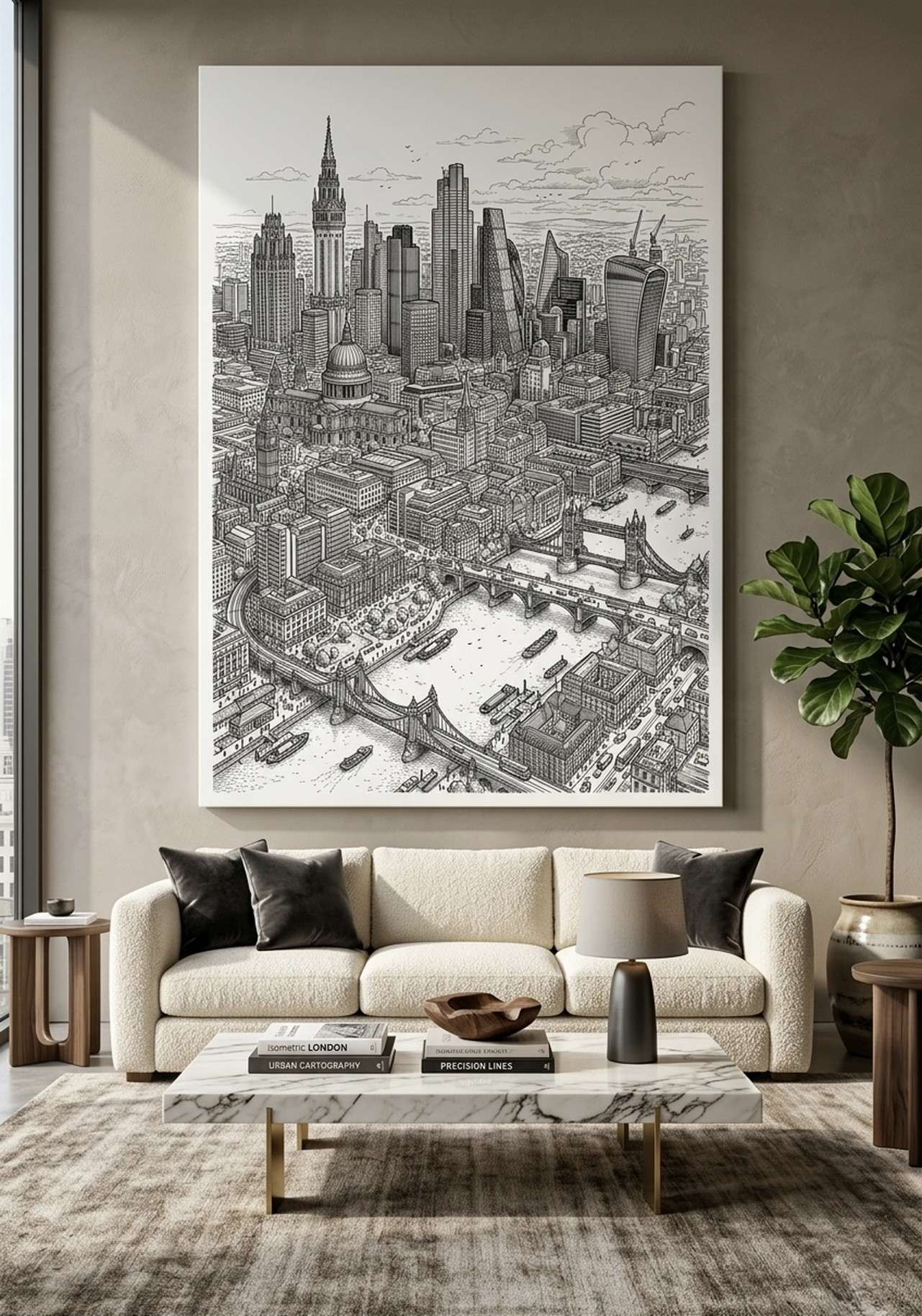
Architectural and cityscape art brings a sharp, intellectual energy to the fireplace wall. The clean geometric lines contrast beautifully with the organic curve of a flame or the rough texture of stone. Photography-based prints, particularly black-and-white urban work, carry a timeless quality that reads as sophisticated without trying too hard. This style suits contemporary interiors, mid-century rooms, and industrial-leaning spaces equally well.
Abstract expressionist work, from gestural brushstrokes to color field paintings, is perhaps the most universally versatile choice above a fireplace. Its non-representational nature means it does not compete with views, furniture patterns, or architectural features. It simply exists as pure color and composition, elevating whatever surrounds it. For traditional fireplaces with ornate mantels, choose abstracts with a classical palette: burnt sienna, deep burgundy, gold leaf tones. For modern fireplaces with minimal linear mantels, bolder graphic abstracts with high contrast will feel at home.
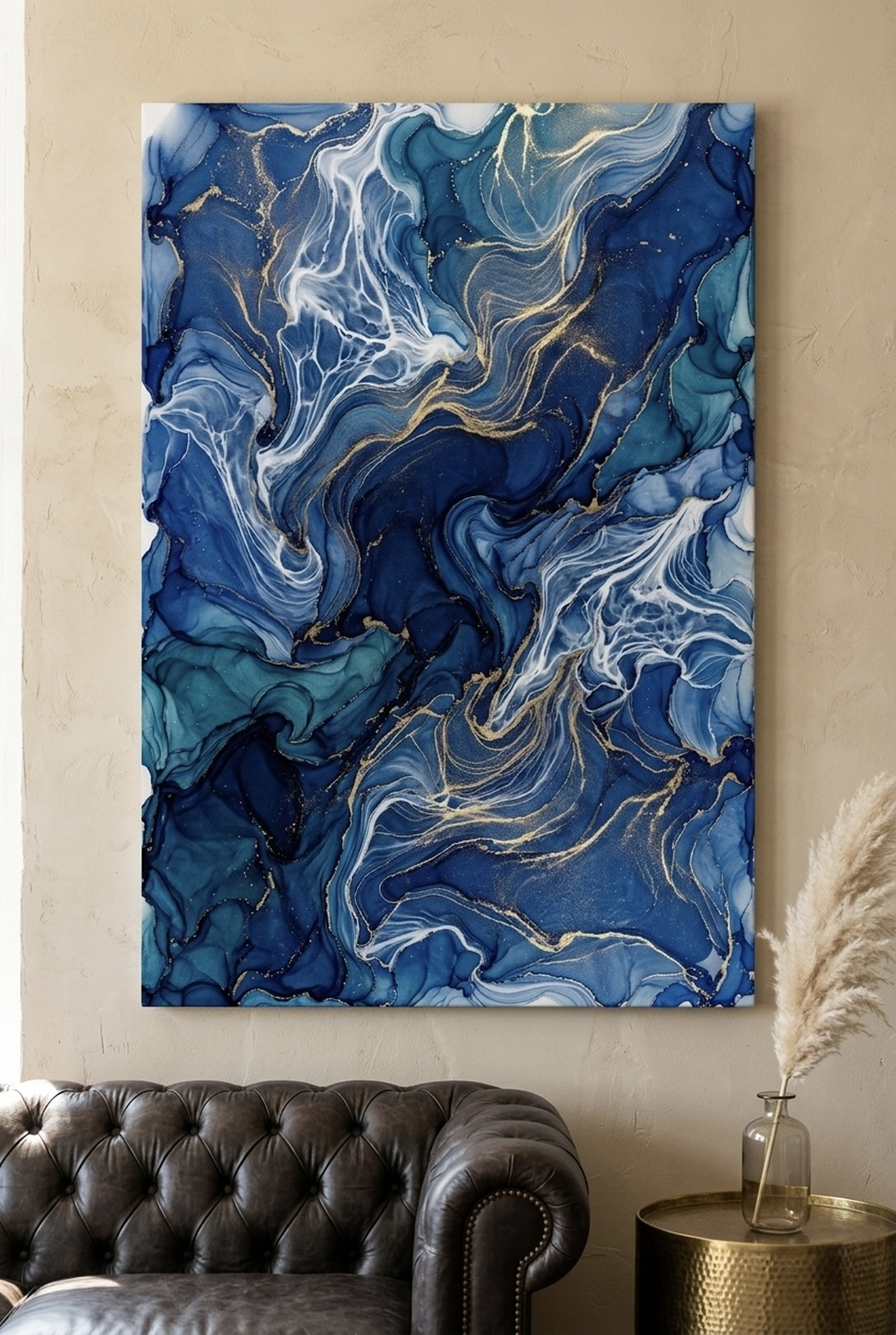
Perfect Height and Placement Above Your Mantel
The single most important placement rule for wall art over a fireplace: hang the bottom edge of the frame 4 to 8 inches (10 to 20 cm) above the mantel shelf. This gap keeps the piece visually connected to the fireplace without creating the uncomfortable illusion that it is balanced precariously on the ledge. It also provides enough clearance that any decorative objects on the mantel, candlesticks, vases, framed photos, do not crowd the art or compete with its lower edge.
Eye level is the secondary rule. The center of the artwork should ideally sit at 57 to 60 inches (145 to 152 cm) from the floor, the standard gallery hanging height. In practice, the mantel dictates this more than personal preference does. If your mantel is 48 to 54 inches (122 to 137 cm) tall and you leave the recommended 4 to 8-inch gap, a 24-to-30-inch-tall (61 to 76 cm) piece will land its center exactly in the ideal zone.
High ceilings change the calculus significantly. In rooms with 10-foot (305 cm) or 12-foot (366 cm) ceilings, a single piece hung at standard gallery height can look abandoned in the upper expanse. Consider one of three approaches: choose taller art, specifically portrait-format pieces that climb toward the ceiling; add a second piece or shelf above the first to fill the vertical space; or use a dramatic oversized canvas that commands the full wall from mantel to ceiling.
For rooms where the fireplace sits in a corner or alcove, the placement rules hold but the framing context changes. Art should be centered over the firebox opening itself rather than the surrounding wall, anchoring the visual weight directly above the source of heat and light. Avoid pushing the art to one side to accommodate architectural asymmetry; symmetry above the firebox reads as intentional and calm.
Our Top Fireplace Art Picks
Not all art is created equal when it comes to fireplace placement. The pieces that work best share a few qualities: visual weight that holds its own against the fireplace's architectural dominance, color relationships that feel warm or sophisticated rather than cold or sterile, and a scale that respects the two-thirds-width rule. The following six canvases from our collection are among the most requested for fireplace walls, each chosen because they bring something distinctive to the space while remaining versatile enough to work across different interior styles. Whether your fireplace is a Victorian cast-iron original, a sleek contemporary linear gas fire, or a traditional stone surround in a farmhouse living room, you will find a match here.
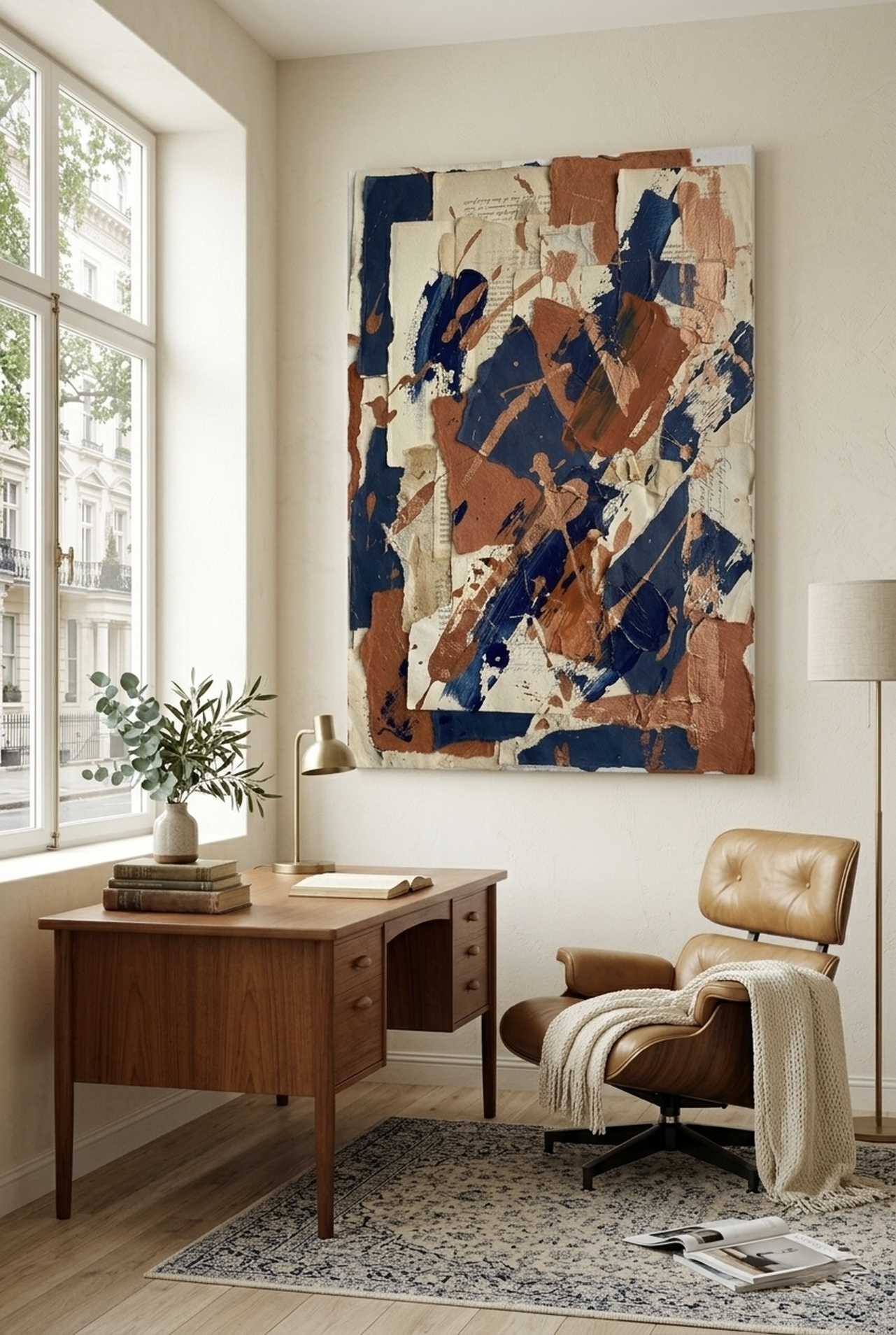
The Navy Terracotta Abstract Collage earns its place at the top of the fireplace art shortlist because its color story is directly in conversation with heat and earth. Terracotta is the color of fired clay, of warm skin in afternoon light, of the soil after rain. Paired with deep navy, it creates a richness that does not shout but resonates. This is art that makes a room feel lived in and loved, the ideal energy for the most social wall in the home.
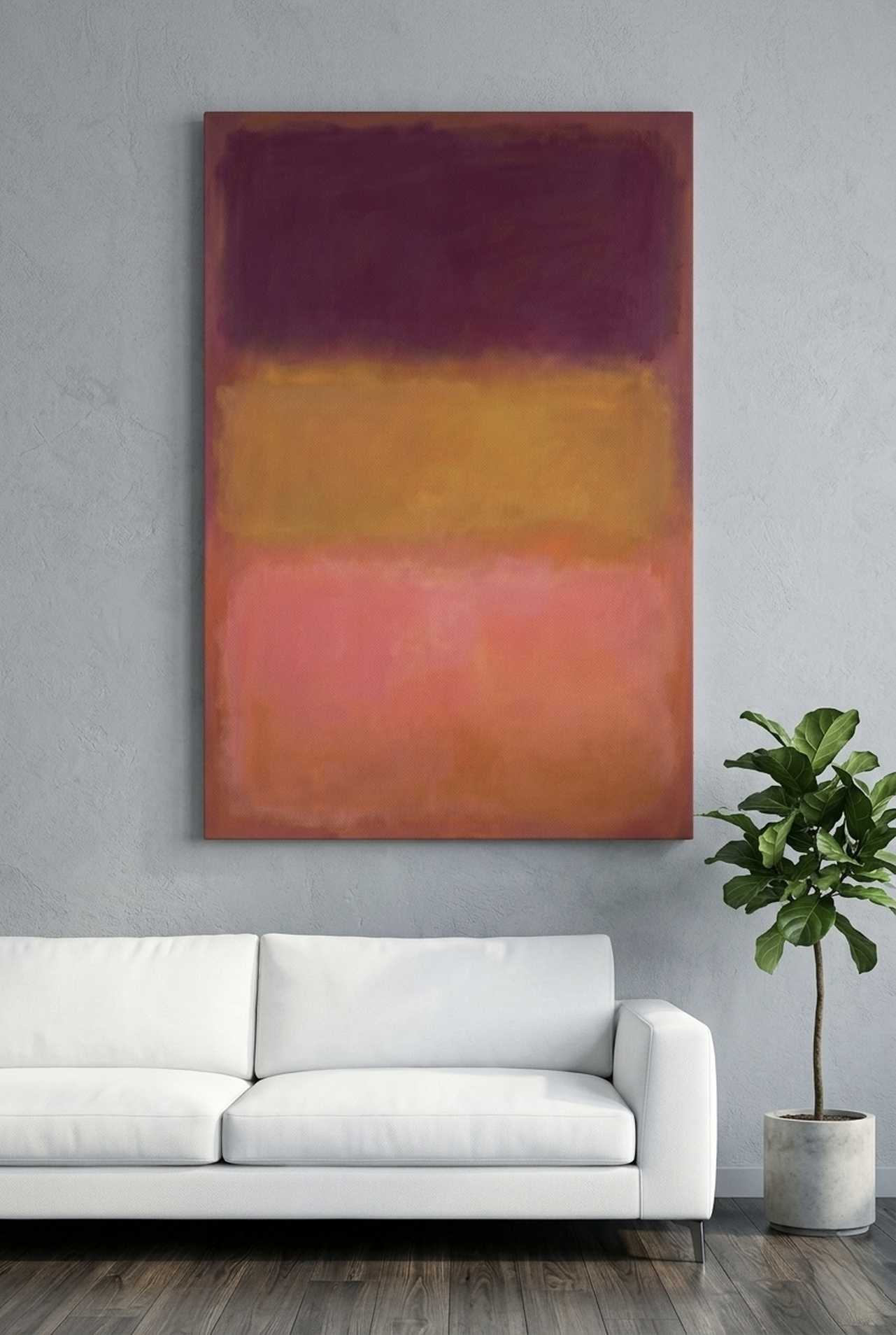
Color field painting at the scale appropriate for a fireplace wall becomes something close to a meditative experience. This Rothko-inspired canvas uses large bands of luminous color to create a sense of depth and quietude. It works on a fireplace wall because it commands presence through pure color rather than complexity, and because its contemplative quality makes it the kind of art you want to sit in front of on cold evenings.
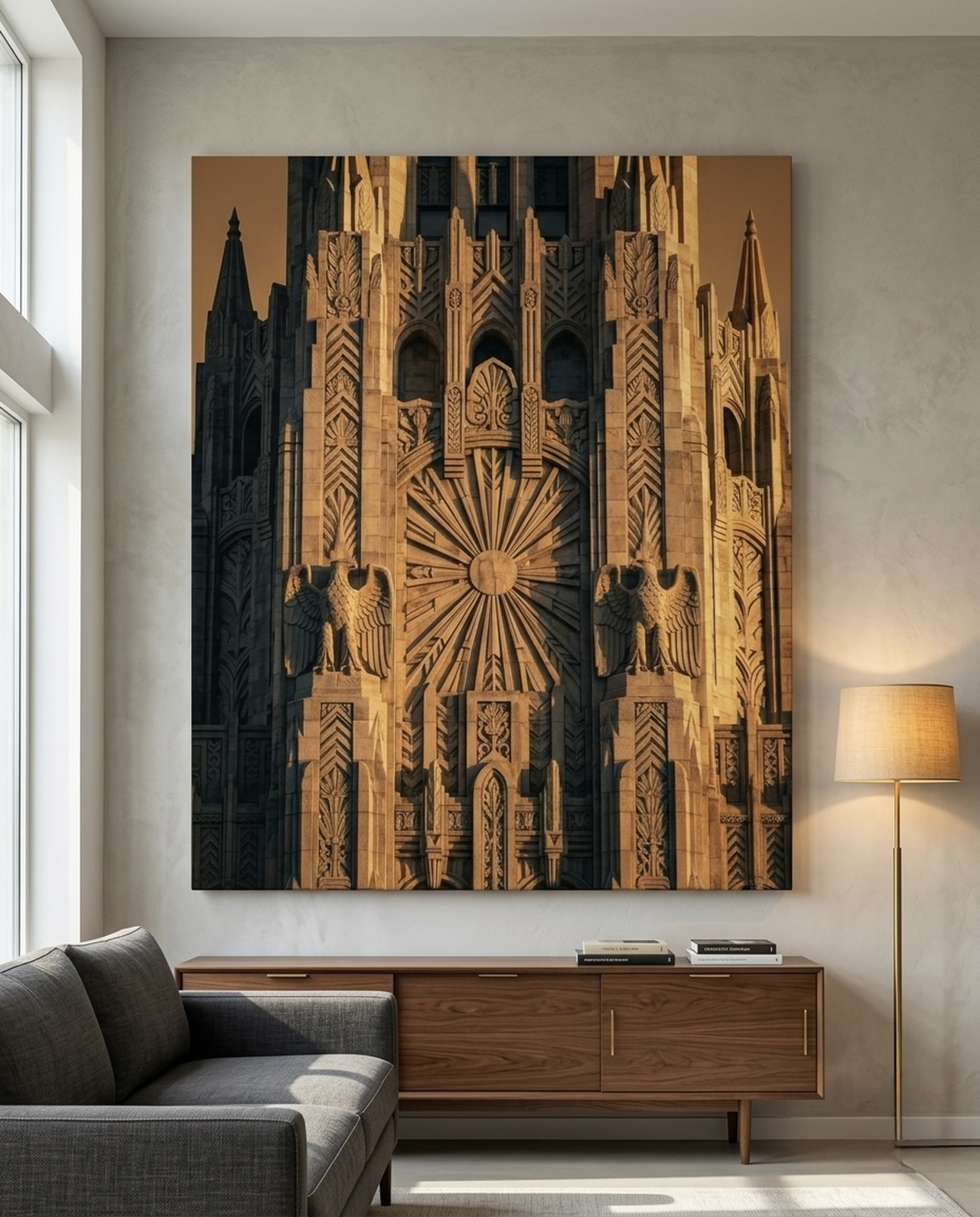
For rooms that lean toward the classic or the carefully curated, architectural photography with an Art Deco sensibility brings a gravitas that purely abstract work sometimes cannot. The soaring vertical lines of the skyscraper composition naturally draw the eye upward, counteracting the horizontal pull of the mantel shelf and creating a sense of dramatic height even in rooms with standard ceilings.
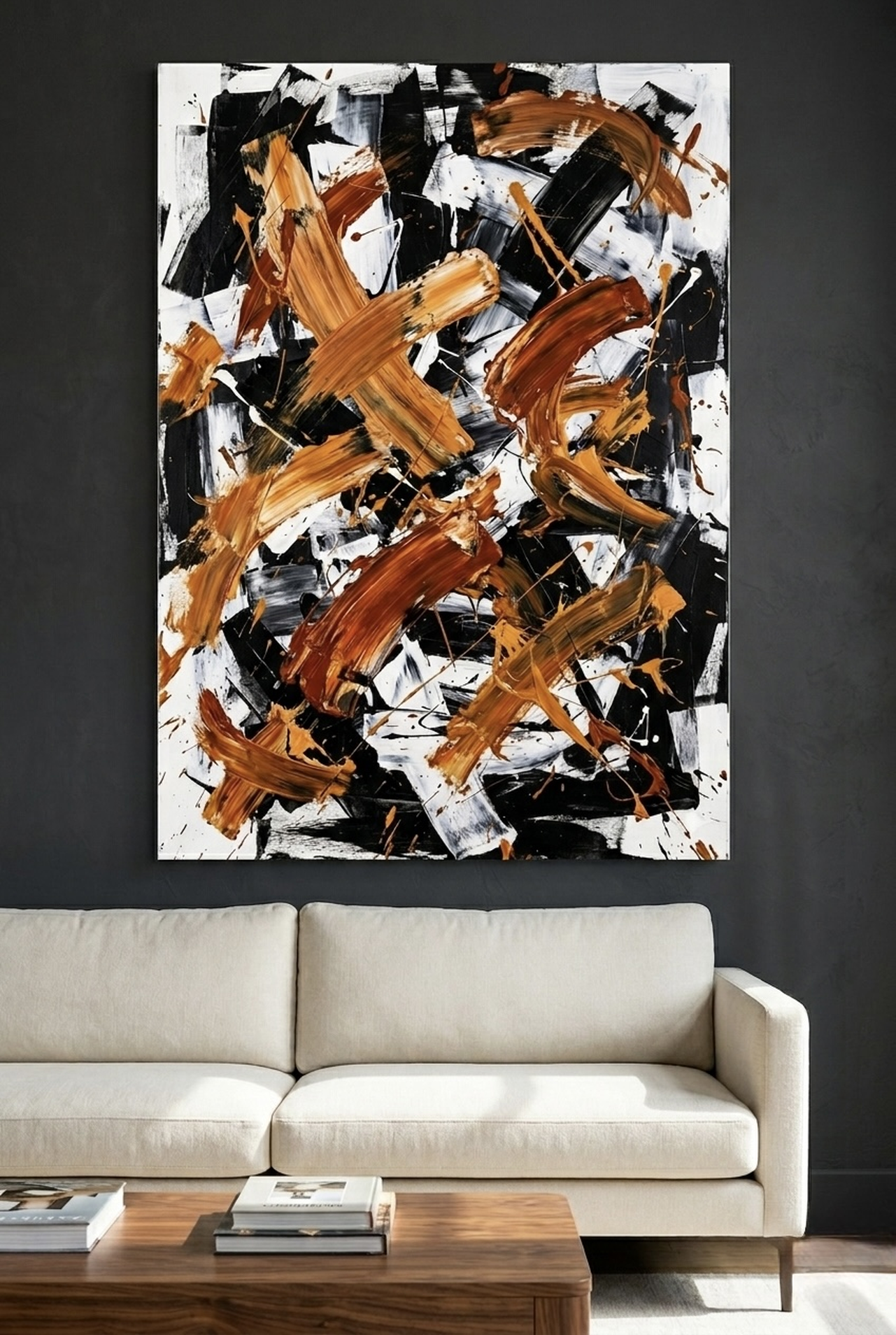
If there is one art style made for fireplaces, it is gestural abstraction. The bold, physical marks of a brushstroke painting carry the same unpredictable energy as flames themselves, that quality of movement caught in a moment. Above a working fireplace, this canvas creates a layered visual experience: the still gestures of the paint above, the living gestures of the fire below.
Placement Measurements Guide
Use the following measurements as your starting blueprint, then adjust based on your specific room proportions and visual preferences.
Distance above the mantel shelf: 4 to 8 inches (10 to 20 cm) is the standard professional range. Use the smaller end of this range (4 to 5 inches, or 10 to 13 cm) when your art is tall and you want it to feel closely integrated with the mantel. Use the larger end (7 to 8 inches, or 18 to 20 cm) when you have decorative objects on the mantel that you do not want to crowd the frame's lower edge.
Ideal art width by mantel size:
- 48-inch (122 cm) mantel: art width 32 to 36 inches (81 to 91 cm)
- 54-inch (137 cm) mantel: art width 36 to 40 inches (91 to 102 cm)
- 60-inch (152 cm) mantel: art width 40 to 45 inches (102 to 114 cm)
- 72-inch (183 cm) mantel: art width 48 to 54 inches (122 to 137 cm)
Art center height from the floor: For a standard 8-foot (244 cm) ceiling, the center of your art should fall between 57 and 60 inches (145 to 152 cm) from the floor. This is the international gallery standard, chosen because it places the visual center of the work at average seated-to-standing eye level. In rooms with higher ceilings, you may raise this by 2 to 4 inches (5 to 10 cm) to maintain visual balance without making the art look ceiling-bound.
Wall height considerations: The total height from floor to ceiling, minus the height of the mantel shelf, tells you how much vertical space you have to work with above the fireplace. In a standard 8-foot room with a 54-inch mantel, you have roughly 42 inches (107 cm) of wall space above the shelf. An art piece 24 to 30 inches (61 to 76 cm) tall, hung with a 6-inch (15 cm) gap above the shelf, will occupy a balanced proportion of that space without floating awkwardly near the ceiling.
Framing depth consideration: Deep canvas wraps and thick frames project from the wall, which can be advantageous on a fireplace wall because it adds sculptural dimension. Gallery-wrapped canvas (no frame) with a 1.5-inch (4 cm) depth reads cleanly and modern. Framed prints with substantial molding add traditional warmth and weight, particularly appropriate for ornate or classic mantel surrounds.
5 Common Mistakes to Avoid When Hanging Art Over a Fireplace
- Choosing art that is too small. This is the number-one error, and it is almost universal among first-time buyers. A piece that measures 20 by 24 inches (51 by 61 cm) will look like a postage stamp above most fireplaces. When in doubt, go one size larger than your instinct tells you. Measure your mantel, calculate two-thirds of its width, and use that number as your minimum target. If the room feels large or the ceilings are tall, push toward three-quarters of the mantel width instead.
- Hanging art too high. When people feel uncertain about placement, they tend to push art higher on the wall, perhaps to keep it away from the heat or to leave more visible mantel space. This creates a visual disconnect where the art appears to float, unanchored, in the upper portion of the wall. Keep the bottom edge 4 to 8 inches above the mantel and trust the proximity to do its job of visual integration.
- Choosing a style that fights the room. A highly traditional ornate frame around a photorealistic oil painting can look incongruous above a sleek concrete-and-steel linear fireplace. Equally, a raw industrial canvas can feel out of place above a delicate Victorian tile surround. Let the fireplace material and the room's furniture style guide your art selection. They should feel like they belong to the same design conversation.
- Ignoring heat and humidity considerations. Working fireplaces generate heat that rises directly toward the wall above. While canvas prints are generally resilient, extreme prolonged heat can cause canvas to warp or pigments to fade over many years. If your fireplace is a high-use wood burner or gas fire, position art at the upper end of the recommended gap (7 to 8 inches, or 18 to 20 cm) and consider framed prints under glass for the most heat-sensitive pieces. Electric fireplaces generate minimal heat upward and present no concern.
- Skipping proper hanging hardware. A large canvas above a fireplace, especially one over 24 inches (61 cm) wide, deserves French cleats, D-ring hangers with two anchor points, or a professional picture-hanging system. Single-nail hanging for large pieces creates the risk of the art tilting, sliding, or falling. Use a level when installing and test the security of the hang before leaving the room. The mantel below provides a hard surface that will damage the frame if the art falls.
Frequently Asked Questions
- How wide should art be above a fireplace?
- Art above a fireplace should be two-thirds to three-quarters the width of the mantel. For a 60-inch (152 cm) mantel, choose a piece between 40 and 45 inches (102 to 114 cm) wide. For wider mantels of 72 inches (183 cm), target 48 to 54 inches (122 to 137 cm). Going smaller than two-thirds of the mantel width tends to make the art look undersized and visually lost against the fireplace surround.
- How high should art be hung above a fireplace mantel?
- The bottom edge of the art should be 4 to 8 inches (10 to 20 cm) above the mantel shelf. This keeps the piece visually connected to the fireplace without appearing to balance on the ledge. The center of the artwork should ideally sit at 57 to 60 inches (145 to 152 cm) from the floor, the standard gallery height that works for both seated and standing viewers.
- What style of art looks best over a fireplace?
- Abstract art, particularly in warm tones (terracotta, gold, deep rust), works exceptionally well above fireplaces because it mirrors the energy of flames without being literal. Architectural photography and cityscape art bring intellectual drama and graphic presence. Color field paintings create meditative calm. The best choice is the one that relates visually to your fireplace material: warm stone suits warm-toned abstracts, white marble suits cooler or more graphic work.
- Can canvas prints be damaged by fireplace heat?
- For most modern gas, electric, or decorative fireplaces, canvas prints positioned 4 to 8 inches (10 to 20 cm) above the mantel face no meaningful heat risk. For high-use wood-burning fireplaces that generate significant upward heat, maintain the maximum gap of 8 inches (20 cm) or slightly more, and consider frames with UV-protective glass if extreme longevity is a priority. Electric fireplaces generate essentially no upward heat and pose no concern.
- Can I hang multiple pieces of art above a fireplace?
- Yes, a gallery wall arrangement above a fireplace can be stunning. The key is to treat the entire arrangement as a single visual unit: the combined width of all pieces together should equal two-thirds to three-quarters of the mantel width. Maintain consistent spacing between frames (3 to 5 inches, or 7.5 to 13 cm, is the standard). Use a single common mat color or frame finish across all pieces to unify the arrangement visually.
- Is canvas or framed print better above a fireplace?
- Both work well, and the choice depends more on style than practicality. Gallery-wrapped canvas without a frame reads as modern, clean, and slightly informal. It suits contemporary and mid-century interiors. Framed prints with substantial molding carry more traditional weight and suit classic, transitional, or formally decorated rooms. A framed canvas combines both qualities: the clean image area of a canvas print with the visual authority of a frame.
Quick Reference: Wall Art Over Fireplace
| Mantel Width | Ideal Art Width | Hang Height Above Mantel | Best Style |
|---|---|---|---|
| 48 in (122 cm) | 32 to 36 in (81 to 91 cm) | 4 to 6 in (10 to 15 cm) | Landscape abstract or photography |
| 54 in (137 cm) | 36 to 40 in (91 to 102 cm) | 5 to 7 in (13 to 18 cm) | Color field or gestural abstract |
| 60 in (152 cm) | 40 to 45 in (102 to 114 cm) | 5 to 8 in (13 to 20 cm) | Oversized canvas, any style |
| 72 in (183 cm) | 48 to 54 in (122 to 137 cm) | 6 to 8 in (15 to 20 cm) | Statement triptych or panoramic art |
The wall above your fireplace has been waiting for this moment. Every design choice you have made in the room, the sofa you chose, the rug you laid, the lighting you installed, has been quietly building toward this wall. The right canvas print above the mantel does not just fill the space; it completes it. It becomes the thing your guests remember, the reason the room feels like home rather than simply a furnished space. At Heva Unique Art Gallery, every canvas is created to be that piece: the one that changes the wall, and the room, and the way you feel when you walk through the door. Whether you are drawn to the dramatic energy of bold gestural brushstrokes, the warm contemplation of color field work, the sophisticated gravity of architectural photography, or the rich earthen tones of abstract collage, your fireplace wall will find its perfect match. Explore the full fireplace wall art collection at Heva Unique Art Gallery and discover the canvas that turns your mantel wall into the most beautiful thing in the room.