Wolf Wall Art: Symbolism, Style and Six Bold Picks
The Heva Team
Art Curators & Interior Design Enthusiasts · May 22, 2026 · 17 min read
Wolf wall art has quietly grown up. Atmospheric oil paintings, moody black and white photography, and mythic navy and gold canvases now anchor home offices, primary bedrooms, and lodge living rooms. Here are six wolf canvases worth hanging.
Wolf wall art has quietly grown up. The motif that once meant airbrushed posters in a teenager's bedroom now anchors home offices, primary bedrooms, lodge living rooms, and dark academia studies, usually in atmospheric oil or moody black and white instead of glossy fantasy. This guide walks through what wolf imagery actually means, where it belongs in your home, and the six canvases in our collection that move the genre into something serious, calm, and quietly powerful.
Ready to browse? Visit our wolf and woodland wildlife collection for the full lineup, or keep reading for our six top wolf canvas picks, the symbolism behind the motif, and the styling rules we have learned helping customers place these pieces in real US homes.
What You Will Find in This Guide
- What wolf wall art actually means
- The five visual styles of wolf art (and where each belongs)
- Best rooms for wolf canvases, with measurements
- The six wolf canvas picks (with styling tips)
- How to pair wolf art with the rest of the room
- Common mistakes to avoid
- Wolf wall art FAQ
- Quick reference table
What Wolf Wall Art Actually Means
The wolf is one of the oldest symbolic animals in human art. Cave paintings, Bronze Age coins, Norse rune stones, Native American hide paintings, and Edo period scroll work all give the wolf the same dual reading: a creature of instinct and a creature of family. That double meaning is exactly why wolf canvases land so hard on a wall.
In ecological terms, the wolf is what biologists call a keystone species. The famous Yellowstone reintroduction documented by the National Park Service wolf program showed that wolves restructured rivers, forests, and elk populations within a decade of returning to the park. A wolf canvas in 2026 carries that contemporary meaning too: a quiet daily reminder of the natural systems that keep wild places alive.
The cultural record is just as deep. The survey of wolves in folklore, religion and mythology traces the motif from Romulus and Remus suckled by a Roman she-wolf, through the Norse Fenrir, into Mongolian and Turkic origin myths where the wolf is the ancestral parent of nations. Almost every visual tradition that paints predators has eventually settled on the wolf as a shorthand for protection, leadership, and the bond of a pack.
The Britannica reference on wolves notes that wolf packs are essentially extended families, usually a breeding pair and their offspring across two or three generations. That family structure is the quieter half of the symbolism, and it is the half that explains why wolf art works in bedrooms, nurseries, and family rooms, not just offices and dens.
For homeowners, the symbolism matters more than it seems. A wolf canvas in a home office reads as a daily statement about focus and quiet leadership. In a bedroom, it reads as protection and family closeness. In a lake house or cabin, it reads as a connection to the wild outside the window. People who buy wolf art for themselves often say they wanted something that felt protective, and the answer usually lies in this long history.
The Five Visual Styles of Wolf Art
Wolf canvases fall into five visual families, and knowing which family a piece belongs to is the fastest way to figure out if it will work in your room. Pick the family before you pick the piece.
1. Classical oil. Warm amber and umber palettes, painterly brushwork, moonlit forest scenes that read like a 19th century animal study. Pairs with leather chairs, brass lamps, and rich wood. Best in living rooms, libraries, and traditional studies.
2. Atmospheric moody. Cool charcoal, slate blue, and silver grounds, often with mist, snow, or low fog. The wolf is partly hidden in the landscape, which makes the piece feel quiet and contemplative. Best in bedrooms, lounges, and modern moody interiors.
3. Mixed media or rustic. Wolf portraits layered over weathered wood, parchment, or textured backgrounds. Reads as cabin or lodge art rather than gallery art. Pairs with reclaimed wood furniture, plaid textiles, and warm metal hardware.
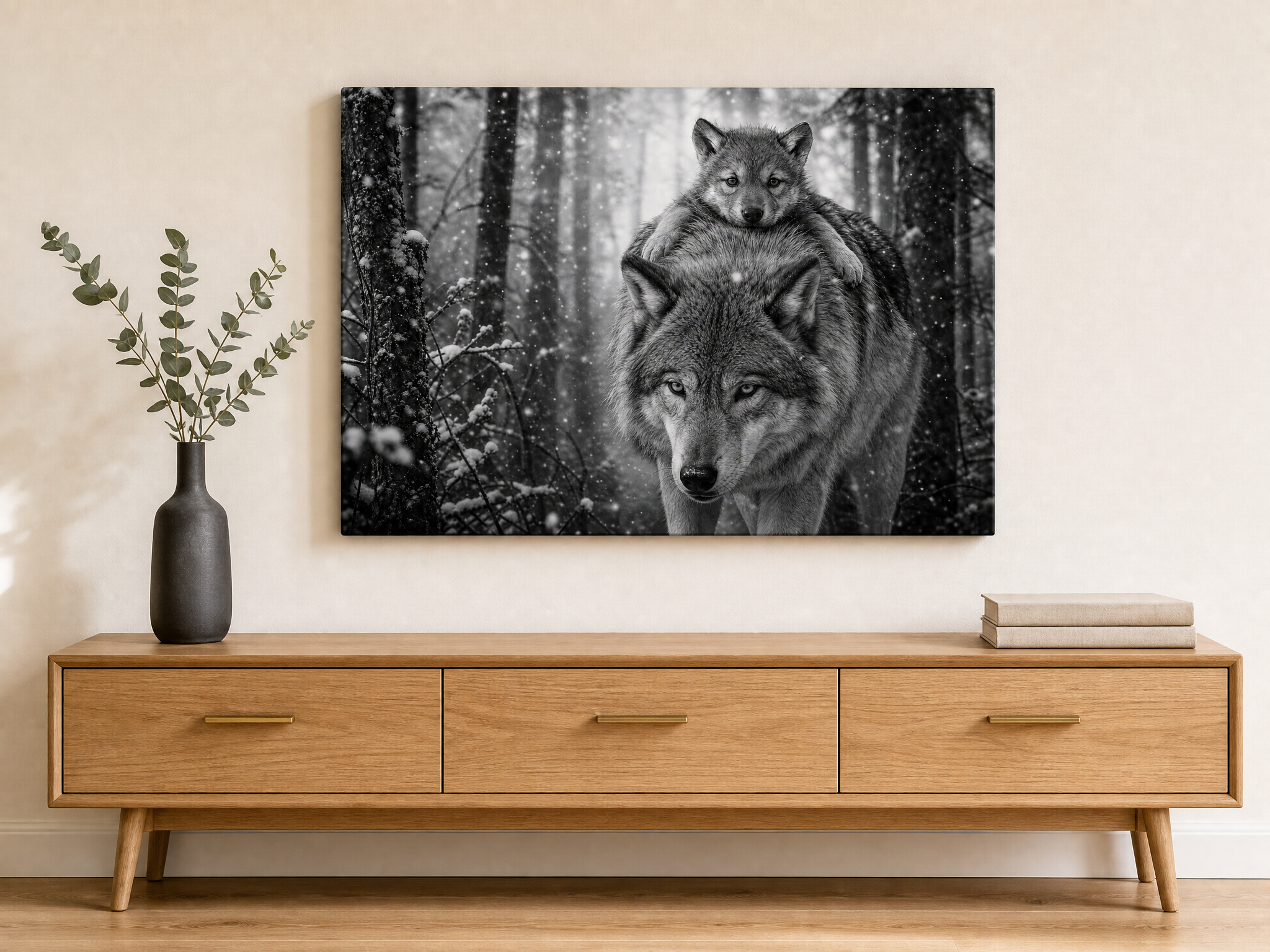
4. Black and white photographic. Monochrome wildlife photography, often in snowy or forested settings. The most flexible style because the absence of color lets the piece work in modern, minimalist, and even feminine rooms without fighting the palette.
5. Mythic or luxe. Wolf paired with eagle or other power animals, navy and gold palette, painterly finish. Reads as heraldic and bold. Best in masculine studies, statement entryways, and luxe primary bedrooms.
If you are not sure which family a piece belongs to, look at three things: the dominant color, the level of background detail, and whether the wolf is the only focal point or part of a wider scene. Classical oil is almost always warm and amber. Atmospheric moody is cool and partly hidden. Mythic luxe is navy and gold with a second animal in frame. Once you can categorize a piece, you can pair it with the right room.
Best Rooms for Wolf Canvases
Not every room benefits equally from wolf art. The motif has emotional weight, and weight needs the right wall to land on.
Home offices. The most natural home for wolf art. The motif's leadership and focus symbolism fits the room where you do your hardest thinking. Hang behind your desk so guests on video calls see it, or on the opposite wall so you face it while you work. Wolf pack pieces especially reinforce the idea of leading a team. See our home office wall art guide for measurements and placement.
Primary bedrooms. Atmospheric and photographic wolves work best here. The protective symbolism fits the room where you sleep, and the cool moody palettes are calming rather than activating. Hang above the bed (centered on the headboard, 6 to 10 inches above), or above a dresser if the bed wall is already busy. Avoid placing classical oil wolves directly above the bed because the warm amber can read too intense in a sleep space.
Living rooms and dens. Classical oil and mixed media pieces shine in these spaces. The trick is going bigger than instinct suggests. A small wolf canvas over a sofa reads as decoration, while a 24x36 inch (60x90 cm) or 30x40 inch (75x100 cm) piece reads as art. For an open plan living and dining area, choose an atmospheric piece with enough landscape behind the wolf to anchor the whole room.
Cabins, lake houses, and lodges. The category that wolf art was almost made for. Rustic and mixed media styles thrive here, especially over a stone fireplace, behind a leather sofa, or above a bunk room dresser. Pair with wool throws, antler accents, and warm Edison bulb lighting. For full cabin styling, our lake house and cabin wall art guide covers everything from mantel to mudroom.
Libraries, studies, and dark academia rooms. Classical oil and mythic luxe wolves belong here. The 19th century scientific illustration tradition fits the bookshelf mood, and a single wolf canvas above a reading chair completes a corner without crowding it. For more on this trend, see our dark academia wall art guide.
For sizing in each room, our wall art size guide walks through every standard furniture pairing with measurements in both inches and centimeters. The American Society of Interior Designers recommends that any single canvas occupy 60 to 75 percent of the width of the largest furniture piece beneath it, which is the rule of thumb we follow when sizing wolf canvases for client homes.
The Six Wolf Canvas Picks
These six pieces are our most-recommended wolf canvases at Heva, chosen to cover every major style family and room type. Each is hand finished, framed, and ready to hang, shipped in protective packaging within the United States. Click any piece to see size options. We offer 12x9 inch (30x23 cm) up to 36x36 inch (90x90 cm), in horizontal, vertical, and square orientations.
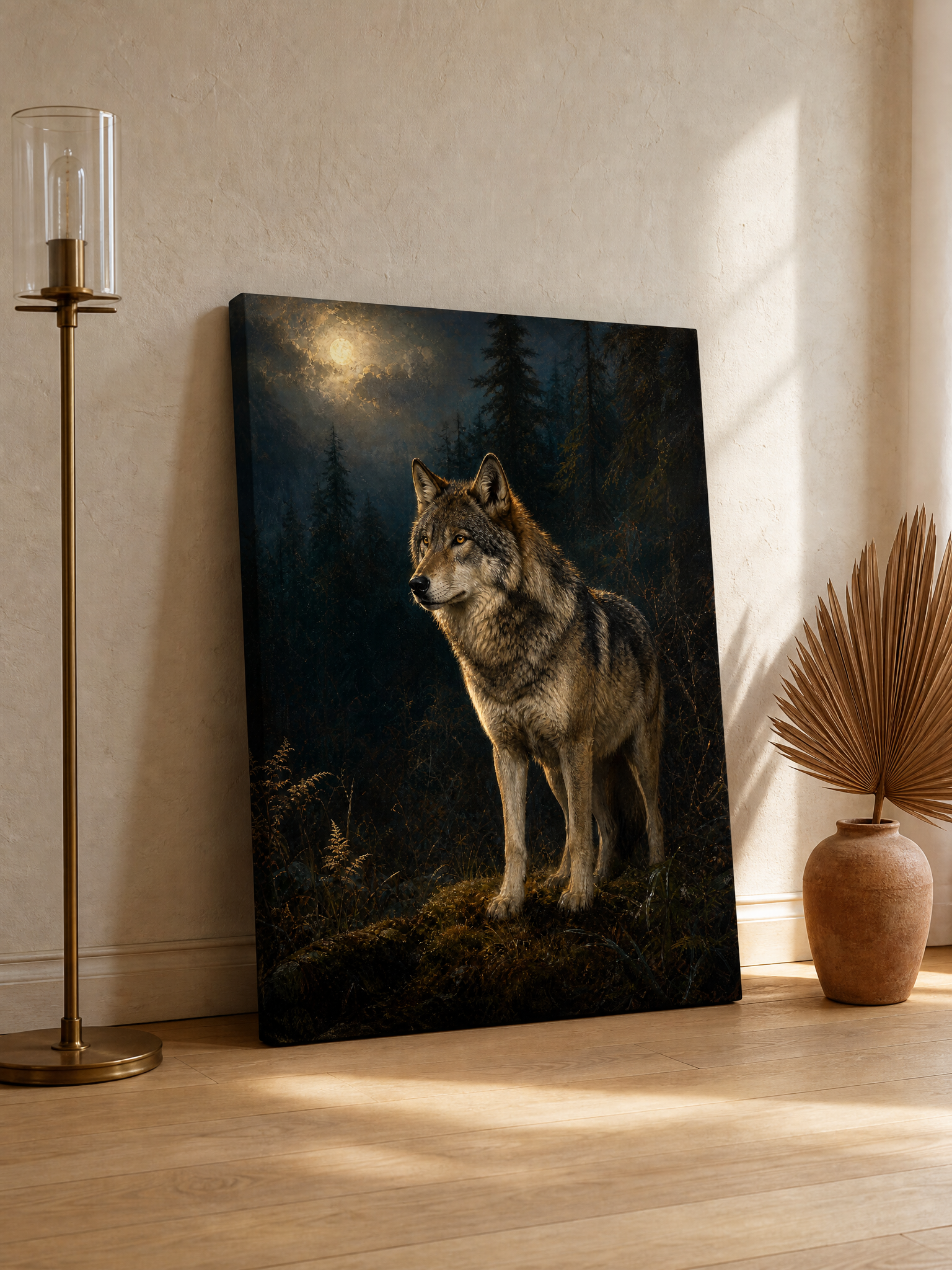
Wolf In Moonlit Forest Classical Canvas
This is the piece we recommend first when someone tells us they want a wolf canvas that does not look like a poster. The composition borrows from 19th century animal painting, with the wolf standing in a clearing under a partly hidden moon, all rendered in warm amber and umber against a deep charcoal forest. The brushwork is visible at close range and reads as a real painting from across the room.
It belongs above a leather sofa, behind a wooden desk, or anchoring a wall of dark bookshelves. The amber tones harmonize with brass lighting and walnut furniture, and the partly visible moon gives the piece quiet depth. Choose 24x36 inch (60x90 cm) above a standard 84 inch sofa or 30x40 inch (75x100 cm) above an oversized one. View the Wolf In Moonlit Forest Classical Canvas.
Wolf Atmospheric Moonlit Forest Painting
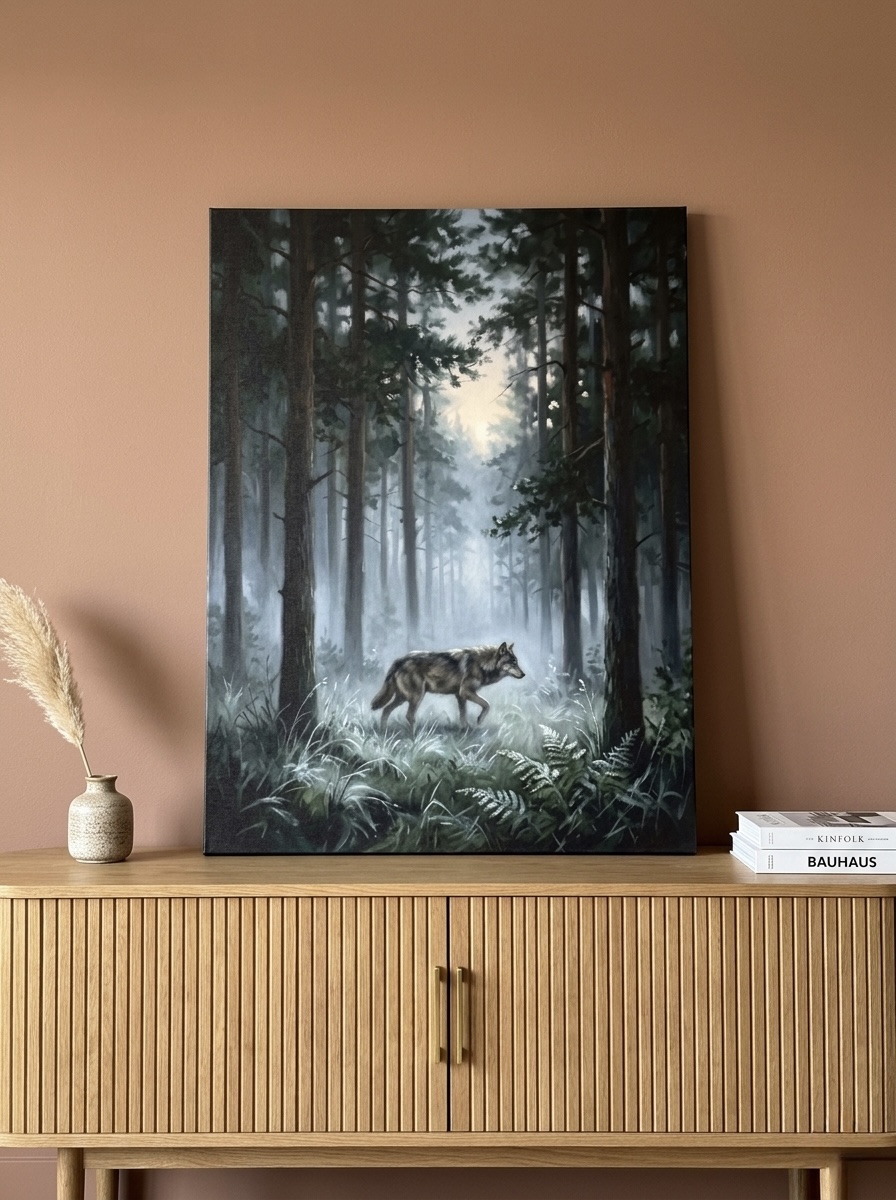
The cooler cousin of our classical wolf, this canvas swaps amber for slate blue and silver. The wolf is partly hidden in the trees, which makes the piece feel cinematic rather than declarative. It works in a primary bedroom where the homeowner wants wildlife art that does not activate the nervous system before sleep, and it works equally well in a lounge or moody home office.
Pair it with charcoal walls, warm wood floors, cream linen bedding, and a single brass or matte black sconce. The cool palette also gives this piece flexibility on a dove gray or muted green wall. Choose 18x24 inch (45x60 cm) for a smaller bedroom or 24x36 inch (60x90 cm) for a primary suite. See the Wolf Atmospheric Moonlit Forest Painting.
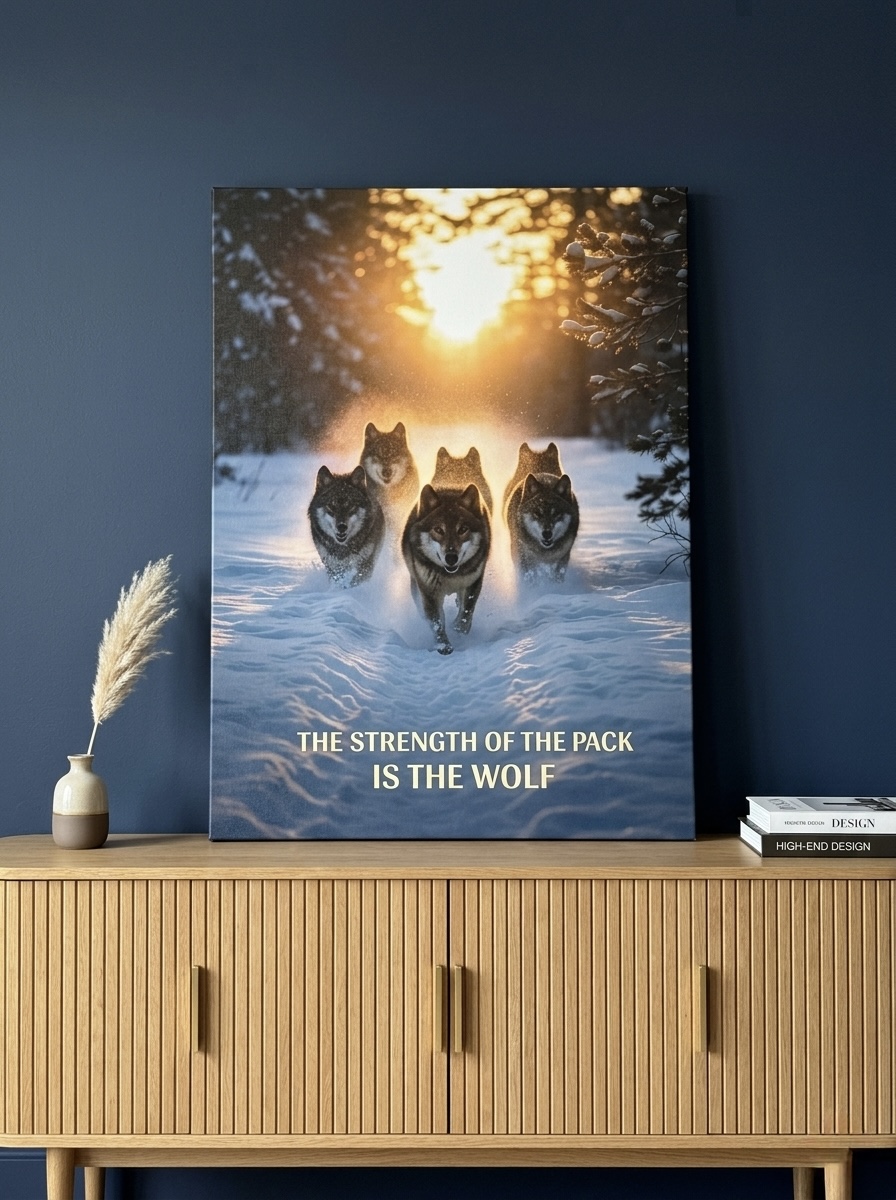
Wolf Pack Atmospheric Wildlife Canvas
The pack piece is the one we recommend for offices, especially home offices and the offices of people who manage teams. The composition shows a full wolf pack moving together through a misty landscape, which reads visually as the leadership idea most offices try to convey. The warm gold accents on the wolves draw the eye and prevent the navy from feeling cold.
Hang it behind a desk so it is visible on video calls, or on the opposite wall so you face it while you work. The piece pairs naturally with leather, walnut, brass, and oxblood. For background on motivational art, our motivational home office art guide covers placement, lighting, and pairing with quote prints. Explore the Wolf Pack Canvas.
Wolf Eagle Painterly Navy Gold Canvas
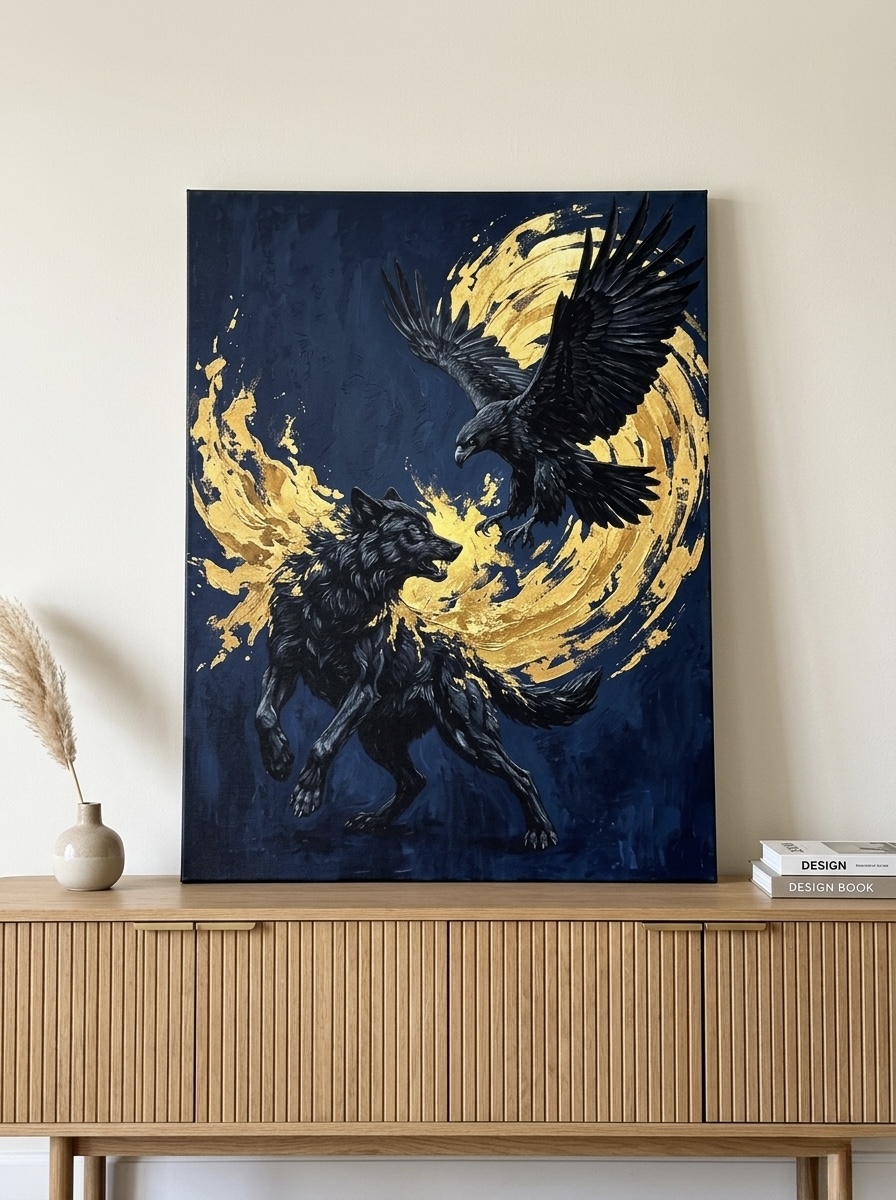
The mythic pick. This canvas pairs the wolf with an eagle in a single dynamic composition, all rendered in deep navy with metallic gold accents. The pairing reads as heraldic, the way coats of arms combine two power animals into a single visual idea, and the navy and gold palette signals luxe rather than rustic. It is the wolf piece for people who want art that announces itself.
It belongs in a statement entryway, a luxe primary bedroom, or a dark walled study. Pair with oxblood, dark green, or deep clay walls, brass picture lights, and velvet upholstery. Avoid pairing with rustic cabin elements because the navy and gold will feel out of place next to plaid wool. Choose 24x36 inch (60x90 cm) or larger for the full mythic effect. View the Wolf Eagle Navy Gold Canvas.
Wolf On Rustic Wood Mixed Media Canvas
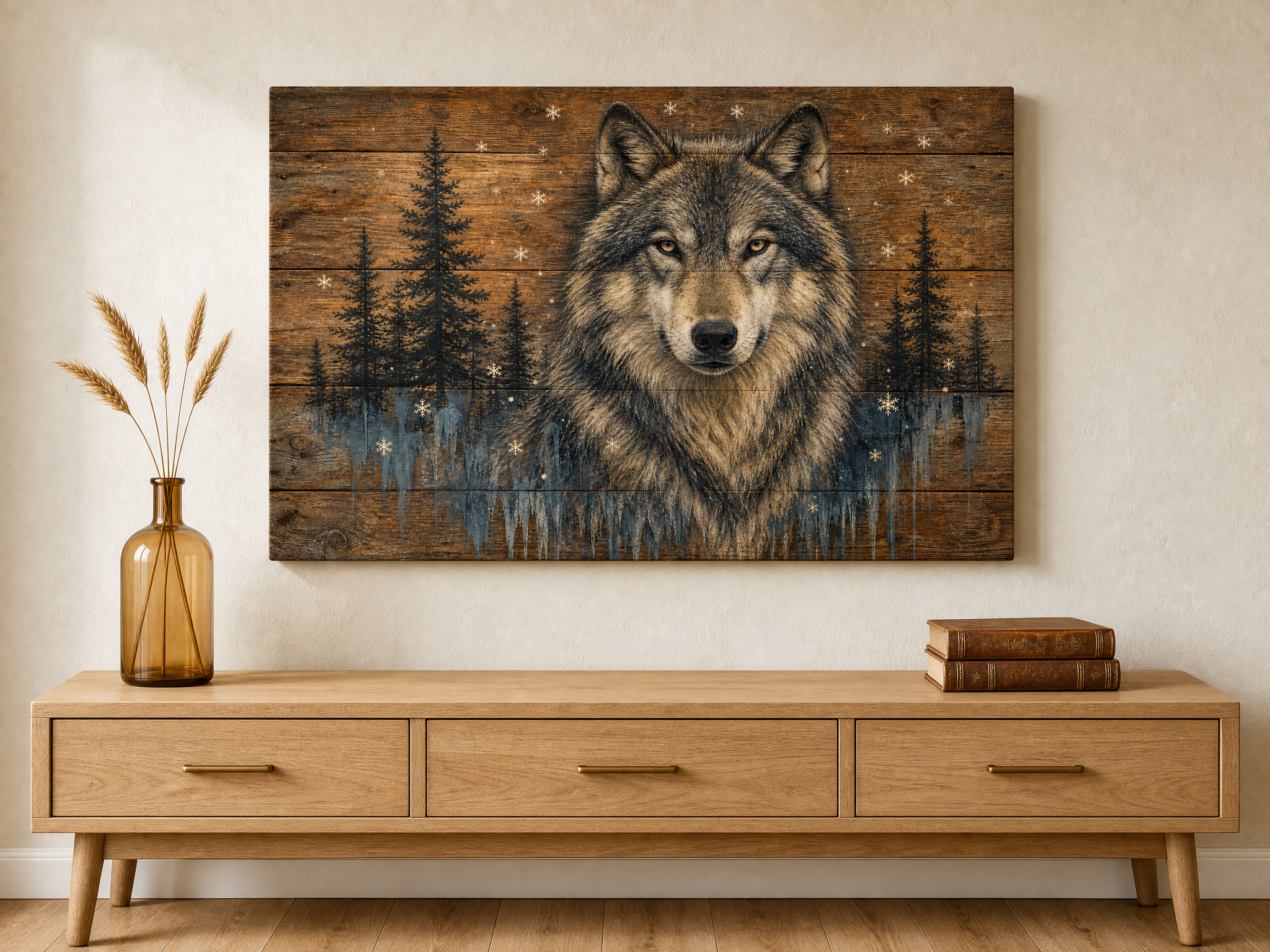
The cabin pick. This piece layers a wolf portrait over a weathered wood plank background, with frosted edges and a warm chestnut tone that reads as alpine cabin from across the room. The mixed media texture gives it depth that a flat oil painting cannot, and the slate blue accents prevent the warm wood from going one note.
It belongs above a stone fireplace, behind a leather sofa in a great room, or in a mudroom that opens onto a back deck. Pair with wool plaid throws, antler or birch accents, and warm Edison bulb lighting. For full cabin styling beyond this single piece, our forest wall art guide covers the broader woodland palette. See the Wolf On Rustic Wood Canvas.
Grey Wolf Glacier Mountains Canvas
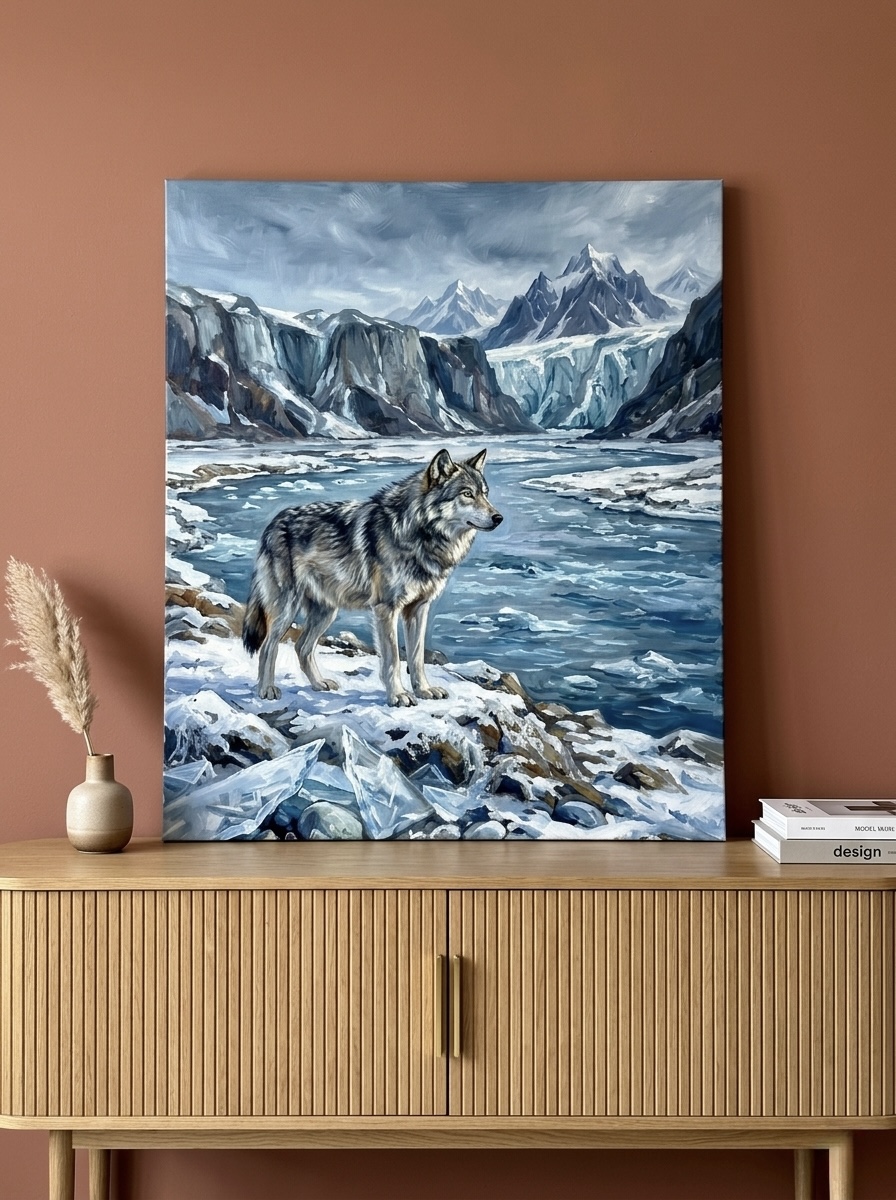
The landscape pick. This canvas places the wolf inside a misty glacier mountain scene, with the wolf occupying perhaps a quarter of the composition and the landscape carrying the rest. The result is a piece that reads first as a mountain painting and second as wildlife art, which makes it the most versatile wolf canvas for homeowners who are not sure they want a single animal as the focal point.
It works in Pacific Northwest interiors, mountain modern living rooms, and any space already leaning toward blue and cream. Pair with natural wood floors, sheepskin throws, and dove gray walls. The cool palette gives this piece flexibility in rooms where a warmer classical wolf would feel too intense. Choose 30x40 inch (75x100 cm) above a sofa for full landscape effect. Browse the Grey Wolf Glacier Mountains Canvas.
How to Pair Wolf Art With the Rest of the Room
A wolf canvas is rarely the only piece in a room, and the pairing rules matter as much as the piece itself. The wolf needs a quiet supporting cast or the room starts to feel like a hunting lodge gift shop.
Walls and paint. Cool wolves (atmospheric, photographic, glacier) want dove gray, sage, or charcoal walls. Warm wolves (classical oil, rustic, mythic luxe) want oxblood, deep clay, or dark green walls. White walls work for any wolf piece but ask the canvas to do all the emotional work.
Furniture. Leather chesterfields, walnut desks, and brass lamps amplify classical and luxe wolves. Reclaimed wood, wool plaid, and matte black hardware amplify rustic wolves. Sheepskin, light oak, and natural linen amplify cool and photographic wolves. Avoid pairing wolf art with high gloss white lacquer furniture, which fights the natural mood.
Lighting. Wolf canvases benefit from a single warm light source aimed at the piece, not a wash of cool ceiling light. A picture light, a wall sconce, or a floor lamp angled at the canvas brings out the brushwork. Cool LED ceiling lights flatten the painting and make it read as printed rather than painted.
Other art. If you are building a gallery wall with a wolf as the anchor, surround it with quieter pieces: a single line drawing, a small landscape, a moody botanical, or a black and white photograph. Avoid pairing a wolf canvas with another large predator (lion, bear, eagle on its own) in the same line of sight because the room starts to feel like a competition. The exception is the wolf and eagle pairing within a single canvas, which is composed to coexist.
If you are mixing wolf art with other animal pieces in different rooms, our wildlife wall art guide covers how to thread the visual story across an open floor plan without making the whole house feel like a nature center.
Common Mistakes to Avoid
After helping hundreds of customers place wolf canvases, the same five mistakes come up over and over. Avoid these and the piece will look intentional rather than incidental.
1. Going too small. Wolf art is emotional art, and small wolves get lost. If you are choosing between two sizes, almost always go up. A 16x20 inch (40x50 cm) wolf above a king bed reads as an afterthought. A 30x40 inch (75x100 cm) wolf in the same spot reads as the point of the wall.
2. Hanging too high. Center the canvas at 57 to 60 inches (145 to 152 cm) from the floor, measured to the middle of the piece. Most homeowners hang art four to six inches too high, which makes the canvas feel like it is floating away from the room. The museum standard cited by the Metropolitan Museum of Art uses 57 inch (145 cm) center as the gallery default for a reason.
3. Pairing with the wrong palette. A warm amber classical wolf on a cold blue gray wall fights for attention. A cool atmospheric wolf on a warm beige wall looks washed out. Match the temperature of the canvas to the temperature of the wall, or paint a feature wall behind the piece to bring them into agreement.
4. Over crowding the room. One wolf canvas is a statement. Two wolf canvases in the same room is a theme. Three is a collection that starts to look like a museum gift shop. If you love wolves enough to want multiple pieces, spread them across different rooms so each has its own moment.
5. Skipping the lighting. A wolf canvas without dedicated lighting is doing half its job. Add a picture light, a track light angled at the piece, or a floor lamp aimed up at the canvas. Even a $40 plug in picture light will roughly double the visual presence of a moody wolf painting.
Wolf Wall Art FAQ
What does wolf wall art symbolize?
Wolf wall art symbolizes loyalty, family, intuition, and quiet leadership. The wolf is read across cultures as a protector of the pack and a creature of instinct, which is why wolf canvases land well in home offices, bedrooms, studies, and cabins where those values matter to the homeowner.
Is wolf wall art only for masculine or rustic spaces?
No. Modern wolf art now spans soft watercolor, monochrome photography, classical oil, and mythic navy and gold palettes. A black and white wolf photograph or a misty mountain wolf painting reads as quiet wildlife art and works in living rooms, studios, and even feminine bedrooms when paired with cream walls and natural wood.
What rooms work best for wolf canvases?
Wolf canvases work especially well in home offices, primary bedrooms, libraries, studies, lake houses, cabins, and lounges. The motif suggests focus, protection, and connection to the natural world, which fits rooms where those moods belong. Wolf pack pieces are especially strong above a desk or behind a leadership chair.
What size wolf canvas should I buy?
For above a desk or console, choose 16x20 inch (40x50 cm) or 18x24 inch (45x60 cm). For above a sofa or bed, choose 24x36 inch (60x90 cm) or 30x40 inch (75x100 cm). The canvas should occupy roughly two thirds the width of the furniture beneath it. Atmospheric and photographic wolves can go larger without overwhelming the room.
What colors pair best with wolf wall art?
Charcoal, slate blue, warm cream, and amber all pair beautifully with wolf imagery. For a moody cabin, build around charcoal walls and warm wood. For a luxe office, lean navy, gold, and oxblood. For a soft, minimalist room, choose dove gray walls with cream and natural linen accents. Avoid bright primary palettes that fight the wolf's natural mood.
Is wolf wall art still trending in 2026?
Yes. Wolf canvases are riding the same wave as dark academia, lodge revival, and biophilic design. The current 2026 versions lean either atmospheric and moody (moonlit forest, misty mountain) or mythic and luxe (navy and gold, eagle and wolf pairings), both of which read more elevated than the airbrushed wolf posters of a decade ago.
Quick Reference Table
| Canvas | Best For | Dominant Colours | Link |
|---|---|---|---|
| Wolf In Moonlit Forest Classical | Living rooms, libraries, traditional studies | Amber, umber, charcoal | View piece |
| Wolf Atmospheric Moonlit Forest | Primary bedrooms, lounges, moody offices | Charcoal, slate blue, silver | View piece |
| Wolf Pack Atmospheric Wildlife | Home offices, executive desks, video call walls | Navy, gold, brown, cream | View piece |
| Wolf Eagle Painterly Navy Gold | Luxe studies, statement entryways, dark walled bedrooms | Navy, gold, black | View piece |
| Wolf On Rustic Wood Mixed Media | Cabins, lake houses, lodges, great rooms | Chestnut, charcoal, cream, slate blue | View piece |
| Grey Wolf Glacier Mountains | Pacific Northwest living rooms, mountain modern interiors | Blue, white, gray, cream | View piece |
A wolf canvas is a long term piece. The motif does not age the way trendy abstracts or seasonal florals do, and a well chosen wolf painting will hold its place on the wall through three or four redecorations. Choose the family that fits your room (classical, atmospheric, mixed media, photographic, or mythic) and the size that fits your furniture, and the piece will quietly do its job for years. Ready to start? Browse the full wolf and woodland wildlife collection for sizes, framing options, and shipping details, or visit our man cave wall art guide and wildlife wall art guide for related pieces that pair beautifully with the wolves above.