Safari Wall Art: Bring the African Savanna Into Your Home
The Heva Team
Art Curators & Interior Design Enthusiasts · March 9, 2026 · 16 min read
Safari wall art brings warm earth tones and powerful animal subjects into any room. From bold big cats to cultural heritage portraits, here is how to style safari canvas prints room by room.
Safari wall art turns a room into a destination. The combination of warm earth tones, powerful animal subjects, and wide-open landscapes gives any space the atmosphere of an African savanna without a single passport stamp. Whether you are decorating a living room, a home office, or a hallway, safari-themed canvas prints bring a grounded, natural energy that mass-produced abstract art simply cannot replicate. This guide walks you through exactly how to choose the right safari pieces, which animal subjects suit which rooms, and how to style them so your home feels like a curated lodge rather than a random poster collection.
Ready to browse? Shop the Wild Canvas collection or keep reading for our top picks and expert tips.
Why Safari Wall Art Commands Attention
Safari art taps into something primal. Humans evolved on the African savanna, and research in environmental psychology consistently shows that we respond positively to images of open landscapes, large animals, and warm natural light. A 2019 study published in the journal Frontiers in Psychology found that nature imagery in indoor environments reduces perceived stress by up to 15 percent compared to blank or abstract walls. Safari subjects, from lions mid-roar to elephants crossing a dry riverbed, carry an intensity that generic nature landscapes alone sometimes lack.
Unlike mass-produced landscape prints, safari wall art anchors a room with a specific narrative. A single lioness portrait above a leather sofa tells your guests something about the space before anyone says a word. The textures of fur, mane, and sun-baked earth translate beautifully to canvas, especially when printed on heavyweight matte cotton with archival inks. The result is art that looks hand-painted even from 30 cm (12 inches) away.
If you are interested in African art more broadly, including masks, textiles, and cultural motifs, our guide on African wall art and heritage canvas prints covers the full scope. This post focuses specifically on the safari and wildlife side of the continent: the animals, the landscapes, and the earthy palettes that define the savanna aesthetic.
The Safari Colour Palette: Why Earthy Tones Calm the Mind
The typical safari palette centres on ochre, burnt sienna, raw umber, terracotta, and dusty gold, punctuated by deep charcoal or true black from animal fur and shadows. These earth tones are not random. Colour psychologist Angela Wright documented that warm browns and tans reduce heart rate and create a grounding effect, particularly in living spaces where people gather in the evening.
When you hang safari wall art, you are essentially adding a pre-mixed warm colour swatch to your wall. Here is how the key tones work in practice:
- Ochre and gold reflect the African grasslands at golden hour. They pair perfectly with cream walls, jute rugs, and rattan furniture. Use these tones as the dominant 60 percent of your room's colour story.
- Burnt sienna and terracotta echo the laterite soil of the savanna. These tones pop against grey or sage-green walls and add warmth to minimalist spaces. They work as accent pillows, vases, or a secondary canvas piece.
- Charcoal and black provide contrast via animal subjects like panthers, gorillas, and buffalo. They anchor lighter palettes and prevent a room from feeling washed out. A single dark-toned animal portrait balances three or four lighter earth-toned accessories.
- Dusty green and olive appear in acacia foliage and dry-season brush. They connect your art to any houseplants you already own, from fiddle-leaf figs to snake plants, creating a visual bridge between the living and the printed.
The design team at Woodgrain recommends starting with one statement piece that carries the majority of your colour story, then layering two to three smaller accents, such as throw pillows or a woven basket, in matching earth tones. This layered approach ensures the safari theme reads as intentional, not costume-like.
Choosing the Right Safari Animal Subject
Not every animal suits every room. Think about the emotional weight of the subject and the mood you want to set:
- Lions and lionesses: Power, confidence, and warmth. Ideal for living rooms, dining rooms, and home offices where you want bold presence. A 76 cm by 102 cm (30 by 40 inch) lion portrait becomes the natural focal point above a mantel or console table.
- Elephants: Wisdom, family, and calm strength. Perfect for bedrooms, nurseries, or meditation corners. Elephants carry a gentle gravitas that does not overwhelm a quiet space.
- Leopards and cheetahs: Sleek, luxurious, and slightly daring. Best in entryways, dressing rooms, or accent walls where you want an element of surprise. Leopard art paired with brass hardware and velvet upholstery creates an immediate luxury-lodge atmosphere.
- Gorillas and primates: Contemplative and moody. Their dark tonal range suits studies, libraries, and darker colour schemes. A silverback portrait in sepia or charcoal reads as sophisticated, not aggressive.
- Big cats (cougars, tigers): Athletic energy and movement. These work well in spaces that benefit from visual dynamism, such as home gyms, stairway walls, or teenage bedrooms.
For a deeper exploration of wildlife art across all habitats, including forests, oceans, and mountains, see our wildlife wall art guide.
Our Top 6 Safari Canvas Picks
1. Lioness Baroque Canvas Wall Art
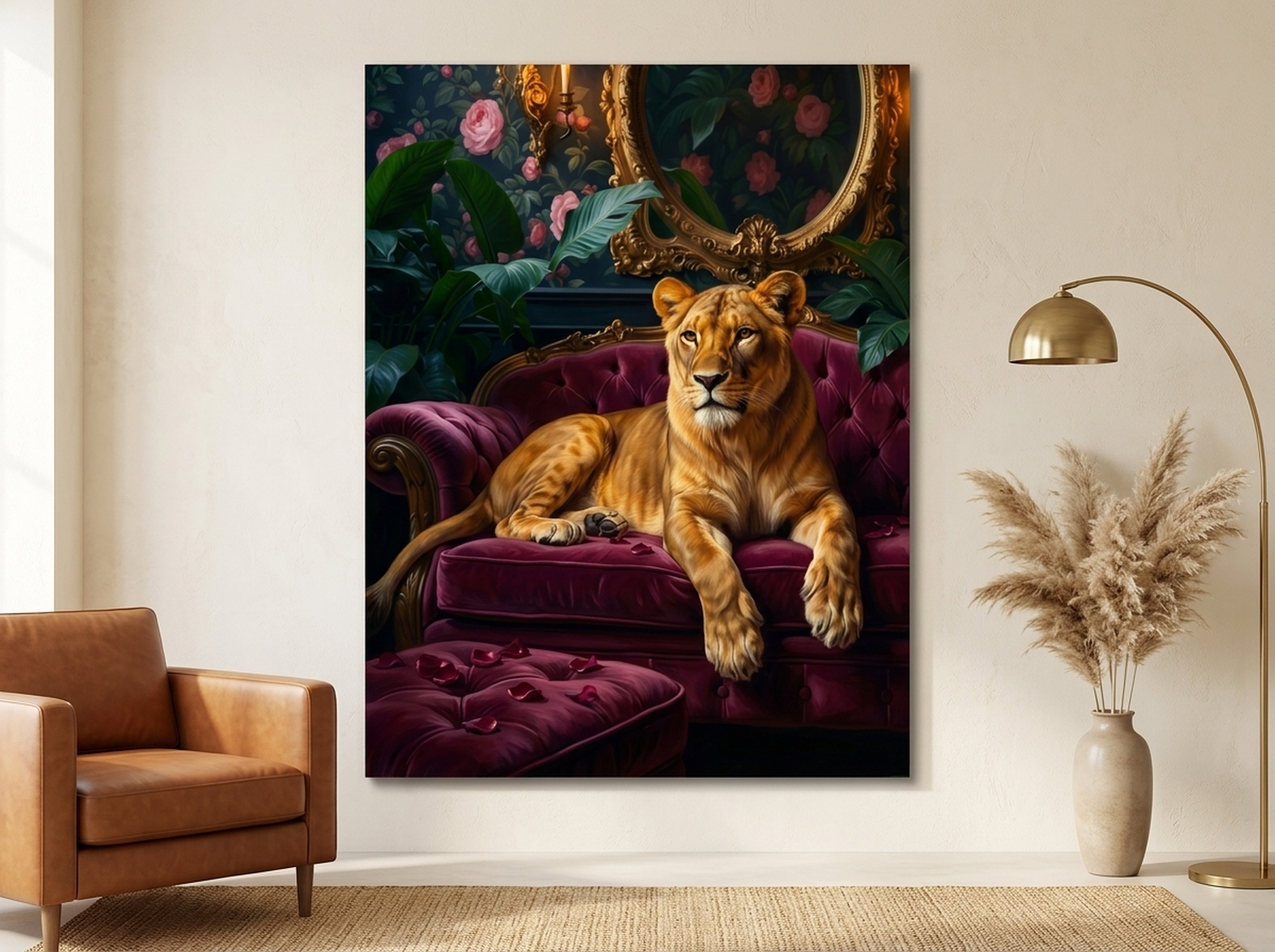
This is not your typical nature documentary still. The Lioness Baroque blends classical European floral borders with the raw presence of a lioness portrait, creating a piece that belongs equally in a Tuscan villa or a Manhattan penthouse. Burgundy and antique gold dominate the palette, making it ideal above a dark leather Chesterfield or a marble-top sideboard. The baroque framing motif adds ornamentation without clutter, and the matte canvas finish prevents glare under evening lamplight. Hang it at 152 cm (60 inches) centre-height in a living room to command the entire seating area.
View the Lioness Baroque Canvas
2. Leopard Print Canvas Wall Art
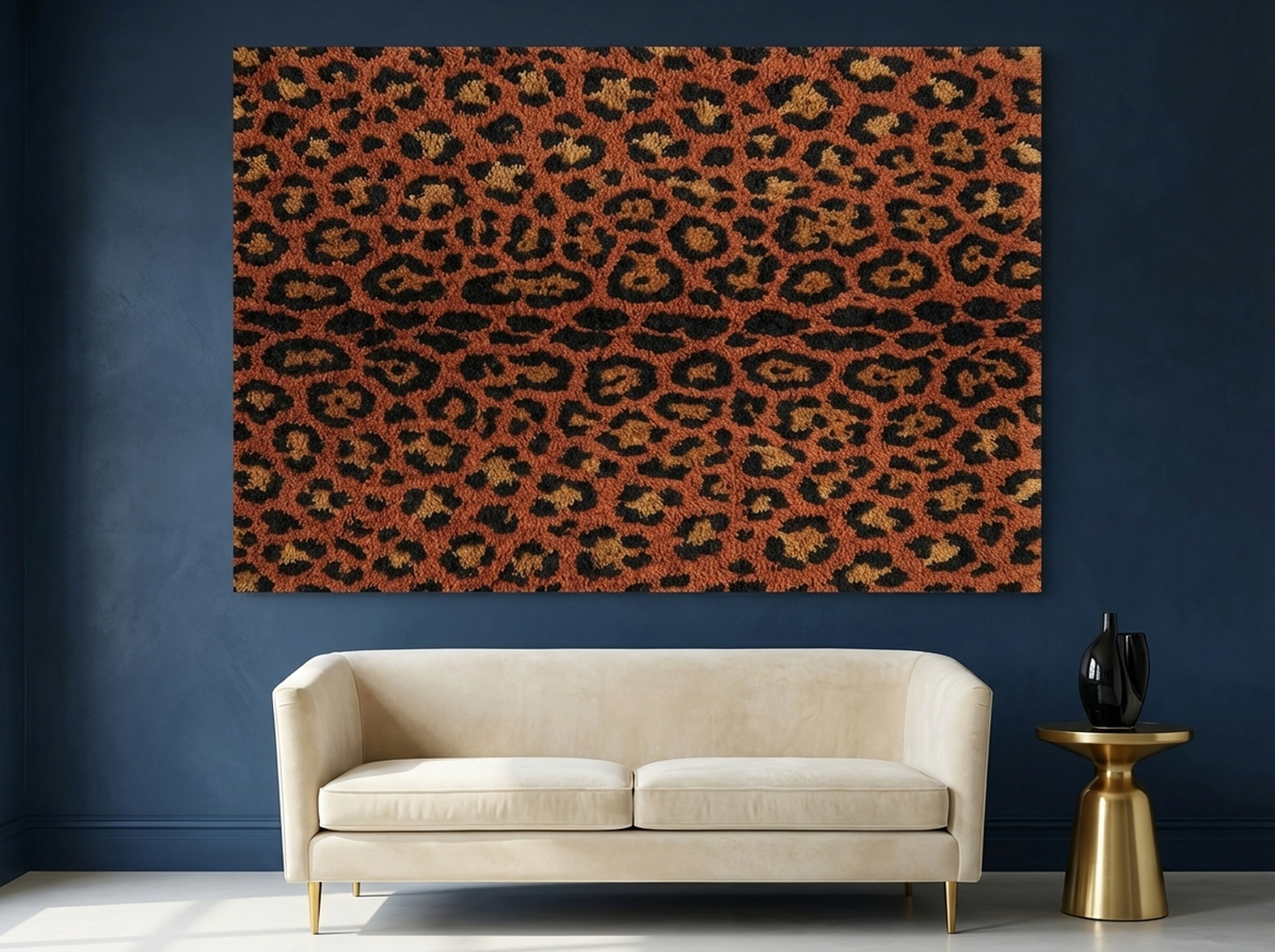
For those who want the safari vibe without a literal animal face, the Leopard Print canvas delivers pattern-driven luxury. Terracotta rosettes on a warm background evoke the textures of an actual leopard pelt while maintaining an abstract, textile-like quality that works in maximalist interiors. Pair this with a navy or forest-green accent wall and brass sconces for a look that channels high-end safari lodge design. The print measures beautifully at 61 cm by 91 cm (24 by 36 inches), fitting neatly between two bedside lamps or centred above a console in an entryway. The rich earthen tone blends seamlessly with rattan, sisal, and reclaimed wood furniture.
3. African Elder Portrait Canvas Wall Art

Safari is not only about animals. The African Elder Portrait captures the human side of the savanna, depicting a weathered face full of wisdom, dignity, and quiet strength. Expressionist brushwork in burgundy and gold gives it a painterly depth that photographs simply cannot match. This piece bridges the gap between wildlife art and cultural portraiture, making it perfect for collectors who want their safari theme to acknowledge the people of the continent as well as the animals. Place it in a study, library, or above a fireplace mantel. At 76 cm by 102 cm (30 by 40 inches), it is substantial enough to anchor a wall without overwhelming it.
View the African Elder Portrait
4. Tiger Canvas Wall Art
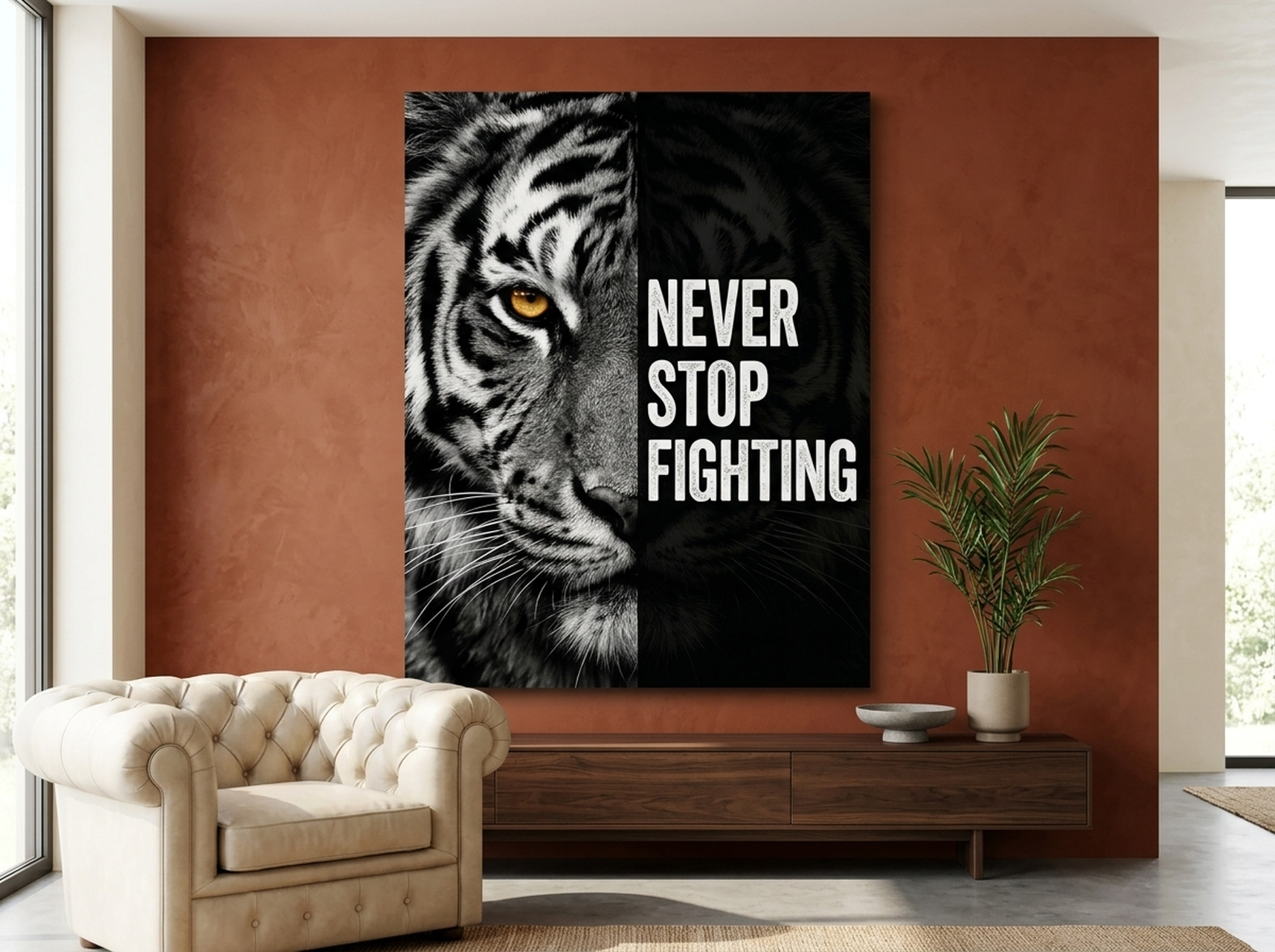
While tigers roam Asia rather than Africa, their raw predatory energy aligns perfectly with the safari aesthetic. This close-up portrait captures every stripe and whisker in rich black and amber tones that complement earthy interiors without clashing. The intense forward gaze makes this piece a conversation starter in any room. Position it on a feature wall in a living room or home office where the drama can breathe. The contrast between deep black and burnished amber works exceptionally well against warm grey walls or exposed brick. At 61 cm by 91 cm (24 by 36 inches), it delivers gallery-level impact without dominating smaller rooms.
5. Silverback Gorilla Canvas Wall Art
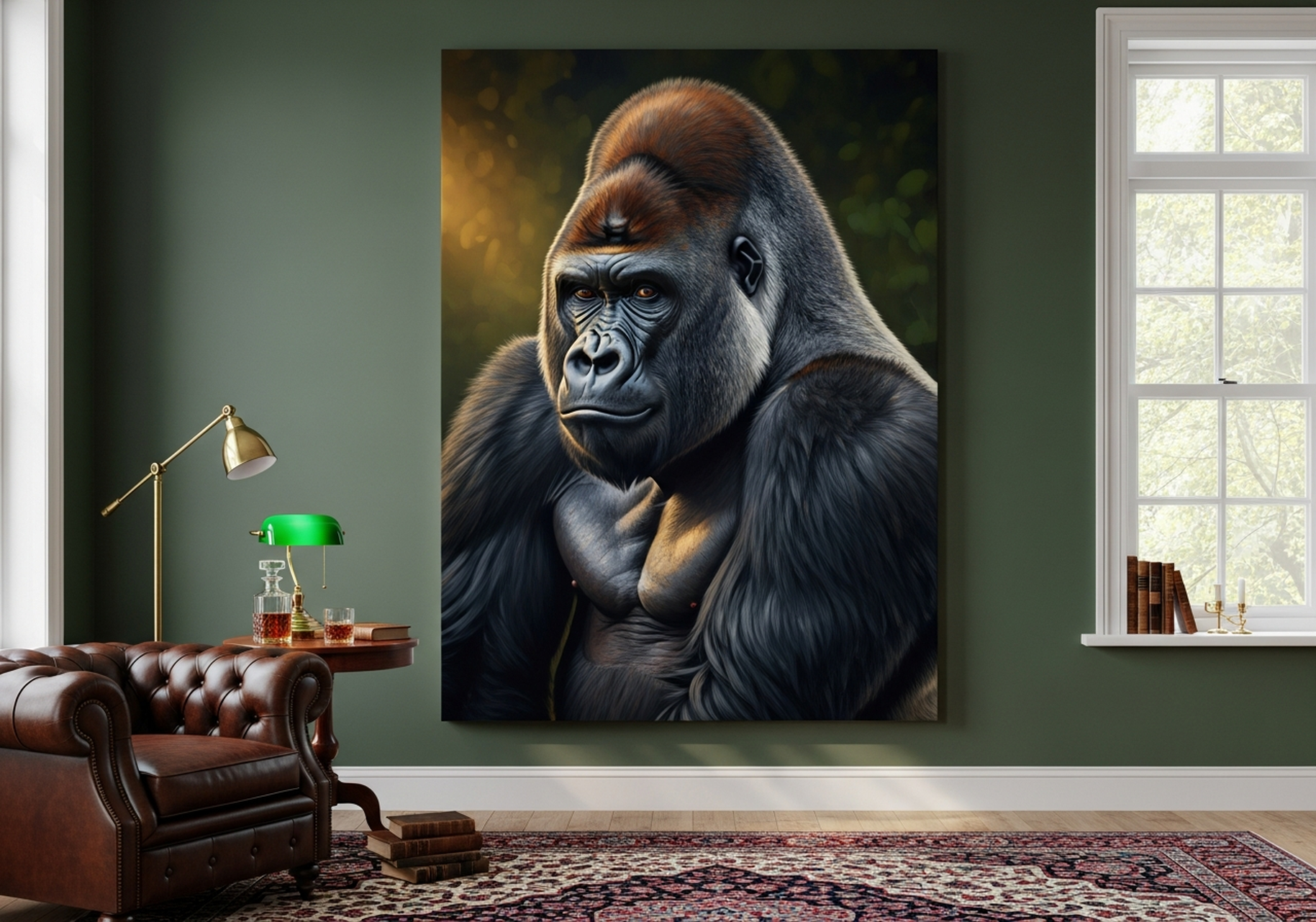
Few animals carry the same contemplative weight as a silverback gorilla. This oil-painting-style portrait renders the primate in dark, moody tones that shift between charcoal, forest green, and deep brown depending on the light. It is the kind of piece that makes a study or home library feel like a private members club. The gorilla's thoughtful expression invites quiet reflection, which is exactly what you want in a space dedicated to reading or focused work. Mount it above a writing desk or between two tall bookcases. The large format, ideally 76 cm by 102 cm (30 by 40 inches), gives the subject room to breathe and avoids the cramped look that plagues smaller wildlife prints.
View the Silverback Gorilla Canvas
6. Mountain Lion Canvas Wall Art
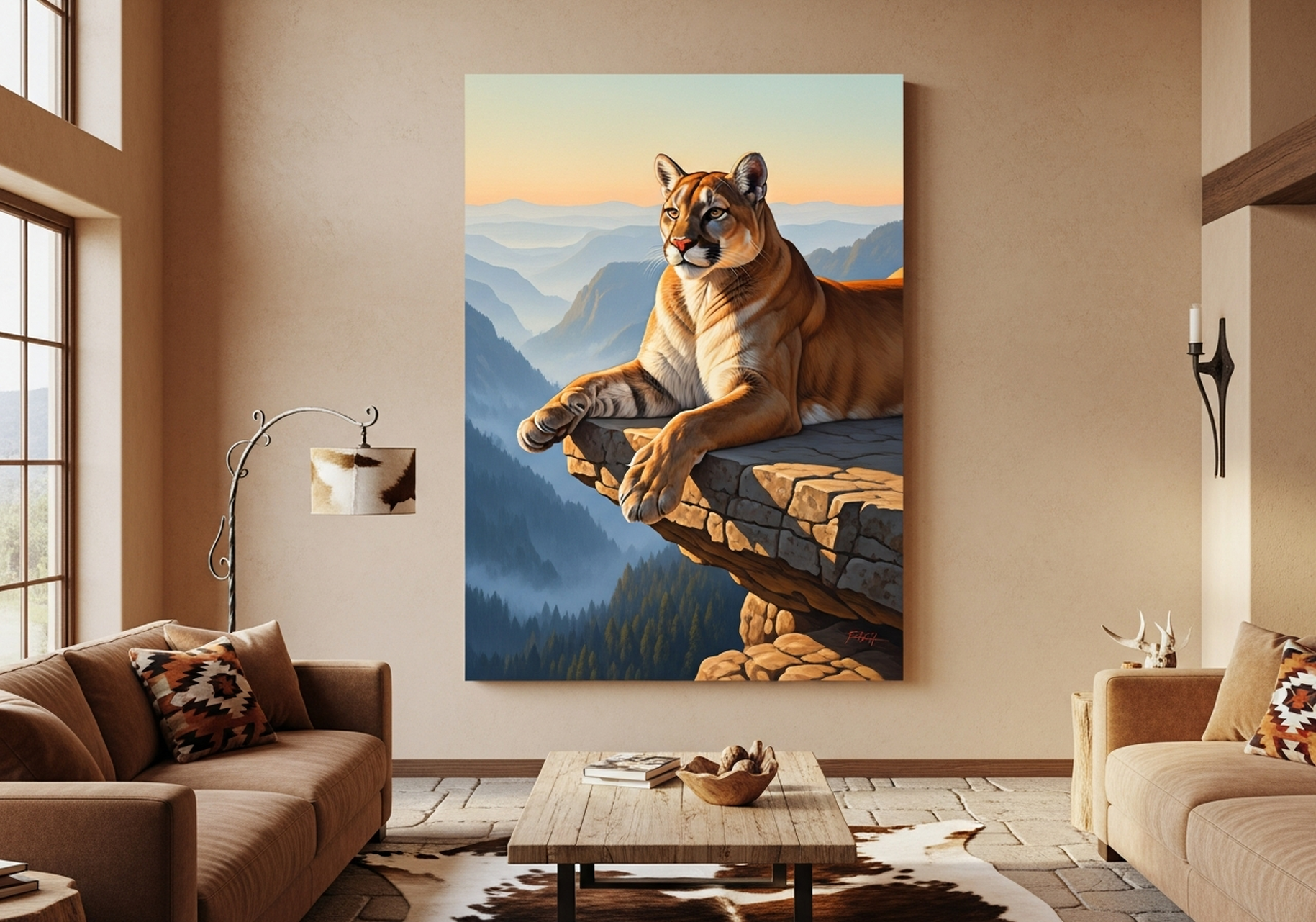
The Mountain Lion painting brings a western wilderness energy that blends surprisingly well with safari themes. Cougars share the sleek musculature and predatory poise of their African cousins, and this particular print captures a puma in a sun-drenched mountain setting with warm golds and tawny browns that slot right into any earthy palette. If your safari-inspired room already includes African pieces and you want to expand the theme across continents, this is the bridge piece. It looks outstanding above a rustic wood mantel or flanking a large window with natural light. The colour temperature matches perfectly with terracotta planters, leather-wrapped accessories, and raw linen curtains.
Room-by-Room Safari Styling Guide
Living Room
The living room is where safari art makes its biggest impact. Choose one large statement piece, at least 76 cm by 102 cm (30 by 40 inches), and position it above the sofa or fireplace. Keep the frame line 15 to 20 cm (6 to 8 inches) above the sofa back. Complement with two to three smaller earthy accents: a woven seagrass basket, a terracotta vase, and a faux-fur throw in tawny or cream. The article on safari style home decorating at Touch of Class recommends layering textures rather than adding more wall art, as one powerful focal piece avoids visual clutter.
Home Office
In a workspace, safari art serves double duty as motivation and atmosphere. A gorilla or lion portrait directly behind your desk chair appears on video calls and subtly communicates authority and depth of character. Keep the piece at eye level when seated, typically around 112 cm (44 inches) from the floor to the centre of the canvas. Avoid overly busy compositions: a single animal portrait in dark tones keeps the background clean for video conferences while still adding personality. Consider pairing the art with a brass desk lamp and a leather desk pad to complete the lodge-meets-office look.
Bedroom
Safari art in the bedroom should lean calm rather than fierce. Opt for sunset savanna landscapes, elephant family scenes, or softer-toned leopard prints rather than roaring predators. Hang above the headboard, centred and no more than 20 cm (8 inches) above the headboard top. The warm earth tones of safari art, particularly ochre, amber, and terracotta, pair with neutral bedding in cream, linen, or warm grey without creating visual tension at bedtime. A single large canvas works better here than a cluster, as the bedroom benefits from visual simplicity.
Hallway and Entryway
A narrow hallway benefits from a vertical safari print or a pair of matching smaller canvases stacked vertically with 5 cm (2 inches) between them. Choose a bold subject like a leopard or cheetah, since hallways are pass-through spaces where the art needs to register quickly. Mount at 150 to 155 cm (59 to 61 inches) centre-height, assuming standing viewers. The burst of wild energy at the front door sets the tone for the entire home and gives guests an immediate sense of your decorating personality.
Dining Room
Safari art in the dining room should complement the meal experience, not compete with it. A wide-format landscape showing acacia trees and a golden-hour sky works better here than a close-up predator portrait. Position the piece across from the main seating so diners can appreciate it without straining their necks. The warm tones integrate beautifully with wood dining tables, candlelight, and leather or upholstered chairs. If your dining room connects to the living room, coordinate the safari colour palette across both spaces for a cohesive flow.
Sizing and Hanging Rules for Safari Prints
Getting the size right is the difference between a room that feels curated and one that feels like a college dorm. Here are the specific measurements to follow:
- Above a sofa: The canvas should be 50 to 75 percent of the sofa width. For a 200 cm (79 inch) sofa, choose a print between 100 and 150 cm (39 and 59 inches) wide. This proportion prevents the art from looking either lost or top-heavy.
- Above a fireplace mantel: Leave at least 10 cm (4 inches) between the mantel top and the bottom edge of the frame. The canvas should not extend beyond the mantel edges on either side.
- Gallery wall arrangements: Space frames 5 to 8 cm (2 to 3 inches) apart. Use odd numbers of pieces (three or five) for the most visually balanced look. For detailed gallery wall techniques, see our step-by-step gallery wall guide.
- Hallways: Centre at 150 to 155 cm (59 to 61 inches) from the floor. This is slightly higher than living room height because viewers are standing, not seated.
- Eye-level rule: The centre of the artwork should land at 145 to 152 cm (57 to 60 inches) from the floor in most rooms. Adjust down by 10 cm (4 inches) in rooms where people are mostly seated, such as dining rooms and home offices.
For a deeper dive into hanging techniques, hardware options, and how to avoid damaging walls, read our complete guide to hanging wall art.
Common Mistakes to Avoid
- Going too small. Safari subjects need room to breathe. A 20 cm by 30 cm (8 by 12 inch) lion print over a king bed looks like a postage stamp on a parcel. Aim for at least 61 cm by 91 cm (24 by 36 inches) for any primary wall position.
- Mixing too many animal species. Two or three complementary species (lion plus elephant, leopard plus giraffe) create a cohesive theme. Five or more different animals on the same wall becomes a zoo gift shop. Curate deliberately rather than collecting randomly.
- Ignoring frame finish. A glossy metallic frame fights the natural, earthy feel of safari art. Choose matte black, raw oak, or walnut frames. Framed canvas with a slim built-in frame already solves this problem by keeping the aesthetic clean and maintenance-free.
- Forgetting the lighting. Safari art thrives under warm-toned lighting at 2700K to 3000K colour temperature. Cool white LEDs at 5000K will wash out the golden and terracotta tones that make safari art special. A single picture light or angled track light adds gallery drama for under twenty dollars.
- Overtheming the room. You do not need zebra-stripe curtains, leopard-print cushions, and a giraffe lamp to make safari art work. One strong canvas and two or three subtle nods, like a woven basket, an earth-toned throw, or a natural-fibre rug, is all it takes. Let the art do the heavy lifting and keep the supporting elements restrained.
Quick Reference: Which Piece Fits Your Room
| Product | Best For | Dominant Colours | Link |
|---|---|---|---|
| Lioness Baroque Canvas | Living room, dining room | Burgundy, antique gold | View |
| Leopard Print Canvas | Bedroom, entryway | Terracotta, warm tan | View |
| African Elder Portrait | Study, library, fireplace wall | Burgundy, gold, earth brown | View |
| Tiger Canvas | Living room, home office | Black, amber | View |
| Silverback Gorilla Canvas | Study, den, library | Charcoal, forest green, brown | View |
| Mountain Lion Canvas | Living room, hallway | Tawny gold, warm brown | View |
Frequently Asked Questions
What colours go best with safari wall art?
Earth tones work best: cream, warm grey, sage green, terracotta, and ochre. Avoid cool blues and stark whites, as they clash with the warm golden palette typical of safari prints. A neutral wall colour such as Swiss Coffee (Benjamin Moore OC-45) or Accessible Beige (Sherwin-Williams SW 7036) lets the art command attention without competition.
Can I mix safari wall art with modern decor?
Yes, and it often looks better than matching safari art with literal safari furniture. A sleek black-framed lion portrait above a mid-century modern credenza creates an appealing tension between wild subject matter and clean-lined furniture. The key is restraint: one or two safari pieces in a modern room read as intentional accents, while five or more read as a themed restaurant.
How do I clean and maintain canvas wall art?
Dust with a soft, dry microfibre cloth once a month. Avoid water, sprays, or chemical cleaners on canvas surfaces. If the print is behind glass or plexiglass, use a dedicated glass cleaner on the glazing only, never on the canvas itself. Keep canvas prints out of direct sunlight to prevent fading. Archival inks resist UV degradation, but prolonged exposure to afternoon sun will still shift colours over several years.
What size safari print should I choose for above a sofa?
The canvas should span 50 to 75 percent of the sofa width. For a standard three-seater sofa (roughly 200 cm or 79 inches wide), a canvas between 100 and 150 cm (39 and 59 inches) wide looks proportional. Hang the bottom edge 15 to 20 cm (6 to 8 inches) above the sofa back. Going too small is the most common mistake; when in doubt, size up.
Is safari wall art appropriate for a children's room?
Absolutely, but choose gentler subjects. Elephant families, giraffes, and zebras carry a playful warmth that suits nurseries and children's rooms. Avoid intense predator close-ups (roaring lions, snarling tigers) that might feel intimidating at bedtime. Soft watercolour or impressionist styles tend to work better for younger children than photorealistic prints.
Does safari art work in small rooms?
It works brilliantly, provided you follow one rule: one statement piece, no clutter. A single 61 cm by 91 cm (24 by 36 inch) canvas in a small room actually makes the space feel larger by drawing the eye to a focal point and creating a sense of depth. Avoid gallery walls of many small safari prints in compact rooms, as they fragment the visual field and make the space feel more cramped rather than larger.
Safari wall art is one of the most versatile decorating investments you can make. It works across rooms, across design styles, and across seasons without ever looking dated. Whether you start with a commanding lioness portrait or a subtle leopard-print texture, the key is to let the art lead and build the room around it.
Browse our full selection of safari and wildlife canvas prints in the Wild Canvas collection.