Gender Neutral Nursery Wall Art Ideas for 2026
The Heva Team
Art Curators & Interior Design Enthusiasts · April 1, 2026 · 17 min read
Explore gender neutral nursery wall art ideas for 2026. Nature themes, soft palettes, and modern prints that grow with your child. No pink or blue required.
You have picked a name, assembled the crib, and painted the walls a shade that feels just right. Now comes the part that pulls the whole room together: the wall art. For expecting parents who want a nursery that feels inclusive, warm, and genuinely timeless, gender neutral nursery art is the single most powerful decorating decision you can make. The right piece does not just fill a blank wall. It sets a mood, grows with your child through toddler years and beyond, and tells a quiet story every time someone walks into the room.
In 2026, gender neutral design has moved far beyond beige. Sage greens, soft ochres, terracotta, and warm creams are replacing the old pink-and-blue default, and parents are choosing art that reflects the world their children will grow up in: curious, creative, and full of wonder.
Ready to browse? Shop the full nursery and kids art collection or keep reading for size guides, colour palettes, product picks, and hanging tips.
Why Gender Neutral Nursery Art Matters: Beyond Pink and Blue
The shift toward gender neutral nursery design is not simply an aesthetic trend. It reflects a broader understanding of how environment shapes early development. Research in environmental psychology consistently shows that the visual environment in the first years of life influences how children form associations with colour, objects, and identity. When a nursery leans heavily on gendered colour coding, it introduces associations before a child is old enough to form their own.
A growing body of nursery design research suggests that rooms built around natural tones, animal motifs, and botanical imagery create a calmer sensory environment than high-contrast primary colour schemes. The reasoning is straightforward: soft, varied tones give developing eyes more to explore without overwhelming the nervous system.
Beyond development, there is a practical argument. Gender neutral nursery art stays relevant longer. A watercolour deer print or a celestial owl canvas does not become dated when a child turns three and outgrows their first theme. You are not redecorating every eighteen months. The art that works on the day your baby comes home can still hang on the wall when they are learning to read.
According to Milwaukee With Kids' 2026 guide to gender neutral nursery themes, the most enduring nursery designs share three qualities: they use a warm neutral base, they introduce interest through texture and subject matter rather than colour saturation, and they include at least one piece of wall art that tells a small story. Animals reading books, owls under moonlight, foxes in starlit forests: these images engage a child's imagination in ways that purely abstract decor cannot.
In our experience helping parents build nursery spaces, the most-asked question is always: will this still look right in two years? The answer is yes when you choose art rooted in nature, whimsy, and gentle colour rather than trend-driven palettes.
Gender Neutral Colour Palettes That Actually Work
Choosing the right palette is the foundation of any successful gender neutral nursery. The goal is warmth without pinkness, calm without coldness, and enough visual interest to keep the room from feeling sterile.
Here are the five palettes that consistently perform best in gender neutral nurseries, along with how to use each one:
Sage and Warm Cream
Sage green has ranked as one of the top two nursery colours for three consecutive years according to a 2025 study on trending nursery colours. Paired with warm cream walls, it creates a botanical, nature-forward atmosphere. Wall art with woodland animals, wildflowers, and watercolour botanicals reads beautifully against this combination. Avoid cool-toned whites, which make sage look grey rather than green.
Terracotta and Natural Linen
Terracotta became a dominant nursery accent in 2024 and shows no sign of fading. It reads as warm, earthy, and genderless. Paired with natural linen tones on walls or textiles, it creates a slightly bohemian, organic feel. Art featuring animals against soft watercolour washes, like baby lambs in wildflower fields or dandelion prints, anchors this palette perfectly.
Warm Grey and Soft Ochre
This combination offers the most versatility. Warm grey acts as a neutral canvas while ochre adds energy without tipping into bright yellow. Sherwin-Williams named Universal Khaki, a warm beige-green hybrid, as its 2026 Colour of the Year, which sits directly in this palette. Art with golden tones, soft browns, and cream backgrounds harmonises naturally with this scheme.
Dusty Blue and Warm White
Not all blue is a gender signifier. Dusty, desaturated blue feels architectural and calm rather than baby-boy-specific. Behr's 2026 Colour of the Year, Hidden Gem, is a soft blue-green that works equally well in any nursery. Pair it with warm white trim and art that features soft, muted tones: impressionist animal portraits, moon-and-star motifs, and gentle floral canvases all read beautifully here.
Soft Ochre and Botanical Green
This is the palette most associated with biophilic nursery design, which brings the textures and colours of the natural world indoors. If you are interested in the broader principles behind this approach, our guide to biophilic design and nature wall art covers it in depth. Sunflower and daisy prints, wildflower canvases, and botanical illustrations all feel at home in this combination.
Nursery Art Size Guide: What Size Canvas for a Baby's Room?
Sizing is where most nursery decorating decisions go wrong. Parents either choose art that is too small and loses impact on the wall, or they choose a single oversized canvas that overwhelms a compact room. Here is how to get it right.
Standard nursery room sizes and recommended art dimensions
Small nursery (under 9 sqm / 97 sq ft): One anchor piece of 50 x 50 cm (20 x 20 inches) to 60 x 80 cm (24 x 32 inches). Avoid anything wider than 76 cm (30 inches), which will dominate the wall and make the room feel smaller.
Medium nursery (9 to 14 sqm / 97 to 150 sq ft): An anchor piece of 76 x 102 cm (30 x 40 inches) works well, or a gallery wall of three to five smaller pieces ranging from 30 x 40 cm (12 x 16 inches) to 50 x 60 cm (20 x 24 inches).
Large nursery (over 14 sqm / 150 sq ft): A statement canvas of 91 x 122 cm (36 x 48 inches) can anchor the main feature wall without feeling cramped. Pair with smaller supporting pieces on adjacent walls to create visual flow.
Art above the crib
Art hung above a crib should sit at least 60 cm (24 inches) above the top rail of the crib when it is in its lowest position. This keeps art out of reach as the baby grows and begins pulling to stand. Horizontally, aim for a canvas that is between half and three-quarters of the crib width. For a standard crib measuring 140 cm (55 inches) wide, that means a canvas between 70 cm (28 inches) and 105 cm (41 inches) wide.
Art on the feature wall
For a dedicated feature wall with no furniture directly beneath, use the standard 57 to 75 percent rule: your art or art arrangement should span between 57 and 75 percent of the total wall width. On a 300 cm (118 inch) wall, that is an arrangement between 171 cm (67 inches) and 225 cm (89 inches) wide. You can achieve this with a single large canvas or a grouped arrangement of multiple pieces.
For more guidance on choosing the right size for any room, see our full wall art size guide.
Featured Nursery Art
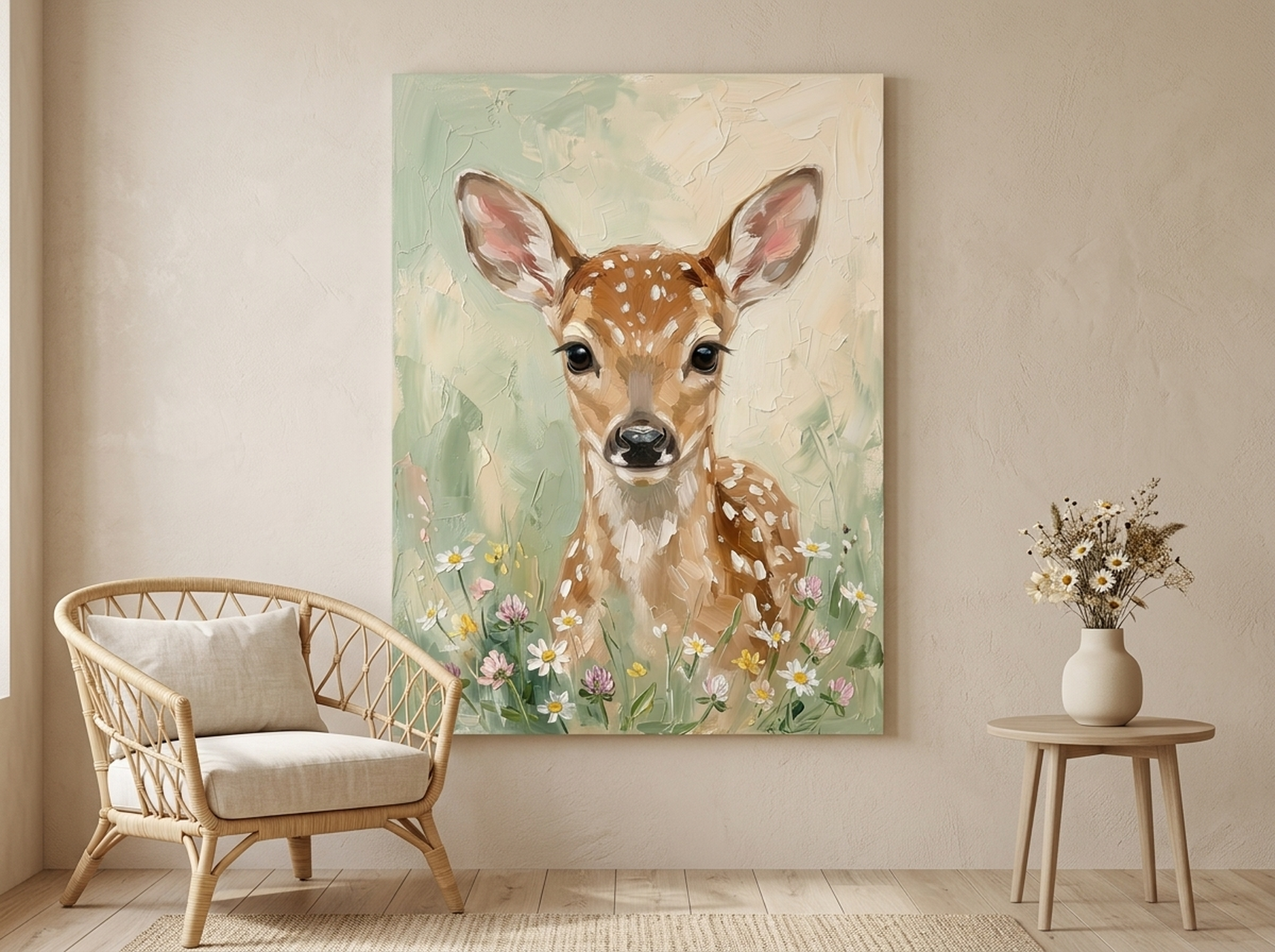
The Fawn Deer Impressionist Portrait shown above is one of the most popular pieces in the nursery collection. The soft, painterly quality of the composition works in sage, terracotta, and warm grey nurseries alike, and the gentle animal subject carries none of the gendered associations that come with more obviously coded nursery imagery.
6 Gender Neutral Nursery Art Picks for 2026
Each piece below is a gallery-quality framed canvas print on premium poly-cotton blend fabric. Frames are solid wood with pre-installed hanging hardware, arriving ready to hang. Every product works in multiple colour palettes so you can build a cohesive nursery without overthinking it.
1. Baby Lamb Wildflower Watercolor Nursery Canvas Wall Art
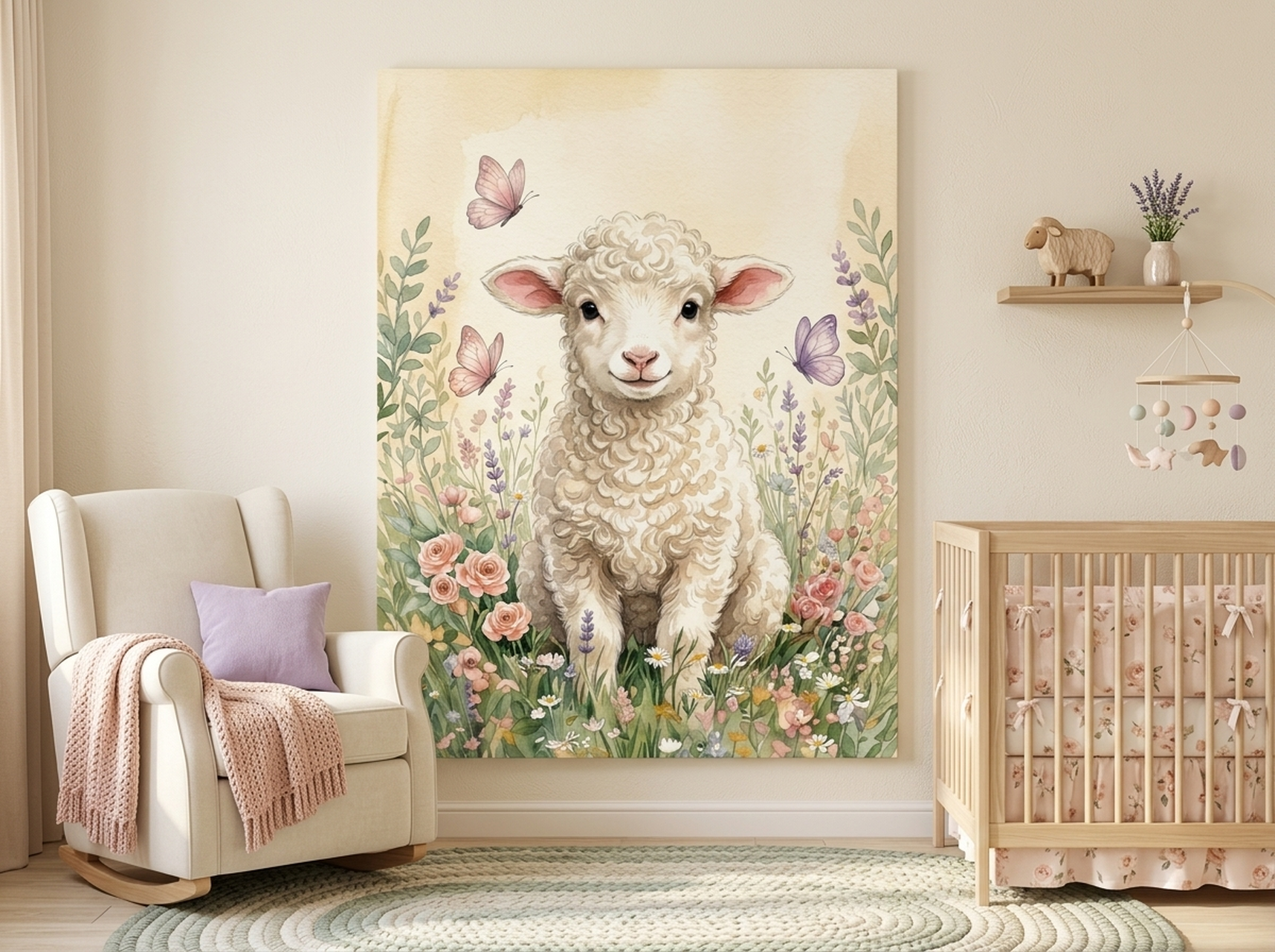
A soft watercolour lamb nestled among wildflowers is one of those images that never feels dated, and this canvas delivers exactly that. The cream and blush tones in the background pair naturally with sage, terracotta, and warm grey nursery palettes. The loose, impressionist quality of the brushwork gives it an heirloom feel rather than a mass-produced one. In our experience, pieces like this become a favourite because they feel gentle rather than overly styled. It works equally well as a standalone anchor above the crib or as part of a gallery wall paired with botanical prints. The wildflower details reward close inspection, which matters once your baby starts noticing the world around them.
View the Baby Lamb Wildflower Canvas
2. Moon Owl Celestial Oil Painting Nursery Canvas Wall Art
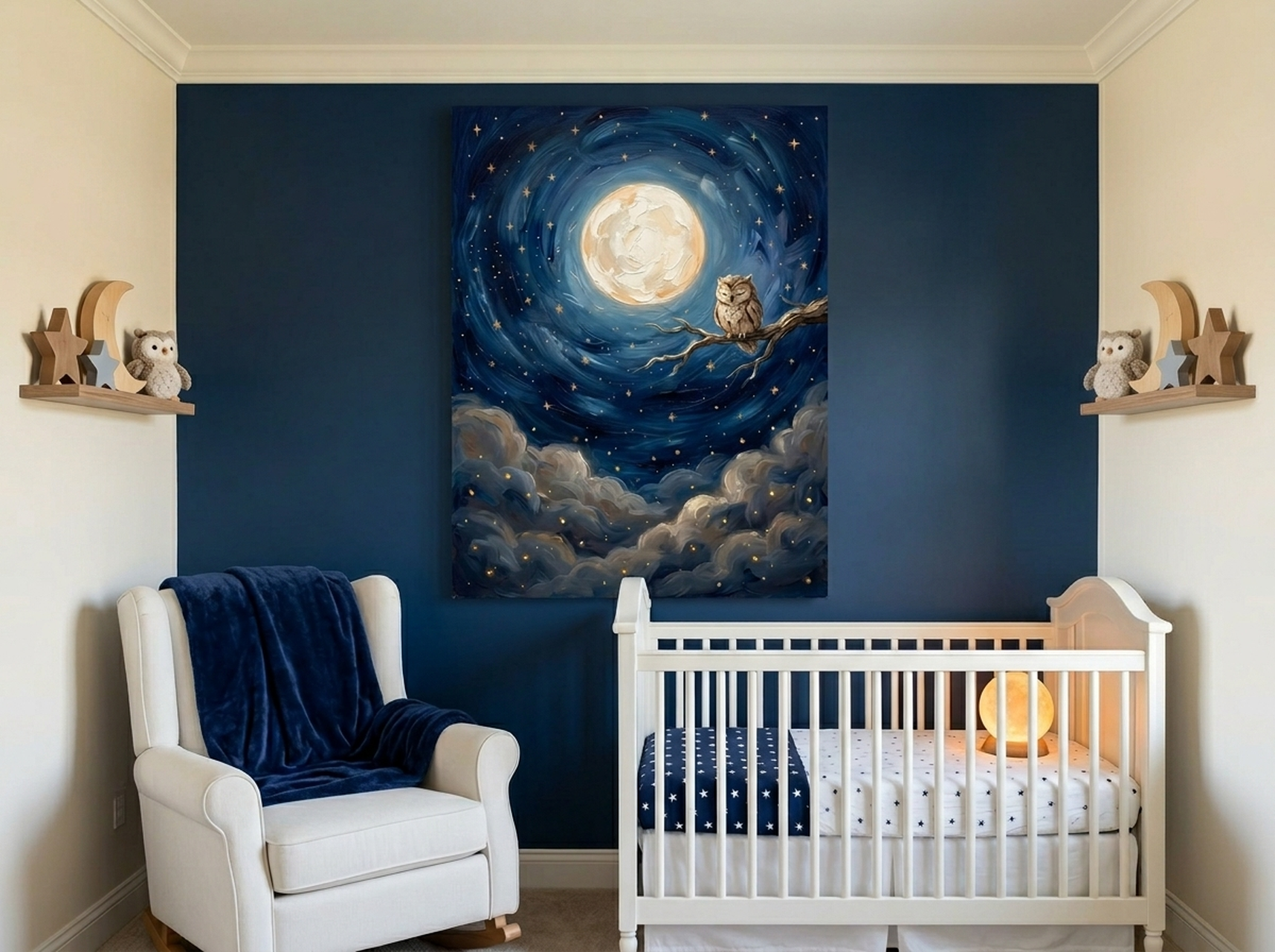
This celestial owl canvas is among the most striking pieces in the nursery collection. Rendered in rich oil painting style with deep blues, warm golds, and a crescent moon backdrop, it transforms any plain wall into something genuinely atmospheric. The owl sits as a symbol of wisdom and watchfulness, which resonates for many parents decorating a space where they will spend countless quiet hours with their newborn. The colour palette anchors beautifully in dusty blue or warm grey nurseries, and the gold tones pick up on brass or warm metal hardware throughout the room. Pair it with the Fox Reading by Starlight canvas for a cohesive celestial-woodland theme. This is the piece guests always notice first.
View the Moon Owl Celestial Canvas
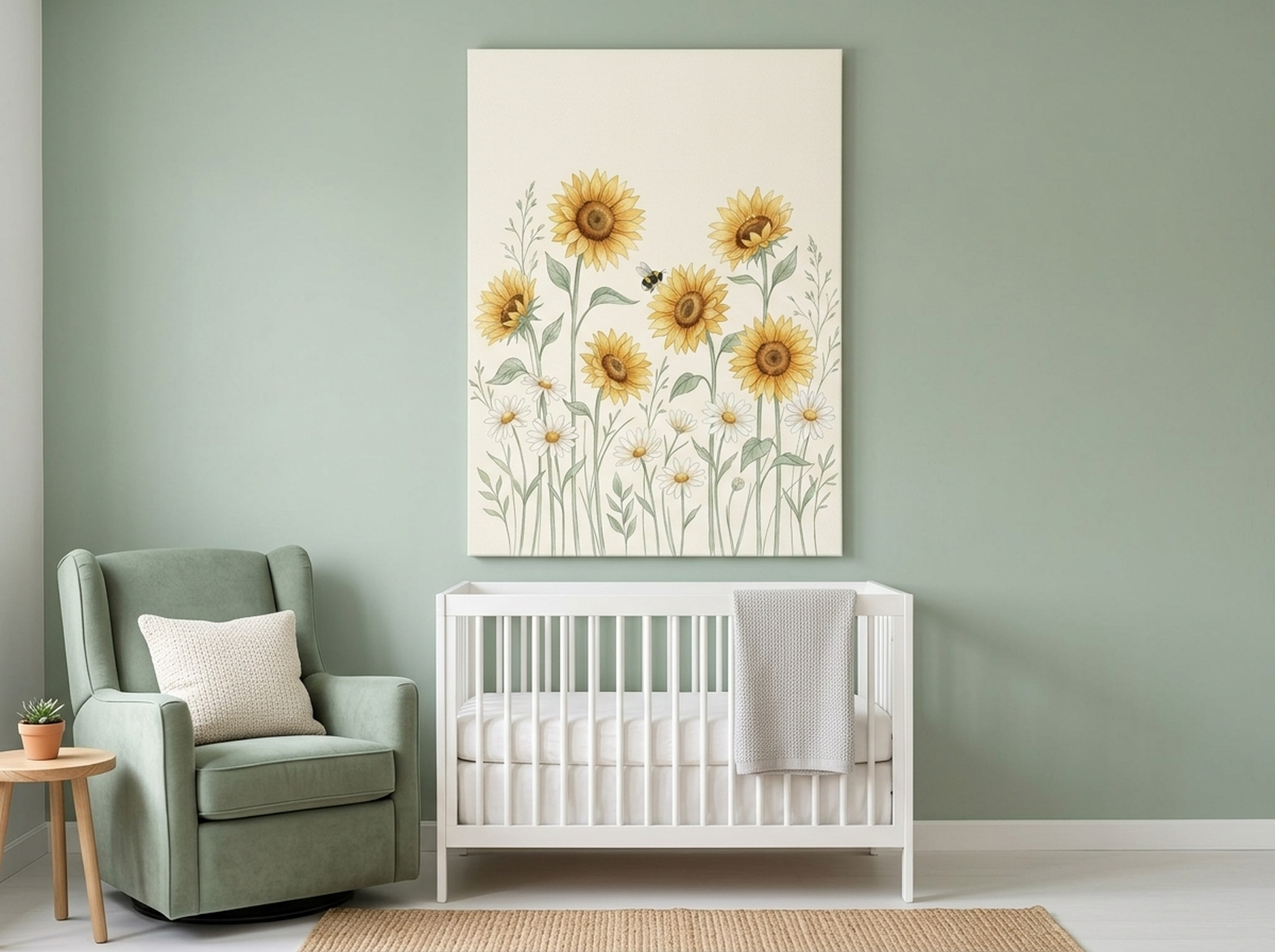
3. Sunflower Daisy Botanical Nursery Canvas Wall Art
Botanical prints have earned their place as one of the most reliable gender neutral nursery art choices, and this sunflower and daisy canvas is a standout example. The warm yellows and soft greens work in any nursery that uses a natural, biophilic palette. The composition is relaxed and slightly boho, which suits parents who want a nursery that feels lived-in and warm rather than overly curated. It pairs naturally with rattan furniture, linen textiles, and macrame accents. For a cohesive gallery wall, combine it with the Baby Lamb Wildflower canvas in a similar soft watercolour style. It also works as a single piece in smaller nurseries where one strong botanical statement is all the room needs.
View the Sunflower Daisy Botanical Canvas
4. Dandelion Birds Street Art Nursery Canvas Wall Art
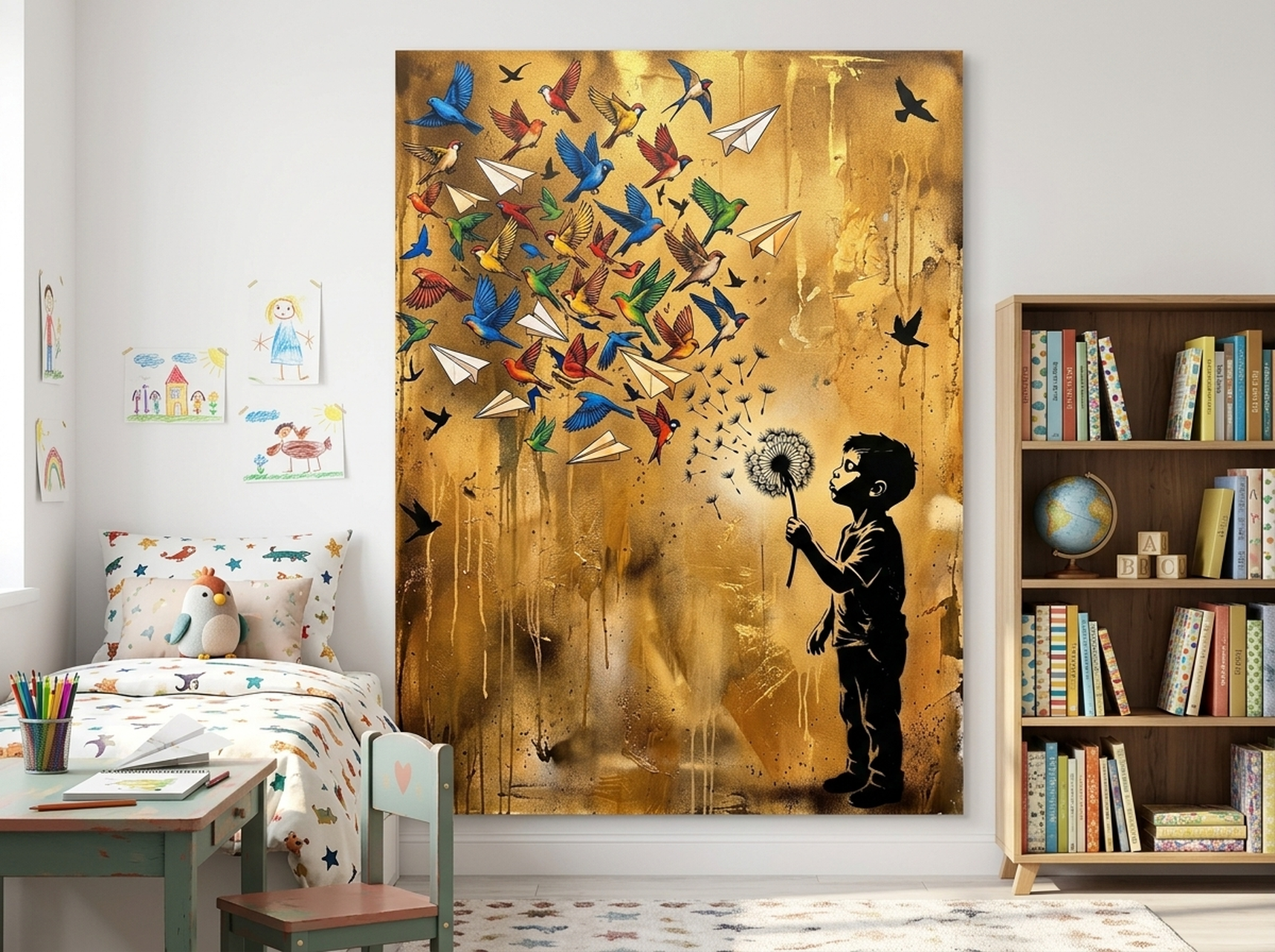
This is the piece for parents who want something with a little more graphic edge without sacrificing softness. The dandelion-seeds-becoming-birds motif is a classic of contemporary wall art, and this nursery version executes it with exactly the right balance of detail and simplicity. The image works at any distance: from across the room it reads as a clean, elegant composition; up close the individual seeds and birds reward careful looking. The colour palette is neutral enough to suit almost any nursery scheme. It introduces a concept of transformation and freedom that feels genuinely meaningful in a child's first space. This is also a strong choice for parents who plan to transition the nursery into a toddler room, as the imagery grows with the child rather than feeling babyish.
View the Dandelion Birds Canvas
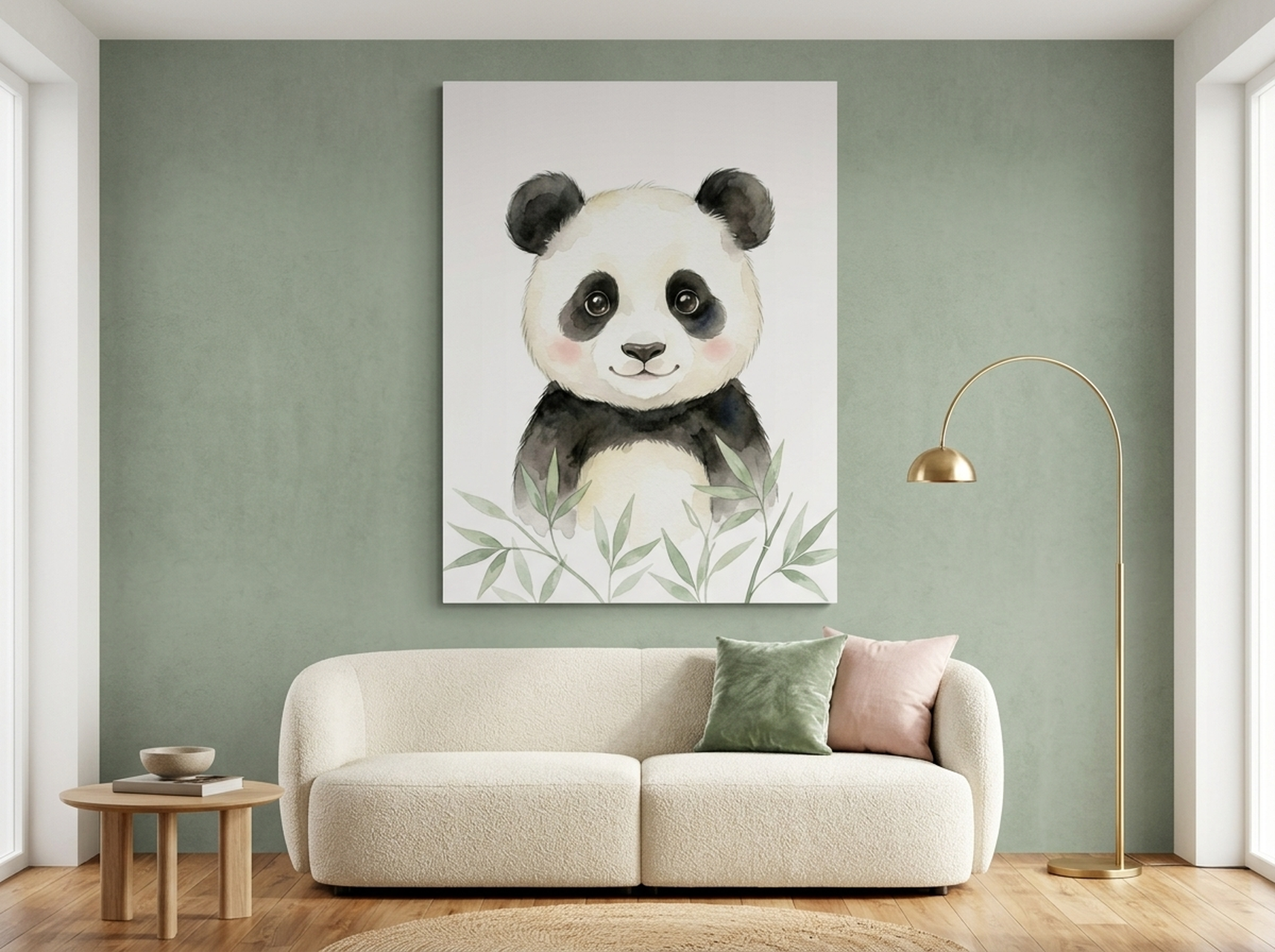
5. Baby Panda Kawaii Nursery Canvas Wall Art
Few things are more universally appealing than a well-rendered panda, and this kawaii-style baby panda canvas captures exactly the right combination of soft illustration and genuine character. The black and white of the panda is inherently gender neutral, and the surrounding palette keeps everything warm and gentle. This piece works particularly well in nurseries that use a green or sage wall colour, where the panda's soft tones pop naturally. The kawaii illustration style bridges the gap between infant nursery art and kids room art, making this an especially good investment for parents who want decor that stays relevant as the room evolves. It is also among the most reliably crowd-pleasing pieces in the collection for visitors who see it for the first time.
View the Baby Panda Kawaii Canvas
6. Fox Reading by Starlight Whimsical Nursery Canvas Wall Art
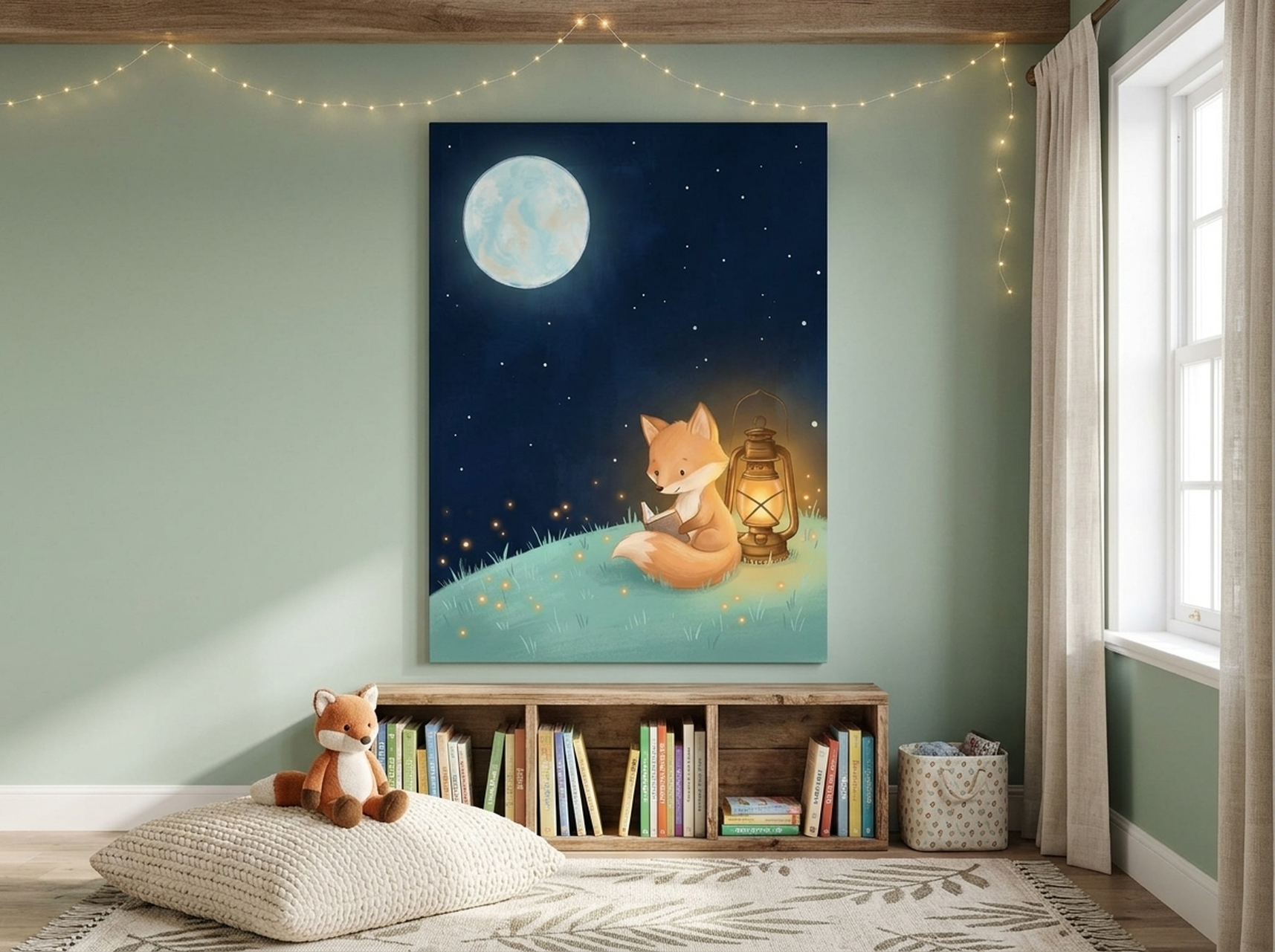
This is the piece parents keep coming back to, and it is easy to see why. A fox reading under a starlit sky is the kind of image that layers meaning as a child grows: first it is just a cosy, beautiful picture; later it becomes an invitation into books, reading, and imagination. The warm amber and deep blue tones work beautifully in both sage-and-cream and dusty-blue-and-ochre nursery palettes. The starlight detail gives it a celestial quality that pairs naturally with the Moon Owl canvas for a two-piece gallery arrangement. In our experience, whimsical narrative images like this one become genuine childhood landmarks, the pieces children remember years later when they look back at their first room.
View the Fox Reading by Starlight Canvas
Looking for more options? Browse the safari nursery wall art guide for animal-themed alternatives, or see our kids room wall art guide for prints designed to grow with your child beyond the nursery years.
How to Hang Nursery Art Safely
Hanging art in a nursery carries different safety considerations than hanging in any other room of the house. Here is what to get right the first time.
Height above the crib
The most important rule: never hang any art directly over the crib where it could fall on a sleeping baby. If you are placing art on the wall above the crib headboard, ensure the bottom edge of the frame sits at least 60 cm (24 inches) above the crib rail at its lowest adjustment position. As your baby grows and begins pulling to stand at around 9 to 12 months, art within arm's reach becomes a grabbing hazard. If in doubt, go higher rather than lower.
Standard hanging height
For art not positioned above the crib, centre the canvas so its midpoint sits approximately 145 cm (57 inches) from the floor. This is the standard gallery hanging height and means the art reads naturally when an adult stands in the room. When hanging art above a changing table or dresser, leave 15 to 25 cm (6 to 10 inches) of space between the top of the furniture and the bottom edge of the frame.
Fixing methods
Every canvas in the HEVA collection ships with pre-installed D-ring hardware on the back. Use two wall anchors spaced at least 20 cm (8 inches) apart for anything over 50 x 50 cm (20 x 20 inches). In plasterboard walls, use proper plasterboard anchors rated for the weight of the canvas plus a safety margin. Do not rely on a single nail for any piece over 2 kg (4.5 lbs). For additional security, apply a strip of foam adhesive or picture-hanging strips to the back lower corners of the frame. This prevents the frame from swinging and keeps it flush against the wall even if a vibration from a nearby door loosens the hook slightly.
Avoid glass
Canvas prints are an inherently safer nursery choice than framed prints under glass. If you do use framed prints elsewhere in the nursery, choose acrylic rather than glass, which will not shatter if knocked by a toy or a falling object.
For a full step-by-step hanging guide covering tools, wall types, and single versus gallery arrangements, see our complete wall art hanging guide.
5 Common Nursery Art Mistakes
1. Choosing art that is too small
A single 20 x 30 cm (8 x 12 inch) print on a large nursery wall disappears entirely. The most common sizing mistake is underestimating how much wall space art needs to command a room. Use the 57 to 75 percent rule: your art or art arrangement should cover between 57 and 75 percent of the available wall width. When in doubt, cut paper to the dimensions of your intended canvas and tape it to the wall before ordering.
2. Picking art based on trends rather than longevity
Nursery trends cycle quickly. What feels contemporary today may feel dated before your child outgrows their first crib. Choose art rooted in timeless subjects: animals, nature, celestial imagery, and gentle whimsy. These hold up across years and transition naturally as the room evolves from nursery to toddler room to early childhood bedroom.
3. Ignoring colour undertones
A piece with cool blue undertones on a warm cream or terracotta wall will create visual tension that is difficult to identify but impossible to ignore. Always check the dominant undertone of your wall colour and match your art accordingly. Warm walls need art with warm undertones; cool walls need cool-leaning art. Our wall art for small spaces guide has more on using colour and tone to make a room feel cohesive rather than cluttered.
4. Hanging art before the furniture is in place
It is tempting to decorate walls before the furniture arrives, but the position of the crib, dresser, and rocking chair will determine where art belongs. Always hang art last, after the main furniture pieces are fixed in position. This ensures the proportions are right and prevents you from putting unnecessary holes in walls you will need to patch.
5. Forgetting that babies look up
Infants spend a significant portion of their waking hours lying on their backs. Art hung at adult eye level may not be visible to a baby lying in a crib. Consider adding one piece of art at a lower position on an adjacent wall, somewhere between 60 and 90 cm (24 and 36 inches) from the floor, where a baby propped up or beginning to sit can actually see it. The Montessori approach to nursery design actively encourages low-hung, high-contrast art within the baby's field of vision during floor time.
Frequently Asked Questions
What is gender neutral nursery art?
Gender neutral nursery art uses subjects, colour palettes, and styles that are not coded as specifically masculine or feminine. Common themes include woodland animals, celestial imagery, botanical prints, whimsical storybook illustrations, and nature scenes. Colour palettes typically use sage, cream, terracotta, warm grey, soft ochre, and dusty blue rather than traditional pink or baby blue. The goal is art that feels timeless, inclusive, and able to grow with the child through nursery and beyond.
What size canvas should I hang in a nursery?
For a small nursery under 9 sqm (97 sq ft), a canvas between 50 x 50 cm (20 x 20 inches) and 60 x 80 cm (24 x 32 inches) works best. Medium nurseries of 9 to 14 sqm (97 to 150 sq ft) suit a 76 x 102 cm (30 x 40 inch) anchor piece or a gallery wall of three to five smaller prints. Large nurseries over 14 sqm (150 sq ft) can handle a statement canvas of 91 x 122 cm (36 x 48 inches). Art above the crib should be between half and three-quarters of the crib width, and the bottom edge should sit at least 60 cm (24 inches) above the crib rail.
Is it safe to hang art above a crib?
Yes, with precautions. The bottom edge of any art hung above a crib should sit at least 60 cm (24 inches) above the crib rail in its lowest position. Use two wall anchors, not a single nail, for anything over 50 x 50 cm. Canvas prints are safer than framed glass prints because they will not shatter if they fall. As the baby grows and begins pulling to stand at around 9 to 12 months, reassess whether any art is within reach and rehang at a higher position if necessary.
What colours work best for a gender neutral nursery in 2026?
The five most versatile gender neutral nursery palettes for 2026 are: sage and warm cream, terracotta and natural linen, warm grey and soft ochre, dusty blue and warm white, and soft ochre with botanical green. Avoid pure white, which reads as clinical, and highly saturated primaries, which can feel overstimulating. Major paint brands including Sherwin-Williams (Universal Khaki), Valspar (Warm Eucalyptus), and Behr (Hidden Gem) have all released 2026 Colours of the Year that sit comfortably within these palettes.
Will gender neutral nursery art still look good when my child gets older?
Yes, that is one of the main advantages of gender neutral art over trend-led or overtly gendered designs. Subjects like woodland animals, celestial imagery, botanical prints, and whimsical narrative scenes (a fox reading, an owl under moonlight) transition naturally from nursery to toddler room to early childhood bedroom. The art grows in meaning as the child grows, rather than becoming babyish or dated. Choosing gender neutral art is fundamentally a long-term investment in your child's room.
Where can I buy gender neutral nursery canvas prints online?
Heva Unique Art Gallery offers a curated range of gender neutral nursery canvas prints including woodland animals, celestial prints, botanical illustrations, and whimsical storybook scenes. Every canvas ships in a solid wood frame with pre-installed hanging hardware. Browse the full collection at hevauniqueartgallery.com or visit individual product pages linked throughout this guide.
Quick Reference Table
| Product | Best Palette | Room Size | Style | Link |
|---|---|---|---|---|
| Baby Lamb Wildflower | Sage, cream, terracotta | Any | Watercolour botanical | View |
| Moon Owl Celestial | Dusty blue, warm grey, gold | Medium to large | Celestial oil painting | View |
| Sunflower Daisy Botanical | Ochre, botanical green, linen | Any | Boho botanical | View |
| Dandelion Birds | Warm grey, cream, soft ochre | Any | Graphic nature art | View |
| Baby Panda Kawaii | Sage, white, warm cream | Small to medium | Kawaii illustration | View |
| Fox Reading by Starlight | Dusty blue, amber, ochre | Any | Whimsical narrative | View |
| Fawn Deer Impressionist Portrait | Sage, warm cream, terracotta | Any | Impressionist portrait | View |
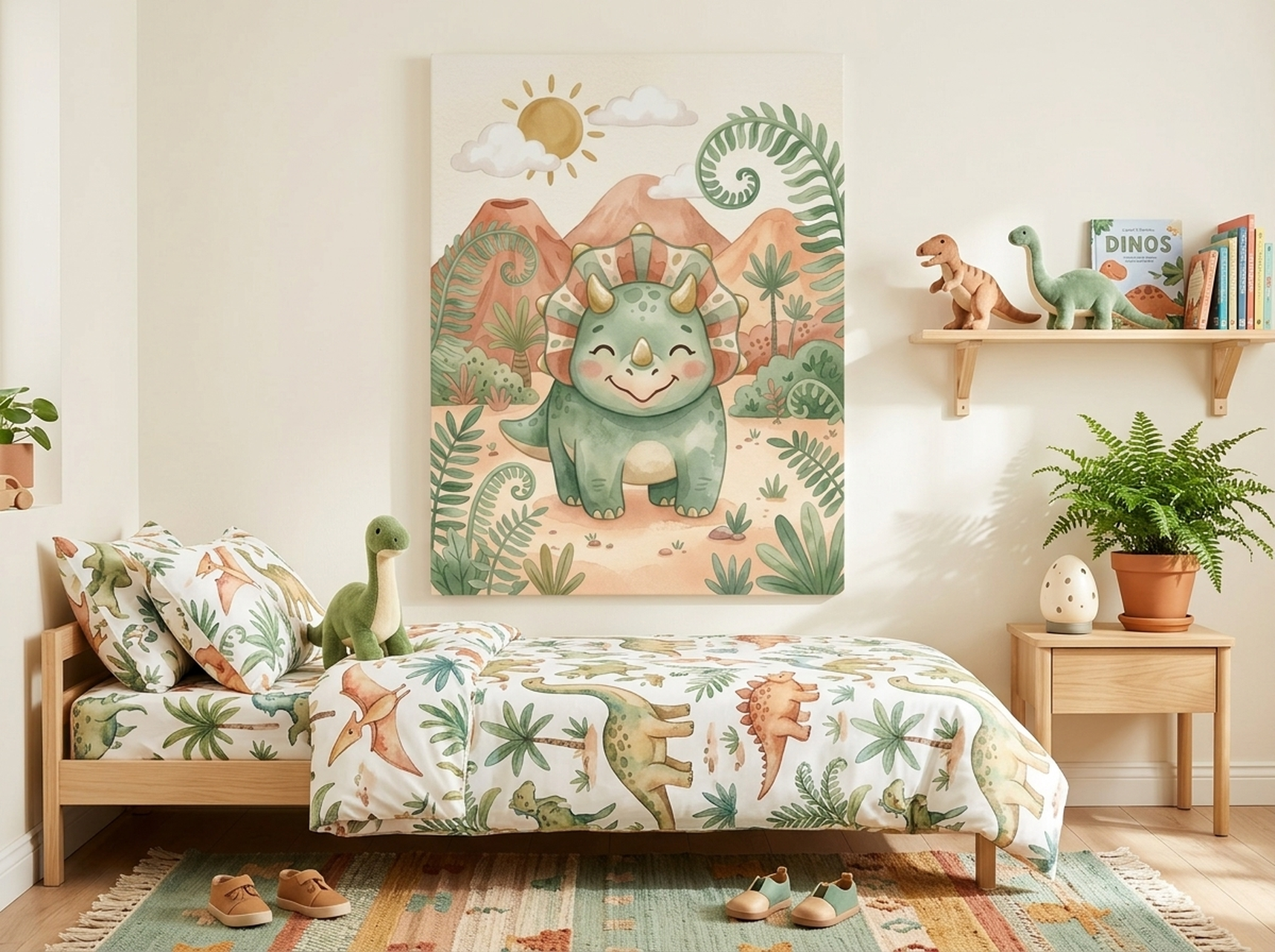
| Triceratops Watercolor | Sage, warm grey, cream | Any | Watercolour animal | View |
Ready to Transform Your Nursery?
The right wall art does more than fill empty space. In a nursery, it creates the visual world your baby wakes up to every morning and falls asleep looking at every night. Gender neutral nursery art gives you the freedom to build a room that is warm, inclusive, and genuinely beautiful without defaulting to tired pink-and-blue conventions.
Every canvas in this guide ships ready to hang with solid wood frames and pre-installed hardware. The only decision left is which one belongs on your wall.
View the Triceratops Watercolor Canvas
Not sure where to start? Browse the full nursery and kids art collection or read our complete hanging guide for installation tips that work in any room.