
Nature Photography Prints for Home Decor: Bring the Outdoors Inside
The Heva Team
Art Curators & Interior Design Enthusiasts · April 13, 2026 · 12 min read
There is a moment when you walk into a room and the walls simply breathe. A sweeping mountain panorama draws your eye to the horizon. A sunlit forest path invites you to step forward. A calm beach at dusk quiets your thoughts before you have said a single word. That is the power of nature photography wall art, and it is more accessible than most people realize. You do not need a countryside property or floor-to-ceiling windows to bring the outdoors inside. The right print, sized and framed correctly, does the work entirely on its own.
Designers and researchers both agree that visual contact with natural scenes produces measurable benefits. According to the Rocky Mountain College of Art and Design, spaces incorporating nature imagery reduce occupant stress and increase feelings of comfort, a principle at the heart of biophilic design. The good news is that a high-quality canvas print achieves this effect just as well as an actual window view.
This guide covers everything you need to choose, size, and hang nature photography prints so your home feels alive, grounded, and unmistakably yours.
Browse Nature Photography Prints →
Why Nature Photography Wall Art Transforms Spaces
Humans evolved spending almost all of their time outdoors. That history is encoded in our nervous systems. When we see natural scenes, including photographs and paintings of them, our brains register the experience similarly to actually being there. This is the biological foundation of biophilic design.
Marvin's biophilia explainer notes that exposure to natural elements, even indirect representations like photography, triggers a positive biological response that lowers cortisol and promotes a sense of calm. Interior designers have applied this science for decades. Today the tools are available to every homeowner.
Nature photography wall art works on three levels simultaneously. Visually, it adds depth and draws the eye. Emotionally, it anchors the room in something larger than itself. Functionally, it solves the common problem of blank, lifeless walls without requiring significant renovation.
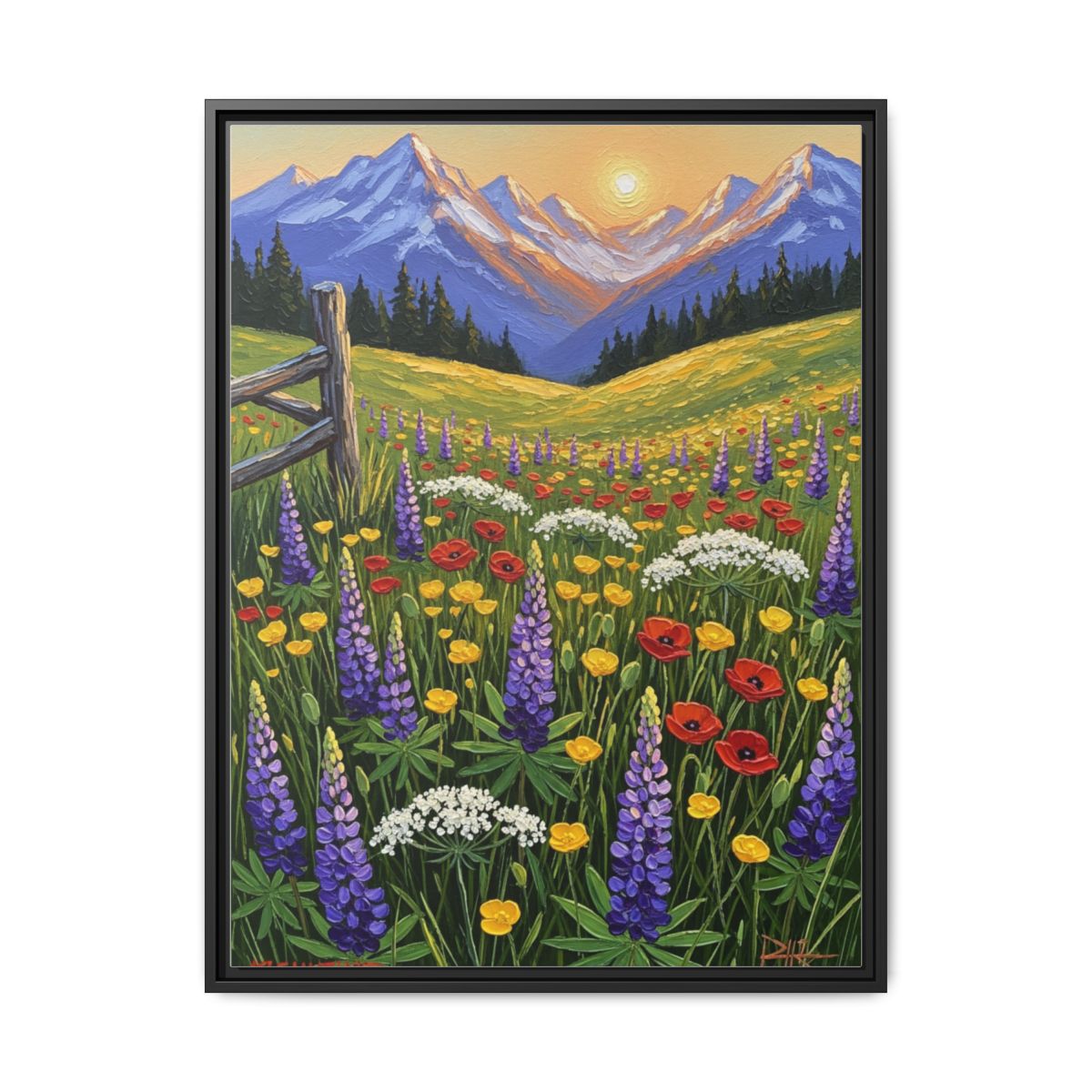
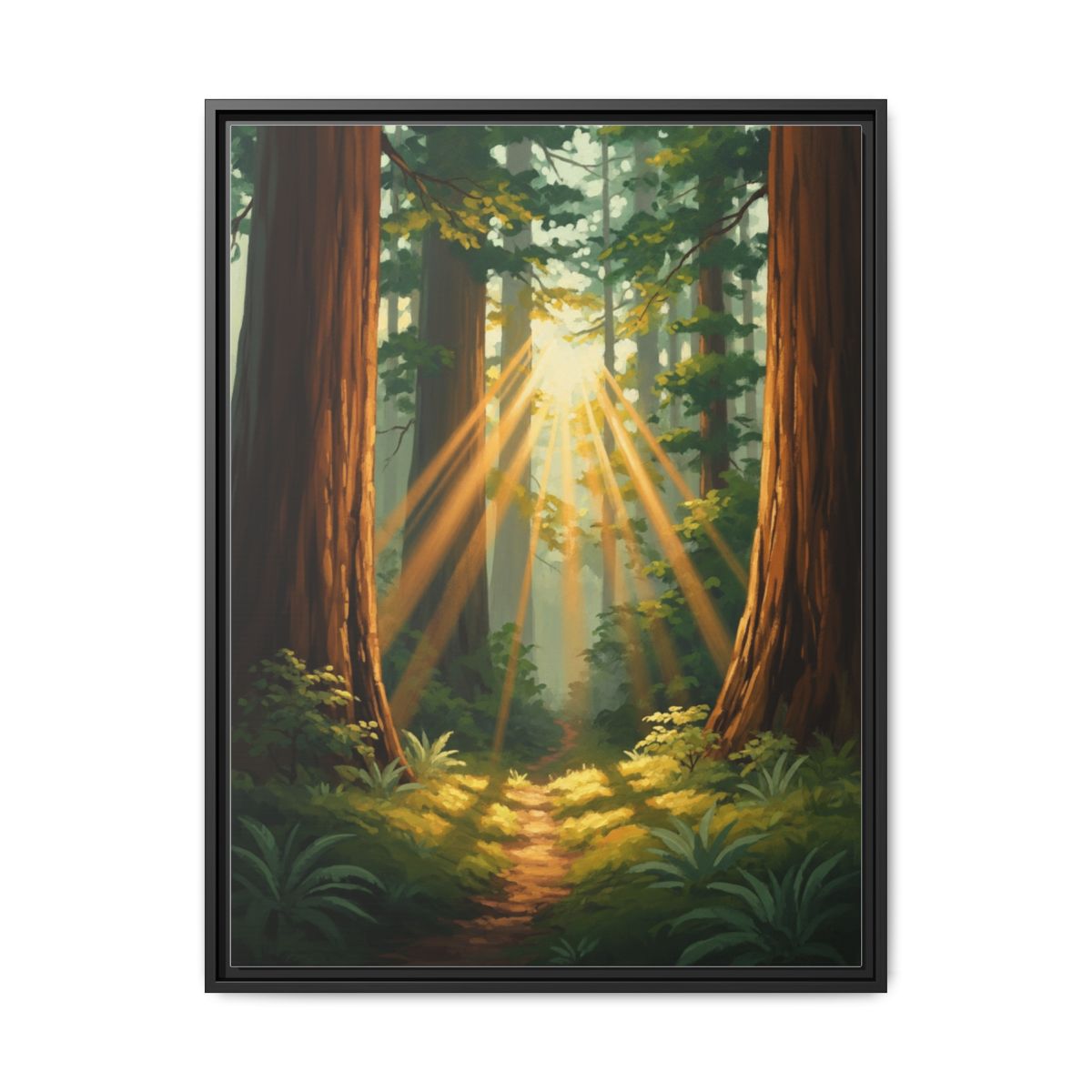
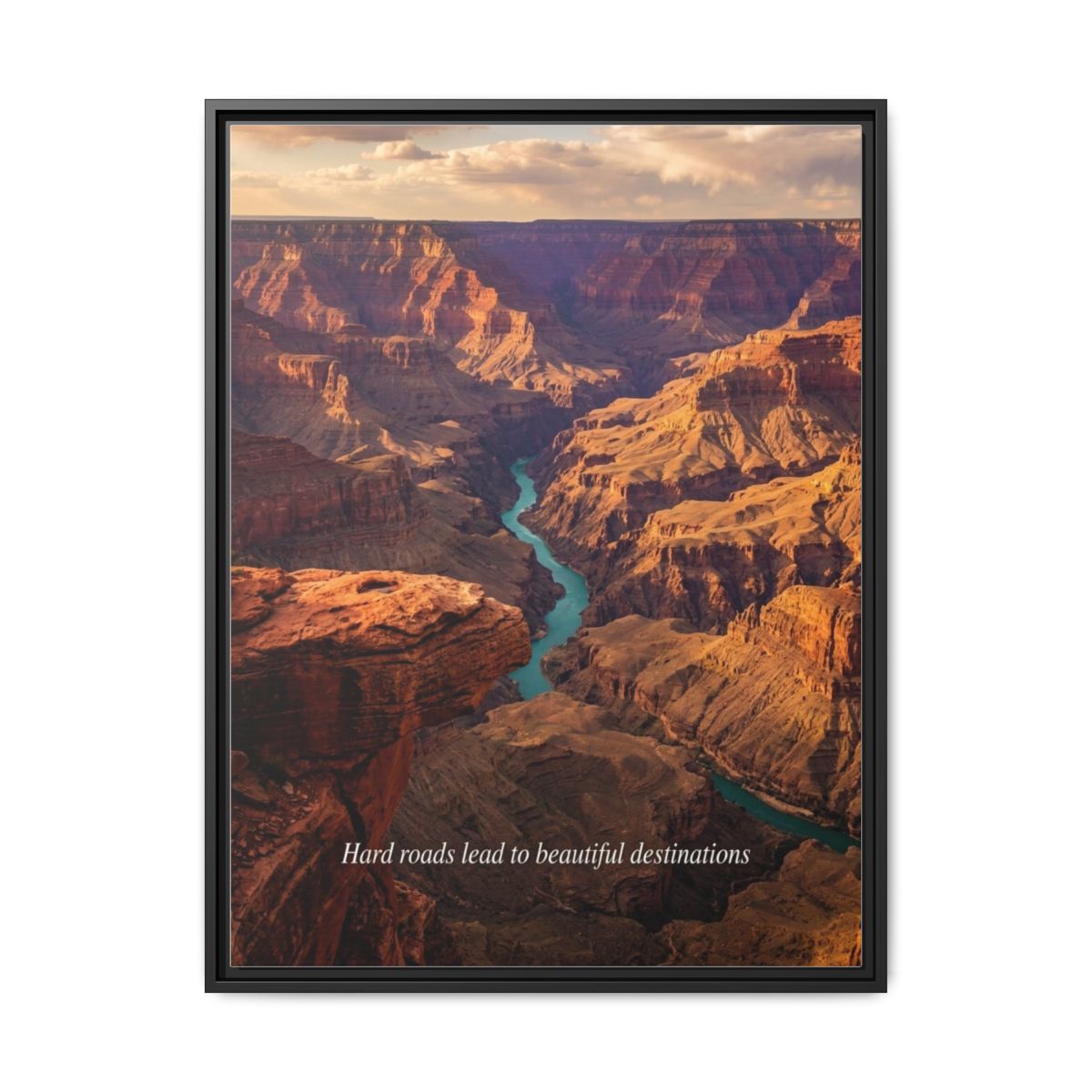
The specific scene matters more than people expect. Mountain landscapes project strength and stillness. Forest interiors feel private and sheltering. Ocean horizons create openness and freedom. Canyon photography brings warmth and geological drama. Matching the emotional quality of the scene to the intended feeling of the room is the single most important decision you will make.
Matching Nature Prints to Each Room
Each room in your home has a distinct purpose, and your nature photography prints should reinforce that purpose. Choosing a scene purely because you like it is a reasonable start, but aligning the emotional tone of the image with the function of the room elevates the entire space.
Living room: This is where you entertain, relax, and spend the most time. Bold panoramic landscapes, such as mountain ranges or expansive meadows, create a statement focal point. Choose your largest print for this wall. The image should be wide enough to anchor the sofa arrangement and draw attention without overpowering the furniture.
Bedroom: Calming scenes promote restful sleep and morning well-being. Soft forest paths, misty lake surfaces, and gentle meadow light are ideal. Avoid high-contrast canyon photography or dramatic storm scenes in the bedroom, as visual energy in the room can disrupt rest.
Home office: Research cited by the Interior Design Institute links nature imagery to a 15 percent productivity increase. Forest and mountain scenes work particularly well in workspaces, providing a visual rest point between focused tasks.
Hallways and entryways: Vertical prints work well in these narrow spaces. A tall forest scene or a vertical cliff face guides the eye down the hallway. The entryway sets the tone for your entire home, so choose an image that represents how you want guests to feel the moment they arrive.
Kitchen and dining area: Lighter, warmer nature scenes complement the social energy of food spaces. Wildflower meadows, sun-dappled forests, and coastal scenes with warm golden hour light all work well here.
Landscape vs. Close-Up Nature Photography
Nature photography wall art divides broadly into two categories: sweeping landscapes and intimate close-up studies. Both are compelling, but they serve different visual and emotional functions in a space.
Landscape photography captures scenes at a distance: mountain ranges, fjords, deserts, coastlines, and forests seen from above or across an open plain. These prints create the illusion of depth and distance, making a room feel larger than it is. They work best as singular statement pieces on a primary wall, sized generously to maximize the sense of space they create.
Close-up nature photography examines texture, pattern, and detail: the grain of bark, the geometry of a leaf, the surface of water, the light through a single flower. These prints add intimacy and organic texture to a room. They work exceptionally well in groups, arranged as a gallery wall where the collective effect builds a rich natural tapestry.
Mixing the two approaches in the same room is possible, but requires intentionality. Keep the landscape as the dominant piece and use close-up studies as smaller supporting elements. The scale contrast itself becomes a design choice that shows visual confidence.
For most buyers choosing their first nature photography print, a landscape is the right starting point. The visual impact is immediate, the sizing logic is intuitive, and the subject matter travels easily across different interior styles from modern to farmhouse.
How to Size and Frame Nature Prints Perfectly
Sizing is where most decorating decisions go wrong. The most common error is choosing a print that is too small. A canvas that feels large in a showroom will look timid and isolated on an actual wall. Work from the wall dimensions outward, not from the print inward.
The 55 to 60 percent rule: Your print should span roughly 55 to 60 percent of the wall width it occupies. For a standard 12-foot living room wall (144 inches / 366 cm), that means a print between 79 and 86 inches (200 to 218 cm) wide. For a sofa wall of 10 feet (120 inches / 305 cm), aim for 66 to 72 inches (168 to 183 cm).
Height placement: The center of the artwork should sit at 57 to 60 inches (145 to 152 cm) from the floor. This corresponds to average standing eye level and is the professional standard used by galleries worldwide. When hanging above a sofa or console table, leave 6 to 8 inches (15 to 20 cm) between the furniture top and the frame bottom.
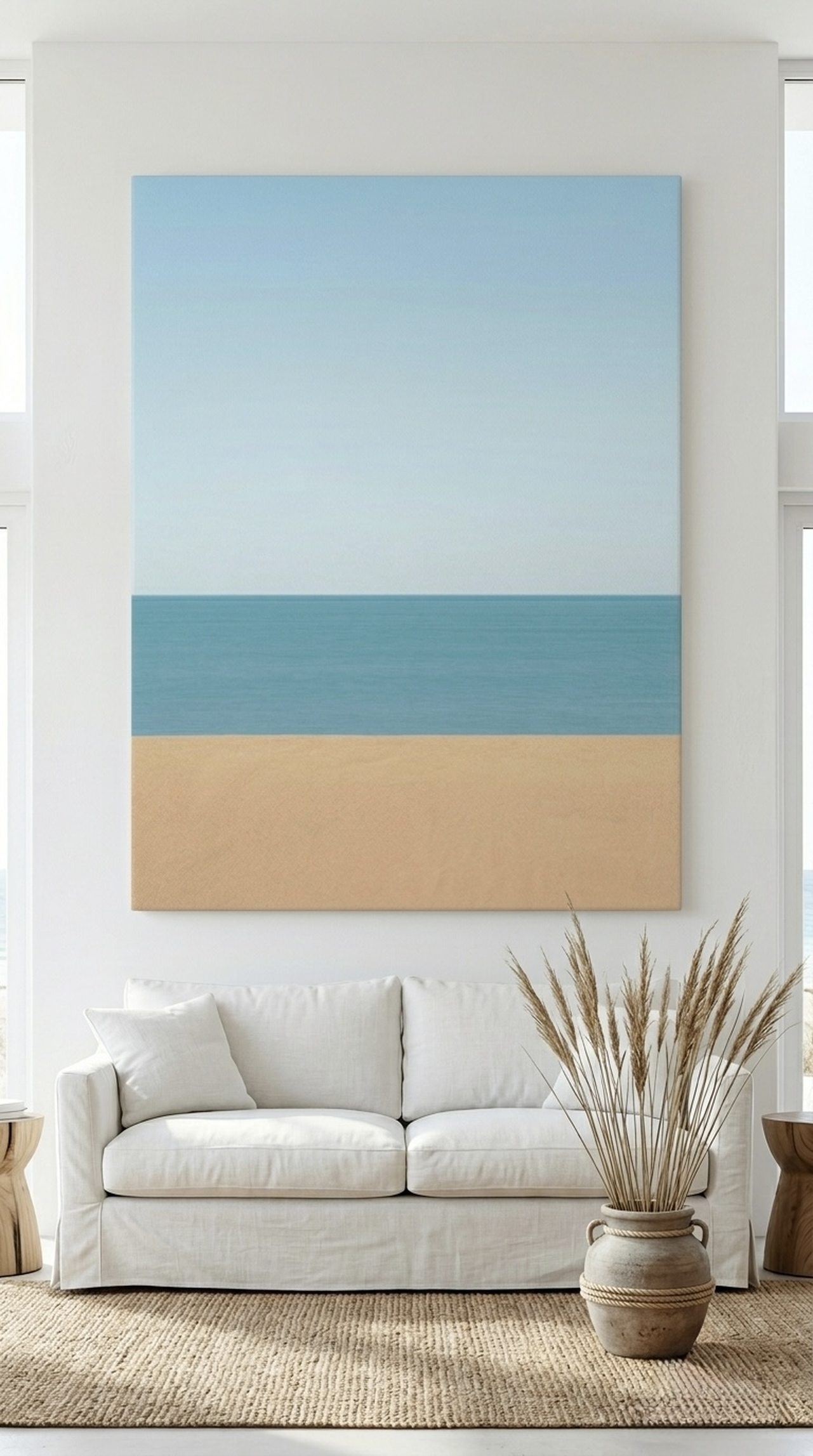
Frame selection by scene type: Black frames create high contrast that intensifies bold subjects like canyons, aurora borealis, and dramatic skies. Natural wood frames harmonize with forest, meadow, and earth-toned landscapes. White frames keep beach and coastal prints feeling airy. Espresso frames add warmth to mountain and fjord imagery without competing with the cooler tones in the photograph.
Canvas wrap vs. framed print: Canvas wraps suit contemporary interiors and casual spaces. Framed prints on canvas add formality and visual weight, working well in rooms where you want the art to feel anchored and deliberate. Both options are available across all prints in our nature photography collection.
Gallery walls with nature photography: If you want multiple prints, group them in a cluster rather than spacing them evenly across the wall. Keep the largest piece at visual center and arrange supporting prints within 2 to 3 inches (5 to 8 cm) of each other. Consistent framing across all pieces unifies the arrangement.
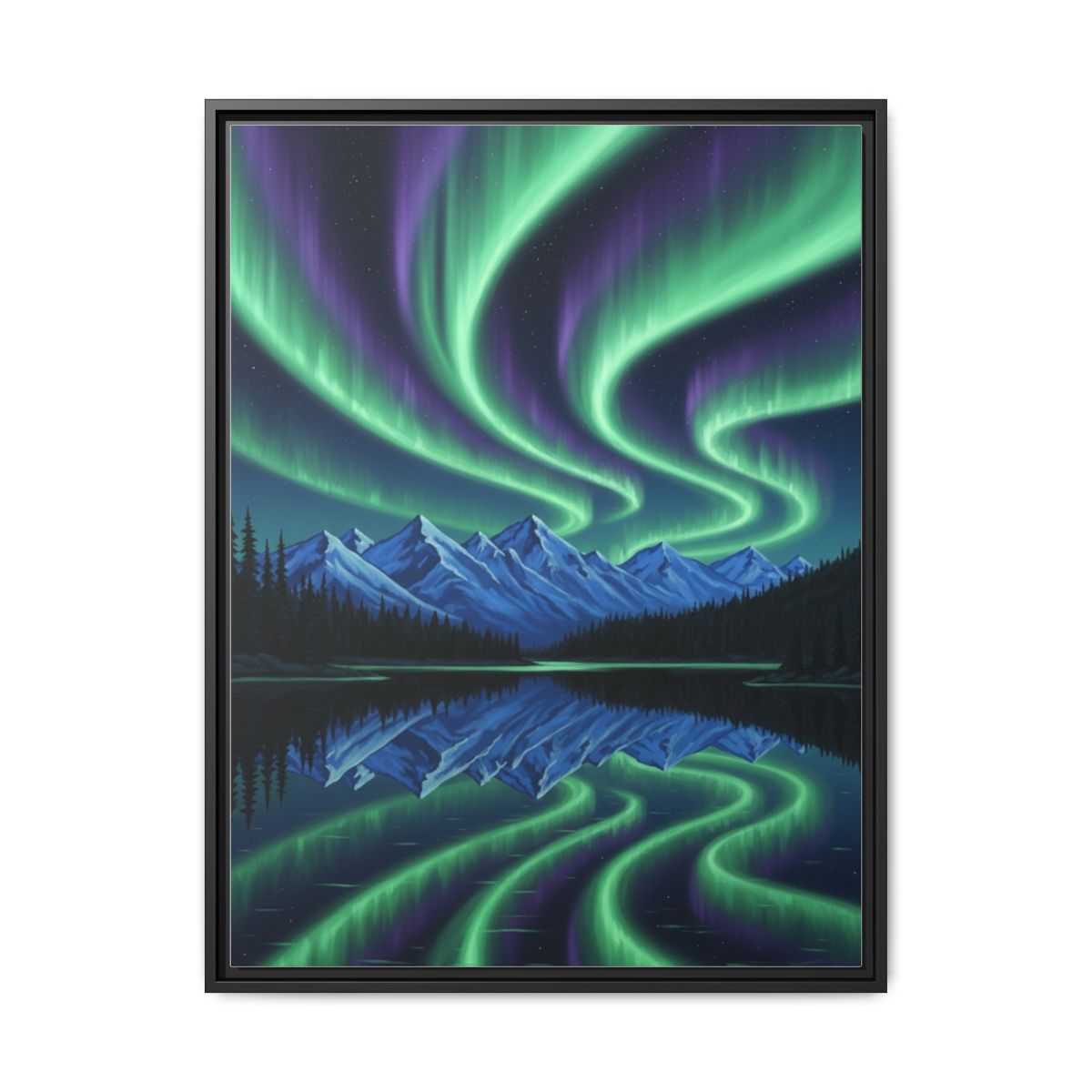
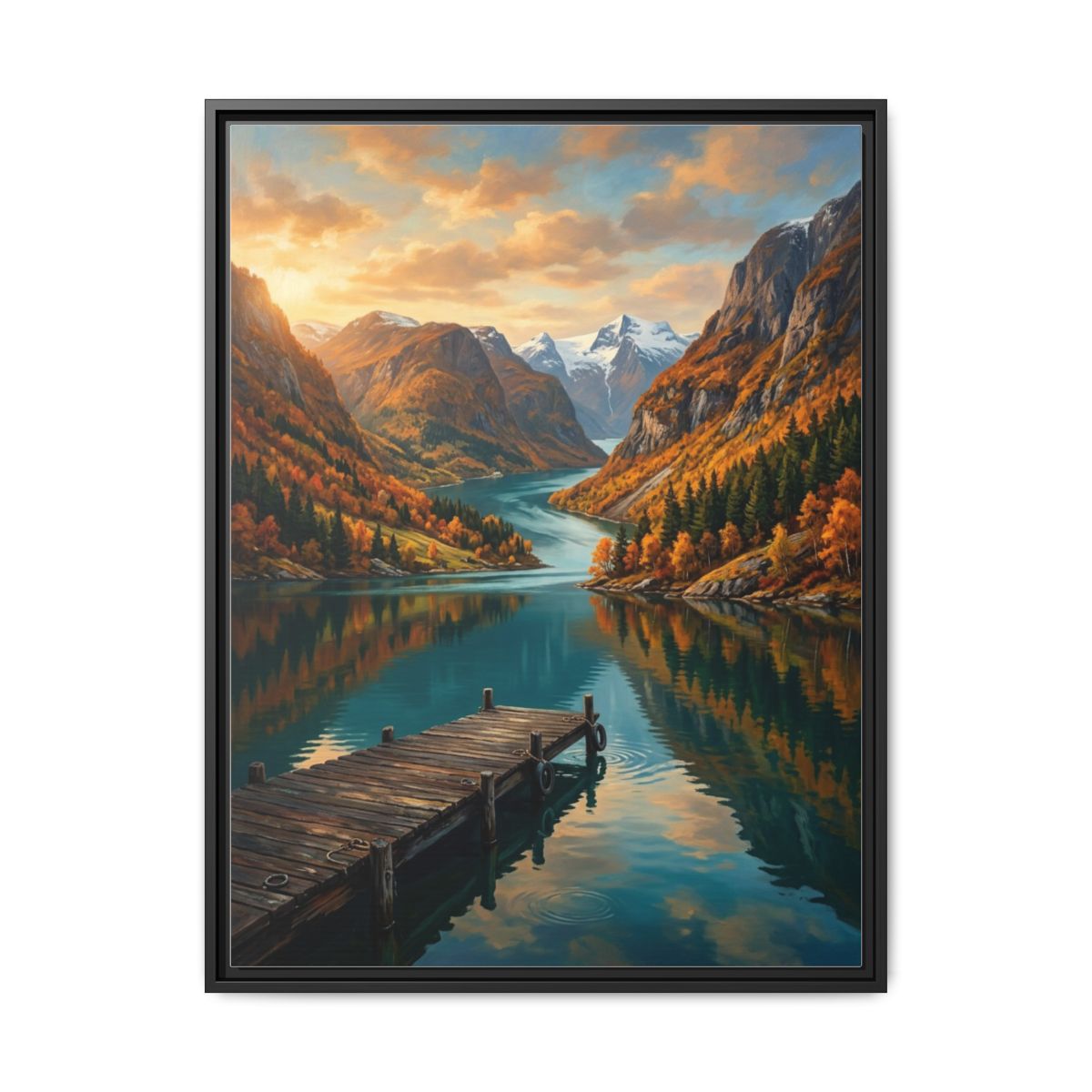
For more ideas on how landscape photography fits into a broader decorating vision, see our guides on forest wall art and woodland serenity and mountain wall art for peak serenity at home. If coastal scenes appeal to you, our ocean wall art guide covers everything from minimalist beach prints to dramatic seascape photography.
5 Common Mistakes When Hanging Nature Photography Art
Even the most beautiful nature photography print can fall flat if the execution is off. These five mistakes account for the majority of disappointing wall art results, and every one of them is easy to avoid.
1. Hanging the print too high. This is the most common error in home decorating. People instinctively hang art near the ceiling, treating it like a border rather than a focal point. The center of your print should be at 57 to 60 inches (145 to 152 cm) from the floor, not the top of the print.
2. Choosing a print that is too small. A print that feels substantial on a website product page can look like a postage stamp on a real wall. Before ordering, tape paper to your wall at the exact dimensions you are considering. Live with it for a day. If it looks small, size up.
3. Mismatching the scene tone with the room purpose. A high-energy canyon at sunrise is energizing, not restful. Placing it in a bedroom will work against you every night. Match the mood of the image to the mood you want in the room.
4. Ignoring the wall color relationship. Dark forest photography needs contrast to read well, ideally against lighter walls. Light, airy coastal prints on a white wall can wash out. If your walls are very light, lean toward prints with mid-tone or darker backgrounds. If your walls are dark, lighter and more luminous nature scenes will pop dramatically.
5. Spacing gallery wall prints too far apart. When grouping multiple nature prints, keep the gaps between frames to 2 to 3 inches (5 to 8 cm). Wider spacing breaks the visual unity of the grouping and makes each piece look like an orphan rather than part of a composed arrangement.
Frequently Asked Questions About Nature Photography Wall Art
What makes nature photography wall art different from regular prints?
Nature photography wall art captures real landscapes, lighting conditions, and organic textures that painted reproductions cannot replicate. The photographic medium preserves authentic color tones of forests, oceans, and mountains, giving your walls a window-like quality that feels genuinely immersive.
Which rooms benefit most from nature photography prints?
Living rooms, bedrooms, and home offices see the greatest impact. Living rooms gain visual depth and a conversational focal point. Bedrooms benefit from calming landscapes that promote restful sleep. Home offices respond well to forest or mountain scenes, which research links to improved focus and reduced stress.
How large should nature photography wall art be?
As a general guideline, choose a print spanning 55 to 60 percent of the wall width. For a standard 10-foot sofa wall (120 inches / 305 cm), that means a print between 66 and 72 inches (168 to 183 cm) wide. Oversized prints create the most dramatic outdoor feel, while smaller pieces work well in clusters.
What frame colors work best with nature photography?
Black frames create high contrast and make colors pop, ideal for bold landscapes like canyons and aurora borealis scenes. Natural wood frames complement earthy forest and meadow prints. White frames keep the look airy and work well with coastal and beach photography. Espresso frames add warmth to mountain and fjord scenes.
Can I use the same nature print in multiple rooms?
You can use prints from the same theme or color family across rooms to create a cohesive feel throughout your home. Varying the subject slightly, such as a forest scene in the hallway and a meadow in the bedroom, maintains visual interest as you move from room to room.
How do I hang nature photography wall art at the correct height?
The center of any wall art should sit at average eye level, which is 57 to 60 inches (145 to 152 cm) from the floor. When hanging above furniture, keep 6 to 8 inches (15 to 20 cm) of space between the top of the furniture and the bottom of the frame. This keeps the artwork visually connected to the furniture rather than floating on the wall.
Quick Reference Table: Nature Photography Wall Art by Room
| Room | Best Scene Type | Recommended Size | Frame Suggestion | Placement Height (center) |
|---|---|---|---|---|
| Living Room | Panoramic landscape, mountain, meadow | 24x36 in (61x91 cm) or larger | Black or Espresso | 57-60 in (145-152 cm) |
| Bedroom | Soft forest, misty lake, gentle meadow | 20x24 in (51x61 cm) to 24x36 in | Natural or White | 57-60 in (145-152 cm) |
| Home Office | Forest path, mountain vista | 16x20 in (41x51 cm) to 20x24 in | Black or Natural | 57-60 in (145-152 cm) |
| Hallway | Vertical forest, waterfall, cliff face | 12x24 in (30x61 cm) vertical | Natural or Espresso | 57-60 in (145-152 cm) |
| Kitchen / Dining | Wildflower meadow, warm coastal, sunlit grove | 16x20 in (41x51 cm) to 20x24 in | White or Natural | 57-60 in (145-152 cm) |
| Bathroom | Minimalist coastal, single bloom, soft waterfall | 8x10 in (20x25 cm) to 12x16 in (30x41 cm) | White or Natural | 57-60 in (145-152 cm) |
Nature photography wall art is one of the most effective and enduring ways to transform how a space feels, not just how it looks. Whether you are drawn to the vast silence of a Norwegian fjord, the electric drama of the northern lights, or the quiet warmth of a wildflower meadow, there is a print that will change the character of your walls permanently for the better.
Every canvas in the HEVA Unique Art Gallery collection is available in multiple sizes and four frame finishes, printed on premium museum-quality canvas and Shipped within the US. Find the scene that speaks to you and let it bring the outdoors inside, starting today.