Christian Wall Art for Every Room: A Room-by-Room Placement Guide
The Heva Team
Art Curators & Interior Design Enthusiasts · March 25, 2026 · 17 min read
A room-by-room guide to Christian wall art. Scripture prints, cross art, and faith-inspired pieces for living rooms, bedrooms, and prayer spaces.
Choosing where to hang christian wall art is just as important as choosing the piece itself. A painting that feels perfect in a prayer room might look out of place in a busy kitchen, and a scripture print sized for a hallway could get lost above a king-size bed. The difference between art that blends into the background and art that anchors a room comes down to one thing: matching the right piece to the right space.
This room-by-room guide walks you through exactly how to select, size, and position christian wall art in every area of your home, from the living room to the kids' room. Whether you are starting a dedicated prayer corner or just want your dining room to feel more intentional, you will find specific measurements, colour advice, and real product picks for each space.
Ready to browse? Explore our full Christian wall art collection, or keep reading for our top picks and expert tips.
What You Will Find in This Guide
- Why Placement Matters for Christian Art
- Colour, Light, and Spiritual Mood
- The Living Room: Your Statement of Faith
- The Bedroom: Rest and Reflection
- The Kitchen and Dining Room: Gratitude at the Table
- The Prayer Room: A Dedicated Devotional Space
- The Kids Room: Growing Up With Faith
- The Home Office: Purpose-Driven Productivity
- Sizing and Hanging Cheat Sheet
- Common Mistakes to Avoid
- FAQ
- Quick Reference Table
Why Placement Matters for Christian Art
Hanging a cross painting above the television is not the same as placing it at the end of a hallway where you see it every morning. Research published in the Journal of Religion and Health found that regular engagement with religious imagery correlates with lower perceived stress levels and stronger feelings of community belonging. The key word there is engagement, and engagement depends on where you put the art.
In our experience helping customers choose placement, three factors determine whether a piece of christian wall art actually gets noticed or fades into the wallpaper:
- Sightline frequency. Art hung where your eyes naturally travel (above a sofa, at the end of a corridor, across from your bed) gets seen 5 to 10 times more per day than art tucked into a corner.
- Lighting quality. A dimly lit hallway flattens even the most vibrant canvas. Position art within 90 cm (about 36 inches) of a light source, whether that is a window, a picture light, or a table lamp.
- Contextual purpose. A prayer room calls for contemplative, quieter imagery. A living room can handle bolder, more dramatic scenes. Matching the emotional weight of the art to the function of the room is what separates thoughtful decorating from random hanging.
This guide treats each room as its own design challenge, with specific picks, sizes, and hanging heights tailored to how you actually use the space. If you want a broader overview of religious art from multiple faith traditions, our complete guide to faith-based home decor covers Hindu, Islamic, Buddhist, and Jewish art alongside Christian pieces.
Colour, Light, and Spiritual Mood
Colour is not just decoration. It shapes how a room feels before a single word of scripture is read. A 2018 study in Frontiers in Psychology confirmed that warm tones (golds, terracottas, warm creams) promote feelings of comfort and safety, while cool tones (navy, deep blue, sage) encourage calm and introspection.
For christian wall art, this translates directly into room selection:
- Gold and warm cream work beautifully in living rooms and dining areas, where you want warmth and welcome. Think of the gold leaf tradition in Byzantine icons: it signalled divine light, and it still carries that weight today.
- Deep blue and navy are natural fits for bedrooms and prayer rooms. They lower visual stimulation and help the mind settle into reflection. Our customers tell us that blue-toned scripture prints in bedrooms become part of their nightly wind-down routine.
- Sage, green, and botanical tones suit kitchens and dining spaces. According to the American Psychological Association, nature imagery combined with spiritual meaning amplifies the restorative effect of both.
- Red and rich jewel tones bring energy, making them ideal for home offices or entryways where you want motivation without distraction.
We have found that the most successful rooms use no more than two dominant colour families from their christian wall art. A gold-and-cream cross painting works in a room with warm wood furniture. Adding a separate navy scripture print to the same wall creates visual competition rather than harmony. For more on colour pairing, see our psychology of colours in wall art guide.
The Living Room: Your Statement of Faith
The living room is where guests form their first impression of your home, and for many Christian families, it is where faith is most visibly shared. The key here is scale. A living room typically has at least one large wall, and a single 60 x 90 cm (24 x 36 inch) canvas tends to anchor the space without overwhelming it. If your sofa is wider than 180 cm (72 inches), consider stepping up to a 90 x 120 cm (36 x 48 inch) piece.
Hang your art so the centre of the canvas sits roughly 145 cm (57 inches) from the floor. If the piece hangs above a sofa, leave 15 to 20 cm (6 to 8 inches) between the top of the sofa back and the bottom edge of the frame. This connects the art to the furniture below rather than floating it in empty space.
For the living room, landscape-oriented pieces with depth and movement work best. A cross set against a mountain or ocean panorama draws the eye and gives guests a natural conversation starter.
Mountain Cross Impressionist Canvas
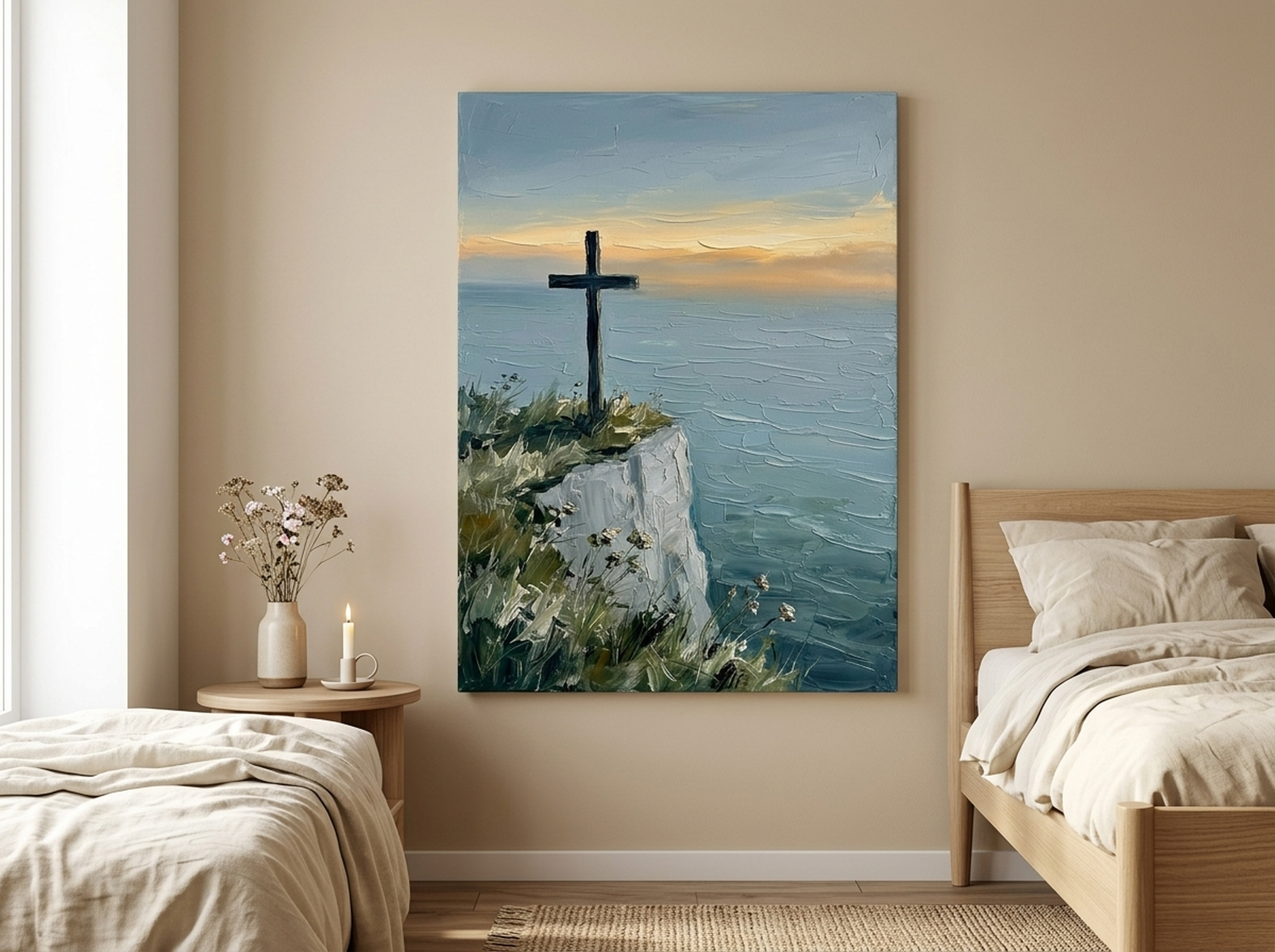
This impressionist landscape places a rugged cross against rolling coastal hills in deep teal, ocean blue, and warm cream. The brushwork is loose and textured, giving the piece an almost painterly movement that changes depending on the time of day and how light hits it. At 60 x 90 cm, it is sized perfectly to anchor a living room wall above a sofa or media console. The cool blue-green palette works with grey, white, or natural wood furniture, and the gold highlights in the clouds bring warmth without tipping the colour balance. We have found this style of landscape cross art outsells flat graphic designs by a wide margin because it feels like a real painting rather than a print.
View the Mountain Cross Canvas
The Bedroom: Rest and Reflection
The bedroom is where most people start and end their day, which makes it the ideal spot for christian wall art that invites quiet reflection rather than bold proclamation. Above the bed is the most popular placement, and for good reason: you see it as you settle in at night and again when you wake. Position the art 10 to 15 cm (4 to 6 inches) above your headboard, or 145 cm (57 inches) from the floor if there is no headboard.
In bedrooms, we recommend softer colour palettes. Cream, rose, sage, and muted gold help the room feel restful. Avoid high-contrast pieces (black text on white backgrounds, for example) that can feel visually loud when you are trying to sleep. Scripture prints with floral or botanical elements work especially well because they combine the calming effect of nature with the comfort of faith. For more bedroom-specific ideas, check our best wall art ideas for a modern bedroom.
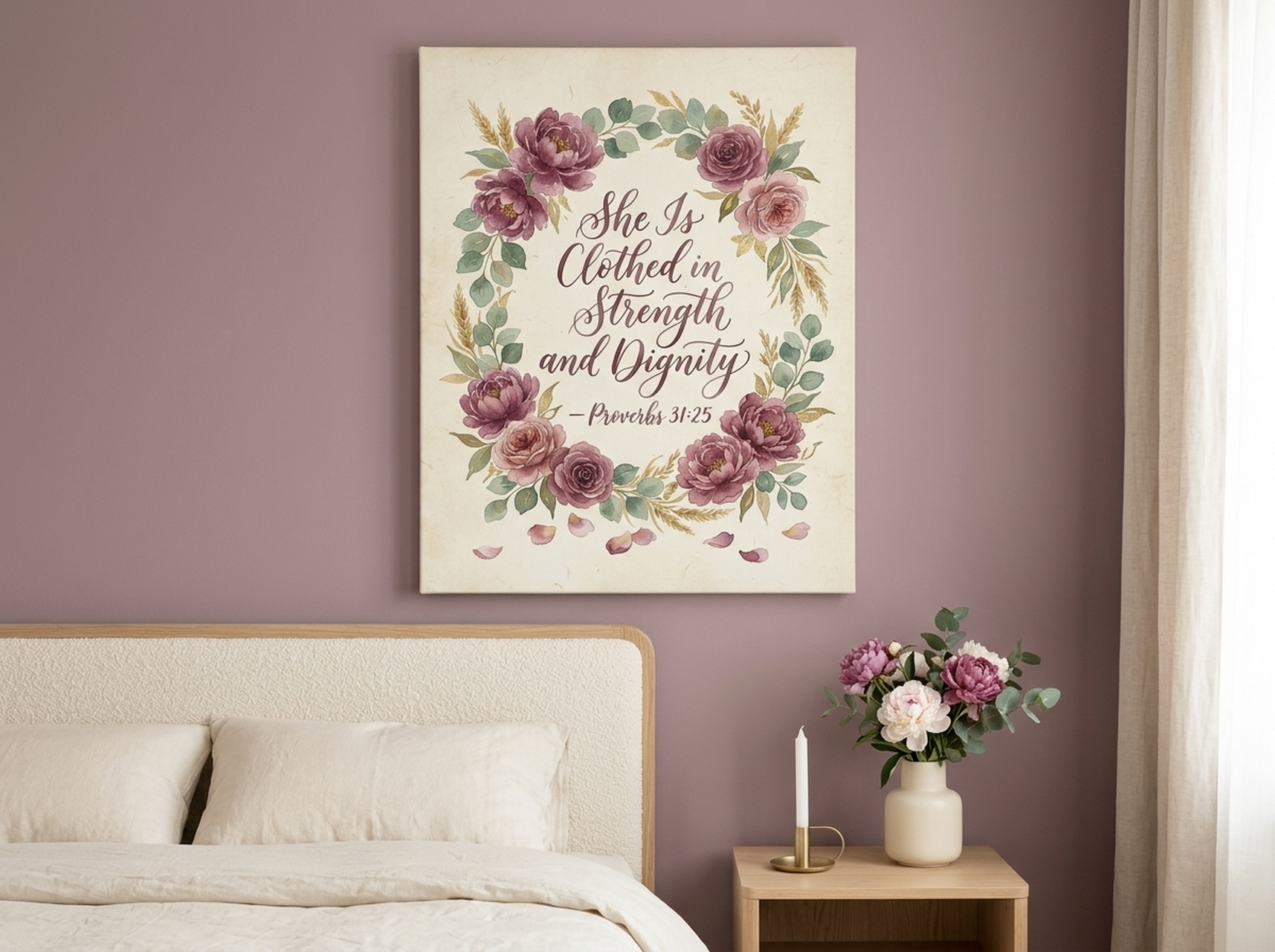
Proverbs 31 Watercolor Floral Canvas
This watercolour floral wreath frames the Proverbs 31 passage in soft rose, burgundy, and sage on a warm cream ground. The hand-painted look of the wreath gives it a personal, almost journaled quality that fits beautifully in a bedroom setting. At typical canvas sizes, it sits comfortably above a queen or king headboard without dominating the wall. The muted palette pairs naturally with linen bedding, whitewashed furniture, or light wood nightstands. Our customers tell us that this piece becomes a nightly reminder, the last thing they read before turning off the light.
The Kitchen and Dining Room: Gratitude at the Table
The kitchen is the heart of the home, and for Christian families, it is often where grace is said and meals are shared. Art in the kitchen needs to survive humidity, cooking splatter proximity, and the general busyness of the space. Canvas prints handle humidity far better than paper prints, and framed canvas adds an extra layer of protection.
Position kitchen art away from the stove and sink. The best spots are the wall adjacent to the dining table, above a breakfast nook, or on the wall opposite the main cooking area. For dining rooms, centre the art above the sideboard or buffet table, keeping it at the same 145 cm (57 inch) centre height. A piece that references harvest, nature, or gratitude fits the spirit of a room where you gather to eat.
Botanical Scripture Ecclesiastes Canvas
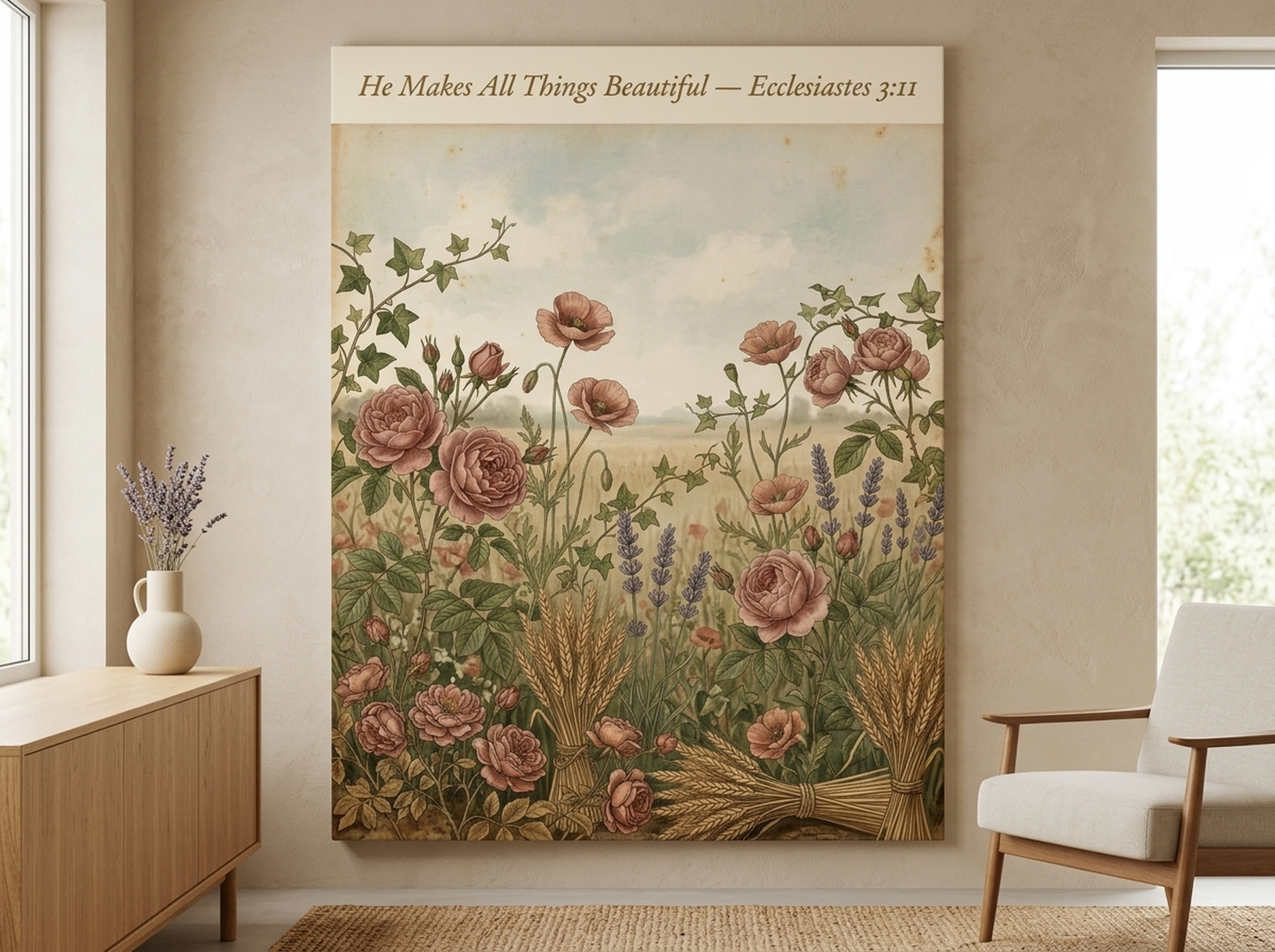
This vintage-style botanical illustration pairs the Ecclesiastes passage with hand-drawn wildflowers in terracotta, sage, and warm tan on a cream ground. The aesthetic sits somewhere between a Victorian botanical plate and a hand-lettered journal page, which gives it real character. It fits kitchens with farmhouse, cottage, or transitional decor without clashing with modern appliances. The earthy palette pulls together rooms that use natural wood, terracotta tile, or warm stone countertops. We have found that scripture art with botanical elements performs particularly well in kitchens because it references the natural world, harvest, and growth, themes that feel right in a space built around food and gathering.
View the Botanical Scripture Canvas
The Prayer Room: A Dedicated Devotional Space
A prayer room or devotional corner does not need to be large. Even a 120 x 90 cm (4 x 3 foot) section of a guest bedroom or a reading nook can become sacred space with the right art. The goal here is singular focus: one piece of christian wall art that serves as the visual anchor for prayer and meditation.
Hang the art at seated eye level if you pray in a chair, which is roughly 110 to 120 cm (43 to 47 inches) from the floor. If you use a prayer kneeler, lower it to 90 to 100 cm (35 to 39 inches). The art should be directly in your line of sight, not off to the side. Keep surrounding decor minimal. A small shelf for a Bible, a candle, and perhaps a plant is enough. The wall art should dominate the visual field.
For prayer rooms, choose contemplative imagery: shepherds, pastoral scenes, quiet moments of devotion. Avoid busy compositions with multiple figures or loud colours. The Gallup religion survey consistently finds that personal prayer is the most common spiritual practice among American Christians, and creating a dedicated physical space for it reinforces the habit.
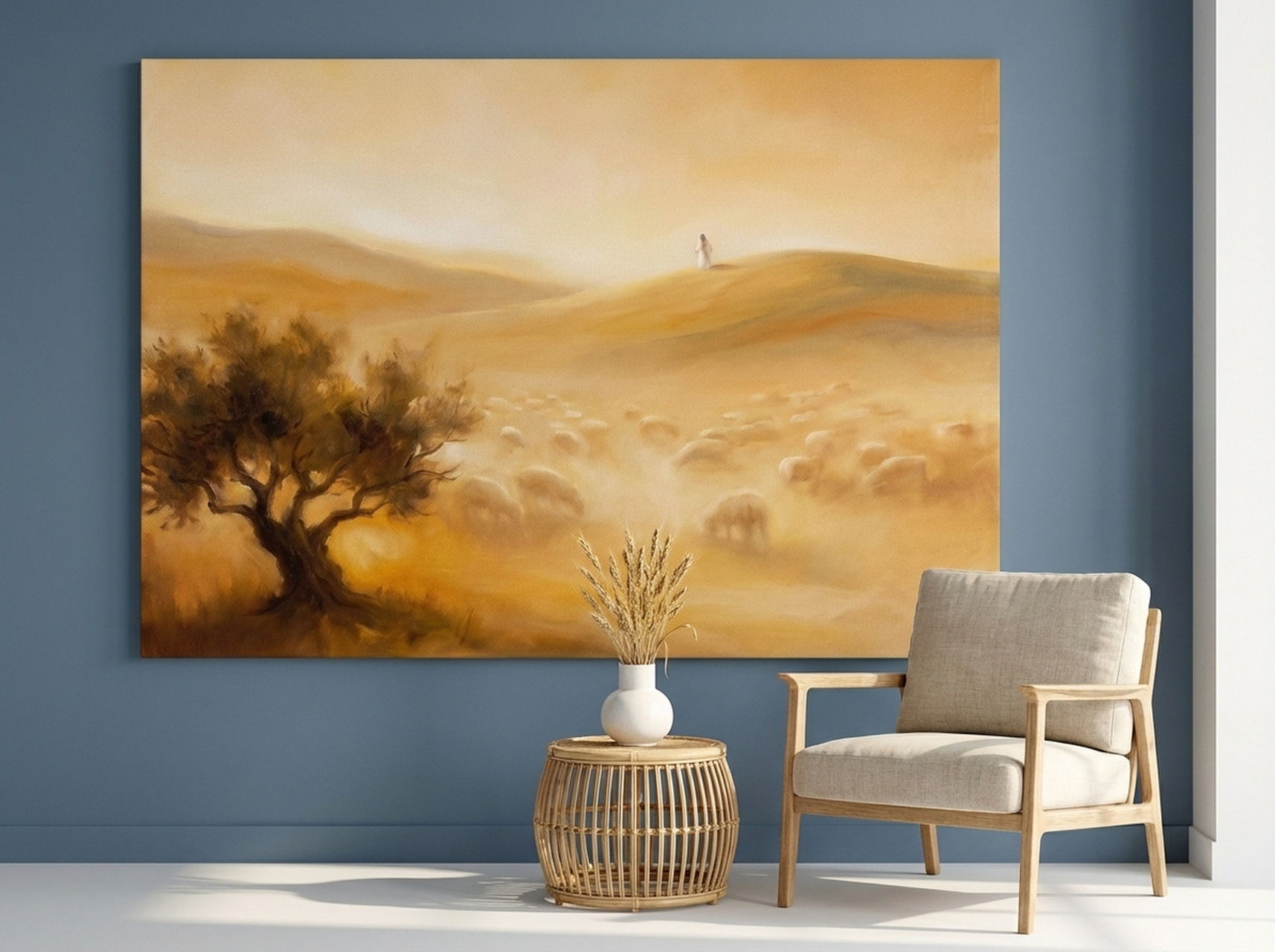
The Good Shepherd Minimalist Canvas
This minimalist interpretation of the Good Shepherd parable uses a restrained palette of gold, tan, cream, and soft brown to create a scene that feels warm without being visually demanding. The composition is deliberately simple: a single figure in a vast, golden landscape. That simplicity is what makes it perfect for a prayer room, where you want art that draws you inward rather than competing for attention. The warm gold tones glow in candlelight or low lamp light, which is how most prayer spaces are lit. We recommend pairing it with a warm-white bulb at 2700K in a nearby lamp for the best effect.
View the The Good Shepherd Canvas
The Kids Room: Growing Up With Faith
Children's rooms present a unique challenge for christian wall art: the piece needs to be visually engaging for a child while still carrying genuine spiritual meaning. Avoid overly cartoonish renditions that the child will outgrow in two years. Instead, look for painterly, storybook-style illustrations with warm colours and welcoming figures.
Hang art at the child's eye level, not yours. For a toddler, that is roughly 90 cm (35 inches) from the floor. For older children (ages 6 to 12), raise it to about 110 cm (43 inches). This ensures the art is something they actually look at rather than something that floats above their heads. Position it near the bed or reading corner, where it can become part of the bedtime routine.
If you are decorating a nursery, our kids room wall art guide covers age-appropriate sizing and safety considerations in more detail.
Jesus with Children Painterly Canvas
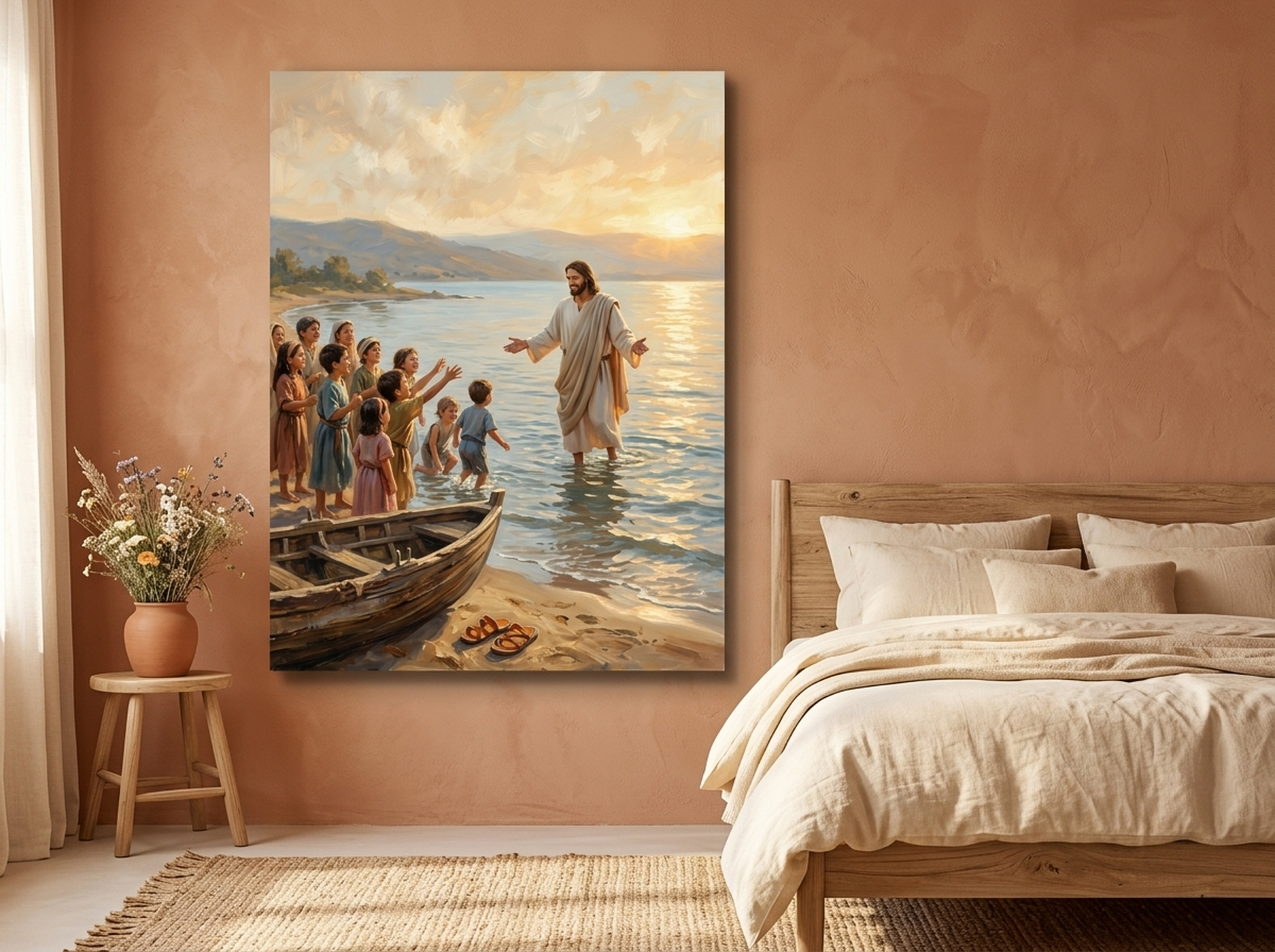
This painterly scene shows Jesus surrounded by children in a warm, sunlit landscape. The terracotta, cream, gold, and soft blue palette feels joyful without being garish, and the loose brushwork gives it the quality of a storybook illustration that a child can study and discover new details in over time. It is one of our most popular picks for both nurseries and older children's rooms because the imagery grows with the child. A toddler sees the colours and the gentle figures; an older child begins to understand the story. We recommend the standard canvas size for children's rooms, centered above the bed or beside a bookshelf at 100 cm (39 inches) from the floor.
View the Jesus with Children Canvas
The Home Office: Purpose-Driven Productivity
A home office is where faith meets daily work, and the right piece of christian wall art can serve as both motivation and a reminder of purpose. The best placement in an office is directly ahead of where you sit, either on the wall behind your monitor or on the wall you face when you look up from your desk. Avoid hanging art behind your chair where you never see it (though it does show up nicely on video calls).
For offices, we recommend pieces with focused, detailed imagery rather than wide landscapes. A scripture print with a strong central subject gives you something specific to focus on during a brief mental break. The colours should complement your desk setup without clashing with your monitor's light. Navy, warm red, and cream are reliable office palettes because they look professional on camera and in person. For more home office design tips, see our home office wall art guide.
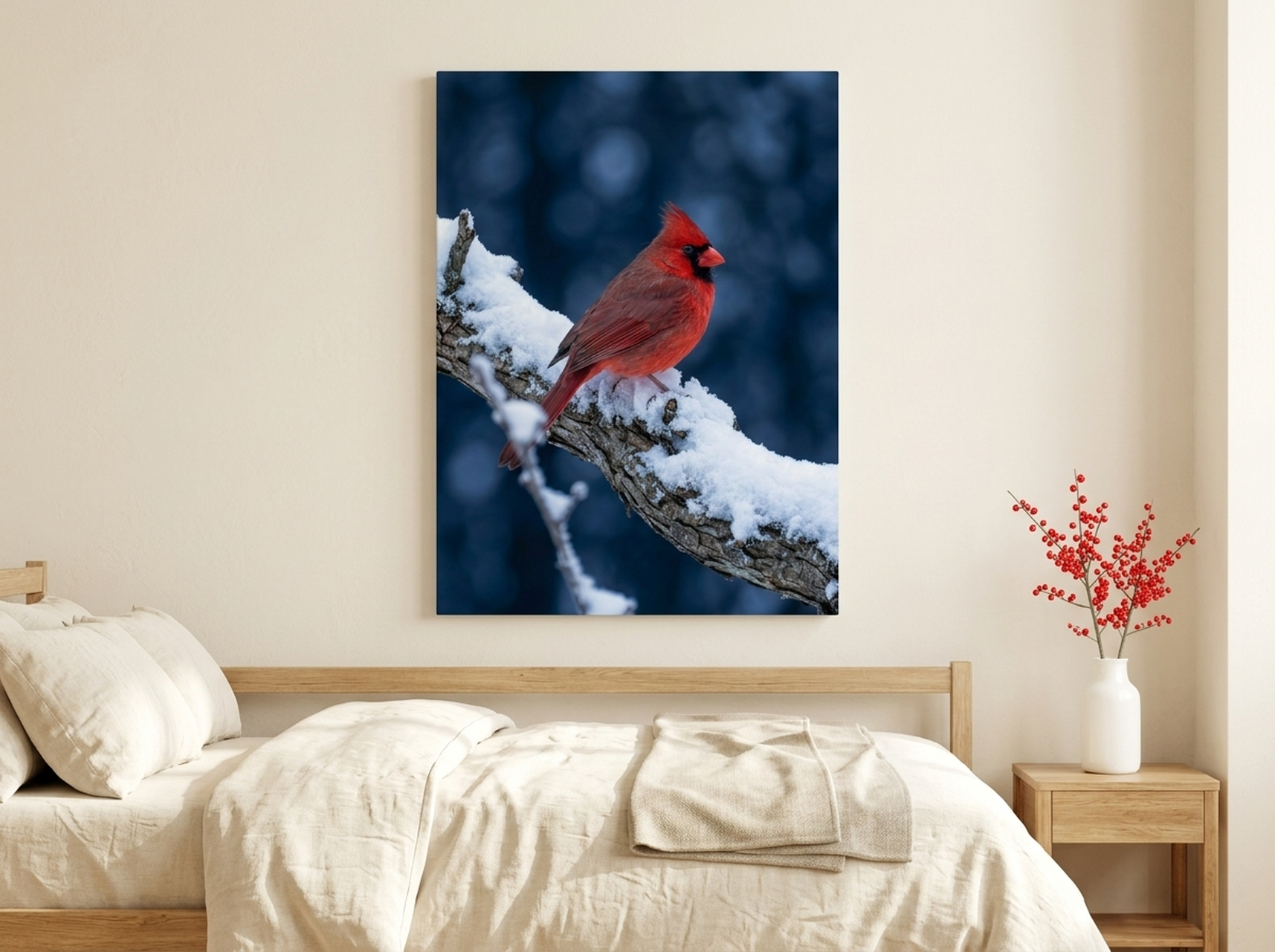
Cardinal Bird Scripture Canvas
This winter scene pairs a vivid cardinal perched on snow-dusted branches with a scripture passage in a rich palette of crimson red, deep navy, white, and cream. The cardinal is a beloved Christian symbol, often associated with the presence of a departed loved one or a messenger of hope, and its bright red against the cool background creates a natural focal point. In a home office, the contrasting colours are energising without being distracting, and the scripture text is legible from a seated distance of 120 to 150 cm (4 to 5 feet). We have found that customers who work from home particularly appreciate nature-based scripture art because it provides a moment of visual respite from screens while reinforcing their daily intention.
View the Cardinal Bird Scripture Canvas
Sizing and Hanging Cheat Sheet
Getting the size and height right prevents the two most common decorating mistakes: art that looks too small for the wall, and art hung too high. Here is a quick reference by room:
| Room | Recommended Size | Centre Height from Floor | Best Orientation |
|---|---|---|---|
| Living Room | 60 x 90 cm (24 x 36 in) or larger | 145 cm (57 in) | Landscape |
| Bedroom | 50 x 70 cm (20 x 28 in) to 60 x 90 cm | 10-15 cm above headboard | Portrait or square |
| Kitchen / Dining | 40 x 60 cm (16 x 24 in) to 50 x 70 cm | 145 cm (57 in) | Portrait |
| Prayer Room | 50 x 70 cm (20 x 28 in) | 110-120 cm (seated eye level) | Portrait |
| Kids Room | 40 x 50 cm (16 x 20 in) to 50 x 70 cm | 90-110 cm (child eye level) | Landscape or square |
| Home Office | 40 x 60 cm (16 x 24 in) to 60 x 90 cm | 145 cm (57 in) or monitor height | Portrait |
A universal rule: the art should cover roughly 60 to 75 percent of the wall space or furniture piece below it. A 200 cm (80 inch) sofa needs art that spans at least 120 cm (48 inches) wide, whether that is a single large canvas or a pair. For detailed hanging instructions, see our complete hanging guide.
Common Mistakes to Avoid
After helping hundreds of customers select and place christian wall art, we see the same missteps come up repeatedly. Here are the five most common, and how to avoid them:
1. Hanging Too High
This is the single most common mistake in wall art placement, regardless of style. Art hung at 170 cm (67 inches) or higher forces people to crane their necks upward, which breaks the natural viewing experience. The standard gallery centre height of 145 cm (57 inches) exists because it aligns with average standing eye level. In rooms where you are mostly seated (prayer rooms, offices, bedrooms), lower it to 110 to 120 cm (43 to 47 inches).
2. Choosing Art That Is Too Small
A 30 x 40 cm (12 x 16 inch) canvas on a 300 cm (10 foot) wall looks like an afterthought. The art should feel proportional to the wall. If the wall is large and you prefer a smaller piece, add visual weight around it: a pair of sconces, a shelf below, or a grouping of two to three complementary frames. The Pew Research Center Religious Landscape Study notes that visual religious expression in the home is most impactful when it occupies a prominent position rather than a peripheral one.
3. Ignoring the Room's Lighting
A dark oil painting of Gethsemane in a dimly lit hallway becomes a dark rectangle. Either add a picture light (LED strip lights with warm 2700K to 3000K colour temperature work well) or choose art with lighter values for low-light rooms. Conversely, highly reflective glass-fronted frames create glare in sunny rooms. Our matte canvas finish eliminates this problem entirely.
4. Mixing Too Many Styles on One Wall
A stained-glass-style print next to a minimalist scripture next to a photorealistic cross creates visual chaos. Stick to one dominant style per wall, and ideally per room. If you want variety, distribute different styles across different rooms, which is exactly what this guide helps you do.
5. Forgetting the Furniture Connection
Art that floats 60 cm (24 inches) above the nearest furniture looks disconnected. Always hang the bottom edge of the frame within 15 to 20 cm (6 to 8 inches) of the furniture below, whether that is a sofa, console table, headboard, or desk. This visual connection makes the art feel intentional rather than randomly placed.
Frequently Asked Questions
What size christian wall art should I hang above a sofa?
The art should span 60 to 75 percent of the sofa's width. For a standard 200 cm (80 inch) sofa, that means a single canvas of at least 120 cm (48 inches) wide, or a pair of canvases that together cover that width. Centre the art horizontally over the sofa with the bottom edge 15 to 20 cm (6 to 8 inches) above the sofa back.
Can I mix christian art with non-religious decor?
Absolutely. In our experience, the best-looking rooms blend christian wall art with complementary non-religious pieces. A cross landscape above the sofa works beautifully next to botanical prints, abstract canvases, or family photos on an adjacent wall. The key is maintaining a consistent colour palette across all the art in the room.
Is canvas better than framed paper prints for christian art?
Canvas is more durable, resists humidity better than paper, and does not require glass that can create glare. Framed matte canvas, which is what we offer, combines the texture of canvas with the polished look of a frame. It is the best option for kitchens and bathrooms where moisture is a factor, and it looks equally good in living rooms and bedrooms.
How do I create a prayer room on a budget?
You do not need a dedicated room. A corner of a guest bedroom, a section of a hallway, or even a closet alcove can work. Start with one piece of meaningful christian wall art at seated eye level, add a small table or shelf for a Bible and candle, and place a comfortable chair or cushion. The total footprint can be as small as 90 x 90 cm (3 x 3 feet) of floor space.
What christian wall art is appropriate for a child's room?
Look for painterly, warm-toned pieces with welcoming figures and gentle scenes. Scenes of Jesus with children, pastoral shepherd landscapes, and nature-based scripture prints work well for all ages. Avoid dark or intense imagery (crucifixion scenes, for example) in rooms for children under 10. Hang at the child's eye level, not yours.
How do I light christian wall art without a picture light?
Position the art within 90 cm (36 inches) of a window for natural light, or use a table lamp or floor lamp angled toward the piece from 45 degrees. LED strip lights mounted behind the frame create a warm halo effect that works beautifully for devotional spaces. Use warm-white bulbs (2700K to 3000K) to bring out golds, creams, and earthy tones.
Frequently Asked Questions
What size Christian wall art works best above a bed?
For a queen bed, aim for 76 to 102 cm (30 to 40 inches) wide. The art should fill roughly two-thirds of the headboard width without overwhelming the space.
Can I mix Christian art with other decor styles?
Yes. Subtle scripture art and abstract cross designs pair well with modern, farmhouse, and traditional interiors. Match the frame and colour palette to your existing furniture.
Where is the best room for faith-based wall art?
Bedrooms and living rooms are the most popular choices. Bedrooms offer a private devotional space, while living rooms let the art serve as a conversation piece.
Is canvas or framed better for Christian wall art?
Gallery-wrapped canvas gives a clean, modern look and needs no frame. Framed prints suit traditional rooms. Choose based on your room style and wall colour.
Quick Reference Table: Our Top Picks by Room
| Product | Best For | Dominant Colours | Link |
|---|---|---|---|
| Mountain Cross Canvas | Living Room | Blue, teal, cream, gold | View |
| Proverbs 31 Floral Canvas | Bedroom | Cream, rose, burgundy, sage | View |
| Botanical Scripture Canvas | Kitchen / Dining Room | Cream, terracotta, sage, gold | View |
| The Good Shepherd Canvas | Prayer Room | Gold, tan, cream, brown | View |
| Jesus with Children Canvas | Kids Room / Nursery | Terracotta, cream, gold, blue | View |
| Cardinal Bird Scripture Canvas | Home Office | Red, navy, white, cream | View |
Every piece of christian wall art in this guide was chosen not just for how it looks, but for how it functions in a specific room. The living room gets the statement landscape. The bedroom gets the gentle scripture. The prayer room gets the contemplative pastoral. And each one is sized, coloured, and styled to match the way you actually use that space.
If you are ready to start placing faith on your walls, browse our full Christian wall art collection and find the piece that belongs in your home.