
How to Choose the Perfect Wall Art Size for Your Living Room
The Heva Team
Art Curators & Interior Design Enthusiasts · February 16, 2026 · 14 min read
Learn the exact formulas interior designers use to size wall art for living rooms. Covers the two-thirds rule, sofa proportions, fireplace sizing, and a step-by-step measuring guide with measurements in both cm and inches.

You found a canvas print you love, but will it actually look right on your wall? Choosing the wrong size is the number one reason living room art falls flat. This guide gives you the exact proportions, formulas, and placement rules interior designers rely on so you can buy with confidence and hang with zero guesswork.
Ready to browse? Explore our Living Room Wall Art collection, or keep reading for our top picks and expert tips.
The Two-Thirds Rule (and When to Break It)
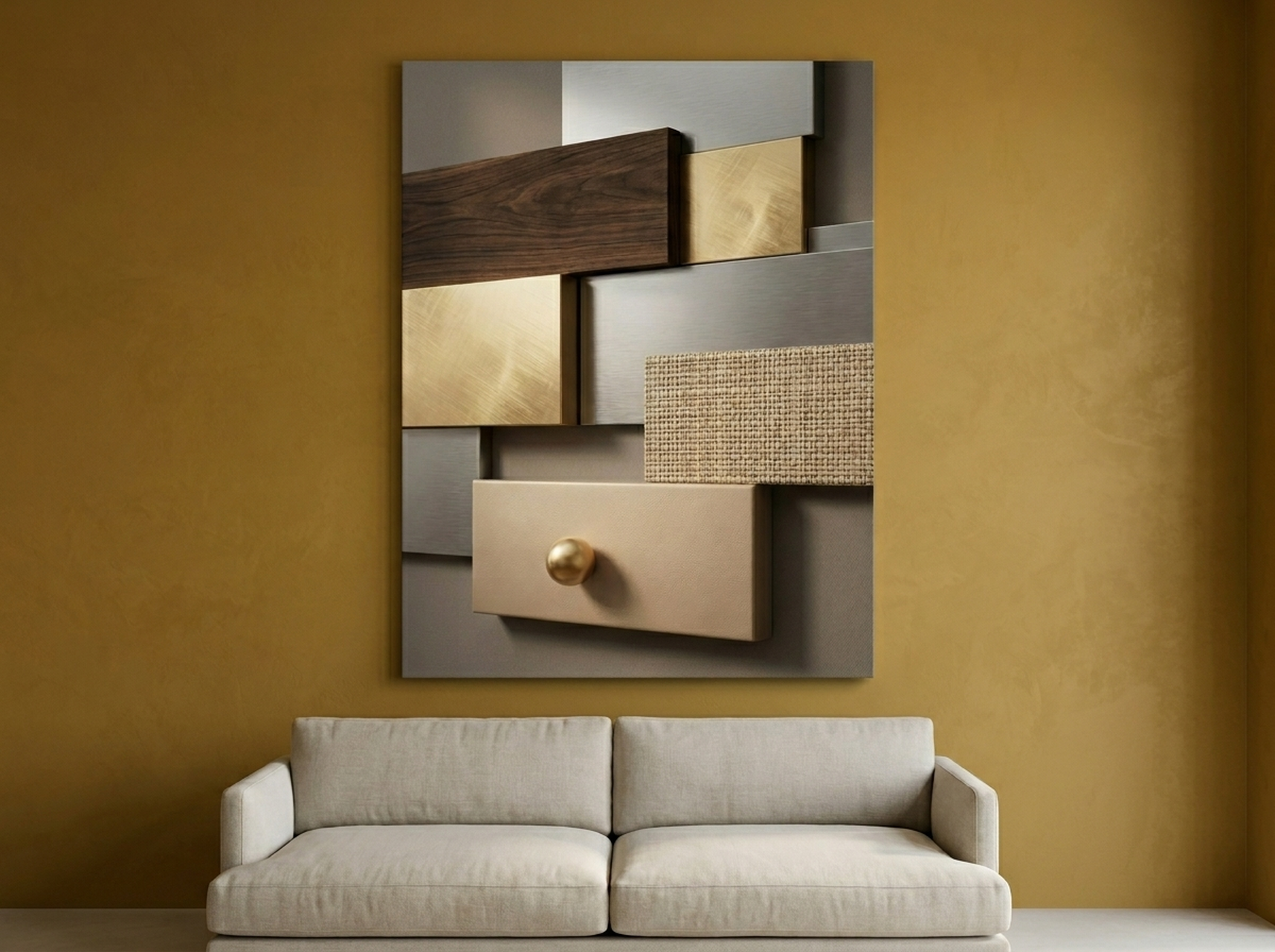
The single most useful proportion in wall art sizing is the two-thirds rule. Your artwork, or the arrangement of artworks, should span roughly two-thirds the width of the furniture directly below it. Interior design site Artfully Walls explains that this ratio traces back to the golden ratio, a mathematical proportion our eyes naturally find balanced and appealing.
In practice that means a 183 cm (72 inch) sofa calls for art roughly 122 cm (48 inches) wide. A 213 cm (84 inch) sofa pairs with art around 142 cm (56 inches) wide. A 244 cm (96 inch) sectional needs art approximately 163 cm (64 inches) wide.
When should you break the rule? On large, unanchored walls with no furniture below, the two-thirds proportion does not apply. Instead, the art itself becomes the anchor. Aim for a single oversized piece or a gallery grouping that covers at least 60 percent of the empty wall space to avoid the lonely-postage-stamp effect.
If you are building a gallery wall, treat the entire arrangement as one visual block and apply the two-thirds rule to the group, not to individual pieces.
Sizing Art Above the Sofa
The space above your sofa is the most prominent art display area in most living rooms and the spot where sizing errors are most visible. Follow these specific measurements.
Width: Your art should cover 50 to 75 percent of the sofa width, with two-thirds (66 percent) as the sweet spot. On a 183 cm (72 inch) sofa, that means a piece 91 to 137 cm (36 to 54 inches) wide. Never go wider than the sofa itself, which creates a top-heavy, off-balance appearance.
Height: For standard 244 cm (8 foot) ceilings, choose art 61 to 91 cm (24 to 36 inches) tall. For 274 to 305 cm (9 to 10 foot) ceilings, you can go up to 102 or even 122 cm (40 to 48 inches) tall. Taller ceilings support even larger vertical dimensions.
Gap between sofa and frame: Leave 15 to 30 cm (6 to 12 inches) of space between the top of the sofa back and the bottom edge of the frame. The design team at Mixtiles recommends 20 cm (8 inches) as the ideal distance, close enough that the art and sofa read as a connected vignette rather than separate elements.
A common blunder is hanging a 41 by 51 cm (16 by 20 inch) print above a 213 cm (84 inch) sofa. That small piece will look lost and disconnected. If you prefer smaller art, group three to five pieces into a cluster that fills the correct proportional footprint.
For more living room recommendations, see our complete living room wall art buyer's guide.
Sizing Art Above a Fireplace
Fireplaces present unique sizing challenges because the mantel depth and chimney breast width vary widely. Measure the mantel width, not the firebox opening, and use that as your reference.
Width: Choose art that spans 50 to 75 percent of the mantel width. A 152 cm (60 inch) mantel calls for a piece 76 to 114 cm (30 to 45 inches) wide.
Height: Measure the wall space between the top of the mantel and the ceiling. Fill roughly half to two-thirds of that vertical gap. In most homes with 244 cm (8 foot) ceilings and a standard mantel height of 130 cm (51 inches), you have about 114 cm (45 inches) of wall space. A piece 61 to 76 cm (24 to 30 inches) tall works perfectly.
Gap above mantel: Leave 10 to 20 cm (4 to 8 inches) between the mantel top and the bottom of the frame. Leaning art on the mantel is a popular casual alternative in 2026. If you lean, choose a slightly larger piece because the angle reduces the visible height.
For fireplaces with a television mounted above, consider art on the flanking walls instead. Two matching vertical pieces on either side of the chimney breast create a balanced, intentional look that does not compete with the screen.
Above-Bed Art Sizing
If your living room doubles as a studio or you are applying these principles bedroom-wide, above-bed sizing follows a similar logic to above-sofa placement.
Width: Art should span roughly two-thirds of the headboard width. A standard queen headboard is 152 cm (60 inches) wide, so aim for art approximately 102 cm (40 inches) wide. A king headboard at 193 cm (76 inches) calls for art around 127 cm (50 inches) wide.
Gap above headboard: Keep 15 to 25 cm (6 to 10 inches) between the top of the headboard and the bottom of the frame. This mirrors the sofa rule and ties the art to the furniture below.
Safety note: Avoid hanging heavy framed pieces directly over a bed where someone sleeps. Use secure wall anchors rated for the frame weight and double-check the mounting hardware. Canvas prints on lightweight frames, like the ones we sell, are a safer choice for above-bed display.
Step-by-Step Measuring Guide
Follow this five-step process to nail the dimensions before you buy.
Step 1: Measure the wall. Use a tape measure to record the total width and height of the available wall space in centimetres and inches. Write it down.
Step 2: Measure the furniture below. Record the width of the sofa, console, bed frame, or mantel that sits beneath the wall. If nothing is below the art, skip to step 4.
Step 3: Calculate the ideal art width. Multiply the furniture width by 0.57 (for the lower bound) and by 0.75 (for the upper bound). The sweet spot is 0.66, or two-thirds. For a 183 cm (72 inch) sofa: 183 x 0.66 = 121 cm, so roughly 122 cm (48 inches) wide.
Step 4: Decide on orientation. Horizontal (landscape) pieces emphasise width and work best above wide furniture. Vertical (portrait) pieces draw the eye upward and suit narrow walls, hallways, and spaces between windows. Square pieces offer a modern, balanced feel and work in either context.
Step 5: Mark the wall. Use painter's tape to outline the planned dimensions on the wall. Live with it for a day. Step back from the doorway and see how the proportions feel before committing to a purchase.
For lighting tips that make your measured and hung art look even better, read our guide on how to light wall art like a gallery.
6 Canvas Prints Sized for Real Living Rooms
Each of these picks demonstrates a different sizing scenario you might encounter in your own home. Every print ships framed and ready to hang with free US delivery.
Sunbeam Forest Canvas Wall Art
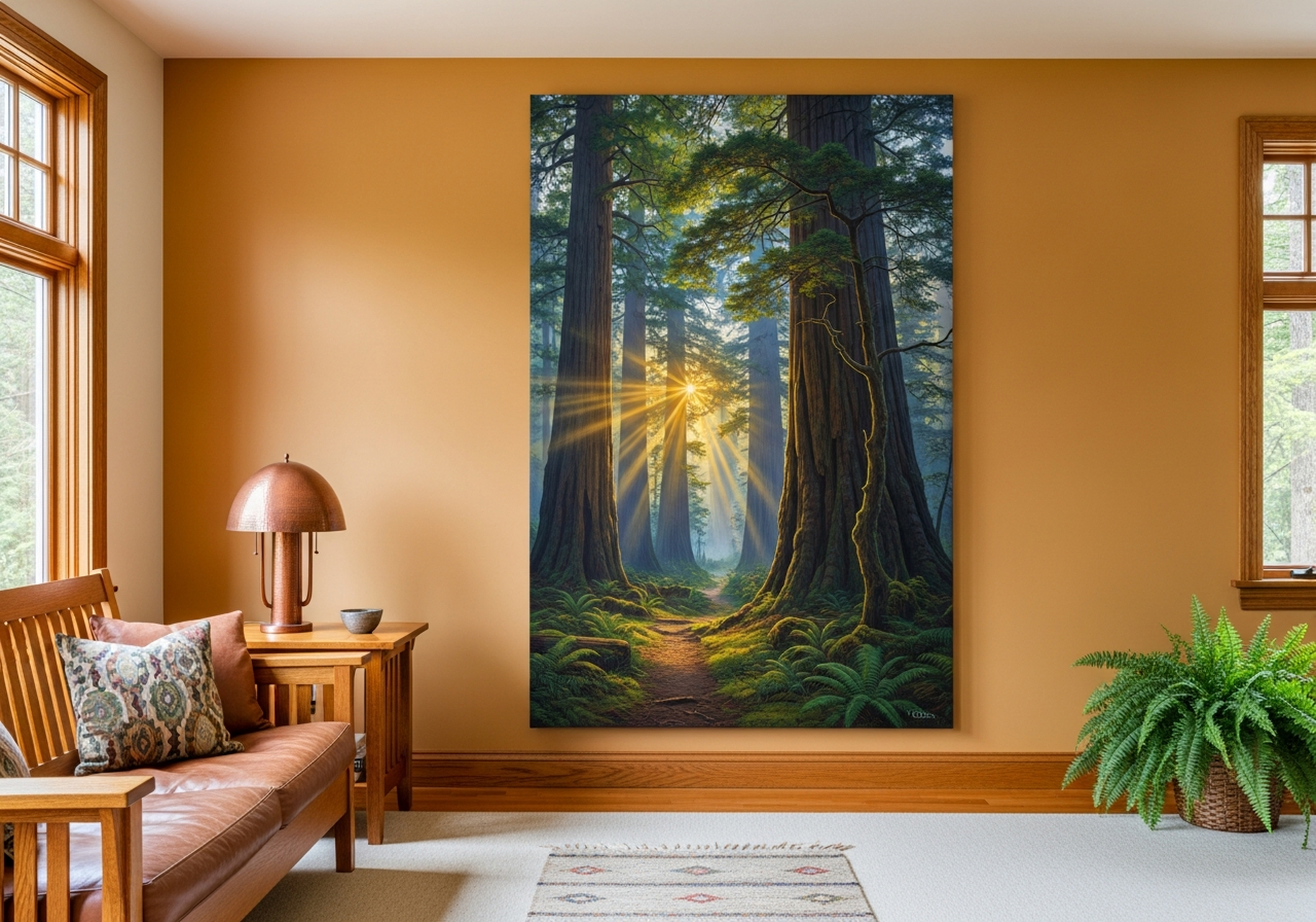
Golden sunlight pours through a canopy of ancient redwood trunks in this atmospheric landscape. The warm palette of gold, green, and deep brown anchors a neutral living room instantly. At 61 by 91 cm (24 by 36 inches), this piece fits perfectly above a standard 183 cm (72 inch) sofa following the two-thirds rule. The rich, painterly texture adds depth without overwhelming lighter furniture.
Best placement: Above a standard sofa.
Canyon Strata Impasto Canvas Wall Art
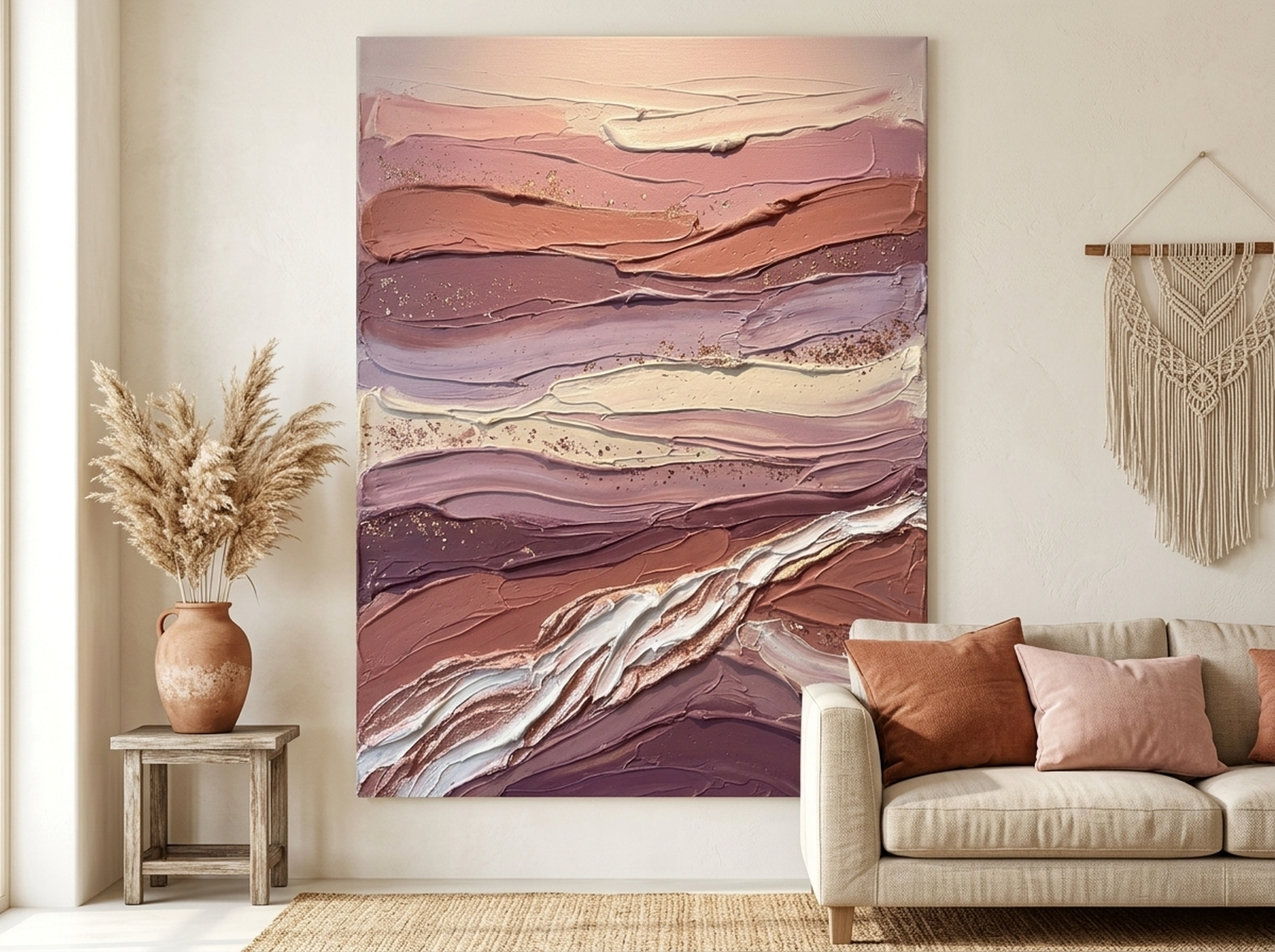
Layers of textured rose, terracotta, and cream sweep horizontally across this oversized abstract landscape. The earthy palette grounds any room, while the impasto brushwork catches side light beautifully. Hang it as the single statement piece on an accent wall where you need a canvas at least 122 by 183 cm (48 by 72 inches) to fill the space confidently. Pairs well with warm wood tones and linen upholstery.
Best placement: Large accent wall or open plan living area.
View the Canyon Strata Impasto
Lotus Flower Gold Leaf Canvas Wall Art
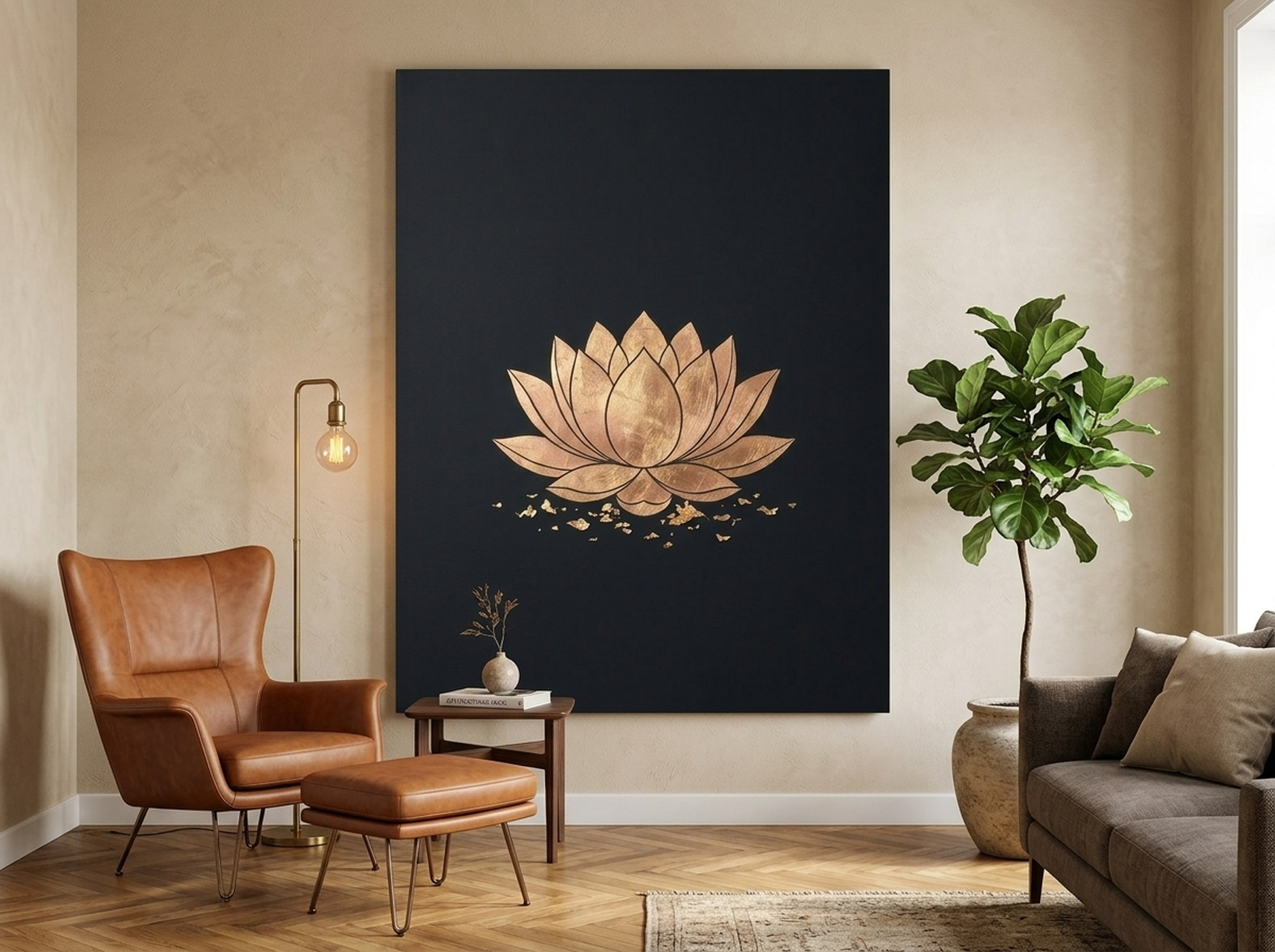
A single lotus rendered in shimmering gold leaf against a matte black background makes a striking vertical statement. This minimalist design works in narrow spaces between windows or flanking a fireplace, where you need a piece roughly 51 by 76 cm (20 by 30 inches). The vertical orientation draws the eye upward, making ceilings feel taller. Perfect for modern, zen, or Asian-inspired interiors.
Best placement: Narrow wall or fireplace flanking pair.
View the Lotus Flower Gold Leaf
Northern Lights Aurora Canvas Wall Art
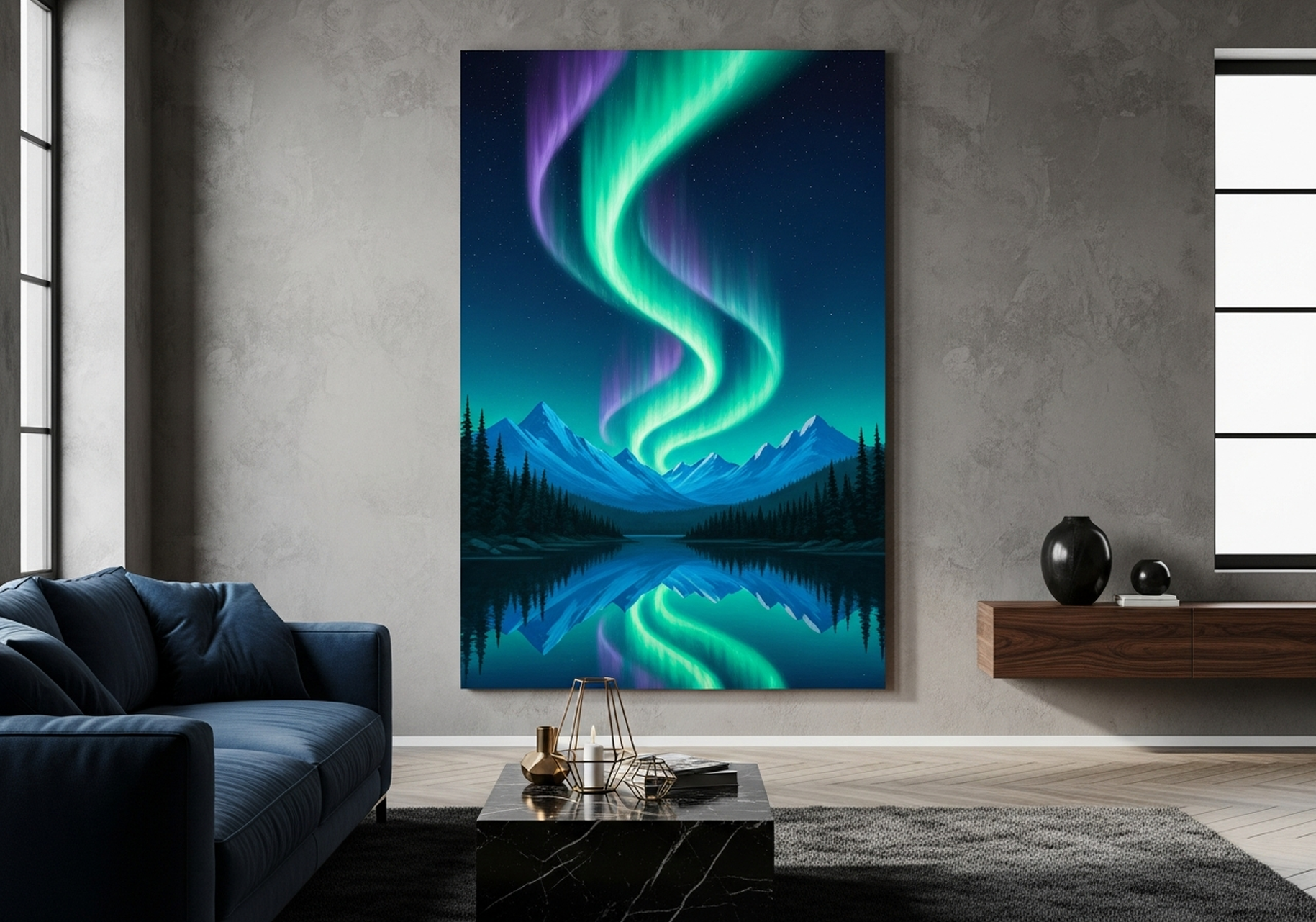
Ribbons of turquoise and purple aurora sweep across a star-filled sky, reflected in a glassy mountain lake below. The cool palette creates a calming focal point in any living room. Sized as a large horizontal piece, it follows the sofa-to-art proportional rule perfectly above a 213 cm (84 inch) sectional. The dramatic colours pop against both white and dark accent walls.
Best placement: Above a wide sectional sofa.
View the Northern Lights Aurora
Cherry Blossom Sculptural Relief Canvas Wall Art
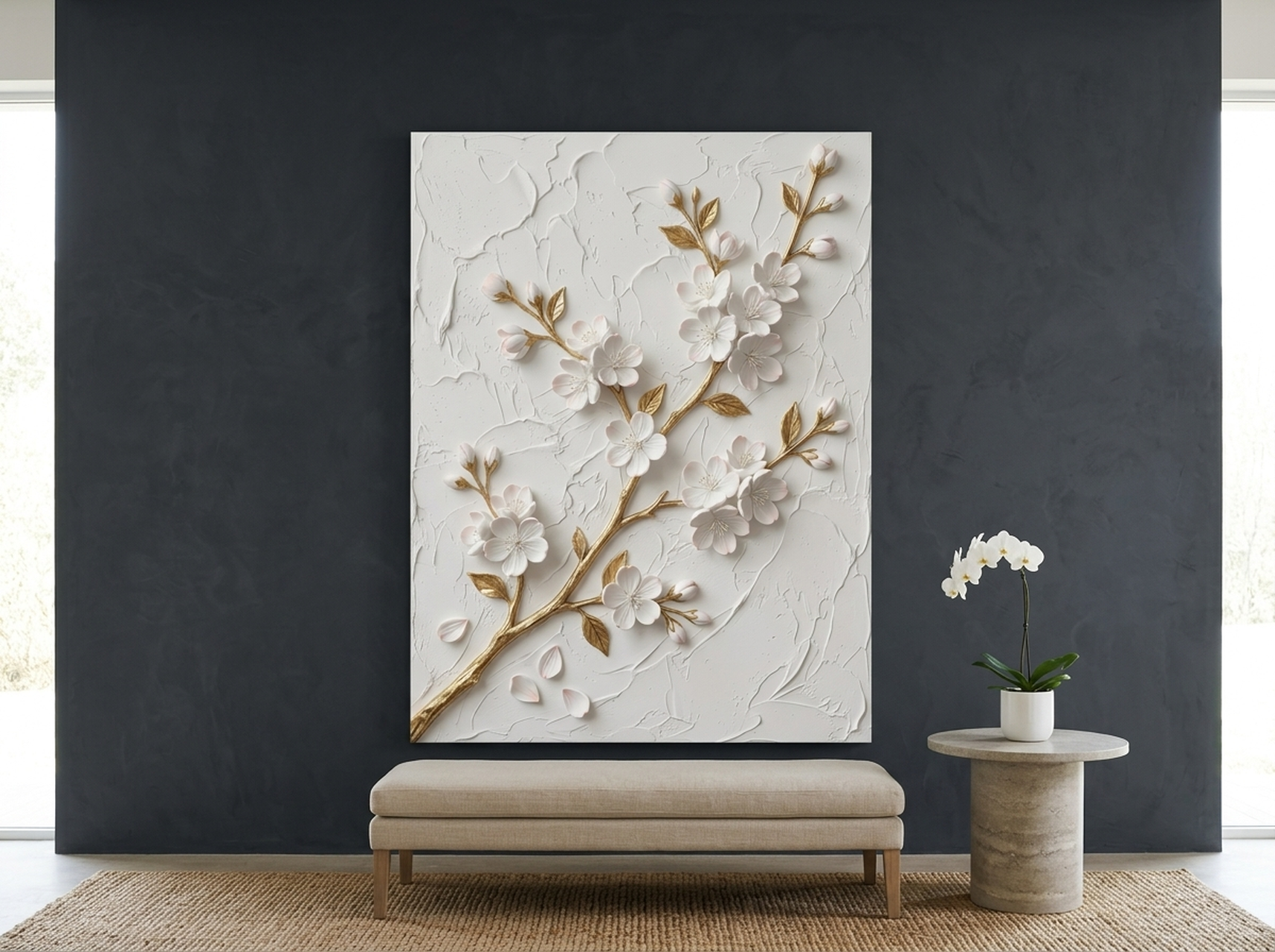
Delicate cherry blossoms appear to rise from the canvas in this trompe-l'oeil relief print. The nearly monochrome palette of white, cream, and subtle gold works with virtually any colour scheme. Sized for above a fireplace mantel, aim for a piece that fills half to three-quarters of the mantel width. The subtle texture catches ambient light and adds visual interest without competing with other decor.
Best placement: Above a fireplace mantel.
View the Cherry Blossom Sculptural Relief
Floral Figure Teal Oil Painting Canvas Print
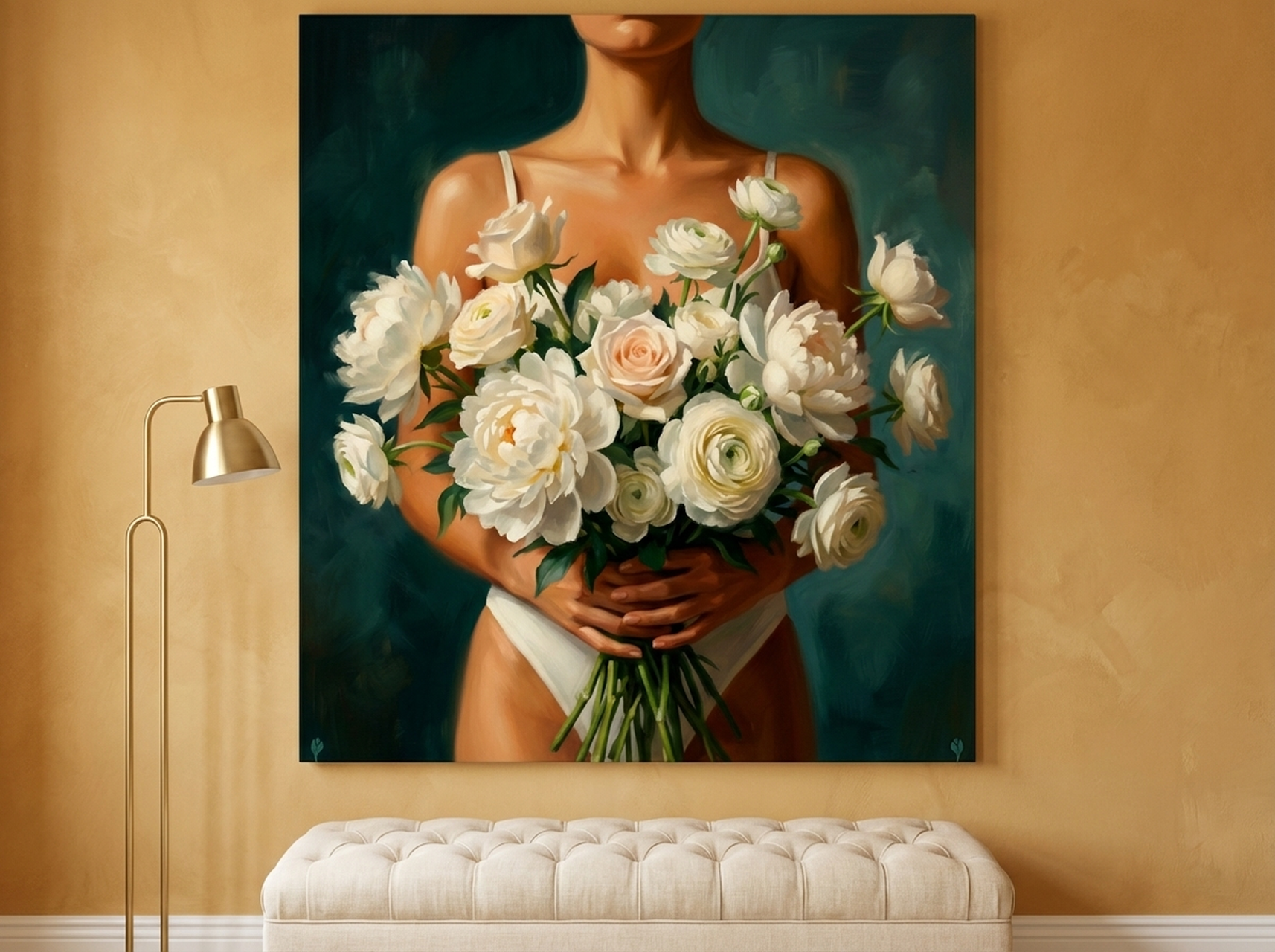
A graceful figure emerges from a wash of teal and cream, crowned with oversized white peonies. This painterly portrait brings an artistic, gallery-worthy quality to any collection wall. Use it as the anchor piece in a gallery arrangement, surrounded by four to six smaller complementary prints. The teal palette coordinates with both warm metallics and cool neutrals, making it versatile across multiple design styles.
Best placement: Gallery wall anchor piece.
View the Floral Figure Teal Oil Painting
Room-by-Room Size Chart
Use these guidelines as a starting point. Always measure your specific space and apply the proportional rules above.
| Room Scenario | Recommended Art Size | Hanging Height |
|---|---|---|
| Above a 183 cm (72 in) sofa | 122 to 137 cm (48 to 54 in) wide | 15 to 25 cm (6 to 10 in) above sofa |
| Above a 213 cm (84 in) sofa | 142 to 160 cm (56 to 63 in) wide | 15 to 25 cm (6 to 10 in) above sofa |
| Above a 244 cm (96 in) sectional | 163 to 183 cm (64 to 72 in) wide | 15 to 25 cm (6 to 10 in) above sofa |
| Above a 152 cm (60 in) fireplace | 76 to 114 cm (30 to 45 in) wide | 10 to 20 cm (4 to 8 in) above mantel |
| Above a 122 cm (48 in) console | 81 to 91 cm (32 to 36 in) wide | 15 to 20 cm (6 to 8 in) above console |
| Large blank wall (no furniture) | 122 x 183 cm (48 x 72 in) minimum | Centre at 145 cm (57 in) from floor |
| Narrow wall between windows | 51 to 61 cm (20 to 24 in) wide, vertical | Centre at 145 to 152 cm (57 to 60 in) |
| Queen bed headboard | 102 cm (40 in) wide | 15 to 25 cm (6 to 10 in) above headboard |
| Staircase wall | Series of 3 to 5 pieces, mixed sizes | Centre each at 152 cm (60 in) from its step |
The 57-Inch Rule: Where to Hang
Size is only half the equation. Hanging art at the wrong height undermines even perfectly proportioned work. The gallery standard used by museums worldwide places the centre of the artwork at 145 to 152 cm (57 to 60 inches) from the floor. This height corresponds to average adult eye level and ensures the piece meets the viewer naturally.
When art hangs above furniture, the furniture-to-art gap takes priority over the eye-level rule. Keep 15 to 30 cm (6 to 12 inches) between the furniture top and the frame bottom, even if that places the centre slightly lower than 145 cm.
For rooms with ceilings above 305 cm (10 feet), you can shift the centre up to 152 to 165 cm (60 to 65 inches). Going higher than that creates a disconnected, floating look where the art seems to belong to the ceiling rather than the room.
When hanging a vertical pair (two stacked pieces), treat them as a single unit. The centre of the combined arrangement should land at 145 to 152 cm (57 to 60 inches), with 5 to 8 cm (2 to 3 inches) of space between the two frames.
Gallery Wall Sizing Tips
Gallery walls remain popular in 2026, though the trend has shifted toward curated, intentional groupings of five to seven pieces rather than sprawling floor-to-ceiling collections. For detailed layouts and templates, see our gallery wall layout guide.
Define the total footprint first using painter's tape or butcher paper on the wall. Apply the two-thirds rule relative to the furniture below. Within that footprint, use one or two larger anchor pieces surrounded by smaller complementary works. A classic layout pairs a 61 by 91 cm (24 by 36 inch) anchor with four to six smaller pieces ranging from 20 by 25 cm to 41 by 51 cm (8 by 10 to 16 by 20 inches).
Keep spacing between frames consistent at 5 to 8 cm (2 to 3 inches). Inconsistent gaps look accidental. Before hammering nails, cut paper templates to size, tape them to the wall, photograph the layout, and adjust until the balance feels right.
5 Common Sizing Mistakes (and How to Fix Them)
1. Going too small. A 41 by 51 cm (16 by 20 inch) print above a 213 cm (84 inch) sofa looks like an afterthought. Fix: measure the sofa width and multiply by 0.66 to find the minimum canvas width.
2. Hanging too high. Art placed closer to the ceiling than to the furniture below creates a visual disconnect. Fix: keep the gap between sofa and frame bottom under 30 cm (12 inches). The art should feel anchored to the furniture, not floating away from it.
3. Ignoring the room's proportions. A horizontally oriented landscape above a tall, narrow wall wastes vertical space and looks cramped. Fix: match the orientation of the art to the shape of the wall. Tall walls call for vertical pieces; wide walls call for horizontal ones.
4. Mixing frame sizes randomly in a gallery wall. Random sizing creates visual chaos instead of curated style. Fix: limit yourself to two or three frame sizes and keep spacing uniform throughout the arrangement.
5. Forgetting to account for frame width. An 8 cm (3 inch) frame adds 15 cm (6 inches) to both the width and height of your art. Fix: include the frame in all your measurements before deciding whether a piece fits the space.
Frequently Asked Questions
What is the two-thirds rule for wall art?
The two-thirds rule states that your artwork should span approximately two-thirds (66 percent) of the width of the furniture below it. For a 183 cm (72 inch) sofa, that means a canvas about 122 cm (48 inches) wide. This proportion is rooted in the golden ratio and consistently produces a balanced, intentional look.
How high should I hang art above a sofa?
Leave 15 to 25 cm (6 to 10 inches) between the top of the sofa back and the bottom edge of the frame. This gap is more important than the absolute height from the floor, because it visually connects the art to the furniture and creates a cohesive grouping.
What size art works above a fireplace?
Measure your mantel width and choose art that spans 50 to 75 percent of it. For a 152 cm (60 inch) mantel, that means a piece between 76 cm (30 inches) and 114 cm (45 inches) wide. Leave 10 to 20 cm (4 to 8 inches) of space between the mantel top and the frame bottom.
Can I lean art on a mantel instead of hanging it?
Yes. Leaning is a popular casual approach. Choose a piece slightly larger than you would hang, because the lean angle reduces visible height. Make sure the piece is secure and will not slide forward. A small piece of museum putty or a non-slip pad under the frame prevents accidents.
Do your canvas prints come framed and ready to hang?
Yes. Every canvas print ships in a premium frame with pre-installed hanging hardware. Choose from four frame colours: black, white, espresso, or natural wood. The canvas is printed on archival-quality matte material and arrives ready to hang.
How do I size art for a room with high ceilings?
For ceilings above 305 cm (10 feet), shift the centre of the art to 152 to 165 cm (60 to 65 inches) from the floor and increase the canvas height to 102 cm (40 inches) or more. Tall ceilings can handle vertically oriented pieces that would overwhelm a standard room. Avoid placing art too close to the ceiling or it will look disconnected from the living space below.
Quick Reference Table
| Product | Best For | Dominant Colours | Link |
|---|---|---|---|
| Sunbeam Forest | Above a standard sofa | Gold, Green, Brown | View |
| Canyon Strata Impasto | Large accent wall or open plan living area | Rose, Terracotta, Cream, Gold | View |
| Lotus Flower Gold Leaf | Narrow wall or fireplace flanking pair | Black, Gold, Tan | View |
| Northern Lights Aurora | Above a wide sectional sofa | Navy, Turquoise, Green, Purple | View |
| Cherry Blossom Sculptural Relief | Above a fireplace mantel | White, Cream, Gold | View |
| Floral Figure Teal Oil Painting | Gallery wall anchor piece | Teal, Cream, White, Terracotta | View |
Find the Perfect Size for Your Living Room
Every piece in our collection is a gallery-quality framed canvas print that arrives ready to hang. Free US shipping on all orders.
The right size wall art turns a bare wall into the focal point of your room and pulls the entire space together. Measure your wall, apply the two-thirds rule, hang at the right height, and you will have a living room that looks like a professional designer styled it. Start browsing our living room collection today and find the perfect piece for your space.


